Pulmonary Sarcoidosis
Sarfraz Saleemi MD
Pulmonary Medicine
King Faisal Specialist Hospital & Research Center
Riyadh, Saudi Arabia
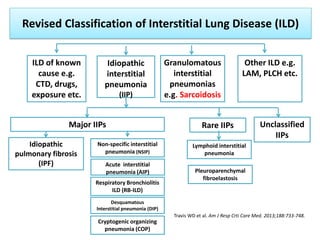
Revised Classification of Interstitial Lung Disease (ILD)
ILD of known
cause e.g.
CTD, drugs,
exposure etc.
Idiopathic
interstitial
pneumonia
(IIP)
Granulomatous
interstitial
pneumonias
e.g. Sarcoidosis
Other ILD e.g.
LAM, PLCH etc.
Major IIPs Rare IIPs
Non-specific interstitial
pneumonia (NSIP)
Acute interstitial
pneumonia (AIP)
Desquamatous
Interstitial pneumonia (DIP)
Respiratory Bronchiolitis
ILD (RB-ILD)
Lymphoid interstitial
pneumonia
Cryptogenic organizing
pneumonia (COP)
Idiopathic
pulmonary fibrosis
(IPF)
Unclassified
IIPs
Pleuroparenchymal
fibroelastosis
Travis WD et al. Am J Resp Crti Care Med. 2013;188:733-748.
Sarcoidosis
The word sarcoidosis is derived from Greek and it means “fleshlike” condition
Jonathan Hutchinson In 1877, described the first case at King’s College Hospital
in London
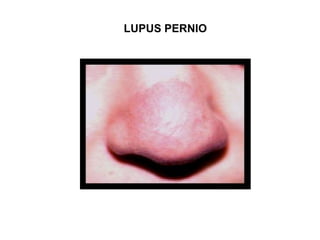
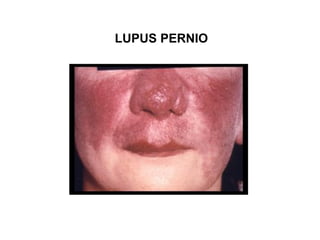
Ernest Besnier, in 1889, described lupus pernio, the cutaneous hallmark of
chronic sarcoidosis
Caesar Boeck was the first to use term sarkoid (sarcoid) because he believed
the lesions resembled sarcoma but were benign.
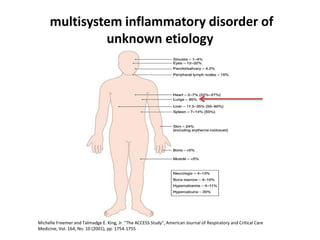
• Chronic multi system disorder
• Unknown cause
• Most affected organ is the lung
• Skin, eyes and lymph nodes are frequently
involved
• Acute or sub acute and self limiting
• Waxing and waning over years
Sarcoidosis
multisystem inflammatory disorder of
unknown etiology
Michelle Freemer and Talmadge E. King, Jr. "The ACCESS Study", American Journal of Respiratory and Critical Care
Medicine, Vol. 164, No. 10 (2001), pp. 1754-1755
Incidence and Prevalence (USA data)
• In all races and both sexes
• Risk greatest in a young black woman
• Scandinavian, German, Irish, or Puerto Rican origin
• 5/100,000 whites
• 40/100,000 blacks
• 20 to 40 years of age
• Black women >twice as black men
• White women equal white men
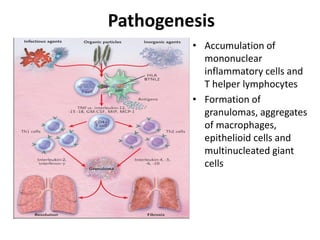
Pathogenesis
• Accumulation of
mononuclear
inflammatory cells and
T helper lymphocytes
• Formation of
granulomas, aggregates
of macrophages,
epithelioid cells and
multinucleated giant
cells
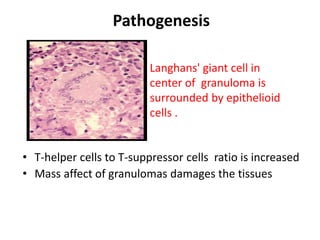
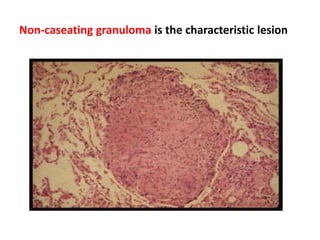
Langhans' giant cell in
center of granuloma is
surrounded by epithelioid
cells .
• T-helper cells to T-suppressor cells ratio is increased
• Mass affect of granulomas damages the tissues
Pathogenesis
Non-caseating granuloma is the characteristic lesion
• Presentation depends on the extent and severity of the
organ involved.
• Up to 50% of cases may be asymptomatic and incidentally
detected by CXR.
• Systemic symptoms occur in 45% of cases such as :
• Fever.
• anorexia
• Fatigue.
• Night sweats .
• Weight loss .
• Pulmonary symptoms, dyspnea on exertion, cough, chest
discomfort occur in 50% of cases.
Clinical Manifestations
Löfgren's syndrome, an acute presentation consisting of:
• Fever.
• Arthralgia.
• erythema nodosum.
• bilateral hilar adenopathy.
• occurs in 9 to 34% of patients .
Heerford's syndrome :
• Anterior Uveitis
• Fever
• Parotid enlaregment
• Facial palsy
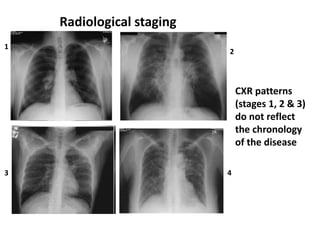
Radiological staging
CXR patterns
(stages 1, 2 & 3)
do not reflect
the chronology
of the disease
1
2
3 4
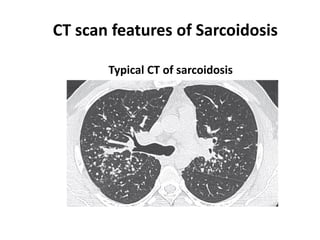
Typical CT of sarcoidosis
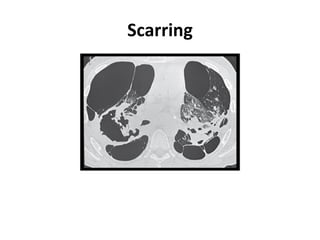
CT scan features of Sarcoidosis
Scarring
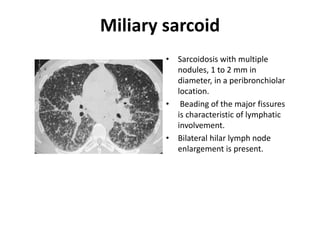
Miliary sarcoid
• Sarcoidosis with multiple
nodules, 1 to 2 mm in
diameter, in a peribronchiolar
location.
• Beading of the major fissures
is characteristic of lymphatic
involvement.
• Bilateral hilar lymph node
enlargement is present.
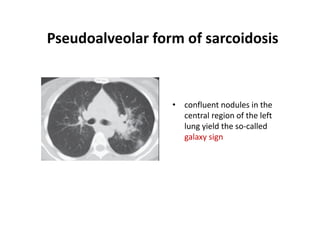
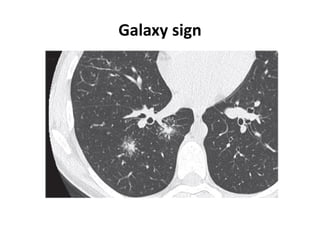
• confluent nodules in the
central region of the left
lung yield the so-called
galaxy sign
Pseudoalveolar form of sarcoidosis
Galaxy sign
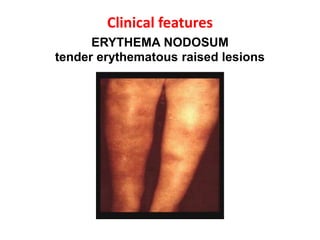
ERYTHEMA NODOSUM
tender erythematous raised lesions
Clinical features
LUPUS PERNIO
LUPUS PERNIO
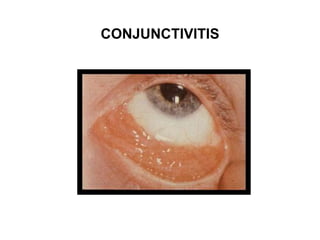
CONJUNCTIVITIS
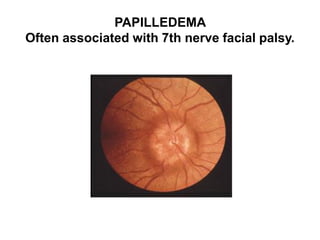
PAPILLEDEMA
Often associated with 7th nerve facial palsy.
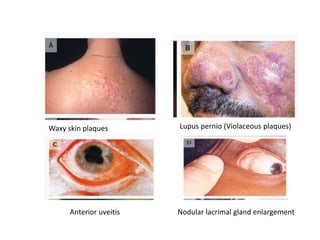
Waxy skin plaques Lupus pernio (Violaceous plaques)
Anterior uveitis Nodular lacrimal gland enlargement
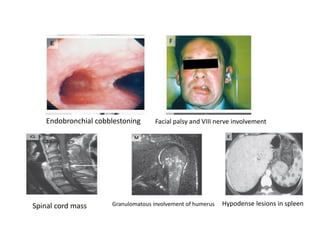
Endobronchial cobblestoning Facial palsy and VIII nerve involvement
Spinal cord mass Granulomatous involvement of humerus Hypodense lesions in spleen
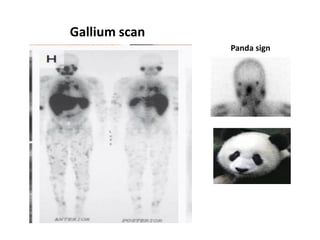
Gallium scan
Panda sign
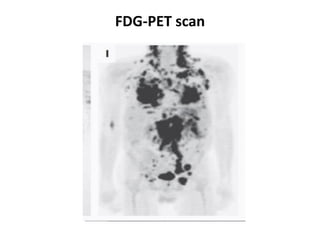
FDG-PET scan
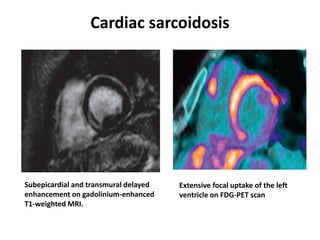
Cardiac sarcoidosis
Subepicardial and transmural delayed
enhancement on gadolinium-enhanced
T1-weighted MRI.
Extensive focal uptake of the left
ventricle on FDG-PET scan
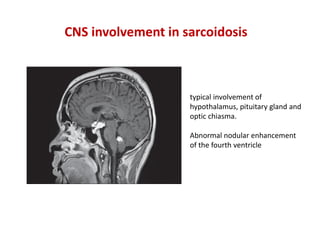
typical involvement of
hypothalamus, pituitary gland and
optic chiasma.
Abnormal nodular enhancement
of the fourth ventricle
CNS involvement in sarcoidosis
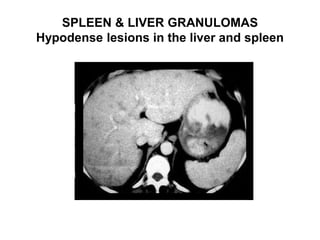
SPLEEN & LIVER GRANULOMAS
Hypodense lesions in the liver and spleen
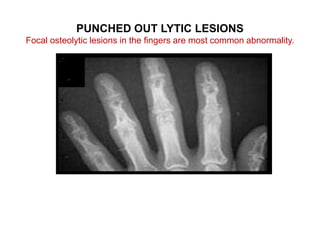
PUNCHED OUT LYTIC LESIONS
Focal osteolytic lesions in the fingers are most common abnormality.
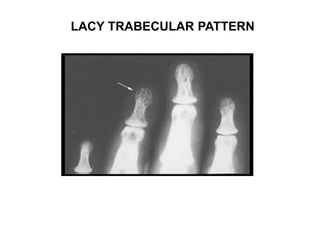
LACY TRABECULAR PATTERN
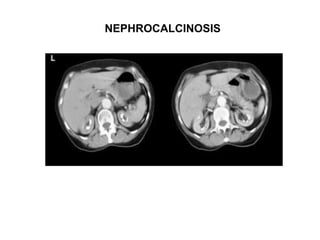
NEPHROCALCINOSIS
Diagnosis
Clinical features
Radiology
Histology (all other causes of granuloma ruled out)
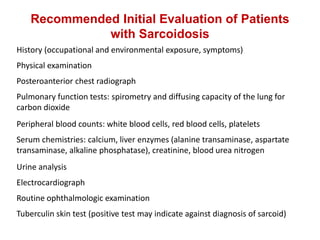
Recommended Initial Evaluation of Patients
with Sarcoidosis
History (occupational and environmental exposure, symptoms)
Physical examination
Posteroanterior chest radiograph
Pulmonary function tests: spirometry and diffusing capacity of the lung for
carbon dioxide
Peripheral blood counts: white blood cells, red blood cells, platelets
Serum chemistries: calcium, liver enzymes (alanine transaminase, aspartate
transaminase, alkaline phosphatase), creatinine, blood urea nitrogen
Urine analysis
Electrocardiograph
Routine ophthalmologic examination
Tuberculin skin test (positive test may indicate against diagnosis of sarcoid)
• Biopsy is indicated for all patients presumed to have
sarcoidosis, except those with Lofgren’s syndrome.
• A response to corticosteroid therapy does not establish
the diagnosis of sarcoidosis.
• Serum angiotensin-converting–enzyme (ACE) level is an
insensitive and nonspecific diagnostic test and a poor
therapeutic guide.
• For patients without apparent lung involvement,
18FDG PET is useful in identifying sites for diagnostic
biopsy.
• 18FDG PET and MRI with gadolinium detect cardiac
and neurologic involvement.
Laboratory Studies
• Routine lab evaluation often is unrevealing.
• Hypercalcemia or hypercalciuria may occur
(granulomas secrete 1,25 vitamin D).
• Hypercalcemia is seen in about 10-13% of patients, whereas
hypercalciuria is 3 times more common.
• An elevated alkaline phosphatase level suggests hepatic
involvement.
• Angiotensin converting enzyme (ACE) levels may be elevated.
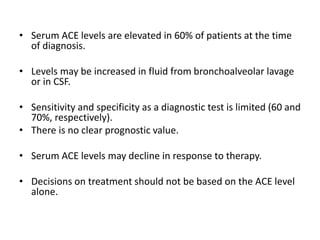
• Serum ACE levels are elevated in 60% of patients at the time
of diagnosis.
• Levels may be increased in fluid from bronchoalveolar lavage
or in CSF.
• Sensitivity and specificity as a diagnostic test is limited (60 and
70%, respectively).
• There is no clear prognostic value.
• Serum ACE levels may decline in response to therapy.
• Decisions on treatment should not be based on the ACE level
alone.
Causes of high ACE level
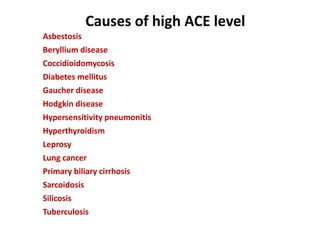
Asbestosis
Beryllium disease
Coccidioidomycosis
Diabetes mellitus
Gaucher disease
Hodgkin disease
Hypersensitivity pneumonitis
Hyperthyroidism
Leprosy
Lung cancer
Primary biliary cirrhosis
Sarcoidosis
Silicosis
Tuberculosis
PFT in pulmonary Sarcoidosis
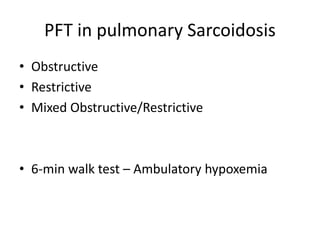
• Obstructive
• Restrictive
• Mixed Obstructive/Restrictive
• 6-min walk test – Ambulatory hypoxemia
Biopsy
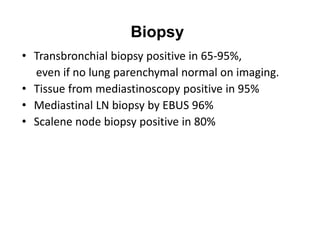
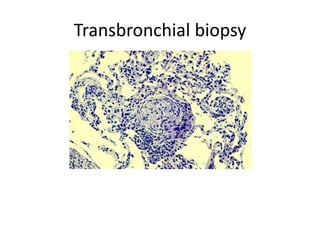
• Transbronchial biopsy positive in 65-95%,
even if no lung parenchymal normal on imaging.
• Tissue from mediastinoscopy positive in 95%
• Mediastinal LN biopsy by EBUS 96%
• Scalene node biopsy positive in 80%
Transbronchial biopsy
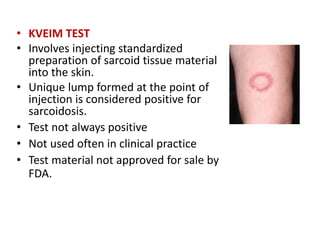
• KVEIM TEST
• Involves injecting standardized
preparation of sarcoid tissue material
into the skin.
• Unique lump formed at the point of
injection is considered positive for
sarcoidosis.
• Test not always positive
• Not used often in clinical practice
• Test material not approved for sale by
FDA.
Differential diagnosis of pulmonary sarcoidosis
Granulomatous diseases
Infections (fungal, mycobacterial, others)
Chronic beryllium disease
Hypersensitivity pneumonitis
Other exposures (methotrexate, metals)
Rheumatologic syndromes (Wegener’s granulomatosis, Churg-Strauss
syndrome)
Lymphoma
Tumor-associated granulomas
Other parenchymal lung diseases (e.g. pulmonary fibrosis)
Asthma
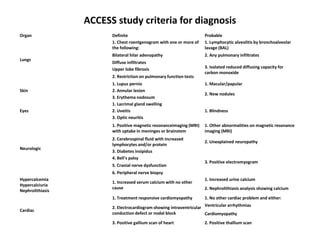
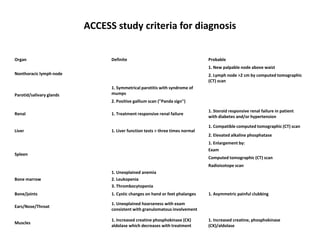
ACCESS study criteria for diagnosis
Organ Definite Probable
Lungs
1. Chest roentgenogram with one or more of
the following:
1. Lymphocytic alveolitis by bronchoalveolar
lavage (BAL)
Bilateral hilar adenopathy 2. Any pulmonary infiltrates
Diffuse infiltrates
3. Isolated reduced diffusing capacity for
carbon monoxide
Upper lobe fibrosis
2. Restriction on pulmonary function tests
Skin
1. Lupus pernio 1. Macular/papular
2. Annular lesion
2. New nodules
3. Erythema nodosum
Eyes
1. Lacrimal gland swelling
1. Blindness2. Uveitis
3. Optic neuritis
Neurologic
1. Positive magnetic resonanceimaging (MRI)
with uptake in meninges or brainstem
1. Other abnormalities on magnetic resonance
imaging (MRI)
2. Cerebrospinal fluid with increased
lymphocytes and/or protein
2. Unexplained neuropathy
3. Diabetes insipidus
3. Positive electromyogram
4. Bell's palsy
5. Cranial nerve dysfunction
6. Peripheral nerve biopsy
Hypercalcemia
Hypercalciuria
Nephrolithiasis
1. Increased serum calcium with no other
cause
1. Increased urine calcium
2. Nephrolithiasis analysis showing calcium
Cardiac
1. Treatment responsive cardiomyopathy 1. No other cardiac problem and either:
2. Electrocardiogram showing intraventricular
conduction defect or nodal block
Ventricular arrhythmias
Cardiomyopathy
3. Positive gallium scan of heart 2. Positive thallium scan
Organ Definite Probable
Nonthoracic lymph node
1. New palpable node above waist
2. Lymph node >2 cm by computed tomographic
(CT) scan
Parotid/salivary glands
1. Symmetrical parotitis with syndrome of
mumps
2. Positive gallium scan ("Panda sign")
Renal 1. Treatment responsive renal failure
1. Steroid responsive renal failure in patient
with diabetes and/or hypertension
Liver 1. Liver function tests > three times normal
1. Compatible computed tomographic (CT) scan
2. Elevated alkaline phosphatase
Spleen
1. Enlargement by:
Exam
Computed tomographic (CT) scan
Radioisotope scan
Bone marrow
1. Unexplained anemia
2. Leukopenia
3. Thrombocytopenia
Bone/joints 1. Cystic changes on hand or feet phalanges 1. Asymmetric painful clubbing
Ears/Nose/Throat
1. Unexplained hoarseness with exam
consistent with granulomatous involvement
Muscles
1. Increased creatine phosphokinase (CK)
aldolase which decreases with treatment
1. Increased creatine, phosphokinase
(CK)/aldolase
ACCESS study criteria for diagnosis
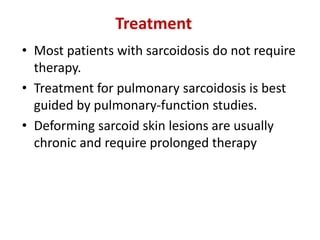
• Most patients with sarcoidosis do not require
therapy.
• Treatment for pulmonary sarcoidosis is best
guided by pulmonary-function studies.
• Deforming sarcoid skin lesions are usually
chronic and require prolonged therapy
Treatment
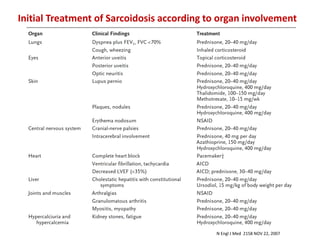
Initial Treatment of Sarcoidosis according to organ involvement
N Engl J Med 2158 NOV 22, 2007
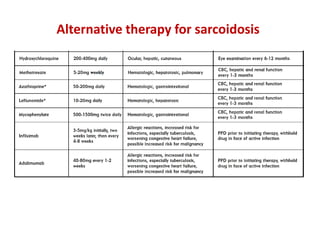
Alternative therapy for sarcoidosis
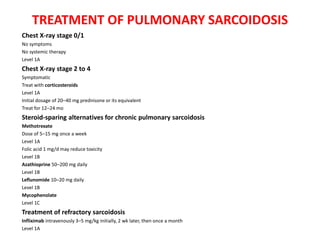
TREATMENT OF PULMONARY SARCOIDOSIS
Chest X-ray stage 0/1
No symptoms
No systemic therapy
Level 1A
Chest X-ray stage 2 to 4
Symptomatic
Treat with corticosteroids
Level 1A
Initial dosage of 20–40 mg prednisone or its equivalent
Treat for 12–24 mo
Steroid-sparing alternatives for chronic pulmonary sarcoidosis
Methotrexate
Dose of 5–15 mg once a week
Level 1A
Folic acid 1 mg/d may reduce toxicity
Level 1B
Azathioprine 50–200 mg daily
Level 1B
Leflunomide 10–20 mg daily
Level 1B
Mycophenolate
Level 1C
Treatment of refractory sarcoidosis
Infliximab intravenously 3–5 mg/kg initially, 2 wk later, then once a month
Level 1A
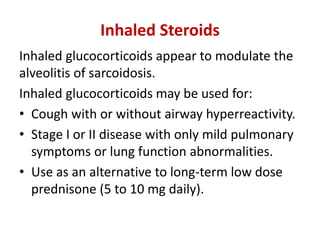
Inhaled Steroids
Inhaled glucocorticoids appear to modulate the
alveolitis of sarcoidosis.
Inhaled glucocorticoids may be used for:
• Cough with or without airway hyperreactivity.
• Stage I or II disease with only mild pulmonary
symptoms or lung function abnormalities.
• Use as an alternative to long-term low dose
prednisone (5 to 10 mg daily).
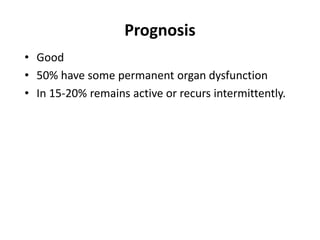
Prognosis
• Good
• 50% have some permanent organ dysfunction
• In 15-20% remains active or recurs intermittently.
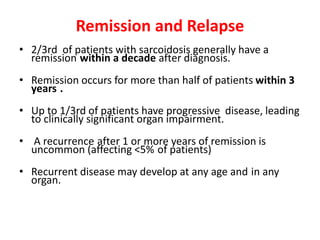
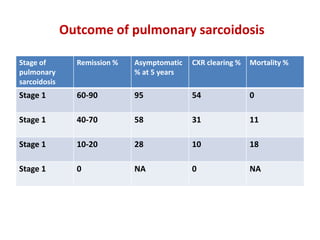
Remission and Relapse
• 2/3rd of patients with sarcoidosis generally have a
remission within a decade after diagnosis.
• Remission occurs for more than half of patients within 3
years .
• Up to 1/3rd of patients have progressive disease, leading
to clinically significant organ impairment.
• A recurrence after 1 or more years of remission is
uncommon (affecting <5% of patients)
• Recurrent disease may develop at any age and in any
organ.
Stage of
pulmonary
sarcoidosis
Remission % Asymptomatic
% at 5 years
CXR clearing % Mortality %
Stage 1 60-90 95 54 0
Stage 1 40-70 58 31 11
Stage 1 10-20 28 10 18
Stage 1 0 NA 0 NA
Outcome of pulmonary sarcoidosis
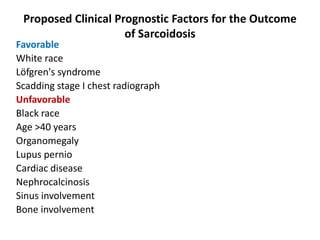
Proposed Clinical Prognostic Factors for the Outcome
of Sarcoidosis
Favorable
White race
Löfgren's syndrome
Scadding stage I chest radiograph
Unfavorable
Black race
Age >40 years
Organomegaly
Lupus pernio
Cardiac disease
Nephrocalcinosis
Sinus involvement
Bone involvement
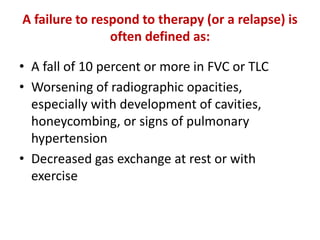
A failure to respond to therapy (or a relapse) is
often defined as:
• A fall of 10 percent or more in FVC or TLC
• Worsening of radiographic opacities,
especially with development of cavities,
honeycombing, or signs of pulmonary
hypertension
• Decreased gas exchange at rest or with
exercise
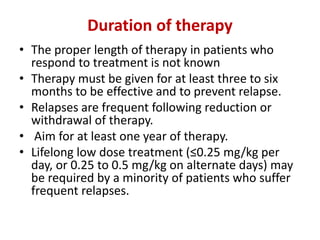
Duration of therapy
• The proper length of therapy in patients who
respond to treatment is not known
• Therapy must be given for at least three to six
months to be effective and to prevent relapse.
• Relapses are frequent following reduction or
withdrawal of therapy.
• Aim for at least one year of therapy.
• Lifelong low dose treatment (≤0.25 mg/kg per
day, or 0.25 to 0.5 mg/kg on alternate days) may
be required by a minority of patients who suffer
frequent relapses.
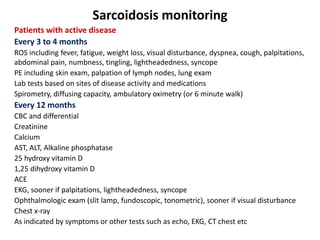
Sarcoidosis monitoring
Patients with active disease
Every 3 to 4 months
ROS including fever, fatigue, weight loss, visual disturbance, dyspnea, cough, palpitations,
abdominal pain, numbness, tingling, lightheadedness, syncope
PE including skin exam, palpation of lymph nodes, lung exam
Lab tests based on sites of disease activity and medications
Spirometry, diffusing capacity, ambulatory oximetry (or 6 minute walk)
Every 12 months
CBC and differential
Creatinine
Calcium
AST, ALT, Alkaline phosphatase
25 hydroxy vitamin D
1,25 dihydroxy vitamin D
ACE
EKG, sooner if palpitations, lightheadedness, syncope
Ophthalmologic exam (slit lamp, fundoscopic, tonometric), sooner if visual disturbance
Chest x-ray
As indicated by symptoms or other tests such as echo, EKG, CT chest etc
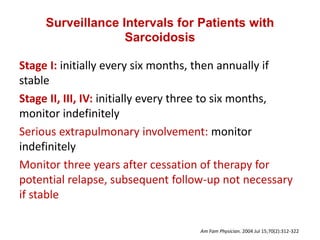
Surveillance Intervals for Patients with
Sarcoidosis
Stage I: initially every six months, then annually if
stable
Stage II, III, IV: initially every three to six months,
monitor indefinitely
Serious extrapulmonary involvement: monitor
indefinitely
Monitor three years after cessation of therapy for
potential relapse, subsequent follow-up not necessary
if stable
Am Fam Physician. 2004 Jul 15;70(2):312-322
Thanks

Pulmonary Sarcoidosis

  • 1.
    Pulmonary Sarcoidosis Sarfraz SaleemiMD Pulmonary Medicine King Faisal Specialist Hospital & Research Center Riyadh, Saudi Arabia
  • 2.
    Revised Classification ofInterstitial Lung Disease (ILD) ILD of known cause e.g. CTD, drugs, exposure etc. Idiopathic interstitial pneumonia (IIP) Granulomatous interstitial pneumonias e.g. Sarcoidosis Other ILD e.g. LAM, PLCH etc. Major IIPs Rare IIPs Non-specific interstitial pneumonia (NSIP) Acute interstitial pneumonia (AIP) Desquamatous Interstitial pneumonia (DIP) Respiratory Bronchiolitis ILD (RB-ILD) Lymphoid interstitial pneumonia Cryptogenic organizing pneumonia (COP) Idiopathic pulmonary fibrosis (IPF) Unclassified IIPs Pleuroparenchymal fibroelastosis Travis WD et al. Am J Resp Crti Care Med. 2013;188:733-748.
  • 3.
    Sarcoidosis The word sarcoidosisis derived from Greek and it means “fleshlike” condition Jonathan Hutchinson In 1877, described the first case at King’s College Hospital in London Ernest Besnier, in 1889, described lupus pernio, the cutaneous hallmark of chronic sarcoidosis Caesar Boeck was the first to use term sarkoid (sarcoid) because he believed the lesions resembled sarcoma but were benign.
  • 4.
    • Chronic multisystem disorder • Unknown cause • Most affected organ is the lung • Skin, eyes and lymph nodes are frequently involved • Acute or sub acute and self limiting • Waxing and waning over years Sarcoidosis
  • 5.
    multisystem inflammatory disorderof unknown etiology Michelle Freemer and Talmadge E. King, Jr. "The ACCESS Study", American Journal of Respiratory and Critical Care Medicine, Vol. 164, No. 10 (2001), pp. 1754-1755
  • 6.
    Incidence and Prevalence(USA data) • In all races and both sexes • Risk greatest in a young black woman • Scandinavian, German, Irish, or Puerto Rican origin • 5/100,000 whites • 40/100,000 blacks • 20 to 40 years of age • Black women >twice as black men • White women equal white men
  • 7.
    Pathogenesis • Accumulation of mononuclear inflammatorycells and T helper lymphocytes • Formation of granulomas, aggregates of macrophages, epithelioid cells and multinucleated giant cells
  • 8.
    Langhans' giant cellin center of granuloma is surrounded by epithelioid cells . • T-helper cells to T-suppressor cells ratio is increased • Mass affect of granulomas damages the tissues Pathogenesis
  • 9.
    Non-caseating granuloma isthe characteristic lesion
  • 10.
    • Presentation dependson the extent and severity of the organ involved. • Up to 50% of cases may be asymptomatic and incidentally detected by CXR. • Systemic symptoms occur in 45% of cases such as : • Fever. • anorexia • Fatigue. • Night sweats . • Weight loss . • Pulmonary symptoms, dyspnea on exertion, cough, chest discomfort occur in 50% of cases. Clinical Manifestations
  • 11.
    Löfgren's syndrome, anacute presentation consisting of: • Fever. • Arthralgia. • erythema nodosum. • bilateral hilar adenopathy. • occurs in 9 to 34% of patients . Heerford's syndrome : • Anterior Uveitis • Fever • Parotid enlaregment • Facial palsy
  • 12.
    Radiological staging CXR patterns (stages1, 2 & 3) do not reflect the chronology of the disease 1 2 3 4
  • 13.
    Typical CT ofsarcoidosis CT scan features of Sarcoidosis
  • 14.
  • 15.
    Miliary sarcoid • Sarcoidosiswith multiple nodules, 1 to 2 mm in diameter, in a peribronchiolar location. • Beading of the major fissures is characteristic of lymphatic involvement. • Bilateral hilar lymph node enlargement is present.
  • 16.
    • confluent nodulesin the central region of the left lung yield the so-called galaxy sign Pseudoalveolar form of sarcoidosis
  • 17.
  • 18.
    ERYTHEMA NODOSUM tender erythematousraised lesions Clinical features
  • 19.
  • 20.
  • 21.
  • 22.
    PAPILLEDEMA Often associated with7th nerve facial palsy.
  • 23.
    Waxy skin plaquesLupus pernio (Violaceous plaques) Anterior uveitis Nodular lacrimal gland enlargement
  • 24.
    Endobronchial cobblestoning Facialpalsy and VIII nerve involvement Spinal cord mass Granulomatous involvement of humerus Hypodense lesions in spleen
  • 25.
  • 26.
  • 27.
    Cardiac sarcoidosis Subepicardial andtransmural delayed enhancement on gadolinium-enhanced T1-weighted MRI. Extensive focal uptake of the left ventricle on FDG-PET scan
  • 28.
    typical involvement of hypothalamus,pituitary gland and optic chiasma. Abnormal nodular enhancement of the fourth ventricle CNS involvement in sarcoidosis
  • 29.
    SPLEEN & LIVERGRANULOMAS Hypodense lesions in the liver and spleen
  • 30.
    PUNCHED OUT LYTICLESIONS Focal osteolytic lesions in the fingers are most common abnormality.
  • 31.
  • 32.
  • 33.
    Diagnosis Clinical features Radiology Histology (allother causes of granuloma ruled out)
  • 34.
    Recommended Initial Evaluationof Patients with Sarcoidosis History (occupational and environmental exposure, symptoms) Physical examination Posteroanterior chest radiograph Pulmonary function tests: spirometry and diffusing capacity of the lung for carbon dioxide Peripheral blood counts: white blood cells, red blood cells, platelets Serum chemistries: calcium, liver enzymes (alanine transaminase, aspartate transaminase, alkaline phosphatase), creatinine, blood urea nitrogen Urine analysis Electrocardiograph Routine ophthalmologic examination Tuberculin skin test (positive test may indicate against diagnosis of sarcoid)
  • 35.
    • Biopsy isindicated for all patients presumed to have sarcoidosis, except those with Lofgren’s syndrome. • A response to corticosteroid therapy does not establish the diagnosis of sarcoidosis. • Serum angiotensin-converting–enzyme (ACE) level is an insensitive and nonspecific diagnostic test and a poor therapeutic guide. • For patients without apparent lung involvement, 18FDG PET is useful in identifying sites for diagnostic biopsy. • 18FDG PET and MRI with gadolinium detect cardiac and neurologic involvement.
  • 36.
    Laboratory Studies • Routinelab evaluation often is unrevealing. • Hypercalcemia or hypercalciuria may occur (granulomas secrete 1,25 vitamin D). • Hypercalcemia is seen in about 10-13% of patients, whereas hypercalciuria is 3 times more common. • An elevated alkaline phosphatase level suggests hepatic involvement. • Angiotensin converting enzyme (ACE) levels may be elevated.
  • 37.
    • Serum ACElevels are elevated in 60% of patients at the time of diagnosis. • Levels may be increased in fluid from bronchoalveolar lavage or in CSF. • Sensitivity and specificity as a diagnostic test is limited (60 and 70%, respectively). • There is no clear prognostic value. • Serum ACE levels may decline in response to therapy. • Decisions on treatment should not be based on the ACE level alone.
  • 38.
    Causes of highACE level Asbestosis Beryllium disease Coccidioidomycosis Diabetes mellitus Gaucher disease Hodgkin disease Hypersensitivity pneumonitis Hyperthyroidism Leprosy Lung cancer Primary biliary cirrhosis Sarcoidosis Silicosis Tuberculosis
  • 39.
    PFT in pulmonarySarcoidosis • Obstructive • Restrictive • Mixed Obstructive/Restrictive • 6-min walk test – Ambulatory hypoxemia
  • 40.
    Biopsy • Transbronchial biopsypositive in 65-95%, even if no lung parenchymal normal on imaging. • Tissue from mediastinoscopy positive in 95% • Mediastinal LN biopsy by EBUS 96% • Scalene node biopsy positive in 80%
  • 41.
  • 42.
    • KVEIM TEST •Involves injecting standardized preparation of sarcoid tissue material into the skin. • Unique lump formed at the point of injection is considered positive for sarcoidosis. • Test not always positive • Not used often in clinical practice • Test material not approved for sale by FDA.
  • 43.
    Differential diagnosis ofpulmonary sarcoidosis Granulomatous diseases Infections (fungal, mycobacterial, others) Chronic beryllium disease Hypersensitivity pneumonitis Other exposures (methotrexate, metals) Rheumatologic syndromes (Wegener’s granulomatosis, Churg-Strauss syndrome) Lymphoma Tumor-associated granulomas Other parenchymal lung diseases (e.g. pulmonary fibrosis) Asthma
  • 44.
    ACCESS study criteriafor diagnosis Organ Definite Probable Lungs 1. Chest roentgenogram with one or more of the following: 1. Lymphocytic alveolitis by bronchoalveolar lavage (BAL) Bilateral hilar adenopathy 2. Any pulmonary infiltrates Diffuse infiltrates 3. Isolated reduced diffusing capacity for carbon monoxide Upper lobe fibrosis 2. Restriction on pulmonary function tests Skin 1. Lupus pernio 1. Macular/papular 2. Annular lesion 2. New nodules 3. Erythema nodosum Eyes 1. Lacrimal gland swelling 1. Blindness2. Uveitis 3. Optic neuritis Neurologic 1. Positive magnetic resonanceimaging (MRI) with uptake in meninges or brainstem 1. Other abnormalities on magnetic resonance imaging (MRI) 2. Cerebrospinal fluid with increased lymphocytes and/or protein 2. Unexplained neuropathy 3. Diabetes insipidus 3. Positive electromyogram 4. Bell's palsy 5. Cranial nerve dysfunction 6. Peripheral nerve biopsy Hypercalcemia Hypercalciuria Nephrolithiasis 1. Increased serum calcium with no other cause 1. Increased urine calcium 2. Nephrolithiasis analysis showing calcium Cardiac 1. Treatment responsive cardiomyopathy 1. No other cardiac problem and either: 2. Electrocardiogram showing intraventricular conduction defect or nodal block Ventricular arrhythmias Cardiomyopathy 3. Positive gallium scan of heart 2. Positive thallium scan
  • 45.
    Organ Definite Probable Nonthoraciclymph node 1. New palpable node above waist 2. Lymph node >2 cm by computed tomographic (CT) scan Parotid/salivary glands 1. Symmetrical parotitis with syndrome of mumps 2. Positive gallium scan ("Panda sign") Renal 1. Treatment responsive renal failure 1. Steroid responsive renal failure in patient with diabetes and/or hypertension Liver 1. Liver function tests > three times normal 1. Compatible computed tomographic (CT) scan 2. Elevated alkaline phosphatase Spleen 1. Enlargement by: Exam Computed tomographic (CT) scan Radioisotope scan Bone marrow 1. Unexplained anemia 2. Leukopenia 3. Thrombocytopenia Bone/joints 1. Cystic changes on hand or feet phalanges 1. Asymmetric painful clubbing Ears/Nose/Throat 1. Unexplained hoarseness with exam consistent with granulomatous involvement Muscles 1. Increased creatine phosphokinase (CK) aldolase which decreases with treatment 1. Increased creatine, phosphokinase (CK)/aldolase ACCESS study criteria for diagnosis
  • 46.
    • Most patientswith sarcoidosis do not require therapy. • Treatment for pulmonary sarcoidosis is best guided by pulmonary-function studies. • Deforming sarcoid skin lesions are usually chronic and require prolonged therapy Treatment
  • 47.
    Initial Treatment ofSarcoidosis according to organ involvement N Engl J Med 2158 NOV 22, 2007
  • 48.
  • 49.
    TREATMENT OF PULMONARYSARCOIDOSIS Chest X-ray stage 0/1 No symptoms No systemic therapy Level 1A Chest X-ray stage 2 to 4 Symptomatic Treat with corticosteroids Level 1A Initial dosage of 20–40 mg prednisone or its equivalent Treat for 12–24 mo Steroid-sparing alternatives for chronic pulmonary sarcoidosis Methotrexate Dose of 5–15 mg once a week Level 1A Folic acid 1 mg/d may reduce toxicity Level 1B Azathioprine 50–200 mg daily Level 1B Leflunomide 10–20 mg daily Level 1B Mycophenolate Level 1C Treatment of refractory sarcoidosis Infliximab intravenously 3–5 mg/kg initially, 2 wk later, then once a month Level 1A
  • 50.
    Inhaled Steroids Inhaled glucocorticoidsappear to modulate the alveolitis of sarcoidosis. Inhaled glucocorticoids may be used for: • Cough with or without airway hyperreactivity. • Stage I or II disease with only mild pulmonary symptoms or lung function abnormalities. • Use as an alternative to long-term low dose prednisone (5 to 10 mg daily).
  • 51.
    Prognosis • Good • 50%have some permanent organ dysfunction • In 15-20% remains active or recurs intermittently.
  • 52.
    Remission and Relapse •2/3rd of patients with sarcoidosis generally have a remission within a decade after diagnosis. • Remission occurs for more than half of patients within 3 years . • Up to 1/3rd of patients have progressive disease, leading to clinically significant organ impairment. • A recurrence after 1 or more years of remission is uncommon (affecting <5% of patients) • Recurrent disease may develop at any age and in any organ.
  • 53.
    Stage of pulmonary sarcoidosis Remission %Asymptomatic % at 5 years CXR clearing % Mortality % Stage 1 60-90 95 54 0 Stage 1 40-70 58 31 11 Stage 1 10-20 28 10 18 Stage 1 0 NA 0 NA Outcome of pulmonary sarcoidosis
  • 54.
    Proposed Clinical PrognosticFactors for the Outcome of Sarcoidosis Favorable White race Löfgren's syndrome Scadding stage I chest radiograph Unfavorable Black race Age >40 years Organomegaly Lupus pernio Cardiac disease Nephrocalcinosis Sinus involvement Bone involvement
  • 55.
    A failure torespond to therapy (or a relapse) is often defined as: • A fall of 10 percent or more in FVC or TLC • Worsening of radiographic opacities, especially with development of cavities, honeycombing, or signs of pulmonary hypertension • Decreased gas exchange at rest or with exercise
  • 56.
    Duration of therapy •The proper length of therapy in patients who respond to treatment is not known • Therapy must be given for at least three to six months to be effective and to prevent relapse. • Relapses are frequent following reduction or withdrawal of therapy. • Aim for at least one year of therapy. • Lifelong low dose treatment (≤0.25 mg/kg per day, or 0.25 to 0.5 mg/kg on alternate days) may be required by a minority of patients who suffer frequent relapses.
  • 57.
    Sarcoidosis monitoring Patients withactive disease Every 3 to 4 months ROS including fever, fatigue, weight loss, visual disturbance, dyspnea, cough, palpitations, abdominal pain, numbness, tingling, lightheadedness, syncope PE including skin exam, palpation of lymph nodes, lung exam Lab tests based on sites of disease activity and medications Spirometry, diffusing capacity, ambulatory oximetry (or 6 minute walk) Every 12 months CBC and differential Creatinine Calcium AST, ALT, Alkaline phosphatase 25 hydroxy vitamin D 1,25 dihydroxy vitamin D ACE EKG, sooner if palpitations, lightheadedness, syncope Ophthalmologic exam (slit lamp, fundoscopic, tonometric), sooner if visual disturbance Chest x-ray As indicated by symptoms or other tests such as echo, EKG, CT chest etc
  • 58.
    Surveillance Intervals forPatients with Sarcoidosis Stage I: initially every six months, then annually if stable Stage II, III, IV: initially every three to six months, monitor indefinitely Serious extrapulmonary involvement: monitor indefinitely Monitor three years after cessation of therapy for potential relapse, subsequent follow-up not necessary if stable Am Fam Physician. 2004 Jul 15;70(2):312-322
  • 59.