THE BONE SCAN
You have to know what is normal before you determine
what is ABNORMAL!
Presented by Dr. Amol Gulhane DNB
resident
 A nuclear medicine procedure, such as a bone
scan. The term is derived from the decay of
the radionuclide and its resultant gamma
radiation or scintillations. The number of
scintillations corresponds to the concentration
of the isotope.
Scintigraphy
Nuclear Medicine
 Images are generated as the uptake and
distribution of administered
radiopharmaceuticals are detected
 Provides vital information regarding tissue
perfusion, physiology, and biochemistry
 Physiologic and metabolic changes often
precede gross structural alteration of diseased
tissue by hours, days or even weeks
 Key factor in determining early diagnosis and
proper treatment protocols and in establishing
an accurate prognosis
Radionuclide Bone Scanning
 Most frequently performed nuclear medicine
technique
 Used to evaluate soft tissue, bone and joint
disorders
 Fractures, infections, arthritides, tumors and
osteonecrosis
History
 Skeletal scintigraphy radiopharmaceuticals
were first introduced in the early 1960s
 1971 Technitium 99-MDP polyphosphate
compounds were introduced
 Today we use diphosphonates which have
faster blood clearance and higher skeletal
uptake
Radiopharmaceutical Agents
 Dozens are employed
 Earlier technetium pyrophosphate was used
which is now replaced by the Tc-based
diphosphonates, primarily Tc-99m-MDP
(methylene diphosphonate).
 6 hour half-life
 Principal photon energy of 140 keV
Tc-99m-MDP is administered intravenously
and is delivered to the skeletal system based
on vascular distribution.
Vigorous osteoblastic activity in the growth
plates of juvenile skeletons, healing
fractures,pathologic conditions stimulating
skeletal blood flow, and bone repair increase
the bone labeling.
In the normal adult, skeletal tracer uptake is fairly
uniform and symmetric.
Uptake is greater in the axial skeleton (pelvis, spine)
than in the appendicular skeleton (skull and
extremities).
Mild,uniform soft tissue uptake is noted in the
background. The kidneys should be slightly hotter than
the soft tissues and should be symmetric and normal
anatomically.
The renal collecting system,ureters, and bladder
activity appear very intense.
NORMAL "HOT" AREAS... 
• SI Joints
• Acromioclavicular joints
• Hip joints
• Sternoclavicular joints
• Ends of long bones
• Growing epiphysis (in pediatric patients)
• Fractures and orthopedic surgery produce uptake for 1 or more
years
• Variations in spine uptake are casued by normal curvature of the
spine
Image generation
 Radiopharmaceutical emits gamma rays that
are detected by an instrument and transformed
into electrical signals that ultimately generate a
computer image of the tracer agent activity and
concentration
Examination Procedure
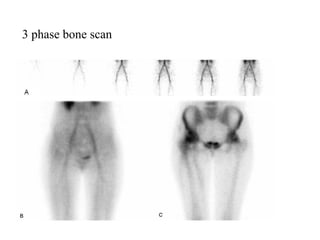
 Three phases which represent the distribution of
the tracer over the course of time
 Phase 1 – Flow phase or radionuclide angiogram -
tracer is intravascular – images are obtained every 2-
3 seconds for 30 seconds
 Phase 2 – Blood pool phase – the tracer is located in
the extravascular space – the body is imaged 5
minutes after injection
 Phase 3 – Bone scan phase – 2-4 hours after
injection – represents clearance of the tracer from the
vessels and soft tissues and concentration into the
skeleton
Phase 4- can be acquired the following
morning if better skeletal detail is
needed, usually when the patient has
poor renal function, such as in the
diabetic foot.
Blood Flow Phase
 Show radionuclide in the arterial, capillary, and
venous phases
 Variations may occur in the blood flow to the
extremities depending on the vascular status
and activity
Blood Pool Phase
 Shows radionuclide in the extravascular space
 Vascular structures such as kidneys, liver,
spleen and uterus are seen and should not be
mistaken for sites of abnormality
Bone Scan Phase
 Show radionuclide in the skeleton and soft tissue
 Metaphyseal regions of long bones show higher
uptake than diaphyses – due to higher bone
turnover rate in the metaphyses
 Areas of highest uptake are the sternum and SI
joints
 The anterior wings of the iliac bones and the
coracoid processes normally show considerable
uptake of the radionuclide
 Scoliosis – the concave side of the spine
appears hotter than the convex
3 phase bone scan
Patient Presentation
 Children have high diffuse bone uptake and prominent
uptake around the growth plates
 Elderly patients tend to have poor-quality bone scans
 Heavy patients have poor quality bone scans owing to
the greater amount of soft tissue, which causes more
scatter and higher attenuation of the photons in the soft
tissues because of the greater distance of the detectors
from the skeleton
 Poor hydration prevents optimal clearance of the
radionuclide from the soft tissues
 Renal failure prevents good soft tissue clearance
 Corticosteroids may produce generalized decreased
skeletal uptake
Absorbed Patient Dose
 Exact dose is difficult to determine
 Influenced by:
 Tracer biodistribution
 Organ pathology
 Renal function
Dose
 Approximately 50% of the injected dose is taken
up by the skeleton within 2-6 hours
 The Tc agents are excreted by glomerular filtration
from the kidneys. In a normal subject, 50% is
excreted by 4
hours, and up to 80% of the injected diphosphonate
will be excreted by 24 hours
 Normal renal function clears soft tissue activity, thus
improving the quality of bone images because of
improved target-to background ratios.
 Decreased renal function from any cause degrades
image quality.
Bladder receives the highest dose
May be reduced by pre-examination
hydration and frequent voiding after
exam
Whole-body dose is approximately
0.13 rad (average dose for CT scan of
the L/S is 3-5 rad.
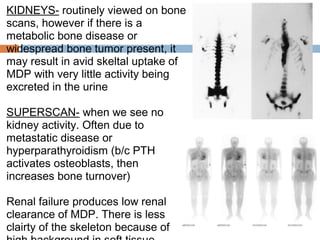
KIDNEYS- routinely viewed on bone
scans, however if there is a
metabolic bone disease or
widespread bone tumor present, it
may result in avid skeltal uptake of
MDP with very little activity being
excreted in the urine
 
SUPERSCAN- when we see no
kidney activity. Often due to
metastatic disease or
hyperparathyroidism (b/c PTH
activates osteoblasts, then
increases bone turnover)
 
Renal failure produces low renal
clearance of MDP. There is less
clairty of the skeleton because of
Contraindications
 Pregnancy because transplacental
transmission of radiopharmaceuticals is
possible
 Breast milk will carry isotope activity for
several days after the study
Several Bone Scan Uses
 Insufficiency fractures in metabolic disease
 Trauma
 Metastatic Disease
 Disuse osteoporosis
 Osteomalacia
 Osteonecrosis
 Osteomyelitis
Insufficiency fractures in metabolic
disease
 Pubic rami
 Femoral necks
 Femoral condyles
 Metaphyses of the proximal and distal portions
of the tibias, sacrum and calcaneus
 Tend to be bilaterally symmetric and occur in
the metaphyses of long bones of the lower
extremities
Traumatotheskeletonmaybeundetectableonstandard
radiographic examinations.
The classic stress fracture may be caused
by overuse of the normal skeleton, or an insufficiency
fracture may result from normal use of weakened bone.
Scintigraphically demonstrated trauma precedes
radiographically detectable fracture healing by
approximately 10 days.
Decreased or normal osteoblastic activity is seen at the
fracture site in this first phase of repair.
 The subsequent osteoblastic activity then shows as a
hot spot
weeks before the calcified callus appears on a
In an uncomplicated fracture, repaired bone returns to
normal
appearance as the callus at the fracture site remodels
over a period of months
A complicated fracture in a weight-bearing bone may
take many years to return to normal bone scan activity.
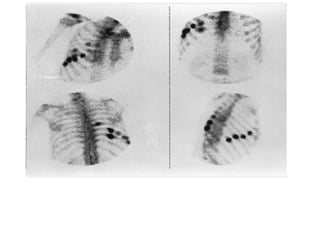
Multiple Rib Fractures. Vigorous osteoblastic
repair activity is seen in two rows of fractures, which were not
visible on radiographs.
Trauma
 Increased blood flow associated with bone repair
results in marked radiopharmaceutical
accumulation
 Occult fractures demonstrate an increased
perfusion
 Important for follow up to assess for fracture
non-union
 Compression fractures of the spine reveal a
horizontal band of increased tracer activity,
typically affecting the superior endplate
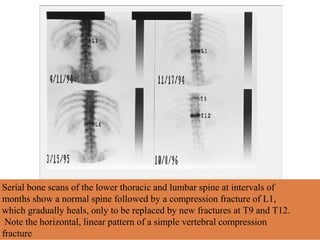
Serial bone scans of the lower thoracic and lumbar spine at intervals of
months show a normal spine followed by a compression fracture of L1,
which gradually heals, only to be replaced by new fractures at T9 and T12.
Note the horizontal, linear pattern of a simple vertebral compression
fracture
Recent studies have shown that a pinhole
bone scan is more sensitive than plain film or
CT for scaphoid and other fractures of the
wrist.
Whole-body bone scans are useful in
detecting
unsuspected fractures following severe
cases of multiple trauma.
Prosthetic joint replacements mayloosenand/orbecome
infected.
For about 6 months after hip replacement surgery, the
bone around the prosthesis is expected to have increased
osteoblastic activity.
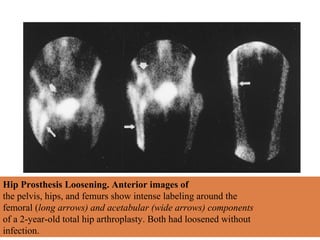
Thereafter, increased labeling correlates with infection,
loosening,
and heterotopic bone formation
Radiographs and, occasionally, radiolabeled white blood
cell scans may be required to further diagnose abnormal
findings
Hip Prosthesis Loosening. Anterior images of
the pelvis, hips, and femurs show intense labeling around the
femoral (long arrows) and acetabular (wide arrows) components
of a 2-year-old total hip arthroplasty. Both had loosened without
infection.
Arthropathies andArthritides
Inflammation of a joint creates increased blood flow and
increases the amount of radiopharmaceutical supplied to
those portions of the bone bounded by the synovial capsule.
 Increased bone labeling is seen in toxic synovitis, septic
joints, inflammation associated with early degenerative
conditions, and connective tissue arthropathies.
In early osteoarthropathy, high-resolution bone scan
images can
detect increased subchondral bone labeling long before
there are radiographic findings.
 Intense, abnormal labeling also is seen in neuropathic
joints
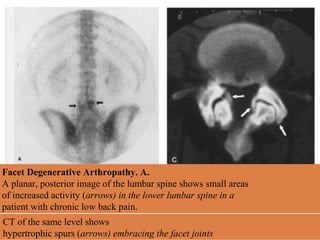
Facet Degenerative Arthropathy. A.
A planar, posterior image of the lumbar spine shows small areas
of increased activity (arrows) in the lower lumbar spine in a
patient with chronic low back pain.
CT of the same level shows
hypertrophic spurs (arrows) embracing the facet joints
Metastatic Disease
The most common use of the bone scan is for the detection
and
monitoring of metastatic tumor involving the skeleton.
 tumors monitored  prostate, lung, breast, thyroid, and
renal
Carcinoma
Majority of metastases affect the axial skeleton in a pattern
that reflects the distribution of the erythropoietic marrow.
Most metastases are multiple at the time of discovery.
 a solitary hot spot in the skull or a rib has a
low probability of being a metastatic lesion.
Comparison bone scans at intervals of 3 to
6 months allow an accurate assessment of
tumor spread.
Because of its sensitivity, the bone scan
can be utilized when a cancer patient has
new back
pain or bone pain.
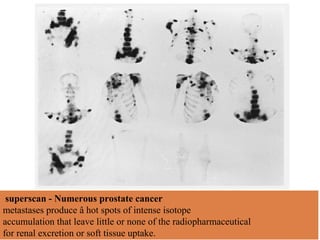
superscan - Numerous prostate cancer
metastases produce â hot spots of intense isotope
accumulation that leave little or none of the radiopharmaceutical
for renal excretion or soft tissue uptake.
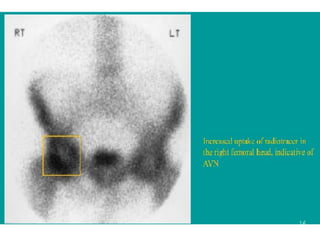
A cold spot within the femoral head is highly
specific for avascular necrosis (AVN) and is the
earliest scintigraphic evidence of this disease.
This finding is usually seen 7-10 days after the
ischemic event.
Over a period of weeks to months, increased
uptake representing revascularization and repair
surrounds and eventually replaces the region of
photopenia.
The central region of photopenia with
surrounding zone of increased uptake is termed
the doughnut sign.
Osteonecrosis
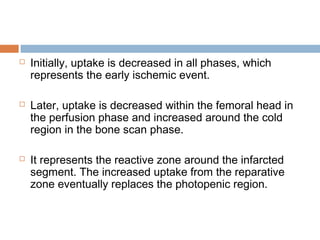
 Initially, uptake is decreased in all phases, which
represents the early ischemic event.
 Later, uptake is decreased within the femoral head in
the perfusion phase and increased around the cold
region in the bone scan phase.
 It represents the reactive zone around the infarcted
segment. The increased uptake from the reparative
zone eventually replaces the photopenic region.
Osteomyelitis
In a large bone such as a tibia, acute hematogenous
infection of bone that precedes radiographic
abnormality can be sensitively and
specifically diagnosed by three-phase bone scans.
early infection Early arterial flow seen seconds after
injection (first phase)
increased blood pool (second phase) for a few minutes
intense labeling in third phase
Radiographic changes may not be seen for 10 to 14
days.
The scan is more difficult to read and not as specific
when the target is small (e.g., the bones of the foot)
In the small bones it is difficult to differentiate
between an infection adjacent to a bone with
increased soft tissue and increased periosteal
labeling from an infection within the bone.
Bone scans may take months to normalize after
infections of bone are sterilized, and thus a white
blood cell scan may be useful for follow-up.
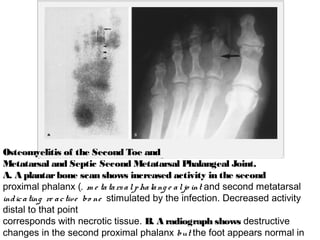
Osteomyelitis of the Second Toe and
Metatarsal and Septic Second Metatarsal Phalangeal Joint.
A. A plantarbone scan shows increased activity in the second
proximal phalanx (, m e tatarsalphalang e aljo int and second metatarsal
indicating re active bo ne stimulated by the infection. Decreased activity
distal to that point
corresponds with necrotic tissue. B. A radiograph shows destructive
changes in the second proximal phalanx but the foot appears normal in
Primary bone tumors
Benign lesions do not show typically increased
activity in the early phases, and even if there is a
detectable late phase activity, it is moderate
(except for osteoid osteoma, osteoblastoma, fibrotic
dysplasia and aggressively growing bone cysts, or
lesions that are associated with pathologic
fractures.)
Malignant tumors (osteosarcoma, Ewing sarcoma)
as opposed to benign tumors, have an increased
blood supply and a more intense osteoblast activity
MDP bone scan highly sensitive in the diagnosis of osteoid
osteoma.
Initial vascular blush followed by a focal avid tracer uptake in
the delayed skeletal phase
The double density sign is the diagnostic feature of the
central nidus on a bone scan.
SPECT localizes the nidus as a focal avid uptake in the
middle of the lesion, with a decremental uptake toward the
periphery.
Osteoid Osteoma
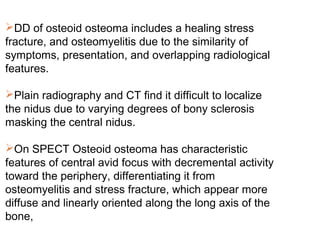
DD of osteoid osteoma includes a healing stress
fracture, and osteomyelitis due to the similarity of
symptoms, presentation, and overlapping radiological
features.
Plain radiography and CT find it difficult to localize
the nidus due to varying degrees of bony sclerosis
masking the central nidus.
On SPECT Osteoid osteoma has characteristic
features of central avid focus with decremental activity
toward the periphery, differentiating it from
osteomyelitis and stress fracture, which appear more
diffuse and linearly oriented along the long axis of the
bone,
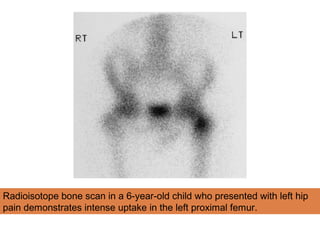
Radioisotope bone scan in a 6-year-old child who presented with left hip
pain demonstrates intense uptake in the left proximal femur.
Typically show increased uptake of radioisotope on bone
scans
Bone scans are most useful in excluding multifocal disease.
Skip lesions and pulmonary metastases may also take up
the radioisotope, but skip lesions are most reliably excluded
by MRI.
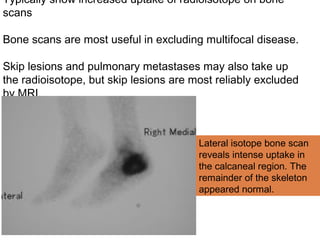
Lateral isotope bone scan
reveals intense uptake in
the calcaneal region. The
remainder of the skeleton
appeared normal.
The primary tumor of Ewing sarcoma is usually depicted as a
focal area of increased radionuclide activity.
Whole-body bone scans can provide information about the
primary lesion and depict skip lesions.
Bone scintigraphy can be used to localize distant metastases
during tumor staging.
Three-phase dynamic bone scintigraphy (TPBS) can help in the
assessment of treatment effects
In cases that respond to treatment, a reduction of both flow and
tracer uptake can be observed.
Ewing sarcoma
In addition to technetium-99m (99m
Tc), other tracers, such as
thallium-201 (201
Tl) & Gallium-67 (67
Ga) are used to assess the
therapeutic response.
However (PET) scanning with (FDG) is currently used
FDG is used as a marker of tumor viability, and it may help to
detect lesions that are not depicted on conventional bone scans.
In addition, PET scanning is the most sensitive modality for
therapeutic follow-up, and this modality can reveal early
changes in tumor metabolism, which is an indicator of the
therapeutic effect.
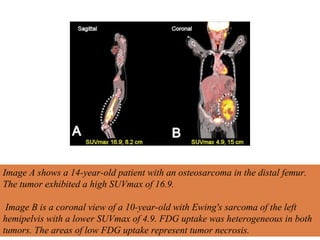
Image A shows a 14-year-old patient with an osteosarcoma in the distal femur.
The tumor exhibited a high SUVmax of 16.9.
Image B is a coronal view of a 10-year-old with Ewing's sarcoma of the left
hemipelvis with a lower SUVmax of 4.9. FDG uptake was heterogeneous in both
tumors. The areas of low FDG uptake represent tumor necrosis.
VascularPhenomena
There is a strong vascular influence on the labeling of bones.
Increased blood flow stimulates increased osteoblastic and
osteoclastic activity.
Tumor and trauma cause hyperemia and increased blood
pooling, with increased delivery of radiopharmaceuticals to the
bone's osteoblasts.
In Reflex sympathetic dystrophy release of sympathetic
vascular tone causes arteries to dilate .
A bone scan is also a simple test of the
vascular status of a bone or bone graft.
If osteoblasts are labeled, the blood supply
must be intact.
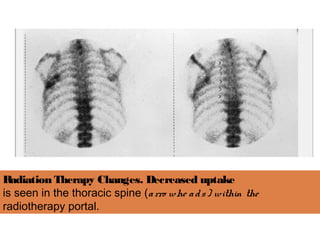
Bone subjected to radiation therapy may lose
blood supply and osteoblastic activity.
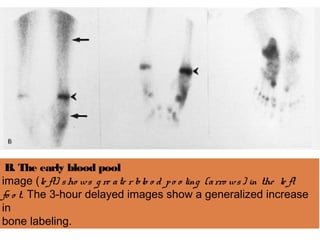
B. The early blood pool
image (le ft) sho ws g re ate r blo o d po o ling (arro ws) in the le ft
fo o t. The 3-hour delayed images show a generalized increase
in
bone labeling.
Radiation Therapy Changes. Decreased uptake
is seen in the thoracic spine (arro whe ads) within the
radiotherapy portal.
Heterotopic Bone
Repair of soft tissue injuries sometimes leads to
the formation of heterotopic bone.
Muscle crush injuries healing with the formation
of heterotopic bone (myositis ossificans) are
readily labeled on bone scans, weeks before a
plain film will show signs of calcification.
The restricting area may be safely released or
resected after the blood pool phase becomes
inactive.
Soft tissues around joint prostheses, in
paralyzed limbs, and in burn injuries are
common sites of heterotopic bone formation.
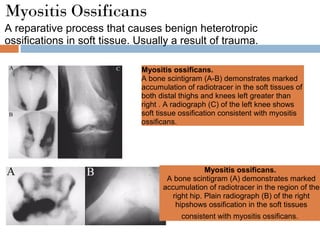
Myositis Ossificans
A reparative process that causes benign heterotropic
ossifications in soft tissue. Usually a result of trauma.
Myositis ossificans.
A bone scintigram (A-B) demonstrates marked
accumulation of radiotracer in the soft tissues of
both distal thighs and knees left greater than
right . A radiograph (C) of the left knee shows
soft tissue ossification consistent with myositis
ossificans.
Myositis ossificans.
A bone scintigram (A) demonstrates marked
accumulation of radiotracer in the region of the
right hip. Plain radiograph (B) of the right
hipshows ossification in the soft tissues
consistent with myositis ossificans.
MAKING A DIAGNOSIS...
• Increased activity is not diagnositc of neoplastic process
• Positive bone scan findings does NOT differentiate between
malignant or benign
• Final diagnosis is made by correlating bone scan images
with clinical data and other imaging modalities ( SPECT CT)
PITFALLS IN BONE SCANS 
• Epiphyeal plates in kids will appear hot due to increased
blood flow and metabolism in growing bones
• Bone images may be negative when bony healing is
completed (healed fx's, cured osteo, treated bone mets).
However, this may take 1+ years.
• Ga-67 or In-111 used with Tc-99m MDP for osteomyelitis.
They help define active osteomyelitis and may detect deep
soft tissue infection
• MDP may concentrate at sites of soft tissue pathologic
conditions such as breast CA, malignant pleural effusions,
ascites, soft tissue malignancies, myositis ossificans, MI,
electrical burns, ectopic calcification, splenic infarction, IM
injections
• Bone grafts show increased activity at the ends of the bone
graft, with little to no uptake in the middle for 6 months post
sx.
INTERESTING FINDINGS
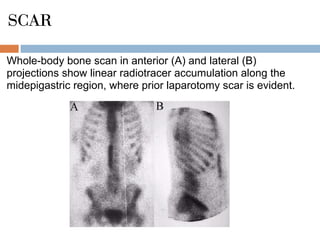
SCAR
Whole-body bone scan in anterior (A) and lateral (B)
projections show linear radiotracer accumulation along the
midepigastric region, where prior laparotomy scar is evident.
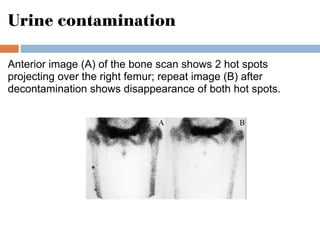
Urine contamination
Anterior image (A) of the bone scan shows 2 hot spots
projecting over the right femur; repeat image (B) after
decontamination shows disappearance of both hot spots.
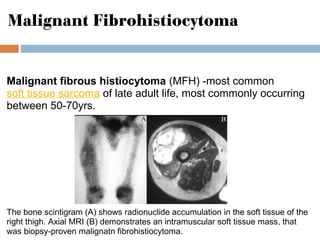
Malignant Fibrohistiocytoma
Malignant fibrous histiocytoma (MFH) -most common
soft tissue sarcoma of late adult life, most commonly occurring
between 50-70yrs.
The bone scintigram (A) shows radionuclide accumulation in the soft tissue of the
right thigh. Axial MRI (B) demonstrates an intramuscular soft tissue mass, that
was biopsy-proven malignatn fibrohistiocytoma.
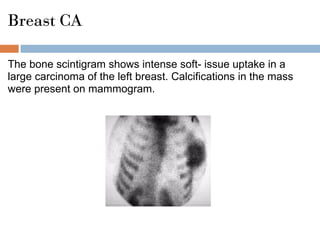
Breast CA
The bone scintigram shows intense soft- issue uptake in a
large carcinoma of the left breast. Calcifications in the mass
were present on mammogram.
PET vs SPECT in Bone metastasis
PET often detects lesions missed on
SPECT
PET has greater ability to differentiate
between benign and malignant lesions
(FDG is used)
Bonescan 22-08-2014

Bonescan 22-08-2014

  • 1.
    THE BONE SCAN Youhave to know what is normal before you determine what is ABNORMAL! Presented by Dr. Amol Gulhane DNB resident
  • 2.
     A nuclearmedicine procedure, such as a bone scan. The term is derived from the decay of the radionuclide and its resultant gamma radiation or scintillations. The number of scintillations corresponds to the concentration of the isotope. Scintigraphy
  • 3.
    Nuclear Medicine  Imagesare generated as the uptake and distribution of administered radiopharmaceuticals are detected  Provides vital information regarding tissue perfusion, physiology, and biochemistry  Physiologic and metabolic changes often precede gross structural alteration of diseased tissue by hours, days or even weeks  Key factor in determining early diagnosis and proper treatment protocols and in establishing an accurate prognosis
  • 4.
    Radionuclide Bone Scanning Most frequently performed nuclear medicine technique  Used to evaluate soft tissue, bone and joint disorders  Fractures, infections, arthritides, tumors and osteonecrosis
  • 5.
    History  Skeletal scintigraphyradiopharmaceuticals were first introduced in the early 1960s  1971 Technitium 99-MDP polyphosphate compounds were introduced  Today we use diphosphonates which have faster blood clearance and higher skeletal uptake
  • 6.
    Radiopharmaceutical Agents  Dozensare employed  Earlier technetium pyrophosphate was used which is now replaced by the Tc-based diphosphonates, primarily Tc-99m-MDP (methylene diphosphonate).  6 hour half-life  Principal photon energy of 140 keV
  • 7.
    Tc-99m-MDP is administeredintravenously and is delivered to the skeletal system based on vascular distribution. Vigorous osteoblastic activity in the growth plates of juvenile skeletons, healing fractures,pathologic conditions stimulating skeletal blood flow, and bone repair increase the bone labeling.
  • 8.
    In the normaladult, skeletal tracer uptake is fairly uniform and symmetric. Uptake is greater in the axial skeleton (pelvis, spine) than in the appendicular skeleton (skull and extremities). Mild,uniform soft tissue uptake is noted in the background. The kidneys should be slightly hotter than the soft tissues and should be symmetric and normal anatomically. The renal collecting system,ureters, and bladder activity appear very intense.
  • 9.
    NORMAL "HOT" AREAS...  •SI Joints • Acromioclavicular joints • Hip joints • Sternoclavicular joints • Ends of long bones • Growing epiphysis (in pediatric patients) • Fractures and orthopedic surgery produce uptake for 1 or more years • Variations in spine uptake are casued by normal curvature of the spine
  • 10.
    Image generation  Radiopharmaceuticalemits gamma rays that are detected by an instrument and transformed into electrical signals that ultimately generate a computer image of the tracer agent activity and concentration
  • 11.
    Examination Procedure  Threephases which represent the distribution of the tracer over the course of time  Phase 1 – Flow phase or radionuclide angiogram - tracer is intravascular – images are obtained every 2- 3 seconds for 30 seconds  Phase 2 – Blood pool phase – the tracer is located in the extravascular space – the body is imaged 5 minutes after injection  Phase 3 – Bone scan phase – 2-4 hours after injection – represents clearance of the tracer from the vessels and soft tissues and concentration into the skeleton
  • 12.
    Phase 4- canbe acquired the following morning if better skeletal detail is needed, usually when the patient has poor renal function, such as in the diabetic foot.
  • 13.
    Blood Flow Phase Show radionuclide in the arterial, capillary, and venous phases  Variations may occur in the blood flow to the extremities depending on the vascular status and activity
  • 14.
    Blood Pool Phase Shows radionuclide in the extravascular space  Vascular structures such as kidneys, liver, spleen and uterus are seen and should not be mistaken for sites of abnormality
  • 15.
    Bone Scan Phase Show radionuclide in the skeleton and soft tissue  Metaphyseal regions of long bones show higher uptake than diaphyses – due to higher bone turnover rate in the metaphyses  Areas of highest uptake are the sternum and SI joints  The anterior wings of the iliac bones and the coracoid processes normally show considerable uptake of the radionuclide  Scoliosis – the concave side of the spine appears hotter than the convex
  • 16.
  • 17.
    Patient Presentation  Childrenhave high diffuse bone uptake and prominent uptake around the growth plates  Elderly patients tend to have poor-quality bone scans  Heavy patients have poor quality bone scans owing to the greater amount of soft tissue, which causes more scatter and higher attenuation of the photons in the soft tissues because of the greater distance of the detectors from the skeleton  Poor hydration prevents optimal clearance of the radionuclide from the soft tissues  Renal failure prevents good soft tissue clearance  Corticosteroids may produce generalized decreased skeletal uptake
  • 18.
    Absorbed Patient Dose Exact dose is difficult to determine  Influenced by:  Tracer biodistribution  Organ pathology  Renal function
  • 19.
    Dose  Approximately 50%of the injected dose is taken up by the skeleton within 2-6 hours  The Tc agents are excreted by glomerular filtration from the kidneys. In a normal subject, 50% is excreted by 4 hours, and up to 80% of the injected diphosphonate will be excreted by 24 hours  Normal renal function clears soft tissue activity, thus improving the quality of bone images because of improved target-to background ratios.  Decreased renal function from any cause degrades image quality.
  • 20.
    Bladder receives thehighest dose May be reduced by pre-examination hydration and frequent voiding after exam Whole-body dose is approximately 0.13 rad (average dose for CT scan of the L/S is 3-5 rad.
  • 21.
    KIDNEYS- routinely viewedon bone scans, however if there is a metabolic bone disease or widespread bone tumor present, it may result in avid skeltal uptake of MDP with very little activity being excreted in the urine   SUPERSCAN- when we see no kidney activity. Often due to metastatic disease or hyperparathyroidism (b/c PTH activates osteoblasts, then increases bone turnover)   Renal failure produces low renal clearance of MDP. There is less clairty of the skeleton because of
  • 22.
    Contraindications  Pregnancy becausetransplacental transmission of radiopharmaceuticals is possible  Breast milk will carry isotope activity for several days after the study
  • 23.
    Several Bone ScanUses  Insufficiency fractures in metabolic disease  Trauma  Metastatic Disease  Disuse osteoporosis  Osteomalacia  Osteonecrosis  Osteomyelitis
  • 24.
    Insufficiency fractures inmetabolic disease  Pubic rami  Femoral necks  Femoral condyles  Metaphyses of the proximal and distal portions of the tibias, sacrum and calcaneus  Tend to be bilaterally symmetric and occur in the metaphyses of long bones of the lower extremities
  • 25.
    Traumatotheskeletonmaybeundetectableonstandard radiographic examinations. The classicstress fracture may be caused by overuse of the normal skeleton, or an insufficiency fracture may result from normal use of weakened bone. Scintigraphically demonstrated trauma precedes radiographically detectable fracture healing by approximately 10 days. Decreased or normal osteoblastic activity is seen at the fracture site in this first phase of repair.  The subsequent osteoblastic activity then shows as a hot spot weeks before the calcified callus appears on a
  • 26.
    In an uncomplicatedfracture, repaired bone returns to normal appearance as the callus at the fracture site remodels over a period of months A complicated fracture in a weight-bearing bone may take many years to return to normal bone scan activity.
  • 27.
    Multiple Rib Fractures.Vigorous osteoblastic repair activity is seen in two rows of fractures, which were not visible on radiographs.
  • 28.
    Trauma  Increased bloodflow associated with bone repair results in marked radiopharmaceutical accumulation  Occult fractures demonstrate an increased perfusion  Important for follow up to assess for fracture non-union  Compression fractures of the spine reveal a horizontal band of increased tracer activity, typically affecting the superior endplate
  • 29.
    Serial bone scansof the lower thoracic and lumbar spine at intervals of months show a normal spine followed by a compression fracture of L1, which gradually heals, only to be replaced by new fractures at T9 and T12. Note the horizontal, linear pattern of a simple vertebral compression fracture
  • 30.
    Recent studies haveshown that a pinhole bone scan is more sensitive than plain film or CT for scaphoid and other fractures of the wrist. Whole-body bone scans are useful in detecting unsuspected fractures following severe cases of multiple trauma.
  • 31.
    Prosthetic joint replacementsmayloosenand/orbecome infected. For about 6 months after hip replacement surgery, the bone around the prosthesis is expected to have increased osteoblastic activity. Thereafter, increased labeling correlates with infection, loosening, and heterotopic bone formation Radiographs and, occasionally, radiolabeled white blood cell scans may be required to further diagnose abnormal findings
  • 32.
    Hip Prosthesis Loosening.Anterior images of the pelvis, hips, and femurs show intense labeling around the femoral (long arrows) and acetabular (wide arrows) components of a 2-year-old total hip arthroplasty. Both had loosened without infection.
  • 33.
    Arthropathies andArthritides Inflammation ofa joint creates increased blood flow and increases the amount of radiopharmaceutical supplied to those portions of the bone bounded by the synovial capsule.  Increased bone labeling is seen in toxic synovitis, septic joints, inflammation associated with early degenerative conditions, and connective tissue arthropathies. In early osteoarthropathy, high-resolution bone scan images can detect increased subchondral bone labeling long before there are radiographic findings.  Intense, abnormal labeling also is seen in neuropathic joints
  • 34.
    Facet Degenerative Arthropathy.A. A planar, posterior image of the lumbar spine shows small areas of increased activity (arrows) in the lower lumbar spine in a patient with chronic low back pain. CT of the same level shows hypertrophic spurs (arrows) embracing the facet joints
  • 35.
    Metastatic Disease The mostcommon use of the bone scan is for the detection and monitoring of metastatic tumor involving the skeleton.  tumors monitored  prostate, lung, breast, thyroid, and renal Carcinoma Majority of metastases affect the axial skeleton in a pattern that reflects the distribution of the erythropoietic marrow. Most metastases are multiple at the time of discovery.
  • 36.
     a solitaryhot spot in the skull or a rib has a low probability of being a metastatic lesion. Comparison bone scans at intervals of 3 to 6 months allow an accurate assessment of tumor spread. Because of its sensitivity, the bone scan can be utilized when a cancer patient has new back pain or bone pain.
  • 37.
    superscan - Numerousprostate cancer metastases produce â hot spots of intense isotope accumulation that leave little or none of the radiopharmaceutical for renal excretion or soft tissue uptake.
  • 38.
    A cold spotwithin the femoral head is highly specific for avascular necrosis (AVN) and is the earliest scintigraphic evidence of this disease. This finding is usually seen 7-10 days after the ischemic event. Over a period of weeks to months, increased uptake representing revascularization and repair surrounds and eventually replaces the region of photopenia. The central region of photopenia with surrounding zone of increased uptake is termed the doughnut sign. Osteonecrosis
  • 39.
     Initially, uptakeis decreased in all phases, which represents the early ischemic event.  Later, uptake is decreased within the femoral head in the perfusion phase and increased around the cold region in the bone scan phase.  It represents the reactive zone around the infarcted segment. The increased uptake from the reparative zone eventually replaces the photopenic region.
  • 41.
    Osteomyelitis In a largebone such as a tibia, acute hematogenous infection of bone that precedes radiographic abnormality can be sensitively and specifically diagnosed by three-phase bone scans. early infection Early arterial flow seen seconds after injection (first phase) increased blood pool (second phase) for a few minutes intense labeling in third phase
  • 42.
    Radiographic changes maynot be seen for 10 to 14 days. The scan is more difficult to read and not as specific when the target is small (e.g., the bones of the foot)
  • 43.
    In the smallbones it is difficult to differentiate between an infection adjacent to a bone with increased soft tissue and increased periosteal labeling from an infection within the bone. Bone scans may take months to normalize after infections of bone are sterilized, and thus a white blood cell scan may be useful for follow-up.
  • 44.
    Osteomyelitis of theSecond Toe and Metatarsal and Septic Second Metatarsal Phalangeal Joint. A. A plantarbone scan shows increased activity in the second proximal phalanx (, m e tatarsalphalang e aljo int and second metatarsal indicating re active bo ne stimulated by the infection. Decreased activity distal to that point corresponds with necrotic tissue. B. A radiograph shows destructive changes in the second proximal phalanx but the foot appears normal in
  • 45.
    Primary bone tumors Benignlesions do not show typically increased activity in the early phases, and even if there is a detectable late phase activity, it is moderate (except for osteoid osteoma, osteoblastoma, fibrotic dysplasia and aggressively growing bone cysts, or lesions that are associated with pathologic fractures.) Malignant tumors (osteosarcoma, Ewing sarcoma) as opposed to benign tumors, have an increased blood supply and a more intense osteoblast activity
  • 46.
    MDP bone scanhighly sensitive in the diagnosis of osteoid osteoma. Initial vascular blush followed by a focal avid tracer uptake in the delayed skeletal phase The double density sign is the diagnostic feature of the central nidus on a bone scan. SPECT localizes the nidus as a focal avid uptake in the middle of the lesion, with a decremental uptake toward the periphery. Osteoid Osteoma
  • 47.
    DD of osteoidosteoma includes a healing stress fracture, and osteomyelitis due to the similarity of symptoms, presentation, and overlapping radiological features. Plain radiography and CT find it difficult to localize the nidus due to varying degrees of bony sclerosis masking the central nidus. On SPECT Osteoid osteoma has characteristic features of central avid focus with decremental activity toward the periphery, differentiating it from osteomyelitis and stress fracture, which appear more diffuse and linearly oriented along the long axis of the bone,
  • 48.
    Radioisotope bone scanin a 6-year-old child who presented with left hip pain demonstrates intense uptake in the left proximal femur.
  • 49.
    Typically show increaseduptake of radioisotope on bone scans Bone scans are most useful in excluding multifocal disease. Skip lesions and pulmonary metastases may also take up the radioisotope, but skip lesions are most reliably excluded by MRI. Lateral isotope bone scan reveals intense uptake in the calcaneal region. The remainder of the skeleton appeared normal.
  • 50.
    The primary tumorof Ewing sarcoma is usually depicted as a focal area of increased radionuclide activity. Whole-body bone scans can provide information about the primary lesion and depict skip lesions. Bone scintigraphy can be used to localize distant metastases during tumor staging. Three-phase dynamic bone scintigraphy (TPBS) can help in the assessment of treatment effects In cases that respond to treatment, a reduction of both flow and tracer uptake can be observed. Ewing sarcoma
  • 51.
    In addition totechnetium-99m (99m Tc), other tracers, such as thallium-201 (201 Tl) & Gallium-67 (67 Ga) are used to assess the therapeutic response. However (PET) scanning with (FDG) is currently used FDG is used as a marker of tumor viability, and it may help to detect lesions that are not depicted on conventional bone scans. In addition, PET scanning is the most sensitive modality for therapeutic follow-up, and this modality can reveal early changes in tumor metabolism, which is an indicator of the therapeutic effect.
  • 52.
    Image A showsa 14-year-old patient with an osteosarcoma in the distal femur. The tumor exhibited a high SUVmax of 16.9. Image B is a coronal view of a 10-year-old with Ewing's sarcoma of the left hemipelvis with a lower SUVmax of 4.9. FDG uptake was heterogeneous in both tumors. The areas of low FDG uptake represent tumor necrosis.
  • 53.
    VascularPhenomena There is astrong vascular influence on the labeling of bones. Increased blood flow stimulates increased osteoblastic and osteoclastic activity. Tumor and trauma cause hyperemia and increased blood pooling, with increased delivery of radiopharmaceuticals to the bone's osteoblasts. In Reflex sympathetic dystrophy release of sympathetic vascular tone causes arteries to dilate .
  • 54.
    A bone scanis also a simple test of the vascular status of a bone or bone graft. If osteoblasts are labeled, the blood supply must be intact. Bone subjected to radiation therapy may lose blood supply and osteoblastic activity.
  • 55.
    B. The earlyblood pool image (le ft) sho ws g re ate r blo o d po o ling (arro ws) in the le ft fo o t. The 3-hour delayed images show a generalized increase in bone labeling.
  • 56.
    Radiation Therapy Changes.Decreased uptake is seen in the thoracic spine (arro whe ads) within the radiotherapy portal.
  • 57.
    Heterotopic Bone Repair ofsoft tissue injuries sometimes leads to the formation of heterotopic bone. Muscle crush injuries healing with the formation of heterotopic bone (myositis ossificans) are readily labeled on bone scans, weeks before a plain film will show signs of calcification. The restricting area may be safely released or resected after the blood pool phase becomes inactive. Soft tissues around joint prostheses, in paralyzed limbs, and in burn injuries are common sites of heterotopic bone formation.
  • 58.
    Myositis Ossificans A reparativeprocess that causes benign heterotropic ossifications in soft tissue. Usually a result of trauma. Myositis ossificans. A bone scintigram (A-B) demonstrates marked accumulation of radiotracer in the soft tissues of both distal thighs and knees left greater than right . A radiograph (C) of the left knee shows soft tissue ossification consistent with myositis ossificans. Myositis ossificans. A bone scintigram (A) demonstrates marked accumulation of radiotracer in the region of the right hip. Plain radiograph (B) of the right hipshows ossification in the soft tissues consistent with myositis ossificans.
  • 59.
    MAKING A DIAGNOSIS... •Increased activity is not diagnositc of neoplastic process • Positive bone scan findings does NOT differentiate between malignant or benign • Final diagnosis is made by correlating bone scan images with clinical data and other imaging modalities ( SPECT CT)
  • 60.
    PITFALLS IN BONESCANS  • Epiphyeal plates in kids will appear hot due to increased blood flow and metabolism in growing bones • Bone images may be negative when bony healing is completed (healed fx's, cured osteo, treated bone mets). However, this may take 1+ years. • Ga-67 or In-111 used with Tc-99m MDP for osteomyelitis. They help define active osteomyelitis and may detect deep soft tissue infection
  • 61.
    • MDP mayconcentrate at sites of soft tissue pathologic conditions such as breast CA, malignant pleural effusions, ascites, soft tissue malignancies, myositis ossificans, MI, electrical burns, ectopic calcification, splenic infarction, IM injections • Bone grafts show increased activity at the ends of the bone graft, with little to no uptake in the middle for 6 months post sx. INTERESTING FINDINGS
  • 62.
    SCAR Whole-body bone scanin anterior (A) and lateral (B) projections show linear radiotracer accumulation along the midepigastric region, where prior laparotomy scar is evident.
  • 63.
    Urine contamination Anterior image(A) of the bone scan shows 2 hot spots projecting over the right femur; repeat image (B) after decontamination shows disappearance of both hot spots.
  • 64.
    Malignant Fibrohistiocytoma Malignant fibroushistiocytoma (MFH) -most common soft tissue sarcoma of late adult life, most commonly occurring between 50-70yrs. The bone scintigram (A) shows radionuclide accumulation in the soft tissue of the right thigh. Axial MRI (B) demonstrates an intramuscular soft tissue mass, that was biopsy-proven malignatn fibrohistiocytoma.
  • 65.
    Breast CA The bonescintigram shows intense soft- issue uptake in a large carcinoma of the left breast. Calcifications in the mass were present on mammogram.
  • 66.
    PET vs SPECTin Bone metastasis PET often detects lesions missed on SPECT PET has greater ability to differentiate between benign and malignant lesions (FDG is used)