The document summarizes key aspects of haemostasis including the vascular, platelet and coagulation phases. It describes tests used to diagnose bleeding disorders affecting platelets or coagulation factors. Managing dental procedures in patients with bleeding disorders requires modifying treatment based on the nature and severity of the disorder to minimize risks of bleeding. Pre-operative assessment of bleeding history and factors is important to guide management and prevent post-operative bleeding complications.
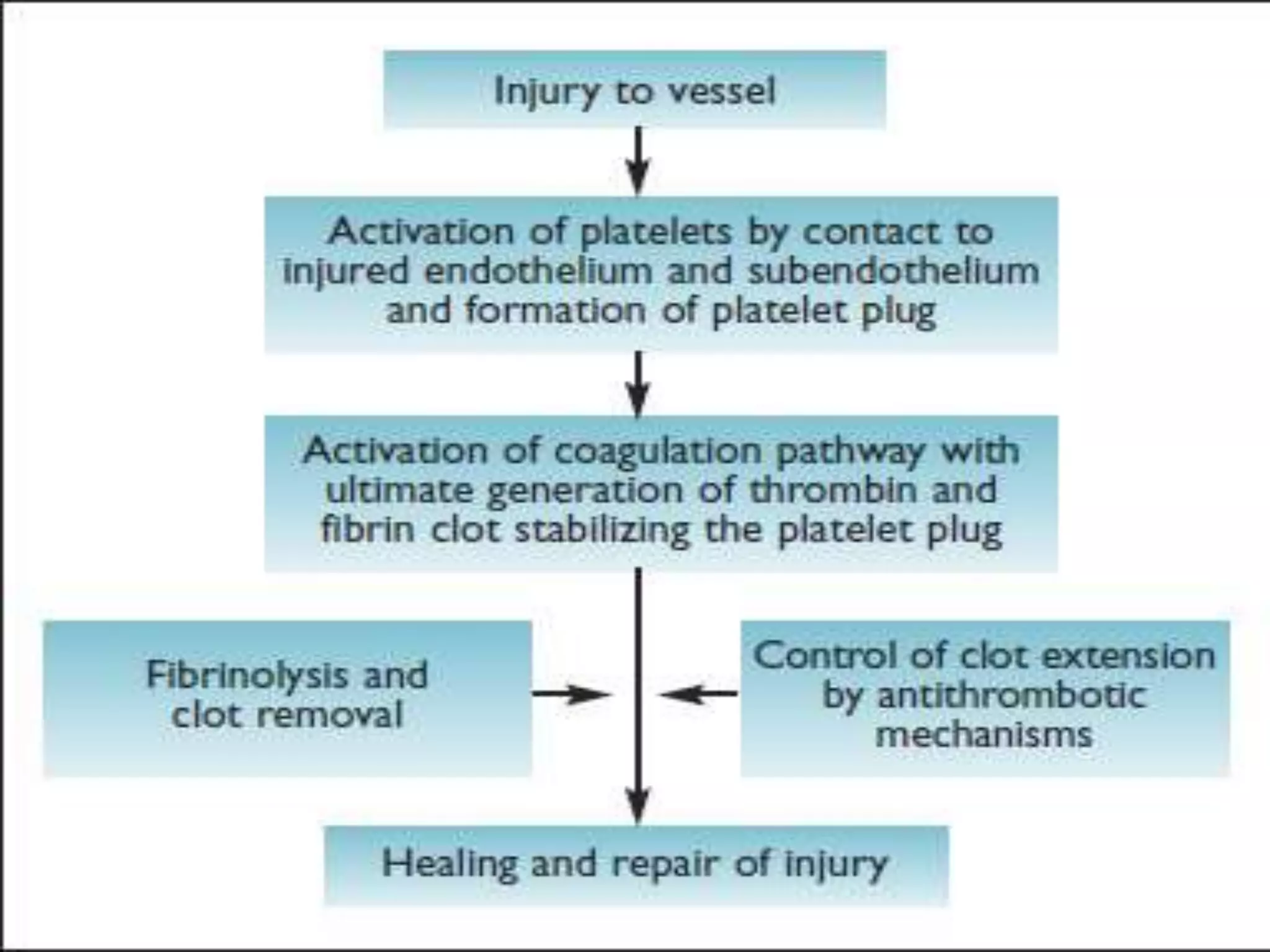
Introduction to haemostasis, its phases like vascular and platelet phase, and its role in preventing bleeding.
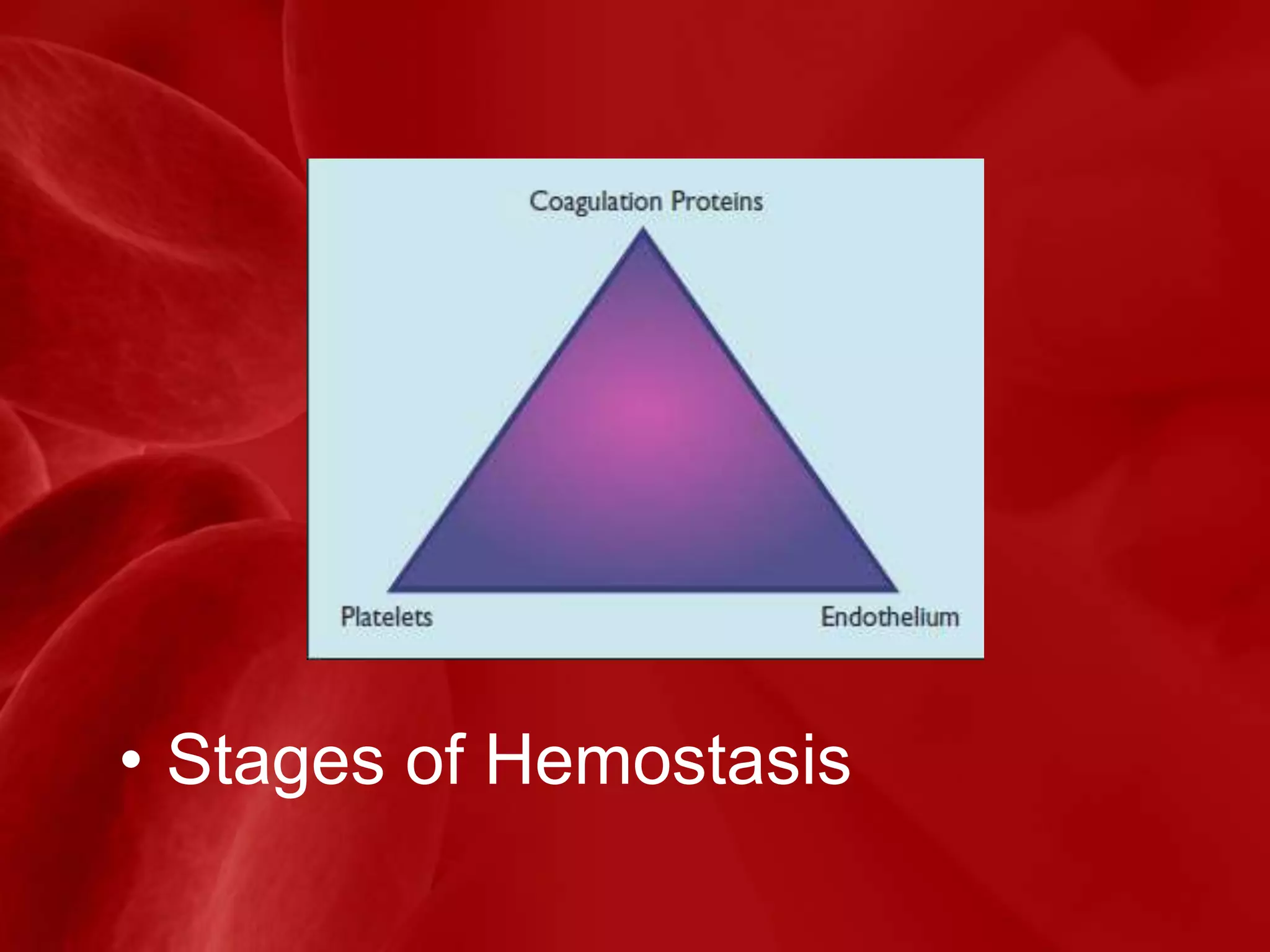
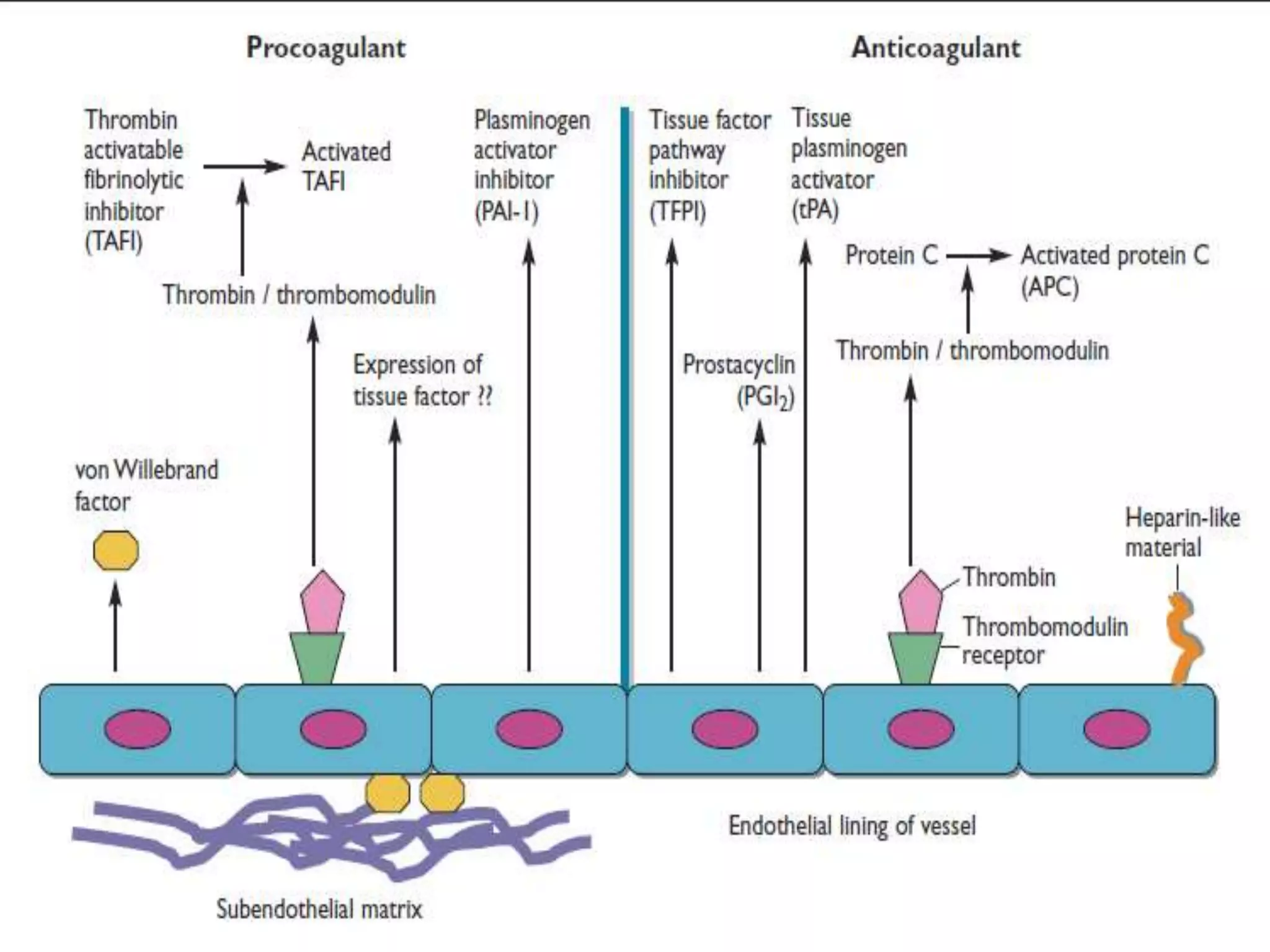
Breakdown of haemostasis stages focusing on the vascular and platelet phases essential for clot formation.
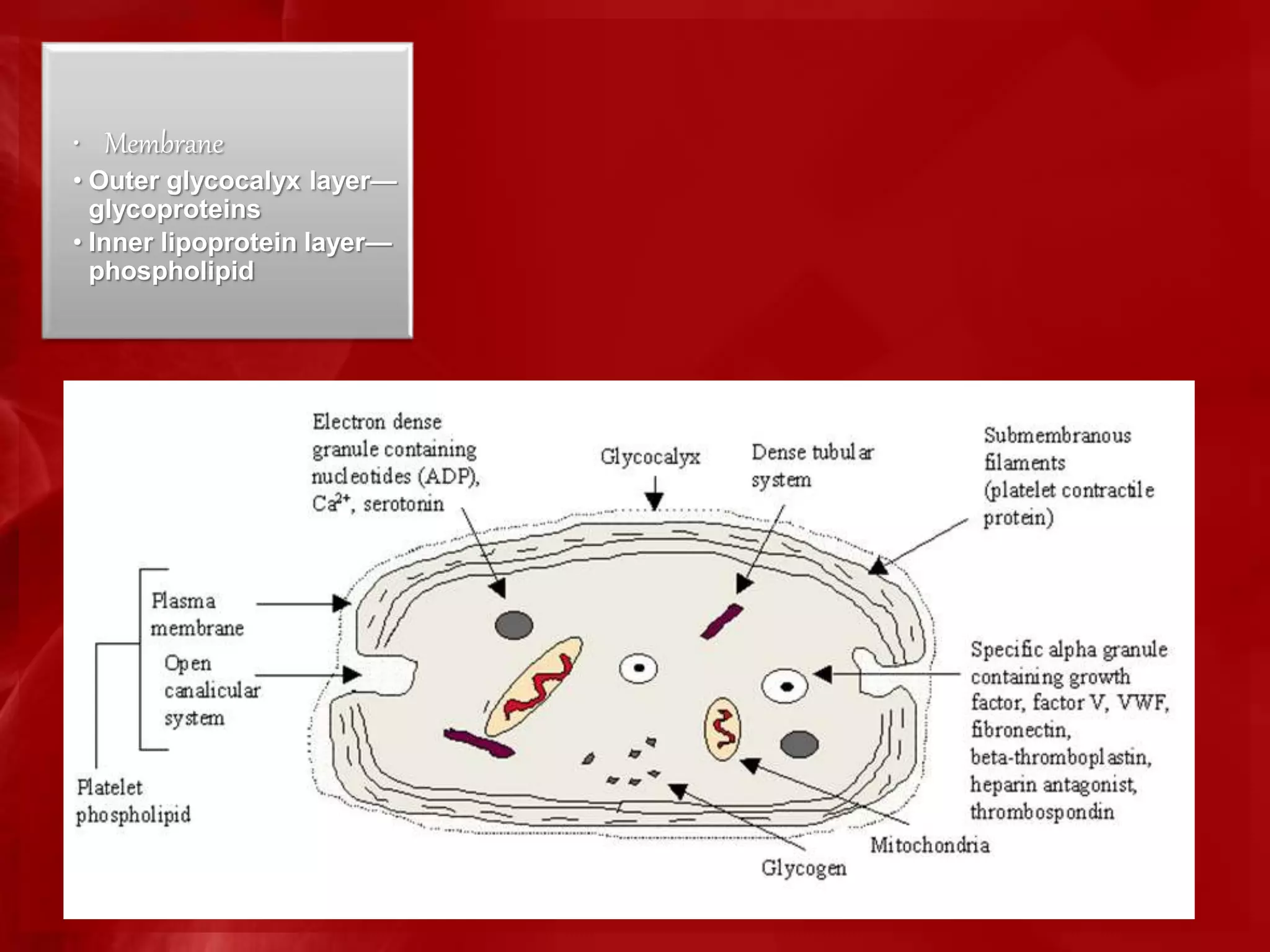
Platelet count (150,000-400,000 per cu mm) and lifespan (9-12 days), including structure and role in clot formation.
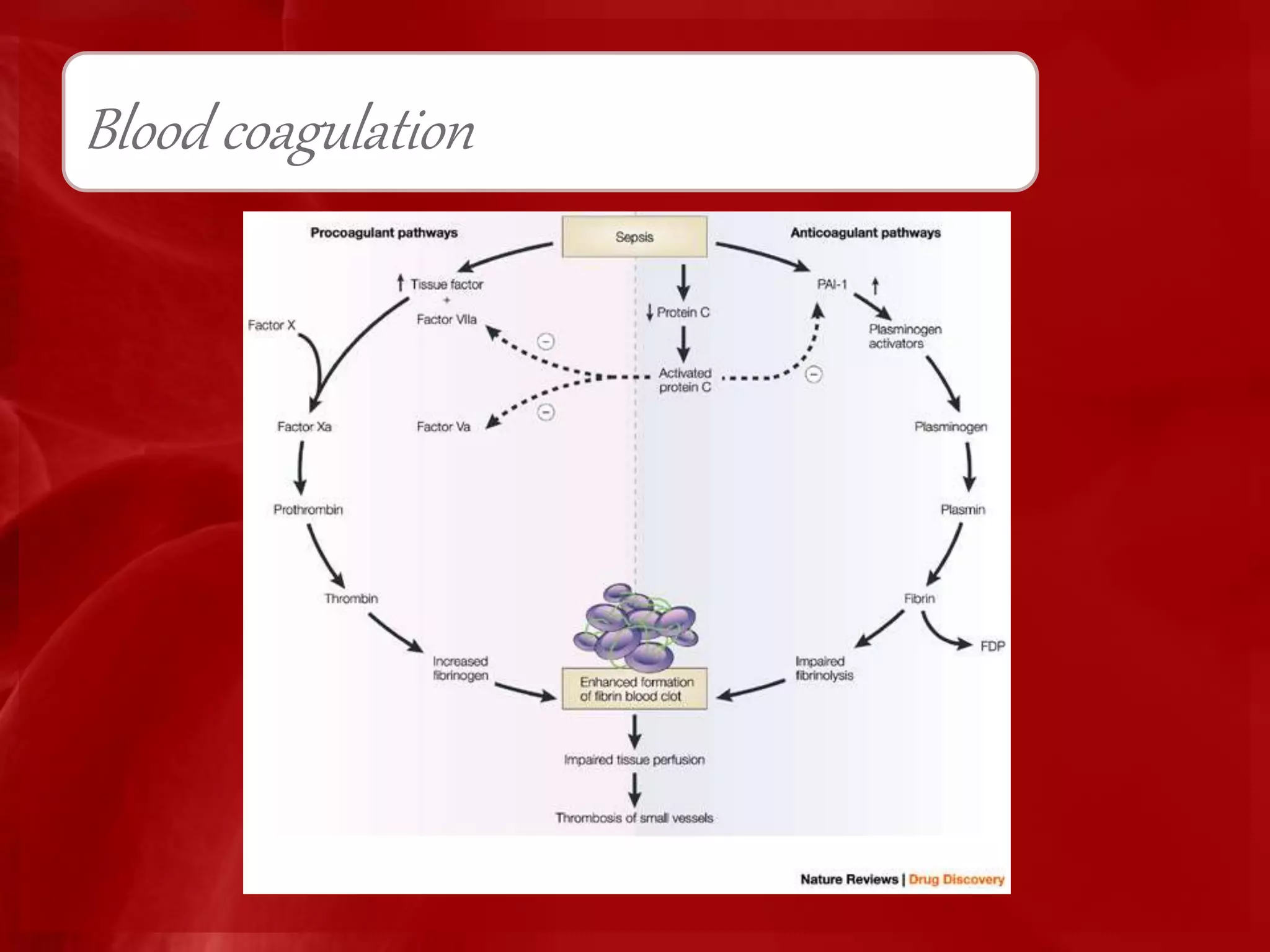
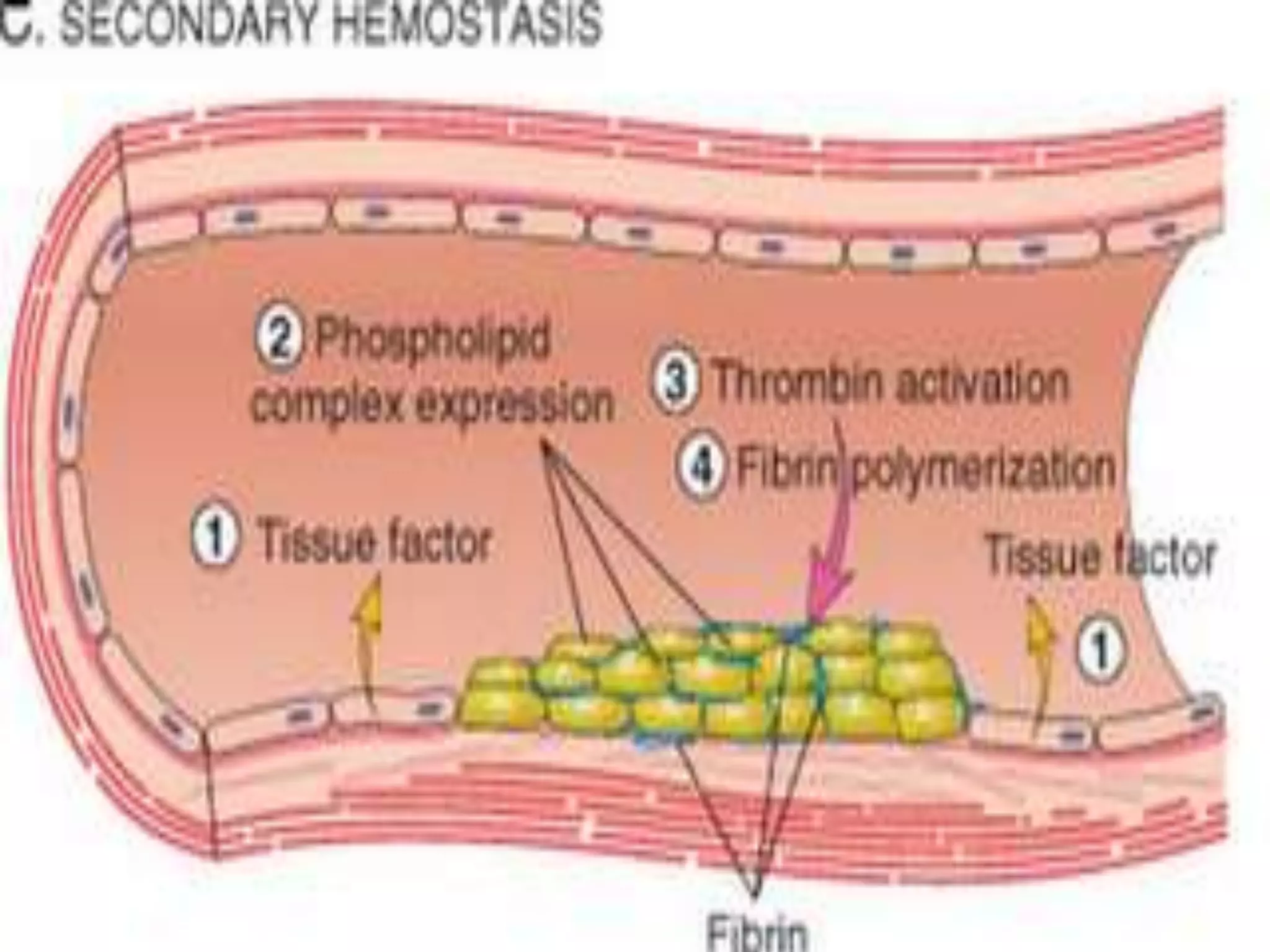
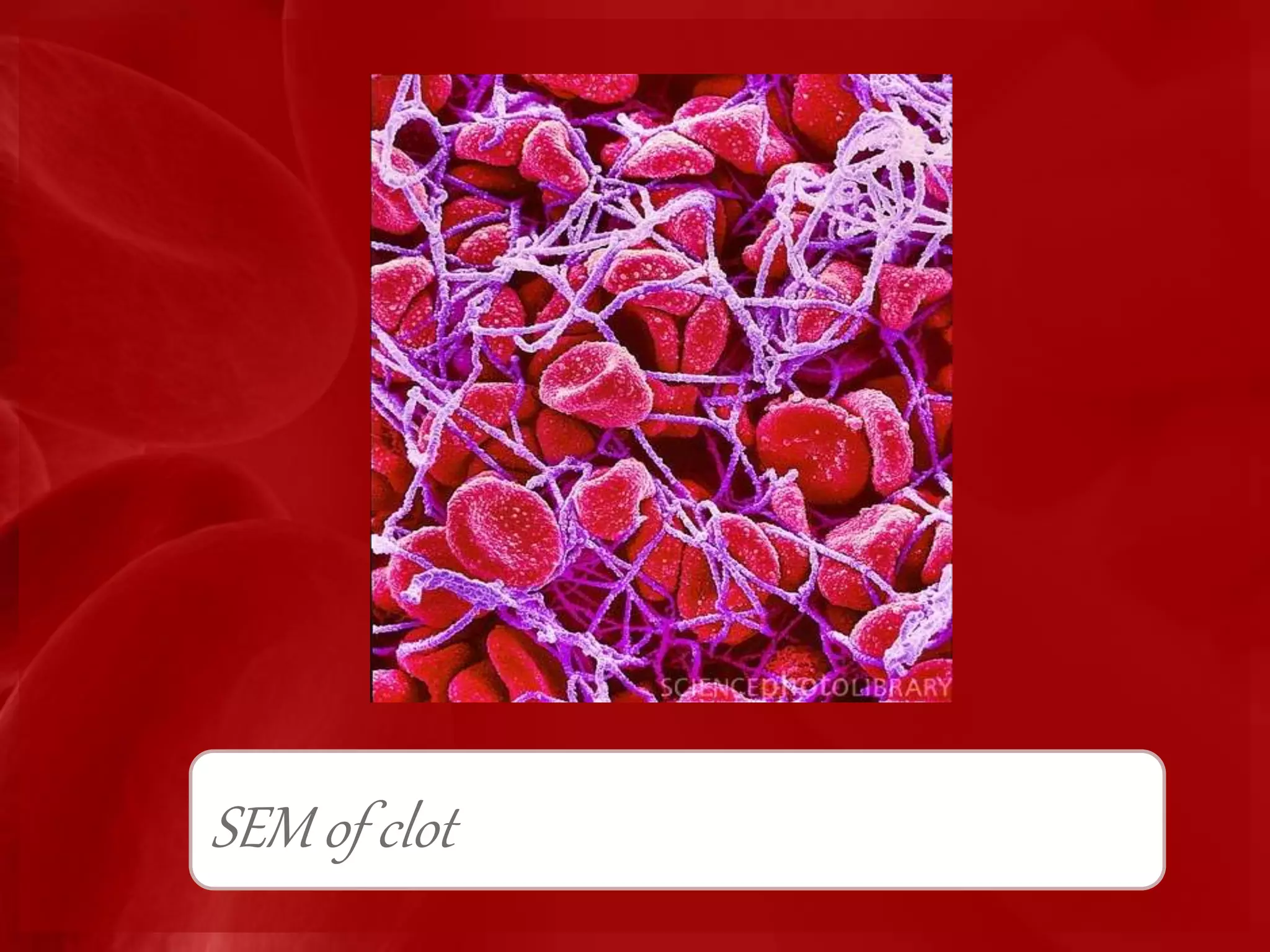
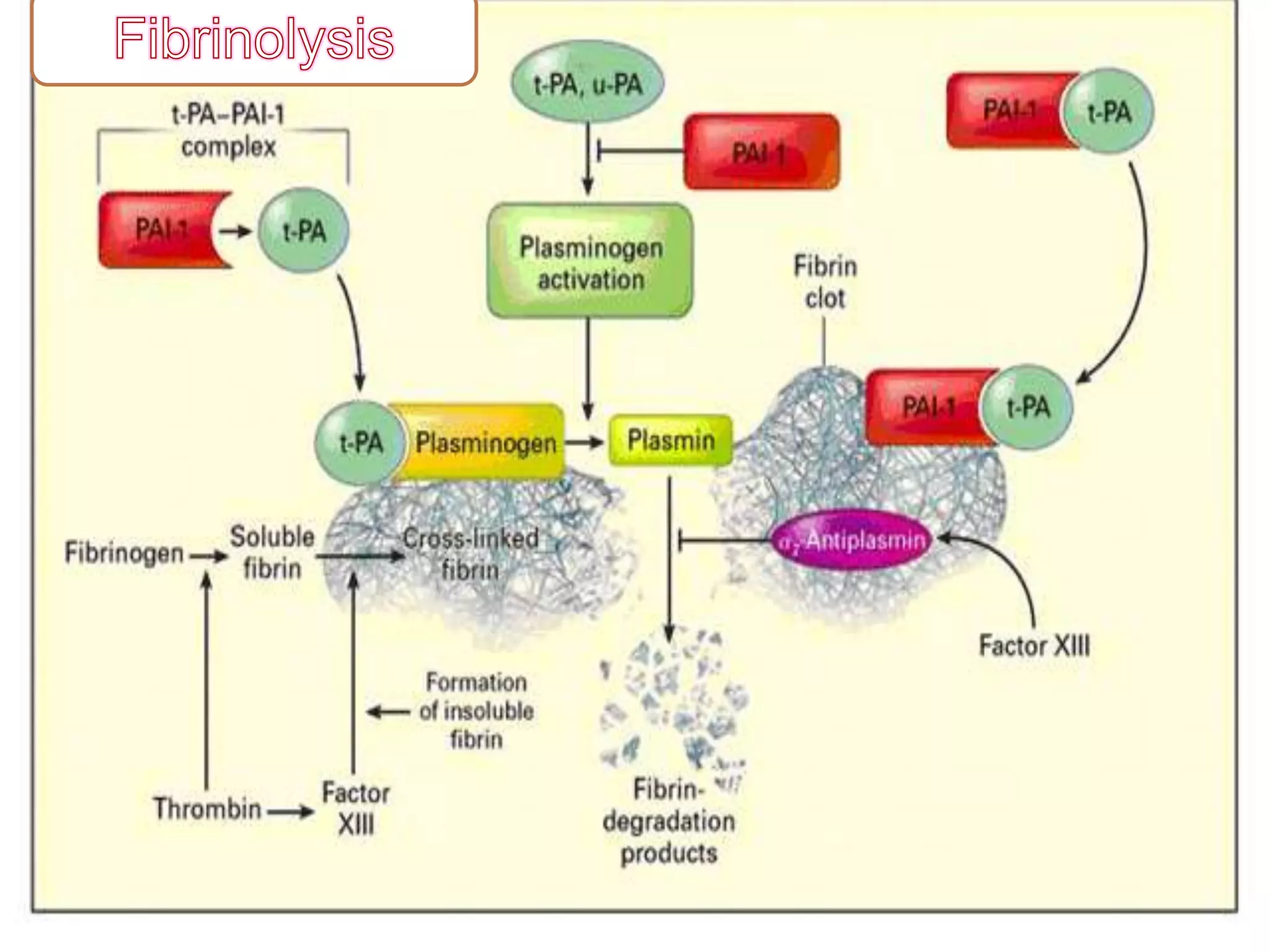
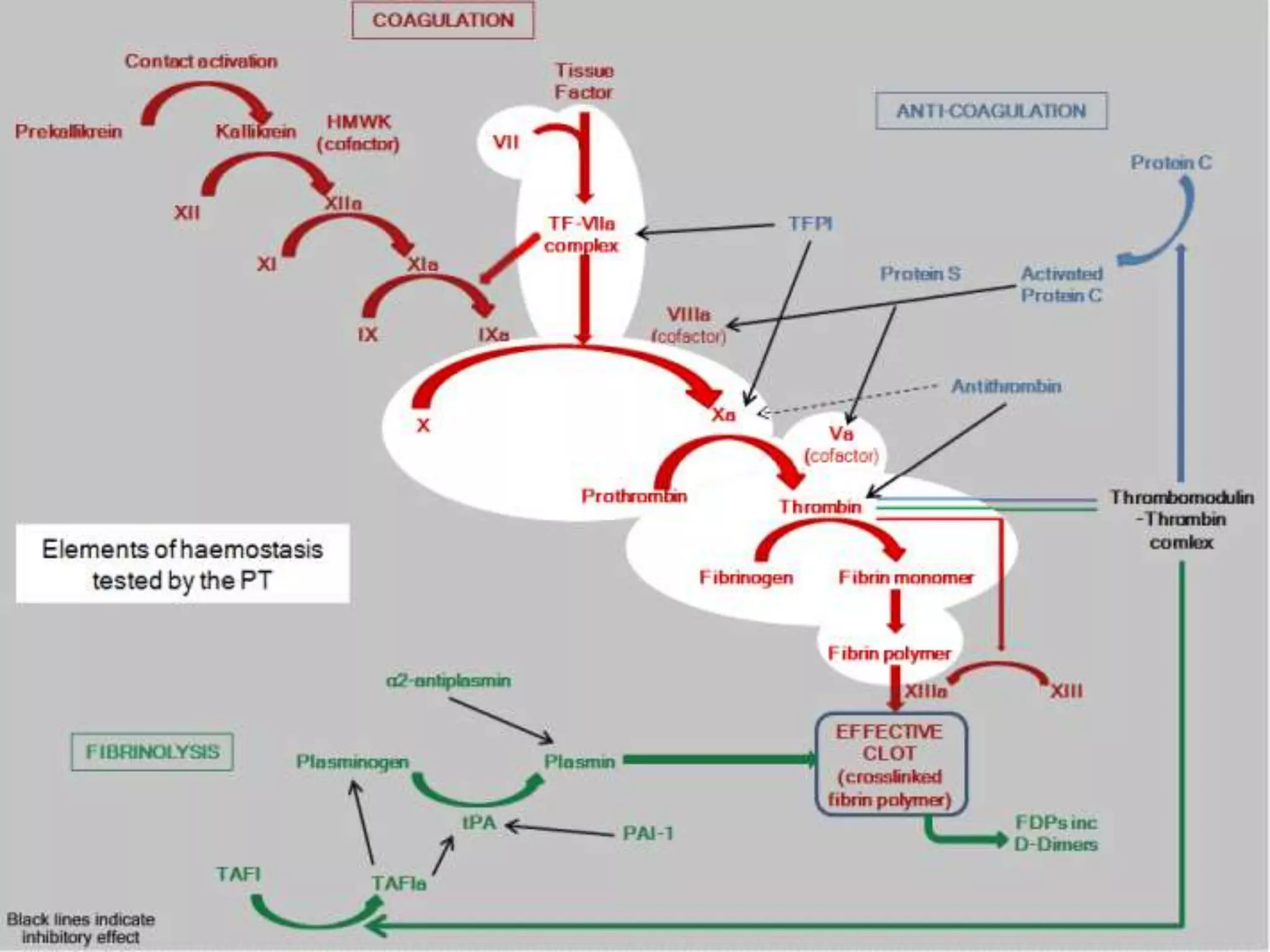
Details of blood coagulation involving thrombin action, fibrin formation and the structural aspects of clot.
Approach to diagnosing bleeding disorders, including clinical and laboratory evaluations for inherited/acquired causes.Differentiation between inherited and acquired bleeding disorders, detailing types like vasculopathies and coagulopathies.
Pre-operative management and treatment modifications based on patient history, including medication considerations and surgical precautions.
Acknowledgment of sources used for the presentation materials and concluding thoughts.
Approach to thediagnosis of bleeding
disorder
Clinical Evaluation
History
Physical Examination
Family history
Laboratory Evaluation
Screening test
Specific test
39.
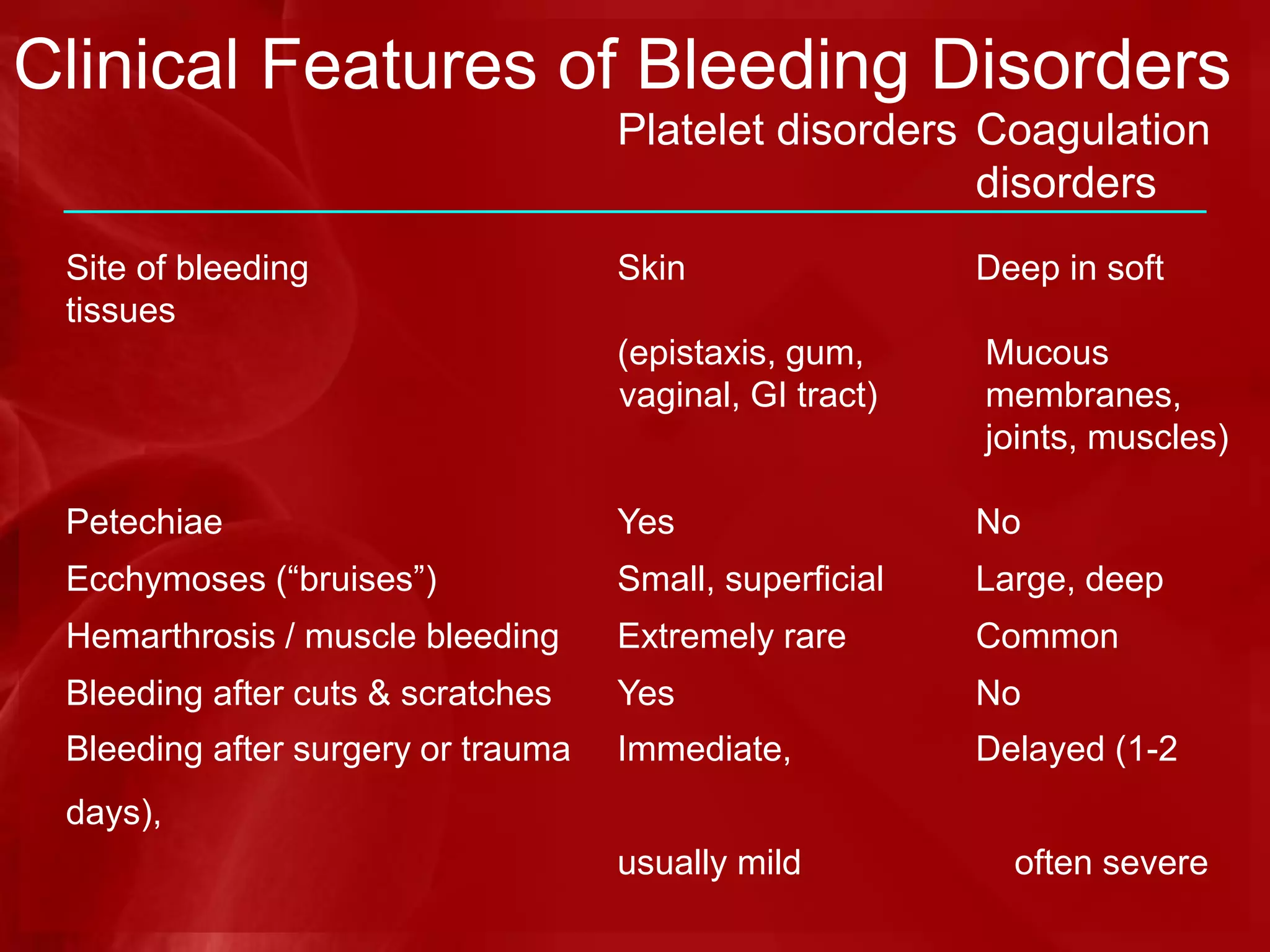
Clinical Features ofBleeding Disorders
Platelet disorders Coagulation
disorders
Site of bleeding Skin Deep in soft
tissues
(epistaxis, gum, Mucous
vaginal, GI tract) membranes,
joints, muscles)
Petechiae Yes No
Ecchymoses (“bruises”) Small, superficial Large, deep
Hemarthrosis / muscle bleeding Extremely rare Common
Bleeding after cuts & scratches Yes No
Bleeding after surgery or trauma Immediate, Delayed (1-2
days),
usually mild often severe
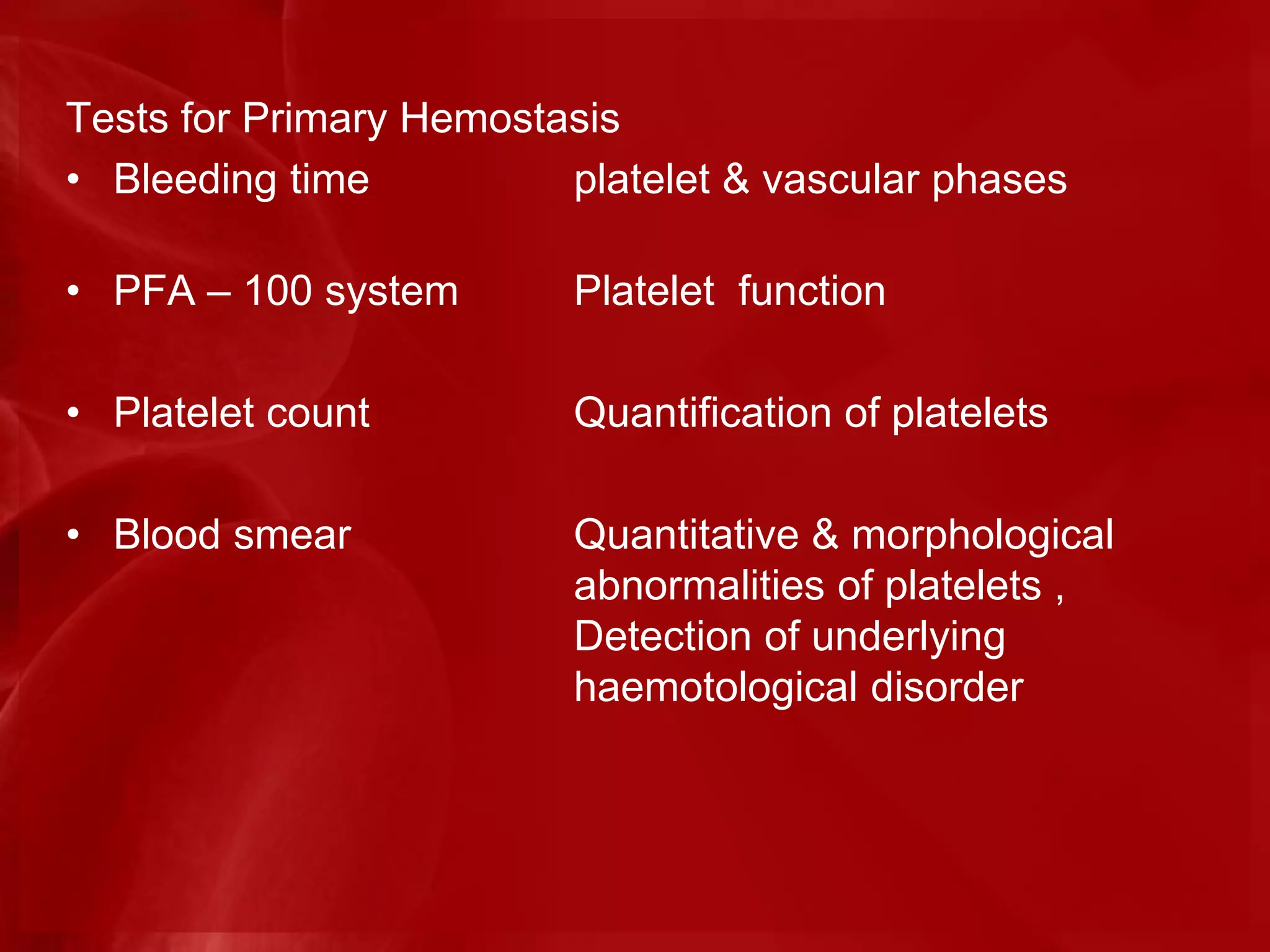
Tests for PrimaryHemostasis
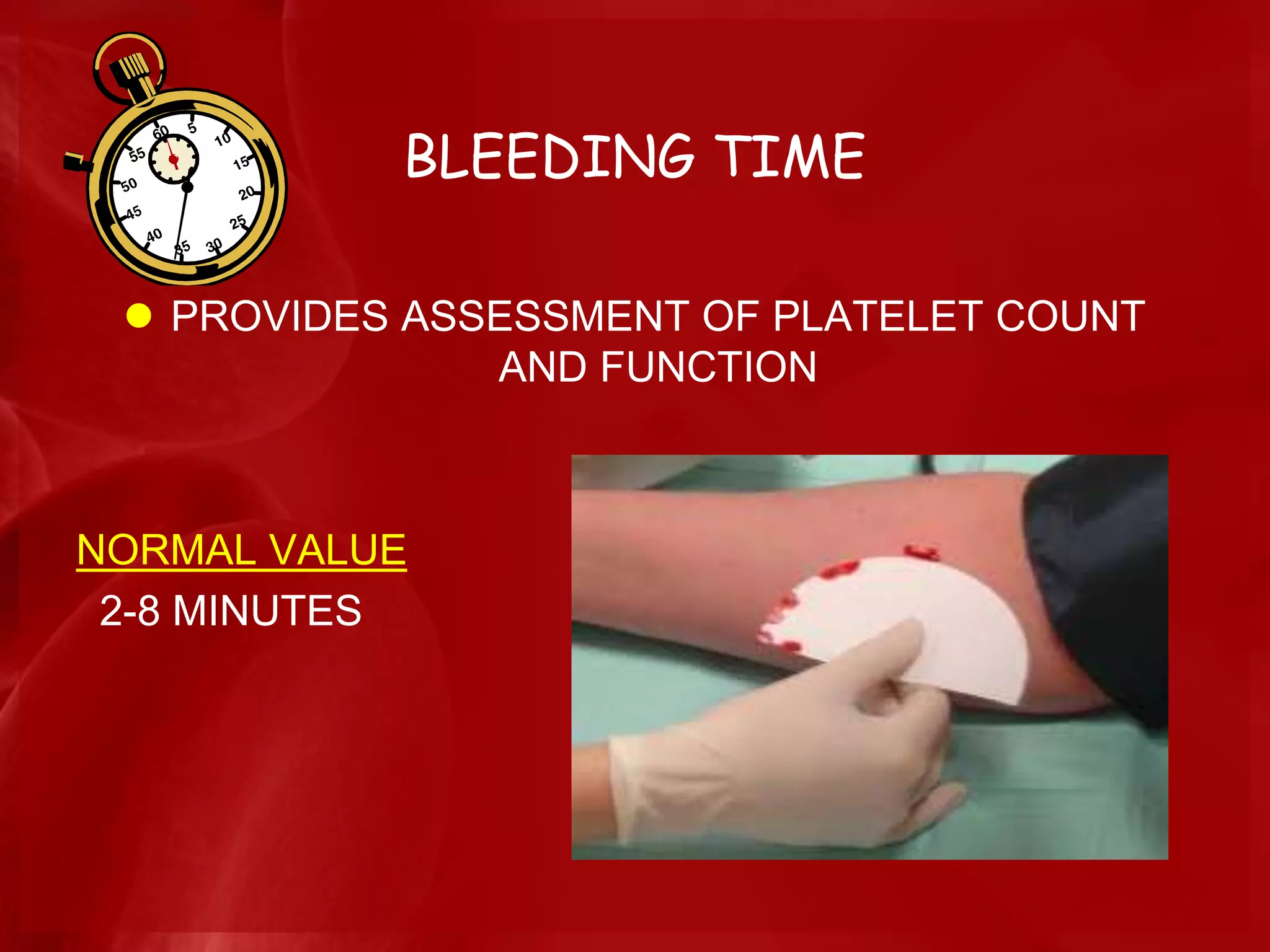
• Bleeding time platelet & vascular phases
• PFA – 100 system Platelet function
• Platelet count Quantification of platelets
• Blood smear Quantitative & morphological
abnormalities of platelets ,
Detection of underlying
haemotological disorder
43.
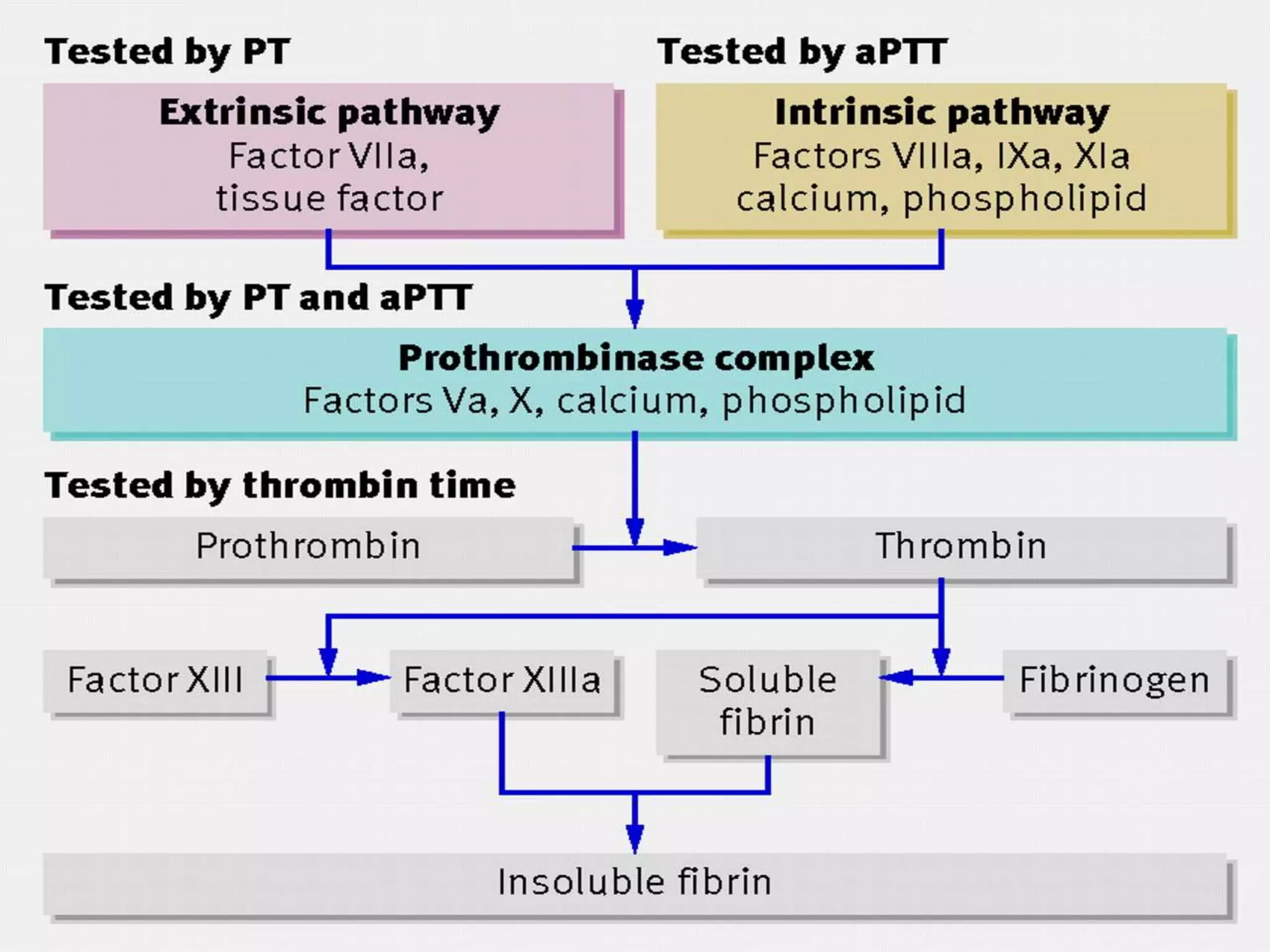
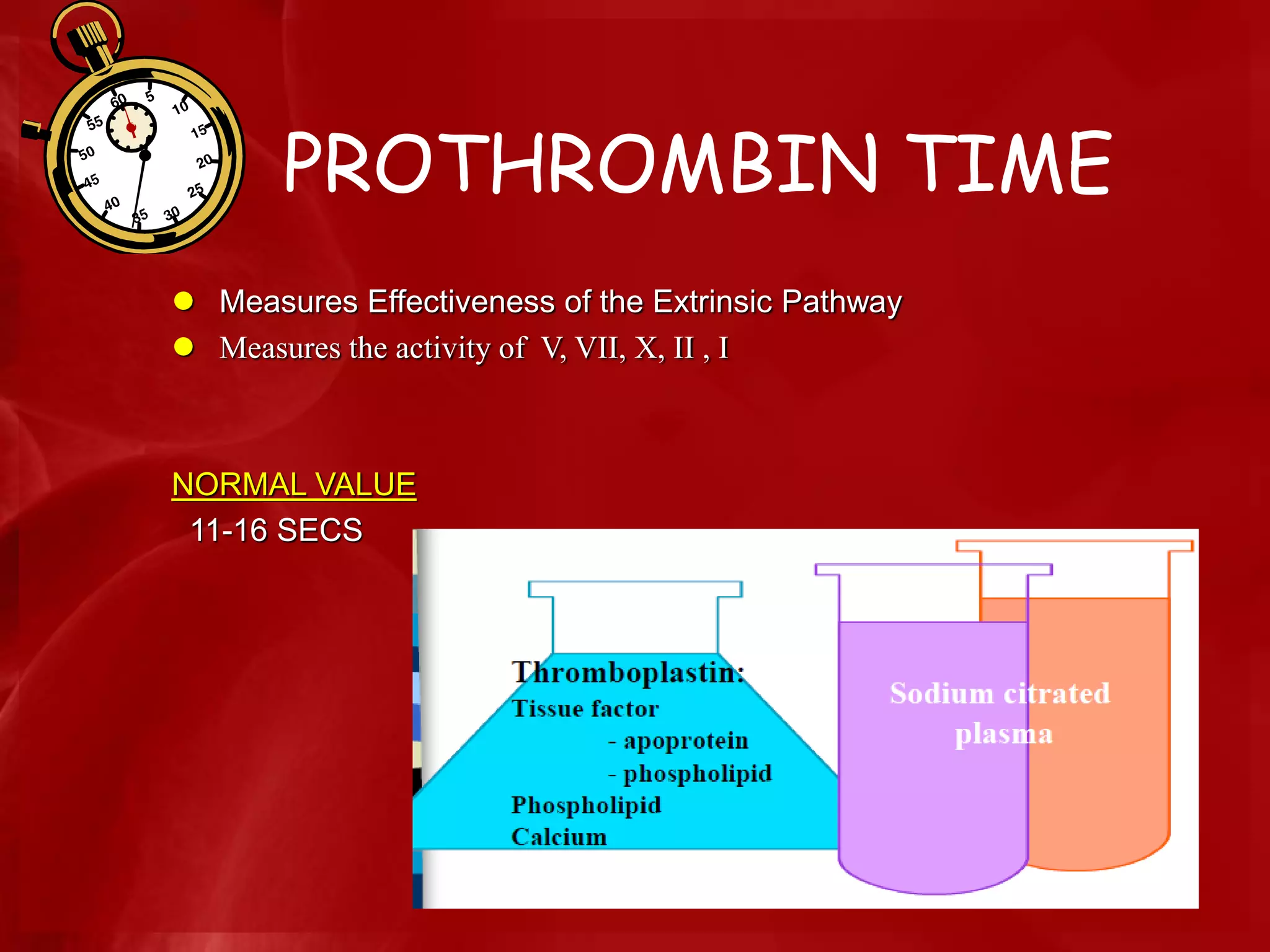
Tests for Secondaryhemostasis
• Clotting factor Crude test of coagulation phase
• Prothrombin factor Extrensic & common pathway
• Activated partial
thromboplastin time Intrensic & common pathway
INR
INR: International normalizedratio
-was established by the WHO and the International Committee on Thrombosis
and Hemostasis for reporting the results of prothrombin tests
-All PT results are standardized by this calculation:
INR= ( Patient PT / Control PT)ISI
ISI= International sensitivity index
- Given by the manufacturer for each particular thromboplastin reagent and
instrument combination
THROMBIN TIME
Timefor Thrombin To Convert
Fibrinogen Fibrin
A Measure of Fibrinolytic Pathway
NORMAL VALUE
9-13 SECS
54.
TT Prolongs..
1. Hypo-afibrinogenaemia
2. Dysfibrinogenaemia
3. Non fractionated heparin
4. Fibrinogen/ fibrin degradation product s
5. Chronic liver disease
55.
SPECIFIC TESTS
Tests forspecific Platelet Functions
1. Platelet aggregration test
2. Flow cytometry
3. Test for platelet secretion
4. Clot retraction test
5. Platelet procoagulant activity
Test for Coagulation Phase
1. Quantitative estimation of Fibrinogen
2. Coagulation factor assays
3. F XIII Qualitative assay
Latex agglutination test for Fibrinolysis
HEMORRHAGIC DISORDERS
Hemorrhagic syndromesare characterized by a disorder
of one or more factors that participate in hemostasis.
The majority of hemorrhagic syndromes are blood vessel
disorders, platelet number and function disorders, or
coagulation factor disorders:
• vasculopathies
• thrombocytopenias
• thrombocytopathies
• coagulopathies.
58.
Vasculopathies
• Vasculopathies maybe inherited or acquired. Inherited
forms result from blood vessel structure disorders
(inherited telangiectasia,Rendu-Osler-Weber’s disease)
while acquired disorders can be a consequence of
inflammatory or immune processes that damage blood
vessel walls.
• In clinical practice, acquired disorders are found more
frequently (secondary purpuras, infections,
effects of some drugs, allergic purpura, effect of aspirin,
vitamin C deficiency, etc.).
59.
Thrombocytopenias
• Thrombocytopenia, orreduced circulating platelet count,
can be inherited or acquired; the acquired form being
more frequent.
• Thrombocytopenia occurs as a result of:
– decreased platelet formation with normal platelet
survival time (effects of irradiation, drugs, malignant
tissue pressure on bone marrow, leukemias, aplastic
anemias) or
− increased platelet degradation or platelet deposit in
spleen with decreased platelet survival (DIC, effects
of drugs, bacterial or viral infections, inherited idiopathic
thrombocytopenic purpura, chronic leukemias, lupus
erythematosus,Hodgkin’s disease, massive transfusions
and liver cirrhosis).
60.
Thrombocytopathies
• Inherited QualitativePlatelet Disorders may be due
to abnormalities of
1. platelet membrane glycoproteins,
- Glanzmann Thrombastenia, abnormal GPIIb/IIIa
– Bernard-Soulier Syndrome, abnormal GPIb, GPIX and
GPV
– platelet-type of vWD, abnormal GPIb
2. platelet granules,
• These may occur due to absence of granules in
platelets, storage pool disorder (characterized by
disturbed platelet aggregation to collagen, adrenaline
and thrombin), or disturbed release (absence of T A2).
61.
3. platelet coagulantactivity, or
4. signal transduction and secretion.
• defects in arachidonic acid metabolism,
• cyclooxigenase deficiency, platelets unable to produce
thromboxane; endothelium may not produce
prostacyclin,
• thromboxane synthesis deficiency, and
• defects in platelet secretion and the second wave of
platelet aggregation, found in response to epinephrine or
ATP.
ACQUIRED BLOOD CLOTTING
DISORDERS
Theyoccur in:
– vitamin K deficiency,
– liver diseases,
– liver transplantation,
– disseminated intravascular coagulation,
– renal diseases,
– primary pathological fibrinolysis
– during the course of anticoagulant therapy.
64.
• The extentand severity of disease determines the
necessity for a surgical or nonsurgical treatment
approach in its management.
• The nature and severity of an acquired bleeding
disorder, and the degree of invasive dental procedures,
determines the need to modify the treatment to be
provided.
• Various Illnesses, along with pharmacotherapy,may
contribute to the tendency for excessive bleeding.
65.
Pre-operative management ofpatients starts with a medical
history focusing on the previous bleeding history of the
patient and medical conditions associated with bleeding.
Presence of following illness may need a modification in
treatment protocol to minimize the risk of intra-operative
and postoperative bleeding.
• Chronic renal failure
• Lack of vitamin K
• Liver failure
• Aspirin
• Antiplatelet medication
• Anticoagulant therpay
66.
• Platelet countshould be assessedSurgeries
• Iv infusion 1 hr before
• Level should be 50% higher in plasma for
Regional anesthesiaMissing factors
• Antifibrinolytic mouthwash (Lee , Boyle)
Scaling and root
planing
• regional anesthesia should be avoidedLA
• Conservative design
• Mandibular molarFlap
• Curettage of extraction socket
• Granulation tissue
Prevention of
infection
Intra-operative measures include a number of systemic and local
measures administered prior to, or during, the procedure to prevent
unlikely bleeding diathesis.
67.
Hemostatic agent
• Absorbable
gelatin
•Absorbable
collagen
• Microfibrillar
collagen
• Oxidised
cellulose
• Thrombin
• Tranexamic acid
• Fibrin glue
• PRP
Other means
• Sponge
• Surgical splint
• Electrocautery
• Laser
• Moistened or
hemostatic
soaked gauze
Hard tissue
• Bone burnishing
• Bone wax
68.
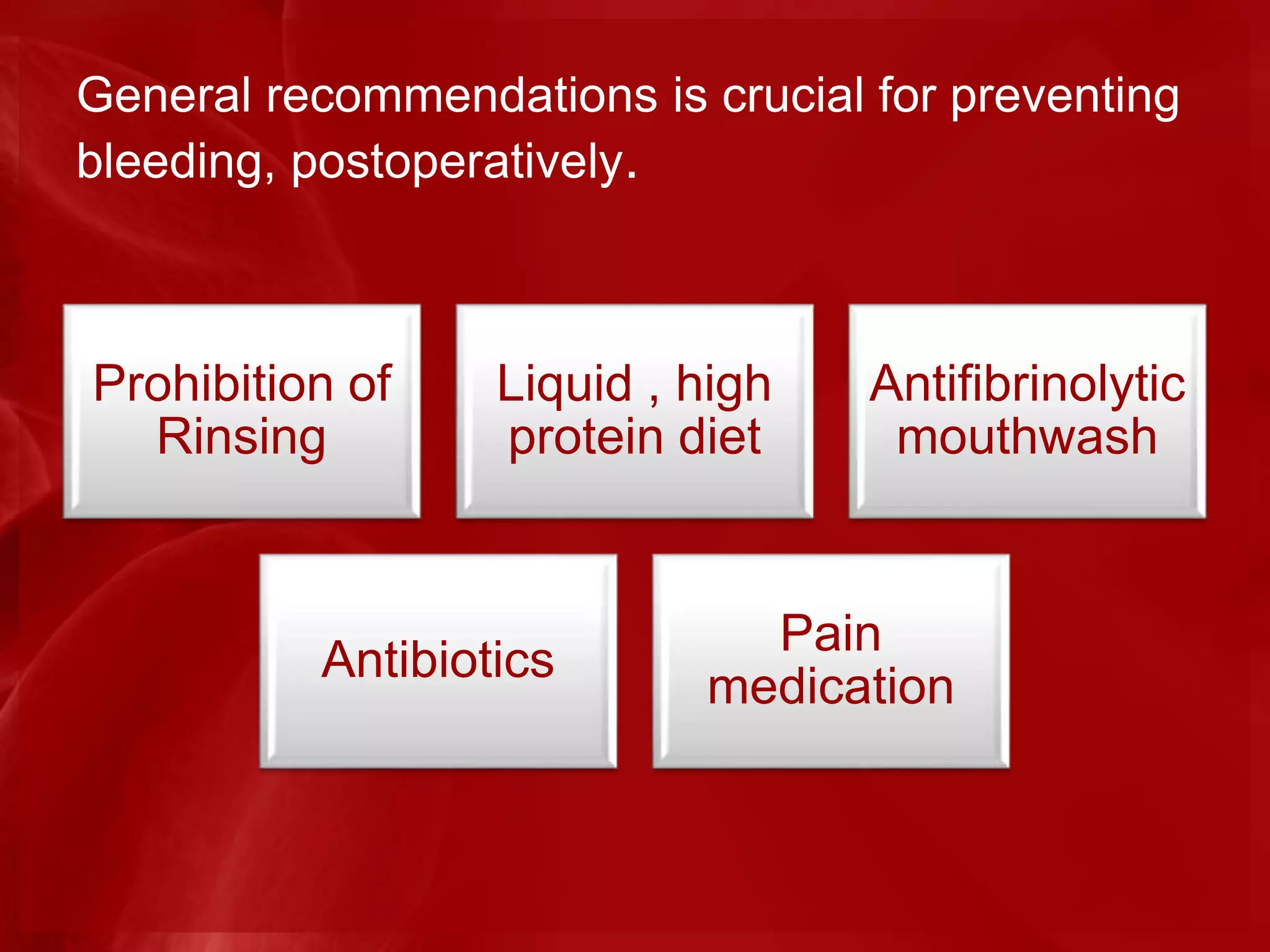
General recommendations iscrucial for preventing
bleeding, postoperatively.
Prohibition of
Rinsing
Liquid , high
protein diet
Antifibrinolytic
mouthwash
Antibiotics
Pain
medication
69.
References :-
• Textbookof Medical Physiology ,10th edition,Hall &
Guyton
• Essentials of hematology , Shirish M Kawthalkar
• Periodontal Medicine, Rose
• Bleeding disorders and periodontology, Philip
Vassilopoulos & Kent Palcanis , Periodontology 2000,
Vol. 44, 2007, 211–223.
• Coagulation Pathway and Physiology, Jerry B. Lefkowitz
• Hemostasis And Hemorrhagic Disorders, R. Baklaja, M.
C. Pešic´, J. Czarnecki
• Platelet function analysis,Paul Harisson, Blood Reviews
(2005) 19, 111–123