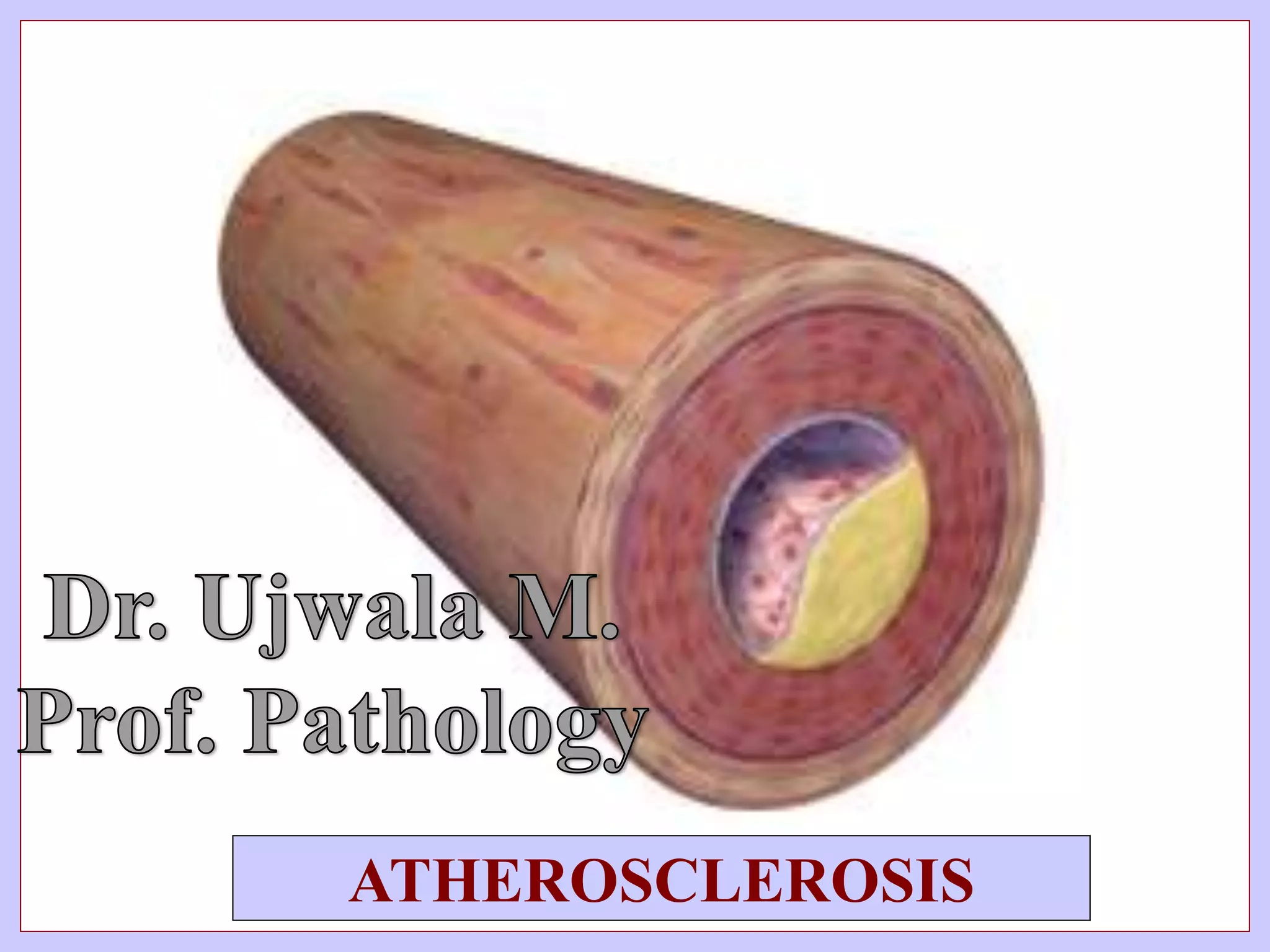
ATHEROSCLEROSIS
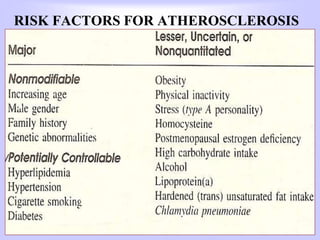
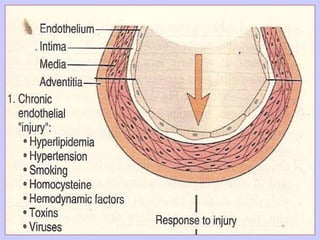
RISK FACTORS FOR ATHEROSCLEROSIS
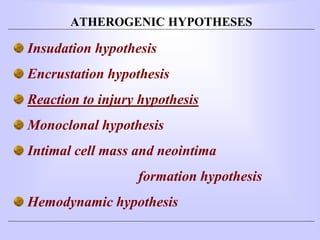
ATHEROGENIC HYPOTHESES
Insudation hypothesis
Encrustation hypothesis
Reaction to injury hypothesis
Monoclonal hypothesis
Intimal cell mass and neointima
formation hypothesis
Hemodynamic hypothesis
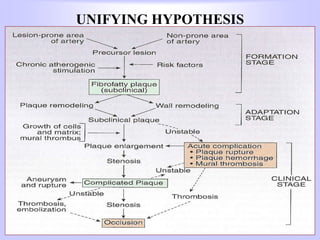
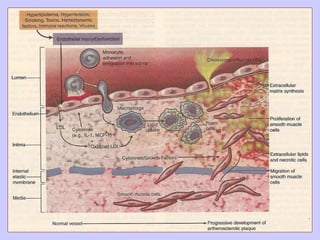
UNIFYING HYPOTHESIS
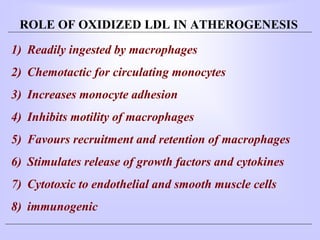
ROLE OF OXIDIZED LDL IN ATHEROGENESIS
1) Readily ingested by macrophages
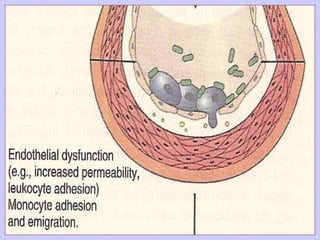
2) Chemotactic for circulating monocytes
3) Increases monocyte adhesion
4) Inhibits motility of macrophages
5) Favours recruitment and retention of macrophages
6) Stimulates release of growth factors and cytokines
7) Cytotoxic to endothelial and smooth muscle cells
8) immunogenic
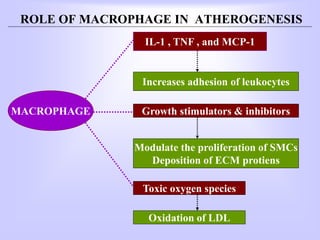
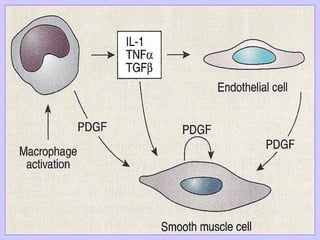
ROLE OF MACROPHAGE IN ATHEROGENESIS
MACROPHAGE
IL-1 , TNF , and MCP-1
Increases adhesion of leukocytes
Toxic oxygen species
Oxidation of LDL
Growth stimulators & inhibitors
Modulate the proliferation of SMCs
Deposition of ECM protiens
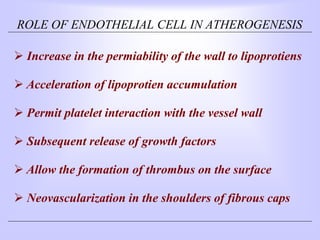
ROLE OF ENDOTHELIAL CELL IN ATHEROGENESIS
๏ƒ˜ Increase in the permiability of the wall to lipoprotiens
๏ƒ˜ Acceleration of lipoprotien accumulation
๏ƒ˜ Permit platelet interaction with the vessel wall
๏ƒ˜ Subsequent release of growth factors
๏ƒ˜ Allow the formation of thrombus on the surface
๏ƒ˜ Neovascularization in the shoulders of fibrous caps
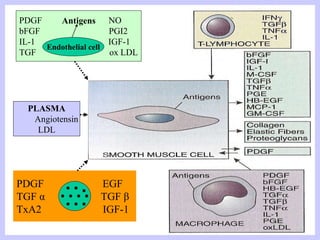
PDGF NO
bFGF PGI2
IL-1 IGF-1
TGF ox LDL
Endothelial cell
Antigens
PDGF EGF
TGF ฮฑ TGF ฮฒ
TxA2 IGF-1
PLASMA
Angiotensin
LDL
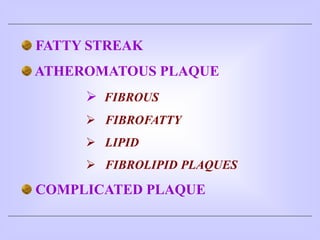
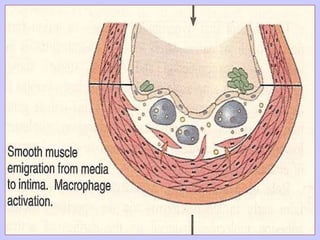
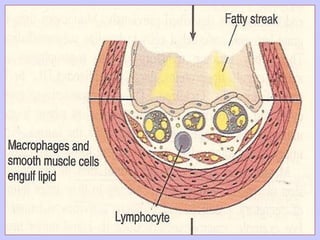
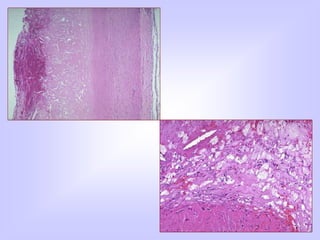
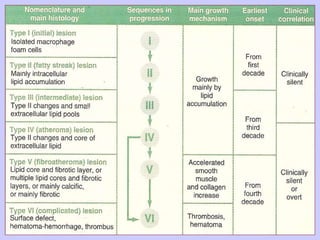
FATTY STREAK
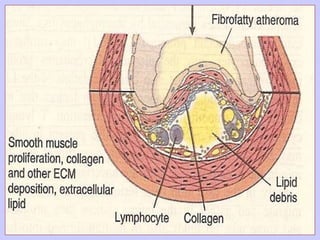
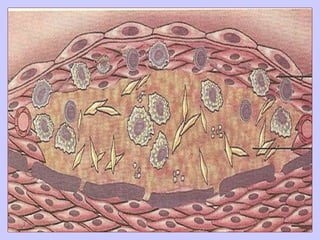
ATHEROMATOUS PLAQUE
๏ƒ˜ FIBROUS
๏ƒ˜ FIBROFATTY
๏ƒ˜ LIPID
๏ƒ˜ FIBROLIPID PLAQUES
COMPLICATED PLAQUE
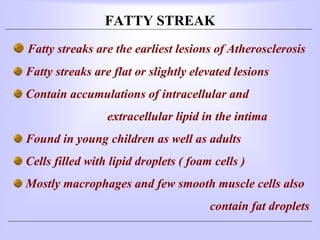
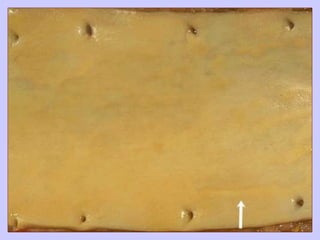
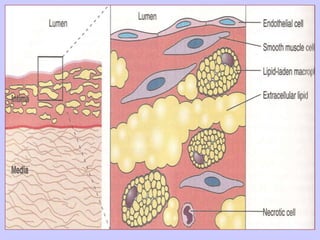
FATTY STREAK
Fatty streaks are the earliest lesions of Atherosclerosis
Fatty streaks are flat or slightly elevated lesions
Contain accumulations of intracellular and
extracellular lipid in the intima
Found in young children as well as adults
Cells filled with lipid droplets ( foam cells )
Mostly macrophages and few smooth muscle cells also
contain fat droplets
Do not correspond to the distribution of athero-
sclerotic lesions in adults
Fatty spots are common in thoracic aorta but
atherosclerosis commom in abdominal aorta
Fatty infiltration represents the initial lesions of
atherosclerosis
Atherosclerosis - clinically significant lesions
Fatty streaks are not significant clinically
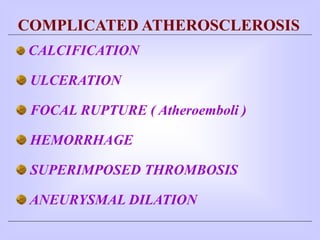
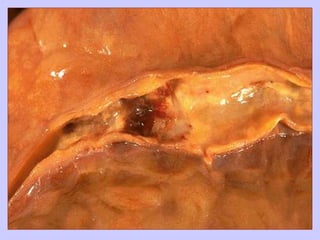
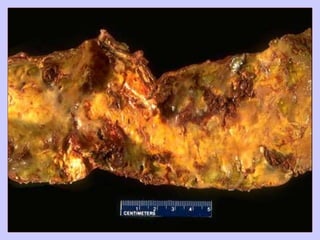
COMPLICATED ATHEROSCLEROSIS
CALCIFICATION
ULCERATION
FOCAL RUPTURE ( Atheroemboli )
HEMORRHAGE
SUPERIMPOSED THROMBOSIS
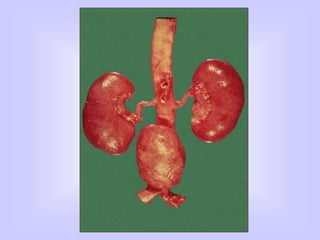
ANEURYSMAL DILATION
COMPLICATIONS
Acute occlusion
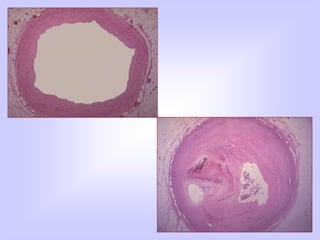
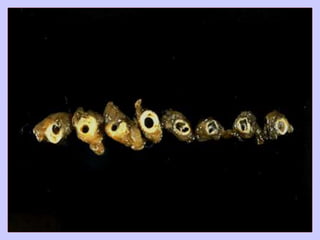
Chronic narrowing of vessel lumen
Aneurysm formation
Embolism
Atherosclerosis pathology mbbs

Atherosclerosis pathology mbbs

  • 1.
  • 2.
    RISK FACTORS FORATHEROSCLEROSIS
  • 3.
    ATHEROGENIC HYPOTHESES Insudation hypothesis Encrustationhypothesis Reaction to injury hypothesis Monoclonal hypothesis Intimal cell mass and neointima formation hypothesis Hemodynamic hypothesis
  • 4.
  • 5.
    ROLE OF OXIDIZEDLDL IN ATHEROGENESIS 1) Readily ingested by macrophages 2) Chemotactic for circulating monocytes 3) Increases monocyte adhesion 4) Inhibits motility of macrophages 5) Favours recruitment and retention of macrophages 6) Stimulates release of growth factors and cytokines 7) Cytotoxic to endothelial and smooth muscle cells 8) immunogenic
  • 6.
    ROLE OF MACROPHAGEIN ATHEROGENESIS MACROPHAGE IL-1 , TNF , and MCP-1 Increases adhesion of leukocytes Toxic oxygen species Oxidation of LDL Growth stimulators & inhibitors Modulate the proliferation of SMCs Deposition of ECM protiens
  • 7.
    ROLE OF ENDOTHELIALCELL IN ATHEROGENESIS ๏ƒ˜ Increase in the permiability of the wall to lipoprotiens ๏ƒ˜ Acceleration of lipoprotien accumulation ๏ƒ˜ Permit platelet interaction with the vessel wall ๏ƒ˜ Subsequent release of growth factors ๏ƒ˜ Allow the formation of thrombus on the surface ๏ƒ˜ Neovascularization in the shoulders of fibrous caps
  • 8.
    PDGF NO bFGF PGI2 IL-1IGF-1 TGF ox LDL Endothelial cell Antigens PDGF EGF TGF ฮฑ TGF ฮฒ TxA2 IGF-1 PLASMA Angiotensin LDL
  • 10.
    FATTY STREAK ATHEROMATOUS PLAQUE ๏ƒ˜FIBROUS ๏ƒ˜ FIBROFATTY ๏ƒ˜ LIPID ๏ƒ˜ FIBROLIPID PLAQUES COMPLICATED PLAQUE
  • 16.
    FATTY STREAK Fatty streaksare the earliest lesions of Atherosclerosis Fatty streaks are flat or slightly elevated lesions Contain accumulations of intracellular and extracellular lipid in the intima Found in young children as well as adults Cells filled with lipid droplets ( foam cells ) Mostly macrophages and few smooth muscle cells also contain fat droplets
  • 17.
    Do not correspondto the distribution of athero- sclerotic lesions in adults Fatty spots are common in thoracic aorta but atherosclerosis commom in abdominal aorta Fatty infiltration represents the initial lesions of atherosclerosis Atherosclerosis - clinically significant lesions Fatty streaks are not significant clinically
  • 24.
    COMPLICATED ATHEROSCLEROSIS CALCIFICATION ULCERATION FOCAL RUPTURE( Atheroemboli ) HEMORRHAGE SUPERIMPOSED THROMBOSIS ANEURYSMAL DILATION
  • 25.
    COMPLICATIONS Acute occlusion Chronic narrowingof vessel lumen Aneurysm formation Embolism