Contents
Hemostasis( 1
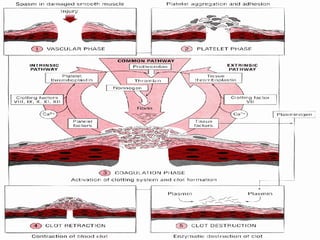
Vascular Phase( 2
Platelet Phase( 3
Clot formation( 4
Clot retraction( 5
Fibrinolysis( 6
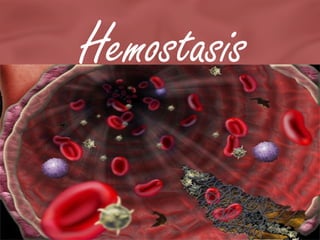
Hemostasis
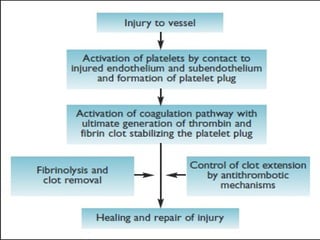
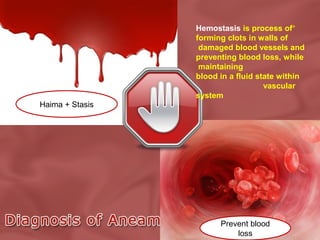
Hemostasis is process of*
forming clots in walls of
damaged blood vessels and
preventing blood loss, while
maintaining
blood in a fluid state within
vascular
system
Haima + Stasis

Prevent blood
loss
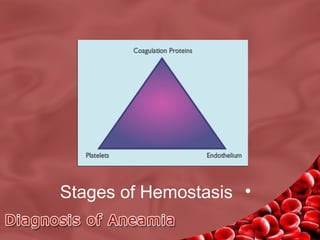
Stages of Hemostasis •
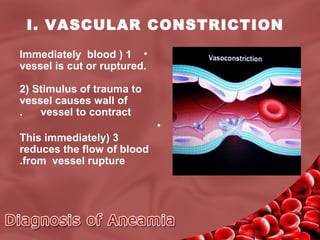
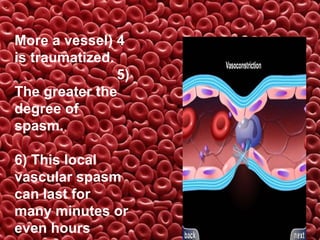
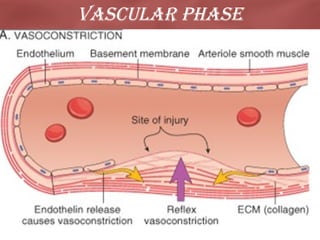
I. VASCULAR CONSTRICTION
Immediately blood ( 1 •
vessel is cut or ruptured.
2( Stimulus of trauma to
vessel causes wall of
.
vessel to contract
•
This immediately( 3
reduces the flow of blood
.from vessel rupture
More a vessel( 4
is traumatized.
5(
The greater the
degree of
spasm.
6( This local
vascular spasm
can last for
many minutes or
even hours
Vascular Phase
II. FORMATION OF
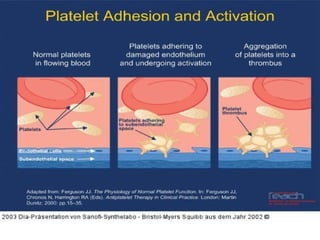
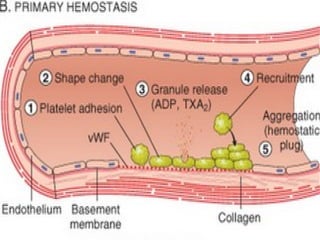
THE PLATELET PLUG
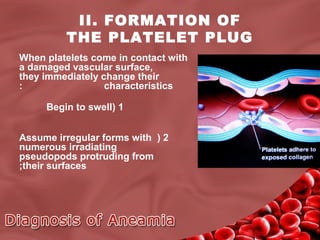
When platelets come in contact with
a damaged vascular surface,
they immediately change their
:
characteristics
Begin to swell( 1
Assume irregular forms with ( 2
numerous irradiating
pseudopods protruding from
;their surfaces
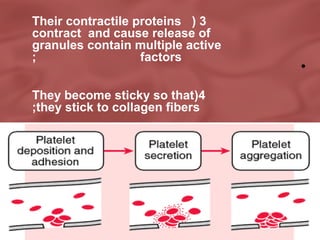
Their contractile proteins ( 3
contract and cause release of
granules contain multiple active
;
factors
They become sticky so that(4
;they stick to collagen fibers

•
III. BLOOD COAGULATION IN
THE RUPTURED VESSEL
Clot begins to develop in 15 to( 1 •
20 seconds if trauma of vascular
wall severe
2(And in 1 to 2 minutes if the
trauma minor
3( Activator substances both from
traumatized vascular wall and
from platelets and blood proteins
adhering to traumatized vascular
..wall initiate clotting process
Within 3 to 6( 4
minutes after rupture
of a vessel, if vessel
opening is not too
large, entire opening
or broken end of
vessel is filled with
.clot
After 20 minutes to( 5
an hour, clot retracts;
.this closes vessel
CLOT
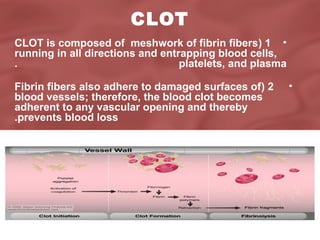
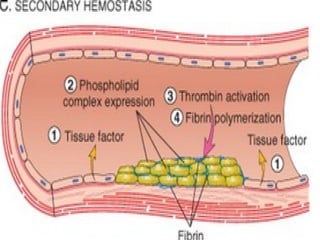
CLOT is composed of meshwork of fibrin fibers( 1 •
running in all directions and entrapping blood cells,
.
platelets, and plasma
Fibrin fibers also adhere to damaged surfaces of( 2
blood vessels; therefore, the blood clot becomes
adherent to any vascular opening and thereby
.prevents blood loss

•
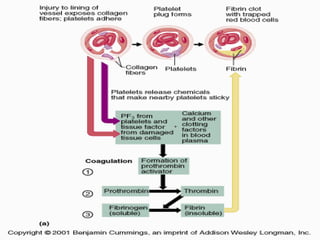
Coagulation process
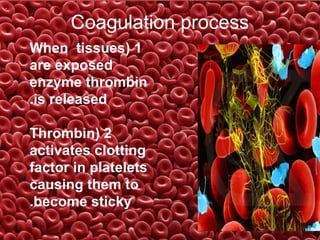
When tissues( 1
are exposed
enzyme thrombin
.is released
Thrombin( 2
activates clotting
factor in platelets
causing them to
.become sticky
Coagulation Process
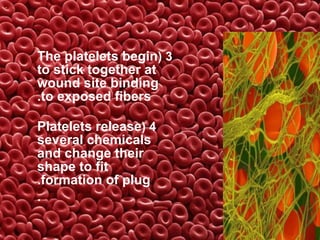
The platelets begin( 3
to stick together at
wound site binding
.to exposed fibers
Platelets release( 4
several chemicals
and change their
shape to fit
.formation of plug
.
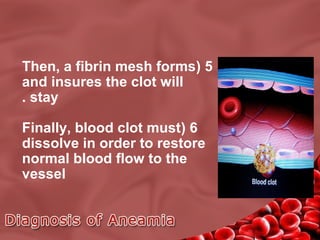
Then, a fibrin mesh forms( 5
and insures the clot will
. stay
Finally, blood clot must( 6
dissolve in order to restore
normal blood flow to the
vessel
CLOT RETRACTION
Platelets are become attached to fibrin, fibers in( 1
such a way that they actually bond different fibers
.together
Platelets release procoagulant substances, one of (2
which is fibrin-stabilizing factor, which causes more
and more cross-linking bonds between adjacent
.fibrin fibers
Platelets themselves contribute directly to clot( 3
contraction by activating platelet thrombosthenin,
actin, and myosin molecules (contractile proteins(
and cause strong contraction of the platelet attached
.to the fibrin

•
•

•
This helps compress fibrin( 4 •
meshwork into a smaller mass.
5( Contraction is activated or
accelerated by thrombin as well as by
. calcium ions released from platelets
As clot retracts,edges of broken( 6 •
blood vessel are pulled together, thus
contributing to ultimate state of
haemostasis
Fibrinolysis
Process wherein a fibrin clot, product of
coagulation, is broken down.
Its main enzyme plasmin cuts fibrin mesh
at various places, leading to production of
circulating fragments
That are cleared by other proteases or by
the kidney and liver
HEMOSTASIS
FIBROUS ORGANIZATION
((DISSOLUTION OF THE CLOT
It can become invaded by fibroblasts, which ( 1
subsequently form connective tissue all through
.
clot
. it can dissolve( 2
The usual course for a clot that forms in a small hole
of a vessel wall is invasion by fibroblasts, beginning
within a few hours after clot is formed.
This
continues to complete organization of the clot into
.fibrous tissue within about 1 to 2 weeks

•
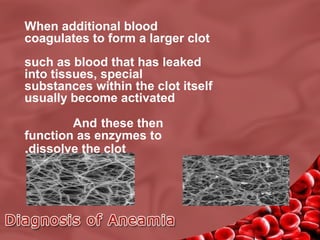
When additional blood
coagulates to form a larger clot
such as blood that has leaked
into tissues, special
substances within the clot itself
usually become activated
And these then
function as enzymes to
.dissolve the clot
How does the blood clotting process work_ - DnaTube.com - Scientific Video and Animation Site.flv
Thank
You
For Your
!Attention

blood clotting

  • 3.
    Contents Hemostasis( 1 Vascular Phase(2 Platelet Phase( 3 Clot formation( 4 Clot retraction( 5 Fibrinolysis( 6
  • 5.
  • 6.
    Hemostasis is processof* forming clots in walls of damaged blood vessels and preventing blood loss, while maintaining blood in a fluid state within vascular system Haima + Stasis Prevent blood loss
  • 7.
  • 8.
    I. VASCULAR CONSTRICTION Immediatelyblood ( 1 • vessel is cut or ruptured. 2( Stimulus of trauma to vessel causes wall of . vessel to contract • This immediately( 3 reduces the flow of blood .from vessel rupture
  • 9.
    More a vessel(4 is traumatized. 5( The greater the degree of spasm. 6( This local vascular spasm can last for many minutes or even hours
  • 10.
  • 11.
    II. FORMATION OF THEPLATELET PLUG When platelets come in contact with a damaged vascular surface, they immediately change their : characteristics Begin to swell( 1 Assume irregular forms with ( 2 numerous irradiating pseudopods protruding from ;their surfaces
  • 12.
    Their contractile proteins( 3 contract and cause release of granules contain multiple active ; factors They become sticky so that(4 ;they stick to collagen fibers •
  • 15.
    III. BLOOD COAGULATIONIN THE RUPTURED VESSEL Clot begins to develop in 15 to( 1 • 20 seconds if trauma of vascular wall severe 2(And in 1 to 2 minutes if the trauma minor 3( Activator substances both from traumatized vascular wall and from platelets and blood proteins adhering to traumatized vascular ..wall initiate clotting process
  • 16.
    Within 3 to6( 4 minutes after rupture of a vessel, if vessel opening is not too large, entire opening or broken end of vessel is filled with .clot After 20 minutes to( 5 an hour, clot retracts; .this closes vessel
  • 17.
    CLOT CLOT is composedof meshwork of fibrin fibers( 1 • running in all directions and entrapping blood cells, . platelets, and plasma Fibrin fibers also adhere to damaged surfaces of( 2 blood vessels; therefore, the blood clot becomes adherent to any vascular opening and thereby .prevents blood loss •
  • 18.
    Coagulation process When tissues(1 are exposed enzyme thrombin .is released Thrombin( 2 activates clotting factor in platelets causing them to .become sticky
  • 19.
    Coagulation Process The plateletsbegin( 3 to stick together at wound site binding .to exposed fibers Platelets release( 4 several chemicals and change their shape to fit .formation of plug .
  • 20.
    Then, a fibrinmesh forms( 5 and insures the clot will . stay Finally, blood clot must( 6 dissolve in order to restore normal blood flow to the vessel
  • 23.
    CLOT RETRACTION Platelets arebecome attached to fibrin, fibers in( 1 such a way that they actually bond different fibers .together Platelets release procoagulant substances, one of (2 which is fibrin-stabilizing factor, which causes more and more cross-linking bonds between adjacent .fibrin fibers Platelets themselves contribute directly to clot( 3 contraction by activating platelet thrombosthenin, actin, and myosin molecules (contractile proteins( and cause strong contraction of the platelet attached .to the fibrin • • •
  • 24.
    This helps compressfibrin( 4 • meshwork into a smaller mass. 5( Contraction is activated or accelerated by thrombin as well as by . calcium ions released from platelets As clot retracts,edges of broken( 6 • blood vessel are pulled together, thus contributing to ultimate state of haemostasis
  • 25.
    Fibrinolysis Process wherein afibrin clot, product of coagulation, is broken down. Its main enzyme plasmin cuts fibrin mesh at various places, leading to production of circulating fragments That are cleared by other proteases or by the kidney and liver HEMOSTASIS
  • 26.
    FIBROUS ORGANIZATION ((DISSOLUTION OFTHE CLOT It can become invaded by fibroblasts, which ( 1 subsequently form connective tissue all through . clot . it can dissolve( 2 The usual course for a clot that forms in a small hole of a vessel wall is invasion by fibroblasts, beginning within a few hours after clot is formed. This continues to complete organization of the clot into .fibrous tissue within about 1 to 2 weeks •
  • 27.
    When additional blood coagulatesto form a larger clot such as blood that has leaked into tissues, special substances within the clot itself usually become activated And these then function as enzymes to .dissolve the clot
  • 29.
    How does theblood clotting process work_ - DnaTube.com - Scientific Video and Animation Site.flv
  • 31.