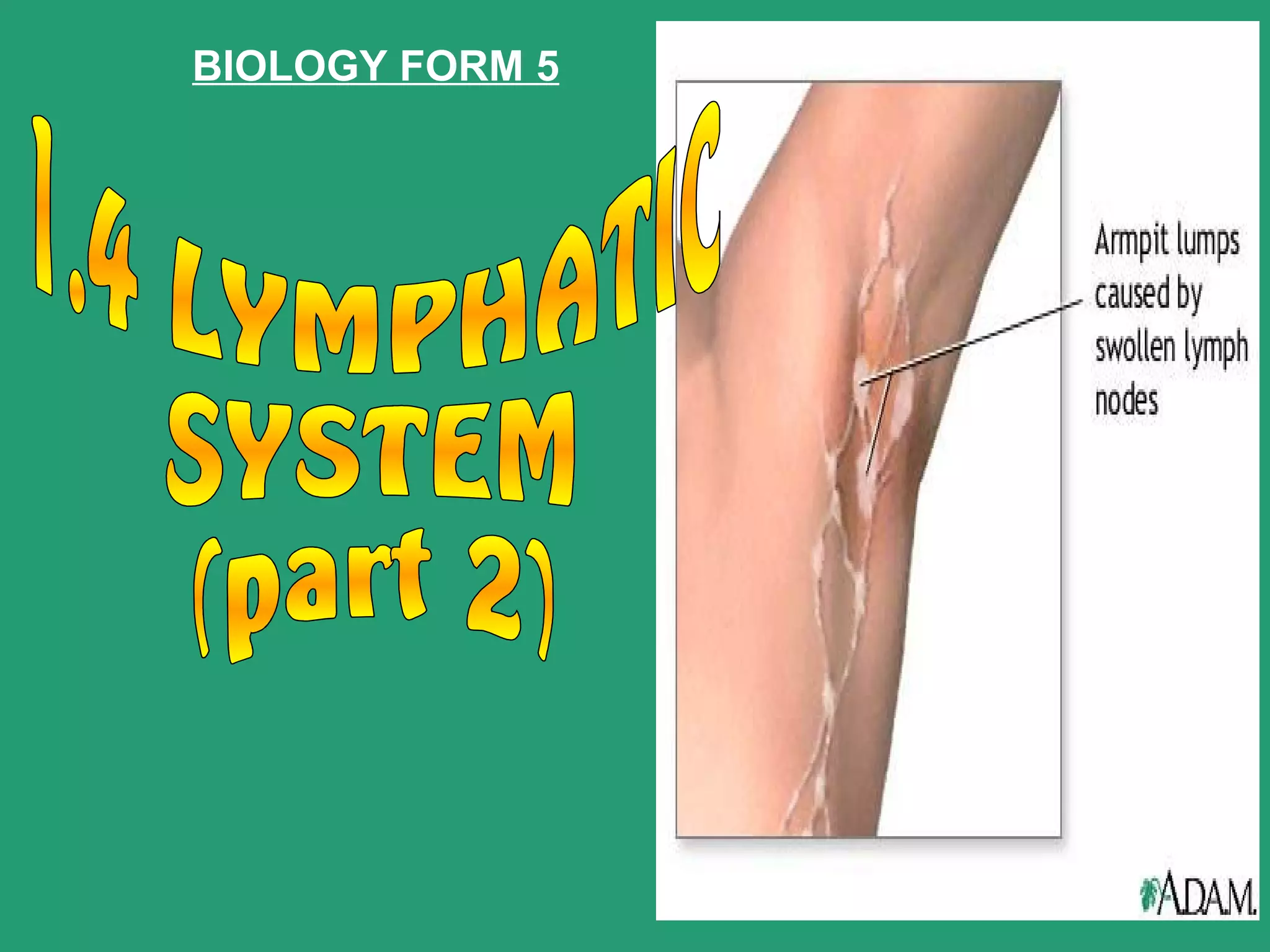
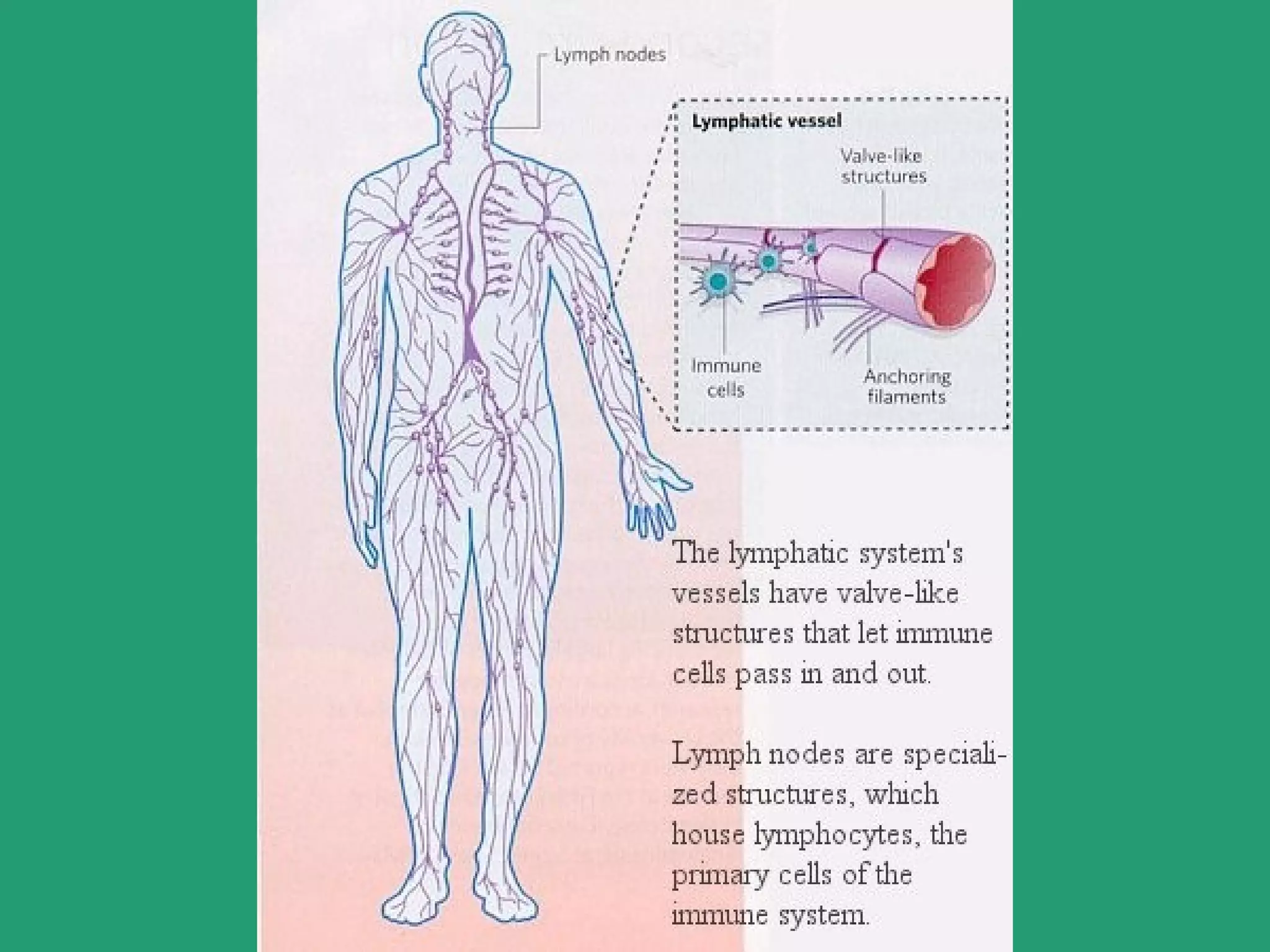
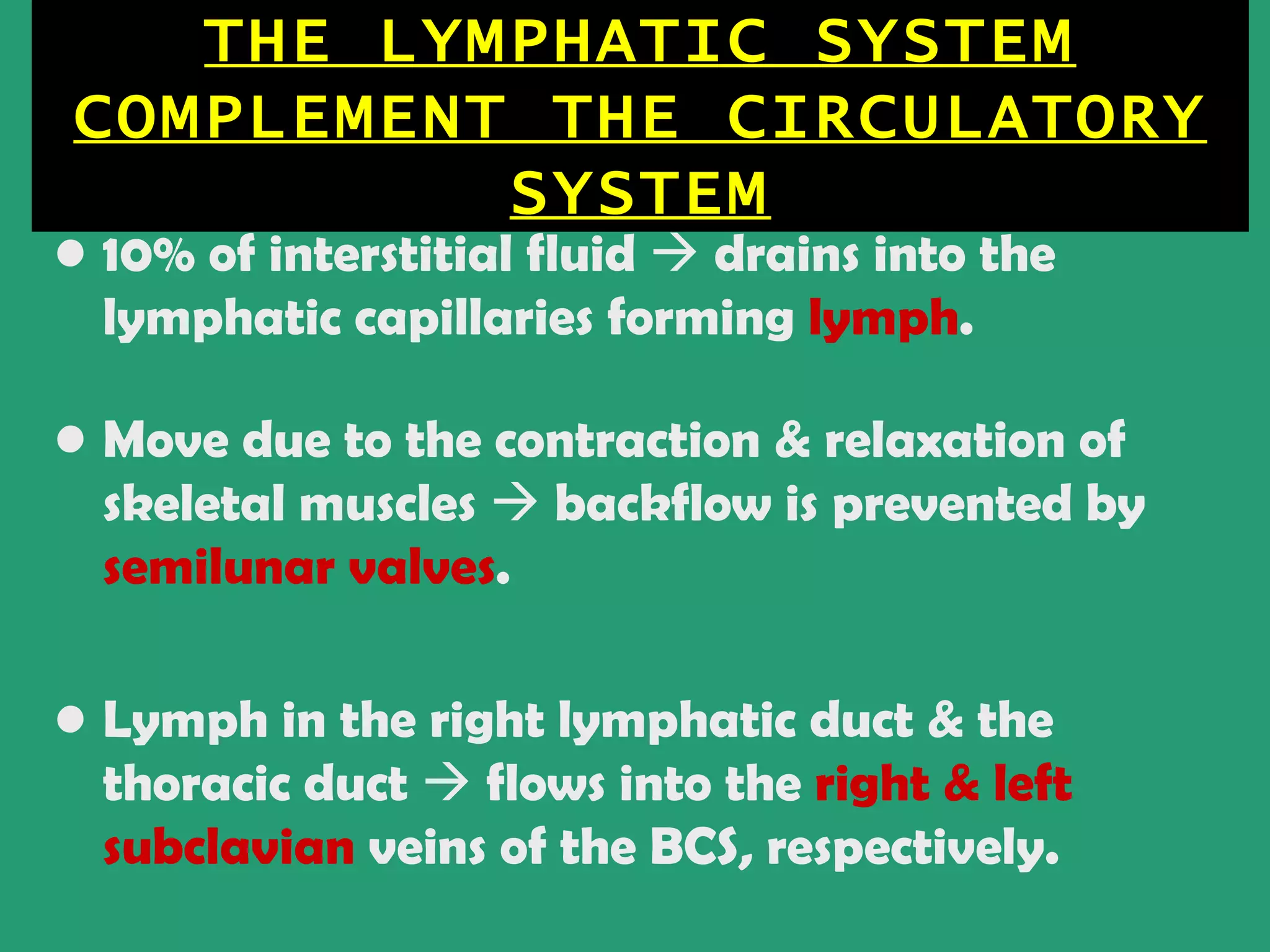
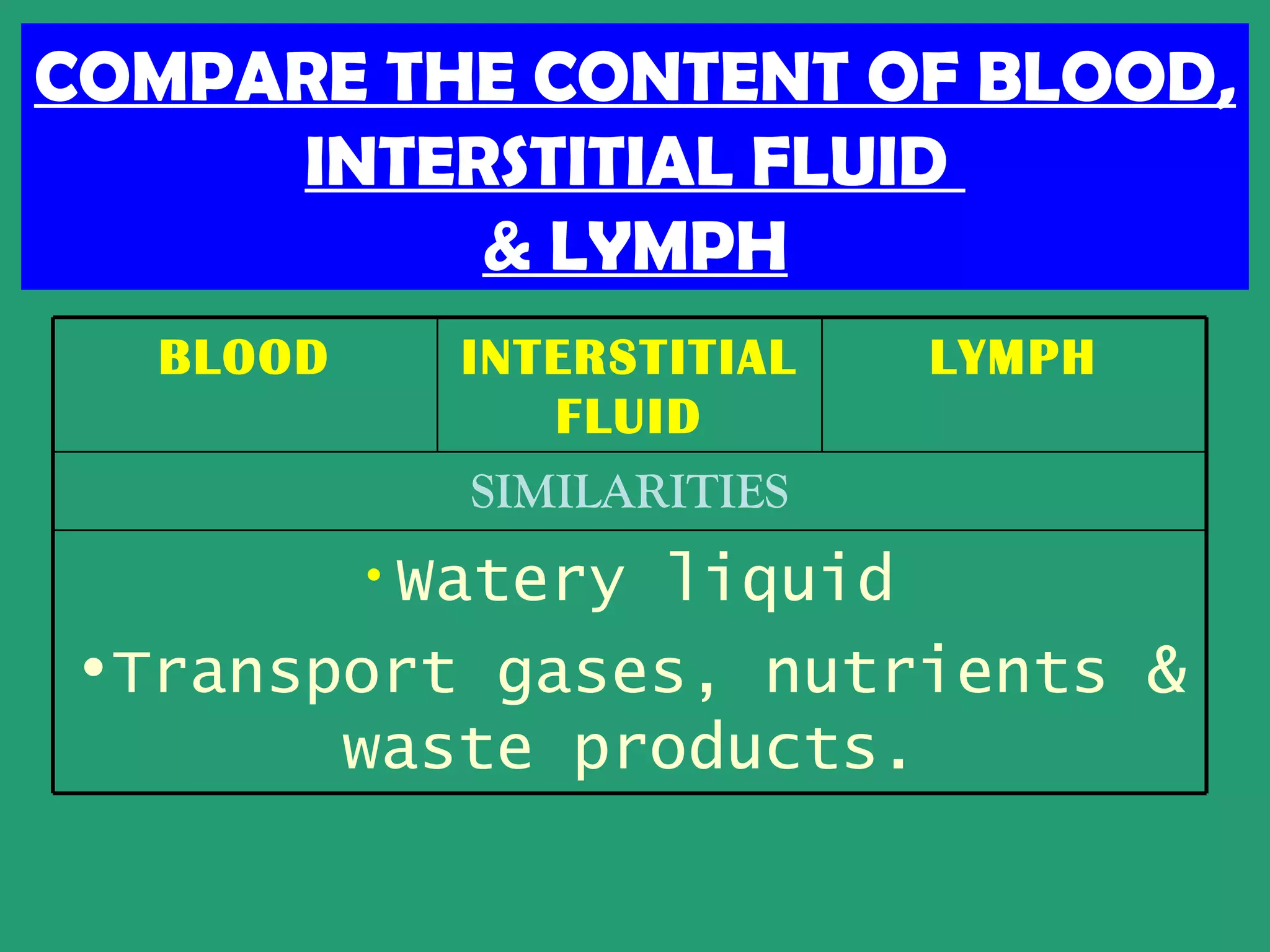
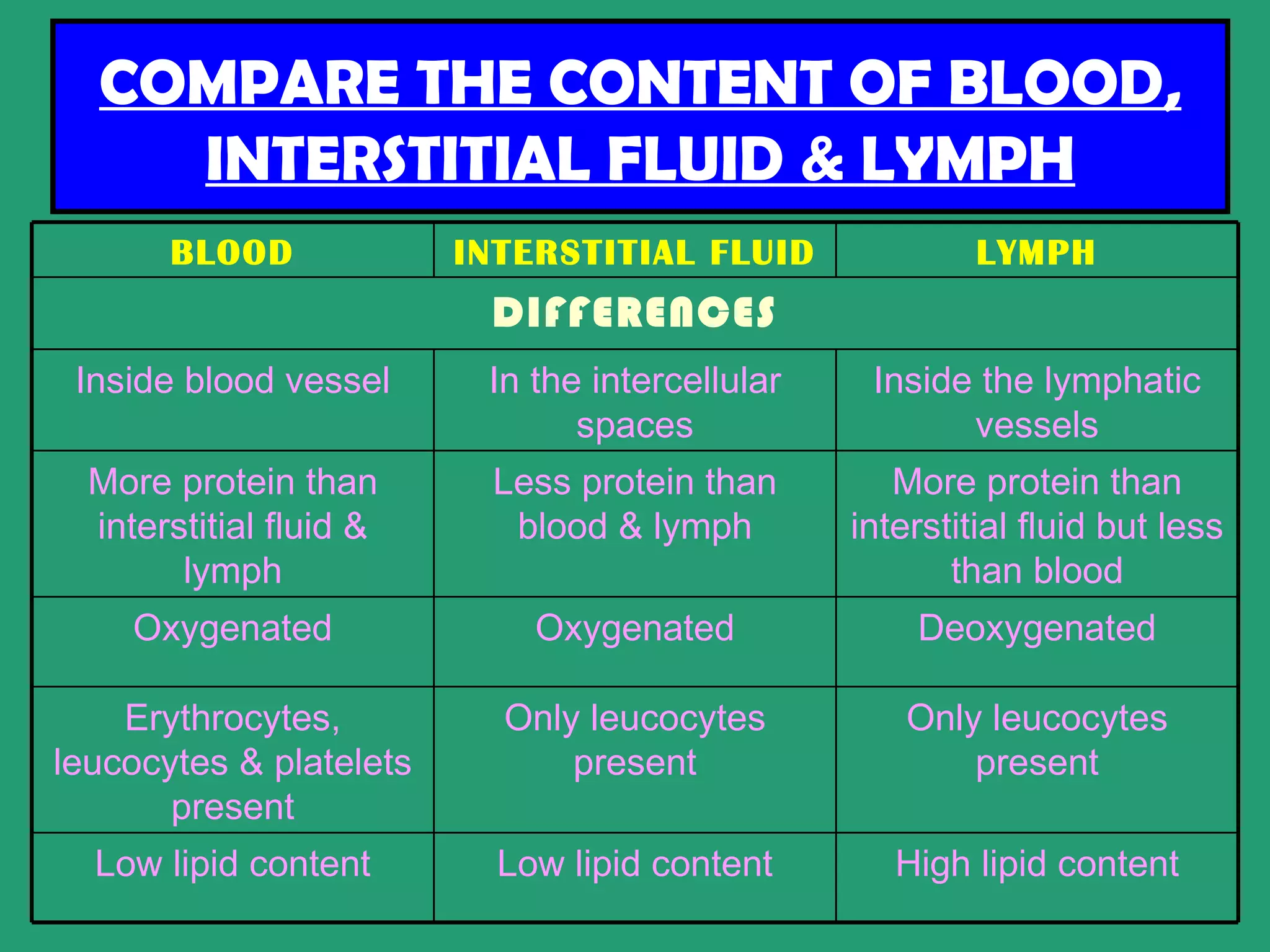
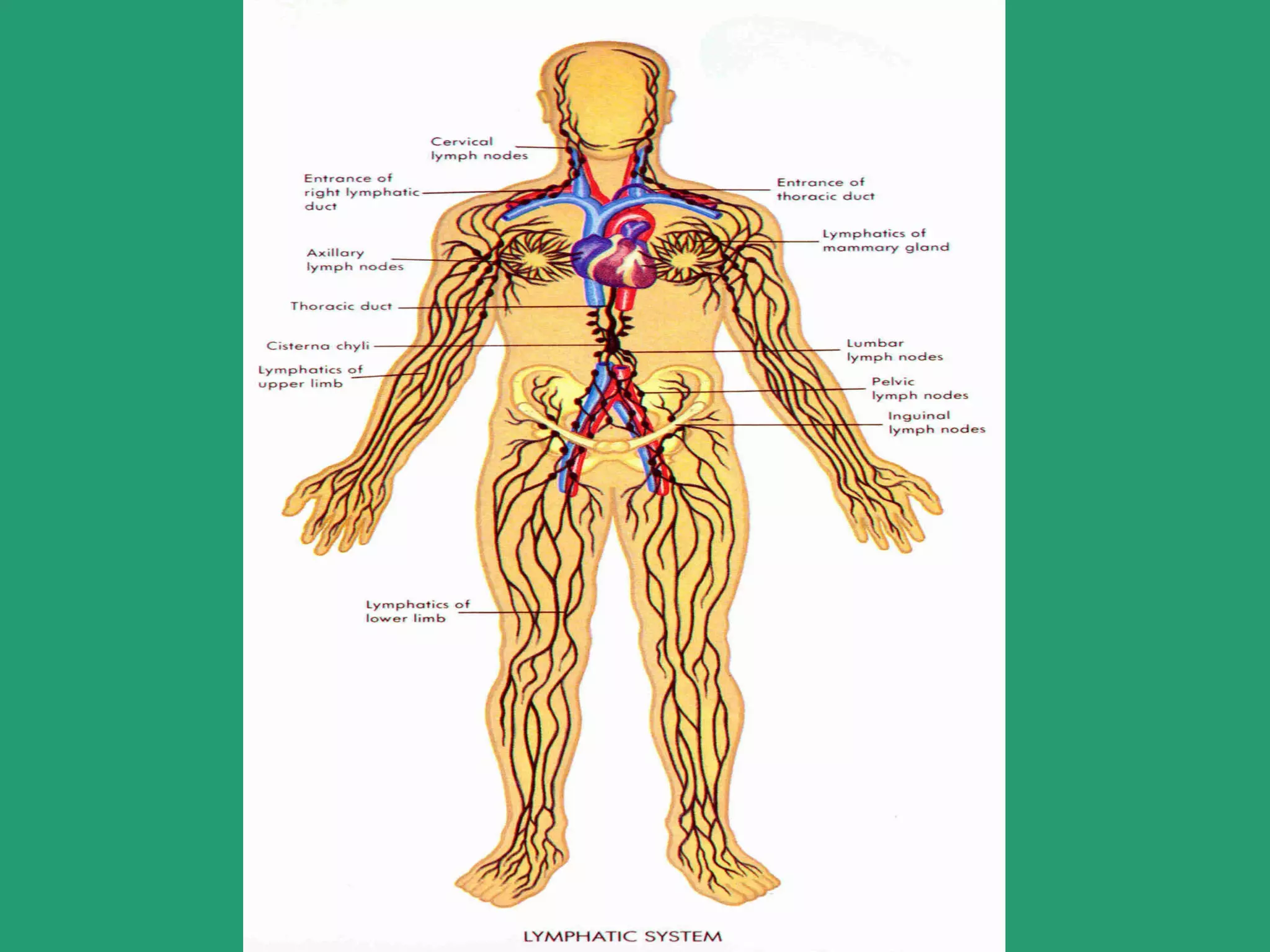
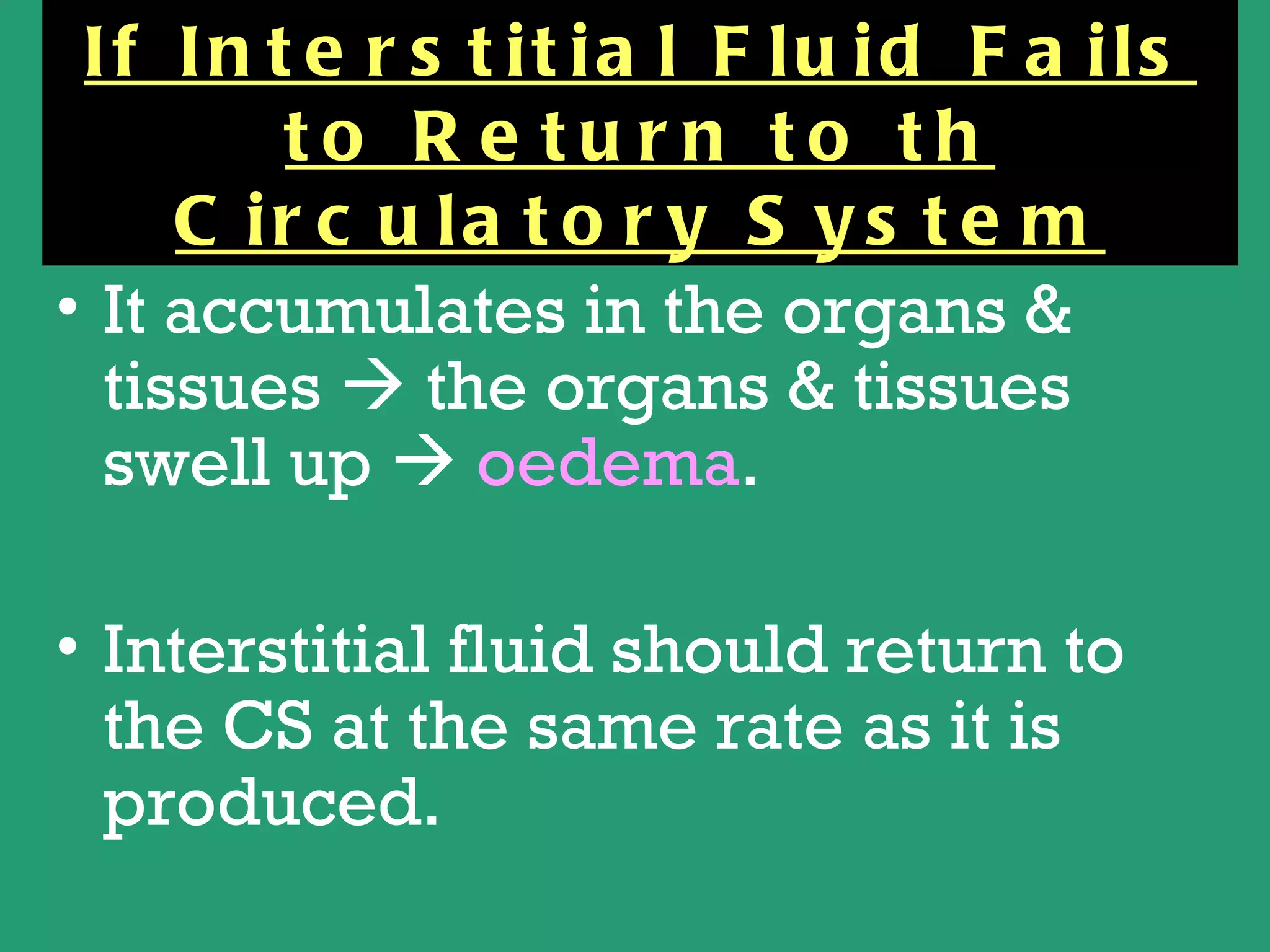
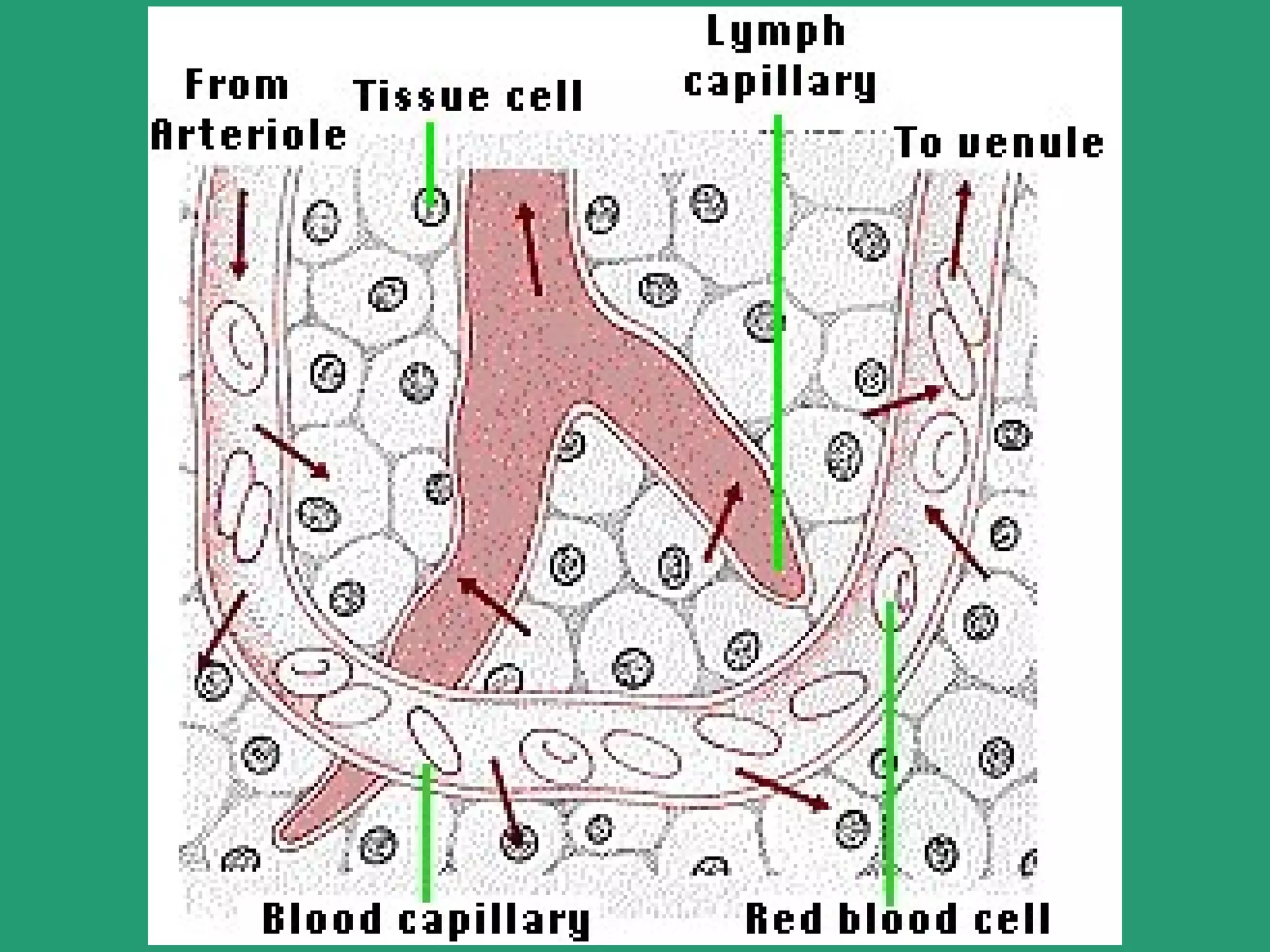
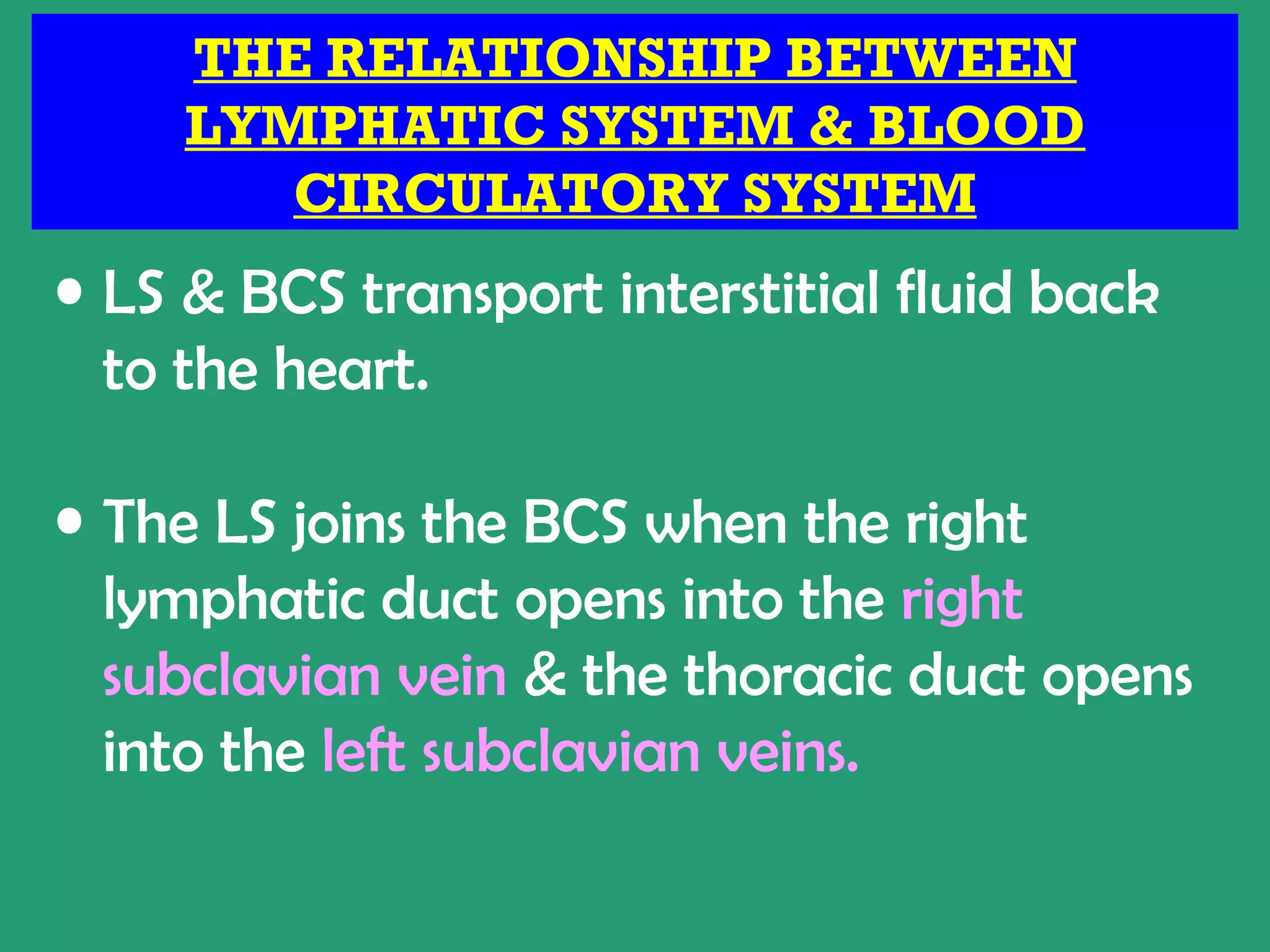
The lymphatic system complements the circulatory system by draining 10% of interstitial fluid into lymphatic capillaries to form lymph. Lymph moves through lymphatic vessels via muscle contraction and enters the circulatory system through the right and left subclavian veins. While blood, interstitial fluid, and lymph are all liquid transports, they differ in their protein, oxygen, and lipid contents. If interstitial fluid fails to return to the circulatory system, it can accumulate and cause edema in tissues. The lymphatic system works with the circulatory system to transport interstitial fluid back to the heart.
![Sub 1[1].4 form 5](https://image.slidesharecdn.com/sub11-4-lymphaticsystempart2-120602212533-phpapp02/75/Sub-1-1-4-form-5-11-2048.jpg)
![Sub 1[1].4 form 5](https://image.slidesharecdn.com/sub11-4-lymphaticsystempart2-120602212533-phpapp02/75/Sub-1-1-4-form-5-12-2048.jpg)


![Sub 1[1].3 form 5](https://cdn.slidesharecdn.com/ss_thumbnails/sub11-3-bloodclotmechanism-120602212724-phpapp01-thumbnail.jpg?width=640&height=640&fit=bounds)


![Sub 1[1].4 form 5 (part 1)](https://cdn.slidesharecdn.com/ss_thumbnails/sub11-4-lymphaticsystempart1-120602212753-phpapp02-thumbnail.jpg?width=640&height=640&fit=bounds)
![Chapter 1[1.4 1.6]]](https://cdn.slidesharecdn.com/ss_thumbnails/chapter11-4-1-6-120302031757-phpapp02-thumbnail.jpg?width=640&height=640&fit=bounds)


![6[1].1 form 5](https://cdn.slidesharecdn.com/ss_thumbnails/61-1-variationinorganisms-120603005250-phpapp01-thumbnail.jpg?width=640&height=640&fit=bounds)
![5[1].3 form 5](https://cdn.slidesharecdn.com/ss_thumbnails/51-3geneschromosomes-120603004012-phpapp02-thumbnail.jpg?width=640&height=640&fit=bounds)
![5[1].1 form 5](https://cdn.slidesharecdn.com/ss_thumbnails/51-1theconceptofinheritance-120603003907-phpapp02-thumbnail.jpg?width=640&height=640&fit=bounds)
![6[1].3 form 5](https://cdn.slidesharecdn.com/ss_thumbnails/61-3-respectfultowardsanother-120603003718-phpapp02-thumbnail.jpg?width=640&height=640&fit=bounds)
![6[1].2 form 5](https://cdn.slidesharecdn.com/ss_thumbnails/61-2-causesofvariation-120603003705-phpapp02-thumbnail.jpg?width=640&height=640&fit=bounds)
![4[1].6 FORM 5](https://cdn.slidesharecdn.com/ss_thumbnails/41-6-growthinmulticellularorganisms-120603003459-phpapp02-thumbnail.jpg?width=640&height=640&fit=bounds)
![4[1].5 FORM 5](https://cdn.slidesharecdn.com/ss_thumbnails/41-5-floweringplant-120603003443-phpapp01-thumbnail.jpg?width=640&height=640&fit=bounds)
![4[1].4 FORM 5](https://cdn.slidesharecdn.com/ss_thumbnails/41-4-thecontributionofst-120603003308-phpapp01-thumbnail.jpg?width=640&height=640&fit=bounds)
![4[1].3 FORM 5](https://cdn.slidesharecdn.com/ss_thumbnails/41-3earlydevelopmentofzygote-120603003204-phpapp02-thumbnail.jpg?width=640&height=640&fit=bounds)
![4[1].2 FORM 5](https://cdn.slidesharecdn.com/ss_thumbnails/41-2-menstrualcycle-120603003033-phpapp01-thumbnail.jpg?width=640&height=640&fit=bounds)
![4[1].1 FORM 5](https://cdn.slidesharecdn.com/ss_thumbnails/41-1theformationofgametes-120603003019-phpapp01-thumbnail.jpg?width=640&height=640&fit=bounds)
![4[1].7 FORM 5](https://cdn.slidesharecdn.com/ss_thumbnails/41-7-thegrowthcurve-120603002724-phpapp02-thumbnail.jpg?width=640&height=640&fit=bounds)
![Subtopic 3 1[1] FORM 5](https://cdn.slidesharecdn.com/ss_thumbnails/subtopic3-11-120603001001-phpapp01-thumbnail.jpg?width=640&height=640&fit=bounds)
![3[1].3 FORM 5](https://cdn.slidesharecdn.com/ss_thumbnails/31-3-appreciate-120603000912-phpapp02-thumbnail.jpg?width=640&height=640&fit=bounds)
![Subtopic 3[1].2 FORM 5](https://cdn.slidesharecdn.com/ss_thumbnails/subtopic31-2-120603000911-phpapp01-thumbnail.jpg?width=640&height=640&fit=bounds)
![2[1].1 (c) FORM 5](https://cdn.slidesharecdn.com/ss_thumbnails/21-1c-themechanisimoflocomotioninanimals-120602235904-phpapp01-thumbnail.jpg?width=640&height=640&fit=bounds)
![2[1].1 (b) FORM 5](https://cdn.slidesharecdn.com/ss_thumbnails/21-1b-roleofmusclesligamentstendonsin-120602235830-phpapp02-thumbnail.jpg?width=640&height=640&fit=bounds)
![2[1].1 (a) FORM 5](https://cdn.slidesharecdn.com/ss_thumbnails/21-1a-supportlocomotioninhumansanimals-120602235814-phpapp02-thumbnail.jpg?width=640&height=640&fit=bounds)
![Sub 2[1].3 FORM 5](https://cdn.slidesharecdn.com/ss_thumbnails/sub21-3supportinplants-120602235702-phpapp02-thumbnail.jpg?width=640&height=640&fit=bounds)


