HEMOSTASIS
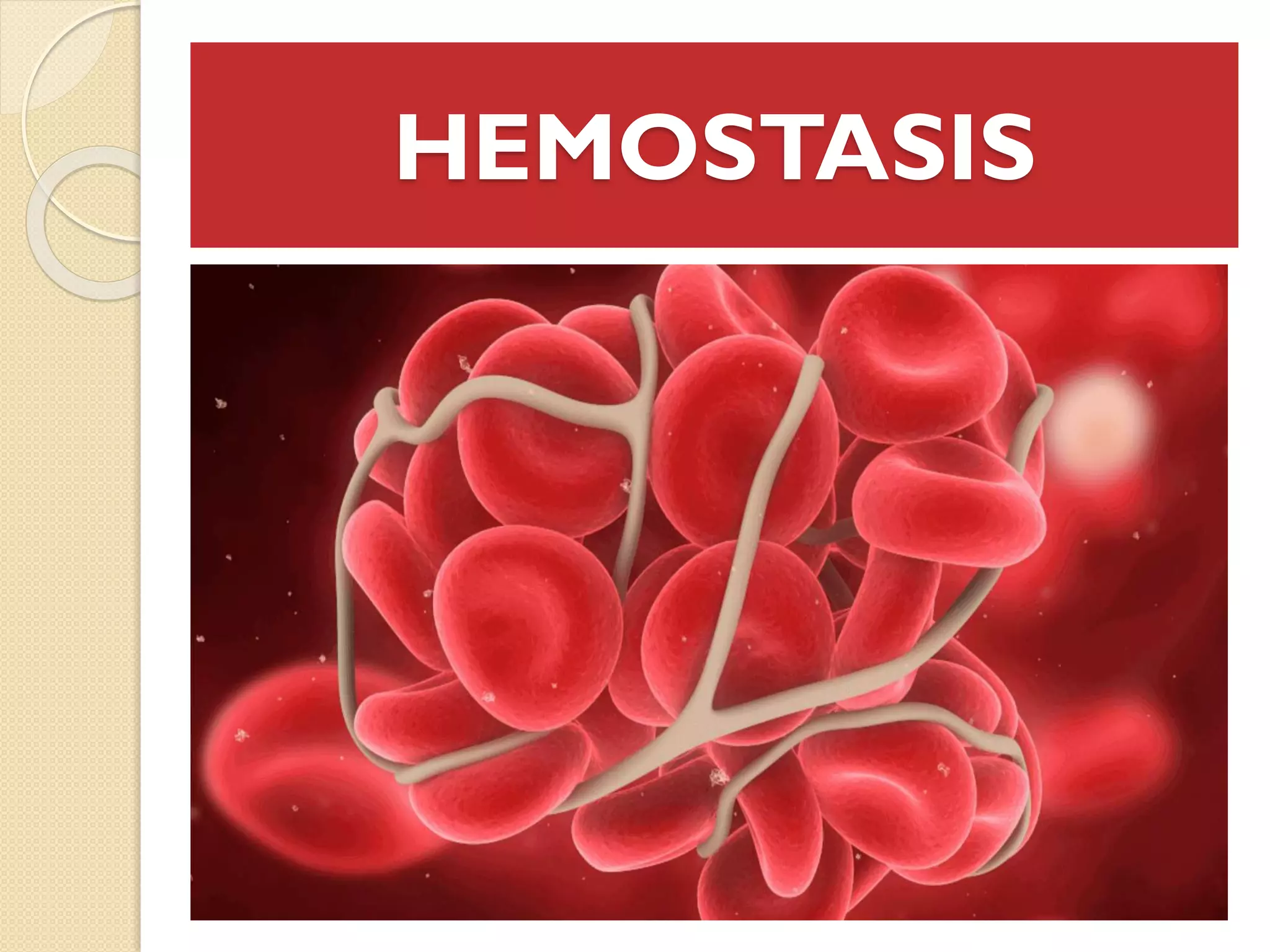
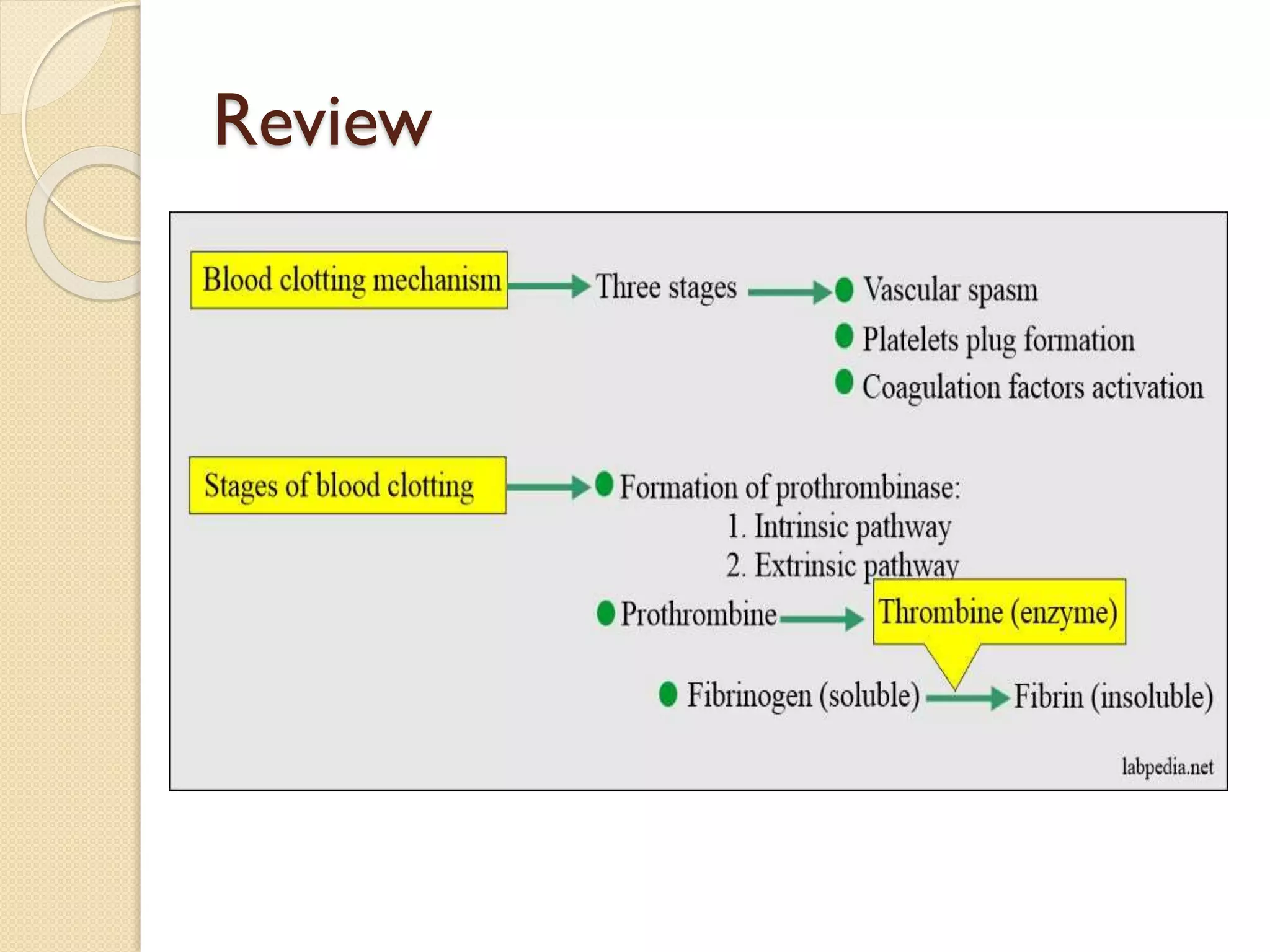
 Haemostasis means “arrest of bleeding”.
 During haemostasis several mechanisms
interact to slow blood flow
(vasoconstriction), block the vessel wall
defect with a platelet plug (primary
haemostasis), convert fibrinogen to a
jelly like fibrin clot (coagulation of
blood) and later re-establish the flow of
blood through a mechanism of slow clot
lysis (fibrinolysis)
HEMOSTASIS
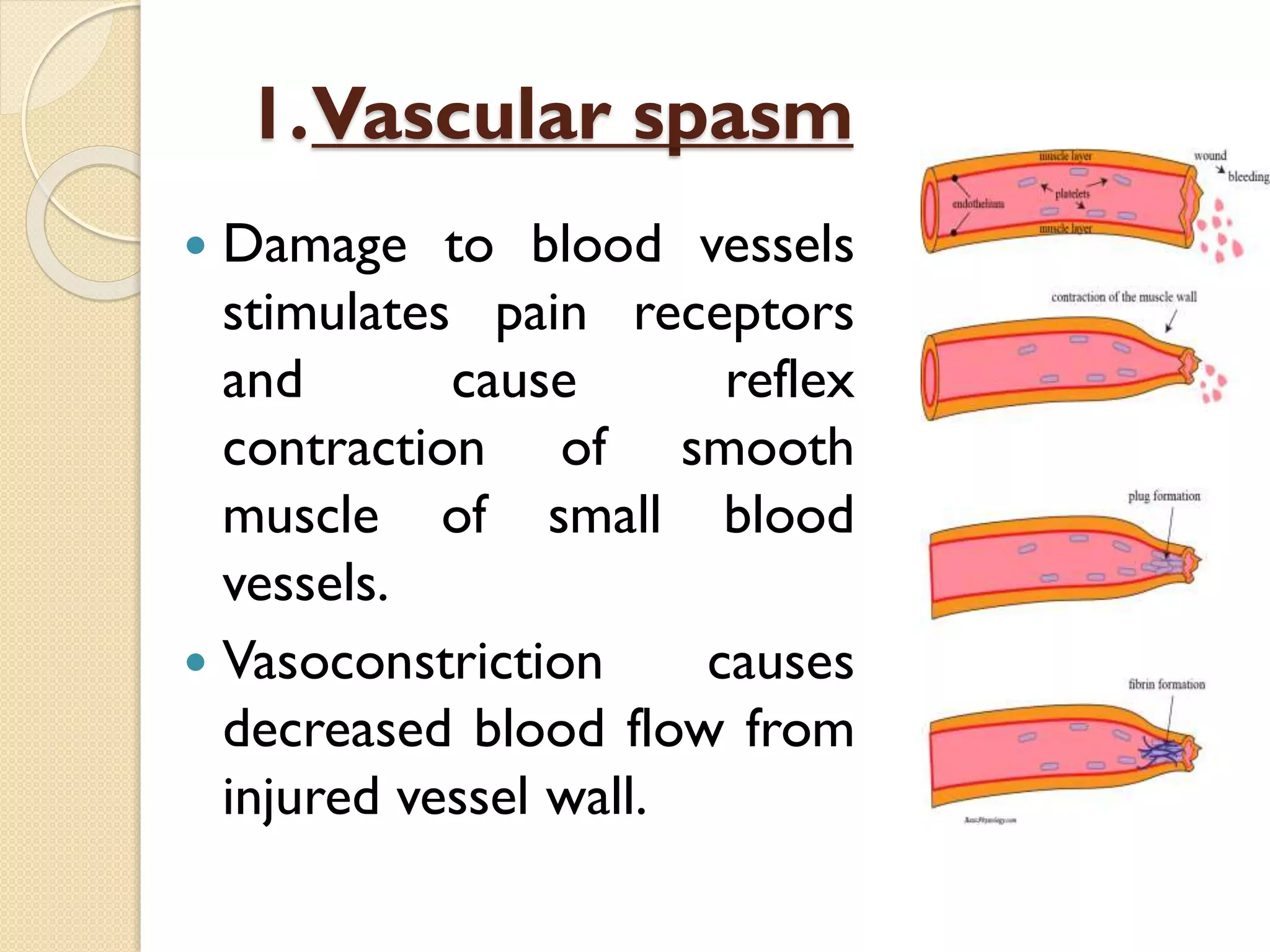
1.Vascular spasm
 Damage to blood vessels
stimulates pain receptors
and cause reflex
contraction of smooth
muscle of small blood
vessels.
 Vasoconstriction causes
decreased blood flow from
injured vessel wall.
Cont..
 For smaller vessels, platelets release a
vasoconstrictor substance i.e.,
Thromboxane A2.
 The spasm can last for many minutes or
hours, during which time the process of
platelet plugging and blood coagulation
can take place.
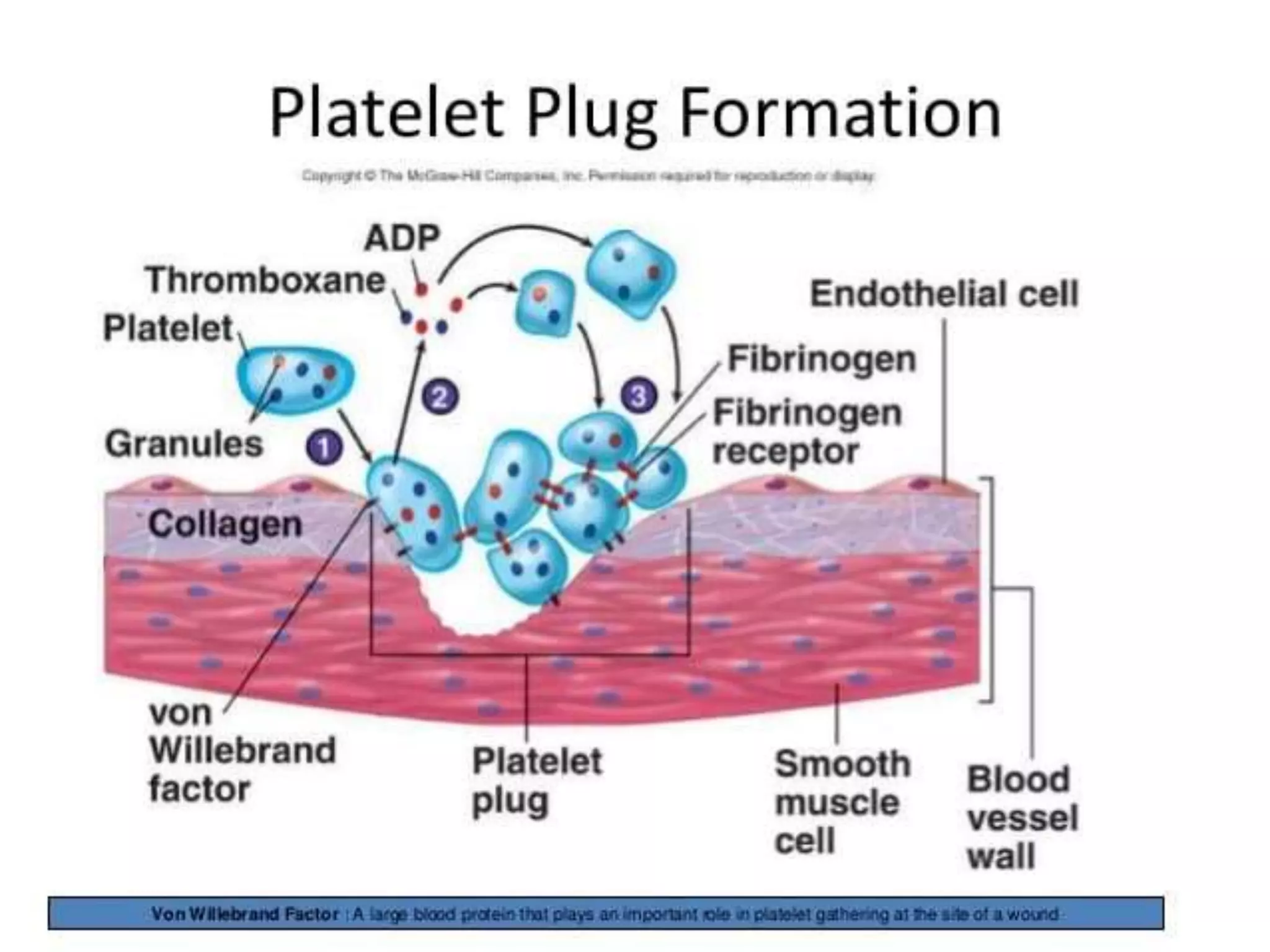
2. Platelet plug formation
It occurs in three steps:
1. Adhesion- platelets adhere to the exposed
collagen on the injured endothelium and to
von willebrand factor.
2. Activation- they undergo a shape change
and become activated and release the
content of granules.
3. Aggregation- the released ADP and
thromboxane act to produce more
aggregation of platelets leading to formation
of platelet plug.
Primary and Secondary Hemostasis
Injury to blood vessel and damage to
endothelium
Release of
vasoconstrictors
(serotonin)
Aggregation of
platelets
Activation of platelets
Deposition of fibers
in temporary plug
Vasoconstriction
Primary hemostasis
Formation of
temporary
platelet plug
Blood clotting
Secondary hemostasis
Coagulation Cascade
Clot Resolution
(Tertiary Hemostasis)
 Activated platelets contract their internal
actin and myosin fibrils in their
cytoskeleton, which leads to shrinkage of
the clot volume.
 Plasminogen then activates to plasmin,
which promotes lysis of the fibrin clot.
 This restores the flow of blood in the
damaged/obstructed blood vessels.
Review
hemostasis.pdf

hemostasis.pdf

  • 1.
  • 2.
     Haemostasis means“arrest of bleeding”.  During haemostasis several mechanisms interact to slow blood flow (vasoconstriction), block the vessel wall defect with a platelet plug (primary haemostasis), convert fibrinogen to a jelly like fibrin clot (coagulation of blood) and later re-establish the flow of blood through a mechanism of slow clot lysis (fibrinolysis) HEMOSTASIS
  • 5.
    1.Vascular spasm  Damageto blood vessels stimulates pain receptors and cause reflex contraction of smooth muscle of small blood vessels.  Vasoconstriction causes decreased blood flow from injured vessel wall.
  • 6.
    Cont..  For smallervessels, platelets release a vasoconstrictor substance i.e., Thromboxane A2.  The spasm can last for many minutes or hours, during which time the process of platelet plugging and blood coagulation can take place.
  • 7.
    2. Platelet plugformation It occurs in three steps: 1. Adhesion- platelets adhere to the exposed collagen on the injured endothelium and to von willebrand factor. 2. Activation- they undergo a shape change and become activated and release the content of granules. 3. Aggregation- the released ADP and thromboxane act to produce more aggregation of platelets leading to formation of platelet plug.
  • 10.
    Primary and SecondaryHemostasis Injury to blood vessel and damage to endothelium Release of vasoconstrictors (serotonin) Aggregation of platelets Activation of platelets Deposition of fibers in temporary plug Vasoconstriction Primary hemostasis Formation of temporary platelet plug Blood clotting Secondary hemostasis
  • 12.
  • 13.
    Clot Resolution (Tertiary Hemostasis) Activated platelets contract their internal actin and myosin fibrils in their cytoskeleton, which leads to shrinkage of the clot volume.  Plasminogen then activates to plasmin, which promotes lysis of the fibrin clot.  This restores the flow of blood in the damaged/obstructed blood vessels.
  • 14.