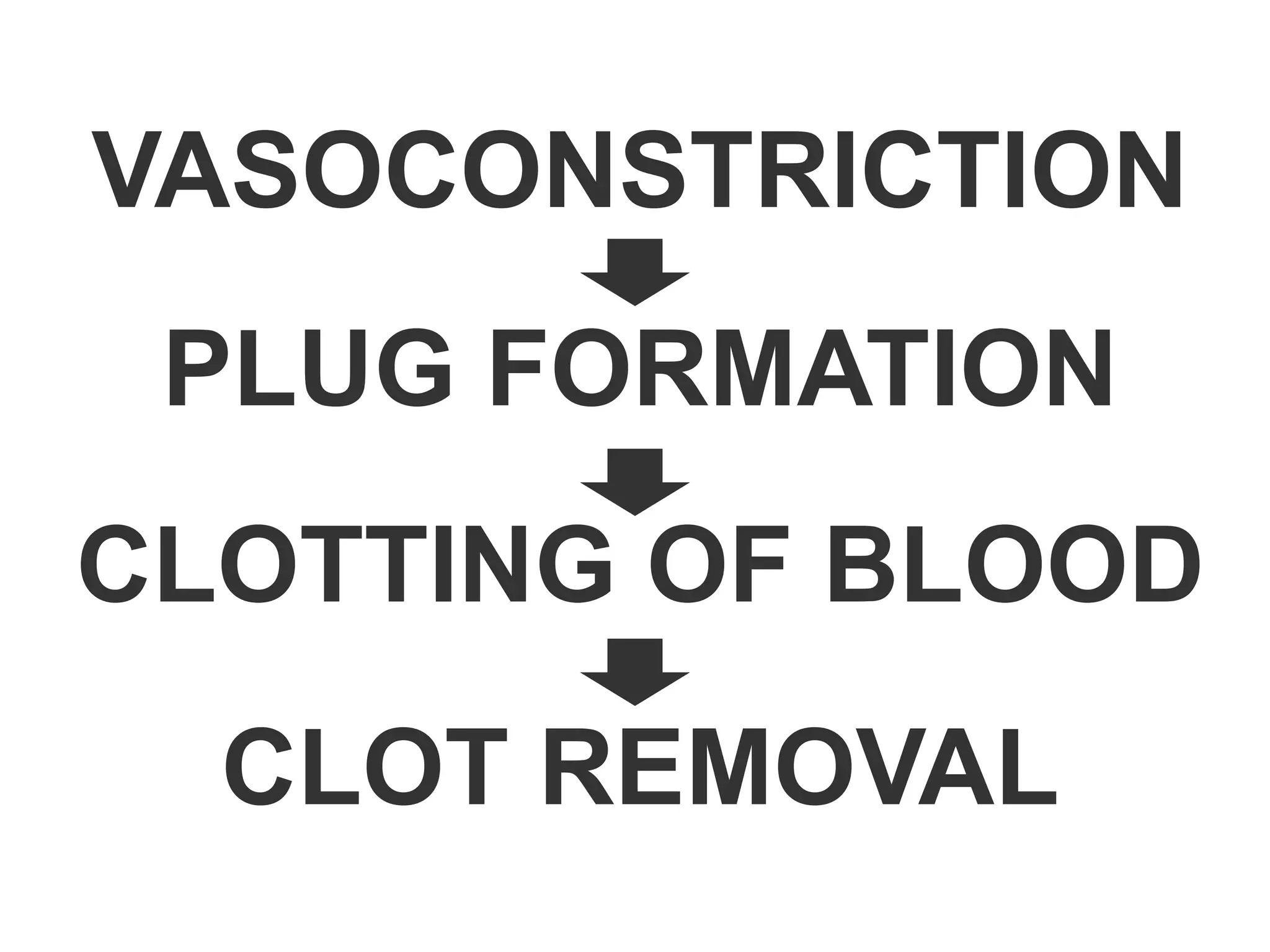
The document covers the process of hemostasis, including mechanisms like vasoconstriction, plug formation, and clotting involving various factors. It also discusses clot removal and fibrinolysis with insights on fibrinolytics and anticoagulants, highlighting pros and cons of different treatments. Various references and studies are cited to provide a comprehensive overview of hemostasis and related disorders.
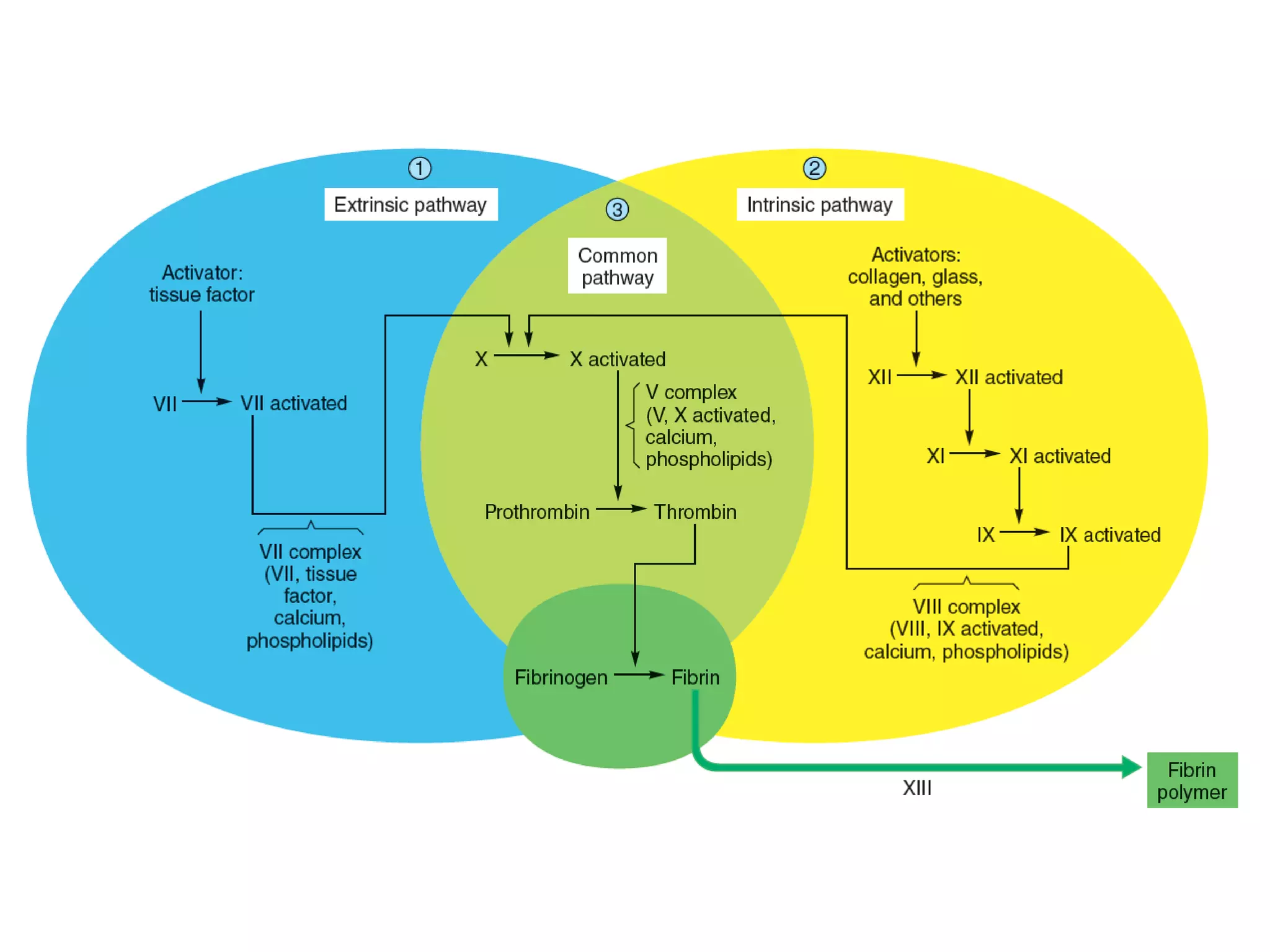
VII + Tissuefactor
IX + VIII
X + V
II
Fibrin clot
Antithrombin
TFP
inhibitor
Protein S and
protein C
Fibrinolysis
INHIBITION OF EXCESSIVE
CLOTTINGDavid Lillicrap; Nigel Key; Michael Makris; Denise O'Shaughnessy (2009). Practical Hemostasis and Thrombosis. Wiley-
Blackwell. pp. 1–5
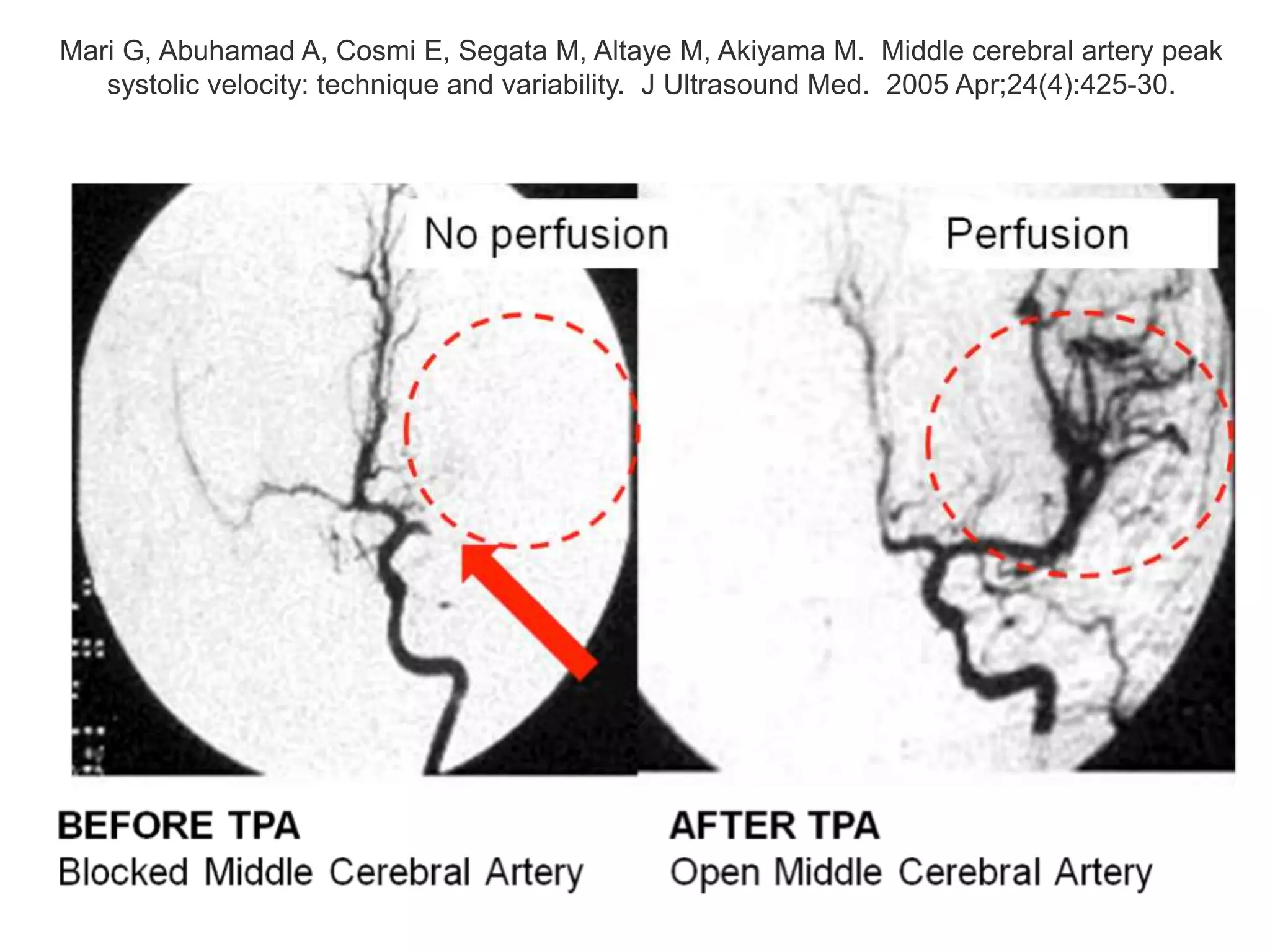
Mari G, AbuhamadA, Cosmi E, Segata M, Altaye M, Akiyama M. Middle cerebral artery peak
systolic velocity: technique and variability. J Ultrasound Med. 2005 Apr;24(4):425-30.
24.
Hatton, Chris (2008).Haematology (Lecture Notes). Cambridge, MA: Blackwell
Publishers. pp. 145–166
ANTICOAGULANTS
25.
A NEW ERAIN ANTICOAGULANTS
Jessica L. Mega, M.D., M.P.H.; N Engl J Med 2011; 365:1052-1054