BLENDEDLEARNING:
LEARNINGMAKEOVER
ABD KARIM ALIAS
UNIVERSITI SAINS MALAYSIA
2
Abd	Karim	Alias@2014
3
Abd	Karim	Alias@2014
4
Abd	Karim	Alias@2014
Agenda
What? Why? Why now?1
How? What are
the steps? Design?2
How technology can
facilitate?3
Sharing my own blend4
Abd Karim Alias@2015
Blend your own course5
6
Abd	Karim	Alias@2014
INTERACTION SPACE
https://todaysmeet.com/usmblend
7
Abd	Karim	Alias@2016
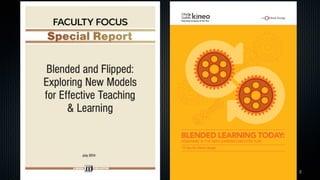
A bundle of e-book for
YOU!
8
Abd	Karim	Alias@2014
9
Abd	Karim	Alias@2014
What are the common challenges
you face in your classroom?
https://todaysmeet.com/usmblend
Say something here…
Group activity (5 min)
10
Abd	Karim	Alias@2014
What inspired you to learn
about blended learning?
https://todaysmeet.com/usmblend
Say something here…
Individual activity (5 min)
11
Abd	Karim	Alias@2014
Think of one small change you can make but
will have significant impact on your class?
https://todaysmeet.com/usmblend
Say something here…
Group activity (5 min)
Abd	Karim	Alias@201112
The21st CenturyEducation
Abd Karim Alias@2015
13
Image	source:	http://office.microsoft.com/en-us/clipart/
How well does today’s
education prepare students
for the 21st century?
Abd Karim Alias@2015
14
Abd Karim Alias@2015
TRADITIONALCLASSROOMMODEL
How do I make
this course more
exciting…?
interesting
engaging
fun
Yet
effective
Image source: http://office.microsoft.com/en-us/clipart/ Abd Karim Alias@2015
16
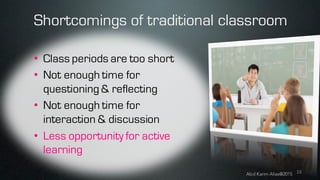
• Class periods are too short
• Not enough time for
questioning& reflecting
• Not enough time for
interaction & discussion
• Less opportunity for active
learning
Shortcomings of traditional classroom
Abd Karim Alias@2015
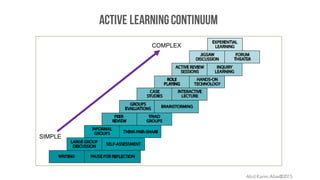
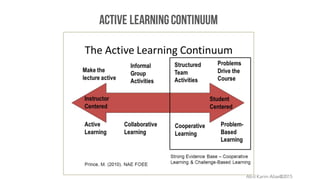
ACTIVE LEARNINGCONTINUUM
Abd Karim Alias@2015
SIMPLE
COMPLEX

ACTIVE LEARNINGCONTINUUM
Abd Karim Alias@2015
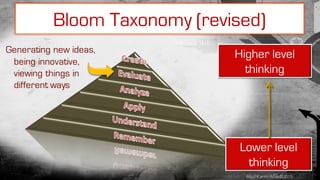
Lower level
thinking
Higher level
thinking
Generating new ideas,
being innovative,
viewing things in
different ways
Bloom Taxonomy (revised)
Abd Karim Alias@2015
20
EMBRACING
21
Blending F2F with Technology
Abd Karim Alias@2015
Abd	Karim	Alias@2014
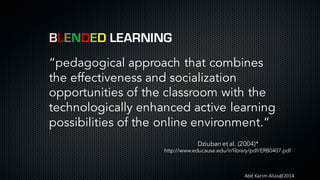
“pedagogical approach that combines
the effectiveness and socialization
opportunities of the classroom with the
technologically enhanced active learning
possibilities of the online environment.”
http://www.educause.edu/ir/library/pdf/ERB0407.pdf
Dziuban et al. (2004)*
BLENDED LEARNING
AbdKarim Alias@2015
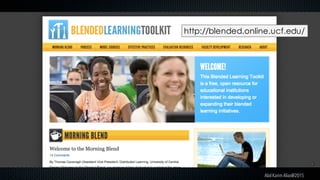
http://blended.online.ucf.edu/
Abd	Karim	Alias@2014
Flexible Learning
‘Flexible learning’ provides
opportunities to improve the
student learning experience
through flexibility in time, pace, mode of
study, teaching approach, forms of
assessment and staffing.
Abd	Karim	Alias@2014
BLENDED/FlexibleLearning
…to enrich learning
experiences…optimise student
engagement…to achieve deep,
meaningful learning.
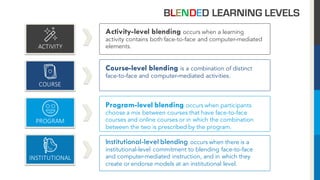
BLENDED LEARNING LEVELS
ACTIVITY
Activity-level blending occurs when a learning
activity contains both face-to-face and computer-mediated
elements.
COURSE
Course-level blending is a combination of distinct
face-to-face and computer-mediated activities.
PROGRAM
Program-level blending occurs when participants
choose a mix between courses that have face-to-face
courses and online courses or in which the combination
between the two is prescribed by the program.
ACTION
INSTITUTIONAL
Institutional-level blending occurs when there is a
institutional-level commitment to blending face-to-face
and computer-mediated instruction, and in which they
create or endorse models at an institutional level.
28
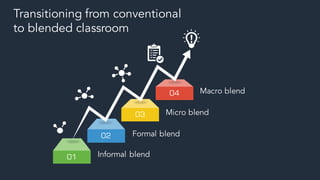
Transitioning from conventional
to blended classroom
01
02
03
04 Macro blend
Micro blend
Formal blend
Informal blend
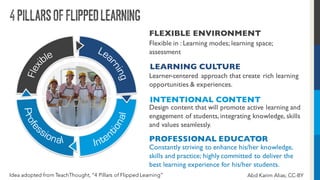
Flexible in : Learning modes; learning space;
assessment
FLEXIBLE ENVIRONMENT
LEARNING CULTURE
Learner-centered approach that create rich learning
opportunities & experiences.
INTENTIONAL CONTENT
Design content that will promote active learning and
engagement of students, integrating knowledge, skills
and values seamlessly.
PROFESSIONAL EDUCATOR
Constantly striving to enhance his/her knowledge,
skills and practice; highly committed to deliver the
best learning experience for his/her students.
4Pillarsof FlippedLearning
Idea adopted from TeachThought, “4 Pillars of Flipped Learning” Abd Karim Alias; CC-BY
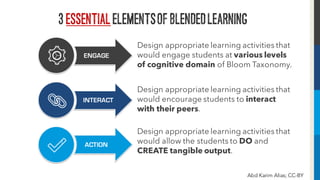
3 EssentialElementsof blendedlearning
ENGAGE
INTERACT
ACTION
Design appropriate learning activities that
would engage students at various levels
of cognitive domain of Bloom Taxonomy.
Design appropriate learning activities that
would encourage students to interact
with their peers.
Design appropriate learning activities that
would allow the students to DO and
CREATE tangible output.
Abd Karim Alias; CC-BY
32
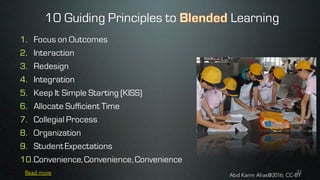
10 Guiding Principles to Learning
1. Focus on Outcomes
2. Interaction
3. Redesign
4. Integration
5. Keep It Simple Starting (KISS)
6. Allocate Sufficient Time
7. Collegial Process
8. Organization
9. Student Expectations
10.Convenience,Convenience,Convenience
Read more Abd Karim Alias@2016; CC-BY
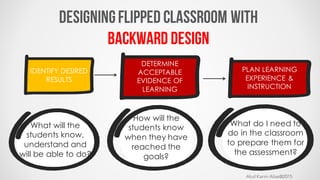
Designingflipped classroom with
Backward Design
What will the
students know,
understand and
will be able to do?
IDENTIFY DESIRED
RESULTS
DETERMINE
ACCEPTABLE
EVIDENCE OF
LEARNING
PLAN LEARNING
EXPERIENCE &
INSTRUCTION
How will the
students know
when they have
reached the
goals?
What do I need to
do in the classroom
to prepare them for
the assessment?
Abd Karim Alias@2015
34
35
Abd	Karim	Alias@2011
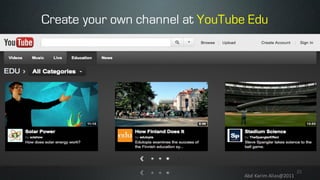
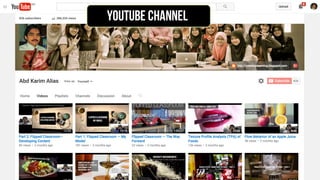
Create your own channel at YouTube Edu
YouTube Channel
37
Abd Karim Alias@2015
Vimeo Channel
38Abd Karim Alias@2015
Slideshare
39
40
Schoology
41
Coursesites
42
43
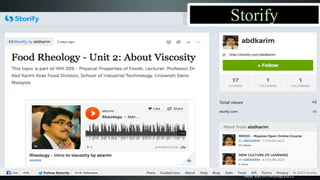
Storify
44
Abd	Karim	Alias@2011
Storify
45
46
Abd	Karim	Alias@2014
So…it’s ALL about…
Abd	Karim	Alias@2014Image	source:	http://science.howstuffworks.com/thinking-cap.htm/
“There is no such thing as an
unmotivated student. There are,
however, students in
unmotivated states”.
- Eric Jensen
48
Motivation is a prerequisite for
engagement; engagement is a
prerequisite for LEARNING.
Abd	Karim	Alias@2015
49
Abd	Karim	Alias@2015
Abd	Karim	Alias@201150Abd Karim Alias@2015
51
Strengthening Student Engagement: WhatDoStudents Want?
(and whatreally motivates them)?
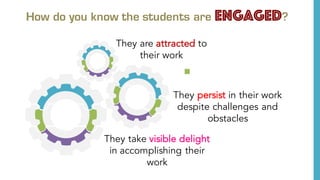
They are attracted to
their work
They take visible delight
in accomplishing their
work
They persist in their work
despite challenges and
obstacles
How do you know the students are engaged?
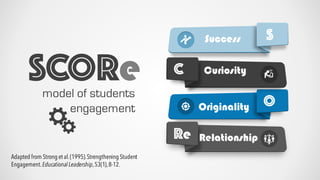
model of students
engagement
SSuccess
OOriginality
Re Relationship
C Curiosity
SCORe
Adapted from Strong et al.(1995).Strengthening Student
Engagement.Educational Leadership,53(1),8-12.
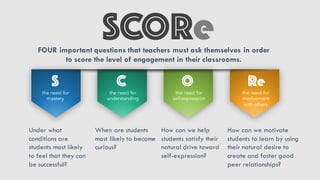
FOUR important questions that teachers must ask themselves in order
to score the level of engagement in their classrooms.
Under what
conditions are
students most likely
to feel that they can
be successful?
When are students
most likely to become
curious?
How can we help
students satisfy their
natural drive toward
self-expression?
How can we motivate
students to learn by using
their natural desire to
create and foster good
peer relationships?
SCORe
S C O Re
the need for
mastery
the need for
understanding
the need for
self-expression
the need for
involvement
with others

Blended Learning—Learning Makeover