LEARNING EXPERIENCES
WHAT IS A LEARNING EXPERIENCE?
• A learning experience is any interaction or activity that facilitates the
acquisition of new knowledge, skills, values, attitudes, or behaviors. it
can occur in a variety of settings, including classrooms, online courses,
workshops, training sessions, or informal learning environments.
• The goal of a learning experience is to create a positive and engaging
environment that promotes learning. a good learning experience should
be designed with the learner in mind, taking into account their individual
needs, interests, and learning styles. it should also be relevant,
meaningful, and applicable to the learner's real-life situations.
TYPES OF LEARNING EXPERIENCES
• FORMAL LEARNING: This refers to structured learning that takes place in formal settings, such as classrooms,
lectures, and workshops. it is usually led by an instructor or teacher and follows a predetermined curriculum.
• INFORMAL LEARNING: This refers to learning that takes place outside of formal settings, such as self-directed
learning, on-the-job training, or social learning. it is often driven by personal interests and curiosity.
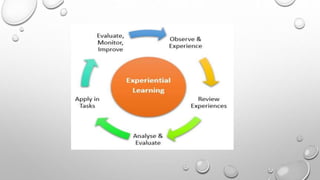
• EXPERIENTIAL LEARNING: This refers to learning through hands-on experience and experimentation. it involves
actively engaging in the learning process by doing and reflecting on what has been learned.
• COLLABORATIVE LEARNING: This refers to learning that occurs through collaboration and teamwork. it involves
working together with others to solve problems, share knowledge, and achieve common goals.
• E-LEARNING: This refers to learning that takes place online or through digital technologies, such as virtual
classrooms, online courses, and educational apps.
• BLENDED LEARNING: This refers to a combination of different learning modalities, such as face-to-face instruction
and online learning. it aims to provide a more flexible and personalized learning experience.
HOW DOES LEARNING EXPERIENCE IMPACT LEARNER
ENGAGEMENT?
• RELEVANCE: If learners perceive that the learning experience is relevant to their goals, interests, and needs, they are more likely to
engage with the content and actively participate in the learning process.
• INTERACTIVITY: The more interactive the learning experience is, the more engaged learners are likely to be. interactive activities such
as games, simulations, and role-playing exercises can enhance engagement by creating a more immersive and participatory learning
environment.
• PERSONALIZATION: When the learning experience is personalized to the individual learner's needs, preferences, and learning style,
learners are more likely to feel valued and invested in the learning process.
• FEEDBACK: Providing timely and constructive feedback can enhance learner engagement by helping learners to monitor their
progress, identify areas for improvement, and celebrate their successes.
• SOCIAL CONNECTION: When learners feel connected to their peers and instructors, they are more likely to engage with the content
and participate in the learning process. encouraging social interaction and collaboration through discussion forums, group projects,
and peer feedback can enhance engagement.
• ACCESSIBILITY: If the learning experience is accessible and easy to use, learners are more likely to engage with the content and
complete the learning activities. a well-designed user interface and mobile-friendly platform can help to remove barriers to
engagement.
Learning Experiences.pptx

Learning Experiences.pptx

  • 1.
  • 2.
    WHAT IS ALEARNING EXPERIENCE? • A learning experience is any interaction or activity that facilitates the acquisition of new knowledge, skills, values, attitudes, or behaviors. it can occur in a variety of settings, including classrooms, online courses, workshops, training sessions, or informal learning environments. • The goal of a learning experience is to create a positive and engaging environment that promotes learning. a good learning experience should be designed with the learner in mind, taking into account their individual needs, interests, and learning styles. it should also be relevant, meaningful, and applicable to the learner's real-life situations.
  • 3.
    TYPES OF LEARNINGEXPERIENCES • FORMAL LEARNING: This refers to structured learning that takes place in formal settings, such as classrooms, lectures, and workshops. it is usually led by an instructor or teacher and follows a predetermined curriculum. • INFORMAL LEARNING: This refers to learning that takes place outside of formal settings, such as self-directed learning, on-the-job training, or social learning. it is often driven by personal interests and curiosity. • EXPERIENTIAL LEARNING: This refers to learning through hands-on experience and experimentation. it involves actively engaging in the learning process by doing and reflecting on what has been learned. • COLLABORATIVE LEARNING: This refers to learning that occurs through collaboration and teamwork. it involves working together with others to solve problems, share knowledge, and achieve common goals. • E-LEARNING: This refers to learning that takes place online or through digital technologies, such as virtual classrooms, online courses, and educational apps. • BLENDED LEARNING: This refers to a combination of different learning modalities, such as face-to-face instruction and online learning. it aims to provide a more flexible and personalized learning experience.
  • 4.
    HOW DOES LEARNINGEXPERIENCE IMPACT LEARNER ENGAGEMENT? • RELEVANCE: If learners perceive that the learning experience is relevant to their goals, interests, and needs, they are more likely to engage with the content and actively participate in the learning process. • INTERACTIVITY: The more interactive the learning experience is, the more engaged learners are likely to be. interactive activities such as games, simulations, and role-playing exercises can enhance engagement by creating a more immersive and participatory learning environment. • PERSONALIZATION: When the learning experience is personalized to the individual learner's needs, preferences, and learning style, learners are more likely to feel valued and invested in the learning process. • FEEDBACK: Providing timely and constructive feedback can enhance learner engagement by helping learners to monitor their progress, identify areas for improvement, and celebrate their successes. • SOCIAL CONNECTION: When learners feel connected to their peers and instructors, they are more likely to engage with the content and participate in the learning process. encouraging social interaction and collaboration through discussion forums, group projects, and peer feedback can enhance engagement. • ACCESSIBILITY: If the learning experience is accessible and easy to use, learners are more likely to engage with the content and complete the learning activities. a well-designed user interface and mobile-friendly platform can help to remove barriers to engagement.