BIPOLAR DISORDER
Tyrone A. Washington, Jr.
Mr. Tyner ~ Psychology
HISTORY
Bipolar disorder, also known as bipolar affective
disorder (originally called manic-depressive illness), is a mental
disorder characterized by periods of elevated mood and periods of
depression. The elevated mood is significant and is known as
mania or hypomania depending on the severity or whether there is
psychosis. During mania an individual feels or acts abnormally
happy, energetic, or irritable. They often make poorly thought out
decisions with little regard to the consequences. The need for sleep
is usually reduced. During periods of depression there may be
crying, poor eye contact with others, and a negative outlook on life.
The risk of suicide among those with the disorder is high at greater
than 6% over 20 years, while self harm occurs in 30–40%.Other
mental health issues such as anxiety disorder and substance use
disorder are commonly associated.
2
SOURCE: Wikipedia ~ http://en.wikipedia.org/wiki/Bipolar_disorder
TYPES
Bipolar I disorder: At least one manic episode is necessary to
make the diagnosis
Bipolar II disorder: No manic episodes, but one or more
hypomanic episodes and one or more major depressive episode
Cyclothymia: A history of hypomanic episodes with periods of
depression that do not meet criteria for major depressive
episodes
Bipolar disorder NOS (not otherwise specified): This is a catchall
category, diagnosed when the disorder does not fall within a
specific subtype.
3
SOURCE: Wikipedia ~ http://en.wikipedia.org/wiki/Bipolar_disorder#Criteria_and_subtypes
AGES AFFECTED
0-2 Never
3-5 Very rare
6-13 Rare
14-18 Common
19-40 Very common
41-60 Very common
60+ Common
4
SOURCE: Mayo Clinic ~ http://www.mayoclinic.org/
FACTS
Fact: Bipolar disorder is a treatable brain disorder
thatisrealandcancausealotofsuffering,especially
if it is not well managed. Individuals cannot just
snapoutofit!Recoverytakestimeandhardwork
Fact: Proper medical treatment and good support
enables most people (more than 75%) with bipolar
toworkandbesuccessful.
Fact: Bipolar disorder is a medical condition just
like diabetes or any other health condition. People
with bipolar disorder cannot “just pull themselves
together”andgetbetter.Treatmentisnecessary.
5
SOURCE: Mood Disorders Association of British Columbia ~ http://www.heretohelp.bc.ca/factsheet/bipolar-disorder-myths-and-facts
CAUSES
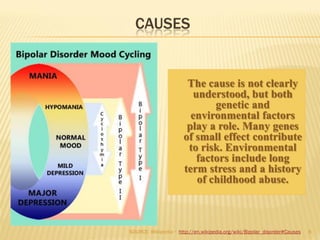
The cause is not clearly
understood, but both
genetic and
environmental factors
play a role. Many genes
of small effect contribute
to risk. Environmental
factors include long
term stress and a history
of childhood abuse.
6SOURCE: Wikipedia ~ http://en.wikipedia.org/wiki/Bipolar_disorder#Causes
SYMPTOMS
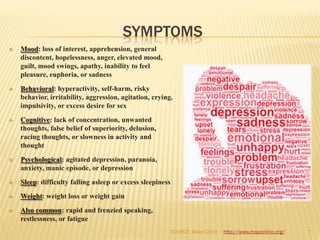
 Mood: loss of interest, apprehension, general
discontent, hopelessness, anger, elevated mood,
guilt, mood swings, apathy, inability to feel
pleasure, euphoria, or sadness
 Behavioral: hyperactivity, self-harm, risky
behavior, irritability, aggression, agitation, crying,
impulsivity, or excess desire for sex
 Cognitive: lack of concentration, unwanted
thoughts, false belief of superiority, delusion,
racing thoughts, or slowness in activity and
thought
 Psychological: agitated depression, paranoia,
anxiety, manic episode, or depression
 Sleep: difficulty falling asleep or excess sleepiness
 Weight: weight loss or weight gain
 Also common: rapid and frenzied speaking,
restlessness, or fatigue
7SOURCE: Mayo Clinic ~ http://www.mayoclinic.org/
DIAGNOSIS
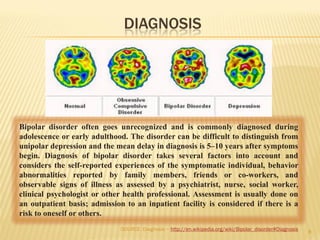
Bipolar disorder often goes unrecognized and is commonly diagnosed during
adolescence or early adulthood. The disorder can be difficult to distinguish from
unipolar depression and the mean delay in diagnosis is 5–10 years after symptoms
begin. Diagnosis of bipolar disorder takes several factors into account and
considers the self-reported experiences of the symptomatic individual, behavior
abnormalities reported by family members, friends or co-workers, and
observable signs of illness as assessed by a psychiatrist, nurse, social worker,
clinical psychologist or other health professional. Assessment is usually done on
an outpatient basis; admission to an inpatient facility is considered if there is a
risk to oneself or others.
8
:SOURCE: Diagnosis ~ http://en.wikipedia.org/wiki/Bipolar_disorder#Diagnosis
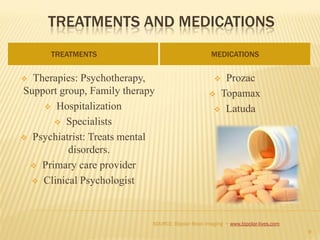
TREATMENTS AND MEDICATIONS
TREATMENTS MEDICATIONS
 Therapies: Psychotherapy,
Support group, Family therapy
 Hospitalization
 Specialists
 Psychiatrist: Treats mental
disorders.
 Primary care provider
 Clinical Psychologist
 Prozac
 Topamax
 Latuda
9
SOURCE: Bipolar Brain Imaging ~ www.bipolar-lives.com
~~ THE END ~~
April 27, 2015
10

Bipolar Disorder PowerPoint

  • 1.
    BIPOLAR DISORDER Tyrone A.Washington, Jr. Mr. Tyner ~ Psychology
  • 2.
    HISTORY Bipolar disorder, alsoknown as bipolar affective disorder (originally called manic-depressive illness), is a mental disorder characterized by periods of elevated mood and periods of depression. The elevated mood is significant and is known as mania or hypomania depending on the severity or whether there is psychosis. During mania an individual feels or acts abnormally happy, energetic, or irritable. They often make poorly thought out decisions with little regard to the consequences. The need for sleep is usually reduced. During periods of depression there may be crying, poor eye contact with others, and a negative outlook on life. The risk of suicide among those with the disorder is high at greater than 6% over 20 years, while self harm occurs in 30–40%.Other mental health issues such as anxiety disorder and substance use disorder are commonly associated. 2 SOURCE: Wikipedia ~ http://en.wikipedia.org/wiki/Bipolar_disorder
  • 3.
    TYPES Bipolar I disorder:At least one manic episode is necessary to make the diagnosis Bipolar II disorder: No manic episodes, but one or more hypomanic episodes and one or more major depressive episode Cyclothymia: A history of hypomanic episodes with periods of depression that do not meet criteria for major depressive episodes Bipolar disorder NOS (not otherwise specified): This is a catchall category, diagnosed when the disorder does not fall within a specific subtype. 3 SOURCE: Wikipedia ~ http://en.wikipedia.org/wiki/Bipolar_disorder#Criteria_and_subtypes
  • 4.
    AGES AFFECTED 0-2 Never 3-5Very rare 6-13 Rare 14-18 Common 19-40 Very common 41-60 Very common 60+ Common 4 SOURCE: Mayo Clinic ~ http://www.mayoclinic.org/
  • 5.
    FACTS Fact: Bipolar disorderis a treatable brain disorder thatisrealandcancausealotofsuffering,especially if it is not well managed. Individuals cannot just snapoutofit!Recoverytakestimeandhardwork Fact: Proper medical treatment and good support enables most people (more than 75%) with bipolar toworkandbesuccessful. Fact: Bipolar disorder is a medical condition just like diabetes or any other health condition. People with bipolar disorder cannot “just pull themselves together”andgetbetter.Treatmentisnecessary. 5 SOURCE: Mood Disorders Association of British Columbia ~ http://www.heretohelp.bc.ca/factsheet/bipolar-disorder-myths-and-facts
  • 6.
    CAUSES The cause isnot clearly understood, but both genetic and environmental factors play a role. Many genes of small effect contribute to risk. Environmental factors include long term stress and a history of childhood abuse. 6SOURCE: Wikipedia ~ http://en.wikipedia.org/wiki/Bipolar_disorder#Causes
  • 7.
    SYMPTOMS  Mood: lossof interest, apprehension, general discontent, hopelessness, anger, elevated mood, guilt, mood swings, apathy, inability to feel pleasure, euphoria, or sadness  Behavioral: hyperactivity, self-harm, risky behavior, irritability, aggression, agitation, crying, impulsivity, or excess desire for sex  Cognitive: lack of concentration, unwanted thoughts, false belief of superiority, delusion, racing thoughts, or slowness in activity and thought  Psychological: agitated depression, paranoia, anxiety, manic episode, or depression  Sleep: difficulty falling asleep or excess sleepiness  Weight: weight loss or weight gain  Also common: rapid and frenzied speaking, restlessness, or fatigue 7SOURCE: Mayo Clinic ~ http://www.mayoclinic.org/
  • 8.
    DIAGNOSIS Bipolar disorder oftengoes unrecognized and is commonly diagnosed during adolescence or early adulthood. The disorder can be difficult to distinguish from unipolar depression and the mean delay in diagnosis is 5–10 years after symptoms begin. Diagnosis of bipolar disorder takes several factors into account and considers the self-reported experiences of the symptomatic individual, behavior abnormalities reported by family members, friends or co-workers, and observable signs of illness as assessed by a psychiatrist, nurse, social worker, clinical psychologist or other health professional. Assessment is usually done on an outpatient basis; admission to an inpatient facility is considered if there is a risk to oneself or others. 8 :SOURCE: Diagnosis ~ http://en.wikipedia.org/wiki/Bipolar_disorder#Diagnosis
  • 9.
    TREATMENTS AND MEDICATIONS TREATMENTSMEDICATIONS  Therapies: Psychotherapy, Support group, Family therapy  Hospitalization  Specialists  Psychiatrist: Treats mental disorders.  Primary care provider  Clinical Psychologist  Prozac  Topamax  Latuda 9 SOURCE: Bipolar Brain Imaging ~ www.bipolar-lives.com
  • 10.
    ~~ THE END~~ April 27, 2015 10