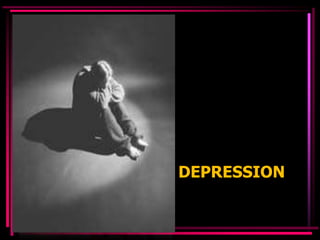
DEPRESSION
MOOD DISORDERS :
Mood/affective Disorders
are characterised by a
disturbance of mood,
accompanied by a full or
partial manic or depressive
syndrome, which is not due
to any other physical and
mental disorder.
CLASSIFICATION
• F 30 : MANIC EPISODE
• F 31: BIPOLAR AFFECTIVE DISORDER
• F32 : DEPRESSIVE EPISODE
• F33 : RECURRENT DEPRESSIVE
DISORDER
• F34: PERSISTENT MOOD DISORDER
• F38 : OTHER MOOD DISORDERS
• F39 : UNSPECIFIED MOOD DISORDERS
DEFINITION
Oxford textbook of psychiatry (1997)
defines depressive disorders as
syndromes of depressed mood,
pessimistic thinking , lack of enjoyment,
reduced energy and slowness.
ICD-10 CLASSIFICATION
• F30-39- mood ( affective disorder)
• F 32 -Depressive episode
• F 32.0 -Mild depressive episode
• F 32.1 - Moderate depressive episode
• F 32.2 - Severe depressive episode without psychotic
symptoms
• F 32.3 - Severe depressive episode with psychotic
symptoms
• F 32.8 - Other depressive episode – atypical depression
• F 32.9 - Depressive episode , unspecified
• F 33 - Recurrent depressive disorder.
EPIDEMIOLOGY
lifetime prevalence of about 15%
perhaps as high as 25% for women.
• Sex: more in women.
• Age: The mean age of onset is about
40 years, 50% of all the patients have
an onset between 20-50 years of age.
• Marital status
• Socioeconomic and cultural
considerations: rural areas than in
urban.
ETIOLOGY
• Biological Theories
– Genetics:
• twin studies,
• family studies and
• Adoption studies.
ETIOLOGY
• Biochemical influences (
NE,SERO.,DOP,A.CH)
• Neuroendocrine disturbances
– Hyperactivity of adrenal gland
– Decreased level of thyroid hormone
ETIOLOGY
• Physiological influences
– Medication side effects: steroids,
hormones, sedatives, antineoplastics,
antibacterials
– Neurological disorders:
– Nutritional deficiencies:
ETIOLOGY
• PSYCHOSOCIAL THEORIES
– Psychoanalytic theory: loss of loved
object.
– Behavioral theory: conditioned by
repeated losses in past.
– Cognitive theory: depression is due to
negative cognitions
– Sociological theory: Stressful life
events
CLINICAL FEATURES
• DEPRESSED MOOD: Sadness of mood,
loss of interest and loss of pleasure in
almost all activities.
– Pervasive and persistent pattern of
sadness.
CLINICAL FEATURES
• DEPRESSIVE COGNITIONS
– Hopelessness: no hope in future due to
pessimism.
– Helplessness: no help is possible
– Worthlessness: feeling of inadequacy and
inferiority.
– Unreasonable guilt
– Self blame
CLINICAL FEATURES
• SUICIDAL THOUGHTS:
• PSYCHOMOTOR ACTIVITY:
– Psychomotor retardation
– Thinks, walks and acts slowly
– Monotonous
– Delay in answering questions
CLINICAL FEATURES
• PSYCHOTIC FEATURES
– Delusions and hallucinations
CLINICAL FEATURES
• Somatic symptoms
– Significant decrease in appetite or weight
– Early morning awakening
– Pervasive lack of interest and lack of reactivity to
pleasurable stimuli
– Posture is stooped
– Reddened eyes from crying
– Persons look 10 years older than their
chronological age.
– Constipation and anorexia
– dry mouth, headache, sleep disturbance, fatigue
and lowered libido
MAJOR DEPRESSIVE DISORDERS
• SINGLE EPISODE OR RECURRENT
• MILD/MODERATE/ SEVERE
• WITH PSYCHOTIC FEATURES
• WITH CATATONIC FEATURES
• WITH MELANCHOLIC FEATURES
• CHRONIC
• WITH SEASONAL PATTERN
• WITH POSTPARTUM ONSET
• DYSTHYMIC DISORDER
• PREMENSTRUAL DYSPHORIC DISORDER
DIAGNOSIS
• ICD 10 diagnostic criteria
• Psychological tests- Beck depression
inventory, Hamilton rating scale
• Dexamethazone suppression test
• Based on signs and symptoms
TREATMENT
• Pharmacotherapy
PHARMACOTHERAPY
• antidepressants
PHYSICAL THERAPIES
• ELECTROCONVULSIVE THERAPY:
severe depression with suicidal risk .
• LIGHT THERAPY: seasonal depression
• REPETITIVE TRANS CRANIAL
MAGNETIC STIMULATION.
PSYCHOSOCIAL THERAPIES
• Cognitive therapy
• Psychoanalytic therapy
• Supportive psychotherapy
• Group therapy
• Family therapy
• Behavioral therapy
NURSING MANAGEMENT
ASSESSMENT
NURSING DIAGNOSIS
• High risk for self directed violence
related to depressed mood, feelings of
worthlessness and anger turned inward
on the self
• Dysfunctional grieving related to real or
perceived loss as evidenced by denial of
loss, inappropriate expression of anger.
• Powerlessness related to dysfunctional
grieving process as evidenced by feeling of
lack of control over life situations.
• Self esteem disturbance related to learned
helplessness , negative view of self as
evidenced by expression of worthlessness
and sensitivity to criticism
• Altered sleep and rest related to depressed
mood as evidenced by difficulty in falling
asleep and early morning awakening.
THANK YOU

Depression

  • 1.
  • 2.
    MOOD DISORDERS : Mood/affectiveDisorders are characterised by a disturbance of mood, accompanied by a full or partial manic or depressive syndrome, which is not due to any other physical and mental disorder.
  • 3.
    CLASSIFICATION • F 30: MANIC EPISODE • F 31: BIPOLAR AFFECTIVE DISORDER • F32 : DEPRESSIVE EPISODE • F33 : RECURRENT DEPRESSIVE DISORDER • F34: PERSISTENT MOOD DISORDER • F38 : OTHER MOOD DISORDERS • F39 : UNSPECIFIED MOOD DISORDERS
  • 4.
    DEFINITION Oxford textbook ofpsychiatry (1997) defines depressive disorders as syndromes of depressed mood, pessimistic thinking , lack of enjoyment, reduced energy and slowness.
  • 5.
    ICD-10 CLASSIFICATION • F30-39-mood ( affective disorder) • F 32 -Depressive episode • F 32.0 -Mild depressive episode • F 32.1 - Moderate depressive episode • F 32.2 - Severe depressive episode without psychotic symptoms • F 32.3 - Severe depressive episode with psychotic symptoms • F 32.8 - Other depressive episode – atypical depression • F 32.9 - Depressive episode , unspecified • F 33 - Recurrent depressive disorder.
  • 6.
    EPIDEMIOLOGY lifetime prevalence ofabout 15% perhaps as high as 25% for women. • Sex: more in women. • Age: The mean age of onset is about 40 years, 50% of all the patients have an onset between 20-50 years of age. • Marital status • Socioeconomic and cultural considerations: rural areas than in urban.
  • 7.
    ETIOLOGY • Biological Theories –Genetics: • twin studies, • family studies and • Adoption studies.
  • 8.
    ETIOLOGY • Biochemical influences( NE,SERO.,DOP,A.CH) • Neuroendocrine disturbances – Hyperactivity of adrenal gland – Decreased level of thyroid hormone
  • 9.
    ETIOLOGY • Physiological influences –Medication side effects: steroids, hormones, sedatives, antineoplastics, antibacterials – Neurological disorders: – Nutritional deficiencies:
  • 10.
    ETIOLOGY • PSYCHOSOCIAL THEORIES –Psychoanalytic theory: loss of loved object. – Behavioral theory: conditioned by repeated losses in past. – Cognitive theory: depression is due to negative cognitions – Sociological theory: Stressful life events
  • 11.
    CLINICAL FEATURES • DEPRESSEDMOOD: Sadness of mood, loss of interest and loss of pleasure in almost all activities. – Pervasive and persistent pattern of sadness.
  • 12.
    CLINICAL FEATURES • DEPRESSIVECOGNITIONS – Hopelessness: no hope in future due to pessimism. – Helplessness: no help is possible – Worthlessness: feeling of inadequacy and inferiority. – Unreasonable guilt – Self blame
  • 13.
    CLINICAL FEATURES • SUICIDALTHOUGHTS: • PSYCHOMOTOR ACTIVITY: – Psychomotor retardation – Thinks, walks and acts slowly – Monotonous – Delay in answering questions
  • 14.
    CLINICAL FEATURES • PSYCHOTICFEATURES – Delusions and hallucinations
  • 15.
    CLINICAL FEATURES • Somaticsymptoms – Significant decrease in appetite or weight – Early morning awakening – Pervasive lack of interest and lack of reactivity to pleasurable stimuli – Posture is stooped – Reddened eyes from crying – Persons look 10 years older than their chronological age. – Constipation and anorexia – dry mouth, headache, sleep disturbance, fatigue and lowered libido
  • 16.
    MAJOR DEPRESSIVE DISORDERS •SINGLE EPISODE OR RECURRENT • MILD/MODERATE/ SEVERE • WITH PSYCHOTIC FEATURES • WITH CATATONIC FEATURES • WITH MELANCHOLIC FEATURES • CHRONIC • WITH SEASONAL PATTERN • WITH POSTPARTUM ONSET • DYSTHYMIC DISORDER • PREMENSTRUAL DYSPHORIC DISORDER
  • 17.
    DIAGNOSIS • ICD 10diagnostic criteria • Psychological tests- Beck depression inventory, Hamilton rating scale • Dexamethazone suppression test • Based on signs and symptoms
  • 18.
  • 19.
  • 20.
    PHYSICAL THERAPIES • ELECTROCONVULSIVETHERAPY: severe depression with suicidal risk . • LIGHT THERAPY: seasonal depression • REPETITIVE TRANS CRANIAL MAGNETIC STIMULATION.
  • 21.
    PSYCHOSOCIAL THERAPIES • Cognitivetherapy • Psychoanalytic therapy • Supportive psychotherapy • Group therapy • Family therapy • Behavioral therapy
  • 22.
  • 23.
  • 24.
    NURSING DIAGNOSIS • Highrisk for self directed violence related to depressed mood, feelings of worthlessness and anger turned inward on the self • Dysfunctional grieving related to real or perceived loss as evidenced by denial of loss, inappropriate expression of anger.
  • 25.
    • Powerlessness relatedto dysfunctional grieving process as evidenced by feeling of lack of control over life situations. • Self esteem disturbance related to learned helplessness , negative view of self as evidenced by expression of worthlessness and sensitivity to criticism • Altered sleep and rest related to depressed mood as evidenced by difficulty in falling asleep and early morning awakening.
  • 26.