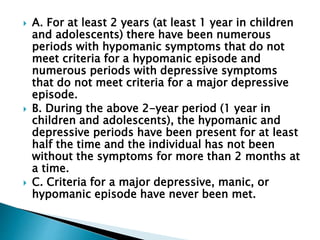
 A. For at least 2 years (at least 1 year in children 
and adolescents) there have been numerous 
periods with hypomanic symptoms that do not 
meet criteria for a hypomanic episode and 
numerous periods with depressive symptoms 
that do not meet criteria for a major depressive 
episode. 
 B. During the above 2-year period (1 year in 
children and adolescents), the hypomanic and 
depressive periods have been present for at least 
half the time and the individual has not been 
without the symptoms for more than 2 months at 
a time. 
 C. Criteria for a major depressive, manic, or 
hypomanic episode have never been met.
 D. The symptoms in Criterion A are not better 
explained by schizoaffective disorder, 
schizophrenia, schizophreniform disorder, 
delusional disorder, or other specified or 
unspecified schizophrenia spectrum and other 
psychotic disorder. 
 E. The symptoms are not attributable to the 
physiological effects of a substance (e.g., a drug 
of abuse, a medication) or another medical 
condition (e.g., hyperthyroidism). 
 F. The symptoms cause clinically significant 
distress or impairment in social, occupational, or 
other important areas of functioning.
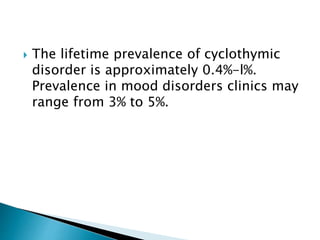
 The lifetime prevalence of cyclothymic 
disorder is approximately 0.4%-l%. 
Prevalence in mood disorders clinics may 
range from 3% to 5%.
 Among children with cyclothymic 
disorder, the mean age at onset of 
symptoms is 6.5 years of age.
 A. A prominent and persistent disturbance in 
mood that predominates in the clinical picture 
and is characterized by elevated, expansive, or 
irritable mood, with or without depressed mood, 
or markedly diminished interest or pleasure in 
all, or almost all, activities. 
 B. There is evidence from the history, physical 
examination, or laboratory findings of both 
(1)and (2): 
1. The symptoms in Criterion A developed during 
or soon after substance intoxication or 
withdrawal or after exposure to a medication. 
2. The involved substance/medication is capable 
of producing the symptoms in Criterion A.
 C. The disturbance is not better explained by a 
bipolar or related disorder that is not 
substance/medication-induced. Such evidence of 
an independent bipolar or related disorder could 
include the following: 
The symptoms precede the onset of the 
substance/medication use; the symptoms persist 
for a substantial period of time (e.g., about 1 
month) after the cessation of acute withdrawal or 
severe intoxication; or there is other evidence 
suggesting the existence 
of an independent non-substance/medication-induced 
bipolar and related disorder (e.g., a 
history of recurrent non-substance/medication-related 
episodes).
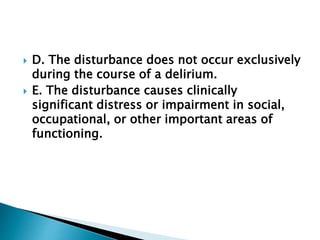
 D. The disturbance does not occur exclusively 
during the course of a delirium. 
 E. The disturbance causes clinically 
significant distress or impairment in social, 
occupational, or other important areas of 
functioning.
 There are no epidemiological studies of 
substance/medication-induced mania or 
bipolar disorder. Each etiological substance 
may have its own individual risk of inducing a 
bipolar (manic/hypomanic) disorder.
 In phencyclidine-induced mania, the initial 
presentation may be one of a delirium with 
affective features, which then becomes an 
atypically appearing manic or mixed manic state. 
This condition follows the ingestion or inhalation 
quickly, usually within hours or, at the most, a 
few days. In stimulant-induced manic or 
hypomanic states, the response is in minutes to 
1 hour after one or several ingestions or 
injections. The episode is very brief and typically 
resolves over 1-2 days. With corticosteroids and 
some immunosuppressant medications, the 
mania (or mixed or depressed state) usually 
follows several days of ingestion, and the higher 
doses appear to have a much greater likelihood 
of producing bipolar symptoms.
 This is from the DSM-V 
 By: Dela Cruz, Ma. Nancy C. 
 Bipolar Disorder type 3: Cyclothymia 
 Substance/Medication-Induced 
Bipolar and Related Disorder

Cyclothymia and Substance/Medication-Induced Bipolar and Related Disorder

  • 2.
     A. Forat least 2 years (at least 1 year in children and adolescents) there have been numerous periods with hypomanic symptoms that do not meet criteria for a hypomanic episode and numerous periods with depressive symptoms that do not meet criteria for a major depressive episode.  B. During the above 2-year period (1 year in children and adolescents), the hypomanic and depressive periods have been present for at least half the time and the individual has not been without the symptoms for more than 2 months at a time.  C. Criteria for a major depressive, manic, or hypomanic episode have never been met.
  • 3.
     D. Thesymptoms in Criterion A are not better explained by schizoaffective disorder, schizophrenia, schizophreniform disorder, delusional disorder, or other specified or unspecified schizophrenia spectrum and other psychotic disorder.  E. The symptoms are not attributable to the physiological effects of a substance (e.g., a drug of abuse, a medication) or another medical condition (e.g., hyperthyroidism).  F. The symptoms cause clinically significant distress or impairment in social, occupational, or other important areas of functioning.
  • 4.
     The lifetimeprevalence of cyclothymic disorder is approximately 0.4%-l%. Prevalence in mood disorders clinics may range from 3% to 5%.
  • 5.
     Among childrenwith cyclothymic disorder, the mean age at onset of symptoms is 6.5 years of age.
  • 7.
     A. Aprominent and persistent disturbance in mood that predominates in the clinical picture and is characterized by elevated, expansive, or irritable mood, with or without depressed mood, or markedly diminished interest or pleasure in all, or almost all, activities.  B. There is evidence from the history, physical examination, or laboratory findings of both (1)and (2): 1. The symptoms in Criterion A developed during or soon after substance intoxication or withdrawal or after exposure to a medication. 2. The involved substance/medication is capable of producing the symptoms in Criterion A.
  • 8.
     C. Thedisturbance is not better explained by a bipolar or related disorder that is not substance/medication-induced. Such evidence of an independent bipolar or related disorder could include the following: The symptoms precede the onset of the substance/medication use; the symptoms persist for a substantial period of time (e.g., about 1 month) after the cessation of acute withdrawal or severe intoxication; or there is other evidence suggesting the existence of an independent non-substance/medication-induced bipolar and related disorder (e.g., a history of recurrent non-substance/medication-related episodes).
  • 9.
     D. Thedisturbance does not occur exclusively during the course of a delirium.  E. The disturbance causes clinically significant distress or impairment in social, occupational, or other important areas of functioning.
  • 10.
     There areno epidemiological studies of substance/medication-induced mania or bipolar disorder. Each etiological substance may have its own individual risk of inducing a bipolar (manic/hypomanic) disorder.
  • 11.
     In phencyclidine-inducedmania, the initial presentation may be one of a delirium with affective features, which then becomes an atypically appearing manic or mixed manic state. This condition follows the ingestion or inhalation quickly, usually within hours or, at the most, a few days. In stimulant-induced manic or hypomanic states, the response is in minutes to 1 hour after one or several ingestions or injections. The episode is very brief and typically resolves over 1-2 days. With corticosteroids and some immunosuppressant medications, the mania (or mixed or depressed state) usually follows several days of ingestion, and the higher doses appear to have a much greater likelihood of producing bipolar symptoms.
  • 12.
     This isfrom the DSM-V  By: Dela Cruz, Ma. Nancy C.  Bipolar Disorder type 3: Cyclothymia  Substance/Medication-Induced Bipolar and Related Disorder

Editor's Notes

  • #5 In the general population, cyclothymic disorder is apparently equally common in males and females. In clinical settings, females with cyclothymic disorder may be more likely to present for treatment than males.