MANIC DISORDER
Mikayla Hudson
This a project for a high school AP Psychology course. This is a
fictionalized account of having a psychological ailment. For
questions about this blog project or its content please email the
teacher, Laura Astorian: laura.astorian@cobbk12.org
Definition
• Manic depression, more commonly known as bipolar
disorder, is a disorder associated with episodes of mood
swings ranging from depressive lows to manic highs.
Causes
• Bipolar disorder has no single cause; however it is known that this disorder
sometimes has a genetic component and often runs in the family.
• External environmental and psychological factors are also believed to be
involved in the development of bipolar disorder. The following is a list of all
possible environmental triggers of bipolar disorder.
• Stress
• Substance Abuse
• Medication
• Seasonal Changes
• Sleep Deprivation
Prevalence
• Bipolar disorder is a very common.
• There are more than 3 million US cases per year
• More than 51 million people worldwide suffer from bipolar
disorder
Who is at Risk
• At least half of the cases of Bipolar disorder start before
the age of 25.
• Some people have their first symptoms during childhood,
while others may develop symptoms later in life
Types of Bipolar Disorder
• Bipolar I Disorder (mania or a mixed episode) – This is
the classic manic-depressive form of the illness,
characterized by at least one manic episode or mixed
episode.
Types of Bipolar Disorder
• Bipolar II Disorder (hypomania and depression) – In
Bipolar II disorder, the illness involves episodes of
hypomania and severe depression.
Types of Bipolar Disorder
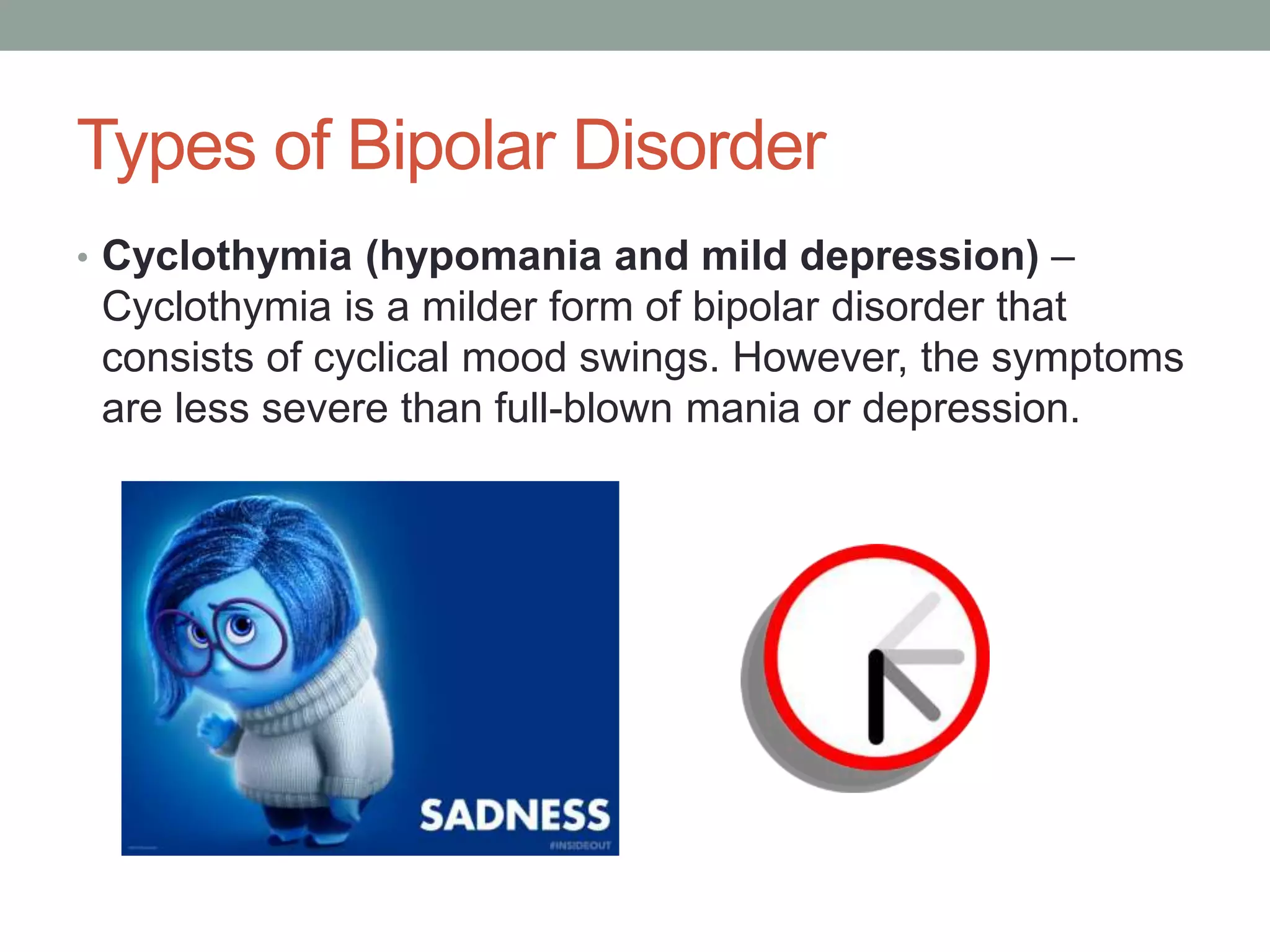
• Cyclothymia (hypomania and mild depression) –
Cyclothymia is a milder form of bipolar disorder that
consists of cyclical mood swings. However, the symptoms
are less severe than full-blown mania or depression.
Manic Phase vs Depressive Phase
Individuals with bipolar disorder are
often torn between manic and
depressive phases.
Manic Phase
• Feelings of heightened energy, creativity, and euphoria
are common during the manic phase. During this phase,
people often feel as if they are invincible.
• However, people often behave recklessly during a manic
episode and may also become angry and aggressive.
Some people even become delusional or start hearing
voices.
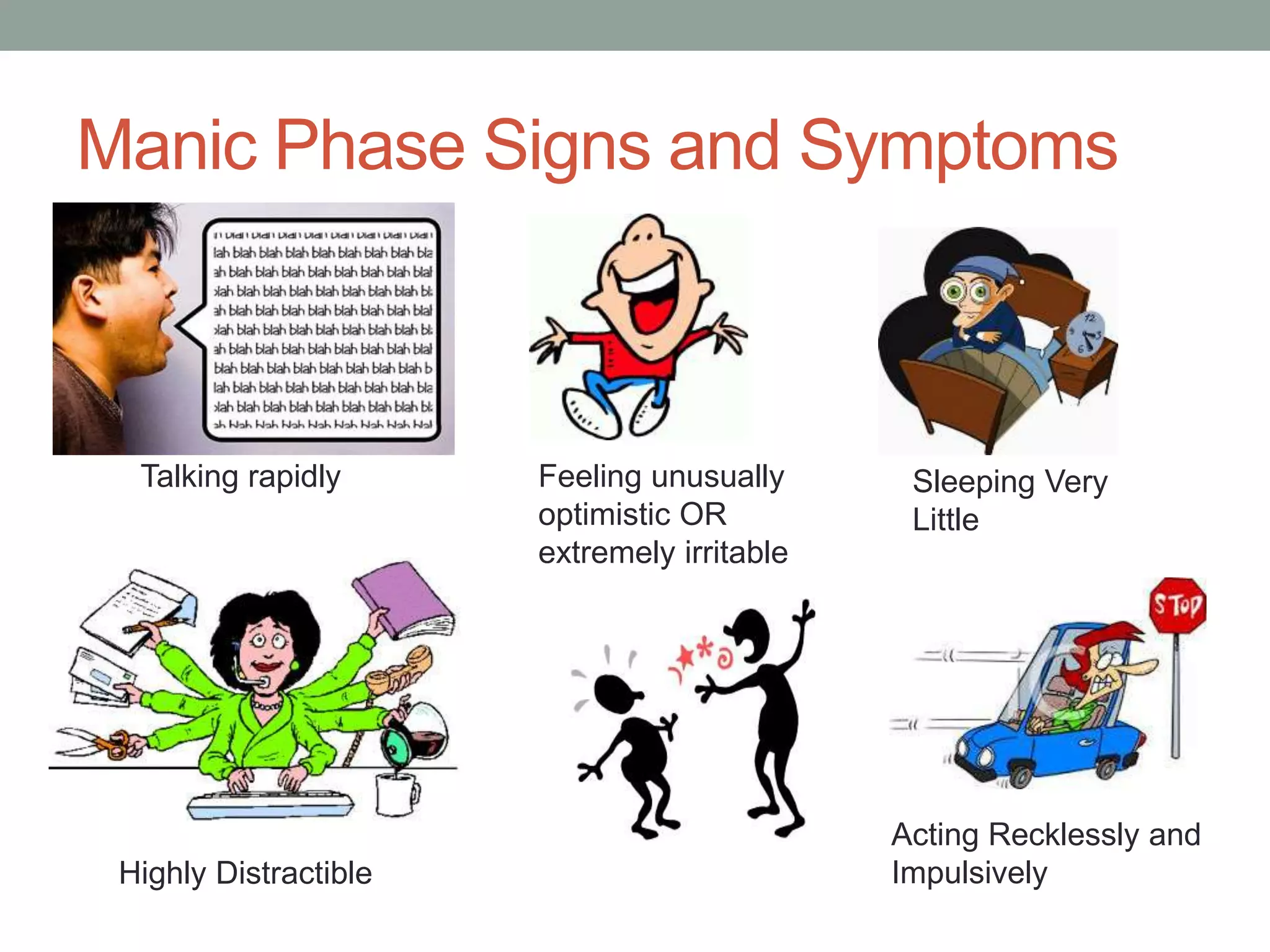
Manic Phase Signs and Symptoms
Talking rapidly Feeling unusually
optimistic OR
extremely irritable
Sleeping Very
Little
Highly Distractible
Acting Recklessly and
Impulsively
Hypomania
• A less severe form of mania
• People in a hypomanic state feel euphoric, energetic, and
productive
• Hypomania can result in bad decisions that harm
relationships, careers, and reputations. In addition,
hypomania often escalates to full-blown mania or is
followed by a major depressive episode.
Depressive Phase
• Bipolar depression is likely to involve irritability, guilt,
unpredictable mood swings, and feelings of restlessness.
• People with bipolar depression also tend to move and
speak slowly, sleep a lot, and gain weight.
Depressive Phase Symptoms
•Feeling hopeless, sad, or
empty
•Irritability
•Inability to experience
pleasure
•Fatigue or loss of energy
•Physical and mental
sluggishness
•Appetite or weight changes
•Sleep problems
•Concentration and memory
problems
•Feelings of worthlessness or
guilt
•Thoughts of death or suicide
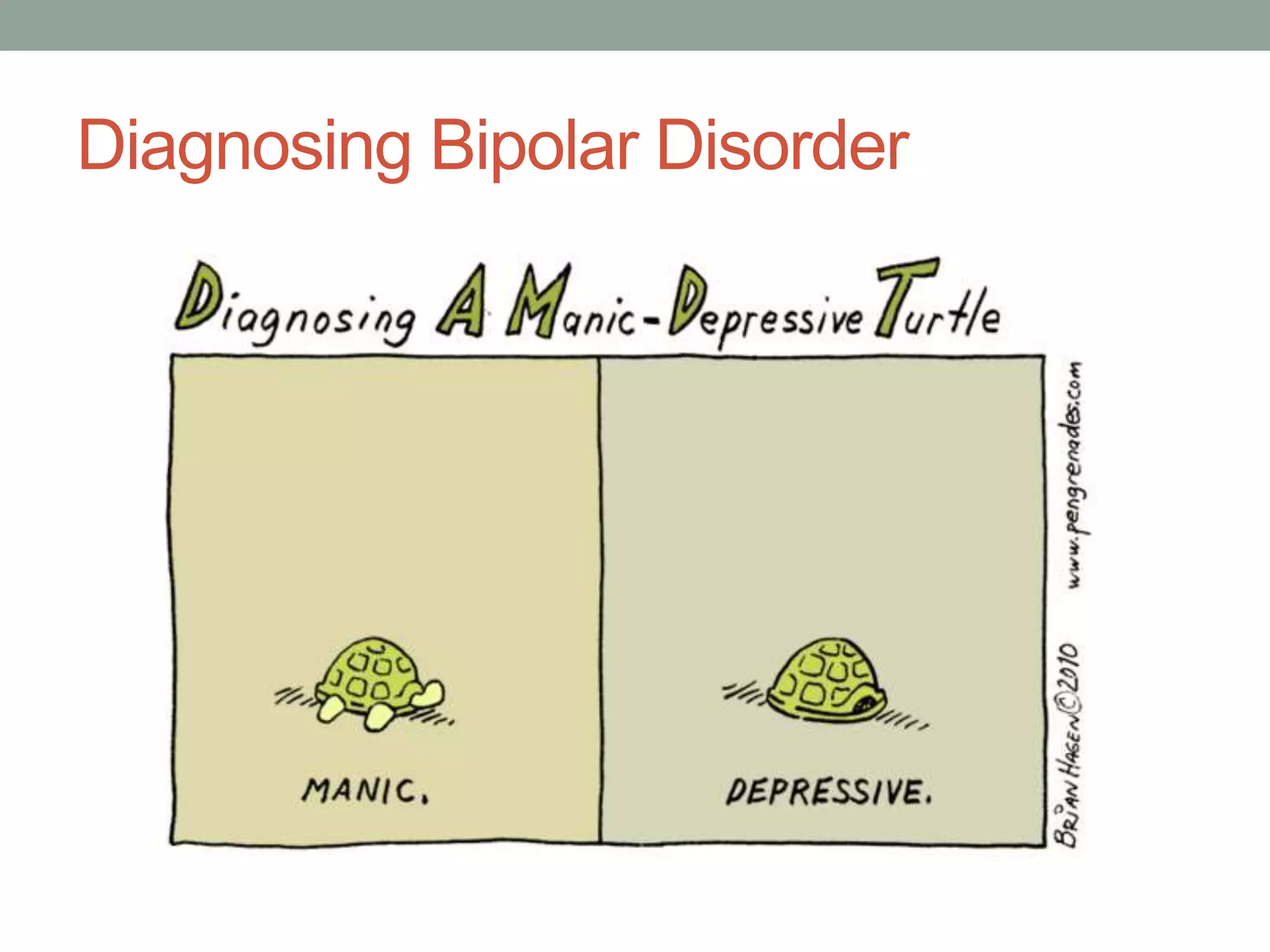
Diagnosing Bipolar Disorder
• Some diagnostic tests that doctors might conduct are:
• Physical exam: may help identify any medical problems that could
be causing one’s symptoms.
• Psychological evaluation: mental health assesses one’s
thoughts, feelings and behavior patterns.
• Mood charting: A record of moods, sleep patterns or other factors
that could help with diagnosis
Treatments
• Bipolar disorder requires lifelong treatment
• People who skip maintenance treatment are at a high risk of a
relapse of symptoms or having minor mood changes turn into full-
blown mania or depression.
• Day treatment programs
• Substance abuse treatment
• Hospitalization
Treatments/ Medications
• Medications may include:
• Mood stabilizers
• Antipsychotics
• Antidepressants
• Antidepressant-antipsychotic
• Anti-anxiety medications
Lifestyle Changes To Make
• Lifestyle changes to stop cycles of behavior that may
worsen bipolar disorder
• Quit drinking or using illegal drugs
• Do not engage in unhealthy relationships
• Get regular physical activity and exercise
• Get plenty of sleep
Alternative Medicine
• Omega-3 fatty acids may help improve depression associated with
bipolar disorde
• Magnesium may lessen mania and the rapid cycling of bipolar
symptoms. More research is needed to confirm these findings.
• St. John's wort may be helpful with depression. However, it can also
interact with antidepressants and other medications, and it has the
potential to trigger mania in some people.
• S-adenosyl-L-methionine (SAMe) appears to help brain function
related to depression. It isn't clear yet whether it's helpful in people
with bipolar disorder.
• Acupuncture may relieve depression
Sources
• http://www.helpguide.org/articles/bipolar-disorder/bipolar-
disorder-signs-and-symptoms.htm
• http://www.mayoclinic.org/diseases-conditions/bipolar-
disorder/basics/symptoms/con-20027544
• http://www.nimh.nih.gov/health/topics/bipolar-
disorder/index.shtml#part_145403

Manic/ Bipolar Disorder

  • 1.
    MANIC DISORDER Mikayla Hudson Thisa project for a high school AP Psychology course. This is a fictionalized account of having a psychological ailment. For questions about this blog project or its content please email the teacher, Laura Astorian: laura.astorian@cobbk12.org
  • 2.
    Definition • Manic depression,more commonly known as bipolar disorder, is a disorder associated with episodes of mood swings ranging from depressive lows to manic highs.
  • 3.
    Causes • Bipolar disorderhas no single cause; however it is known that this disorder sometimes has a genetic component and often runs in the family. • External environmental and psychological factors are also believed to be involved in the development of bipolar disorder. The following is a list of all possible environmental triggers of bipolar disorder. • Stress • Substance Abuse • Medication • Seasonal Changes • Sleep Deprivation
  • 4.
    Prevalence • Bipolar disorderis a very common. • There are more than 3 million US cases per year • More than 51 million people worldwide suffer from bipolar disorder
  • 5.
    Who is atRisk • At least half of the cases of Bipolar disorder start before the age of 25. • Some people have their first symptoms during childhood, while others may develop symptoms later in life
  • 6.
    Types of BipolarDisorder • Bipolar I Disorder (mania or a mixed episode) – This is the classic manic-depressive form of the illness, characterized by at least one manic episode or mixed episode.
  • 7.
    Types of BipolarDisorder • Bipolar II Disorder (hypomania and depression) – In Bipolar II disorder, the illness involves episodes of hypomania and severe depression.
  • 8.
    Types of BipolarDisorder • Cyclothymia (hypomania and mild depression) – Cyclothymia is a milder form of bipolar disorder that consists of cyclical mood swings. However, the symptoms are less severe than full-blown mania or depression.
  • 9.
    Manic Phase vsDepressive Phase Individuals with bipolar disorder are often torn between manic and depressive phases.
  • 10.
    Manic Phase • Feelingsof heightened energy, creativity, and euphoria are common during the manic phase. During this phase, people often feel as if they are invincible. • However, people often behave recklessly during a manic episode and may also become angry and aggressive. Some people even become delusional or start hearing voices.
  • 11.
    Manic Phase Signsand Symptoms Talking rapidly Feeling unusually optimistic OR extremely irritable Sleeping Very Little Highly Distractible Acting Recklessly and Impulsively
  • 12.
    Hypomania • A lesssevere form of mania • People in a hypomanic state feel euphoric, energetic, and productive • Hypomania can result in bad decisions that harm relationships, careers, and reputations. In addition, hypomania often escalates to full-blown mania or is followed by a major depressive episode.
  • 13.
    Depressive Phase • Bipolardepression is likely to involve irritability, guilt, unpredictable mood swings, and feelings of restlessness. • People with bipolar depression also tend to move and speak slowly, sleep a lot, and gain weight.
  • 14.
    Depressive Phase Symptoms •Feelinghopeless, sad, or empty •Irritability •Inability to experience pleasure •Fatigue or loss of energy •Physical and mental sluggishness •Appetite or weight changes •Sleep problems •Concentration and memory problems •Feelings of worthlessness or guilt •Thoughts of death or suicide
  • 15.
  • 16.
    Diagnosing Bipolar Disorder •Some diagnostic tests that doctors might conduct are: • Physical exam: may help identify any medical problems that could be causing one’s symptoms. • Psychological evaluation: mental health assesses one’s thoughts, feelings and behavior patterns. • Mood charting: A record of moods, sleep patterns or other factors that could help with diagnosis
  • 17.
    Treatments • Bipolar disorderrequires lifelong treatment • People who skip maintenance treatment are at a high risk of a relapse of symptoms or having minor mood changes turn into full- blown mania or depression. • Day treatment programs • Substance abuse treatment • Hospitalization
  • 18.
    Treatments/ Medications • Medicationsmay include: • Mood stabilizers • Antipsychotics • Antidepressants • Antidepressant-antipsychotic • Anti-anxiety medications
  • 19.
    Lifestyle Changes ToMake • Lifestyle changes to stop cycles of behavior that may worsen bipolar disorder • Quit drinking or using illegal drugs • Do not engage in unhealthy relationships • Get regular physical activity and exercise • Get plenty of sleep
  • 20.
    Alternative Medicine • Omega-3fatty acids may help improve depression associated with bipolar disorde • Magnesium may lessen mania and the rapid cycling of bipolar symptoms. More research is needed to confirm these findings. • St. John's wort may be helpful with depression. However, it can also interact with antidepressants and other medications, and it has the potential to trigger mania in some people. • S-adenosyl-L-methionine (SAMe) appears to help brain function related to depression. It isn't clear yet whether it's helpful in people with bipolar disorder. • Acupuncture may relieve depression
  • 21.