
Topic: Bioremediation, Waste Management and Impact on Bio Diversity 
Submitted By: 
D.Sairam ( 1st Sem IBT) 
BSBT-111 ( Bio Diversity and 
Bio Prospecting) 
Dr.Subhash Diyundi & Dr. 
Biswarup Basu 
Source: Getty Images
OVERVIEW 
 Introduction of Bio Remediation 
 Advantages & Disadvantages 
 Impact on Biodiversity 
 Waste Management 
 Types of Disposal 
 3R’s and Basel Convention
INTRODUCTION 
 Bioremediation is a waste management technique that involves 
the use of organisms to remove or neutralize pollutants from a 
contaminated site. 
 Microorganisms used to perform the function of bioremediation 
are known as Bio Remediators. 
 They are of two types namely In situ ( in site) and Ex situ Bio 
Remediation. 
 It basically encourages the use of pollution eating microbes on the 
medium. 
 Eg: Use of Oil Zappers to feed on oil spills.
ADVANTAGES OF BIO REMEDIATION 
 Cost Effective 
 Bioremediation is a natural process 
 Environment Friendly 
 Less Energy and Supervision 
 Low Capital Expenditure
DISADVANTAGES 
 Time Consuming 
 Heavy Metals like Cd,Zn not Removed 
 Does not Remove all types of Contaminants 
 Soil must have High Permeability
Sources: Greenpeace 2010
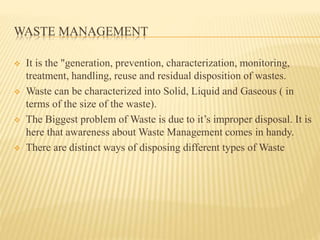
WASTE MANAGEMENT 
 It is the "generation, prevention, characterization, monitoring, 
treatment, handling, reuse and residual disposition of wastes. 
 Waste can be characterized into Solid, Liquid and Gaseous ( in 
terms of the size of the waste). 
 The Biggest problem of Waste is due to it’s improper disposal. It is 
here that awareness about Waste Management comes in handy. 
 There are distinct ways of disposing different types of Waste
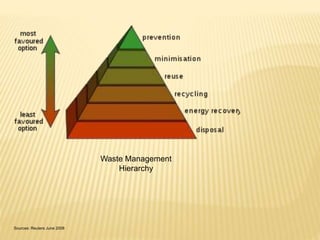
Waste Management 
Hierarchy 
Sources: Reuters June 2008
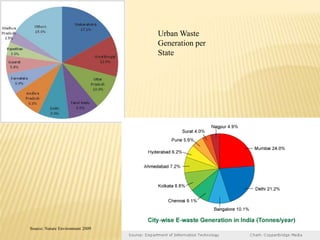
Urban Waste 
Generation per 
State 
Source: Nature Environment 2009
SOLID WASTE DISPOSAL 
 Landfills 
 Composting 
 Incineration 
 Recycling 
 Reusing ( Domestic Waste)
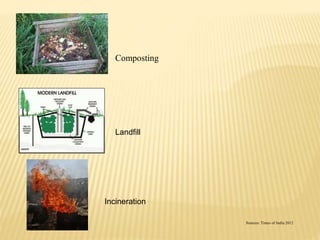
Composting 
Landfill 
Incineration 
Sources: Times of India 2012
LIQUID WASTE DISPOSAL 
 Sedimentation & Dewatering E.g.: Water 
Purification 
 Bio Remediation E.g.: Oil Spills 
 Filtration
GASEOUS WASTE DISPOSAL 
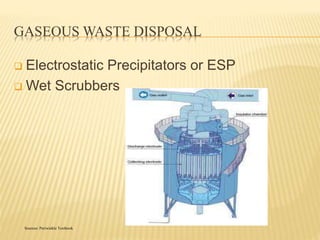
 Electrostatic Precipitators or ESP 
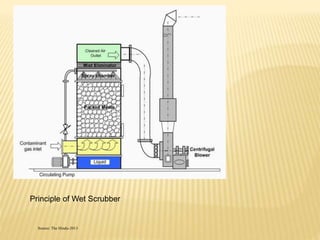
Wet Scrubbers 
Sources: Periwinkle Textbook
Principle of Wet Scrubber 
Source: The Hindu-2013
oMinimize generation of hazardous waste. 
oEnsure adequate disposal facilities are available 
oControl and reduce international movements of hazardous waste 
oEnsure environmentally sound management of wastes 
oPrevent and punish illegal traffic 
Source: Basel Convention website
3R’S 
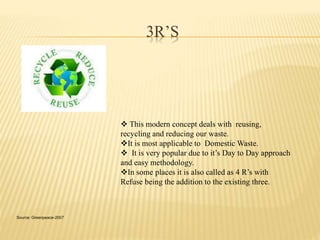
 This modern concept deals with reusing, 
recycling and reducing our waste. 
It is most applicable to Domestic Waste. 
 It is very popular due to it’s Day to Day approach 
and easy methodology. 
In some places it is also called as 4 R’s with 
Refuse being the addition to the existing three. 
Source: Greenpeace-2007
REFERENCES 
 www.wikipedia.org/waste_management 
 www.greenpeace.org/3 
 www.environment.gov.au 
 www.epa.gov 
 www.ehow.com 
 marvel-of-ebt.blogspot.in 
 www.sciencedaily.com
THANK YOU

Bioremediation & Waste Management

  • 1.
    Topic: Bioremediation, WasteManagement and Impact on Bio Diversity Submitted By: D.Sairam ( 1st Sem IBT) BSBT-111 ( Bio Diversity and Bio Prospecting) Dr.Subhash Diyundi & Dr. Biswarup Basu Source: Getty Images
  • 2.
    OVERVIEW  Introductionof Bio Remediation  Advantages & Disadvantages  Impact on Biodiversity  Waste Management  Types of Disposal  3R’s and Basel Convention
  • 3.
    INTRODUCTION  Bioremediationis a waste management technique that involves the use of organisms to remove or neutralize pollutants from a contaminated site.  Microorganisms used to perform the function of bioremediation are known as Bio Remediators.  They are of two types namely In situ ( in site) and Ex situ Bio Remediation.  It basically encourages the use of pollution eating microbes on the medium.  Eg: Use of Oil Zappers to feed on oil spills.
  • 4.
    ADVANTAGES OF BIOREMEDIATION  Cost Effective  Bioremediation is a natural process  Environment Friendly  Less Energy and Supervision  Low Capital Expenditure
  • 5.
    DISADVANTAGES  TimeConsuming  Heavy Metals like Cd,Zn not Removed  Does not Remove all types of Contaminants  Soil must have High Permeability
  • 6.
  • 7.
    WASTE MANAGEMENT It is the "generation, prevention, characterization, monitoring, treatment, handling, reuse and residual disposition of wastes.  Waste can be characterized into Solid, Liquid and Gaseous ( in terms of the size of the waste).  The Biggest problem of Waste is due to it’s improper disposal. It is here that awareness about Waste Management comes in handy.  There are distinct ways of disposing different types of Waste
  • 8.
    Waste Management Hierarchy Sources: Reuters June 2008
  • 9.
    Urban Waste Generationper State Source: Nature Environment 2009
  • 10.
    SOLID WASTE DISPOSAL  Landfills  Composting  Incineration  Recycling  Reusing ( Domestic Waste)
  • 11.
    Composting Landfill Incineration Sources: Times of India 2012
  • 12.
    LIQUID WASTE DISPOSAL  Sedimentation & Dewatering E.g.: Water Purification  Bio Remediation E.g.: Oil Spills  Filtration
  • 13.
    GASEOUS WASTE DISPOSAL  Electrostatic Precipitators or ESP Wet Scrubbers Sources: Periwinkle Textbook
  • 14.
    Principle of WetScrubber Source: The Hindu-2013
  • 15.
    oMinimize generation ofhazardous waste. oEnsure adequate disposal facilities are available oControl and reduce international movements of hazardous waste oEnsure environmentally sound management of wastes oPrevent and punish illegal traffic Source: Basel Convention website
  • 16.
    3R’S  Thismodern concept deals with reusing, recycling and reducing our waste. It is most applicable to Domestic Waste.  It is very popular due to it’s Day to Day approach and easy methodology. In some places it is also called as 4 R’s with Refuse being the addition to the existing three. Source: Greenpeace-2007
  • 17.
    REFERENCES  www.wikipedia.org/waste_management  www.greenpeace.org/3  www.environment.gov.au  www.epa.gov  www.ehow.com  marvel-of-ebt.blogspot.in  www.sciencedaily.com
  • 18.