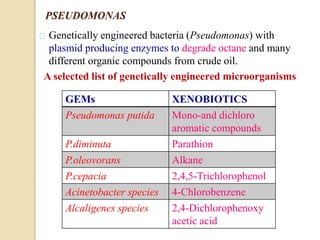
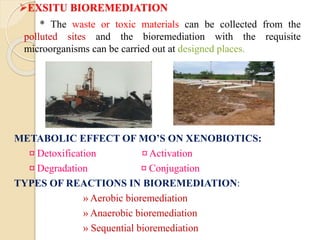
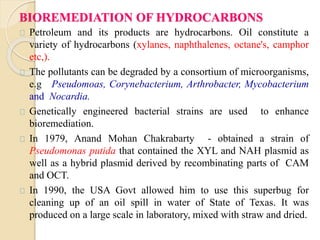
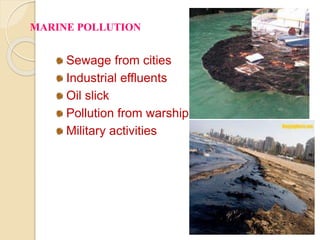
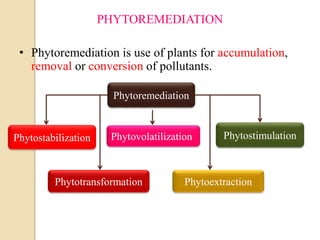
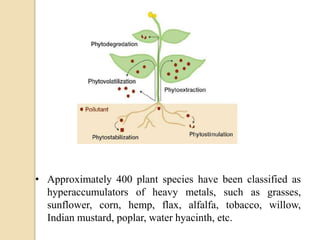
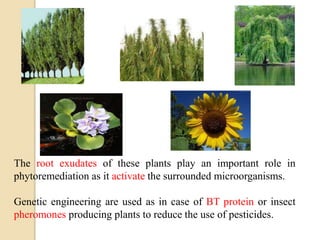
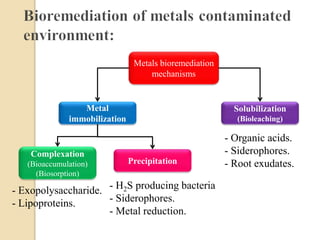
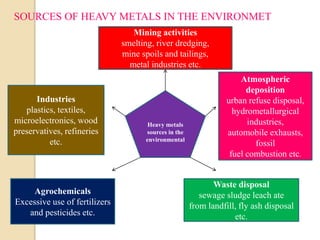
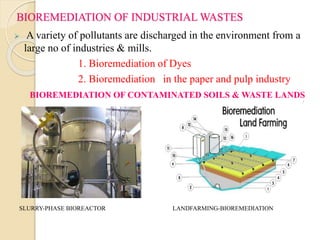
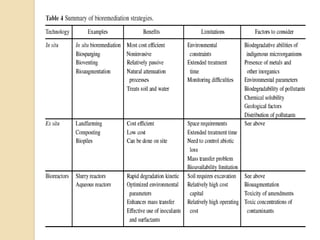
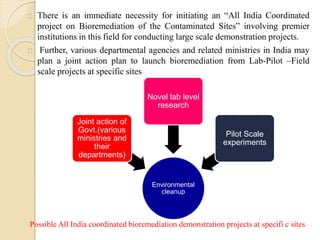
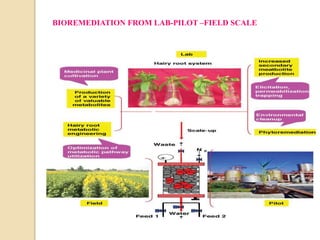
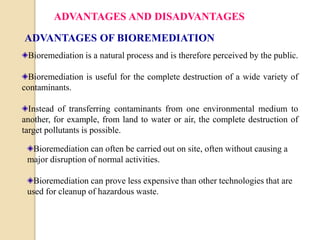
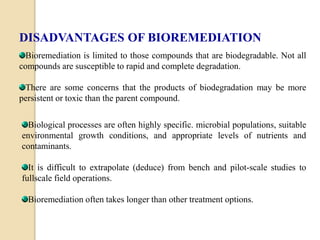
This document discusses bioremediation, which uses microorganisms to remove environmental pollutants or prevent pollution. It describes various types of bioremediation including biostimulation and bioaugmentation. Key organisms used in bioremediation are discussed, such as Pseudomonas bacteria, white rot fungi, and plants. Methods like phytoremediation, biosurfactants, and bioremediation of sites, soils, wastes, and hydrocarbons are summarized. Advantages include being natural and enabling complete destruction of contaminants, while disadvantages are limitations to biodegradable compounds and length of time needed.