Name of the Student: D.Sairam ( Ist 
Semester IBT) 
Name of Teacher: Vineet Sharma 
Course Code: BSBT – 102 
Assignment Code: U1A1 
Presentation Title: Origin of 
Biomolecules and the Cause of their 
Formation
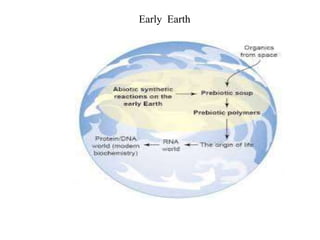
Early Earth
What are Biomolecules? 
• Biomolecules can be defined as molecules that are produced by 
living organisms and form the structural basis of all living 
organisms 
• Hence, one may also call them as “Biogenic” molecules too. The 
most common Biomolecules are proteins, lipids, nucleic acids, 
carbohydrates and vitamins. 
• They have existed since time immemorial and there are numerous 
theories propounded describing their origin. 
• Most notably people believe that the conducive environment in the 
past resulted in the binding of simpler molecules such as amino 
acids and others together, thus forming Biomolecules.
Foreword to Theory 
The Oparin-Haldane Theory first brought about a concrete 
analysis of the origin of Biomolecules. 
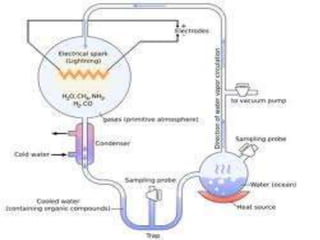
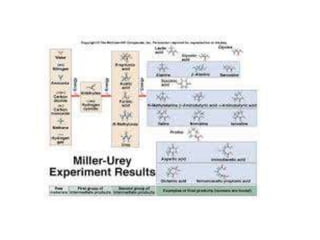
The Miller Urey Experiment determined that molecules 
can spontaneously combine and form organic molecules in 
primordial Earth conditions 
It was thought that evolution, from a chemical standpoint, 
was simply one archaic autocatalytic reaction branching out 
to numerous different reactions, using different substrates 
and generating different products over the course of billions 
of years. 
The primordial Earth did not have Biomolecules; thus, 
reactions were not catalyzed by enzymes. Inorganic catalysts 
must have been used for reactions to take place.
Theory of 
Chemical 
Evolution 
• This theory was proposed by 
Oparin and Haldane based on the 
Urey- Miller Experiment. The 
chemoautotrophic origin of life 
model, the starting material for all 
Biomolecules and organic 
molecules was carbon 
dioxide.[1] Because carbon dioxide 
is in a fully oxidized state, all 
reactions involving carbon 
dioxide must have been reductive, 
and a reducing agent must have 
been necessary. The reducing 
agent must have fit the following 
criteria: 
Urey- Miller
It had to be strong enough to reduce carbon dioxide 
in order for a reaction to occur. 
I t must have been readily available in the 
environment of primordial Earth. 
It must be somehow connected to today's known 
biochemistry. 
It must remain stable even after going through many 
reactions. 
This is the most wide spread and accepted theory 
however there are several other thesis that state that 
Biomolecules were created from external sources.
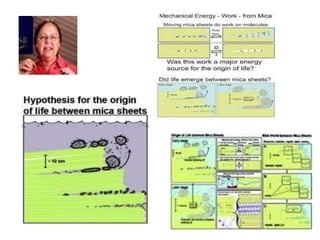
Theory of Mica Sheets 
• In 2007, Professors from University of California (including Helen Hansma) 
claimed that life and Biomolecules on earth may have originated as an organic 
filing between layers of Mica Sheets. 
• It proposes that proposes that the narrow confined spaces between the thin layers of 
mica could have provided exactly the right conditions for the rise of the first 
Biomolecules ---- effectively creating cells without membranes. 
• . The separation of the layers would have also provided the isolation needed for 
Darwinian evolution RNA plays an important part in translating the genetic code, 
and is composed of nitrogenous bases, sugar, and phosphates 
• The theory adds on by saying that Mica layers are held together by potassium. The 
concentration of potassium inside the mica is very similar to the concentration of 
potassium in our cells. And the seawater that bathed the mica is rich in sodium, just 
like our blood. 
• The heating and cooling of the day to night cycle would have caused the mica 
sheets to move up and down, and waves would have provided a mechanical energy 
source as well, according to the new model.
Theory of Ocean Impacts 
• Another theory published in 2009 by a group of Japanese scientists’ claims that 
Biomolecules have originated owing to oceanic impacts 
• In a Letter written to Nature Geo science they assert “Intense impacts of 
extraterrestrial objects melted the embryonic Earth, forming an inorganic body with 
a carbon-dioxide- and nitrogen-rich atmosphere1, 
• Certain simple organic molecules have been shown to form under conditions 
resembling meteorite impacts, although the link between these events and the 
development of more complex molecules remains unclear3. 
• Ordinary chondrites, the most common type of meteorite, contain solid carbon, iron 
and nickel—elements essential to the formation of organic chemicals4, 5. Here we 
use shock experiments to recreate the conditions surrounding the impact of 
chondritic meteorites into an early ocean. We used a propellant gun to create a high-velocity 
impact into a mixture of solid carbon, iron, nickel, water and nitrogen.
After the impact, we recovered numerous organic molecules, 
including fatty acids, amines and an amino acid. We suggest 
that organic molecules on the early Earth may have arisen from 
such impact syntheses. As the natural impacts that were 
frequent on the early Earth are more sustained and reach higher 
pressures than our experiments6, 7, they may have resulted in the 
synthesis of a greater abundance, variety and complexity of 
organic compounds.” 
This theory also does not have any concrete backing yet.
References 
• www.wikipedia.org/biomolecules 
• http://www.sciencedaily.com/releases/2007/12/071204102500. 
htm 
• http://www.nature.com/ngeo/journal/v2/n1/full/ngeo383.html 
• https://www.google.co.in/images ( for pictures) 
• https://www.youtube.com/watch?v=mF9U5x6Nxnw ( Video)
THANK YOU

Origin of biomolecules.. sairam

  • 1.
    Name of theStudent: D.Sairam ( Ist Semester IBT) Name of Teacher: Vineet Sharma Course Code: BSBT – 102 Assignment Code: U1A1 Presentation Title: Origin of Biomolecules and the Cause of their Formation
  • 2.
  • 3.
    What are Biomolecules? • Biomolecules can be defined as molecules that are produced by living organisms and form the structural basis of all living organisms • Hence, one may also call them as “Biogenic” molecules too. The most common Biomolecules are proteins, lipids, nucleic acids, carbohydrates and vitamins. • They have existed since time immemorial and there are numerous theories propounded describing their origin. • Most notably people believe that the conducive environment in the past resulted in the binding of simpler molecules such as amino acids and others together, thus forming Biomolecules.
  • 4.
    Foreword to Theory The Oparin-Haldane Theory first brought about a concrete analysis of the origin of Biomolecules. The Miller Urey Experiment determined that molecules can spontaneously combine and form organic molecules in primordial Earth conditions It was thought that evolution, from a chemical standpoint, was simply one archaic autocatalytic reaction branching out to numerous different reactions, using different substrates and generating different products over the course of billions of years. The primordial Earth did not have Biomolecules; thus, reactions were not catalyzed by enzymes. Inorganic catalysts must have been used for reactions to take place.
  • 5.
    Theory of Chemical Evolution • This theory was proposed by Oparin and Haldane based on the Urey- Miller Experiment. The chemoautotrophic origin of life model, the starting material for all Biomolecules and organic molecules was carbon dioxide.[1] Because carbon dioxide is in a fully oxidized state, all reactions involving carbon dioxide must have been reductive, and a reducing agent must have been necessary. The reducing agent must have fit the following criteria: Urey- Miller
  • 6.
    It had tobe strong enough to reduce carbon dioxide in order for a reaction to occur. I t must have been readily available in the environment of primordial Earth. It must be somehow connected to today's known biochemistry. It must remain stable even after going through many reactions. This is the most wide spread and accepted theory however there are several other thesis that state that Biomolecules were created from external sources.
  • 9.
    Theory of MicaSheets • In 2007, Professors from University of California (including Helen Hansma) claimed that life and Biomolecules on earth may have originated as an organic filing between layers of Mica Sheets. • It proposes that proposes that the narrow confined spaces between the thin layers of mica could have provided exactly the right conditions for the rise of the first Biomolecules ---- effectively creating cells without membranes. • . The separation of the layers would have also provided the isolation needed for Darwinian evolution RNA plays an important part in translating the genetic code, and is composed of nitrogenous bases, sugar, and phosphates • The theory adds on by saying that Mica layers are held together by potassium. The concentration of potassium inside the mica is very similar to the concentration of potassium in our cells. And the seawater that bathed the mica is rich in sodium, just like our blood. • The heating and cooling of the day to night cycle would have caused the mica sheets to move up and down, and waves would have provided a mechanical energy source as well, according to the new model.
  • 11.
    Theory of OceanImpacts • Another theory published in 2009 by a group of Japanese scientists’ claims that Biomolecules have originated owing to oceanic impacts • In a Letter written to Nature Geo science they assert “Intense impacts of extraterrestrial objects melted the embryonic Earth, forming an inorganic body with a carbon-dioxide- and nitrogen-rich atmosphere1, • Certain simple organic molecules have been shown to form under conditions resembling meteorite impacts, although the link between these events and the development of more complex molecules remains unclear3. • Ordinary chondrites, the most common type of meteorite, contain solid carbon, iron and nickel—elements essential to the formation of organic chemicals4, 5. Here we use shock experiments to recreate the conditions surrounding the impact of chondritic meteorites into an early ocean. We used a propellant gun to create a high-velocity impact into a mixture of solid carbon, iron, nickel, water and nitrogen.
  • 12.
    After the impact,we recovered numerous organic molecules, including fatty acids, amines and an amino acid. We suggest that organic molecules on the early Earth may have arisen from such impact syntheses. As the natural impacts that were frequent on the early Earth are more sustained and reach higher pressures than our experiments6, 7, they may have resulted in the synthesis of a greater abundance, variety and complexity of organic compounds.” This theory also does not have any concrete backing yet.
  • 13.
    References • www.wikipedia.org/biomolecules • http://www.sciencedaily.com/releases/2007/12/071204102500. htm • http://www.nature.com/ngeo/journal/v2/n1/full/ngeo383.html • https://www.google.co.in/images ( for pictures) • https://www.youtube.com/watch?v=mF9U5x6Nxnw ( Video)
  • 14.