BIODEGRADATION
INTRODUCTION
 Process by which substances are broken down by the
environmental effects and by the living organisms.
 Organic material can be degraded by aerobically or an
anaerobically.
 Biodegradable matter is generally organic material that
provides nutrition for microorganisms.
DEFINATION
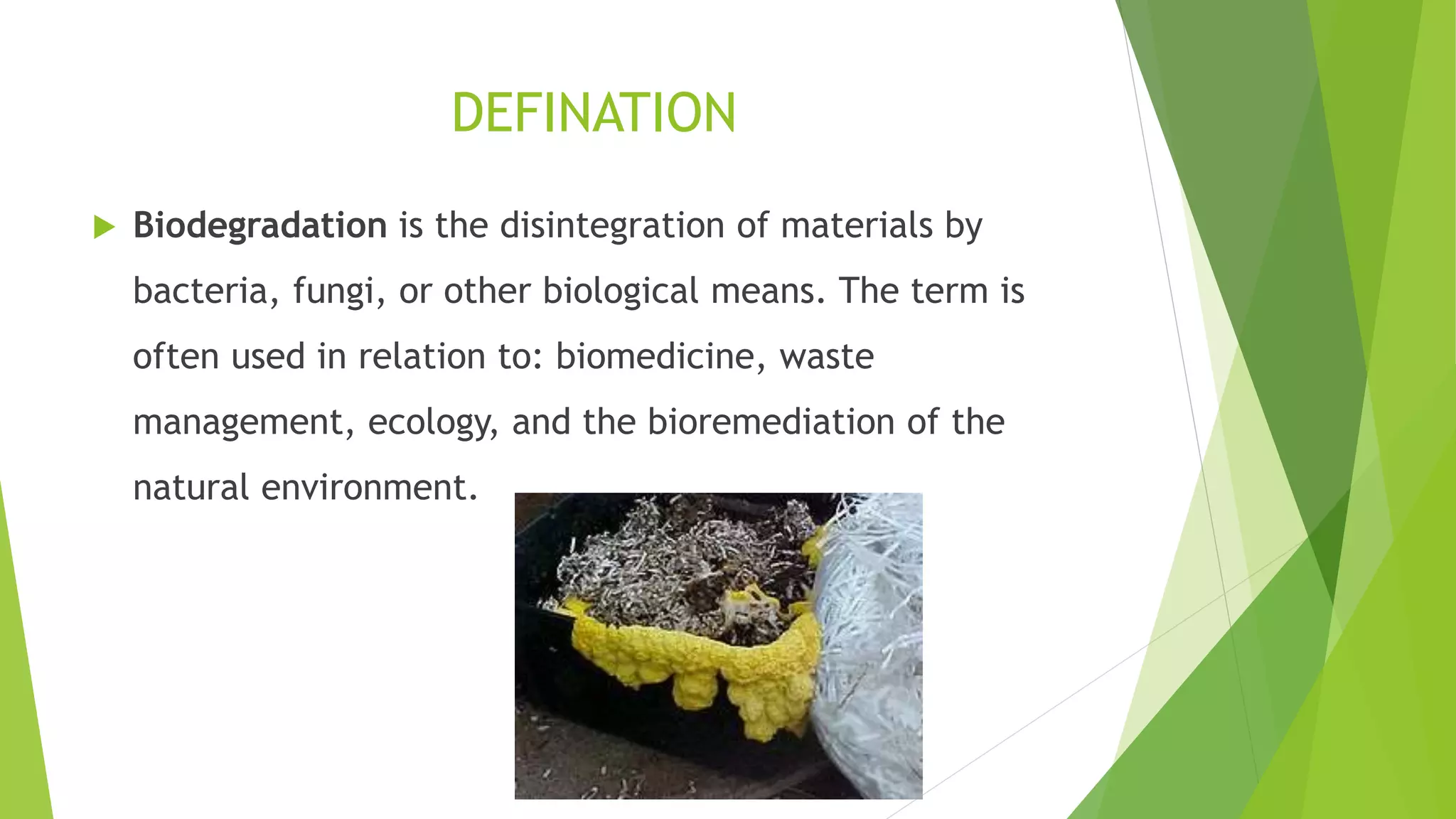
 Biodegradation is the disintegration of materials by
bacteria, fungi, or other biological means. The term is
often used in relation to: biomedicine, waste
management, ecology, and the bioremediation of the
natural environment.
yyh
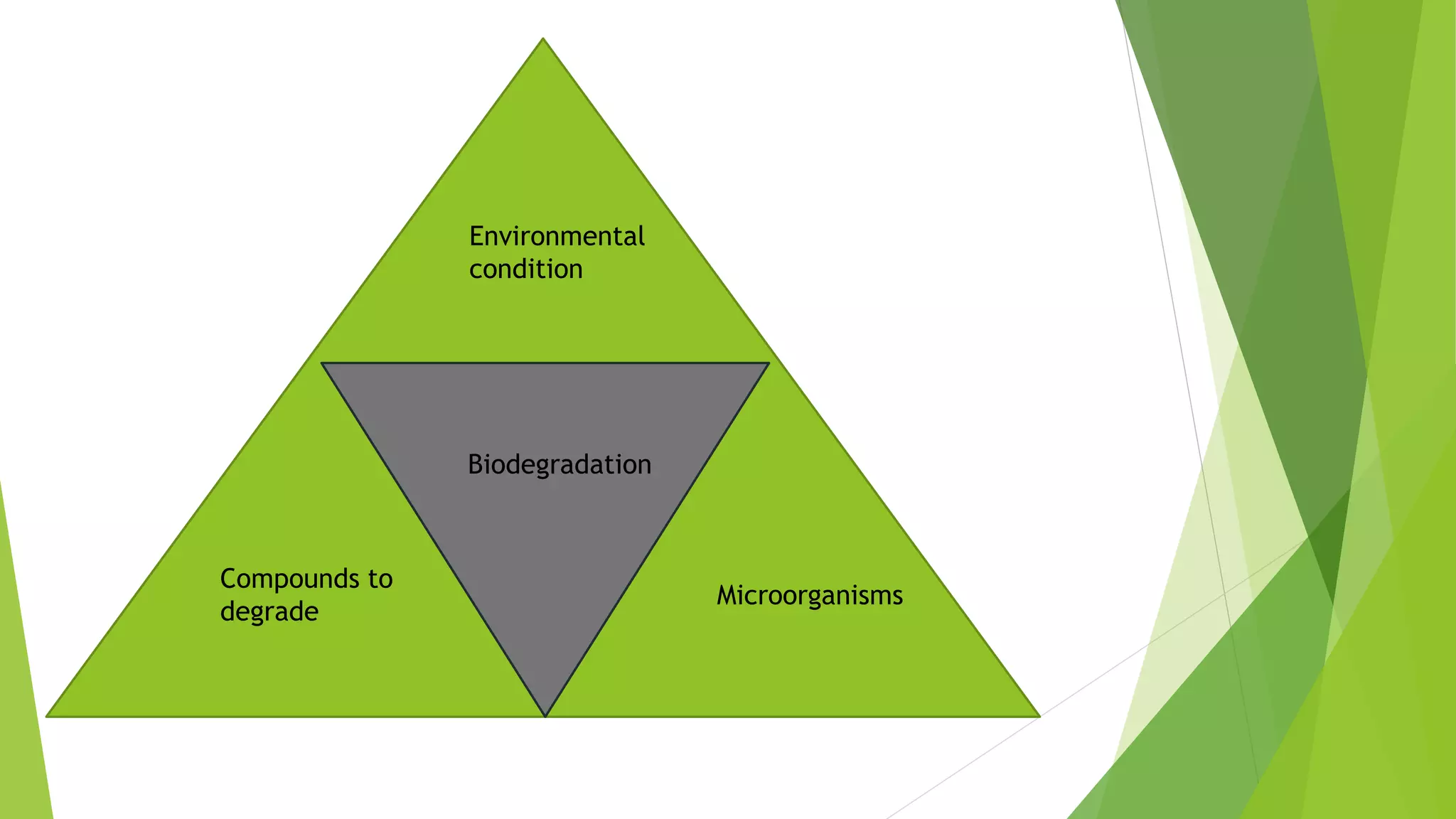
Environmental
condition
Biodegradation
Compounds to
degrade
Microorganisms
HISTORY
 The first known use of the world in biological text was in
1961 when employed to describe the breakdown of
material into the base components of carbon, hydrogen
and oxygen by microorganisms
 Now biodegradable is commonly associated with
environmentally friendly product that are part of the
earth’s innate cycle and capable of decomposing back into
natural environments.
TYPES OF BIODEGRADION
Mineralization or Bio mineralization
 Mineralization or Bio mineralization – Microorganisms convert organic
waste into chemical inorganic matter such as water and carbon
dioxide. Examples include the shells of invertebrates.
Biotransformation
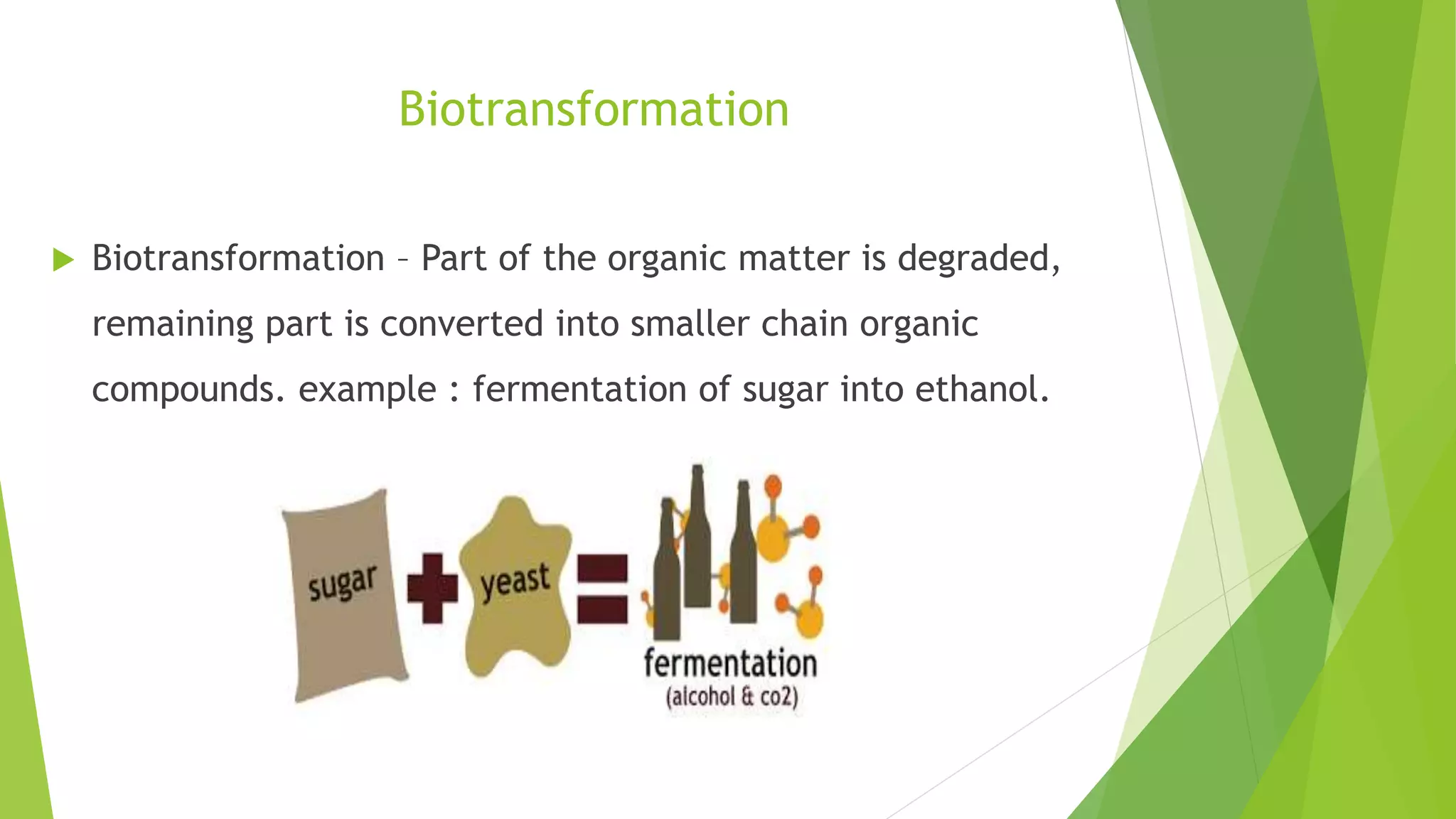
 Biotransformation – Part of the organic matter is degraded,
remaining part is converted into smaller chain organic
compounds. example : fermentation of sugar into ethanol.
MICROBIAL DEGRADATION
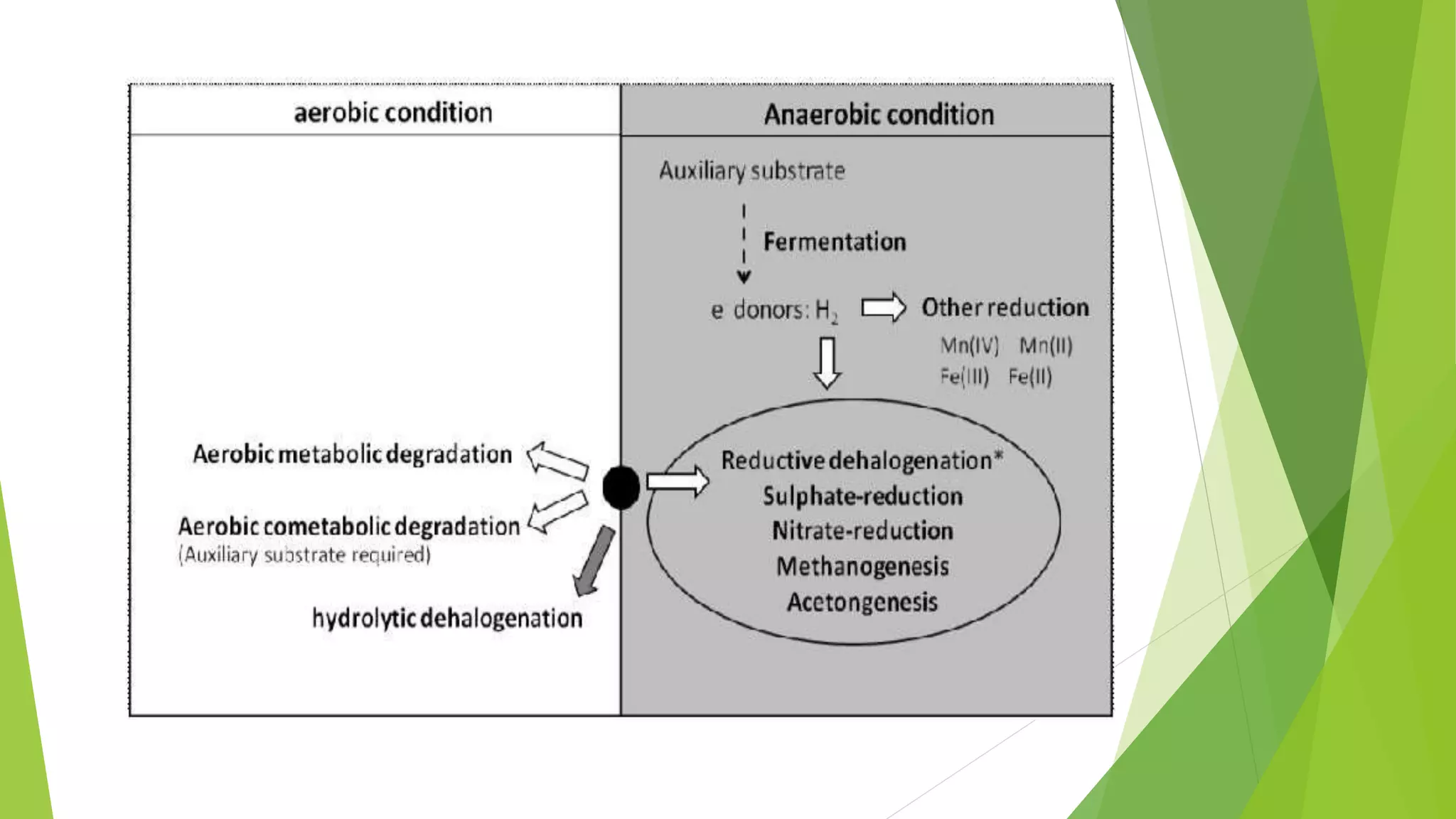
 Aerobic – Degradation with the presence of
oxygen.
 Anaerobic – In the absence of oxygen.
 In situ – Degradation in their original place.
 Ex situ - Outside of their environment.
FACTORS AFFECTING BIODEGRADATION
 Composition of microbial community
 Presence of oxygen and nutrient
 Abiotic factors - Temperature, pH, salinity,
 Presence of light and water
 Predation
 synergism
BIODEGRADABLE PLASTIC
 Plastic that is able to break down when discarded
either in dumps or sunlight
 It is made by using additives which help the plastic to
degrade.
 It has been treated to be easily breakdown by
microorganisms
Biodegradation of plastic
ACCLIMATION
 Prior to the degradation of many organic compounds, a
period is noted in which no destruction of chemical is
evident. This time interval is designated as acclimation
period
 It is also known as adaption or lag period.
 Possibility of an undesirable effect to humans, animals,
and plants is increased.
Factors affecting acclimation
 Temperature
 pH
 Aeration
 Concentration of nitrogen
 Concentration of phosphorus
 Concentration of the compound
SORPTION
 Some substances appear to be non biodegradable under all
circumstances.
 Example – various synthetic polymers
 Reasons for sorption
1. High concentration of toxic substances
2. Need of nutrient
3. Low concentration of substrate etc
ADVANTAGES OF BIODEGRADATION
 Can be does on site
 Permanently eliminate waste
 Is cheaper
 Minimizes the destruction
 Eliminates long term liability
 Can be coupled with other treatment techniques
 Eliminates transportation cost.
DISADVANTAGES OF BIODEGRADATION
 Some chemical cannot be degraded
 Unknown by-products can be produced
 Toxicity of contaminants can be a problem
 Extensive maintaining is needed
 Site specific requirements can affect applicability
CONCLUSION
 We need to save our earth and environment from pollution
 Biodegradation is one of the best way that many counties
use to protect environment from harmful material, waste
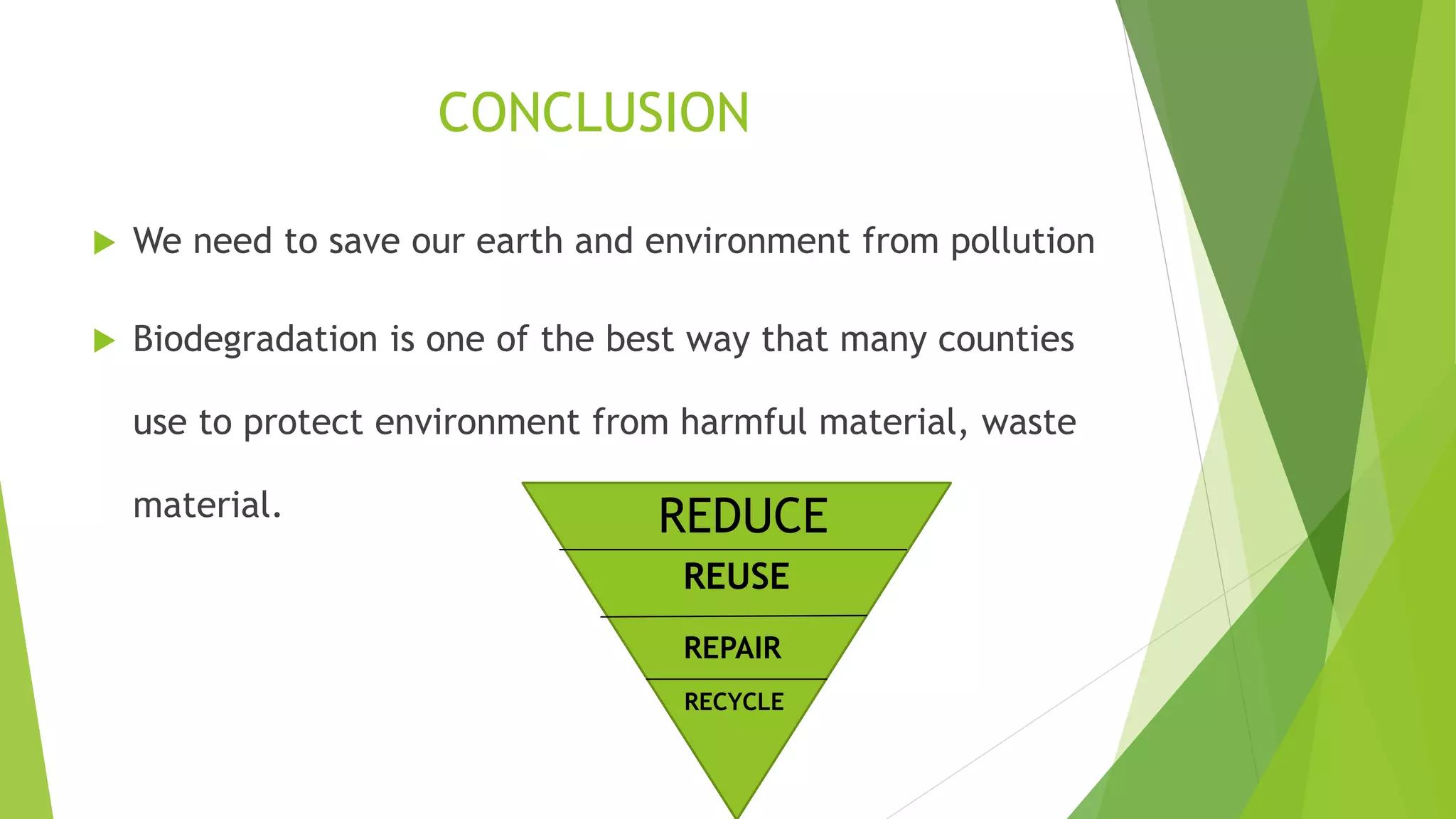
material. REDUCE
REUSE
REPAIR
RECYCLE
THANK YOU !

Biodegradation

  • 1.
  • 2.
    INTRODUCTION  Process bywhich substances are broken down by the environmental effects and by the living organisms.  Organic material can be degraded by aerobically or an anaerobically.  Biodegradable matter is generally organic material that provides nutrition for microorganisms.
  • 3.
    DEFINATION  Biodegradation isthe disintegration of materials by bacteria, fungi, or other biological means. The term is often used in relation to: biomedicine, waste management, ecology, and the bioremediation of the natural environment.
  • 4.
  • 5.
    HISTORY  The firstknown use of the world in biological text was in 1961 when employed to describe the breakdown of material into the base components of carbon, hydrogen and oxygen by microorganisms  Now biodegradable is commonly associated with environmentally friendly product that are part of the earth’s innate cycle and capable of decomposing back into natural environments.
  • 6.
    TYPES OF BIODEGRADION Mineralizationor Bio mineralization  Mineralization or Bio mineralization – Microorganisms convert organic waste into chemical inorganic matter such as water and carbon dioxide. Examples include the shells of invertebrates.
  • 7.
    Biotransformation  Biotransformation –Part of the organic matter is degraded, remaining part is converted into smaller chain organic compounds. example : fermentation of sugar into ethanol.
  • 8.
    MICROBIAL DEGRADATION  Aerobic– Degradation with the presence of oxygen.  Anaerobic – In the absence of oxygen.  In situ – Degradation in their original place.  Ex situ - Outside of their environment.
  • 11.
    FACTORS AFFECTING BIODEGRADATION Composition of microbial community  Presence of oxygen and nutrient  Abiotic factors - Temperature, pH, salinity,  Presence of light and water  Predation  synergism
  • 12.
    BIODEGRADABLE PLASTIC  Plasticthat is able to break down when discarded either in dumps or sunlight  It is made by using additives which help the plastic to degrade.  It has been treated to be easily breakdown by microorganisms
  • 13.
  • 14.
    ACCLIMATION  Prior tothe degradation of many organic compounds, a period is noted in which no destruction of chemical is evident. This time interval is designated as acclimation period  It is also known as adaption or lag period.  Possibility of an undesirable effect to humans, animals, and plants is increased.
  • 15.
    Factors affecting acclimation Temperature  pH  Aeration  Concentration of nitrogen  Concentration of phosphorus  Concentration of the compound
  • 16.
    SORPTION  Some substancesappear to be non biodegradable under all circumstances.  Example – various synthetic polymers  Reasons for sorption 1. High concentration of toxic substances 2. Need of nutrient 3. Low concentration of substrate etc
  • 17.
    ADVANTAGES OF BIODEGRADATION Can be does on site  Permanently eliminate waste  Is cheaper  Minimizes the destruction  Eliminates long term liability  Can be coupled with other treatment techniques  Eliminates transportation cost.
  • 18.
    DISADVANTAGES OF BIODEGRADATION Some chemical cannot be degraded  Unknown by-products can be produced  Toxicity of contaminants can be a problem  Extensive maintaining is needed  Site specific requirements can affect applicability
  • 19.
    CONCLUSION  We needto save our earth and environment from pollution  Biodegradation is one of the best way that many counties use to protect environment from harmful material, waste material. REDUCE REUSE REPAIR RECYCLE
  • 20.