BIOMOLECULES
(BuildingBlocks oflife)
Mrs. Praveen Garg
Asst. Prof.
VITS College, Satna (M.P.)
“ Life is a relationship among molecules and
not a property of any one molecule.”
- Linus Carl Pauling
INTRODUCTION
• Biomolecules are the chemicals or biological molecules occur
in the living organisms or cells.
• The collection of different types of biomolecules and ions
present in the cells called the cellular pool.
• Cellular pool has two phases:
Aqueous phase
Non aqueous phase
• Aqueous phase contain chemicals dispersed in water and
form solutions.
• Non aqueous phase contain chemicals deposited in structure
such as chromatin, cell wall and cell membrane.
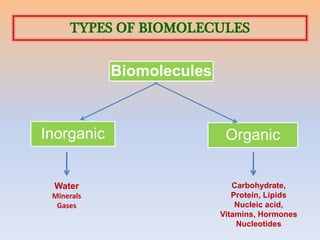
TYPES OF BIOMOLECULES
Inorganic Organic
Biomolecules
Water
Minerals
Gases
Carbohydrate,
Protein, Lipids
Nucleic acid,
Vitamins, Hormones
Nucleotides
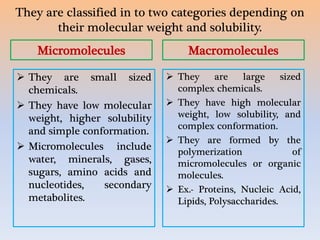
They are classified in to two categories depending on
their molecular weight and solubility.
Micromolecules
 They are small sized
chemicals.
 They have low molecular
weight, higher solubility
and simple conformation.
 Micromolecules include
water, minerals, gases,
sugars, amino acids and
nucleotides, secondary
metabolites.
Macromolecules
 They are large sized
complex chemicals.
 They have high molecular
weight, low solubility, and
complex conformation.
 They are formed by the
polymerization of
micromolecules or organic
molecules.
 Ex.- Proteins, Nucleic Acid,
Lipids, Polysaccharides.
PROPERTY
• Most biomolecules are organic compounds.
• Four element- oxygeon, carbon, hydrogen, and nitrogen
make up 96% of the human body's mass.
• But many other elements, such as the various biometals,
are present in small amounts.
• Biomolecules are essential to one or more
typically biological processes, such as cell division,
morphogenesis or development.
• Biomolecules have same types of functional groups as
organic molecules such as hydroxyl groups, amino groups,
carbonyl groups, carboxyl groups, etc
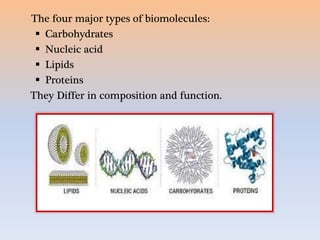
The four major types of biomolecules:
 Carbohydrates
 Nucleic acid
 Lipids
 Proteins
They Differ in composition and function.
Structure of Biomolecules
1. Polysaccharides Made up of monosaccharides
2. Nucleic acids Made up of nucleotides
3. Lipids Made up of glycerol and fatty
acids
4. Proteins Made up of amino acids
Monosccharides, Nucleotides, Glycerol and fatty acids, Amino
acids are the basic building blocks of Biomolecules.
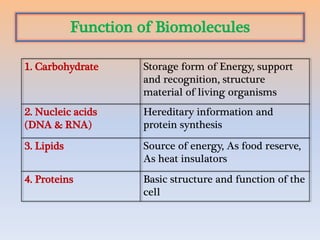
Function of Biomolecules
1. Carbohydrate Storage form of Energy, support
and recognition, structure
material of living organisms
2. Nucleic acids
(DNA & RNA)
Hereditary information and
protein synthesis
3. Lipids Source of energy, As food reserve,
As heat insulators
4. Proteins Basic structure and function of the
cell
Biomolecules  carbohydrate

Biomolecules carbohydrate

  • 1.
    BIOMOLECULES (BuildingBlocks oflife) Mrs. PraveenGarg Asst. Prof. VITS College, Satna (M.P.)
  • 2.
    “ Life isa relationship among molecules and not a property of any one molecule.” - Linus Carl Pauling
  • 3.
    INTRODUCTION • Biomolecules arethe chemicals or biological molecules occur in the living organisms or cells. • The collection of different types of biomolecules and ions present in the cells called the cellular pool. • Cellular pool has two phases: Aqueous phase Non aqueous phase • Aqueous phase contain chemicals dispersed in water and form solutions. • Non aqueous phase contain chemicals deposited in structure such as chromatin, cell wall and cell membrane.
  • 4.
    TYPES OF BIOMOLECULES InorganicOrganic Biomolecules Water Minerals Gases Carbohydrate, Protein, Lipids Nucleic acid, Vitamins, Hormones Nucleotides
  • 5.
    They are classifiedin to two categories depending on their molecular weight and solubility. Micromolecules  They are small sized chemicals.  They have low molecular weight, higher solubility and simple conformation.  Micromolecules include water, minerals, gases, sugars, amino acids and nucleotides, secondary metabolites. Macromolecules  They are large sized complex chemicals.  They have high molecular weight, low solubility, and complex conformation.  They are formed by the polymerization of micromolecules or organic molecules.  Ex.- Proteins, Nucleic Acid, Lipids, Polysaccharides.
  • 6.
    PROPERTY • Most biomoleculesare organic compounds. • Four element- oxygeon, carbon, hydrogen, and nitrogen make up 96% of the human body's mass. • But many other elements, such as the various biometals, are present in small amounts. • Biomolecules are essential to one or more typically biological processes, such as cell division, morphogenesis or development. • Biomolecules have same types of functional groups as organic molecules such as hydroxyl groups, amino groups, carbonyl groups, carboxyl groups, etc
  • 7.
    The four majortypes of biomolecules:  Carbohydrates  Nucleic acid  Lipids  Proteins They Differ in composition and function.
  • 8.
    Structure of Biomolecules 1.Polysaccharides Made up of monosaccharides 2. Nucleic acids Made up of nucleotides 3. Lipids Made up of glycerol and fatty acids 4. Proteins Made up of amino acids Monosccharides, Nucleotides, Glycerol and fatty acids, Amino acids are the basic building blocks of Biomolecules.
  • 9.
    Function of Biomolecules 1.Carbohydrate Storage form of Energy, support and recognition, structure material of living organisms 2. Nucleic acids (DNA & RNA) Hereditary information and protein synthesis 3. Lipids Source of energy, As food reserve, As heat insulators 4. Proteins Basic structure and function of the cell