By: Diego Anatolio & Daniel Adam
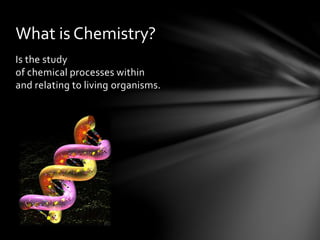
Is the study
of chemical processes within
and relating to living organisms.
What is Chemistry?
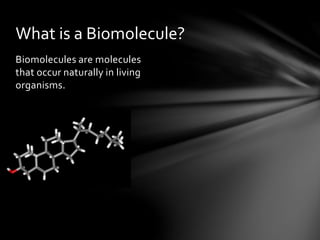
Biomolecules are molecules
that occur naturally in living
organisms.
What is a Biomolecule?
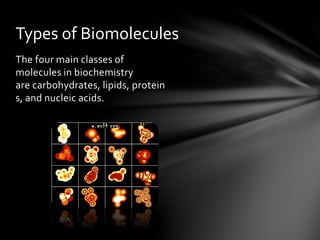
The four main classes of
molecules in biochemistry
are carbohydrates, lipids, protein
s, and nucleic acids.
Types of Biomolecules
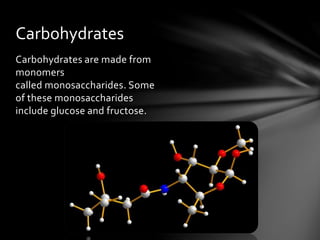
Carbohydrates are made from
monomers
called monosaccharides. Some
of these monosaccharides
include glucose and fructose.
Carbohydrates
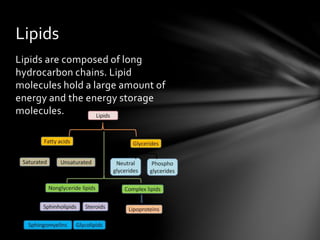
Lipids are composed of long
hydrocarbon chains. Lipid
molecules hold a large amount of
energy and the energy storage
molecules.
Lipids
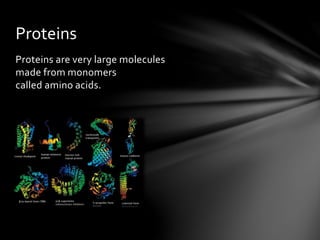
Proteins are very large molecules
made from monomers
called amino acids.
Proteins
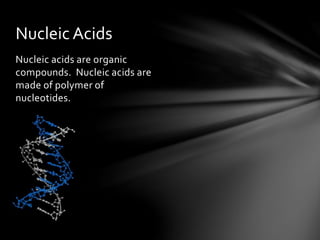
Nucleic acids are organic
compounds. Nucleic acids are
made of polymer of
nucleotides.
Nucleic Acids
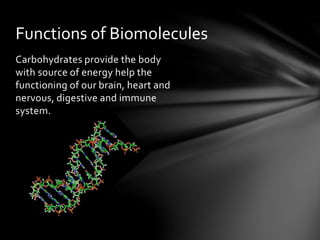
Carbohydrates provide the body
with source of energy help the
functioning of our brain, heart and
nervous, digestive and immune
system.
Functions of Biomolecules
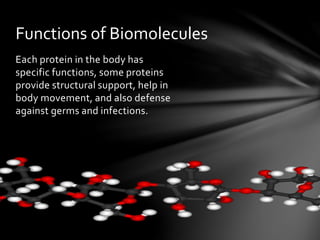
Each protein in the body has
specific functions, some proteins
provide structural support, help in
body movement, and also defense
against germs and infections.
Functions of Biomolecules
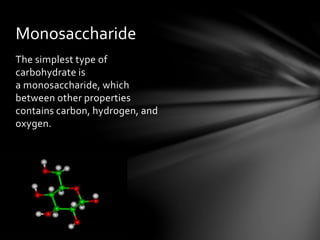
The simplest type of
carbohydrate is
a monosaccharide, which
between other properties
contains carbon, hydrogen, and
oxygen.
Monosaccharide
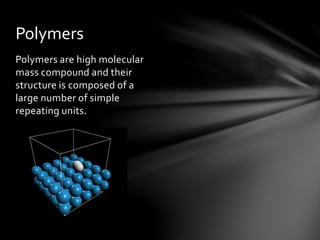
Polymers are high molecular
mass compound and their
structure is composed of a
large number of simple
repeating units.
Polymers
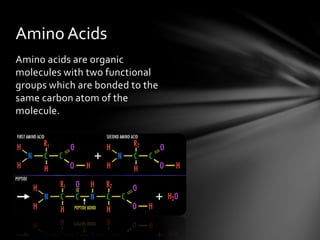
Amino acids are organic
molecules with two functional
groups which are bonded to the
same carbon atom of the
molecule.
Amino Acids
NCS Pearson;Biochemistry;2015;United Kingdom(Consult: 18/06/15);
available: http://chemistry.tutorvista.com/biochemistry.html
Bibliography
End

Biochemistry

  • 1.
    By: Diego Anatolio& Daniel Adam
  • 2.
    Is the study ofchemical processes within and relating to living organisms. What is Chemistry?
  • 3.
    Biomolecules are molecules thatoccur naturally in living organisms. What is a Biomolecule?
  • 4.
    The four mainclasses of molecules in biochemistry are carbohydrates, lipids, protein s, and nucleic acids. Types of Biomolecules
  • 5.
    Carbohydrates are madefrom monomers called monosaccharides. Some of these monosaccharides include glucose and fructose. Carbohydrates
  • 6.
    Lipids are composedof long hydrocarbon chains. Lipid molecules hold a large amount of energy and the energy storage molecules. Lipids
  • 7.
    Proteins are verylarge molecules made from monomers called amino acids. Proteins
  • 8.
    Nucleic acids areorganic compounds. Nucleic acids are made of polymer of nucleotides. Nucleic Acids
  • 9.
    Carbohydrates provide thebody with source of energy help the functioning of our brain, heart and nervous, digestive and immune system. Functions of Biomolecules
  • 10.
    Each protein inthe body has specific functions, some proteins provide structural support, help in body movement, and also defense against germs and infections. Functions of Biomolecules
  • 11.
    The simplest typeof carbohydrate is a monosaccharide, which between other properties contains carbon, hydrogen, and oxygen. Monosaccharide
  • 12.
    Polymers are highmolecular mass compound and their structure is composed of a large number of simple repeating units. Polymers
  • 13.
    Amino acids areorganic molecules with two functional groups which are bonded to the same carbon atom of the molecule. Amino Acids
  • 14.
    NCS Pearson;Biochemistry;2015;United Kingdom(Consult:18/06/15); available: http://chemistry.tutorvista.com/biochemistry.html Bibliography
  • 15.