Mithun Paul
M.Sc in Computer Science.
University of Gour Banga,Malda
West Bengal,India
Biometric Introduction
History Of Biometric System Security
Biometric Devices & Its Work Area
Why Biometric Required?
Working Of Biometrics System
Comparison with any Other Devices
Limitation Of Biometric System
Conclusion & References
Biometric is a combination of two Greek words
Bio(Life) and Metric(To Measure).
It actually measures and analyzes the biological
traits of a human being.
Biometric is the automated process of
identifying or verifying an individual based upon
his or her behavioral or physical characteristics.
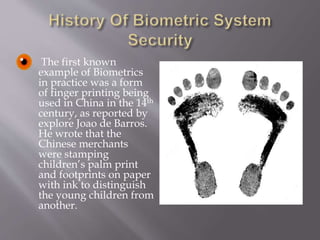
 The first known
example of Biometrics
in practice was a form
of finger printing being
used in China in the 14th
century, as reported by
explore Joao de Barros.
He wrote that the
Chinese merchants
were stamping
children’s palm print
and footprints on paper
with ink to distinguish
the young children from
another.
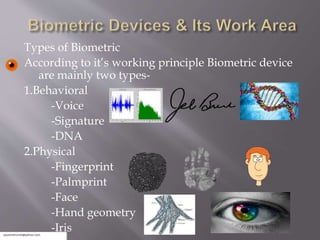
Types of Biometric
According to it’s working principle Biometric device
are mainly two types-
1.Behavioral
-Voice
-Signature
-DNA
2.Physical
-Fingerprint
-Palmprint
-Face
-Hand geometry
-Iris
In generally these devices are used any where, required
core security.
Such as-
The Banking sector
Company employee attendance
Store data
Send data/wealth
Now a day for attendance in school these device are
used.
ATMs
Identity theft is not possible
Password remembrance problem does not exist
Cannot be predicted or hacked
Cannot be shared
Perceived as more secure
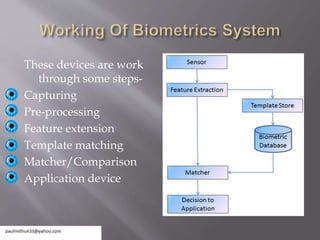
These devices are work
through some steps-
Capturing
Pre-processing
Feature extension
Template matching
Matcher/Comparison
Application device
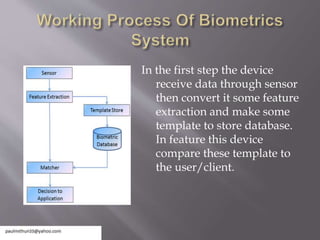
In the first step the device
receive data through sensor
then convert it some feature
extraction and make some
template to store database.
In feature this device
compare these template to
the user/client.
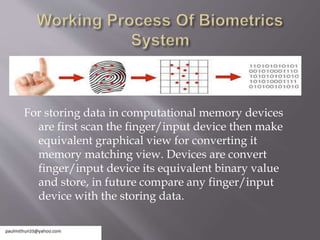
For storing data in computational memory devices
are first scan the finger/input device then make
equivalent graphical view for converting it
memory matching view. Devices are convert
finger/input device its equivalent binary value
and store, in future compare any finger/input
device with the storing data.
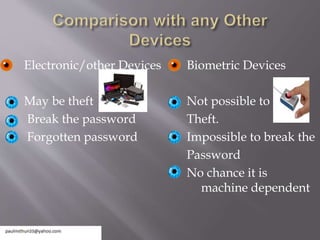
Electronic/other Devices
May be theft
Break the password
Forgotten password
Biometric Devices
Not possible to
Theft.
Impossible to break the
Password
No chance it is
machine dependent
Presence of noise in the sensed data
Variations in the enrolled data
Non-universality
It is an expensive security solution
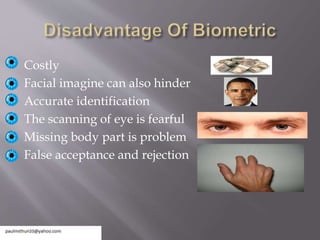
Costly
Facial imagine can also hinder
Accurate identification
The scanning of eye is fearful
Missing body part is problem
False acceptance and rejection
Biometrics-based authentication has many
usability advantage over traditional system
such as password.
The greatest strength of biometric, the fact that
the biometrics does not change over time, is at
the same time its greatest libility . Once a set of
biometric data has compromised, it is
compromised forever.
Any Question??

Biometric security system

  • 1.
    Mithun Paul M.Sc inComputer Science. University of Gour Banga,Malda West Bengal,India
  • 2.
    Biometric Introduction History OfBiometric System Security Biometric Devices & Its Work Area Why Biometric Required? Working Of Biometrics System Comparison with any Other Devices Limitation Of Biometric System Conclusion & References
  • 3.
    Biometric is acombination of two Greek words Bio(Life) and Metric(To Measure). It actually measures and analyzes the biological traits of a human being. Biometric is the automated process of identifying or verifying an individual based upon his or her behavioral or physical characteristics.
  • 4.
     The firstknown example of Biometrics in practice was a form of finger printing being used in China in the 14th century, as reported by explore Joao de Barros. He wrote that the Chinese merchants were stamping children’s palm print and footprints on paper with ink to distinguish the young children from another.
  • 5.
    Types of Biometric Accordingto it’s working principle Biometric device are mainly two types- 1.Behavioral -Voice -Signature -DNA 2.Physical -Fingerprint -Palmprint -Face -Hand geometry -Iris
  • 6.
    In generally thesedevices are used any where, required core security. Such as- The Banking sector Company employee attendance Store data Send data/wealth Now a day for attendance in school these device are used. ATMs
  • 7.
    Identity theft isnot possible Password remembrance problem does not exist Cannot be predicted or hacked Cannot be shared Perceived as more secure
  • 8.
    These devices arework through some steps- Capturing Pre-processing Feature extension Template matching Matcher/Comparison Application device
  • 9.
    In the firststep the device receive data through sensor then convert it some feature extraction and make some template to store database. In feature this device compare these template to the user/client.
  • 10.
    For storing datain computational memory devices are first scan the finger/input device then make equivalent graphical view for converting it memory matching view. Devices are convert finger/input device its equivalent binary value and store, in future compare any finger/input device with the storing data.
  • 11.
    Electronic/other Devices May betheft Break the password Forgotten password Biometric Devices Not possible to Theft. Impossible to break the Password No chance it is machine dependent
  • 12.
    Presence of noisein the sensed data Variations in the enrolled data Non-universality It is an expensive security solution
  • 13.
    Costly Facial imagine canalso hinder Accurate identification The scanning of eye is fearful Missing body part is problem False acceptance and rejection
  • 14.
    Biometrics-based authentication hasmany usability advantage over traditional system such as password. The greatest strength of biometric, the fact that the biometrics does not change over time, is at the same time its greatest libility . Once a set of biometric data has compromised, it is compromised forever.
  • 15.