Outline:-
 Introduction
 History
 Characteristics of Biometrics
 Working Principle of Biometrics
 Classification of Biometrics
 System Accuracy
 Comparison of Various Biometrics Technology
 Applications
 Conclusion
Introduction
What is biometrics?
Why biometrics?
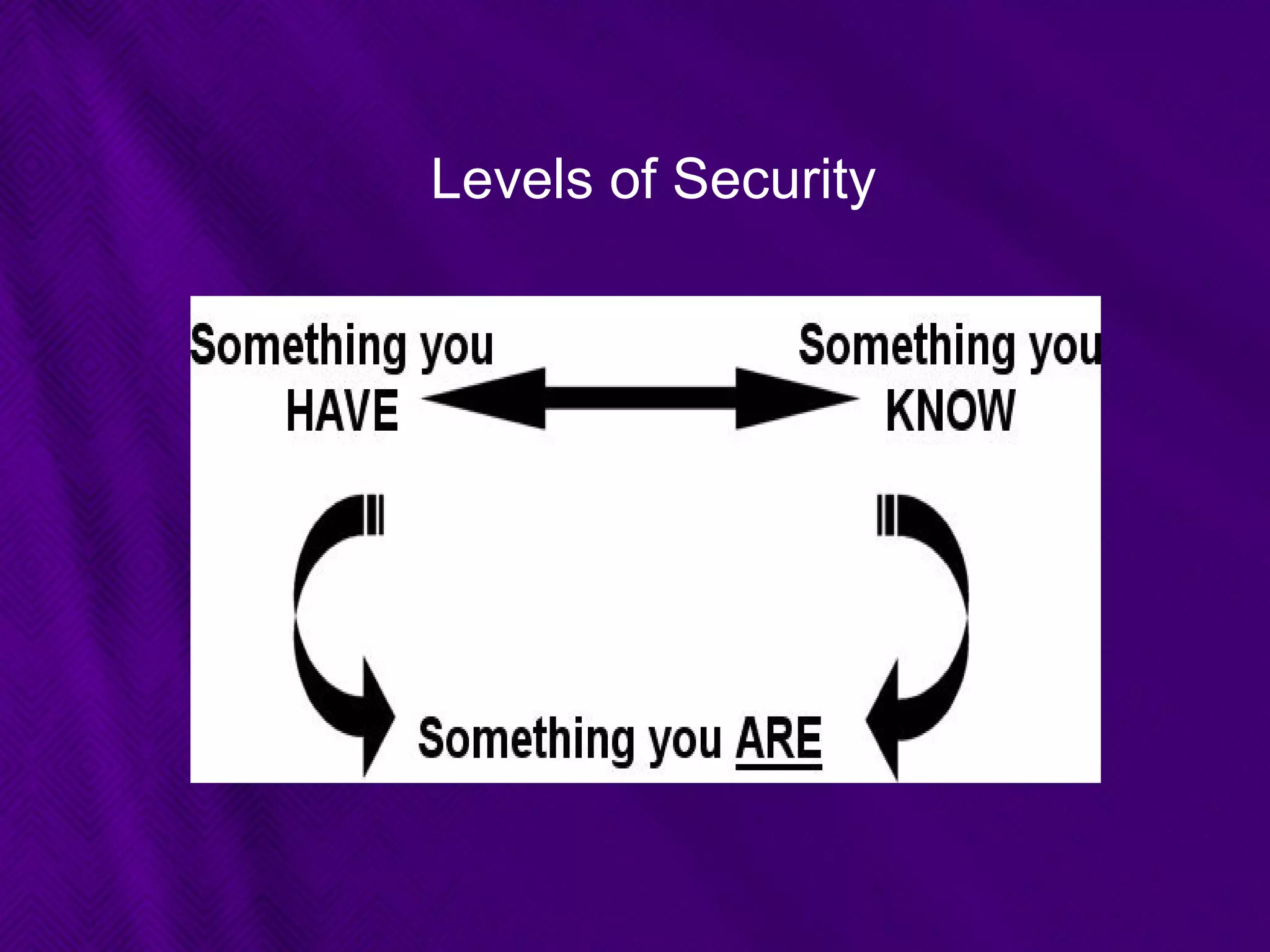
Levels of Security
History
 The ancient Egyptians and the Chinese played a large role in
biometrics history.
 Biometrics in practice was a form of finger printing being used
in china in the 14th
century.
 Bertillon developed a technique of multiple body
measurements .
 A system called “Indentimat” which measured shape of the
hand and length of fingers was introduced in 1970s.
Characteristics of Biometrics
 Any human characteristic can qualify as a biometric
characteristic as long as it satisfies the following
requirements:-
 Universality
 Distinctiveness
 Permanence
 Collectability
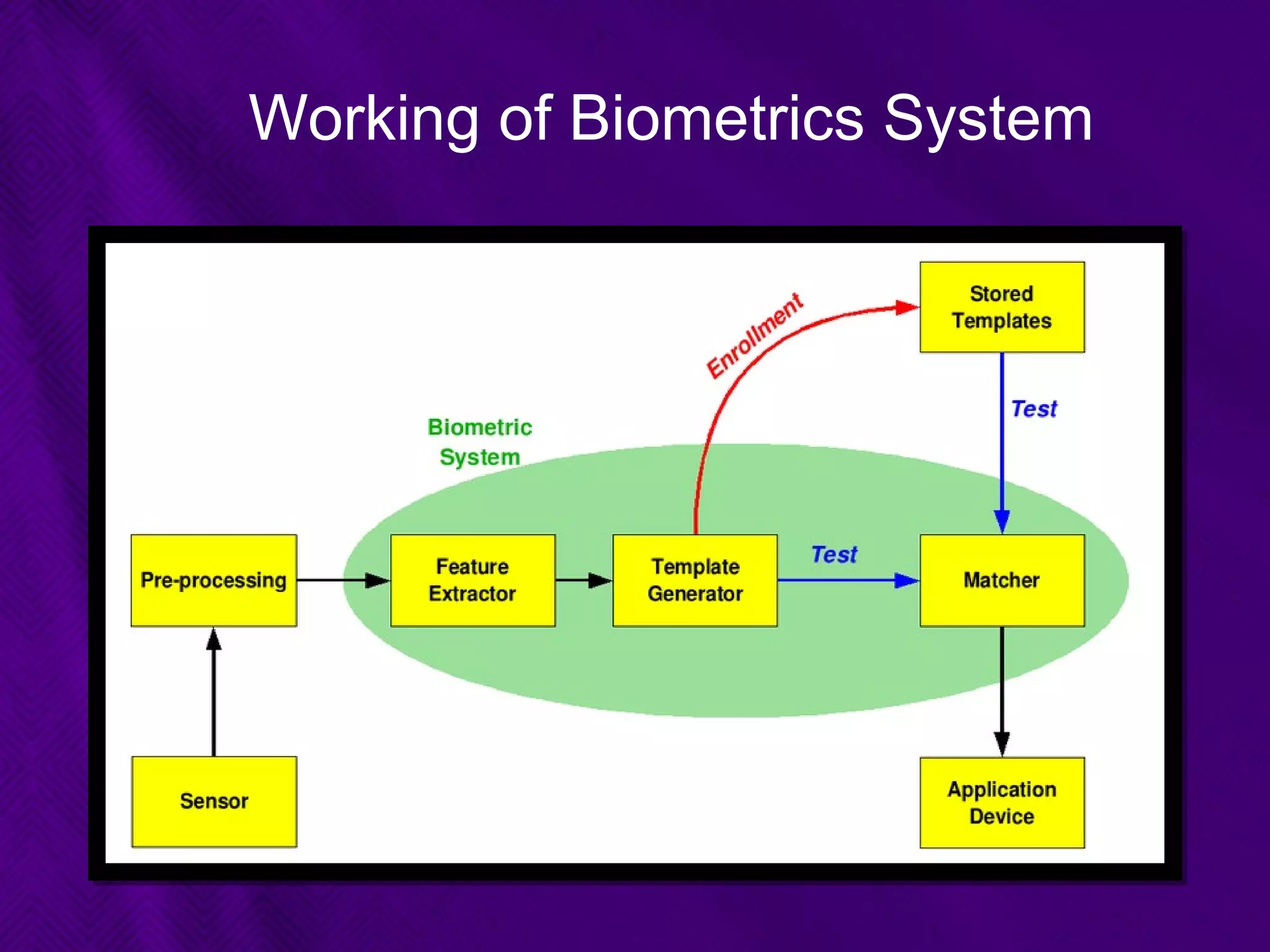
Working of Biometrics System
Classification of Biometrics
1. Physiological – related to shape of the body.
 Fingerprint
 Facial recognisation
 Hand geometry
 Iris recognisation
2. Behavioral – related to the behavior of the person.
 Speaker recognisation
 Signature recognisation
 Gesture recognisation
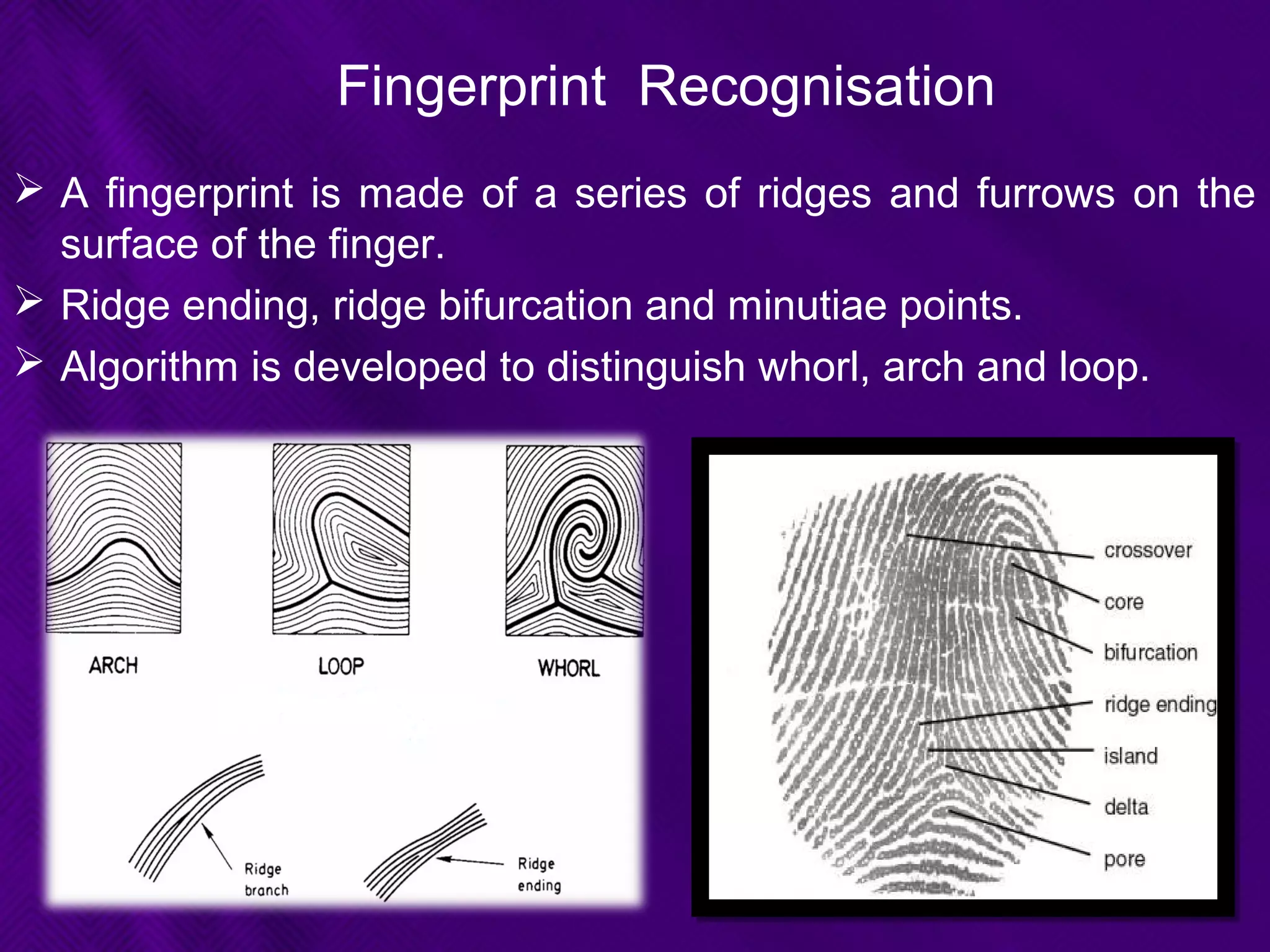
Fingerprint Recognisation
 A fingerprint is made of a series of ridges and furrows on the
surface of the finger.
 Ridge ending, ridge bifurcation and minutiae points.
 Algorithm is developed to distinguish whorl, arch and loop.
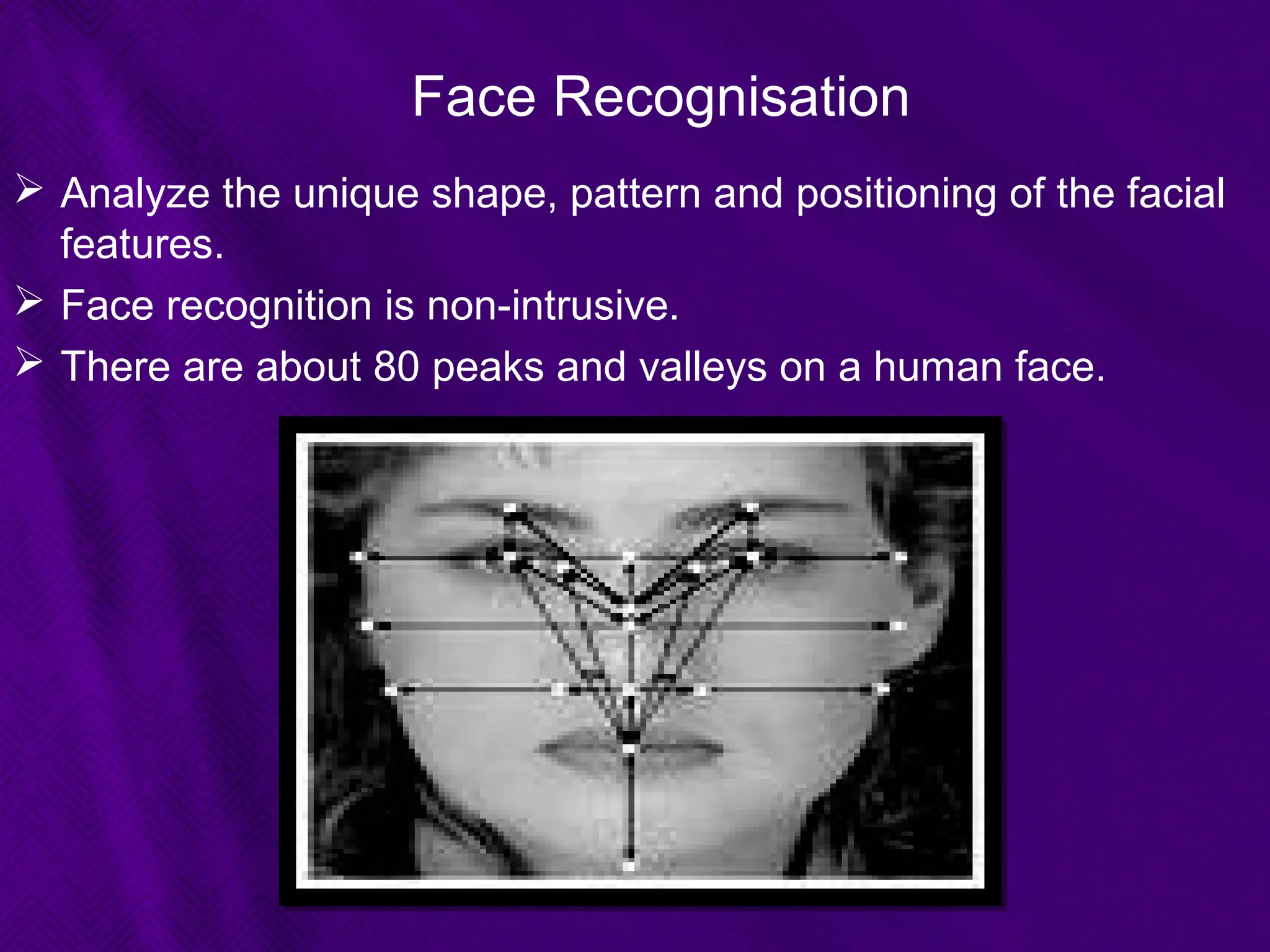
Face Recognisation
 Analyze the unique shape, pattern and positioning of the facial
features.
 Face recognition is non-intrusive.
 There are about 80 peaks and valleys on a human face.
Continues……
 A face recognition system consists of the following modules:-
 Sensor module.
 Face detection and feature extraction module.
 Classification module.
 A face detection algorithms can be divided into three categories
according to
 Knowledge-based methods.
 Feature invariant approaches.
 Template-based methods.
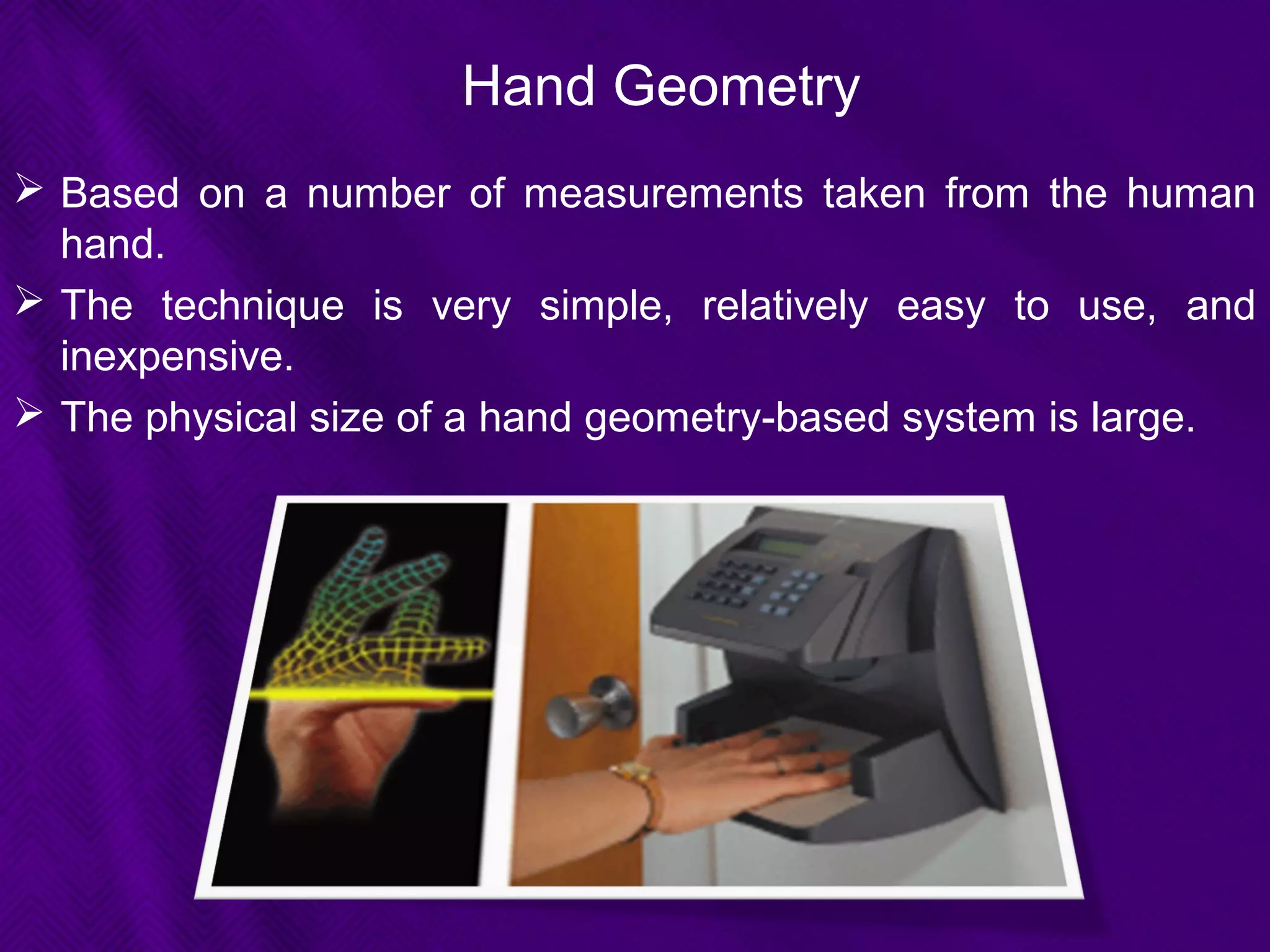
Hand Geometry
 Based on a number of measurements taken from the human
hand.
 The technique is very simple, relatively easy to use, and
inexpensive.
 The physical size of a hand geometry-based system is large.
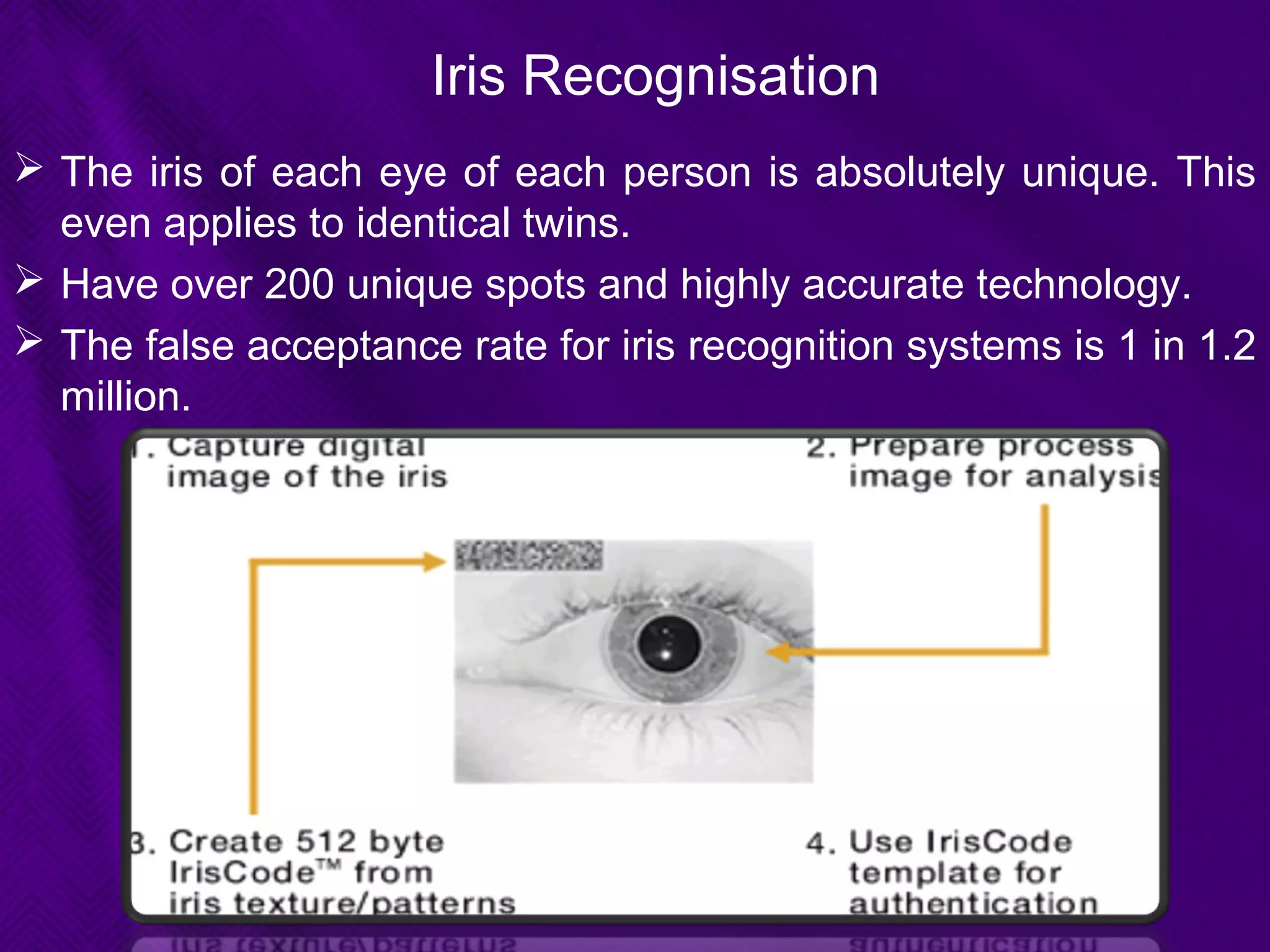
Iris Recognisation
 The iris of each eye of each person is absolutely unique. This
even applies to identical twins.
 Have over 200 unique spots and highly accurate technology.
 The false acceptance rate for iris recognition systems is 1 in 1.2
million.
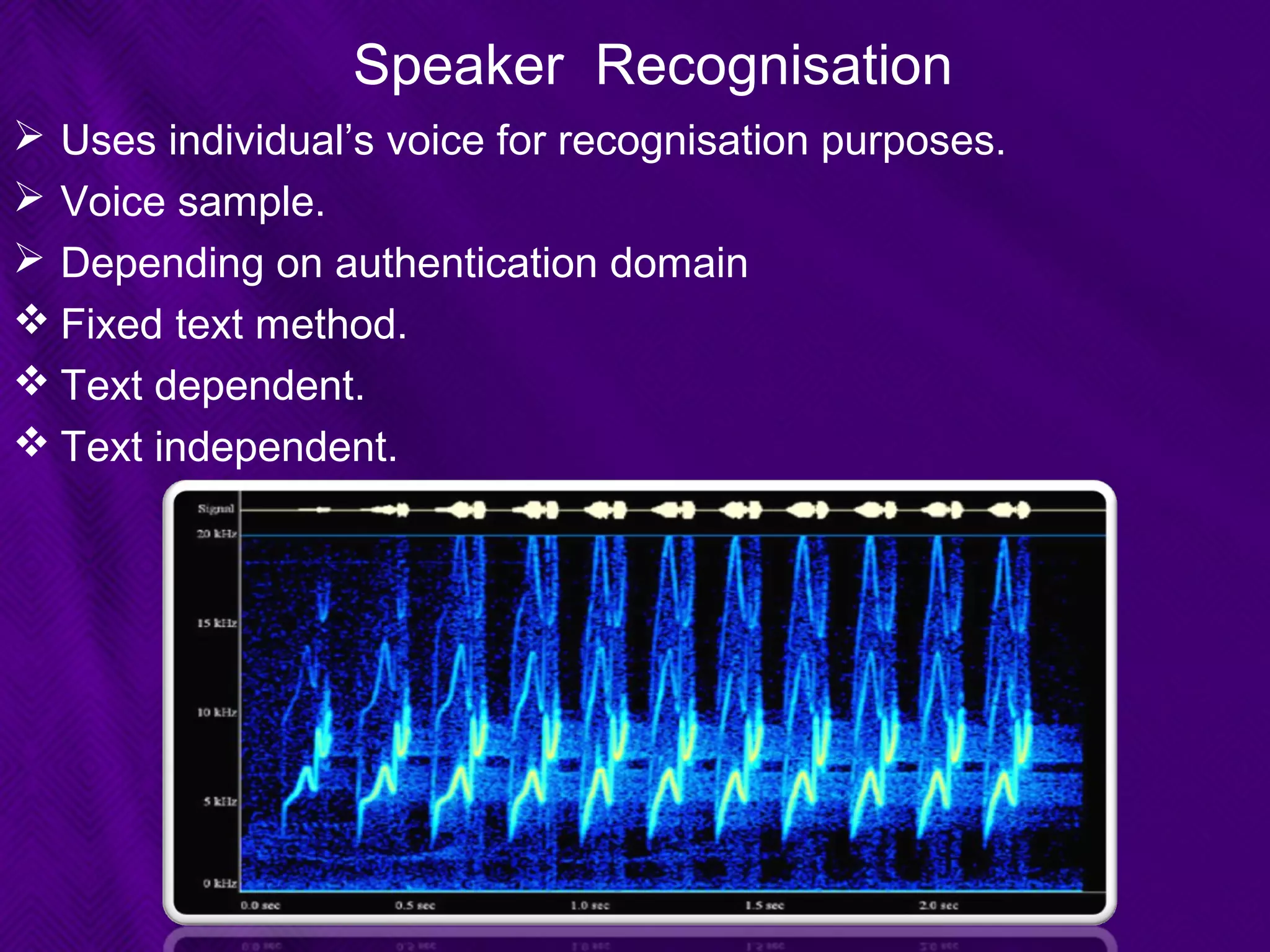
Speaker Recognisation
 Uses individual’s voice for recognisation purposes.
 Voice sample.
 Depending on authentication domain
 Fixed text method.
 Text dependent.
 Text independent.
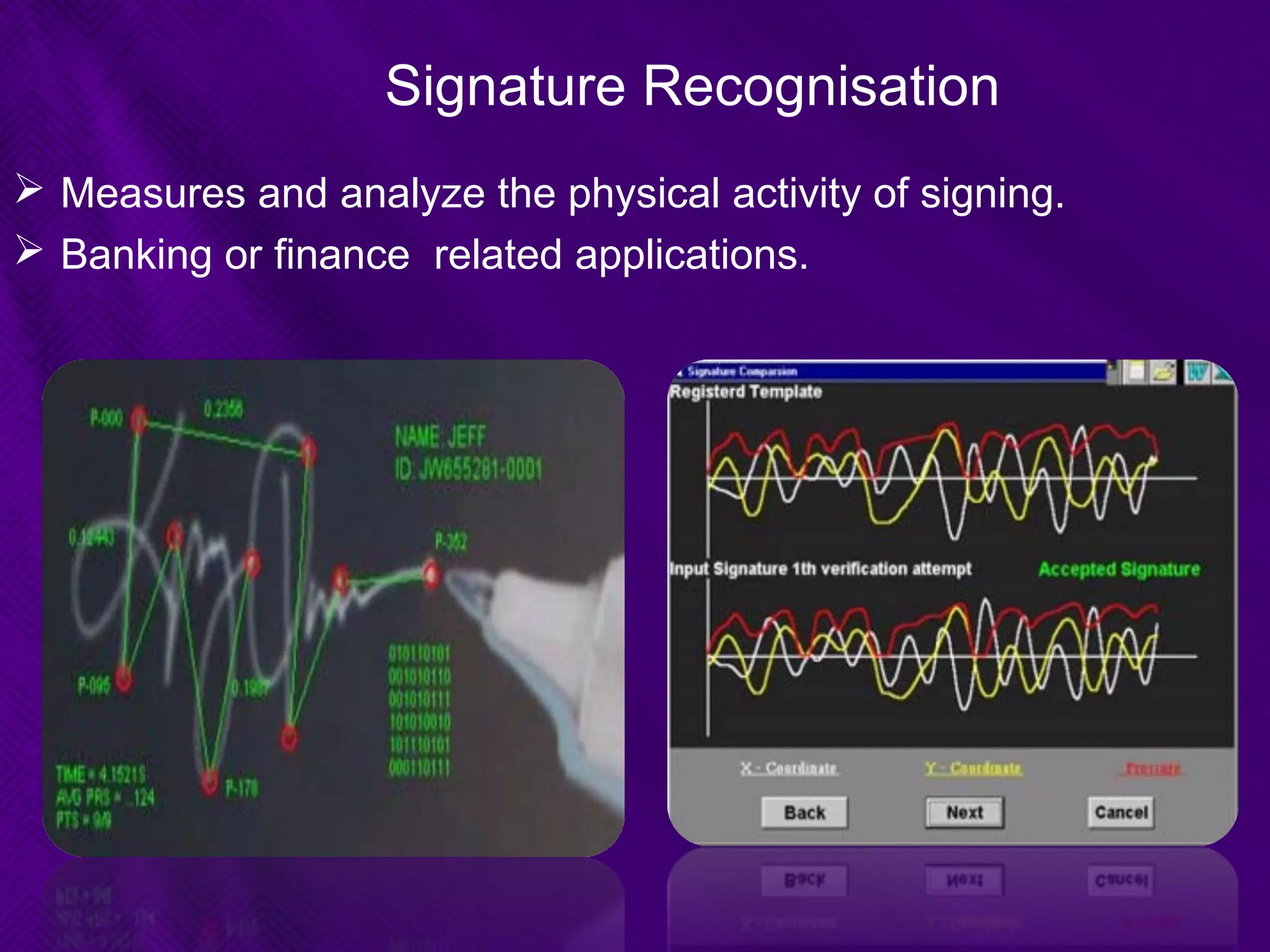
Signature Recognisation
 Measures and analyze the physical activity of signing.
 Banking or finance related applications.
Multimodal Biometrics System
 It utilize more than one physiological or behavioral
characteristic for enrollment, verification or identification.
 This system takes advantage of the capabilities of each
individual biometric.
 It can be used to overcome some of the limitations of a
single biometrics.
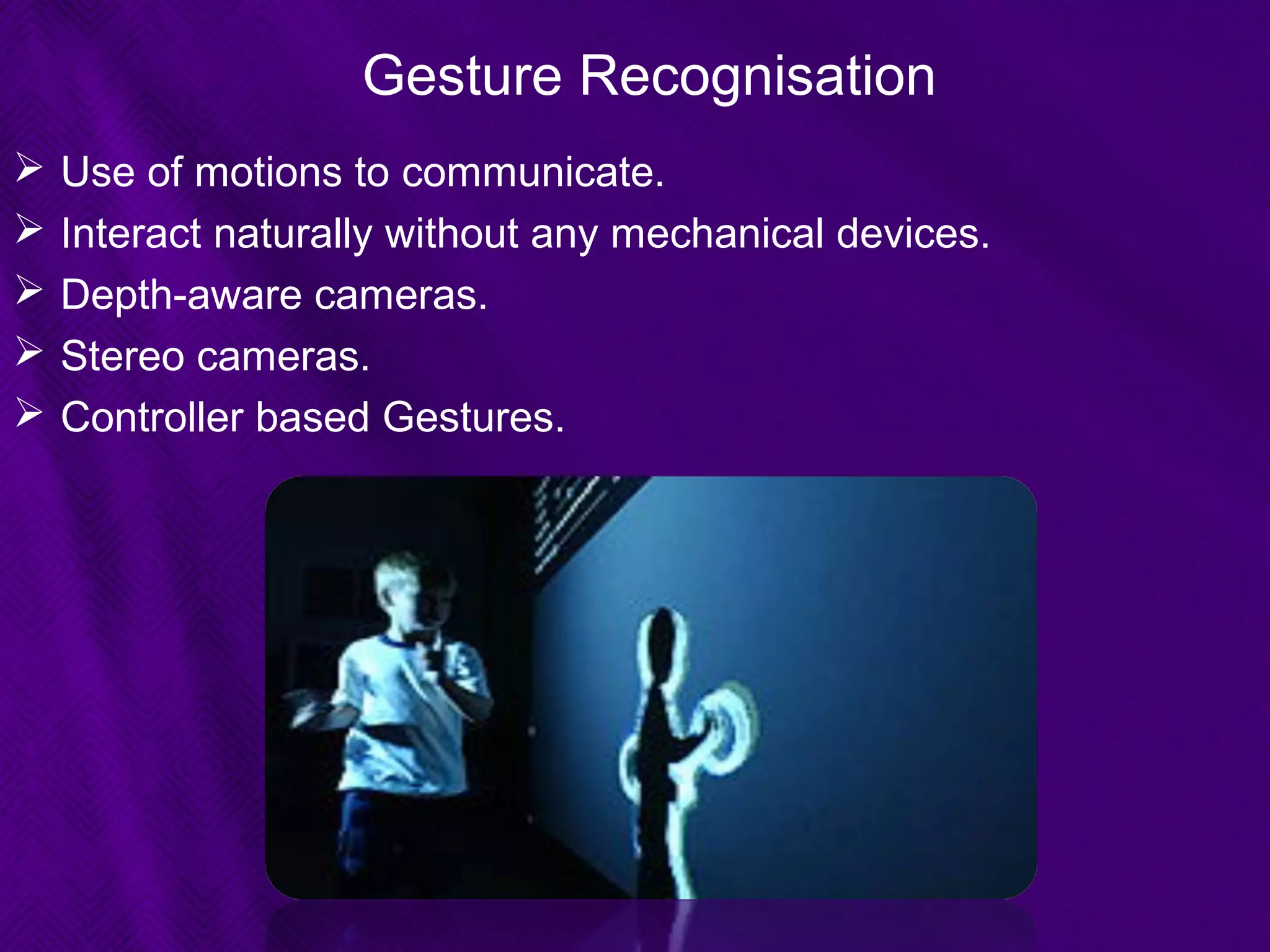
Gesture Recognisation
 Use of motions to communicate.
 Interact naturally without any mechanical devices.
 Depth-aware cameras.
 Stereo cameras.
 Controller based Gestures.
System Accuracy
 Accuracy or performance of biometric systems is measured
with three factors:-
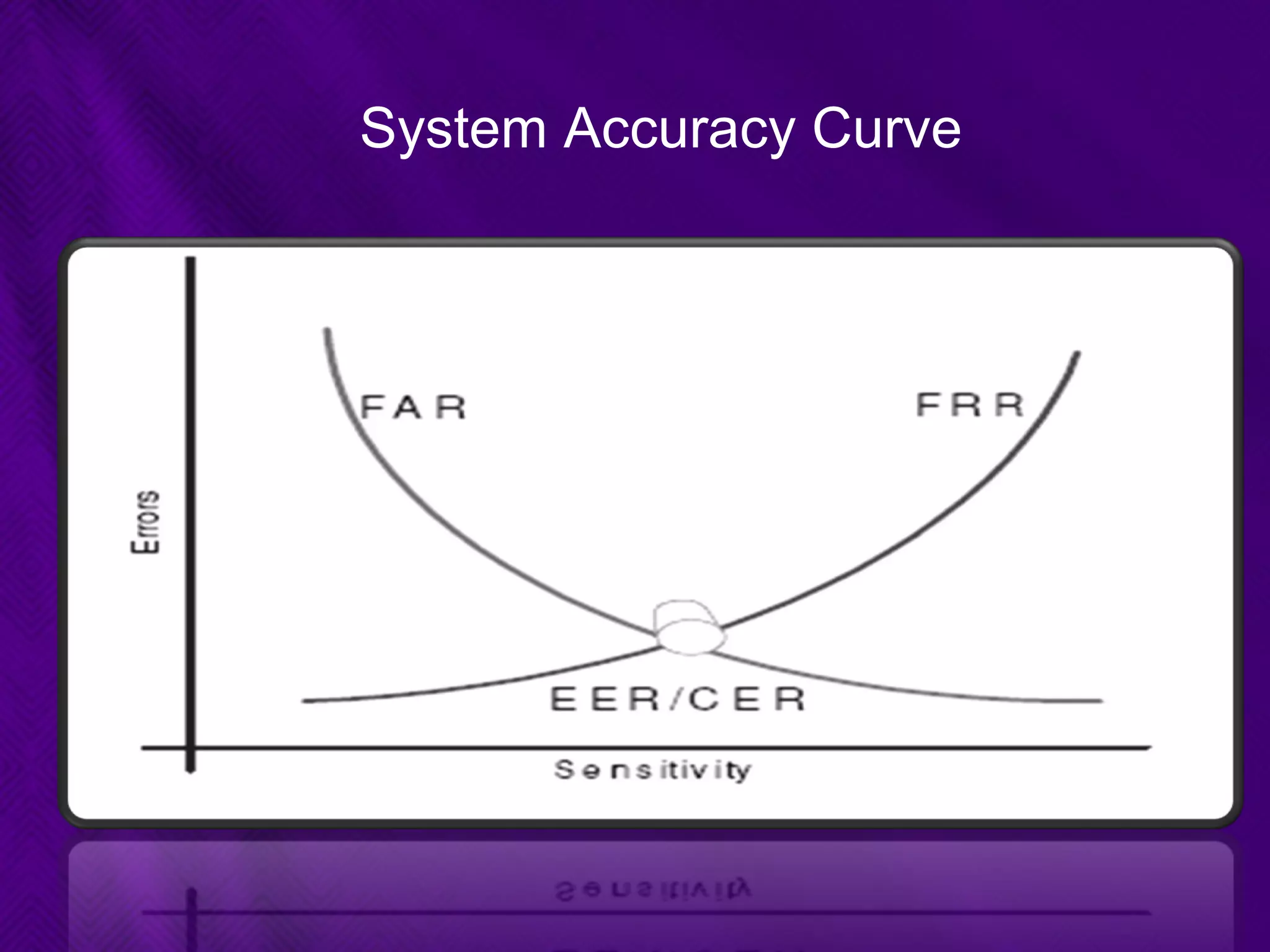
 False acceptance rate (FAR)
 False rejection rate (FRR)
 Equal Error Rate (EER)
System Accuracy Curve
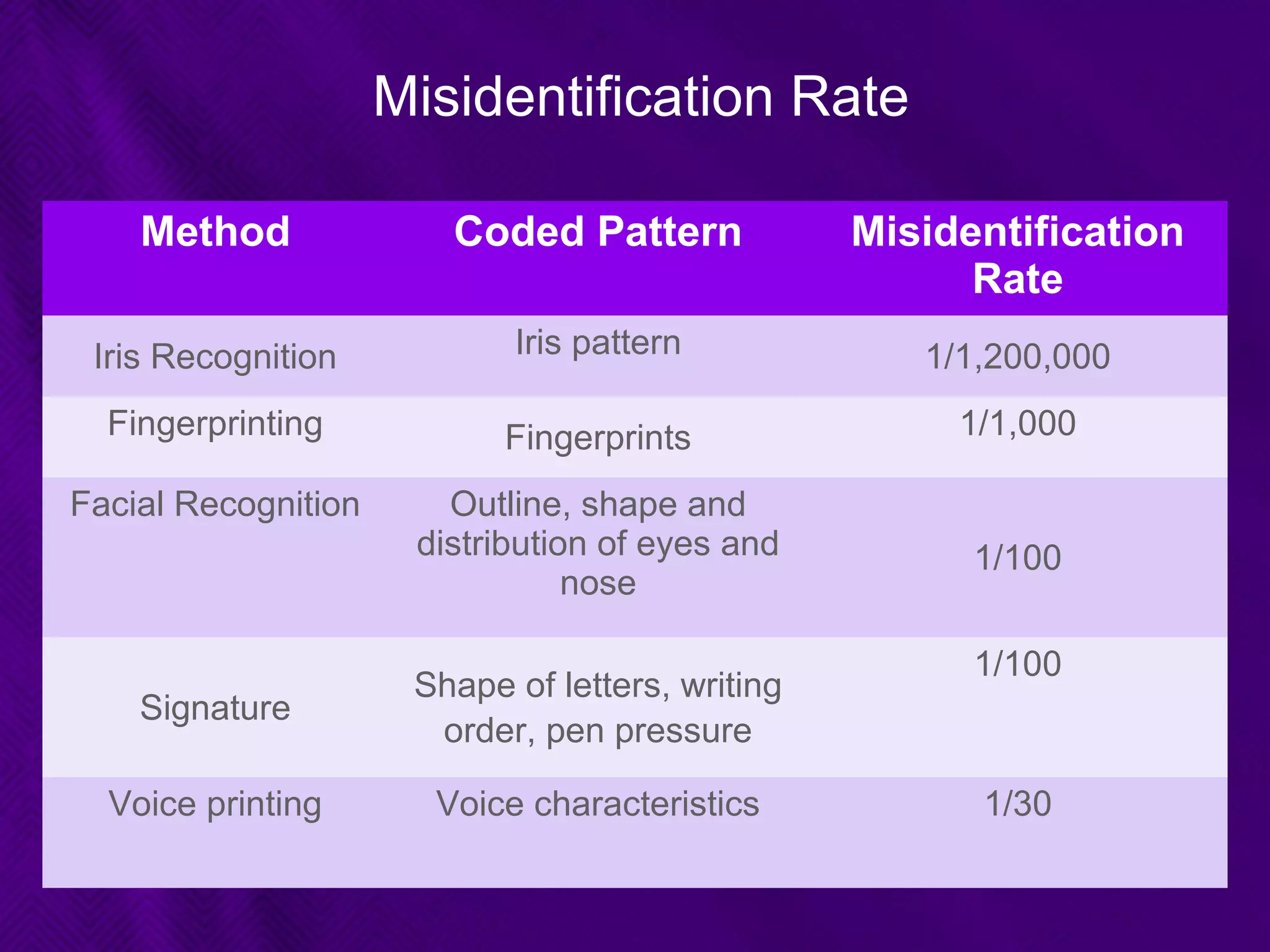
Misidentification Rate
Method Coded Pattern Misidentification
Rate
Iris Recognition Iris pattern 1/1,200,000
Fingerprinting Fingerprints 1/1,000
Facial Recognition Outline, shape and
distribution of eyes and
nose
1/100
Signature
Shape of letters, writing
order, pen pressure
1/100
Voice printing Voice characteristics 1/30
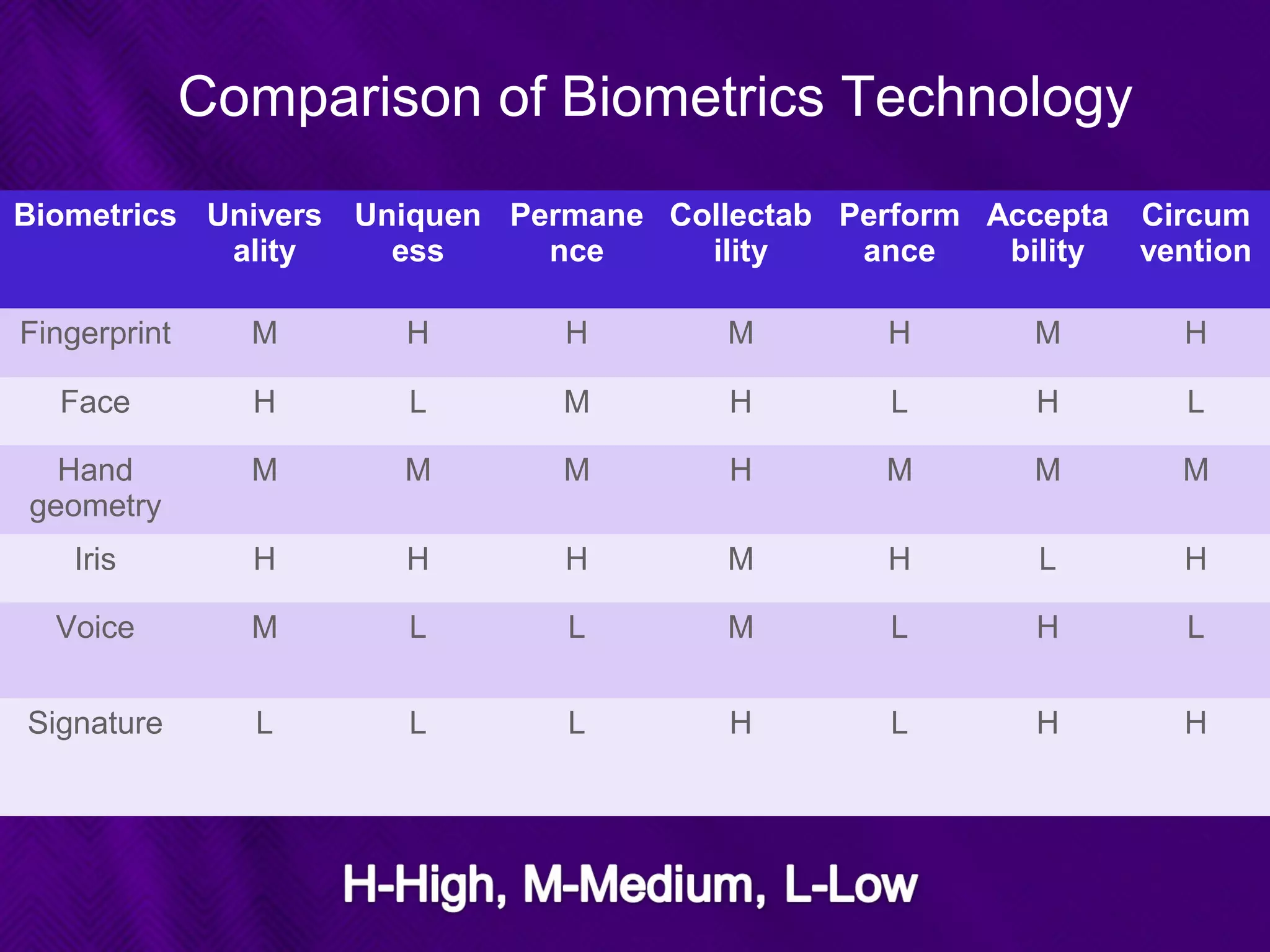
Comparison of Biometrics Technology
Biometrics Univers
ality
Uniquen
ess
Permane
nce
Collectab
ility
Perform
ance
Accepta
bility
Circum
vention
Fingerprint M H H M H M H
Face H L M H L H L
Hand
geometry
M M M H M M M
Iris H H H M H L H
Voice M L L M L H L
Signature L L L H L H H
Applications
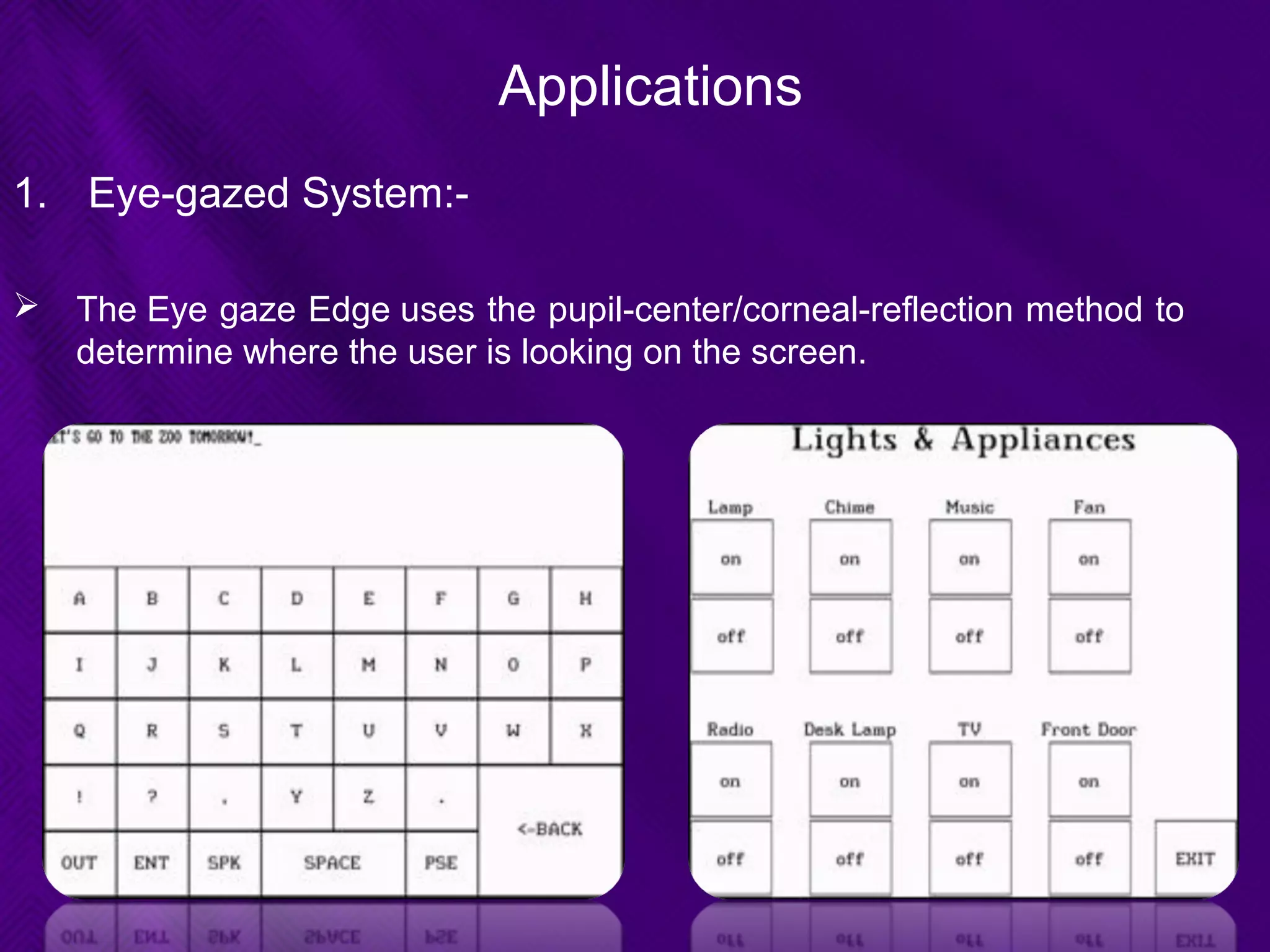
1. Eye-gazed System:-
 The Eye gaze Edge uses the pupil-center/corneal-reflection method to
determine where the user is looking on the screen.
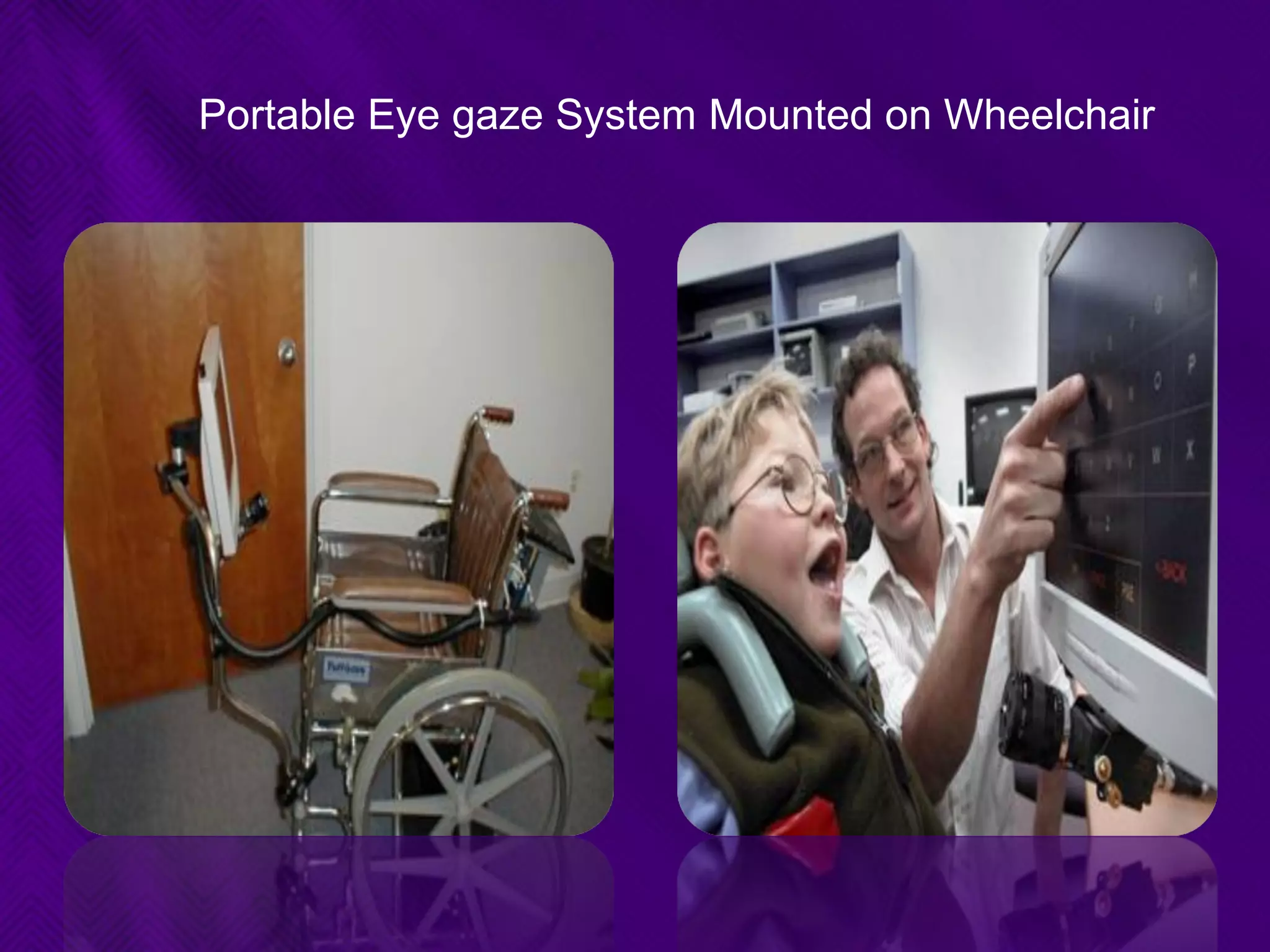
Portable Eye gaze System Mounted on Wheelchair
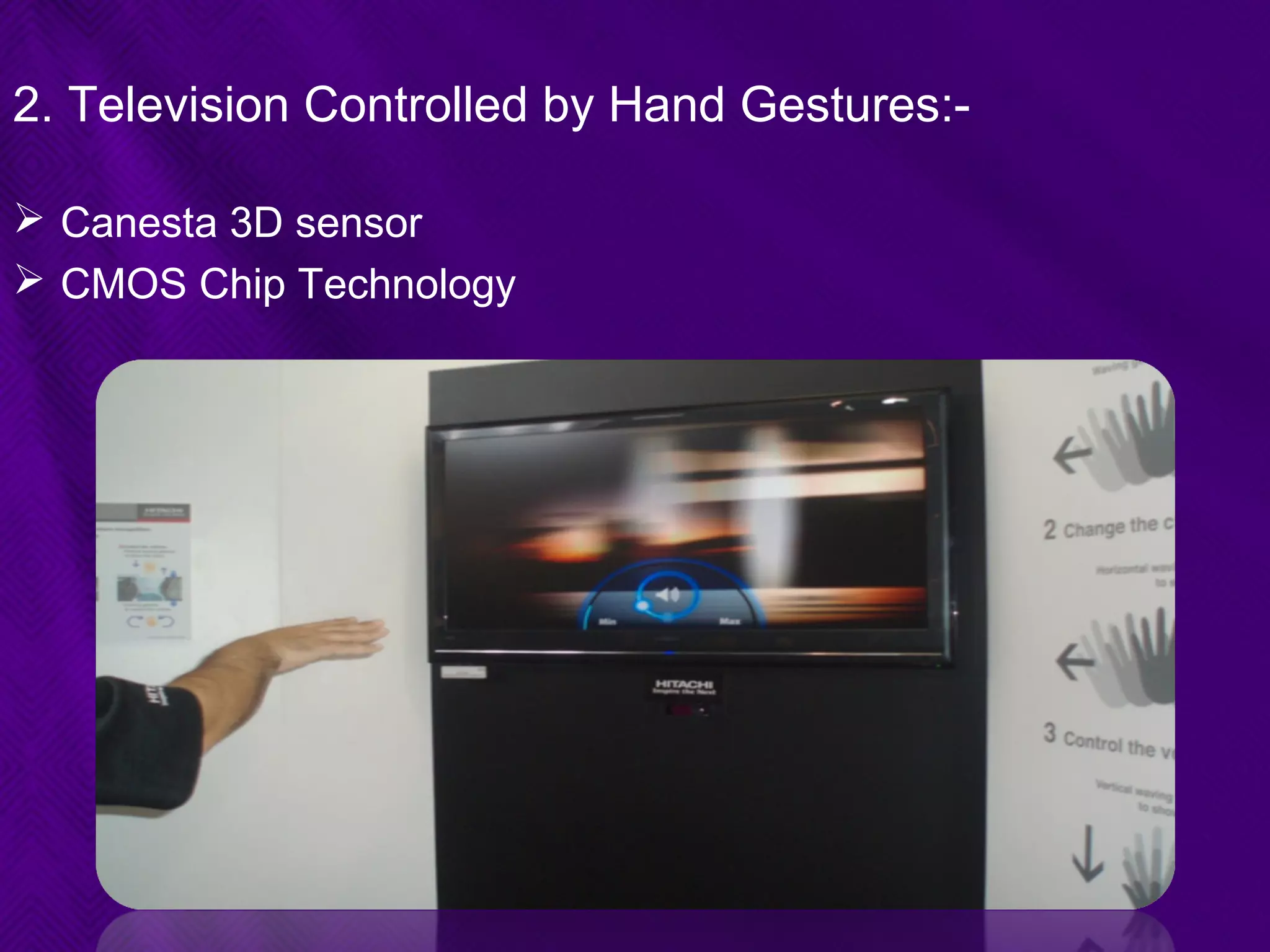
2. Television Controlled by Hand Gestures:-
 Canesta 3D sensor
 CMOS Chip Technology
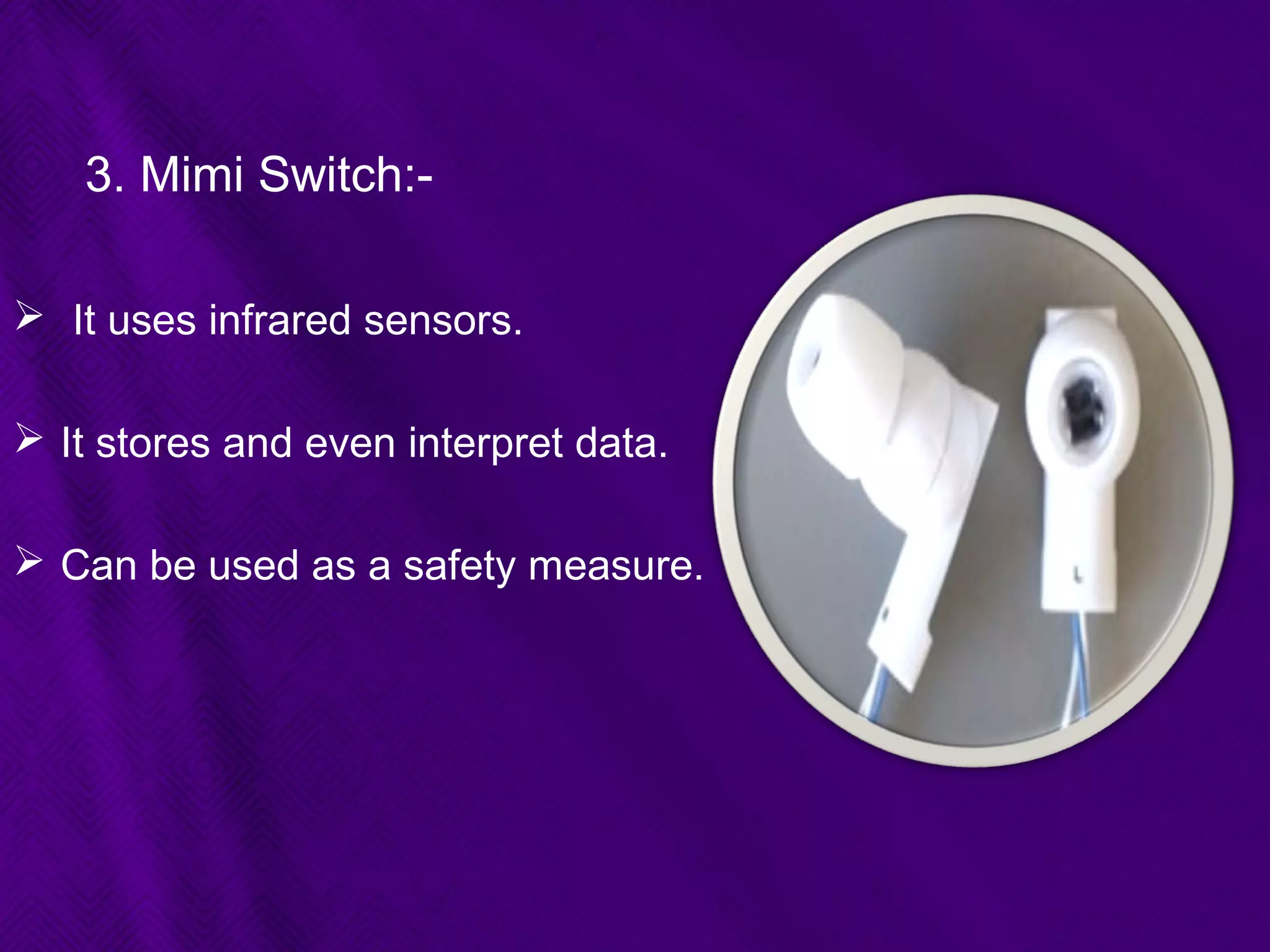
3. Mimi Switch:-
 It uses infrared sensors.
 It stores and even interpret data.
 Can be used as a safety measure.
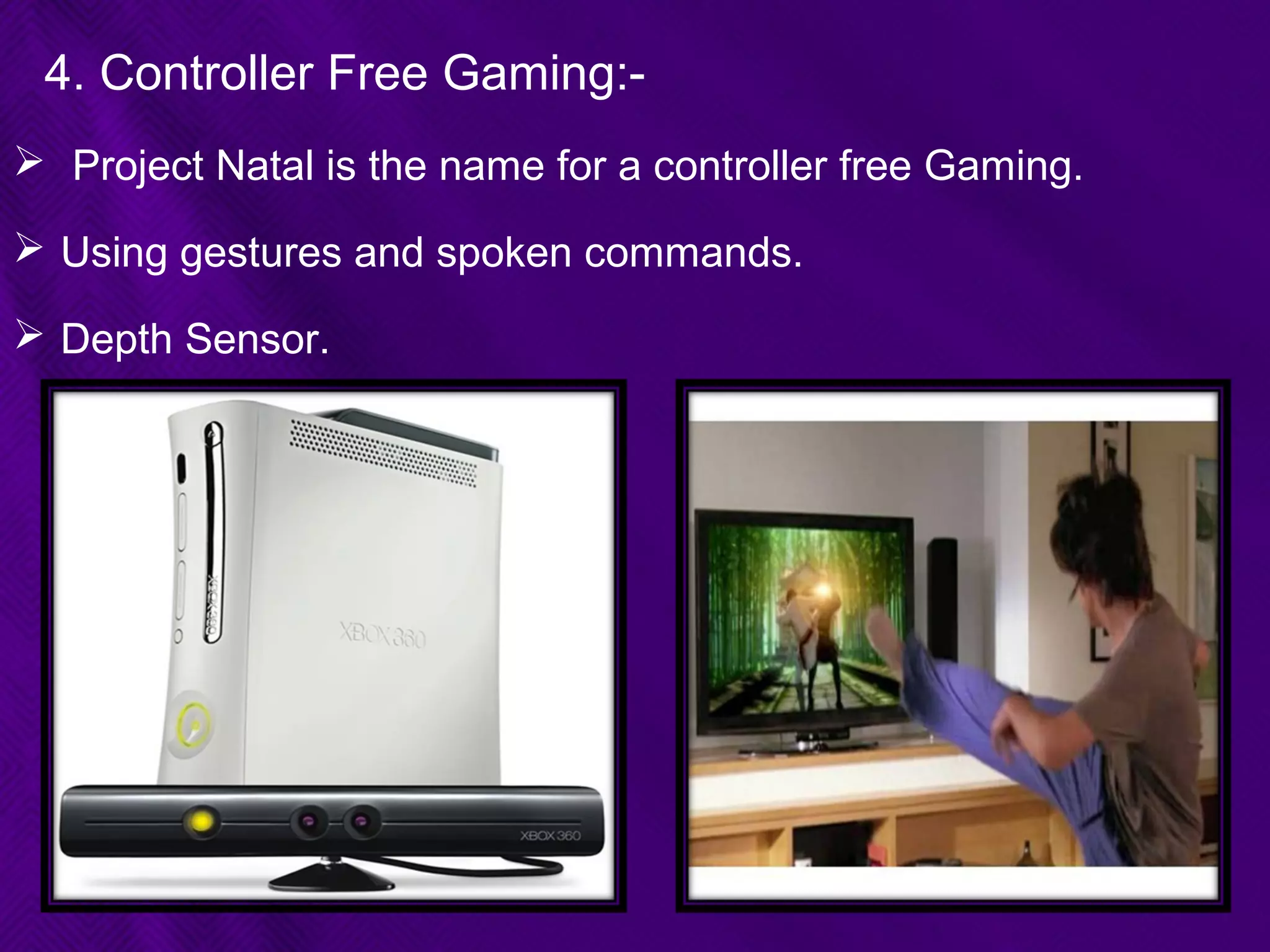
4. Controller Free Gaming:-
 Project Natal is the name for a controller free Gaming.
 Using gestures and spoken commands.
 Depth Sensor.
Conclusion
 Biometrics is an emerging area with many opportunities for
growth.
 Not to remember passwords.
 User friendliness.
 A new way to interact with devices.
References
1. A. Jain et al: “BIOMETRICS: Personal Identification in Networked Society”,
Kluwer Academic Publishers, 1999, ISBN0-7923-8345-1.
2. S. Prabhakar, S. Pankanti, and A. K. Jain, “Biometric Recognition: Security
and Privacy Concerns”, IEEE Security and Privacy Magazine, Vol. 1, No. 2,
pp. 33-42, 2003.
3. http:// www.biometrics.org/
4. http://www.biometricsconsotorium.com
5. http://www.howstufworks.com
6. http://www.youtube.com/watch?v=FCEyHiLxuC8
THANK YOU
Any Questions

Biometrics Technology PPT

  • 2.
    Outline:-  Introduction  History Characteristics of Biometrics  Working Principle of Biometrics  Classification of Biometrics  System Accuracy  Comparison of Various Biometrics Technology  Applications  Conclusion
  • 3.
  • 4.
  • 5.
    History  The ancientEgyptians and the Chinese played a large role in biometrics history.  Biometrics in practice was a form of finger printing being used in china in the 14th century.  Bertillon developed a technique of multiple body measurements .  A system called “Indentimat” which measured shape of the hand and length of fingers was introduced in 1970s.
  • 6.
    Characteristics of Biometrics Any human characteristic can qualify as a biometric characteristic as long as it satisfies the following requirements:-  Universality  Distinctiveness  Permanence  Collectability
  • 7.
  • 8.
    Classification of Biometrics 1.Physiological – related to shape of the body.  Fingerprint  Facial recognisation  Hand geometry  Iris recognisation 2. Behavioral – related to the behavior of the person.  Speaker recognisation  Signature recognisation  Gesture recognisation
  • 9.
    Fingerprint Recognisation  Afingerprint is made of a series of ridges and furrows on the surface of the finger.  Ridge ending, ridge bifurcation and minutiae points.  Algorithm is developed to distinguish whorl, arch and loop.
  • 10.
    Face Recognisation  Analyzethe unique shape, pattern and positioning of the facial features.  Face recognition is non-intrusive.  There are about 80 peaks and valleys on a human face.
  • 11.
    Continues……  A facerecognition system consists of the following modules:-  Sensor module.  Face detection and feature extraction module.  Classification module.  A face detection algorithms can be divided into three categories according to  Knowledge-based methods.  Feature invariant approaches.  Template-based methods.
  • 12.
    Hand Geometry  Basedon a number of measurements taken from the human hand.  The technique is very simple, relatively easy to use, and inexpensive.  The physical size of a hand geometry-based system is large.
  • 13.
    Iris Recognisation  Theiris of each eye of each person is absolutely unique. This even applies to identical twins.  Have over 200 unique spots and highly accurate technology.  The false acceptance rate for iris recognition systems is 1 in 1.2 million.
  • 14.
    Speaker Recognisation  Usesindividual’s voice for recognisation purposes.  Voice sample.  Depending on authentication domain  Fixed text method.  Text dependent.  Text independent.
  • 15.
    Signature Recognisation  Measuresand analyze the physical activity of signing.  Banking or finance related applications.
  • 16.
    Multimodal Biometrics System It utilize more than one physiological or behavioral characteristic for enrollment, verification or identification.  This system takes advantage of the capabilities of each individual biometric.  It can be used to overcome some of the limitations of a single biometrics.
  • 17.
    Gesture Recognisation  Useof motions to communicate.  Interact naturally without any mechanical devices.  Depth-aware cameras.  Stereo cameras.  Controller based Gestures.
  • 18.
    System Accuracy  Accuracyor performance of biometric systems is measured with three factors:-  False acceptance rate (FAR)  False rejection rate (FRR)  Equal Error Rate (EER)
  • 19.
  • 20.
    Misidentification Rate Method CodedPattern Misidentification Rate Iris Recognition Iris pattern 1/1,200,000 Fingerprinting Fingerprints 1/1,000 Facial Recognition Outline, shape and distribution of eyes and nose 1/100 Signature Shape of letters, writing order, pen pressure 1/100 Voice printing Voice characteristics 1/30
  • 21.
    Comparison of BiometricsTechnology Biometrics Univers ality Uniquen ess Permane nce Collectab ility Perform ance Accepta bility Circum vention Fingerprint M H H M H M H Face H L M H L H L Hand geometry M M M H M M M Iris H H H M H L H Voice M L L M L H L Signature L L L H L H H
  • 22.
    Applications 1. Eye-gazed System:- The Eye gaze Edge uses the pupil-center/corneal-reflection method to determine where the user is looking on the screen.
  • 23.
    Portable Eye gazeSystem Mounted on Wheelchair
  • 24.
    2. Television Controlledby Hand Gestures:-  Canesta 3D sensor  CMOS Chip Technology
  • 25.
    3. Mimi Switch:- It uses infrared sensors.  It stores and even interpret data.  Can be used as a safety measure.
  • 26.
    4. Controller FreeGaming:-  Project Natal is the name for a controller free Gaming.  Using gestures and spoken commands.  Depth Sensor.
  • 28.
    Conclusion  Biometrics isan emerging area with many opportunities for growth.  Not to remember passwords.  User friendliness.  A new way to interact with devices.
  • 29.
    References 1. A. Jainet al: “BIOMETRICS: Personal Identification in Networked Society”, Kluwer Academic Publishers, 1999, ISBN0-7923-8345-1. 2. S. Prabhakar, S. Pankanti, and A. K. Jain, “Biometric Recognition: Security and Privacy Concerns”, IEEE Security and Privacy Magazine, Vol. 1, No. 2, pp. 33-42, 2003. 3. http:// www.biometrics.org/ 4. http://www.biometricsconsotorium.com 5. http://www.howstufworks.com 6. http://www.youtube.com/watch?v=FCEyHiLxuC8
  • 30.
  • 31.