‫يم‬ ِ‫ح‬َّ‫ٱلر‬ ِ‫ن‬ ٰ‫م‬ْ‫ح‬َّ‫ٱلر‬ ِ ‫ه‬‫ٱّٰلل‬ ِ‫م‬ْ‫س‬ِ‫ب‬ِِ
Biometrics Technology
By
• Usman Haider
• Ahmad M. Nawaz
Three main types of authentication
available today are:
• Something that you know, like a password, PIN, pattern or code.
• Something you have, like a swipe card, smart card, token or key.
• Something you are, which is biometrics.
What is a biometic?
Biometrics
Is the term given to the use of biological traits
OR
Behavioral characteristics to identify an individual.
Characteristics
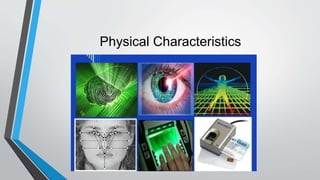
The common physical
characteristics are:
• Fingerprint
• Face
• Retina
• Iris
• Vein pattern, and
• Hand and finger geometery
Characteristics
Behavioral characteristics are:
• Keystroke dynamics
• Voice
• Gait, and
• Signature dynamics
Importance of Biometrics
• The security is needed in every place.
• Using biometrics systems can alleviate the existing problems with
current methods of identification, like those which can be taken, stolen,
borrowed or even forgotten.
• Improves convenience, security and privacy.
Physical Characteristics
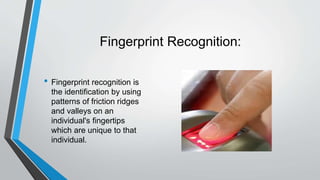
Fingerprint Recognition:
• Fingerprint recognition is
the identification by using
patterns of friction ridges
and valleys on an
individual's fingertips
which are unique to that
individual.
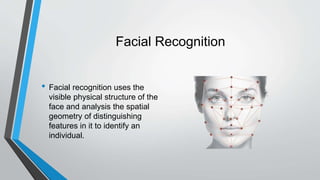
Facial Recognition
• Facial recognition uses the
visible physical structure of the
face and analysis the spatial
geometry of distinguishing
features in it to identify an
individual.
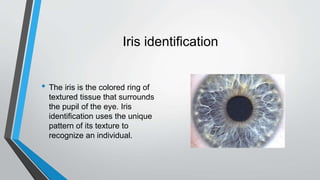
Iris identification
• The iris is the colored ring of
textured tissue that surrounds
the pupil of the eye. Iris
identification uses the unique
pattern of its texture to
recognize an individual.
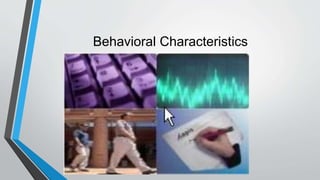
Behavioral Characteristics
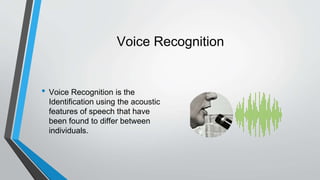
Voice Recognition
• Voice Recognition is the
Identification using the acoustic
features of speech that have
been found to differ between
individuals.
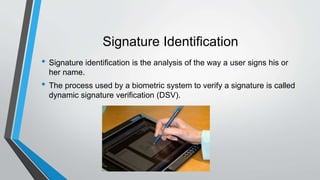
Signature Identification
• Signature identification is the analysis of the way a user signs his or
her name.
• The process used by a biometric system to verify a signature is called
dynamic signature verification (DSV).
Signature Verification Process
The following biometric traits are taken into account while designing signature
verification systems.
• The angle at which pen is held,
• The number of times the pen is lifted,
• The time it takes to write the entire signature
• The pressure exerted by the person while signing
• The variations in the speed with which different parts of the signature are
written.
Applications of Biometrics
• Security
• Airports i.e. Heathrow Airport had Iris Recognition Immigration System (IRIS) to facilitate
frequent travelers.
• Government Agencies
• Banks i.e. Facial recognition system equipped ATM Machines.
• Time and attendance management
• Hospitals
• Banks
• Access Control
• Personal Computers, Phones i.e. Apple Touch ID
Advantages and Disadvantages of
Biometrics
Advantages
• Uniqueness
• Universality
• User Friendliness
• Accuracy
• Comfort
Disadvantages
• Costly
• Facial Imaging can also hinder accurate
identification.
• Missing or Injured body part problem
• False acceptance and rejections
• The scanning of eye is fearful to some
people

Biometrics Technology, Types & Applications

  • 1.
    ‫يم‬ ِ‫ح‬َّ‫ٱلر‬ ِ‫ن‬ٰ‫م‬ْ‫ح‬َّ‫ٱلر‬ ِ ‫ه‬‫ٱّٰلل‬ ِ‫م‬ْ‫س‬ِ‫ب‬ِِ Biometrics Technology By • Usman Haider • Ahmad M. Nawaz
  • 2.
    Three main typesof authentication available today are: • Something that you know, like a password, PIN, pattern or code. • Something you have, like a swipe card, smart card, token or key. • Something you are, which is biometrics.
  • 3.
    What is abiometic? Biometrics Is the term given to the use of biological traits OR Behavioral characteristics to identify an individual.
  • 4.
    Characteristics The common physical characteristicsare: • Fingerprint • Face • Retina • Iris • Vein pattern, and • Hand and finger geometery
  • 5.
    Characteristics Behavioral characteristics are: •Keystroke dynamics • Voice • Gait, and • Signature dynamics
  • 6.
    Importance of Biometrics •The security is needed in every place. • Using biometrics systems can alleviate the existing problems with current methods of identification, like those which can be taken, stolen, borrowed or even forgotten. • Improves convenience, security and privacy.
  • 7.
  • 8.
    Fingerprint Recognition: • Fingerprintrecognition is the identification by using patterns of friction ridges and valleys on an individual's fingertips which are unique to that individual.
  • 9.
    Facial Recognition • Facialrecognition uses the visible physical structure of the face and analysis the spatial geometry of distinguishing features in it to identify an individual.
  • 10.
    Iris identification • Theiris is the colored ring of textured tissue that surrounds the pupil of the eye. Iris identification uses the unique pattern of its texture to recognize an individual.
  • 11.
  • 12.
    Voice Recognition • VoiceRecognition is the Identification using the acoustic features of speech that have been found to differ between individuals.
  • 13.
    Signature Identification • Signatureidentification is the analysis of the way a user signs his or her name. • The process used by a biometric system to verify a signature is called dynamic signature verification (DSV).
  • 14.
    Signature Verification Process Thefollowing biometric traits are taken into account while designing signature verification systems. • The angle at which pen is held, • The number of times the pen is lifted, • The time it takes to write the entire signature • The pressure exerted by the person while signing • The variations in the speed with which different parts of the signature are written.
  • 15.
    Applications of Biometrics •Security • Airports i.e. Heathrow Airport had Iris Recognition Immigration System (IRIS) to facilitate frequent travelers. • Government Agencies • Banks i.e. Facial recognition system equipped ATM Machines. • Time and attendance management • Hospitals • Banks • Access Control • Personal Computers, Phones i.e. Apple Touch ID
  • 16.
    Advantages and Disadvantagesof Biometrics Advantages • Uniqueness • Universality • User Friendliness • Accuracy • Comfort Disadvantages • Costly • Facial Imaging can also hinder accurate identification. • Missing or Injured body part problem • False acceptance and rejections • The scanning of eye is fearful to some people