BY : PRIYANKA
PALIWAL

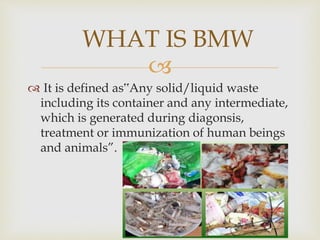
 It is defined as‟Any solid/liquid waste
including its container and any intermediate,
which is generated during diagonsis,
treatment or immunization of human beings
and animals”.
WHAT IS BMW

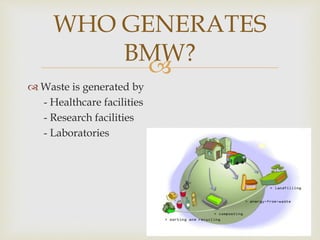
 Waste is generated by
- Healthcare facilities
- Research facilities
- Laboratories
WHO GENERATES
BMW?

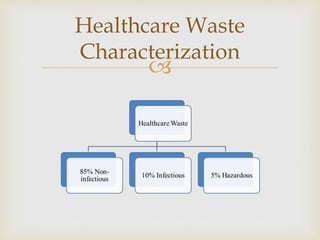
Healthcare Waste
Characterization

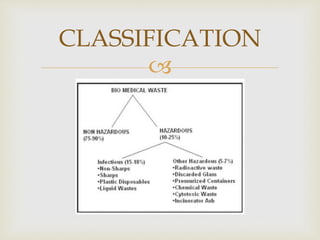
CLASSIFICATION

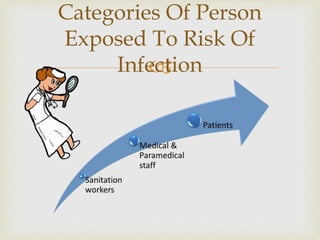
Categories Of Person
Exposed To Risk Of
Infection

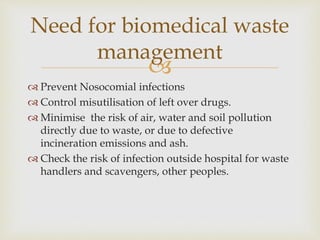
 Prevent Nosocomial infections
 Control misutilisation of left over drugs.
 Minimise the risk of air, water and soil pollution
directly due to waste, or due to defective
incineration emissions and ash.
 Check the risk of infection outside hospital for waste
handlers and scavengers, other peoples.
Need for biomedical waste
management

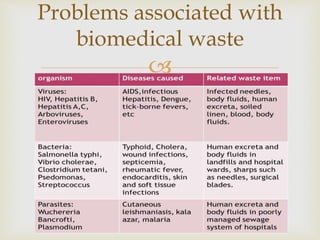
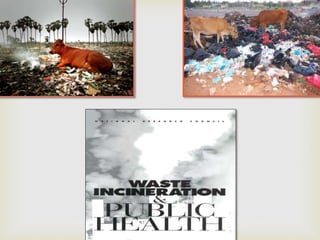
Problems associated with
biomedical waste

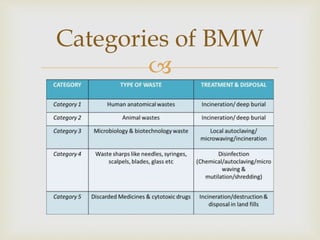
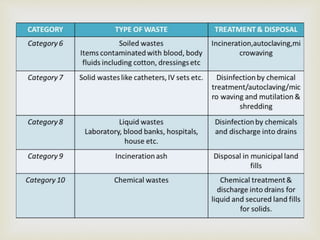
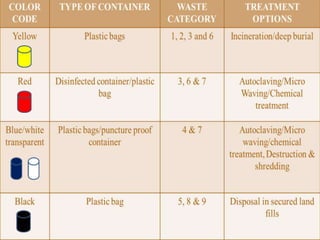
Categories of BMW

 Ministry of Environment and Forests has revised the Bio
Medical Waste (Management and Handling) Rules
promulgated under the Environment Protection Act of
1986. The Rules now called the Bio Medical Wastes
(Management and Handling) Rules 2011.
According to the Ministry of Environment and Forests
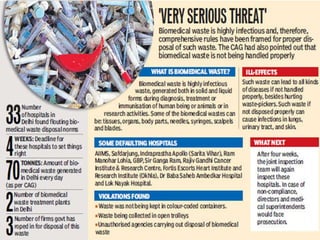
(MoEF) gross generation of BMW in India is 4,05,702
kg/day of which only 2,91,983 kg/day is disposed, which
means that almost 28% of the wastes is left untreated and
not disposed finding its way in dumps or water bodies
and re-enters our system.
Biomedical waste
management rules in india

 Do not dispose dressings in patients bin / Ask for
disposal bags.
 Ensure all the plastics and gloves are cut and put
into bleach solution.
 Ensure all used injections are cut using needle
cutters.
 Ensure compliance of this scheme during ward visits
 Help patients understand the scheme.
 Media plates to be put in separate bleach solution.
Role Of Doctors, Nurses,
Lab Technicians.

 Put the waste indiscriminately.
 Put wrong bags in bin. (Adhere to colour code.)
 Fill the bags till neck. (Waste would otherwise spill
over.)
 Handle waste without protective clothing.
 Drag the bags after removal. (Bags can burst and the
site could be repulsive.)
 Never recap the needle. (Never re-use needle
without disinfection)
 Mix non infectious waste with infectious waste.
DON’TS

Environment Legislation
• The Air (PControl of Pollution) Act, prevention and 1981
• The Environment (Protection) Act, 1986
• The Hazardous Waste (Management & Handling) Rules, 1989
• The National Environmental Tribunal Act, 1995
• The Biomedical Waste (Management & Handling) Rules, 1998
• The Municipal Solid Waste (Management & Handling) Rules,
2000

Conclusion
• We need innovative and radical measures to clean up the
distressing picture of lack of civic concern on the part of hospitals
and slackness in government implementation of bare minimum of
rules, as waste generation particularly biomedical waste imposes
increasing direct and indirect costs on society.
• The challenge before us is to scientifically manage growing
quantities of biomedical waste that go beyond past practices.
BioMedical Waste Management (BMW)

BioMedical Waste Management (BMW)

  • 1.
  • 2.
      It isdefined as‟Any solid/liquid waste including its container and any intermediate, which is generated during diagonsis, treatment or immunization of human beings and animals”. WHAT IS BMW
  • 3.
      Waste isgenerated by - Healthcare facilities - Research facilities - Laboratories WHO GENERATES BMW?
  • 5.
  • 6.
  • 7.
  • 8.
      Prevent Nosocomialinfections  Control misutilisation of left over drugs.  Minimise the risk of air, water and soil pollution directly due to waste, or due to defective incineration emissions and ash.  Check the risk of infection outside hospital for waste handlers and scavengers, other peoples. Need for biomedical waste management
  • 9.
  • 10.
  • 14.
      Ministry ofEnvironment and Forests has revised the Bio Medical Waste (Management and Handling) Rules promulgated under the Environment Protection Act of 1986. The Rules now called the Bio Medical Wastes (Management and Handling) Rules 2011. According to the Ministry of Environment and Forests (MoEF) gross generation of BMW in India is 4,05,702 kg/day of which only 2,91,983 kg/day is disposed, which means that almost 28% of the wastes is left untreated and not disposed finding its way in dumps or water bodies and re-enters our system. Biomedical waste management rules in india
  • 16.
      Do notdispose dressings in patients bin / Ask for disposal bags.  Ensure all the plastics and gloves are cut and put into bleach solution.  Ensure all used injections are cut using needle cutters.  Ensure compliance of this scheme during ward visits  Help patients understand the scheme.  Media plates to be put in separate bleach solution. Role Of Doctors, Nurses, Lab Technicians.
  • 17.
      Put thewaste indiscriminately.  Put wrong bags in bin. (Adhere to colour code.)  Fill the bags till neck. (Waste would otherwise spill over.)  Handle waste without protective clothing.  Drag the bags after removal. (Bags can burst and the site could be repulsive.)  Never recap the needle. (Never re-use needle without disinfection)  Mix non infectious waste with infectious waste. DON’TS
  • 18.
     Environment Legislation • TheAir (PControl of Pollution) Act, prevention and 1981 • The Environment (Protection) Act, 1986 • The Hazardous Waste (Management & Handling) Rules, 1989 • The National Environmental Tribunal Act, 1995 • The Biomedical Waste (Management & Handling) Rules, 1998 • The Municipal Solid Waste (Management & Handling) Rules, 2000
  • 19.
     Conclusion • We needinnovative and radical measures to clean up the distressing picture of lack of civic concern on the part of hospitals and slackness in government implementation of bare minimum of rules, as waste generation particularly biomedical waste imposes increasing direct and indirect costs on society. • The challenge before us is to scientifically manage growing quantities of biomedical waste that go beyond past practices.