Downloaded 42 times

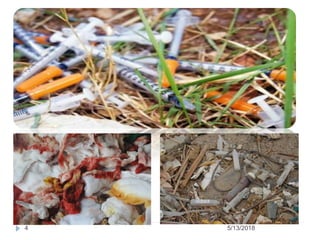
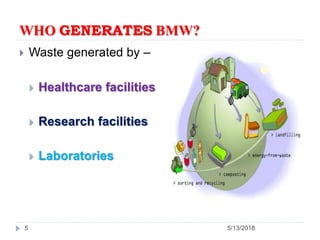

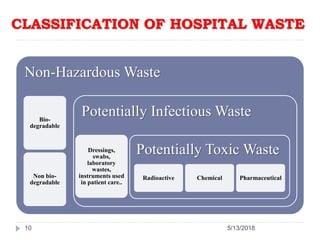
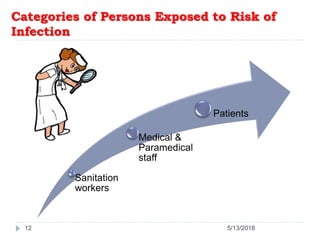
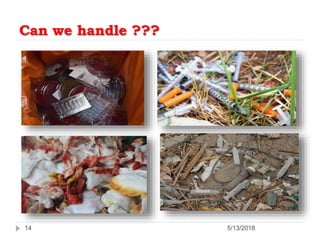

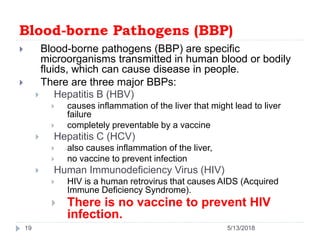
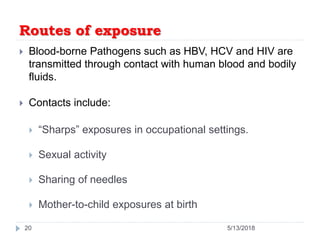

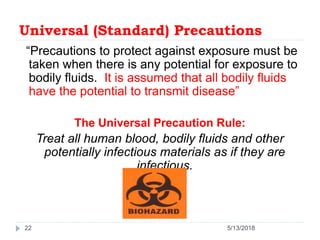
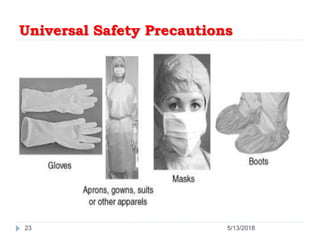
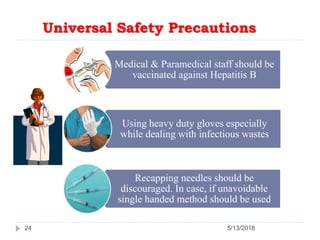

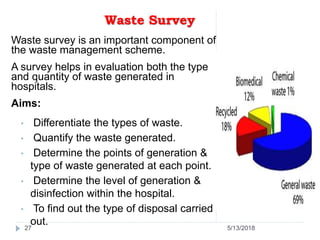
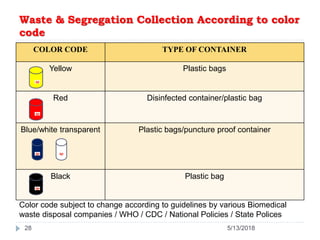
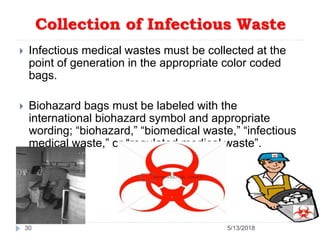
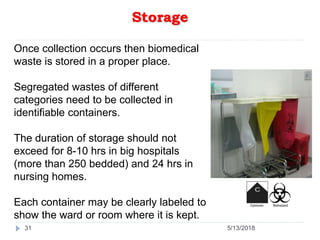

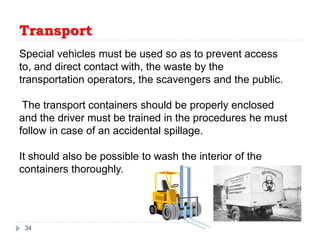
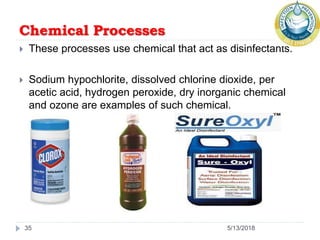

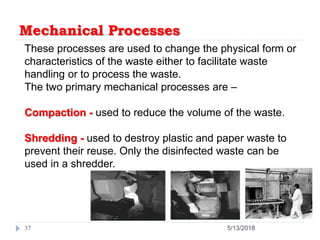

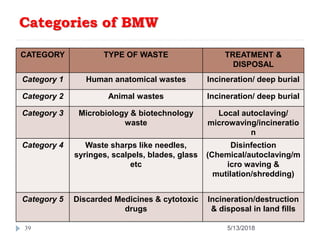
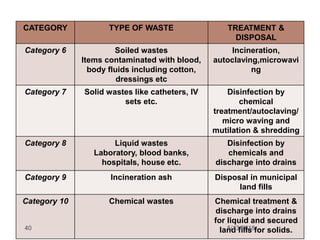
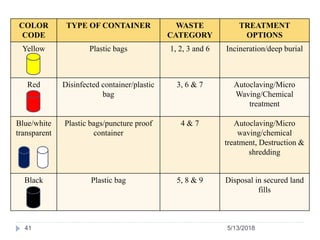


Biomedical waste includes human waste, animal waste, and materials contaminated with blood or body fluids. It is generated during diagnosis, treatment, research, or testing involving humans or animals. The main types are infectious waste, sharps, pathological waste, pharmaceutical waste, and genotoxic waste. Healthcare facilities, research labs, and clinics produce the majority of biomedical waste. Exposure to biomedical waste puts sanitation workers, medical staff, and patients at risk of diseases. Proper management includes segregating, storing, transporting, and treating waste before disposal to prevent disease transmission. Treatment methods include incineration, autoclaving, chemical disinfection, and secured landfilling. Following universal safety precautions and biomedical waste rules


