MANAGEMENT OF SOLID WASTE
   FROM MUNICIPALITY


      By Dr. Ebadullah Hedayat
            30/ 01/ 2012
OUTLINE OF THE PRESENTATION
•   Define solid waste
•   Different sources of solid waste
•   Municipality waste
•   Impact of solid waste on health
•   Waste management
•   Recommendations
•   Conclusion
•   References
INTRODUCTION
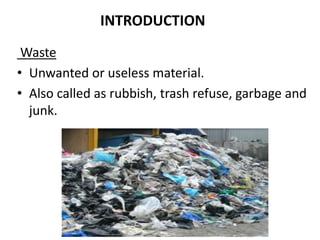
 Waste
• Unwanted or useless material.
• Also called as rubbish, trash refuse, garbage and
  junk.
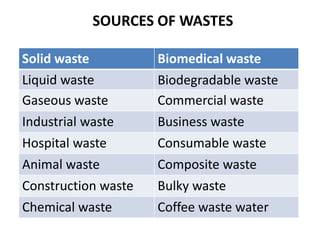
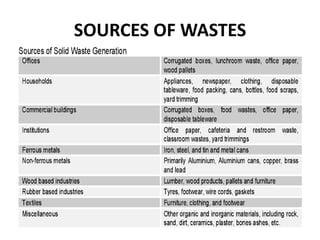
SOURCES OF WASTES

Solid waste          Biomedical waste
Liquid waste         Biodegradable waste
Gaseous waste        Commercial waste
Industrial waste     Business waste
Hospital waste       Consumable waste
Animal waste         Composite waste
Construction waste   Bulky waste
Chemical waste       Coffee waste water
SOURCES OF WASTES
BACKGROUND

• Since the beginning Human kind has been
  generating waste


                      BUT

• With the progress of civilization the waste
  became of a more complex nature
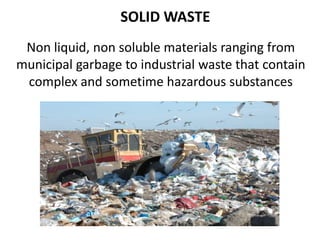
SOLID WASTE
 Non liquid, non soluble materials ranging from
municipal garbage to industrial waste that contain
 complex and sometime hazardous substances
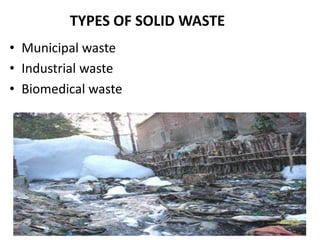
TYPES OF SOLID WASTE
• Municipal waste
• Industrial waste
• Biomedical waste
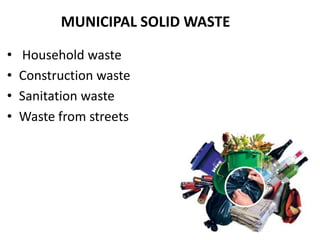
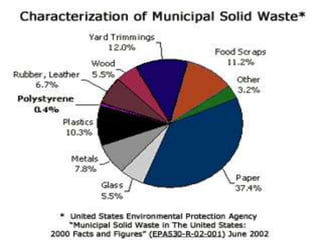
MUNICIPAL SOLID WASTE

•   Household waste
•   Construction waste
•   Sanitation waste
•   Waste from streets
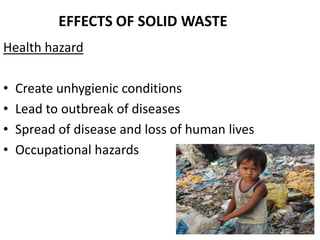
EFFECTS OF SOLID WASTE
Health hazard

•   Create unhygienic conditions
•   Lead to outbreak of diseases
•   Spread of disease and loss of human lives
•   Occupational hazards
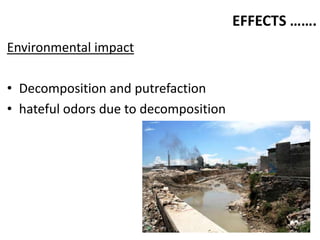
EFFECTS …….
Environmental impact

• Decomposition and putrefaction
• hateful odors due to decomposition
WASTE MANAGEMENT
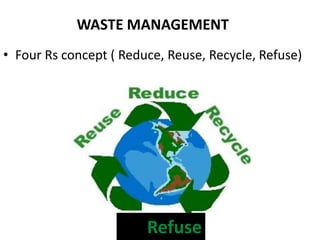
• Four Rs concept ( Reduce, Reuse, Recycle, Refuse)


                        Refuse
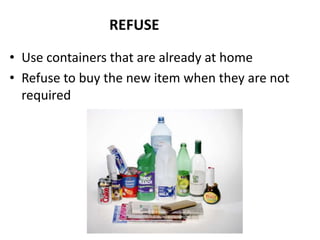
REFUSE

• Use containers that are already at home
• Refuse to buy the new item when they are not
  required
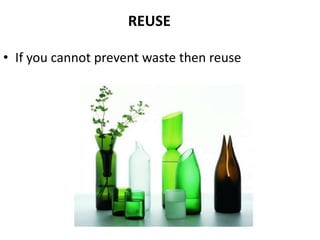
REUSE

• If you cannot prevent waste then reuse
RECYCLE
• Use shopping bags made of cloth which can be use
  over and over again
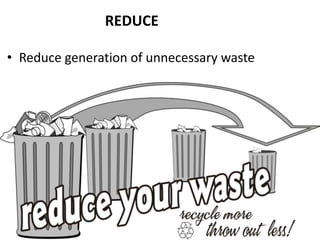
REDUCE

• Reduce generation of unnecessary waste
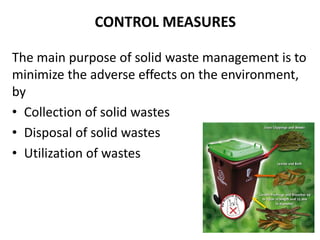
CONTROL MEASURES

The main purpose of solid waste management is to
minimize the adverse effects on the environment,
by
• Collection of solid wastes
• Disposal of solid wastes
• Utilization of wastes
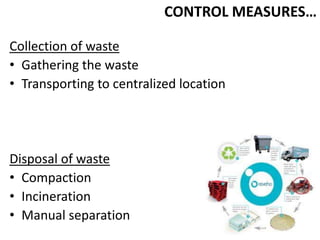
CONTROL MEASURES…

Collection of waste
• Gathering the waste
• Transporting to centralized location


Disposal of waste
• Compaction
• Incineration
• Manual separation
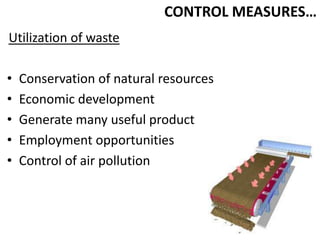
CONTROL MEASURES…
Utilization of waste

•   Conservation of natural resources
•   Economic development
•   Generate many useful product
•   Employment opportunities
•   Control of air pollution
CONCLUSION

• Limited focus on control mechanism affecting on safety,

  health and environment

• Inadequately enforcement of regulations

• Lack of integrated solid waste management system

• Involvement of private sector is ignored.

• open burning and disposal of waste is common practice.
RECOMMENDATIONS
• The involvement of people and public sector
  could improve the efficiency of solid waste
  management
• Public awareness
• House to house collection of waste
• Availability of collections bins with enough
  capacity
• Storage facility to avoid unhygienic and
  unsanitary conditions
Thanks
Any Questions?


                 23

Waste management (EoH) ebadullah ppt

  • 1.
    MANAGEMENT OF SOLIDWASTE FROM MUNICIPALITY By Dr. Ebadullah Hedayat 30/ 01/ 2012
  • 2.
    OUTLINE OF THEPRESENTATION • Define solid waste • Different sources of solid waste • Municipality waste • Impact of solid waste on health • Waste management • Recommendations • Conclusion • References
  • 3.
    INTRODUCTION Waste • Unwantedor useless material. • Also called as rubbish, trash refuse, garbage and junk.
  • 4.
    SOURCES OF WASTES Solidwaste Biomedical waste Liquid waste Biodegradable waste Gaseous waste Commercial waste Industrial waste Business waste Hospital waste Consumable waste Animal waste Composite waste Construction waste Bulky waste Chemical waste Coffee waste water
  • 5.
  • 6.
    BACKGROUND • Since thebeginning Human kind has been generating waste BUT • With the progress of civilization the waste became of a more complex nature
  • 7.
    SOLID WASTE Nonliquid, non soluble materials ranging from municipal garbage to industrial waste that contain complex and sometime hazardous substances
  • 8.
    TYPES OF SOLIDWASTE • Municipal waste • Industrial waste • Biomedical waste
  • 9.
    MUNICIPAL SOLID WASTE • Household waste • Construction waste • Sanitation waste • Waste from streets
  • 11.
    EFFECTS OF SOLIDWASTE Health hazard • Create unhygienic conditions • Lead to outbreak of diseases • Spread of disease and loss of human lives • Occupational hazards
  • 12.
    EFFECTS ……. Environmental impact •Decomposition and putrefaction • hateful odors due to decomposition
  • 13.
    WASTE MANAGEMENT • FourRs concept ( Reduce, Reuse, Recycle, Refuse) Refuse
  • 14.
    REFUSE • Use containersthat are already at home • Refuse to buy the new item when they are not required
  • 15.
    REUSE • If youcannot prevent waste then reuse
  • 16.
    RECYCLE • Use shoppingbags made of cloth which can be use over and over again
  • 17.
    REDUCE • Reduce generationof unnecessary waste
  • 18.
    CONTROL MEASURES The mainpurpose of solid waste management is to minimize the adverse effects on the environment, by • Collection of solid wastes • Disposal of solid wastes • Utilization of wastes
  • 19.
    CONTROL MEASURES… Collection ofwaste • Gathering the waste • Transporting to centralized location Disposal of waste • Compaction • Incineration • Manual separation
  • 20.
    CONTROL MEASURES… Utilization ofwaste • Conservation of natural resources • Economic development • Generate many useful product • Employment opportunities • Control of air pollution
  • 21.
    CONCLUSION • Limited focuson control mechanism affecting on safety, health and environment • Inadequately enforcement of regulations • Lack of integrated solid waste management system • Involvement of private sector is ignored. • open burning and disposal of waste is common practice.
  • 22.
    RECOMMENDATIONS • The involvementof people and public sector could improve the efficiency of solid waste management • Public awareness • House to house collection of waste • Availability of collections bins with enough capacity • Storage facility to avoid unhygienic and unsanitary conditions
  • 23.