DR.S.BALA MURUGAN .,BPharm.,PharmD
ASSISTANT PROFESSOR OF PHARMACY PRACTICE,
KMCH-COP COIMBATORE
 Healthcare-associated infection (HCAI) is one of the most common complications
of health care management. It is a serious health hazard as it leads to increased
patients’ morbidity and mortality, length of hospital stay and the costs associated
with hospital stay.
 Effective infection prevention and control is central to providing high quality
health care for patients and a safe working environment for those that work in
healthcare settings.
 It is important to minimize the risk of spread of infection to patients and staff in
hospital by implementing good infection control programme.
 The Committee is an integral component of the patient safety programme of the
health care facility, and is responsible for establishing and maintaining infection
prevention and control, its monitoring, surveillance, reporting, research and
education.
 This committee should include wide representation from all relevant disciplines or
departments in the facility.
 The committee has one elected chairperson who is the hospital administrator or a
person who has direct access to the head of the hospital
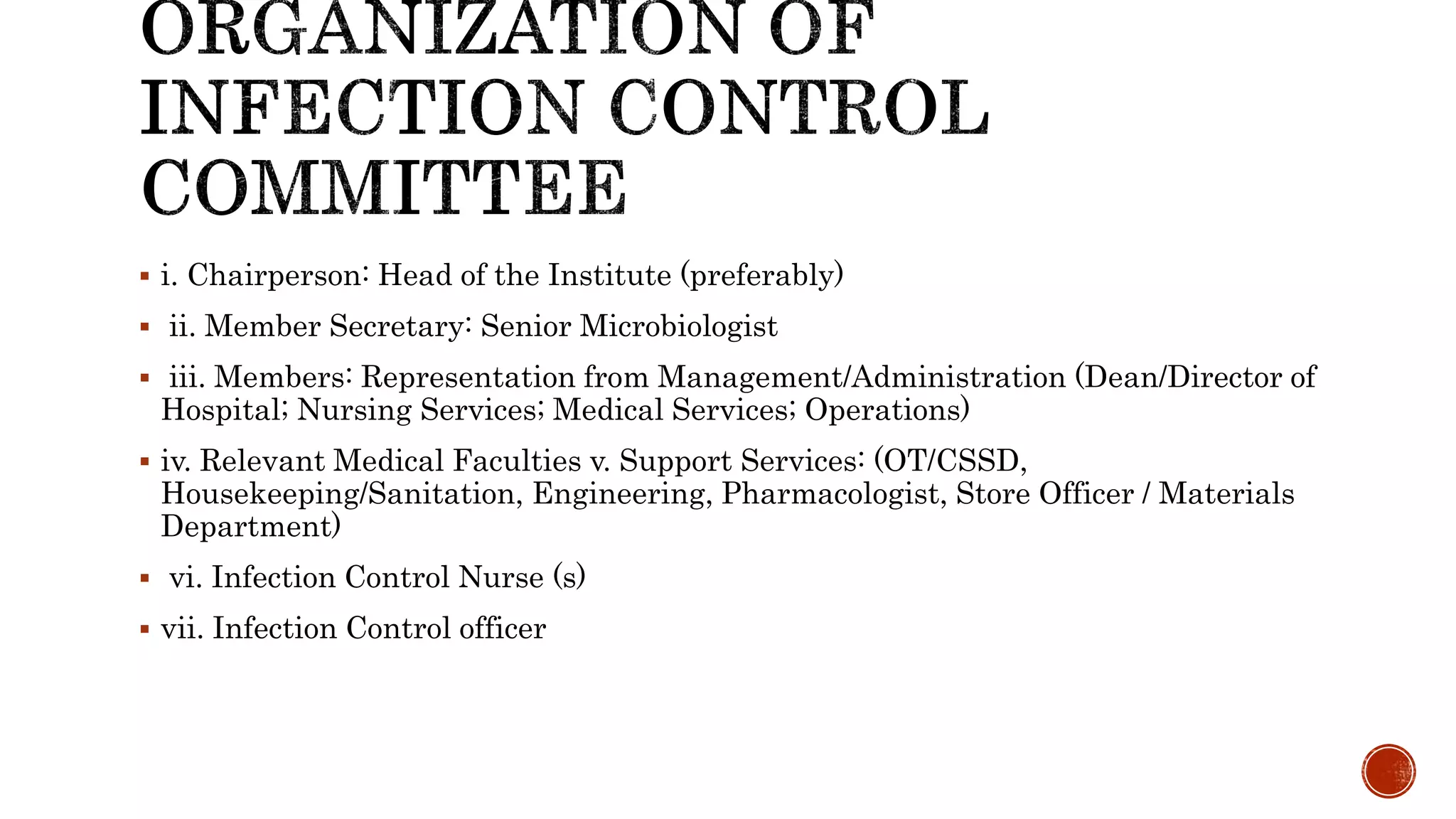
 i. Chairperson: Head of the Institute (preferably)
 ii. Member Secretary: Senior Microbiologist
 iii. Members: Representation from Management/Administration (Dean/Director of
Hospital; Nursing Services; Medical Services; Operations)
 iv. Relevant Medical Faculties v. Support Services: (OT/CSSD,
Housekeeping/Sanitation, Engineering, Pharmacologist, Store Officer / Materials
Department)
 vi. Infection Control Nurse (s)
 vii. Infection Control officer
 Develop a manual of policies and procedures for aseptic, isolation and antiseptic
techniques.
 Carry out targeted surveillance of HAIs, data analysis for presentation in HICC
meeting and take corrective steps
 Advise staff on all aspects of infection control and maintain a safe environment for
patients and staff.
 Supervise and monitor cleanliness and hygienic practices
 Oversee sterilization and disinfection and monitor the use and quality control of
disinfectants
 Advise management of at risk patients and supervision of isolation procedures.
 Investigate outbreaks of infection and take corrective measures for control and
prevention of outbreak.
 Waste management
 Provide relevant information on infection problems to management.
 Assist in training of all new employees as to the importance of infection control
and the relevant policies and procedures.
 Organize regular training programme for the staff to ensure implementation of
infection control practices
 Audit infection control procedures and antimicrobial usage – Monitors Health care
workers safety Programme.
 hospital infection prevention and control guideline().Hospital infection control
program Ministry of Health & Family Welfare-Government of India.4-6

Hospital infection control committee

  • 1.
    DR.S.BALA MURUGAN .,BPharm.,PharmD ASSISTANTPROFESSOR OF PHARMACY PRACTICE, KMCH-COP COIMBATORE
  • 2.
     Healthcare-associated infection(HCAI) is one of the most common complications of health care management. It is a serious health hazard as it leads to increased patients’ morbidity and mortality, length of hospital stay and the costs associated with hospital stay.  Effective infection prevention and control is central to providing high quality health care for patients and a safe working environment for those that work in healthcare settings.  It is important to minimize the risk of spread of infection to patients and staff in hospital by implementing good infection control programme.
  • 3.
     The Committeeis an integral component of the patient safety programme of the health care facility, and is responsible for establishing and maintaining infection prevention and control, its monitoring, surveillance, reporting, research and education.  This committee should include wide representation from all relevant disciplines or departments in the facility.  The committee has one elected chairperson who is the hospital administrator or a person who has direct access to the head of the hospital
  • 4.
     i. Chairperson:Head of the Institute (preferably)  ii. Member Secretary: Senior Microbiologist  iii. Members: Representation from Management/Administration (Dean/Director of Hospital; Nursing Services; Medical Services; Operations)  iv. Relevant Medical Faculties v. Support Services: (OT/CSSD, Housekeeping/Sanitation, Engineering, Pharmacologist, Store Officer / Materials Department)  vi. Infection Control Nurse (s)  vii. Infection Control officer
  • 5.
     Develop amanual of policies and procedures for aseptic, isolation and antiseptic techniques.  Carry out targeted surveillance of HAIs, data analysis for presentation in HICC meeting and take corrective steps  Advise staff on all aspects of infection control and maintain a safe environment for patients and staff.  Supervise and monitor cleanliness and hygienic practices  Oversee sterilization and disinfection and monitor the use and quality control of disinfectants
  • 6.
     Advise managementof at risk patients and supervision of isolation procedures.  Investigate outbreaks of infection and take corrective measures for control and prevention of outbreak.  Waste management  Provide relevant information on infection problems to management.  Assist in training of all new employees as to the importance of infection control and the relevant policies and procedures.  Organize regular training programme for the staff to ensure implementation of infection control practices  Audit infection control procedures and antimicrobial usage – Monitors Health care workers safety Programme.
  • 7.
     hospital infectionprevention and control guideline().Hospital infection control program Ministry of Health & Family Welfare-Government of India.4-6