SOLID WASTE
MANAGEMENT
Incineration
method
SUBMITTED TO:
Mrs. Indhu Priya
Dept. of urban & Regional planning
JNAFAU
Submitted 13011BA004 ; 13011BA012; 13011BA020;
13011BA027
 The main purpose of solid waste management is to
minimize the adverse effects on the environment. The
steps involved are:
 Collection of solid wastes
 Disposal of solid wastes
 Utilization of wastes
SOLID WASTE CONTROL
MEASURES
COLLECTION OF SOLID
WASTES Collection of waste includes gathering the waste,
transporting it to a centralized location, and then moving
it to the site of disposal.
 The collected waste is then separated into
 Hazardous
 Non-hazardous materials.
DISPOSAL OF SOLID WASTES
 Before the final disposal of the solid wastes, it is
processed to recover the usable resources and to
improve the efficiency of the solid waste disposal system.
 The main processing technologies are
 compaction
 Incineration
 Manual separation.
 The appropriate solid waste disposal method has to be
selected, keeping in view the following objectives:
1. Should be economically viable
2. Should not create a health hazard
3. Should not cause adverse environmental effects
4. Should not result in unpleasant sight, odor, and noise
The solid wastes can be properly utilized to gather the
benefits such as:
 Conservation of natural resources
 Economic development
 Generate many useful products
 Employment opportunities
 Control of air pollution
UTILIZATION OF WASTES
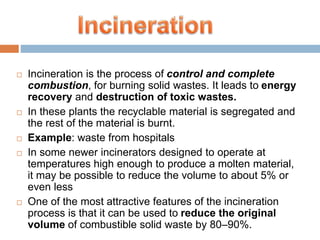
 Incineration is the process of control and complete
combustion, for burning solid wastes. It leads to energy
recovery and destruction of toxic wastes.
 In these plants the recyclable material is segregated and
the rest of the material is burnt.
 Example: waste from hospitals
 In some newer incinerators designed to operate at
temperatures high enough to produce a molten material,
it may be possible to reduce the volume to about 5% or
even less
 One of the most attractive features of the incineration
process is that it can be used to reduce the original
volume of combustible solid waste by 80–90%.
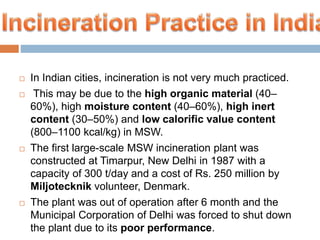
 In Indian cities, incineration is not very much practiced.
 This may be due to the high organic material (40–
60%), high moisture content (40–60%), high inert
content (30–50%) and low calorific value content
(800–1100 kcal/kg) in MSW.
 The first large-scale MSW incineration plant was
constructed at Timarpur, New Delhi in 1987 with a
capacity of 300 t/day and a cost of Rs. 250 million by
Miljotecknik volunteer, Denmark.
 The plant was out of operation after 6 month and the
Municipal Corporation of Delhi was forced to shut down
the plant due to its poor performance.
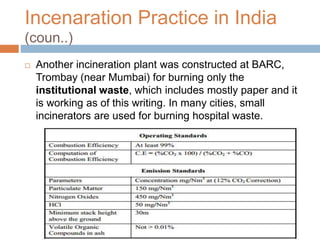
Incenaration Practice in India
(coun..)
 Another incineration plant was constructed at BARC,
Trombay (near Mumbai) for burning only the
institutional waste, which includes mostly paper and it
is working as of this writing. In many cities, small
incinerators are used for burning hospital waste.
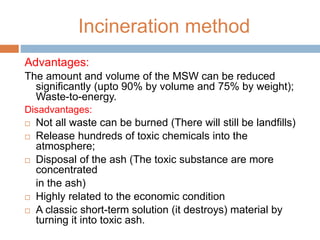
Incineration method
Advantages:
The amount and volume of the MSW can be reduced
significantly (upto 90% by volume and 75% by weight);
Waste-to-energy.
Disadvantages:
 Not all waste can be burned (There will still be landfills)
 Release hundreds of toxic chemicals into the
atmosphere;
 Disposal of the ash (The toxic substance are more
concentrated
in the ash)
 Highly related to the economic condition
 A classic short-term solution (it destroys) material by
turning it into toxic ash.
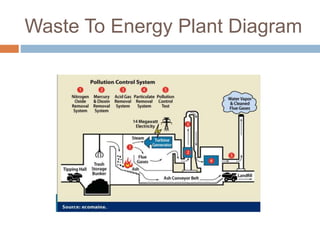
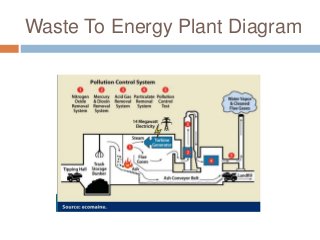
Waste To Energy Plant Diagram
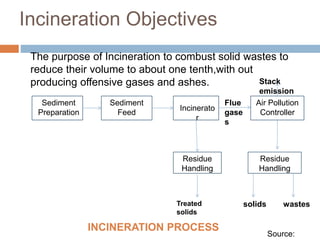
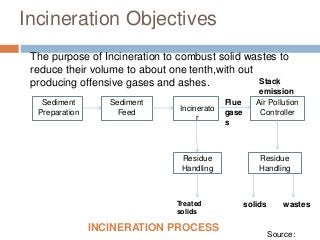
Incineration Objectives
The purpose of Incineration to combust solid wastes to
reduce their volume to about one tenth,with out
producing offensive gases and ashes.
Sediment
Preparation
Sediment
Feed
Incinerato
r
Air Pollution
Controller
Residue
Handling
Residue
Handling
Flue
gase
s
Stack
emission
Treated
solids
solids wastes
Source:
INCINERATION PROCESS
Incenaration can be useful for…
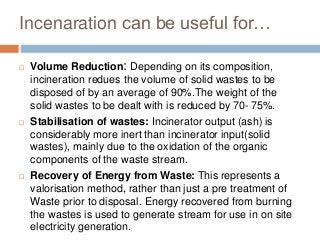
 Volume Reduction: Depending on its composition,
incineration redues the volume of solid wastes to be
disposed of by an average of 90%.The weight of the
solid wastes to be dealt with is reduced by 70- 75%.
 Stabilisation of wastes: Incinerator output (ash) is
considerably more inert than incinerator input(solid
wastes), mainly due to the oxidation of the organic
components of the waste stream.
 Recovery of Energy from Waste: This represents a
valorisation method, rather than just a pre treatment of
Waste prior to disposal. Energy recovered from burning
the wastes is used to generate stream for use in on site
electricity generation.
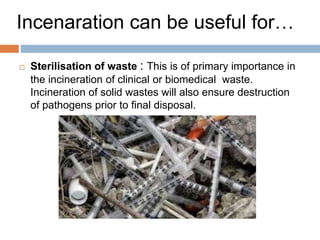
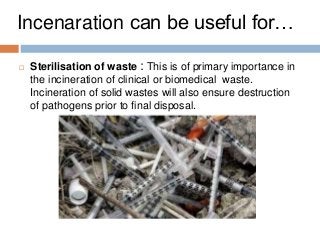
 Sterilisation of waste : This is of primary importance in
the incineration of clinical or biomedical waste.
Incineration of solid wastes will also ensure destruction
of pathogens prior to final disposal.
Incenaration can be useful for…
The End
Source:
http://www.unc.edu/courses/2009spring/envr/890/002/readings/SolidWasteIndiaRevi
ew2008
http://environmentclearance.nic.in/writereaddata/Form-
1A/HomeLinks/TGM_%20Comman%20Municipal%20Sold%20Waste%20Managem
ent_160910_NK

Incineration method of solid waste disposal

  • 1.
    SOLID WASTE MANAGEMENT Incineration method SUBMITTED TO: Mrs.Indhu Priya Dept. of urban & Regional planning JNAFAU Submitted 13011BA004 ; 13011BA012; 13011BA020; 13011BA027
  • 2.
     The mainpurpose of solid waste management is to minimize the adverse effects on the environment. The steps involved are:  Collection of solid wastes  Disposal of solid wastes  Utilization of wastes SOLID WASTE CONTROL MEASURES
  • 3.
    COLLECTION OF SOLID WASTESCollection of waste includes gathering the waste, transporting it to a centralized location, and then moving it to the site of disposal.  The collected waste is then separated into  Hazardous  Non-hazardous materials.
  • 4.
    DISPOSAL OF SOLIDWASTES  Before the final disposal of the solid wastes, it is processed to recover the usable resources and to improve the efficiency of the solid waste disposal system.  The main processing technologies are  compaction  Incineration  Manual separation.
  • 5.
     The appropriatesolid waste disposal method has to be selected, keeping in view the following objectives: 1. Should be economically viable 2. Should not create a health hazard 3. Should not cause adverse environmental effects 4. Should not result in unpleasant sight, odor, and noise
  • 6.
    The solid wastescan be properly utilized to gather the benefits such as:  Conservation of natural resources  Economic development  Generate many useful products  Employment opportunities  Control of air pollution UTILIZATION OF WASTES
  • 7.
     Incineration isthe process of control and complete combustion, for burning solid wastes. It leads to energy recovery and destruction of toxic wastes.  In these plants the recyclable material is segregated and the rest of the material is burnt.  Example: waste from hospitals  In some newer incinerators designed to operate at temperatures high enough to produce a molten material, it may be possible to reduce the volume to about 5% or even less  One of the most attractive features of the incineration process is that it can be used to reduce the original volume of combustible solid waste by 80–90%.
  • 8.
     In Indiancities, incineration is not very much practiced.  This may be due to the high organic material (40– 60%), high moisture content (40–60%), high inert content (30–50%) and low calorific value content (800–1100 kcal/kg) in MSW.  The first large-scale MSW incineration plant was constructed at Timarpur, New Delhi in 1987 with a capacity of 300 t/day and a cost of Rs. 250 million by Miljotecknik volunteer, Denmark.  The plant was out of operation after 6 month and the Municipal Corporation of Delhi was forced to shut down the plant due to its poor performance.
  • 9.
    Incenaration Practice inIndia (coun..)  Another incineration plant was constructed at BARC, Trombay (near Mumbai) for burning only the institutional waste, which includes mostly paper and it is working as of this writing. In many cities, small incinerators are used for burning hospital waste.
  • 10.
    Incineration method Advantages: The amountand volume of the MSW can be reduced significantly (upto 90% by volume and 75% by weight); Waste-to-energy. Disadvantages:  Not all waste can be burned (There will still be landfills)  Release hundreds of toxic chemicals into the atmosphere;  Disposal of the ash (The toxic substance are more concentrated in the ash)  Highly related to the economic condition  A classic short-term solution (it destroys) material by turning it into toxic ash.
  • 11.
    Waste To EnergyPlant Diagram
  • 12.
    Incineration Objectives The purposeof Incineration to combust solid wastes to reduce their volume to about one tenth,with out producing offensive gases and ashes. Sediment Preparation Sediment Feed Incinerato r Air Pollution Controller Residue Handling Residue Handling Flue gase s Stack emission Treated solids solids wastes Source: INCINERATION PROCESS
  • 13.
    Incenaration can beuseful for…  Volume Reduction: Depending on its composition, incineration redues the volume of solid wastes to be disposed of by an average of 90%.The weight of the solid wastes to be dealt with is reduced by 70- 75%.  Stabilisation of wastes: Incinerator output (ash) is considerably more inert than incinerator input(solid wastes), mainly due to the oxidation of the organic components of the waste stream.  Recovery of Energy from Waste: This represents a valorisation method, rather than just a pre treatment of Waste prior to disposal. Energy recovered from burning the wastes is used to generate stream for use in on site electricity generation.
  • 14.
     Sterilisation ofwaste : This is of primary importance in the incineration of clinical or biomedical waste. Incineration of solid wastes will also ensure destruction of pathogens prior to final disposal. Incenaration can be useful for…
  • 15.