HOW
ANIMALS
SURVIVE
Body parts and organ systems work
together in harmonious relationship to
achieve homeostasis in one’s body.
How do animals use their body parts?
Do all animals have the same organ
systems?
DIGESTIVE SYSTEM
How do animals respire?
RESPIRATION
The exchange of respiratory gases between the external
environment and the organism’s body or cell
Different animals differ in respiratory body parts and ways
of respiration
CUTANEOUS RESPIRATION
(SKIN)
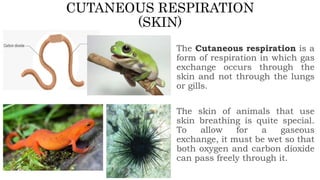
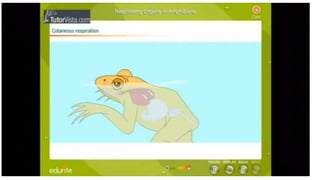
The Cutaneous respiration is a
form of respiration in which gas
exchange occurs through the
skin and not through the lungs
or gills.
The skin of animals that use
skin breathing is quite special.
To allow for a gaseous
exchange, it must be wet so that
both oxygen and carbon dioxide
can pass freely through it.
AQUATIC RESPIRATION
(GILLS)
Aquatic respiration is the process whereby
an aquatic organism exchanges respiratory
gases with water, obtaining oxygen from
oxygen dissolved in water and excreting
carbon dioxide and some other metabolic
waste products into the water.
Most fish use the countercurrent exchange
mechanism of breathing, in which the water
flows opposite the bloodstream, which in
turn increases the efficiency of the
exchange of gasses by 90%.
DIRECT RESPIRATION
(TRACHEA)
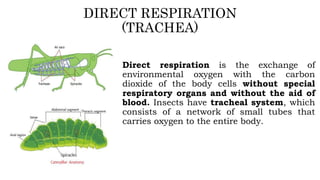
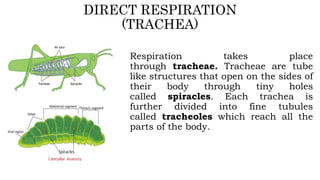
Direct respiration is the exchange of
environmental oxygen with the carbon
dioxide of the body cells without special
respiratory organs and without the aid of
blood. Insects have tracheal system, which
consists of a network of small tubes that
carries oxygen to the entire body.
DIRECT RESPIRATION
(TRACHEA)
Respiration takes place
through tracheae. Tracheae are tube
like structures that open on the sides of
their body through tiny holes
called spiracles. Each trachea is
further divided into fine tubules
called tracheoles which reach all the
parts of the body.
DIGESTION IN ANIMALS
(GRASS EATING)
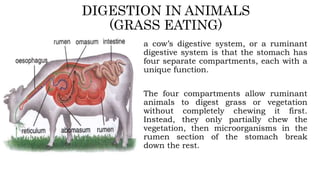
a cow’s digestive system, or a ruminant
digestive system is that the stomach has
four separate compartments, each with a
unique function.
The four compartments allow ruminant
animals to digest grass or vegetation
without completely chewing it first.
Instead, they only partially chew the
vegetation, then microorganisms in the
rumen section of the stomach break
down the rest.
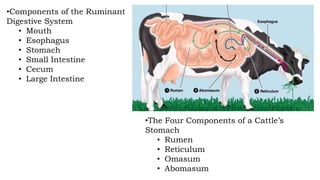
•Components of the Ruminant
Digestive System
• Mouth
• Esophagus
• Stomach
• Small Intestine
• Cecum
• Large Intestine
•The Four Components of a Cattle’s
Stomach
• Rumen
• Reticulum
• Omasum
• Abomasum
DIGESTION IN ANIMALS
(HUMANS)
Two major roles:
1. To break down food into smaller
usable food molecules
2. To absorb the food molecules for
further use of the body cells.
Two groups:
1. Gastrointestinal Tract/ Alimentary Canal
2. Accessory Organs
SALIVARY GLANDS
MOUTH
ESOPHAGUS
STOMACH
LIVER
GALL BLADDER PANCREAS
SMALL INTESTINE
LARGE INTESTINE
RECTUM
ANUS
Thank you for listening!!!

HOW ANIMALS SURVIVE.pptx

  • 1.
  • 2.
    Body parts andorgan systems work together in harmonious relationship to achieve homeostasis in one’s body. How do animals use their body parts? Do all animals have the same organ systems?
  • 3.
    DIGESTIVE SYSTEM How doanimals respire? RESPIRATION The exchange of respiratory gases between the external environment and the organism’s body or cell Different animals differ in respiratory body parts and ways of respiration
  • 5.
    CUTANEOUS RESPIRATION (SKIN) The Cutaneousrespiration is a form of respiration in which gas exchange occurs through the skin and not through the lungs or gills. The skin of animals that use skin breathing is quite special. To allow for a gaseous exchange, it must be wet so that both oxygen and carbon dioxide can pass freely through it.
  • 8.
    AQUATIC RESPIRATION (GILLS) Aquatic respirationis the process whereby an aquatic organism exchanges respiratory gases with water, obtaining oxygen from oxygen dissolved in water and excreting carbon dioxide and some other metabolic waste products into the water. Most fish use the countercurrent exchange mechanism of breathing, in which the water flows opposite the bloodstream, which in turn increases the efficiency of the exchange of gasses by 90%.
  • 10.
    DIRECT RESPIRATION (TRACHEA) Direct respirationis the exchange of environmental oxygen with the carbon dioxide of the body cells without special respiratory organs and without the aid of blood. Insects have tracheal system, which consists of a network of small tubes that carries oxygen to the entire body.
  • 11.
    DIRECT RESPIRATION (TRACHEA) Respiration takesplace through tracheae. Tracheae are tube like structures that open on the sides of their body through tiny holes called spiracles. Each trachea is further divided into fine tubules called tracheoles which reach all the parts of the body.
  • 13.
    DIGESTION IN ANIMALS (GRASSEATING) a cow’s digestive system, or a ruminant digestive system is that the stomach has four separate compartments, each with a unique function. The four compartments allow ruminant animals to digest grass or vegetation without completely chewing it first. Instead, they only partially chew the vegetation, then microorganisms in the rumen section of the stomach break down the rest.
  • 14.
    •Components of theRuminant Digestive System • Mouth • Esophagus • Stomach • Small Intestine • Cecum • Large Intestine •The Four Components of a Cattle’s Stomach • Rumen • Reticulum • Omasum • Abomasum
  • 16.
    DIGESTION IN ANIMALS (HUMANS) Twomajor roles: 1. To break down food into smaller usable food molecules 2. To absorb the food molecules for further use of the body cells. Two groups: 1. Gastrointestinal Tract/ Alimentary Canal 2. Accessory Organs
  • 18.
    SALIVARY GLANDS MOUTH ESOPHAGUS STOMACH LIVER GALL BLADDERPANCREAS SMALL INTESTINE LARGE INTESTINE RECTUM ANUS
  • 20.
    Thank you forlistening!!!

Editor's Notes

  • #2 To live and to survive is the ultimate goal of every living thing on Earth. Different organisms have different ways to survive.
  • #6  Among this group are amphibians (frogs, toads, salamanders), annelids (earthworm) and some echinoderms (sea urchin).
  • #15 Cud consists of large, non-digestible pieces of plant matter that must be regurgitated, chewed a second time and swallowed before continuing through the process. The abomasum is the last component of the stomach and is often known as the “true stomach,” because it operates the most similar to a non-ruminant stomach.
  • #19 BOLUS- PARTIALLY DIGESTED FOOD CHYME- SEMI FLUID