How
Animals
Move
BIO 14 General Biology 2
Movement and Locomotion
 Movement - a distinguishing characteristics of
animals.
(In muscle cell contraction and amoeboid
movement, the cellular system is based on
microfilaments. Microtubules are the main components of
cilia and flagella)
 Locomotion- active travel from place to
place—requires energy to overcome two forces
that tend to keep an animal stationary: friction
and gravity.
Major Modes of Animal
Locomotion
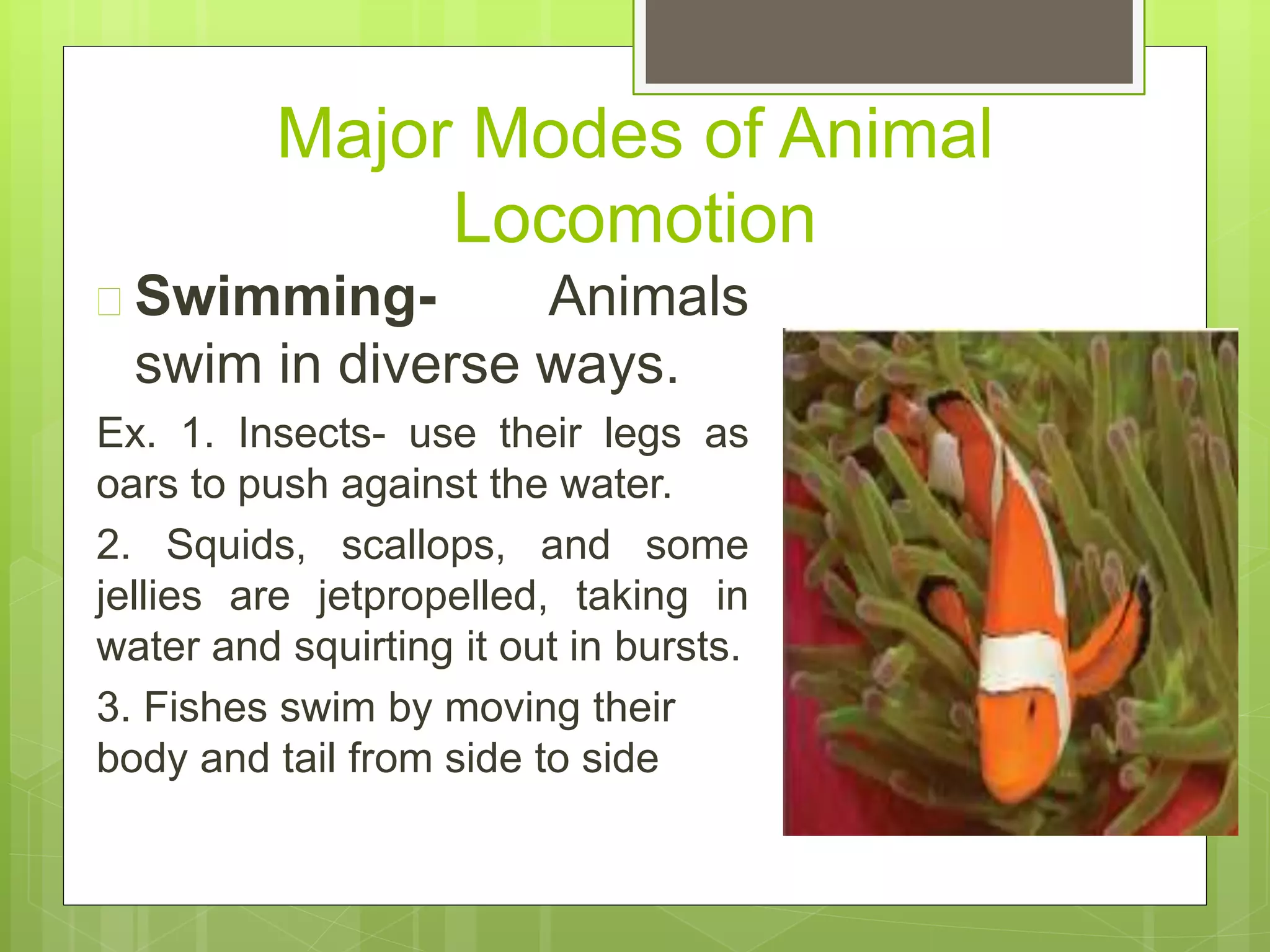
 Swimming- Animals
swim in diverse ways.
Ex. 1. Insects- use their legs as
oars to push against the water.
2. Squids, scallops, and some
jellies are jetpropelled, taking in
water and squirting it out in bursts.
3. Fishes swim by moving their
body and tail from side to side
Major Modes of Animal
Locomotion
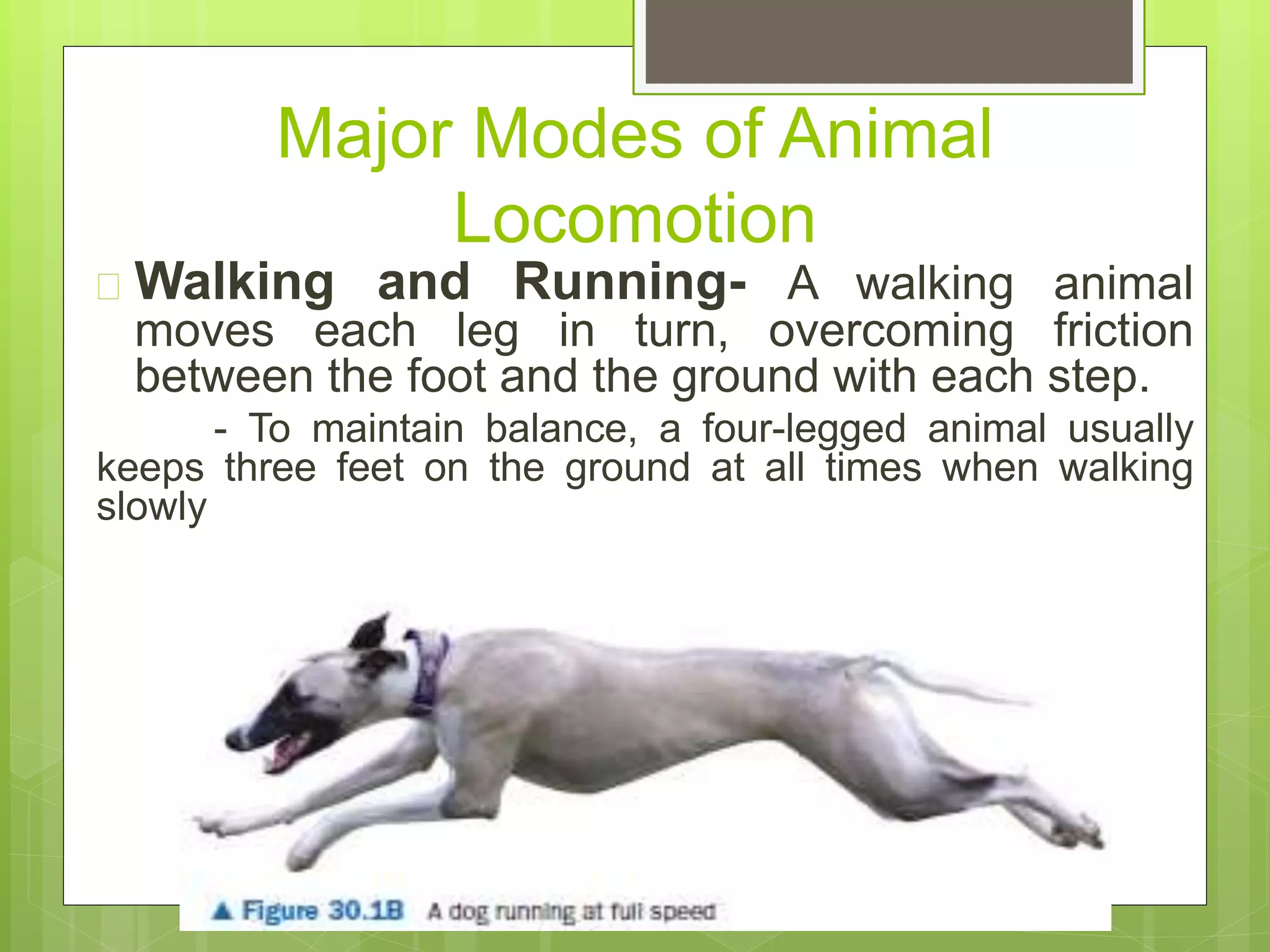
 Walking and Running- A walking animal
moves each leg in turn, overcoming friction
between the foot and the ground with each step.
- To maintain balance, a four-legged animal usually
keeps three feet on the ground at all times when walking
slowly
Major Modes of Animal
Locomotion
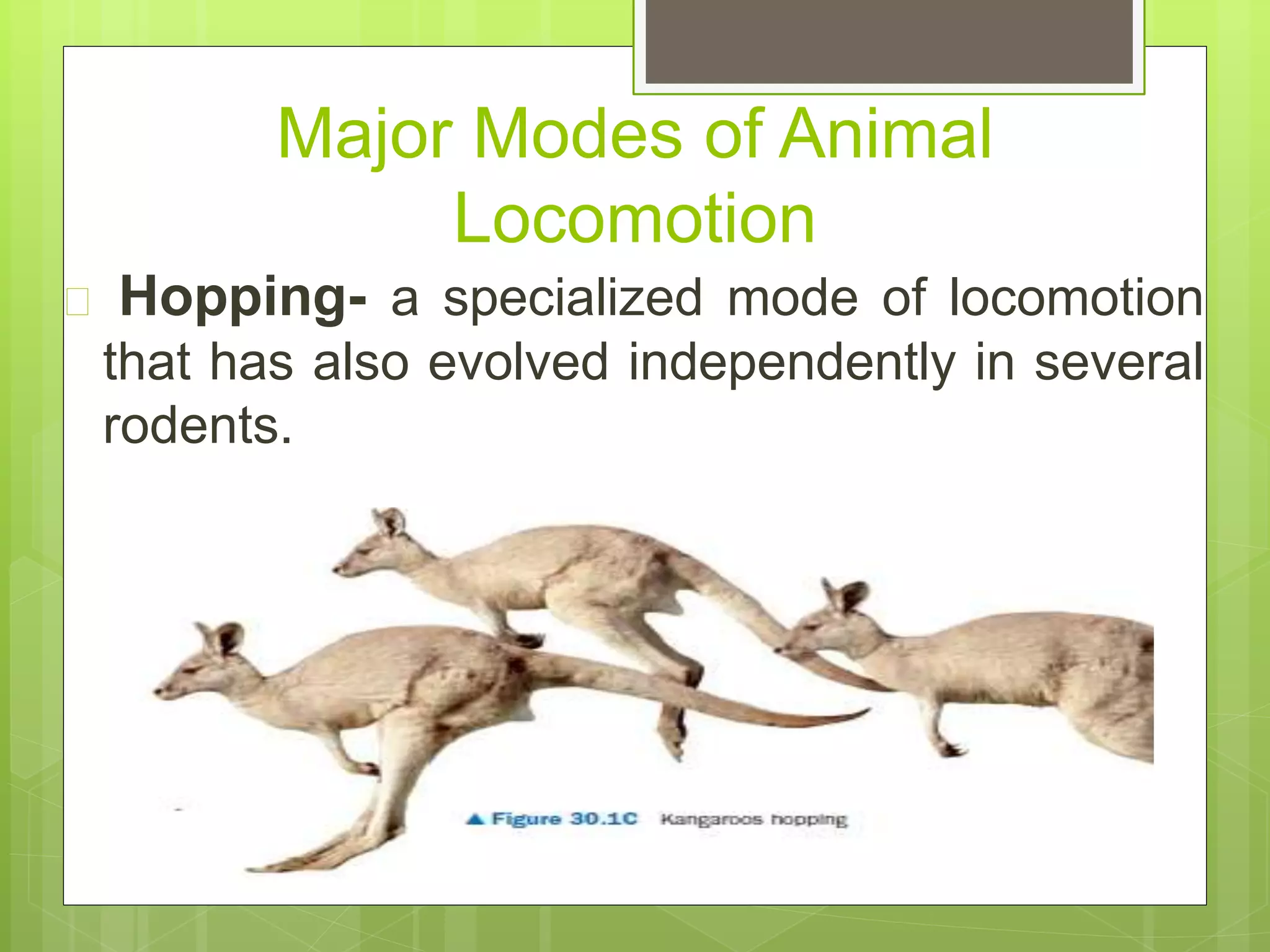
 Hopping- a specialized mode of locomotion
that has also evolved independently in several
rodents.
Major Modes of Animal
Locomotion
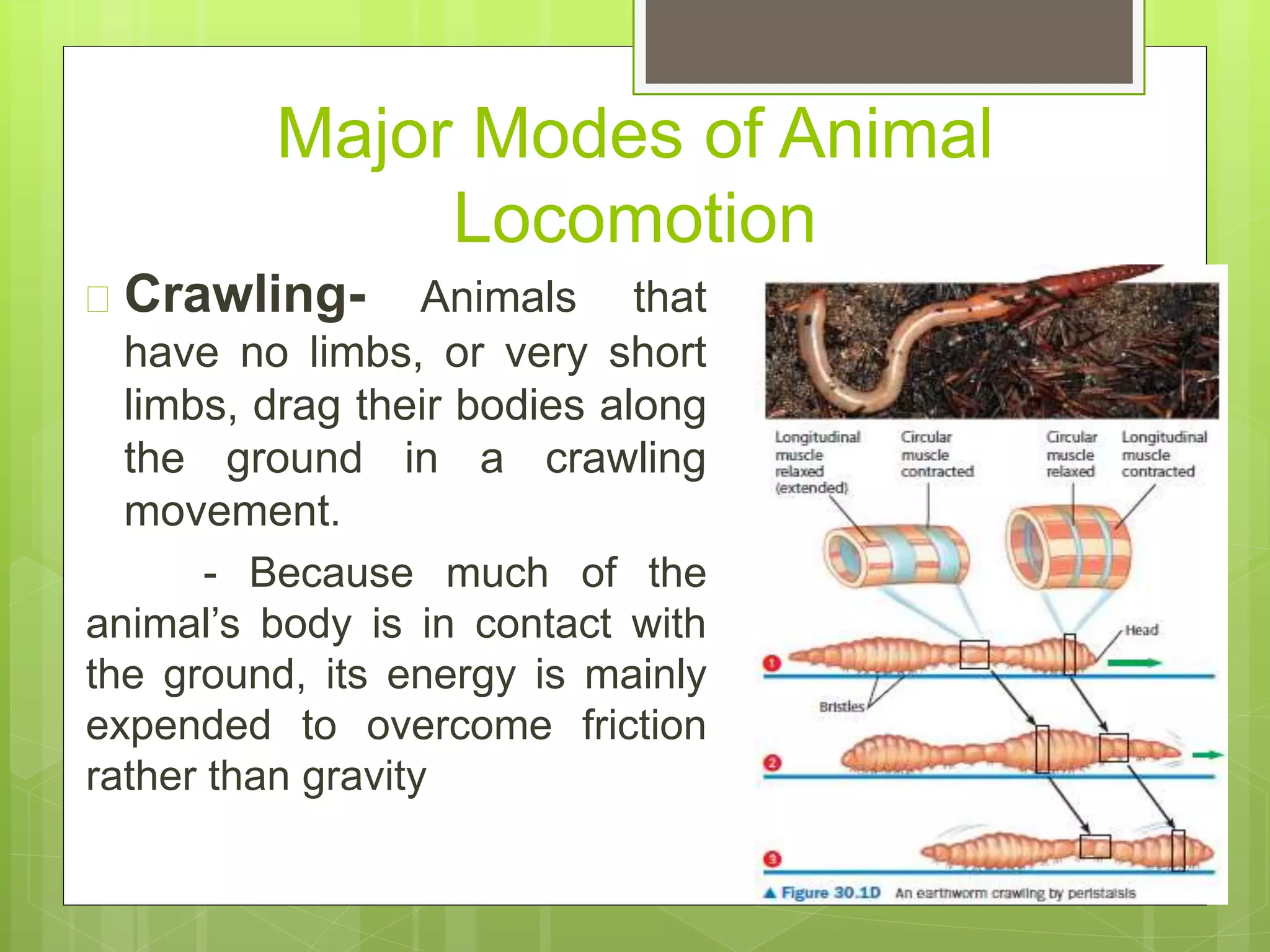
 Crawling- Animals that
have no limbs, or very short
limbs, drag their bodies along
the ground in a crawling
movement.
- Because much of the
animal’s body is in contact with
the ground, its energy is mainly
expended to overcome friction
rather than gravity
Major Modes of Animal
Locomotion
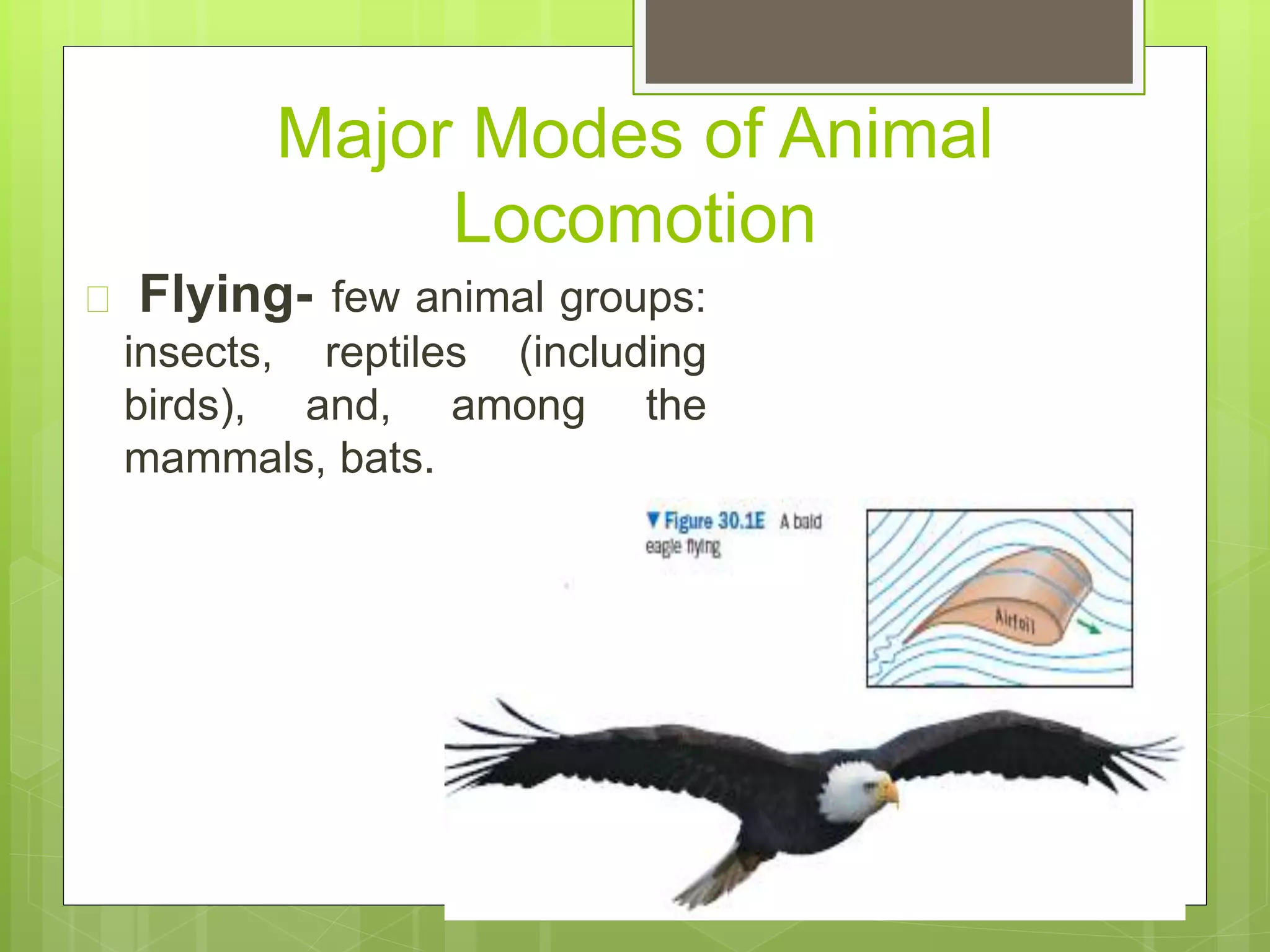
 Flying- few animal groups:
insects, reptiles (including
birds), and, among the
mammals, bats.
Skeletons function in support, movement, and
protection
3 main types of skeletons:
1. Hydrostatic skeletons
2. Exoskeletons
3. Endoskeletons
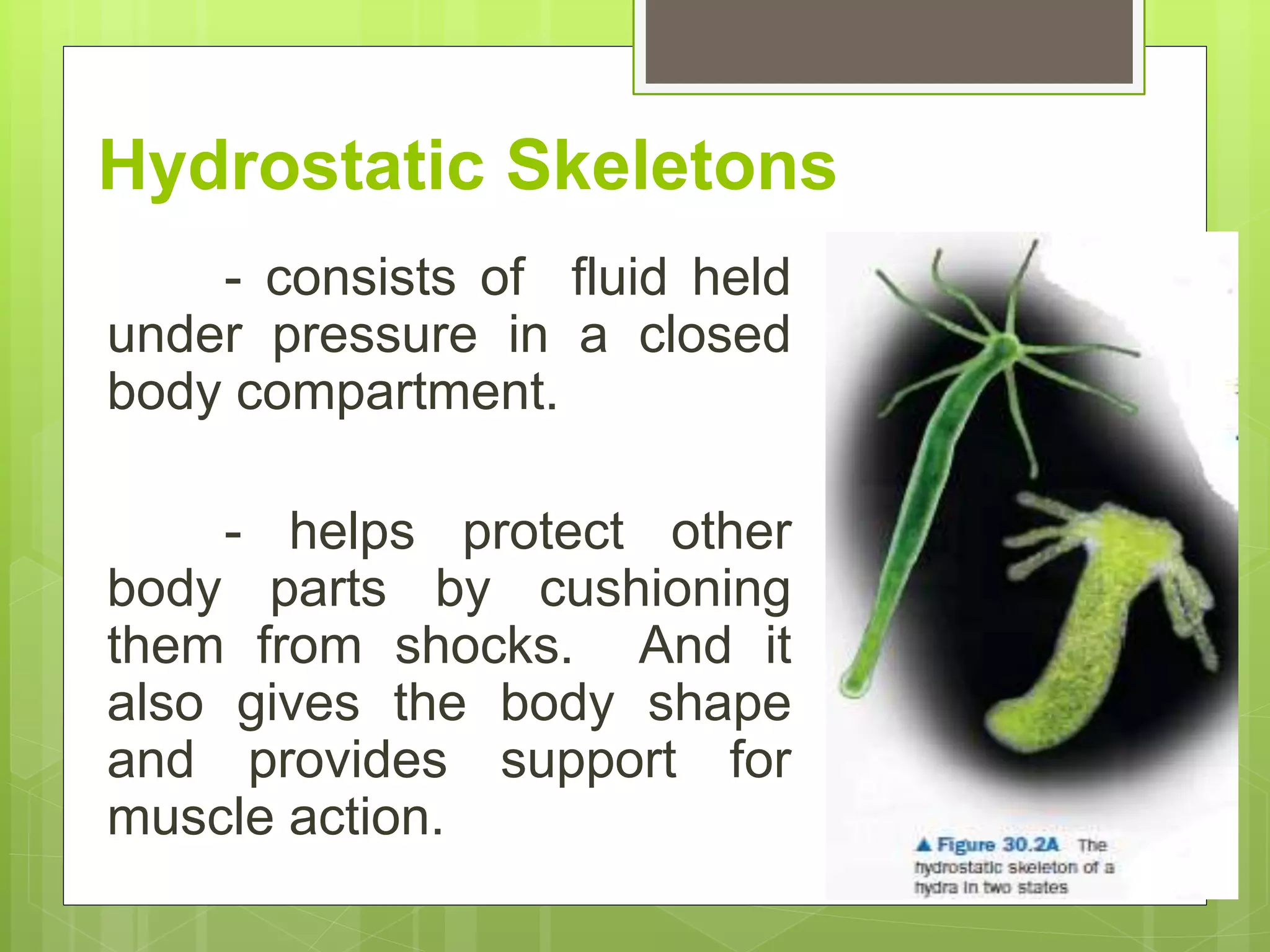
Hydrostatic Skeletons
- consists of fluid held
under pressure in a closed
body compartment.
- helps protect other
body parts by cushioning
them from shocks. And it
also gives the body shape
and provides support for
muscle action.
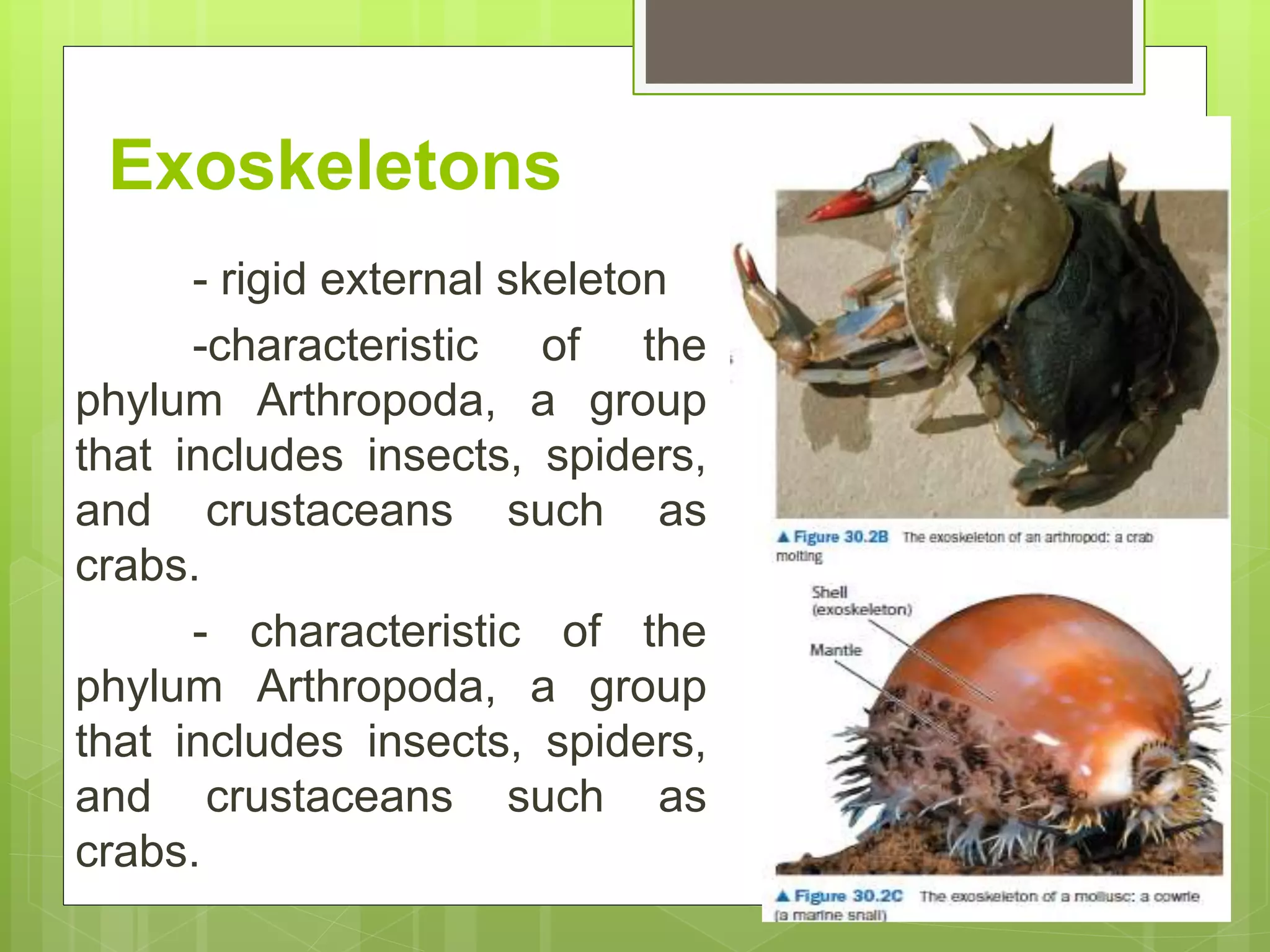
Exoskeletons
- rigid external skeleton
-characteristic of the
phylum Arthropoda, a group
that includes insects, spiders,
and crustaceans such as
crabs.
- characteristic of the
phylum Arthropoda, a group
that includes insects, spiders,
and crustaceans such as
crabs.
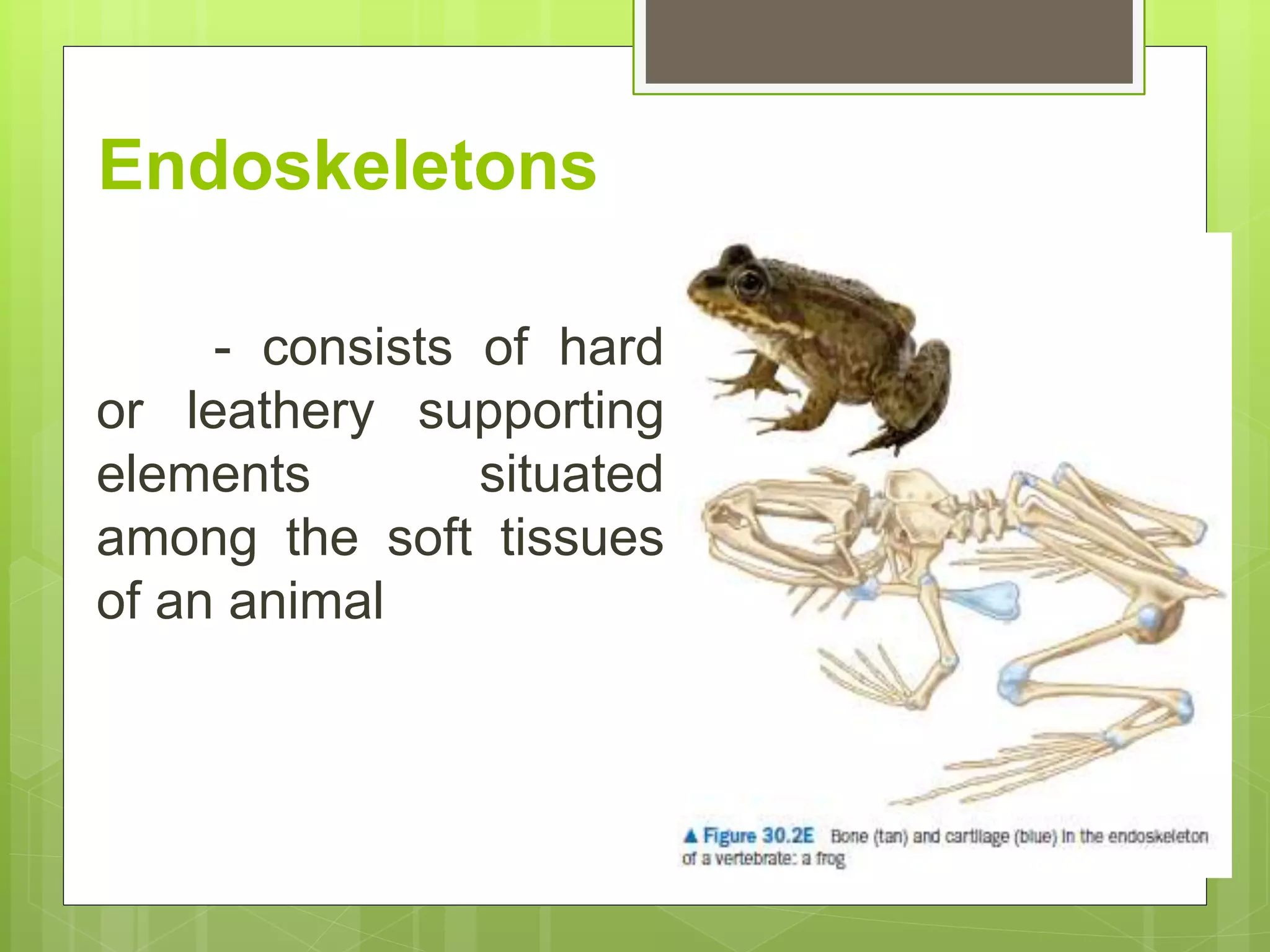
Endoskeletons
- consists of hard
or leathery supporting
elements situated
among the soft tissues
of an animal
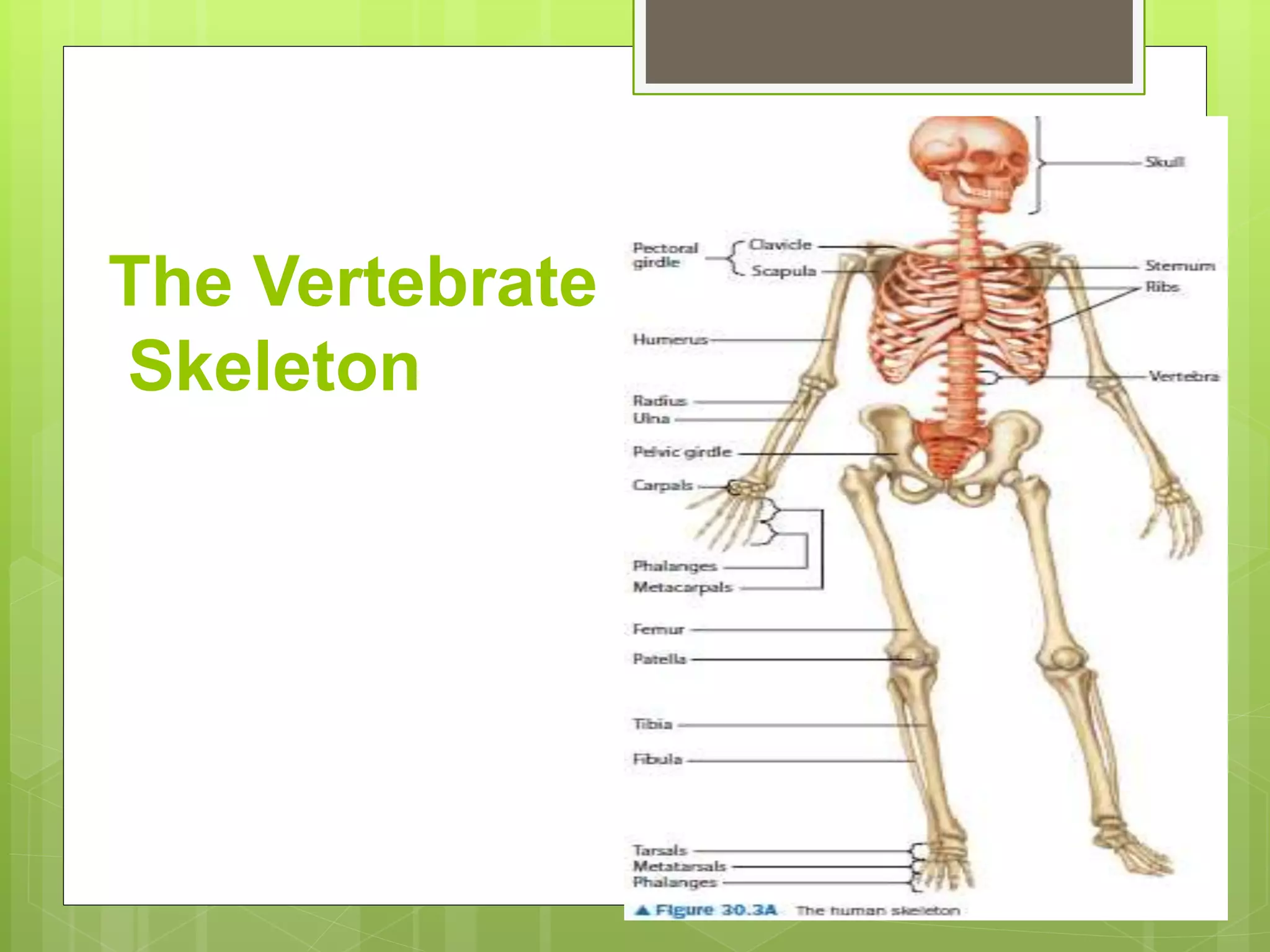
The Vertebrate
Skeleton
 All vertebrates have an axial skeleton
supporting the axis, or trunk, of the body.
- consists of skull, vertebral column
(backbone) and in most vertebrates, rib cage.
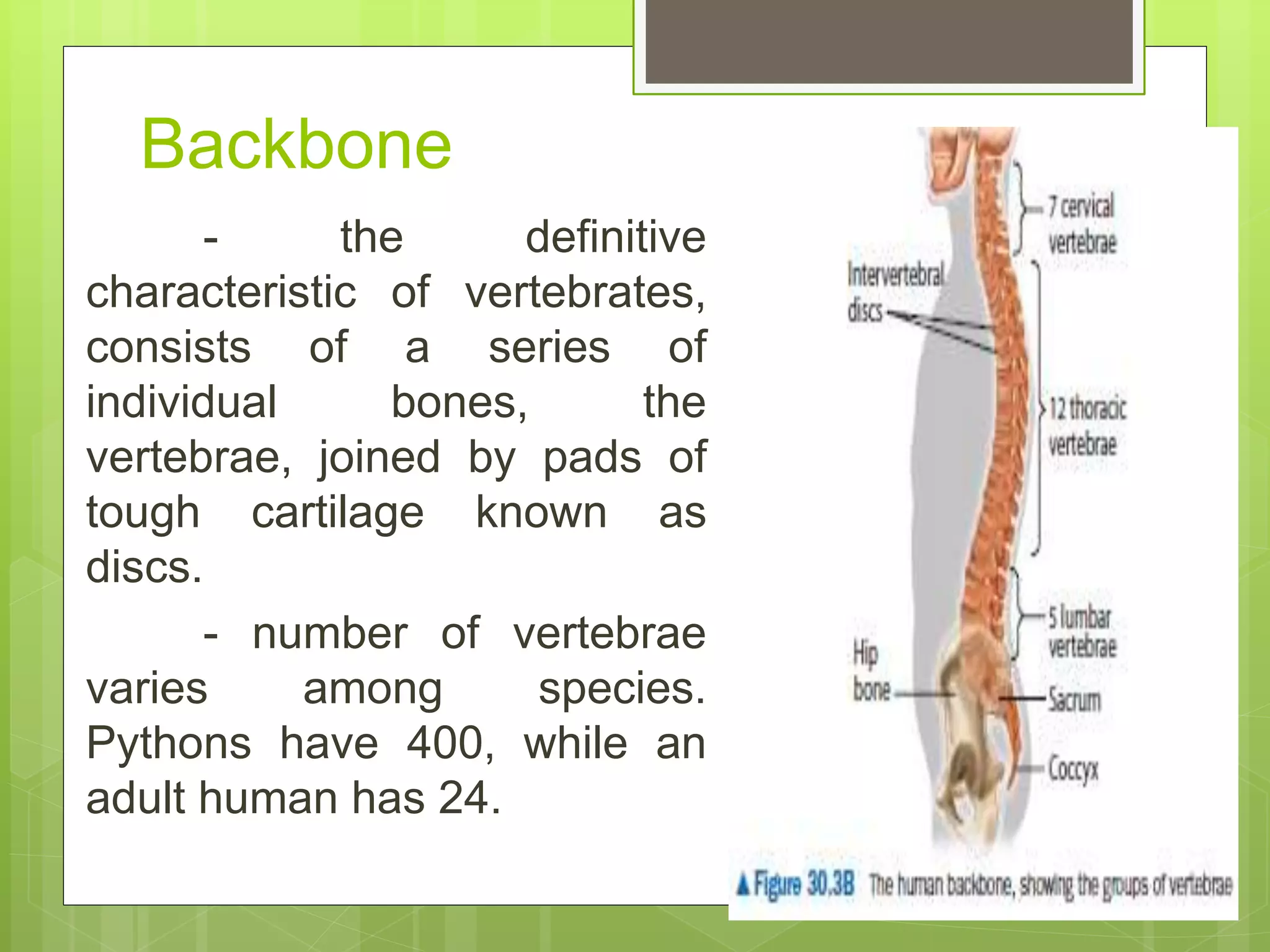
Backbone
- the definitive
characteristic of vertebrates,
consists of a series of
individual bones, the
vertebrae, joined by pads of
tough cartilage known as
discs.
- number of vertebrae
varies among species.
Pythons have 400, while an
adult human has 24.
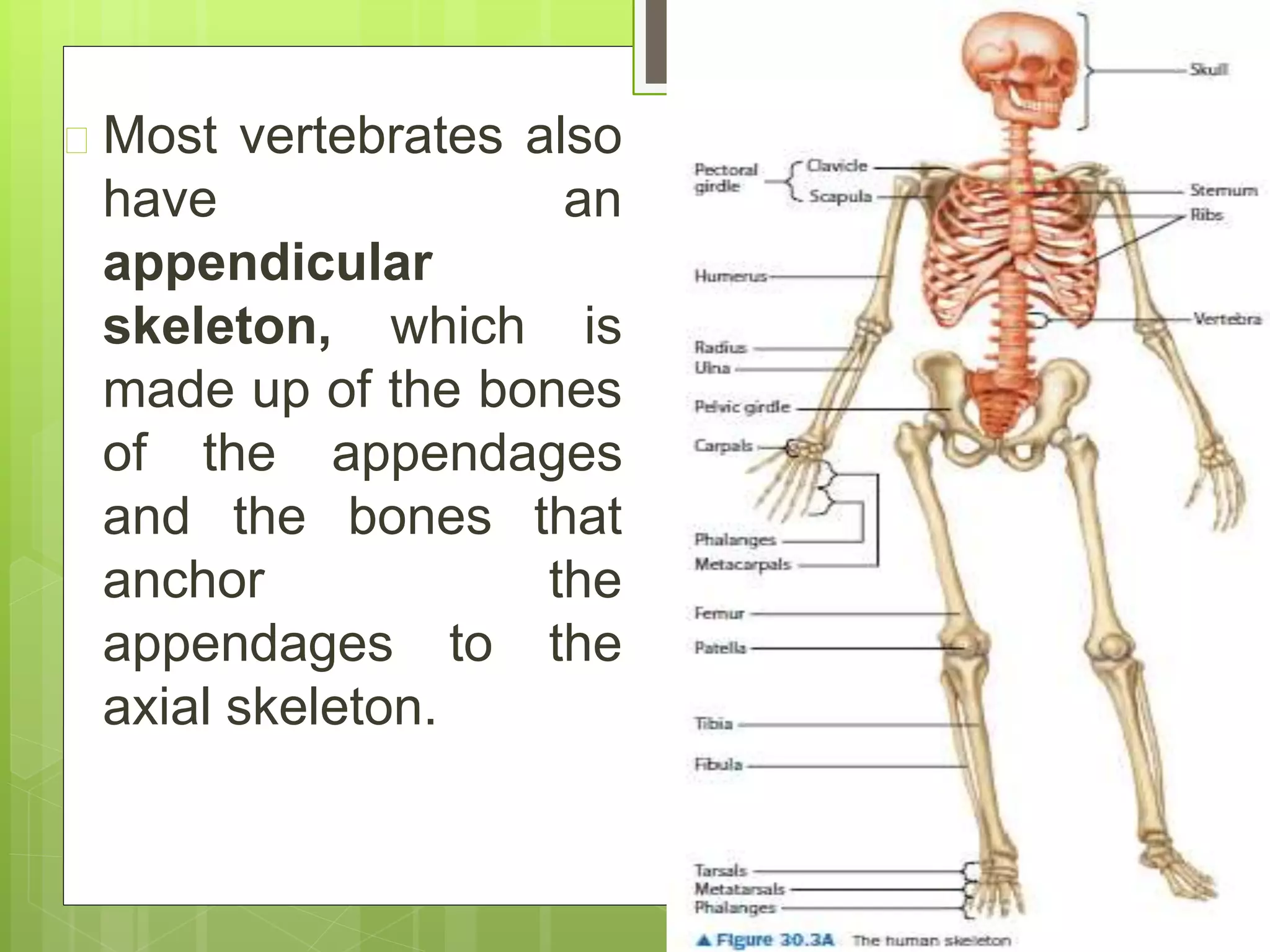
 Most vertebrates also
have an
appendicular
skeleton, which is
made up of the bones
of the appendages
and the bones that
anchor the
appendages to the
axial skeleton.
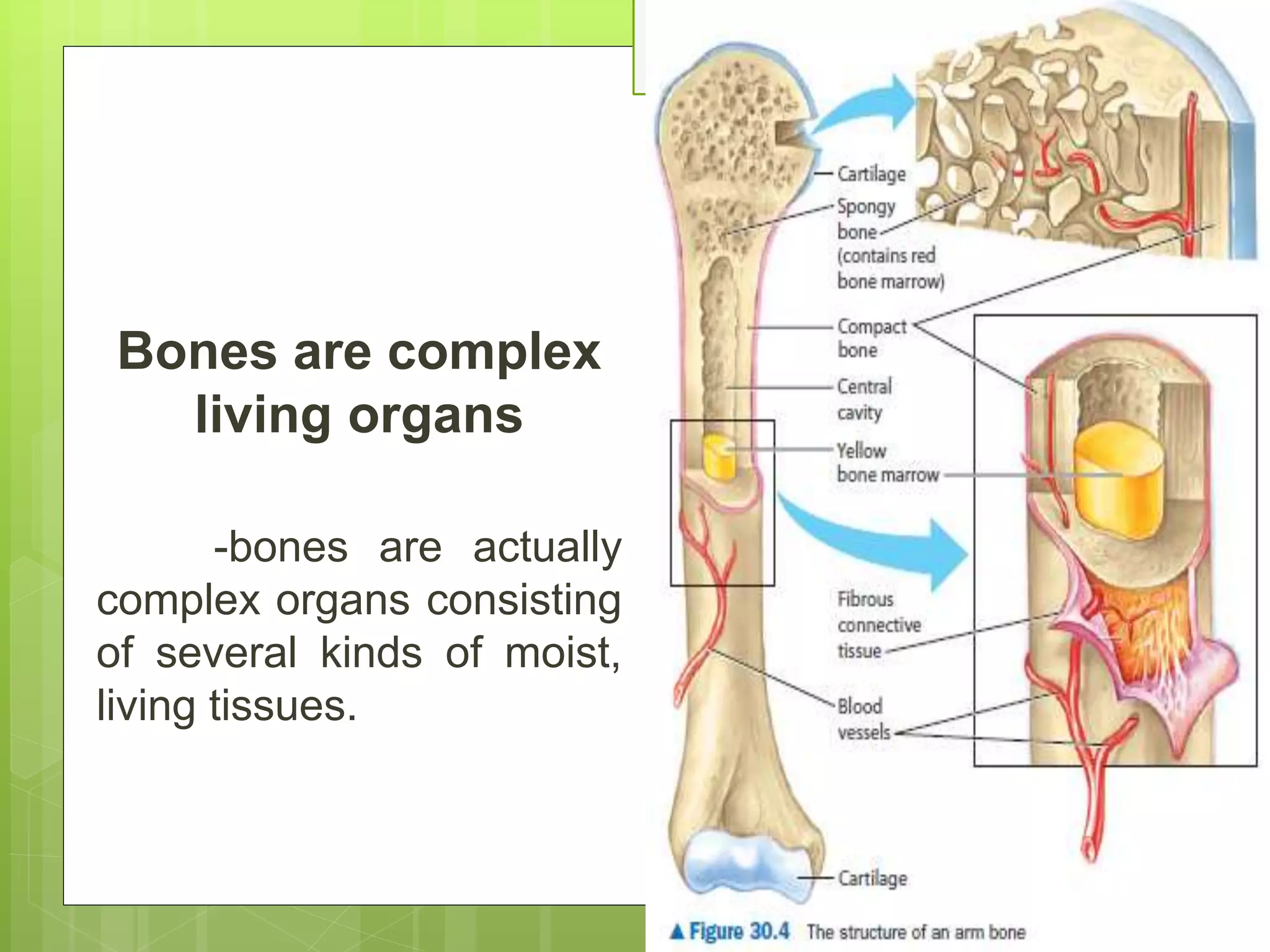
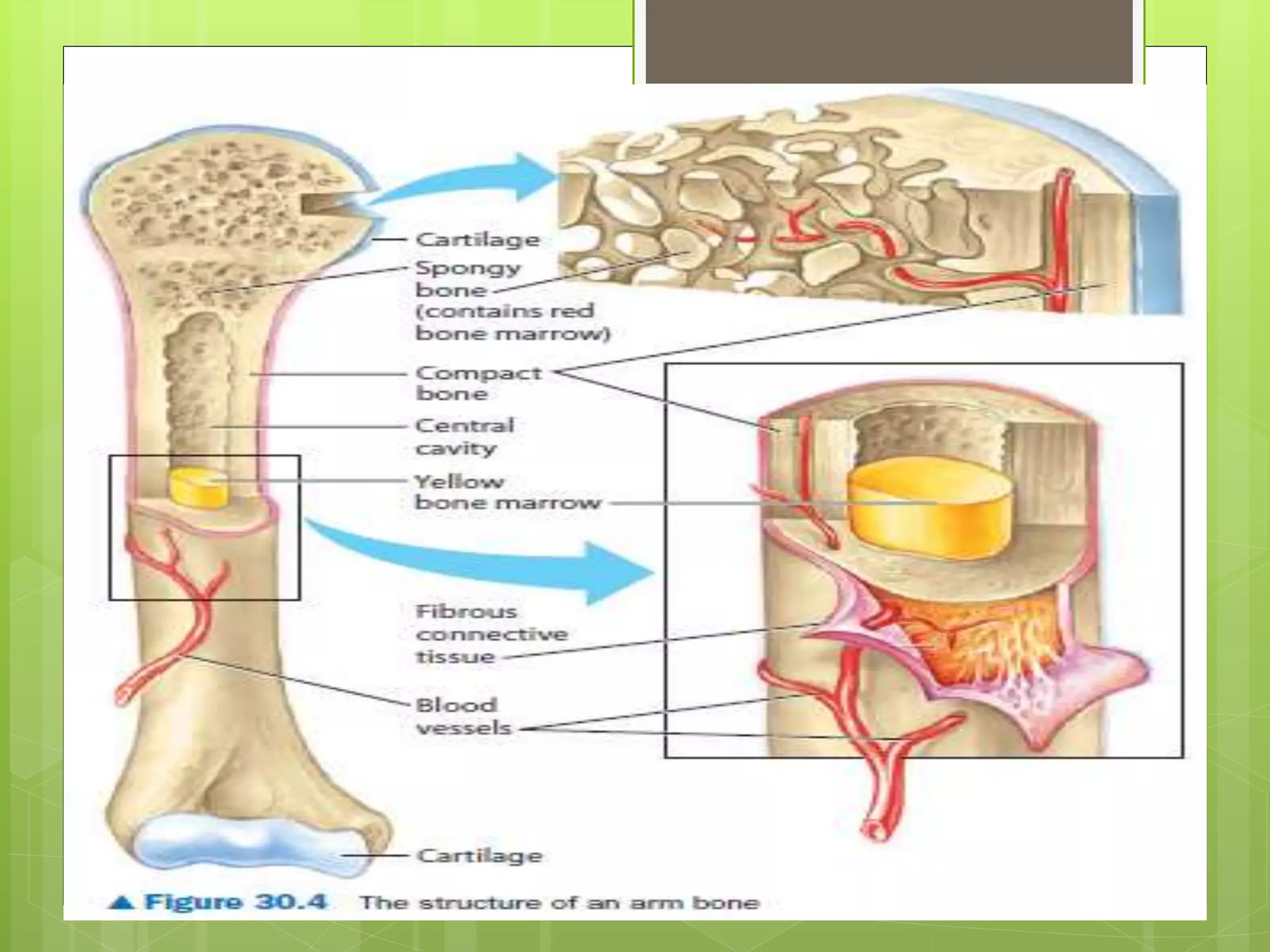
Bones are complex
living organs
-bones are actually
complex organs consisting
of several kinds of moist,
living tissues.
What causes the colors of yellow
and red bone marrow?
Yellow bone marrow stores fat
while red bone marrow develops red
blood
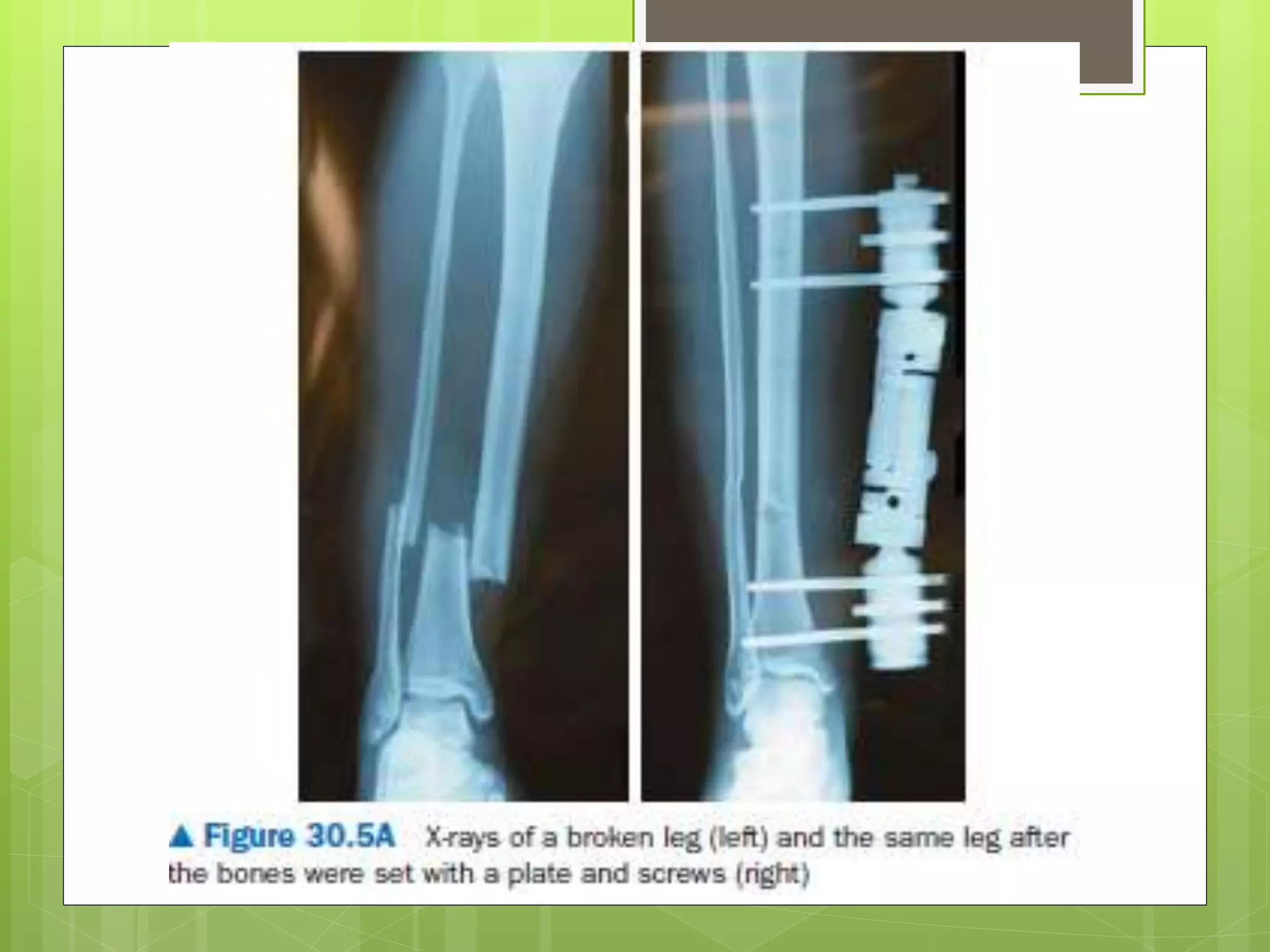
Healthy bones resist stress and heal from
injuries
 Excessive bone fatigue can lead to so-called
stress fractures, hairline cracks in the bone, just
as the accumulation of small amounts of stress
on metals can cause a break.
 bone is composed of living, dynamic tissue.
Cells continually remove old bone matrix and
replace it with new material.
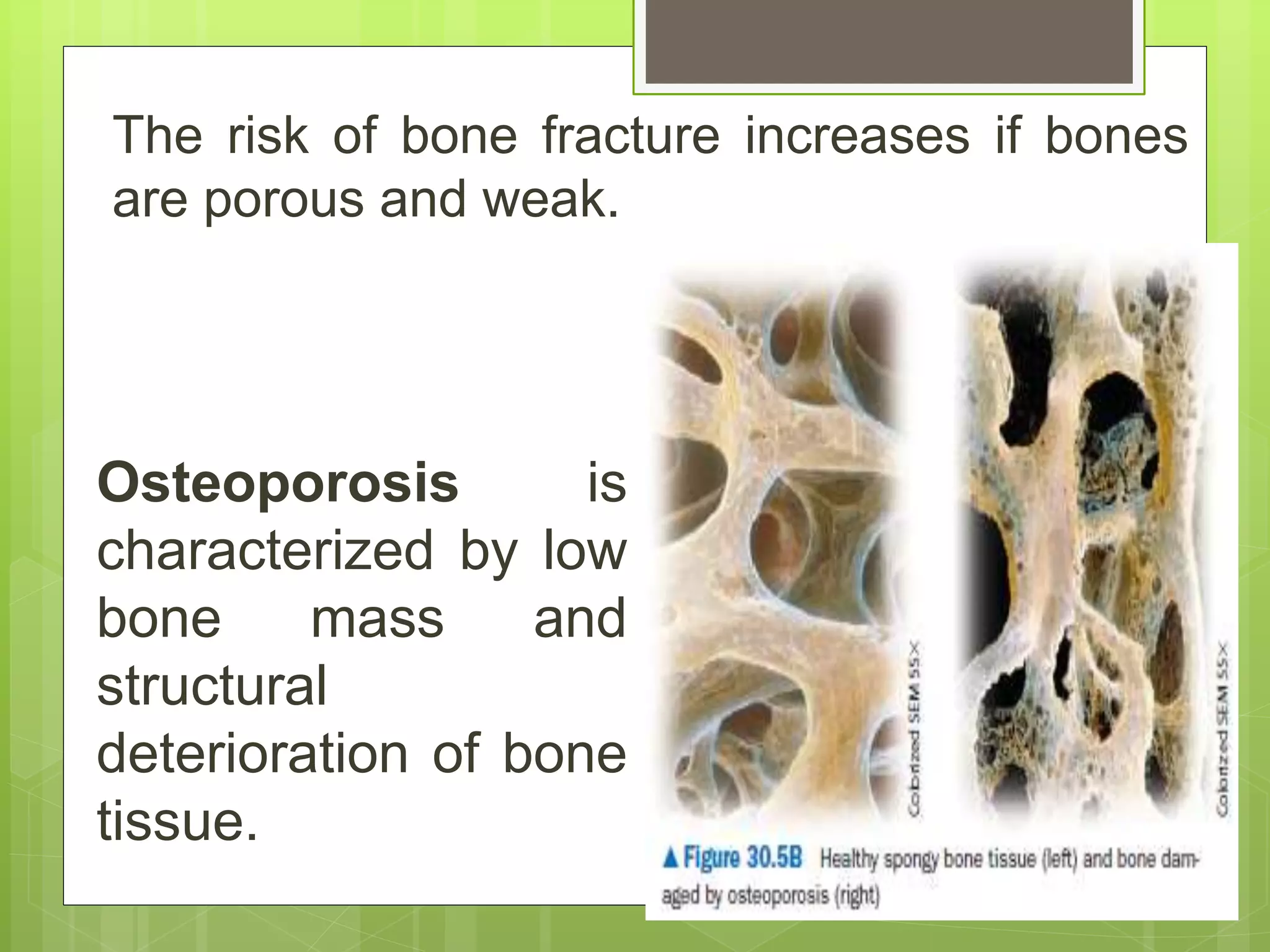
The risk of bone fracture increases if bones
are porous and weak.
Osteoporosis is
characterized by low
bone mass and
structural
deterioration of bone
tissue.
 Other lifestyle habits, such as smoking, may
also contribute to osteoporosis. There is a
strong genetic component as well;
 young women whose mothers or
grandmothers suffer from osteoporosis
should be especially concerned with
maintaining good bone health.
 Treatments for osteoporosis include calcium
and vitamin D supplements and drugs that
slow bone loss.
Joints permit different types of movement
- the versatility of the vertebrate skeleton
comes from its joints.
Ligaments- Bands of strong fibrous
connective tissue
3 kinds of Joints:
 Ball –and-socket joints
 Hinge joints
 Pivot joints
 Ball –and-socket joints
- are found where the
humerus joins the pectoral
girdle
- enable us to rotate
our arms and legs and move
them in several planes.
 Hinge Joints
- permit movement in a
single plane, just as the
hinge on a door enables it to
open and close.
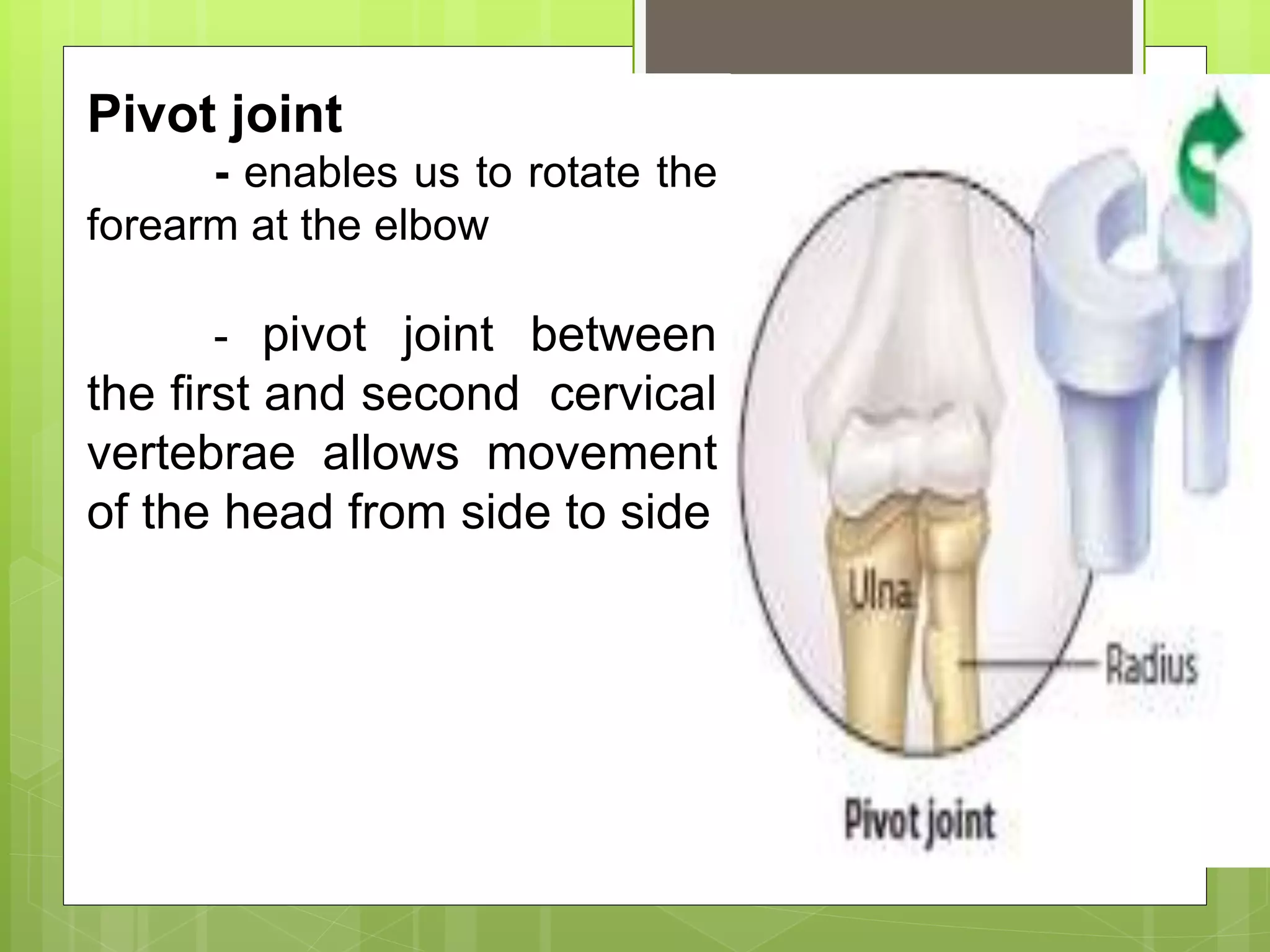
Pivot joint
- enables us to rotate the
forearm at the elbow
- pivot joint between
the first and second cervical
vertebrae allows movement
of the head from side to side
Muscle Contraction and Movement
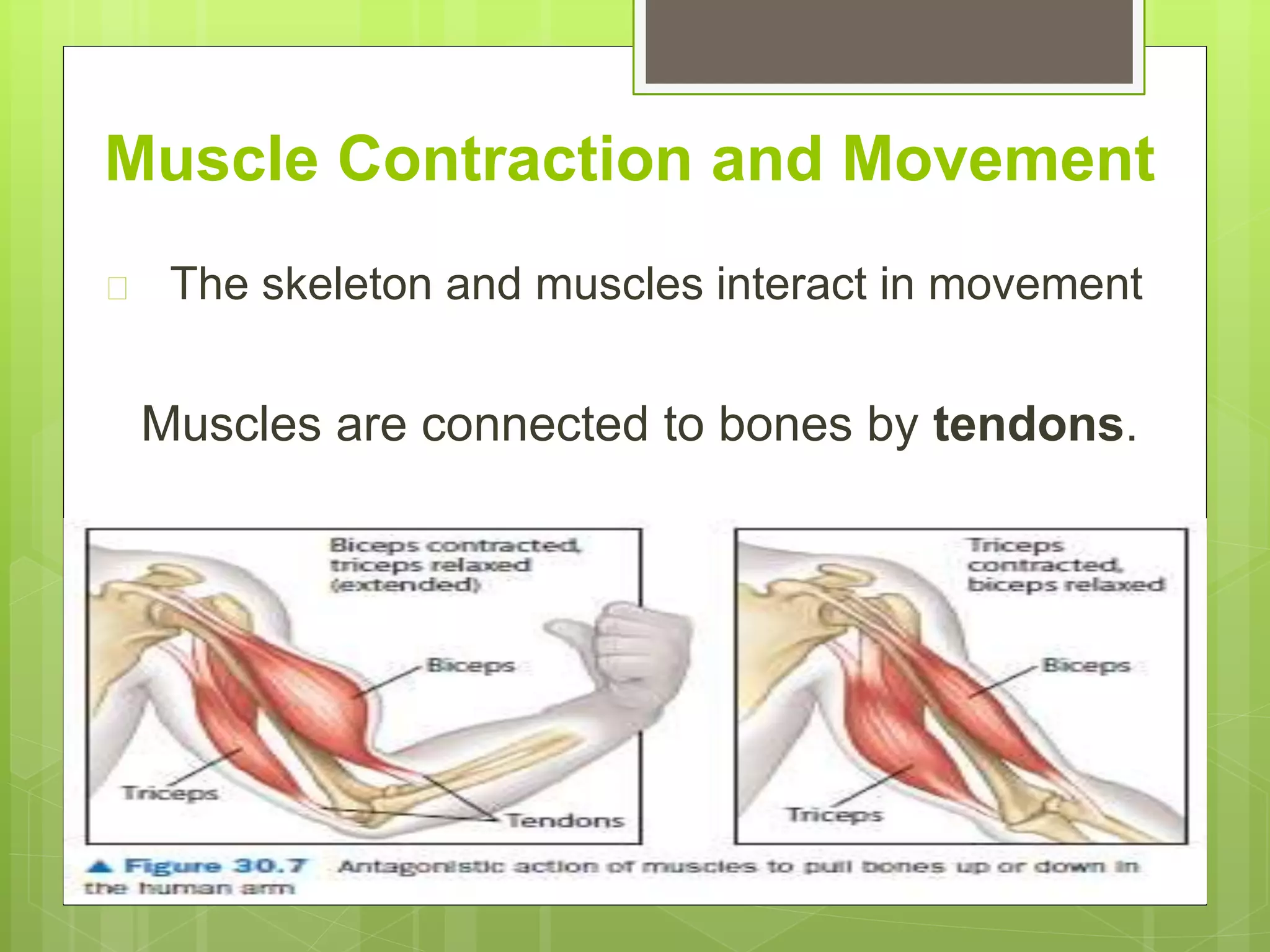
 The skeleton and muscles interact in movement
Muscles are connected to bones by tendons.
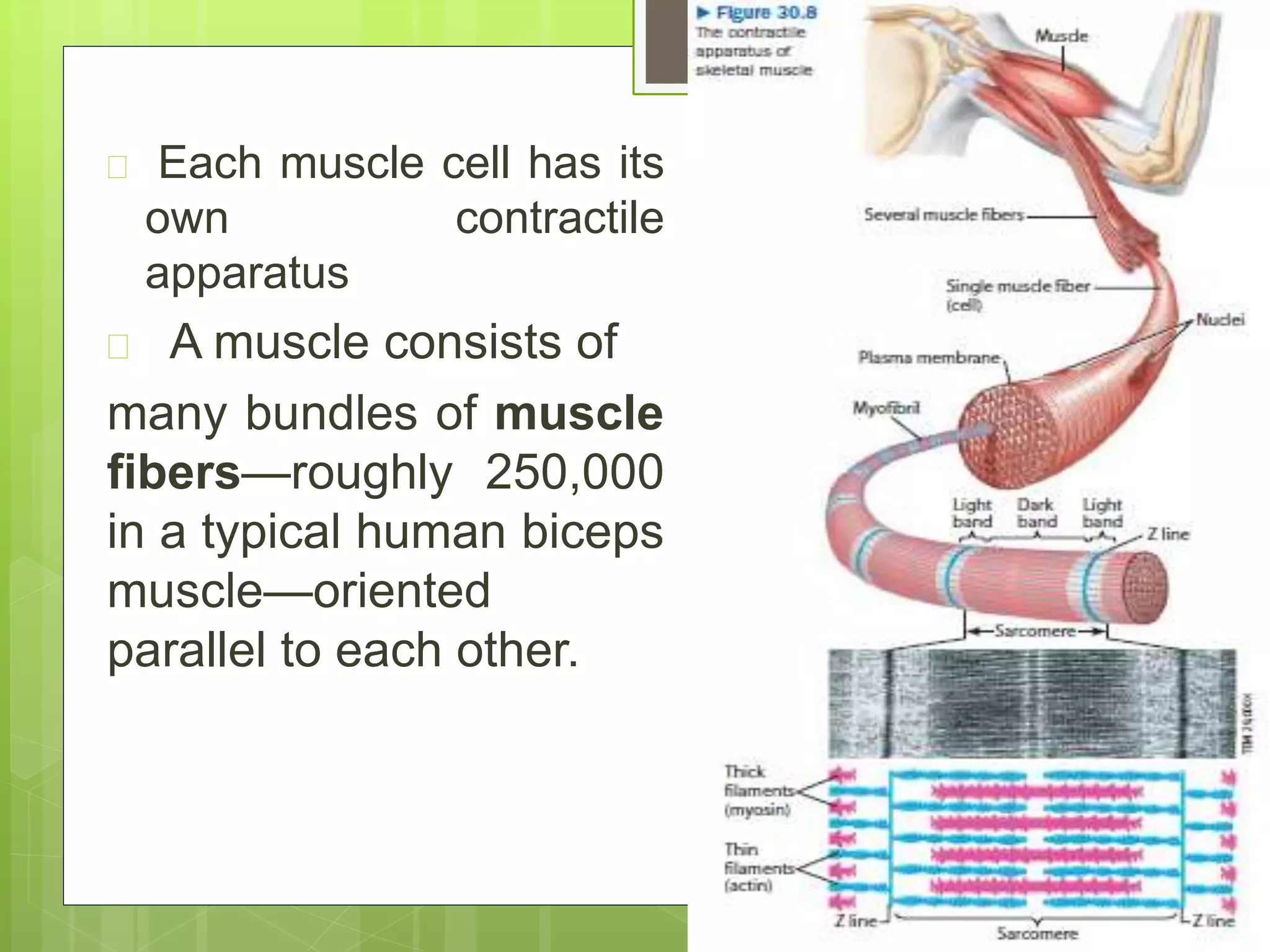
 Each muscle cell has its
own contractile
apparatus
 A muscle consists of
many bundles of muscle
fibers—roughly 250,000
in a typical human biceps
muscle—oriented
parallel to each other.
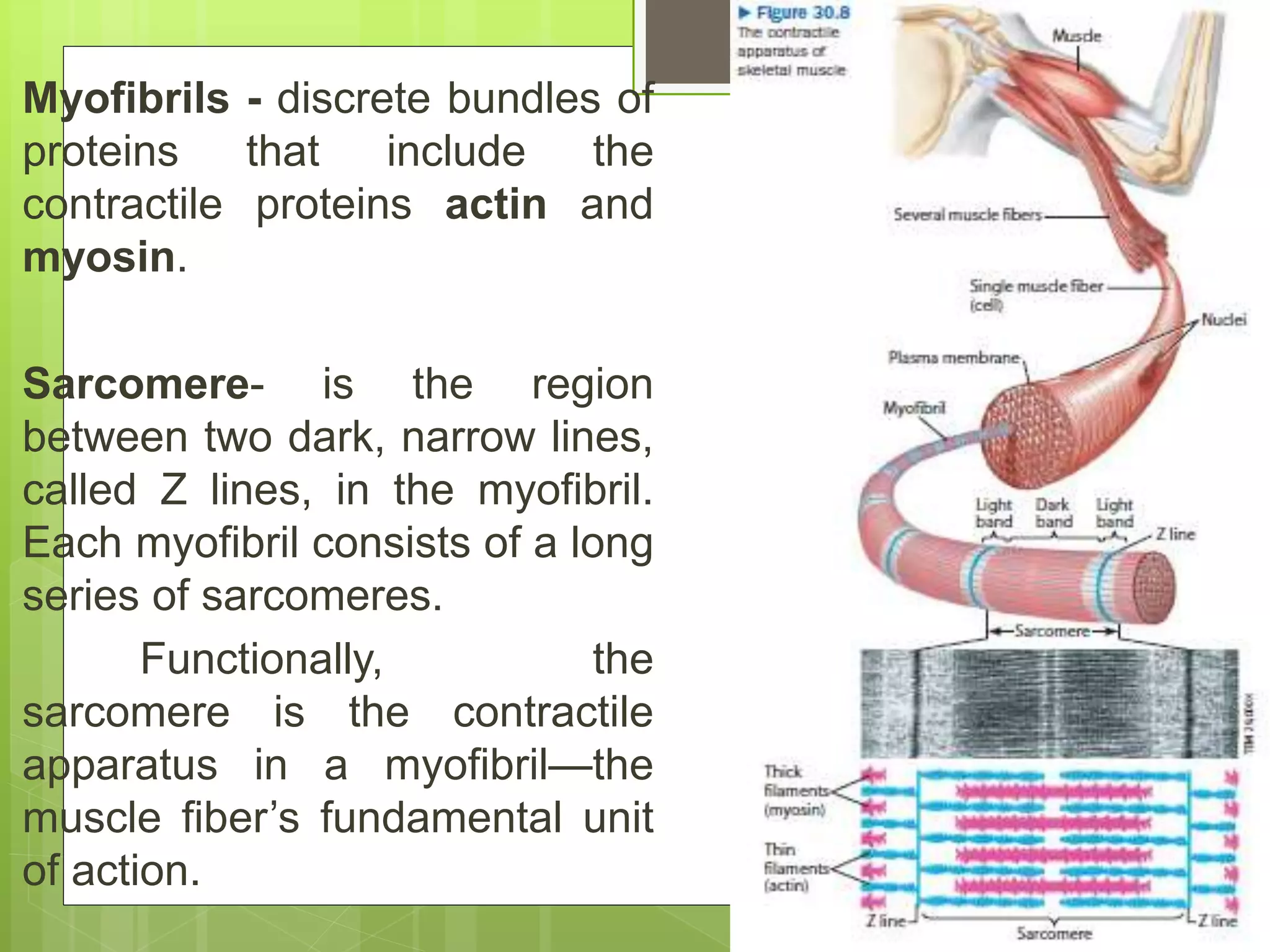
Myofibrils - discrete bundles of
proteins that include the
contractile proteins actin and
myosin.
Sarcomere- is the region
between two dark, narrow lines,
called Z lines, in the myofibril.
Each myofibril consists of a long
series of sarcomeres.
Functionally, the
sarcomere is the contractile
apparatus in a myofibril—the
muscle fiber’s fundamental unit
of action.
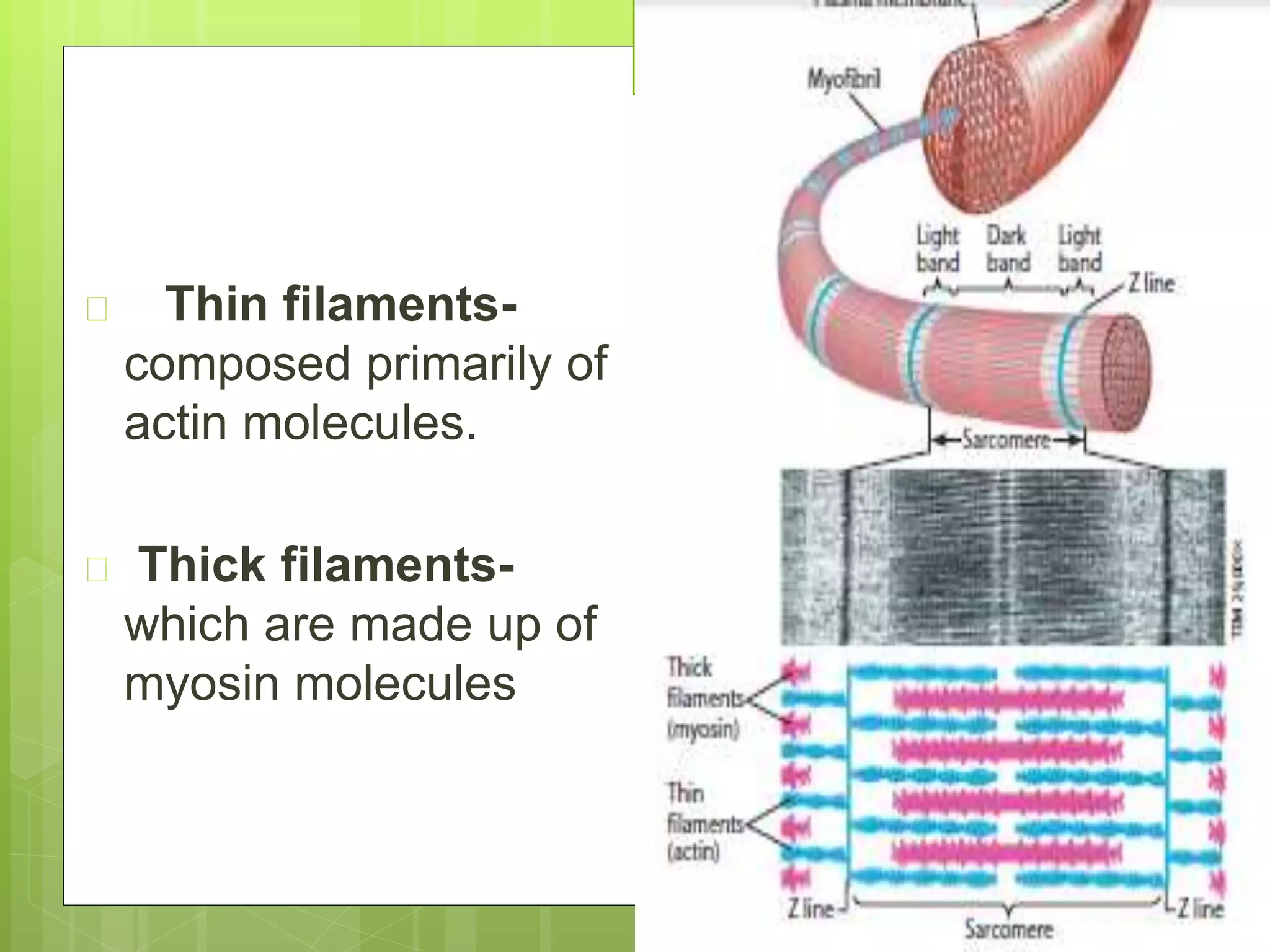
 Thin filaments-
composed primarily of
actin molecules.
 Thick filaments-
which are made up of
myosin molecules
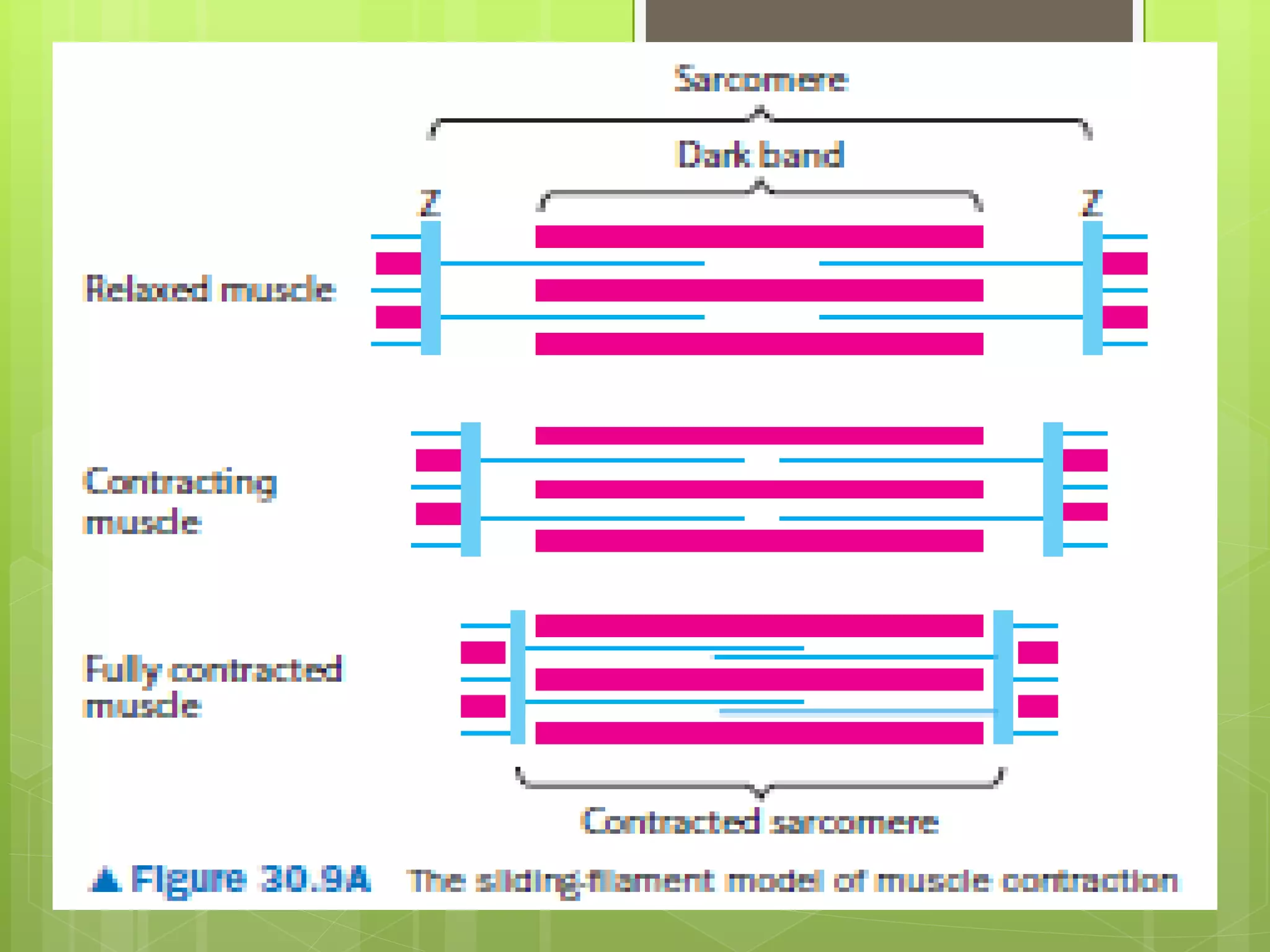
A muscle contracts when thin filaments slide
along thick filaments
Sliding-filament model of muscle contraction
- a sarcomere contracts (shortens) when
its thin filaments slide along its thick filaments
How animals move

How animals move

  • 1.
  • 2.
    Movement and Locomotion Movement - a distinguishing characteristics of animals. (In muscle cell contraction and amoeboid movement, the cellular system is based on microfilaments. Microtubules are the main components of cilia and flagella)  Locomotion- active travel from place to place—requires energy to overcome two forces that tend to keep an animal stationary: friction and gravity.
  • 3.
    Major Modes ofAnimal Locomotion  Swimming- Animals swim in diverse ways. Ex. 1. Insects- use their legs as oars to push against the water. 2. Squids, scallops, and some jellies are jetpropelled, taking in water and squirting it out in bursts. 3. Fishes swim by moving their body and tail from side to side
  • 4.
    Major Modes ofAnimal Locomotion  Walking and Running- A walking animal moves each leg in turn, overcoming friction between the foot and the ground with each step. - To maintain balance, a four-legged animal usually keeps three feet on the ground at all times when walking slowly
  • 5.
    Major Modes ofAnimal Locomotion  Hopping- a specialized mode of locomotion that has also evolved independently in several rodents.
  • 6.
    Major Modes ofAnimal Locomotion  Crawling- Animals that have no limbs, or very short limbs, drag their bodies along the ground in a crawling movement. - Because much of the animal’s body is in contact with the ground, its energy is mainly expended to overcome friction rather than gravity
  • 7.
    Major Modes ofAnimal Locomotion  Flying- few animal groups: insects, reptiles (including birds), and, among the mammals, bats.
  • 8.
    Skeletons function insupport, movement, and protection 3 main types of skeletons: 1. Hydrostatic skeletons 2. Exoskeletons 3. Endoskeletons
  • 9.
    Hydrostatic Skeletons - consistsof fluid held under pressure in a closed body compartment. - helps protect other body parts by cushioning them from shocks. And it also gives the body shape and provides support for muscle action.
  • 10.
    Exoskeletons - rigid externalskeleton -characteristic of the phylum Arthropoda, a group that includes insects, spiders, and crustaceans such as crabs. - characteristic of the phylum Arthropoda, a group that includes insects, spiders, and crustaceans such as crabs.
  • 11.
    Endoskeletons - consists ofhard or leathery supporting elements situated among the soft tissues of an animal
  • 12.
  • 13.
     All vertebrateshave an axial skeleton supporting the axis, or trunk, of the body. - consists of skull, vertebral column (backbone) and in most vertebrates, rib cage.
  • 14.
    Backbone - the definitive characteristicof vertebrates, consists of a series of individual bones, the vertebrae, joined by pads of tough cartilage known as discs. - number of vertebrae varies among species. Pythons have 400, while an adult human has 24.
  • 15.
     Most vertebratesalso have an appendicular skeleton, which is made up of the bones of the appendages and the bones that anchor the appendages to the axial skeleton.
  • 16.
    Bones are complex livingorgans -bones are actually complex organs consisting of several kinds of moist, living tissues.
  • 18.
    What causes thecolors of yellow and red bone marrow? Yellow bone marrow stores fat while red bone marrow develops red blood
  • 19.
    Healthy bones resiststress and heal from injuries  Excessive bone fatigue can lead to so-called stress fractures, hairline cracks in the bone, just as the accumulation of small amounts of stress on metals can cause a break.  bone is composed of living, dynamic tissue. Cells continually remove old bone matrix and replace it with new material.
  • 21.
    The risk ofbone fracture increases if bones are porous and weak. Osteoporosis is characterized by low bone mass and structural deterioration of bone tissue.
  • 22.
     Other lifestylehabits, such as smoking, may also contribute to osteoporosis. There is a strong genetic component as well;  young women whose mothers or grandmothers suffer from osteoporosis should be especially concerned with maintaining good bone health.  Treatments for osteoporosis include calcium and vitamin D supplements and drugs that slow bone loss.
  • 23.
    Joints permit differenttypes of movement - the versatility of the vertebrate skeleton comes from its joints. Ligaments- Bands of strong fibrous connective tissue 3 kinds of Joints:  Ball –and-socket joints  Hinge joints  Pivot joints
  • 24.
     Ball –and-socketjoints - are found where the humerus joins the pectoral girdle - enable us to rotate our arms and legs and move them in several planes.  Hinge Joints - permit movement in a single plane, just as the hinge on a door enables it to open and close. Pivot joint - enables us to rotate the forearm at the elbow - pivot joint between the first and second cervical vertebrae allows movement of the head from side to side
  • 25.
    Muscle Contraction andMovement  The skeleton and muscles interact in movement Muscles are connected to bones by tendons.
  • 26.
     Each musclecell has its own contractile apparatus  A muscle consists of many bundles of muscle fibers—roughly 250,000 in a typical human biceps muscle—oriented parallel to each other.
  • 27.
    Myofibrils - discretebundles of proteins that include the contractile proteins actin and myosin. Sarcomere- is the region between two dark, narrow lines, called Z lines, in the myofibril. Each myofibril consists of a long series of sarcomeres. Functionally, the sarcomere is the contractile apparatus in a myofibril—the muscle fiber’s fundamental unit of action.
  • 28.
     Thin filaments- composedprimarily of actin molecules.  Thick filaments- which are made up of myosin molecules
  • 29.
    A muscle contractswhen thin filaments slide along thick filaments Sliding-filament model of muscle contraction - a sarcomere contracts (shortens) when its thin filaments slide along its thick filaments

Editor's Notes

  • #3 Locomotion requires energy to overcome friction and gravity *Movement- At the cellular level, every form of movement involves protein strands moving against one another, an energy-consuming process. *Locomotion- (depends on the environment) see Campbell Biology- Concepts and Connections 7th ed. To see the explaination.
  • #5 Bipedal (twofooted) animals, such as birds and humans, are less stable on land and keep part of at least one foot on the ground when walking.
  • #7 Earthworms crawl by peristalsis, a type of movement produced by rhythmic waves of muscle contractions passing from head to tail.
  • #11 An arthropod is never without an exoskeleton of some sort.
  • #12 Sea stars, sea urchins, and most other echinoderms have an endoskeleton of hard plates beneath their skin. Vertebrates have endoskeletons consisting of cartilage or a combination of cartilage and bone
  • #14 1.skull, enclosing and protecting the brain, 2. the vertebral column (backbone), enclosing the spinal cord; 3. rib cage around the lungs and heart
  • #16 *Bone- which is made up of the bones of the appendages and the bones that anchor the appendages to the axial skeleton.
  • #18 The central cavity contains yellow bone marrow, which is mostly stored fat brought into the bone by the blood. The ends, or heads, of the bone have an outer layer of compact bone and an inner layer of spongy bone, so named because it is honeycombed with small cavities. The cavities contain red bone marrow (not shown in the figure), a specialized tissue that produces our blood cells
  • #22 Osteoporosis is characterized by low bone mass and structural deterioration of bone tissue. On the other hand, disuse causes bones to become thinner. Strong bones also require an adequate intake of dietary calcium and enough vitamin D, which are both essential to bone replacement.
  • #26 Figure 30.7 shows how an animal’s muscles interact with its bones to produce movement. The biceps and triceps muscles are an example of an antagonistic pair.
  • #29 The diagram of the sarcomere at the bottom of Figure 30.8 explains the features visible in the micrograph.