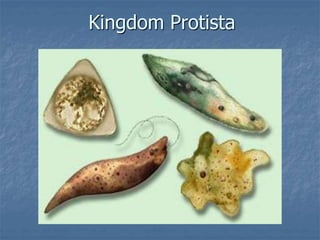
Kingdom Protista
 If you look at a drop of pond water under a
microscope, all the "little creatures" you
see swimming around are protists.
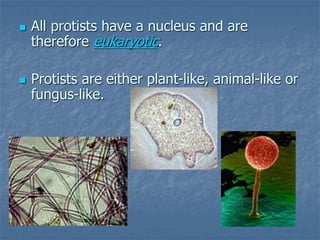
 All protists have a nucleus and are
therefore eukaryotic.
 Protists are either plant-like, animal-like or
fungus-like.
Three Types of Protists
 Plant-like protists are autotrophs
 Animal-like and fungus-like protists and
are heterotrophs.
 Protozoans are animal-like protists
(heterotrophs) grouped according to how
they move.
 The word protozoa means "little animal.“
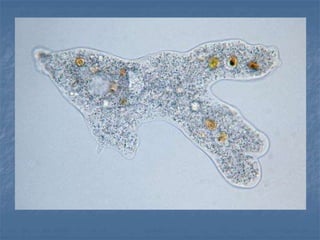
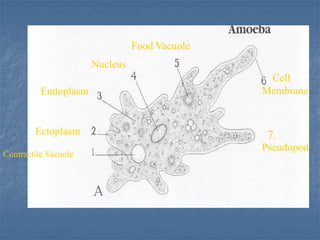
 One group of animal-like protists are
amoebas.
Animal-like Protists
7.
Contractile Vacuole
Ectoplasm
Endoplasm
Nucleus
Food Vacuole
Cell
Membrane
Pseudopod
 The second group is the Flagellates <flah-
geh-lets>, of the phylum Zoomastigina.
Flagellates are generally the smallest of
the protozoa and have one or several
long, whip-like projections called flagella
poking out of their cells.
 Flagellates use their flagella to move.
Flagellates
Giardia
 The third group of protozoans are the
ciliates from the phylum Ciliophora. These
are generally the largest protozoa.
 They are covered with hair-like projections
called cilia and they eat the other two
types of protozoa as well as bacteria.
 Ciliates are found in every aquatic habitat.
Ciliates
8. Cilia
9. Contractile Vacuole
15. Contractile Vacuole
10. Food Vacuole
11. Macronucleus
12. Micronucleus
13. Oral Groove
14. Cytoplasm
16. Cell Membrane
How do Protozoans reproduce?
 Asexual – Binary fission
 Sexual - Conjugation
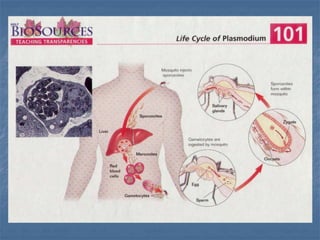
 The last of the Protozoans come from the
phylum, Sporozoa.
 These are parasitic and nonmotile.
 For example……
Sporozoa
 Plant-like protists are algae.
 Algae are eukaryotic autotrophs.
 They, along with other eukaryotic
autotrophs, form the foundation of Earth’s
food chains.
 They produce much of Earth’s oxygen.
Algae
 There are three unicellular phyla of algae:
 Phylum Euglenophyta
 Phylum Bacillariophyta
 Phylum Dinoflagellata
 Members of first phylum of algae,
Euglenophyta, are both plant-like and animal-
like.
 Euglena are autotrophs since they make food
from sunlight
 Heterotrophs since they ingest food from
surrounding water.
Euglena
Euglena
Flagella
Eyespot
Contractile Vacuole
Chloroplasts
Nucleus
Cytoplasm
Contractile Vacuole
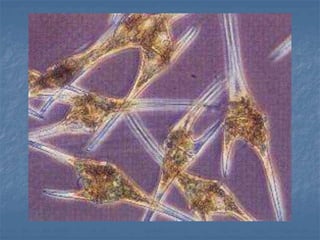
 The third unicellular algae, Dinoflagellata, are
a major component of marine phytoplankton.
 These algae have at least two flagella set at
right angles to each other and thick cell walls
made of cellulose plates.
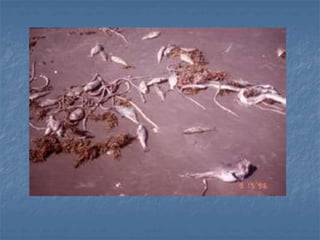
 Blooms of dinoflagellates cause “Red Tide.”
Dinoflagellates
 They are in many
food chains & food
webs.
 Plant-like ones
provide oxygen as
well as food.
 Fungi-like ones help
as decomposers
(recycle).
 Some cause diseases

Protist notes

  • 1.
  • 2.
     If youlook at a drop of pond water under a microscope, all the "little creatures" you see swimming around are protists.
  • 3.
     All protistshave a nucleus and are therefore eukaryotic.  Protists are either plant-like, animal-like or fungus-like.
  • 4.
    Three Types ofProtists  Plant-like protists are autotrophs  Animal-like and fungus-like protists and are heterotrophs.
  • 5.
     Protozoans areanimal-like protists (heterotrophs) grouped according to how they move.  The word protozoa means "little animal.“  One group of animal-like protists are amoebas. Animal-like Protists
  • 7.
  • 8.
     The secondgroup is the Flagellates <flah- geh-lets>, of the phylum Zoomastigina. Flagellates are generally the smallest of the protozoa and have one or several long, whip-like projections called flagella poking out of their cells.  Flagellates use their flagella to move. Flagellates
  • 9.
  • 10.
     The thirdgroup of protozoans are the ciliates from the phylum Ciliophora. These are generally the largest protozoa.  They are covered with hair-like projections called cilia and they eat the other two types of protozoa as well as bacteria.  Ciliates are found in every aquatic habitat. Ciliates
  • 12.
    8. Cilia 9. ContractileVacuole 15. Contractile Vacuole 10. Food Vacuole 11. Macronucleus 12. Micronucleus 13. Oral Groove 14. Cytoplasm 16. Cell Membrane
  • 13.
    How do Protozoansreproduce?  Asexual – Binary fission  Sexual - Conjugation
  • 14.
     The lastof the Protozoans come from the phylum, Sporozoa.  These are parasitic and nonmotile.  For example…… Sporozoa
  • 16.
     Plant-like protistsare algae.  Algae are eukaryotic autotrophs.  They, along with other eukaryotic autotrophs, form the foundation of Earth’s food chains.  They produce much of Earth’s oxygen. Algae
  • 17.
     There arethree unicellular phyla of algae:  Phylum Euglenophyta  Phylum Bacillariophyta  Phylum Dinoflagellata
  • 18.
     Members offirst phylum of algae, Euglenophyta, are both plant-like and animal- like.  Euglena are autotrophs since they make food from sunlight  Heterotrophs since they ingest food from surrounding water. Euglena
  • 20.
  • 21.
     The thirdunicellular algae, Dinoflagellata, are a major component of marine phytoplankton.  These algae have at least two flagella set at right angles to each other and thick cell walls made of cellulose plates.  Blooms of dinoflagellates cause “Red Tide.” Dinoflagellates
  • 26.
     They arein many food chains & food webs.  Plant-like ones provide oxygen as well as food.  Fungi-like ones help as decomposers (recycle).  Some cause diseases