BIODIESEL
What is biodiesel?
● Biodiesel is an alternative fuel similar to conventional or
‘fossil’ diesel.
● Biodiesel can be produced from straight vegetable oil,
animal oil/fats, natura oil like Jatropha, tallow and waste
cooking oil.
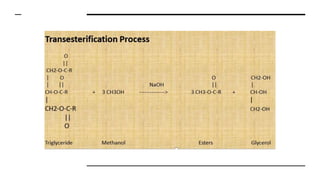
● The process used to convert these oils to Biodiesel is
called transesterification.
Jatropha plant
● When jatropha seeds are crushed, the resulting jatropha
oil can be processed to produce a high-quality biofuel or
biodiesel that can be used in a standard diesel car or
further processed into jet fuel,
Why do we need biodiesel ?
1. Biodiesel reduces air pollution.
2. Biodiesel causes far less damage than petroleum diesel
does if spilt or released to the environment because of
biodiesel’s better biodegradability.
3. Biodiesel can extend the life of diesel engines because it
is more lubricating than petroleum diesel fuel.
METHODOLOGY
● Vegetables oils can’t be used directly in the diesel
engine.
● It has been found that transesterification is the most
effective way to reduce the viscosity of vegetable oils.
● Transesterification is the process by which biodiesel is
produced. It is the reaction between vegetable oil,
alcohol and catalyst (to speed the reaction)
Process
● Combine a certain amount of alcohol and catalyst
mixture with the feedstock, and then heat and agitate for
a short period of time.
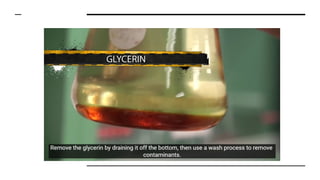
● The result is a layer of biodiesel and a layer of glycerin.
Remove the glycerin by draining it off the bottom.
● Water washing is also followed after it.
Advantages of biodiesel
● Biodiesel can be used directly in CI engine with no substantial change in the
engine
● As the fuel is derived from biomass is does not contribute to atmospheric
CO2 emission
● It is made from jatropha thus we can reduce the import from other countries
● It provides engine lubrication, as it has twice the viscosity of petroleum
diesel
● It is safe and non-toxic
● Biodiesel degrades four times faster than diesel.
● Blending of biodiesel with diesel fuel increases engine efficiency.
● The higher flash point of biodiesel makes its storage safer.
Disadvantages of biodiesel
● NOX emission increases
● Fuel filter changing
● Low availability due to less production of jatropha in
India.
● Produces 10% less power than normal fuel.
● Blends of biodiesel possible upto 20% only.
APPLICATIONS
❖ Railway usage
❖ Aircraft use
❖ Generating electricity
❖ Vehicles
❖ Removing paint and adhesives
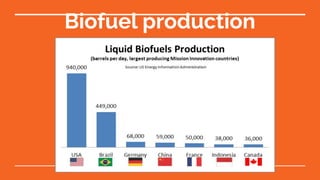
Biofuel production
CONCLUSION
❖ By blending of 20 percent biodiesel with diesel will
help India to save 7.3x10⁶ tones of diesel per year.
❖ In India about 33 million hectares of wasteland is
available and can effectively be used for cultivation
of jatropha plants.
❖ It offers business possibility to agricultural
enterprises and rural employment.

Biodiesel

  • 1.
  • 2.
    What is biodiesel? ●Biodiesel is an alternative fuel similar to conventional or ‘fossil’ diesel. ● Biodiesel can be produced from straight vegetable oil, animal oil/fats, natura oil like Jatropha, tallow and waste cooking oil. ● The process used to convert these oils to Biodiesel is called transesterification.
  • 3.
    Jatropha plant ● Whenjatropha seeds are crushed, the resulting jatropha oil can be processed to produce a high-quality biofuel or biodiesel that can be used in a standard diesel car or further processed into jet fuel,
  • 4.
    Why do weneed biodiesel ? 1. Biodiesel reduces air pollution. 2. Biodiesel causes far less damage than petroleum diesel does if spilt or released to the environment because of biodiesel’s better biodegradability. 3. Biodiesel can extend the life of diesel engines because it is more lubricating than petroleum diesel fuel.
  • 5.
    METHODOLOGY ● Vegetables oilscan’t be used directly in the diesel engine. ● It has been found that transesterification is the most effective way to reduce the viscosity of vegetable oils. ● Transesterification is the process by which biodiesel is produced. It is the reaction between vegetable oil, alcohol and catalyst (to speed the reaction)
  • 7.
    Process ● Combine acertain amount of alcohol and catalyst mixture with the feedstock, and then heat and agitate for a short period of time. ● The result is a layer of biodiesel and a layer of glycerin. Remove the glycerin by draining it off the bottom. ● Water washing is also followed after it.
  • 9.
    Advantages of biodiesel ●Biodiesel can be used directly in CI engine with no substantial change in the engine ● As the fuel is derived from biomass is does not contribute to atmospheric CO2 emission ● It is made from jatropha thus we can reduce the import from other countries ● It provides engine lubrication, as it has twice the viscosity of petroleum diesel ● It is safe and non-toxic ● Biodiesel degrades four times faster than diesel. ● Blending of biodiesel with diesel fuel increases engine efficiency. ● The higher flash point of biodiesel makes its storage safer.
  • 10.
    Disadvantages of biodiesel ●NOX emission increases ● Fuel filter changing ● Low availability due to less production of jatropha in India. ● Produces 10% less power than normal fuel. ● Blends of biodiesel possible upto 20% only.
  • 11.
    APPLICATIONS ❖ Railway usage ❖Aircraft use ❖ Generating electricity ❖ Vehicles ❖ Removing paint and adhesives
  • 12.
  • 13.
    CONCLUSION ❖ By blendingof 20 percent biodiesel with diesel will help India to save 7.3x10⁶ tones of diesel per year. ❖ In India about 33 million hectares of wasteland is available and can effectively be used for cultivation of jatropha plants. ❖ It offers business possibility to agricultural enterprises and rural employment.