Biodiesel and
Vegetable Oils
Anier Isabel Peña Fajardo

Lizbeth Martínez Patatuchi
Introduction
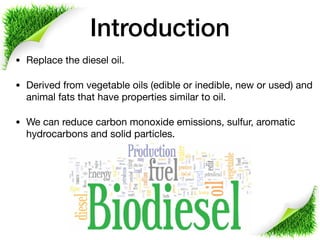
• Replace the diesel oil. 

• Derived from vegetable oils (edible or inedible, new or used) and
animal fats that have properties similar to oil. 

• We can reduce carbon monoxide emissions, sulfur, aromatic
hydrocarbons and solid particles.
Vegetable Oils
• Up to 15% of food oils and up to 100% of certain commodity
oils are used for industrial purposes. 

• In the past pure vegetable oils have been mainly used in tractors
on farms. 

• Vegetable oils have higher density than diesel, but lower energy
content 

• Vegetable oils have lower carbon content than diesel.
Difficulties
• Coking combustion of the chamber

• Injector nozzles

• Gumming

• Hence sticking of the piston (decline in power results)

• Fuel filter blockages 

• The dilution of the crankcase oil can lead to lubrication breakdown. 

• Viscosity
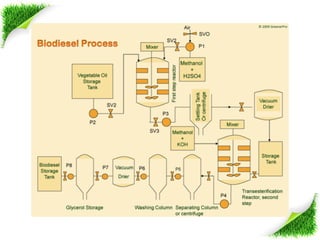
Process
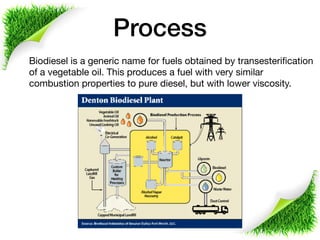
Biodiesel is a generic name for fuels obtained by transesterification
of a vegetable oil. This produces a fuel with very similar
combustion properties to pure diesel, but with lower viscosity.
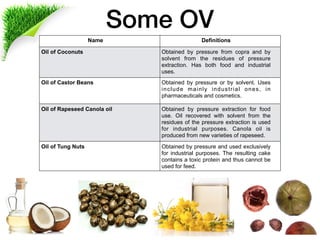
Some OV
Name Definitions
Oil of Coconuts Obtained by pressure from copra and by
solvent from the residues of pressure
extraction. Has both food and industrial
uses.
Oil of Castor Beans Obtained by pressure or by solvent. Uses
include mainly industrial ones, in
pharmaceuticals and cosmetics.
Oil of Rapeseed Canola oil Obtained by pressure extraction for food
use. Oil recovered with solvent from the
residues of the pressure extraction is used
for industrial purposes. Canola oil is
produced from new varieties of rapeseed.
Oil of Tung Nuts Obtained by pressure and used exclusively
for industrial purposes. The resulting cake
contains a toxic protein and thus cannot be
used for feed.
Advantages and
Disadvantages
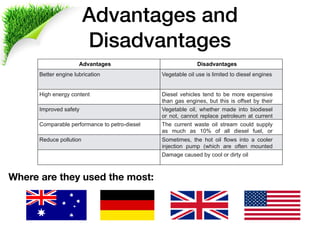
Where are they used the most:
Advantages Disadvantages
Better engine lubrication Vegetable oil use is limited to diesel engines
High energy content Diesel vehicles tend to be more expensive
than gas engines, but this is offset by their
longer life.Improved safety Vegetable oil, whether made into biodiesel
or not, cannot replace petroleum at current
consumption levels.Comparable performance to petro-diesel The current waste oil stream could supply
as much as 10% of all diesel fuel, or
perhaps 1% of total current petroleum use.Reduce pollution Sometimes, the hot oil flows into a cooler
injection pump (which are often mounted
away from the engine, and thus thermallyDamage caused by cool or dirty oil
Biodiesel
• Considered to be the most pure and the easiest available 

fuels on the planet.

• These biofuels can be a lot more economic if used in the 

kitchen for cooking purpose.

• Encourage the recycling process as most of them are manufactured from waste products.

The process:
• All the fats and oils are turned into esters, separating the glycerin.

• All the glycerin sinks down at the bottom and all the biofuel rests at the top.
Transesterification (organic chemical process).

• Chemical used: ethanol or methanol.
Advantages and
Disadvantages
Advantages Disadvantages
Emissions and greenhouse reduction Biodiesel fuel distribution infrastructure needs
improvement
Availability It requires energy to produce biodiesel fuel from
soy crops
The lack of sulfur in 100% biodiesel extends the life of
catalytic converters
It can harm rubber hoses in some engines
The lubricating property of the biodiesel may lengthen
the lifetime of engines
As Biodiesel cleans the dirt from the engine, this
dirt can then get collected in the fuel filter, thus
clogging it. So, filters have to be changed after the
first several hours of biodiesel use
Biodegradability (In both soil and water, biodiesel
degraded at a rate 4 times faster than regular diesel
fuel)
Mexico
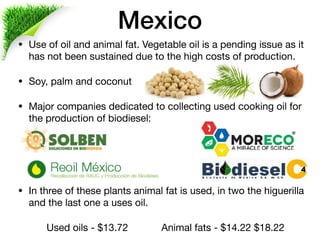
• Use of oil and animal fat. Vegetable oil is a pending issue as it
has not been sustained due to the high costs of production.

• Soy, palm and coconut

• Major companies dedicated to collecting used cooking oil for
the production of biodiesel:


• In three of these plants animal fat is used, in two the higuerilla
and the last one a uses oil.

Used oils - $13.72 Animal fats - $14.22 $18.22
References
Sawit Industry. Fundamental process of biodiesel. February 2013. http://thesawit.blogspot.mx/2013_02_01_archive.html
 
North Central Texas Council of Governments. How Biodiesel is made. http://www.ceasethegreasentx.com/Biodiesel.html
Iliana Ernestina Medina Ramírez, Norma Angélica Chávez Vela, Juan Jáuregui Rincón. Universidad Autónoma de Aguascalientes. Biodiesel, a
renewable fuel. Agosto 2012. PDF. http://www.uaa.mx/investigacion/revista/archivo/revista55/Articulo%208.pdf
 
berkeleybiodiesel. Advantages and disadvantages of biodiesel fuel. http://www.berkeleybiodiesel.org/advantages-and-disadvantages-of-
biodiesel.html
 
Pacific Biodiesel. BIODIESEL BENEFITS – WHY USE BIODIESEL?. http://www.biodiesel.com/biodiesel/benefits/
 
Patricia Tapia y Roberto Valadez. Milenio. 22/06/17. Biodiésel, a la espera de brillar en México.http://www.milenio.com/negocios/biodiesel-espera-
mexico-cambio_climatico-biocombustibles-medio_ambiente-milenio_0_901709836.html
 
Claudia Sheinbaum-Pardo, A. C.-I.-S. (2013). ScienceDirect. Obtenido de Biomass & Bioenergy: http://www.sciencedirect.com/science/article/pii/
S0961953413002365
 
DEFINITION AND CLASSIFICATION OF COMMODITIES. (1994). Obtenido de VEGETABLE AND ANIMAL OILS AND FATS: http://www.fao.org/
waicent/faoinfo/economic/faodef/fdef14e.htm
 
Erhan, S. Z. (2005). CRNnetBase. Obtenido de Industrial Uses of Vegetable Oil: http://www.crcnetbase.com/doi/10.1201/9781439822388.ch1
 
Limited, E. I. (2009). eitg. Obtenido de Pure Vegetables Oils: http://www.eitg.co.nz/index.php?option=com_content&view=article&id=56&Itemid=12
 
Steinman, J. (12 de January de 2005). Resilience. Obtenido de SUSTAINABLE ENERGY FROM VEGETABLE OIL: http://www.resilience.org/stories/
2005-01-12/sustainable-energy-vegetable-oil/

Biodiesel and Vegetable oils

  • 1.
    Biodiesel and Vegetable Oils AnierIsabel Peña Fajardo Lizbeth Martínez Patatuchi
  • 2.
    Introduction • Replace thediesel oil. • Derived from vegetable oils (edible or inedible, new or used) and animal fats that have properties similar to oil. • We can reduce carbon monoxide emissions, sulfur, aromatic hydrocarbons and solid particles.
  • 3.
    Vegetable Oils • Upto 15% of food oils and up to 100% of certain commodity oils are used for industrial purposes. • In the past pure vegetable oils have been mainly used in tractors on farms. • Vegetable oils have higher density than diesel, but lower energy content • Vegetable oils have lower carbon content than diesel.
  • 4.
    Difficulties • Coking combustionof the chamber • Injector nozzles • Gumming • Hence sticking of the piston (decline in power results) • Fuel filter blockages • The dilution of the crankcase oil can lead to lubrication breakdown. • Viscosity
  • 5.
    Process Biodiesel is ageneric name for fuels obtained by transesterification of a vegetable oil. This produces a fuel with very similar combustion properties to pure diesel, but with lower viscosity.
  • 6.
    Some OV Name Definitions Oilof Coconuts Obtained by pressure from copra and by solvent from the residues of pressure extraction. Has both food and industrial uses. Oil of Castor Beans Obtained by pressure or by solvent. Uses include mainly industrial ones, in pharmaceuticals and cosmetics. Oil of Rapeseed Canola oil Obtained by pressure extraction for food use. Oil recovered with solvent from the residues of the pressure extraction is used for industrial purposes. Canola oil is produced from new varieties of rapeseed. Oil of Tung Nuts Obtained by pressure and used exclusively for industrial purposes. The resulting cake contains a toxic protein and thus cannot be used for feed.
  • 7.
    Advantages and Disadvantages Where arethey used the most: Advantages Disadvantages Better engine lubrication Vegetable oil use is limited to diesel engines High energy content Diesel vehicles tend to be more expensive than gas engines, but this is offset by their longer life.Improved safety Vegetable oil, whether made into biodiesel or not, cannot replace petroleum at current consumption levels.Comparable performance to petro-diesel The current waste oil stream could supply as much as 10% of all diesel fuel, or perhaps 1% of total current petroleum use.Reduce pollution Sometimes, the hot oil flows into a cooler injection pump (which are often mounted away from the engine, and thus thermallyDamage caused by cool or dirty oil
  • 8.
    Biodiesel • Considered tobe the most pure and the easiest available 
 fuels on the planet. • These biofuels can be a lot more economic if used in the 
 kitchen for cooking purpose. • Encourage the recycling process as most of them are manufactured from waste products. The process: • All the fats and oils are turned into esters, separating the glycerin. • All the glycerin sinks down at the bottom and all the biofuel rests at the top. Transesterification (organic chemical process). • Chemical used: ethanol or methanol.
  • 10.
    Advantages and Disadvantages Advantages Disadvantages Emissionsand greenhouse reduction Biodiesel fuel distribution infrastructure needs improvement Availability It requires energy to produce biodiesel fuel from soy crops The lack of sulfur in 100% biodiesel extends the life of catalytic converters It can harm rubber hoses in some engines The lubricating property of the biodiesel may lengthen the lifetime of engines As Biodiesel cleans the dirt from the engine, this dirt can then get collected in the fuel filter, thus clogging it. So, filters have to be changed after the first several hours of biodiesel use Biodegradability (In both soil and water, biodiesel degraded at a rate 4 times faster than regular diesel fuel)
  • 11.
    Mexico • Use ofoil and animal fat. Vegetable oil is a pending issue as it has not been sustained due to the high costs of production. • Soy, palm and coconut • Major companies dedicated to collecting used cooking oil for the production of biodiesel:


 • In three of these plants animal fat is used, in two the higuerilla and the last one a uses oil. Used oils - $13.72 Animal fats - $14.22 $18.22
  • 12.
    References Sawit Industry. Fundamentalprocess of biodiesel. February 2013. http://thesawit.blogspot.mx/2013_02_01_archive.html   North Central Texas Council of Governments. How Biodiesel is made. http://www.ceasethegreasentx.com/Biodiesel.html Iliana Ernestina Medina Ramírez, Norma Angélica Chávez Vela, Juan Jáuregui Rincón. Universidad Autónoma de Aguascalientes. Biodiesel, a renewable fuel. Agosto 2012. PDF. http://www.uaa.mx/investigacion/revista/archivo/revista55/Articulo%208.pdf   berkeleybiodiesel. Advantages and disadvantages of biodiesel fuel. http://www.berkeleybiodiesel.org/advantages-and-disadvantages-of- biodiesel.html   Pacific Biodiesel. BIODIESEL BENEFITS – WHY USE BIODIESEL?. http://www.biodiesel.com/biodiesel/benefits/   Patricia Tapia y Roberto Valadez. Milenio. 22/06/17. Biodiésel, a la espera de brillar en México.http://www.milenio.com/negocios/biodiesel-espera- mexico-cambio_climatico-biocombustibles-medio_ambiente-milenio_0_901709836.html   Claudia Sheinbaum-Pardo, A. C.-I.-S. (2013). ScienceDirect. Obtenido de Biomass & Bioenergy: http://www.sciencedirect.com/science/article/pii/ S0961953413002365   DEFINITION AND CLASSIFICATION OF COMMODITIES. (1994). Obtenido de VEGETABLE AND ANIMAL OILS AND FATS: http://www.fao.org/ waicent/faoinfo/economic/faodef/fdef14e.htm   Erhan, S. Z. (2005). CRNnetBase. Obtenido de Industrial Uses of Vegetable Oil: http://www.crcnetbase.com/doi/10.1201/9781439822388.ch1   Limited, E. I. (2009). eitg. Obtenido de Pure Vegetables Oils: http://www.eitg.co.nz/index.php?option=com_content&view=article&id=56&Itemid=12   Steinman, J. (12 de January de 2005). Resilience. Obtenido de SUSTAINABLE ENERGY FROM VEGETABLE OIL: http://www.resilience.org/stories/ 2005-01-12/sustainable-energy-vegetable-oil/