GPERI
GUIDED BY :-
Pro. Bhargav Pandya
Created By:-
Hiren Patel :- 161040106020
Jay Patel :- 161040106021
Development of Bio-Diesel in India
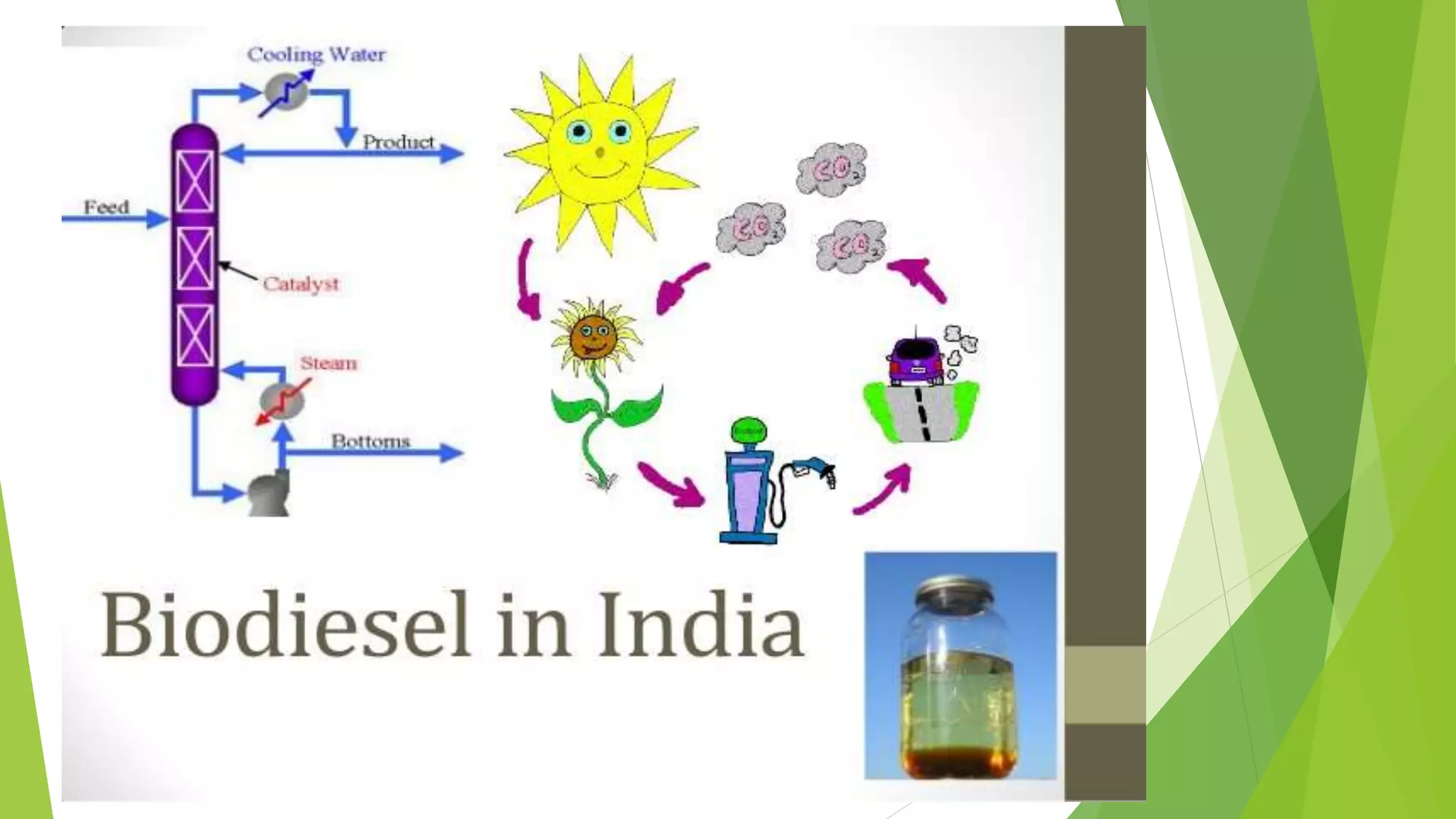
What is Bio-diesel ?
• Bio-diesel is diesel produced from vegetal oil.
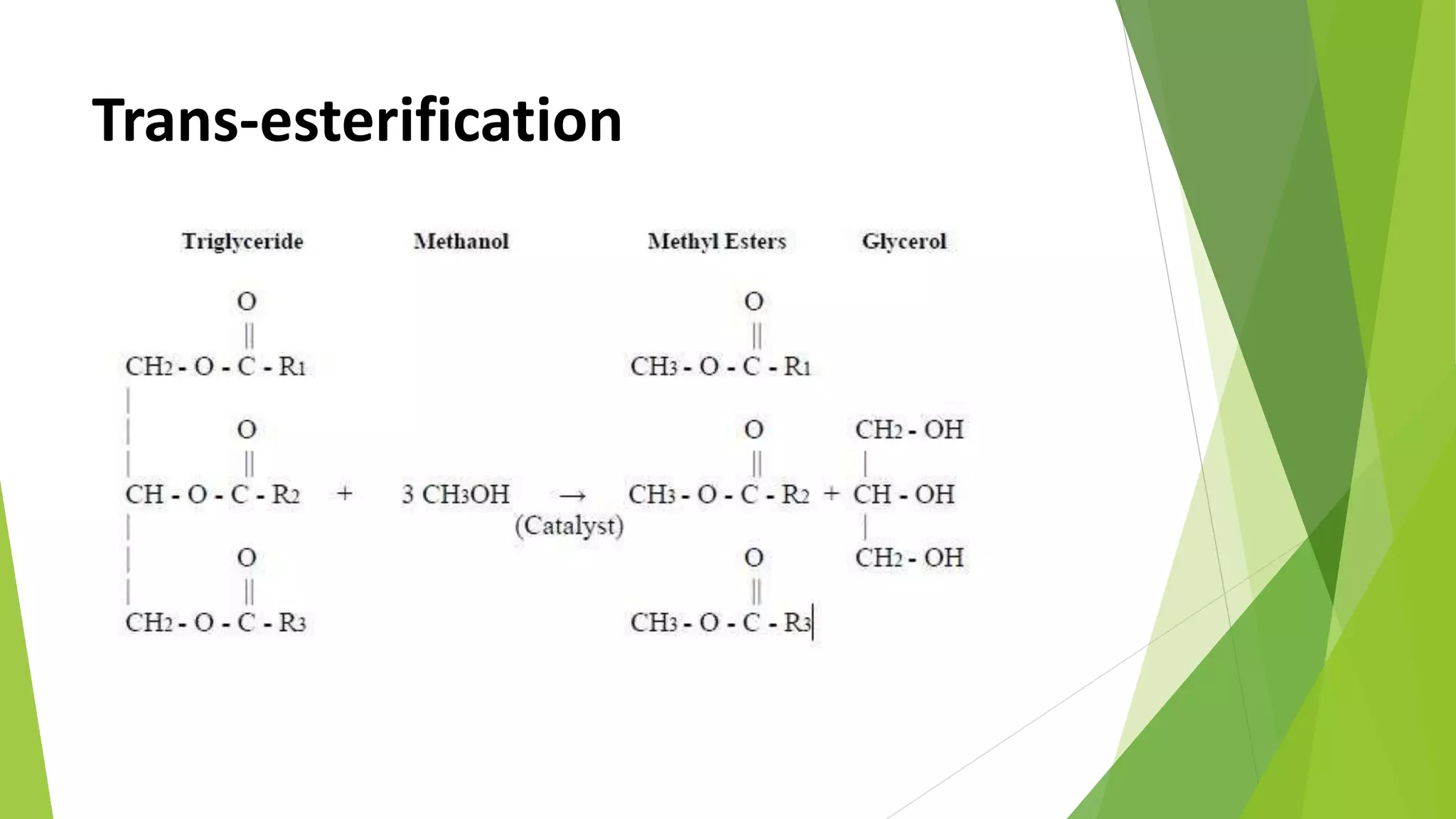
• The process is a well known technique called «Trans-esterification».
It is now profitable because of high prices of fossil oil.
• Bio-diesel can totally replace fossil diesel, or can be mixed with it.
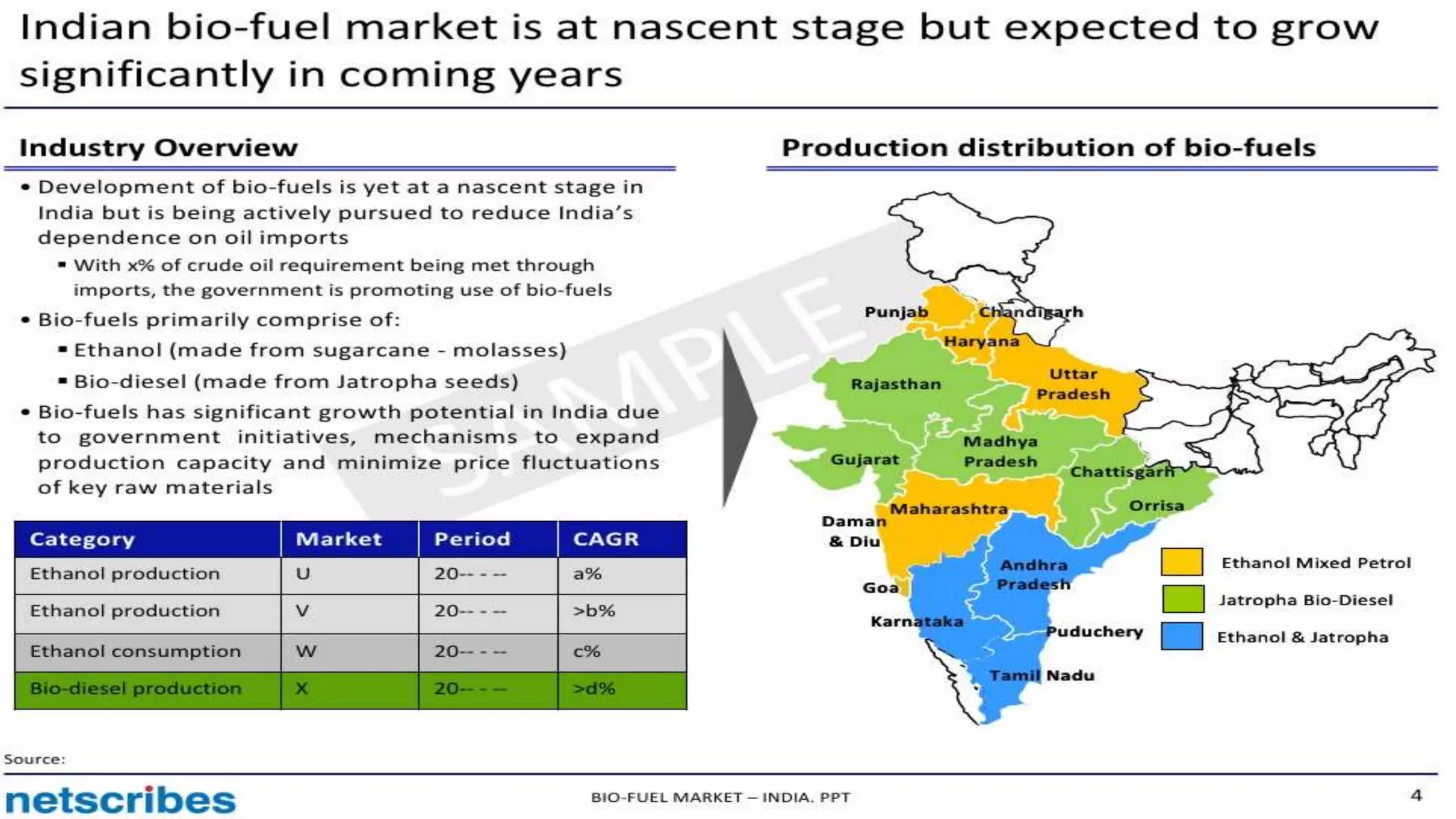
• Vegetal oil from the seeds of “Jatropha Curcas” is among the best
source of bio-diesel.
Why Biodiesel?
 Extend the usefulness of petroleum
 The longevity and cleanliness of diesel engines
 Community-based biodiesel production model
 Reducing impact on the local environment
 Increasing energy security
What is Jatropha Curcas?
Jatropha curcas
Scientific classification
Kingdom: Plantae
(unranked): Angiosperms
(unranked): Eudicots
(unranked): Rosids
Order: Malpighiales
Family: Euphorbiaceae
[1]
Genus: Jatropha
Species: J. curcas
Binomial name
Jatropha curcas
[
 Jatropha curcas is a species of flowering plant in
the spurge family, Euphorbiaceae, that is native to
the American tropics, most likely Mexico and Central America.
 It is cultivated in tropical and subtropical regions around the
world, becoming naturalized in some areas.
 The specific epithet, "curcas", was first used
by Portuguese doctor Garcia de Orta more than 400 years ago
and is of uncertain origin.
 Common names include Barbados nut, purging nut, physic
nut, or JCL
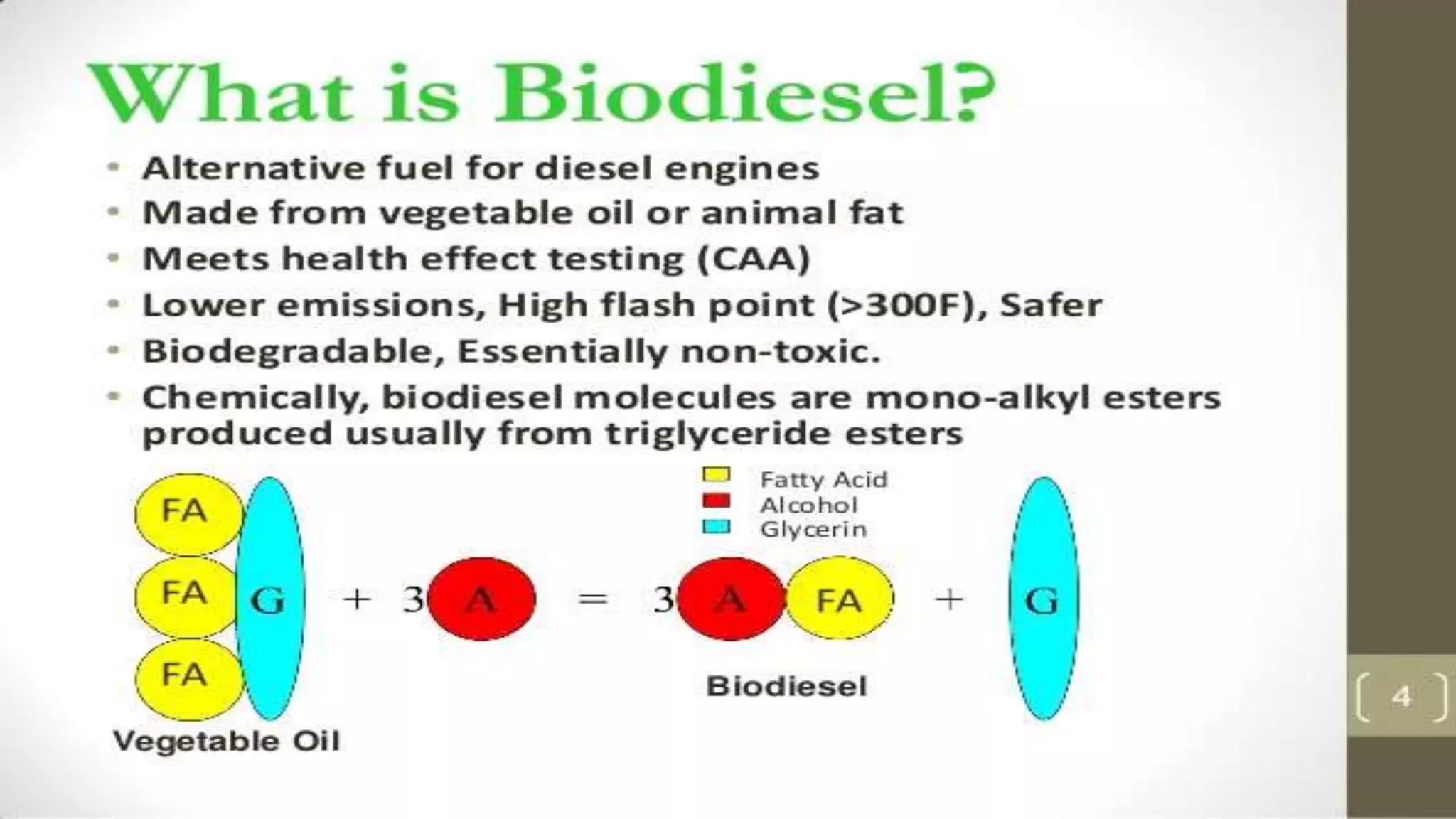
Trans-esterification
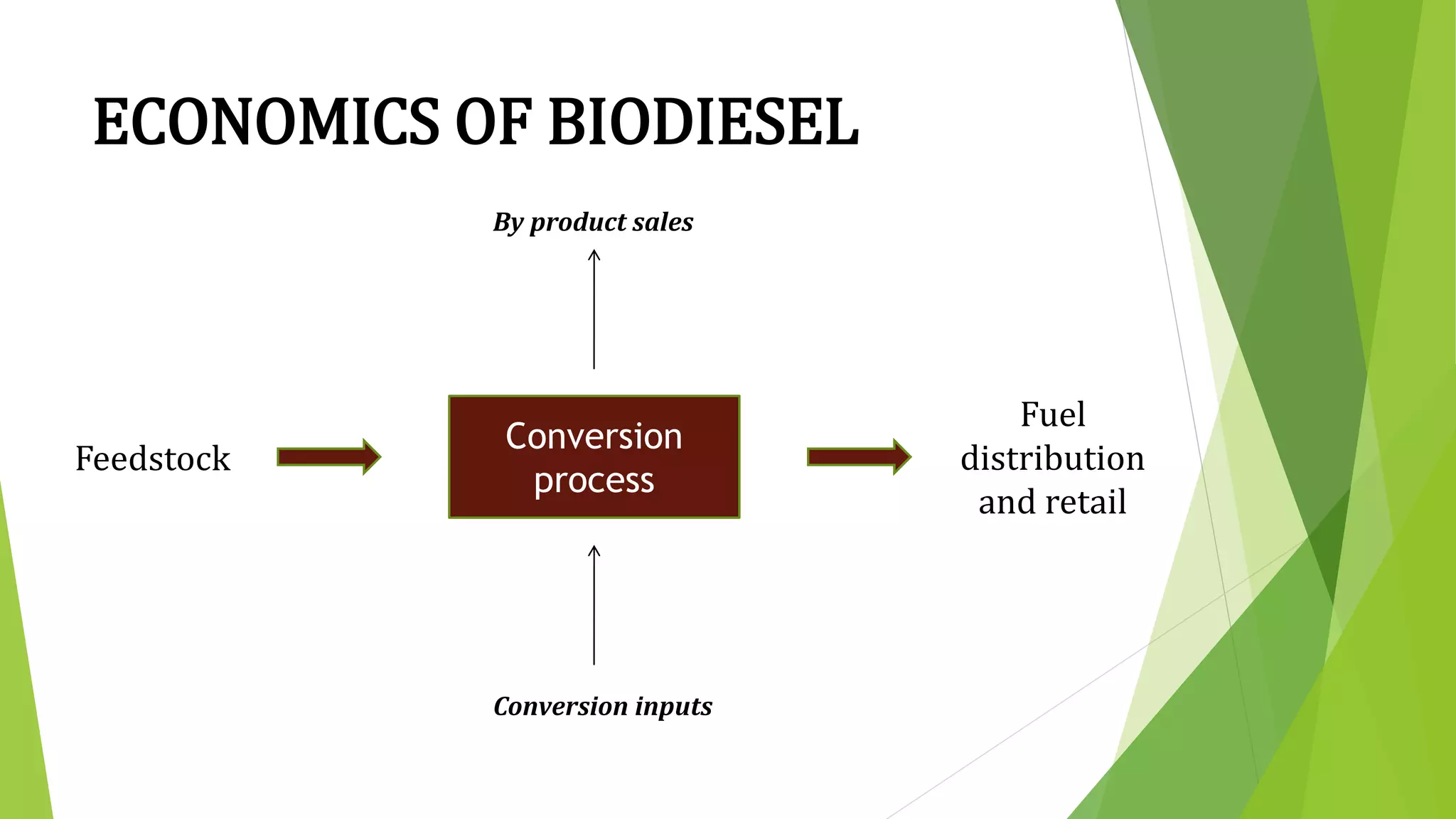
ECONOMICS OF BIODIESEL
Conversion
process
Feedstock
By product sales
Fuel
distribution
and retail
Conversion inputs
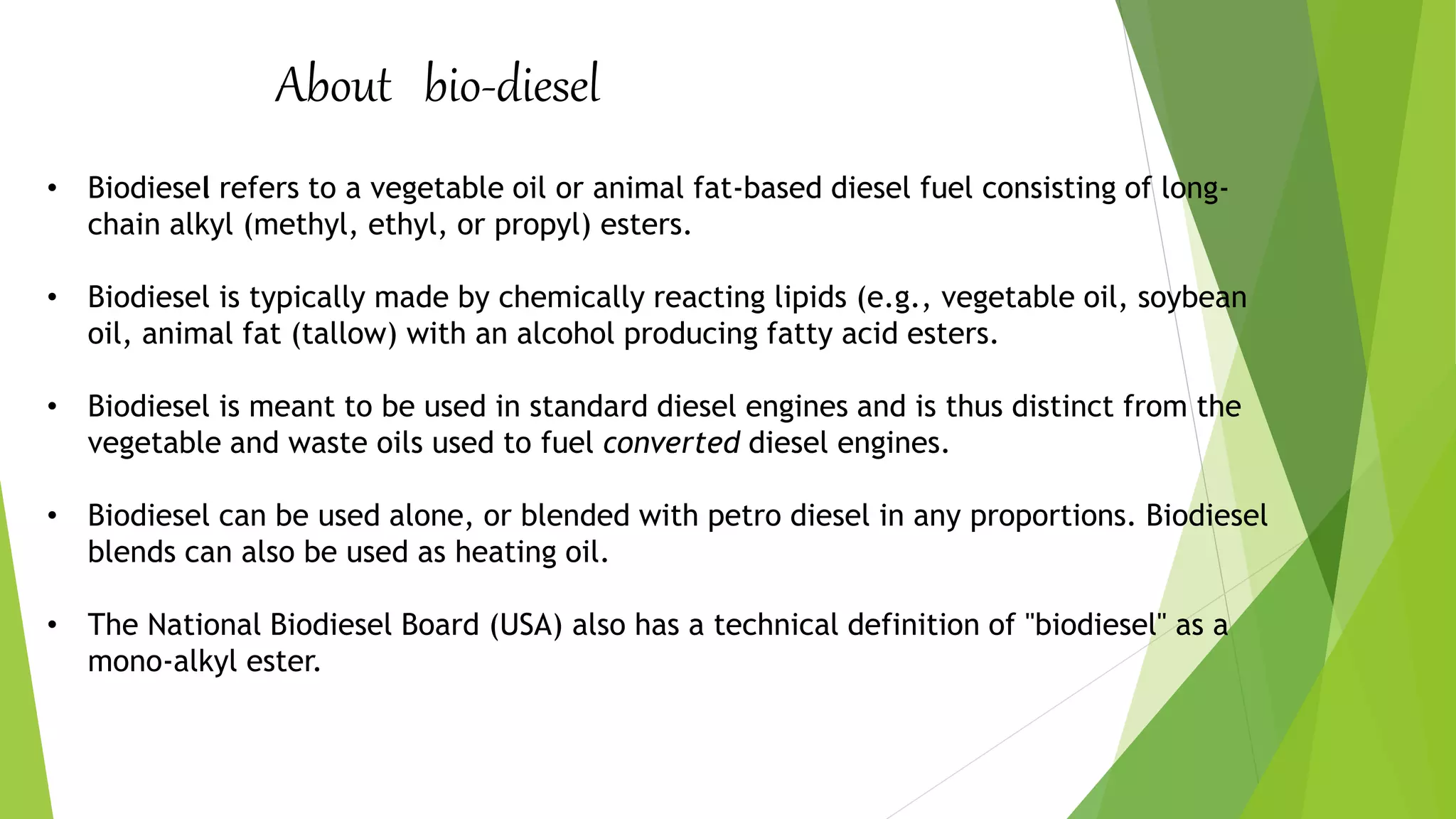
About bio-diesel
• Biodiesel refers to a vegetable oil or animal fat-based diesel fuel consisting of long-
chain alkyl (methyl, ethyl, or propyl) esters.
• Biodiesel is typically made by chemically reacting lipids (e.g., vegetable oil, soybean
oil, animal fat (tallow) with an alcohol producing fatty acid esters.
• Biodiesel is meant to be used in standard diesel engines and is thus distinct from the
vegetable and waste oils used to fuel converted diesel engines.
• Biodiesel can be used alone, or blended with petro diesel in any proportions. Biodiesel
blends can also be used as heating oil.
• The National Biodiesel Board (USA) also has a technical definition of "biodiesel" as a
mono-alkyl ester.
Advantages of Biodiesel
• 75% cleaner than conventional diesel fuel.
• Reduces unburned hydrocarbons, carbon monoxide and particulate matter in exhaust
fumes.
• Contains no sulphur.
• Emissions are nearly 50% less than conventional diesel fuel.
• Doesn’t cause eye irritation
• More biodegradable than sugar and less toxic than table salt.
• Fuel economy is the same as conventional diesel fuel.
• Much better lubricant than conventional diesel fuel and extends engine life
• High cetin rating, which improves engine performance.
• 1% biodiesel will increase lubricity by 65%.
Development  of bio diesel

Development of bio diesel

  • 1.
  • 2.
    Created By:- Hiren Patel:- 161040106020 Jay Patel :- 161040106021 Development of Bio-Diesel in India
  • 3.
    What is Bio-diesel? • Bio-diesel is diesel produced from vegetal oil. • The process is a well known technique called «Trans-esterification». It is now profitable because of high prices of fossil oil. • Bio-diesel can totally replace fossil diesel, or can be mixed with it. • Vegetal oil from the seeds of “Jatropha Curcas” is among the best source of bio-diesel.
  • 5.
    Why Biodiesel?  Extendthe usefulness of petroleum  The longevity and cleanliness of diesel engines  Community-based biodiesel production model  Reducing impact on the local environment  Increasing energy security
  • 6.
    What is JatrophaCurcas? Jatropha curcas Scientific classification Kingdom: Plantae (unranked): Angiosperms (unranked): Eudicots (unranked): Rosids Order: Malpighiales Family: Euphorbiaceae [1] Genus: Jatropha Species: J. curcas Binomial name Jatropha curcas [  Jatropha curcas is a species of flowering plant in the spurge family, Euphorbiaceae, that is native to the American tropics, most likely Mexico and Central America.  It is cultivated in tropical and subtropical regions around the world, becoming naturalized in some areas.  The specific epithet, "curcas", was first used by Portuguese doctor Garcia de Orta more than 400 years ago and is of uncertain origin.  Common names include Barbados nut, purging nut, physic nut, or JCL
  • 8.
  • 9.
    ECONOMICS OF BIODIESEL Conversion process Feedstock Byproduct sales Fuel distribution and retail Conversion inputs
  • 10.
    About bio-diesel • Biodieselrefers to a vegetable oil or animal fat-based diesel fuel consisting of long- chain alkyl (methyl, ethyl, or propyl) esters. • Biodiesel is typically made by chemically reacting lipids (e.g., vegetable oil, soybean oil, animal fat (tallow) with an alcohol producing fatty acid esters. • Biodiesel is meant to be used in standard diesel engines and is thus distinct from the vegetable and waste oils used to fuel converted diesel engines. • Biodiesel can be used alone, or blended with petro diesel in any proportions. Biodiesel blends can also be used as heating oil. • The National Biodiesel Board (USA) also has a technical definition of "biodiesel" as a mono-alkyl ester.
  • 12.
    Advantages of Biodiesel •75% cleaner than conventional diesel fuel. • Reduces unburned hydrocarbons, carbon monoxide and particulate matter in exhaust fumes. • Contains no sulphur. • Emissions are nearly 50% less than conventional diesel fuel. • Doesn’t cause eye irritation • More biodegradable than sugar and less toxic than table salt. • Fuel economy is the same as conventional diesel fuel. • Much better lubricant than conventional diesel fuel and extends engine life • High cetin rating, which improves engine performance. • 1% biodiesel will increase lubricity by 65%.