
A
PRESENTATION
ON
First Generation Biofuels
• Called as conventional biofuels.
• Manufactured from the sugars and vegetable oils.
Second Generation Biofuels
• Called as advanced biofuels.
• Manufactured from various types of biomass.
• Many second generation biofuels are cellulosic ethanol, algae fuel, biohydrogen,
biomethanol, biohydrogen , DMF, wood diesel.
Bioalcoholes
A. Bioethanol
• Most common biofuel worldwide.
• Made by fermentation, mostly from carbohydrates.
• Used as a fuel for vehicles, a gasoline additive, a winter oxidizer.
B. Biomethanol
• Produced from natural gas, biomass.
• The methanol economy is an alternative to the hydrogen economy, compared
to today’s hydrogen production from natural gas.
C. Biobutanol
• A direct replacement for gasoline.
• Formed by ABE fermentation.
• Used in a gasoline engine.
Biodiesel
• Made from vegetable oils and animal fats using
transesterification.
• Used as a fuel for vehicles.
• Usually used as a diesel addictive to reduce levels
of carbon monoxide hydrocarbons from diesel
vehicles.
Green Diesel
• Produced through hydrocracking biological oil feedstocks.
• Called renewable diesel.
Biofuel Gasoline
• Manufactured from glucose.
• In future, gasoline can be made from straw and animal manure.
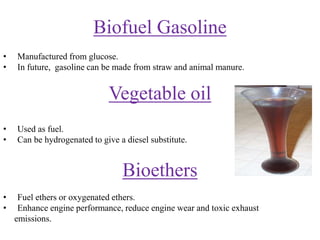
Vegetable oil
• Used as fuel.
• Can be hydrogenated to give a diesel substitute.
Bioethers
• Fuel ethers or oxygenated ethers.
• Enhance engine performance, reduce engine wear and toxic exhaust
emissions.
Biogas
• Biogas is a methane produced by the process of anaerobic digestion.
• Recovered from mechanical biological treatment.
• Farmers can produce biogas from manure by using anaerobic digesters.
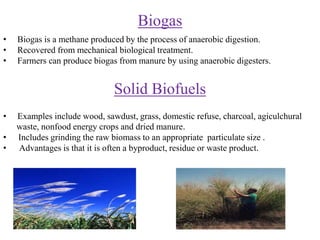
Solid Biofuels
• Examples include wood, sawdust, grass, domestic refuse, charcoal, agiculchural
waste, nonfood energy crops and dried manure.
• Includes grinding the raw biomass to an appropriate particulate size .
• Advantages is that it is often a byproduct, residue or waste product.
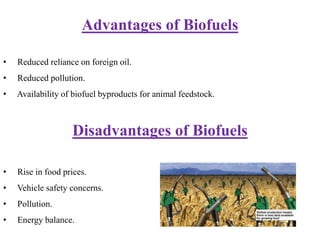
Advantages of Biofuels
• Reduced reliance on foreign oil.
• Reduced pollution.
• Availability of biofuel byproducts for animal feedstock.
Disadvantages of Biofuels
• Rise in food prices.
• Vehicle safety concerns.
• Pollution.
• Energy balance.
Uses of Biofuels
• As an alternative, cleaner fuel source.
• As power vehicles, heat homes, cooking
and for power production.
• As replacement for fossil fuels for home
and transportation purposes.
• As substitute for toxic products used for
paint removal.
• As home heating oil in domestic boilers.
Conclusion
• Biofuels are not an absolute substitute to fossil fuels but if produced under
adequate policy regimes they offer one of the stepping stones towards a development
among poor countries.
• Since the collapse of the commodity markets in the 70s, biofuels offer the first
expanded market opportunity and rise in commodity prices for poor producer countries.
• Least developed countries should take advantage of this window of opportunity to
develop their agriculture and industry.
• There is need to support the biofuels initiatives in the developing countries in
order to realize economic gains.
THANK YOU

Biofuels

  • 1.
  • 2.
    First Generation Biofuels •Called as conventional biofuels. • Manufactured from the sugars and vegetable oils. Second Generation Biofuels • Called as advanced biofuels. • Manufactured from various types of biomass. • Many second generation biofuels are cellulosic ethanol, algae fuel, biohydrogen, biomethanol, biohydrogen , DMF, wood diesel.
  • 3.
    Bioalcoholes A. Bioethanol • Mostcommon biofuel worldwide. • Made by fermentation, mostly from carbohydrates. • Used as a fuel for vehicles, a gasoline additive, a winter oxidizer. B. Biomethanol • Produced from natural gas, biomass. • The methanol economy is an alternative to the hydrogen economy, compared to today’s hydrogen production from natural gas. C. Biobutanol • A direct replacement for gasoline. • Formed by ABE fermentation. • Used in a gasoline engine.
  • 4.
    Biodiesel • Made fromvegetable oils and animal fats using transesterification. • Used as a fuel for vehicles. • Usually used as a diesel addictive to reduce levels of carbon monoxide hydrocarbons from diesel vehicles. Green Diesel • Produced through hydrocracking biological oil feedstocks. • Called renewable diesel.
  • 5.
    Biofuel Gasoline • Manufacturedfrom glucose. • In future, gasoline can be made from straw and animal manure. Vegetable oil • Used as fuel. • Can be hydrogenated to give a diesel substitute. Bioethers • Fuel ethers or oxygenated ethers. • Enhance engine performance, reduce engine wear and toxic exhaust emissions.
  • 6.
    Biogas • Biogas isa methane produced by the process of anaerobic digestion. • Recovered from mechanical biological treatment. • Farmers can produce biogas from manure by using anaerobic digesters. Solid Biofuels • Examples include wood, sawdust, grass, domestic refuse, charcoal, agiculchural waste, nonfood energy crops and dried manure. • Includes grinding the raw biomass to an appropriate particulate size . • Advantages is that it is often a byproduct, residue or waste product.
  • 7.
    Advantages of Biofuels •Reduced reliance on foreign oil. • Reduced pollution. • Availability of biofuel byproducts for animal feedstock. Disadvantages of Biofuels • Rise in food prices. • Vehicle safety concerns. • Pollution. • Energy balance.
  • 8.
    Uses of Biofuels •As an alternative, cleaner fuel source. • As power vehicles, heat homes, cooking and for power production. • As replacement for fossil fuels for home and transportation purposes. • As substitute for toxic products used for paint removal. • As home heating oil in domestic boilers.
  • 9.
    Conclusion • Biofuels arenot an absolute substitute to fossil fuels but if produced under adequate policy regimes they offer one of the stepping stones towards a development among poor countries. • Since the collapse of the commodity markets in the 70s, biofuels offer the first expanded market opportunity and rise in commodity prices for poor producer countries. • Least developed countries should take advantage of this window of opportunity to develop their agriculture and industry. • There is need to support the biofuels initiatives in the developing countries in order to realize economic gains.
  • 10.