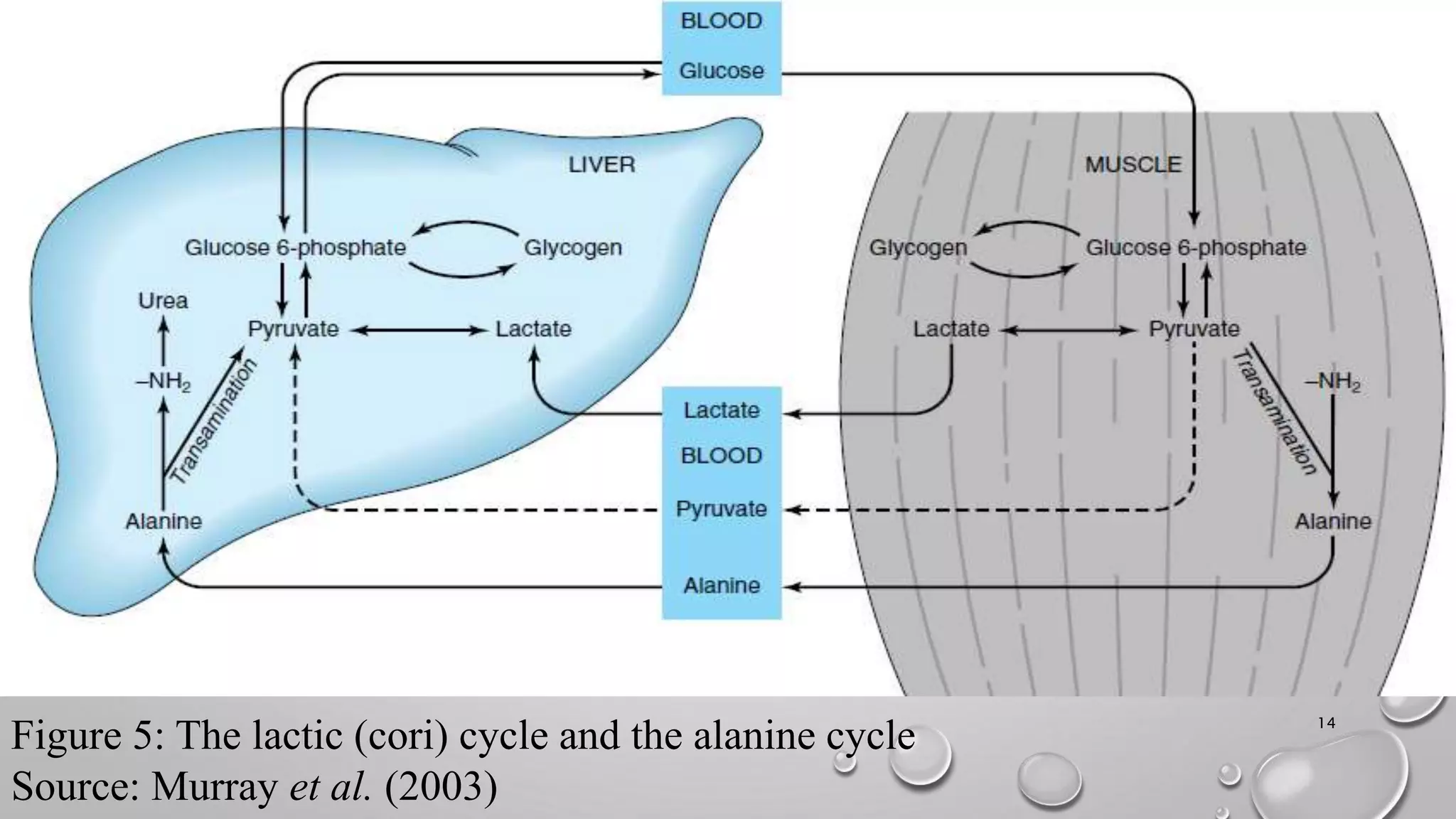
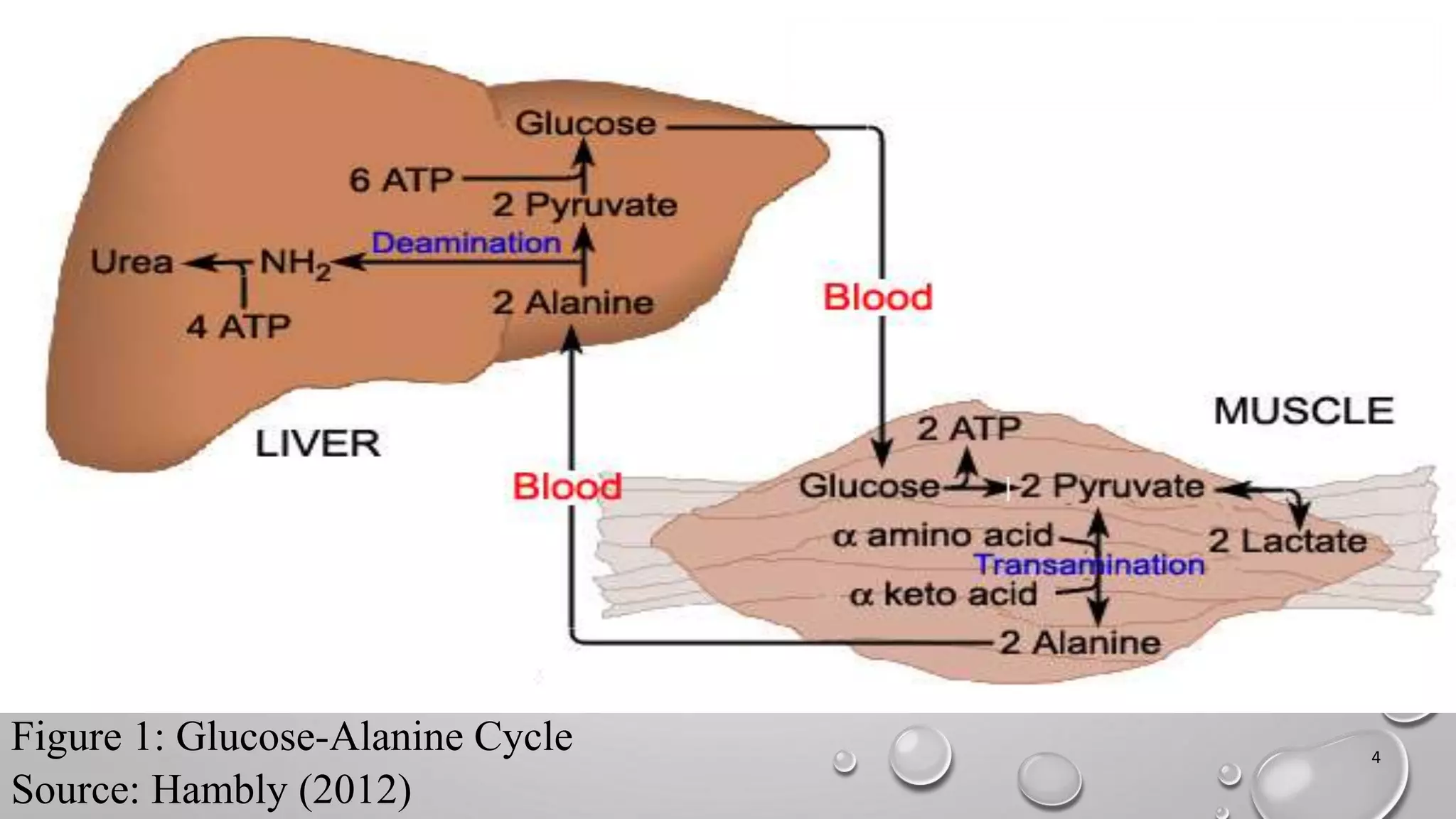
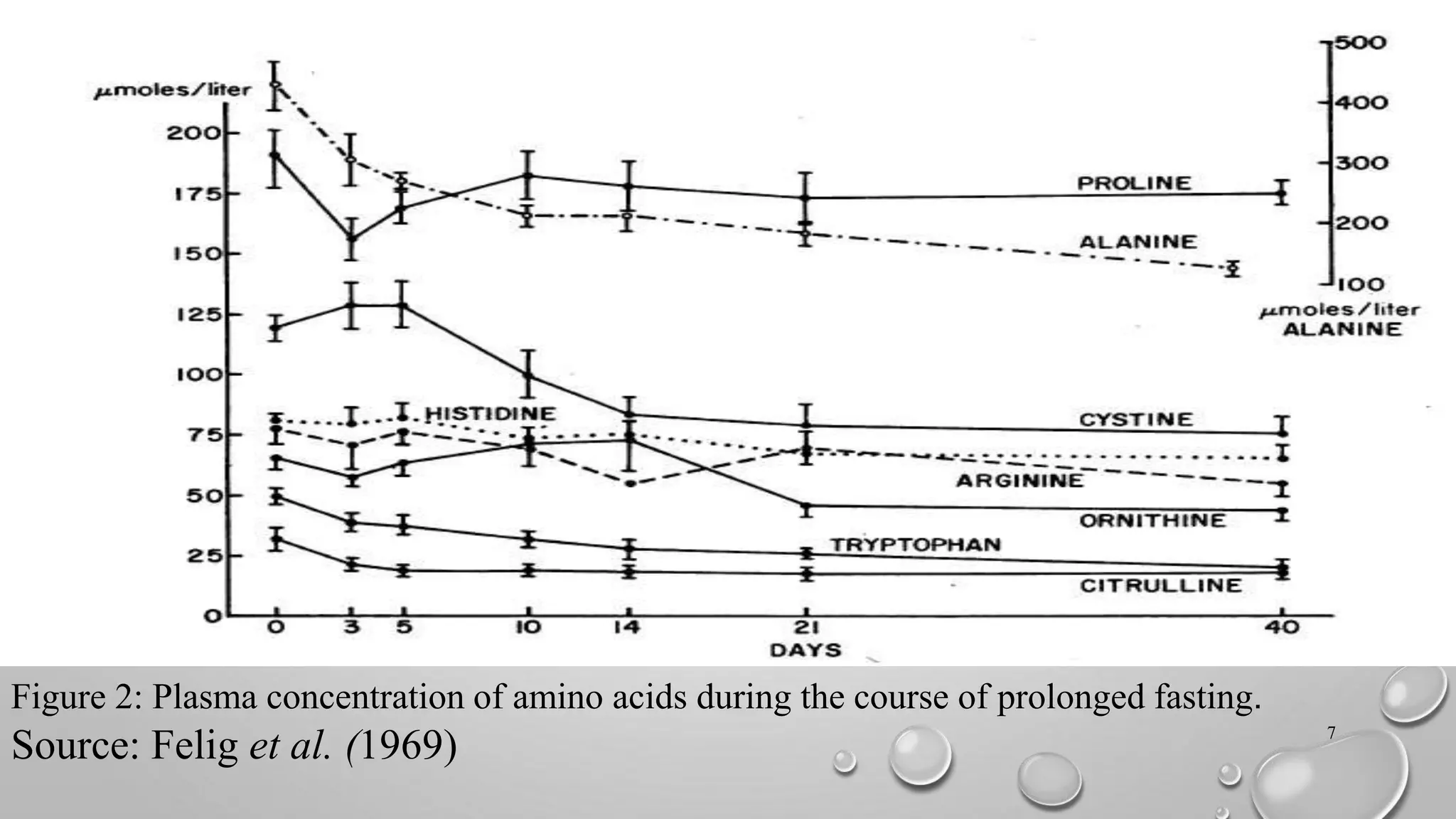
The glucose-alanine cycle involves the breakdown of muscle protein during periods of fasting or starvation. In muscle, pyruvate is converted to alanine through transamination. Alanine is then transported to the liver where it is converted back to pyruvate. The pyruvate in the liver can then be used to produce glucose through gluconeogenesis. This cycle allows nitrogen and carbon skeletons from degraded muscle proteins to be recycled to produce glucose as an energy source for other tissues when food intake is low.
![PRODUCTION OF ALANINE
• Directly from protein degradation.
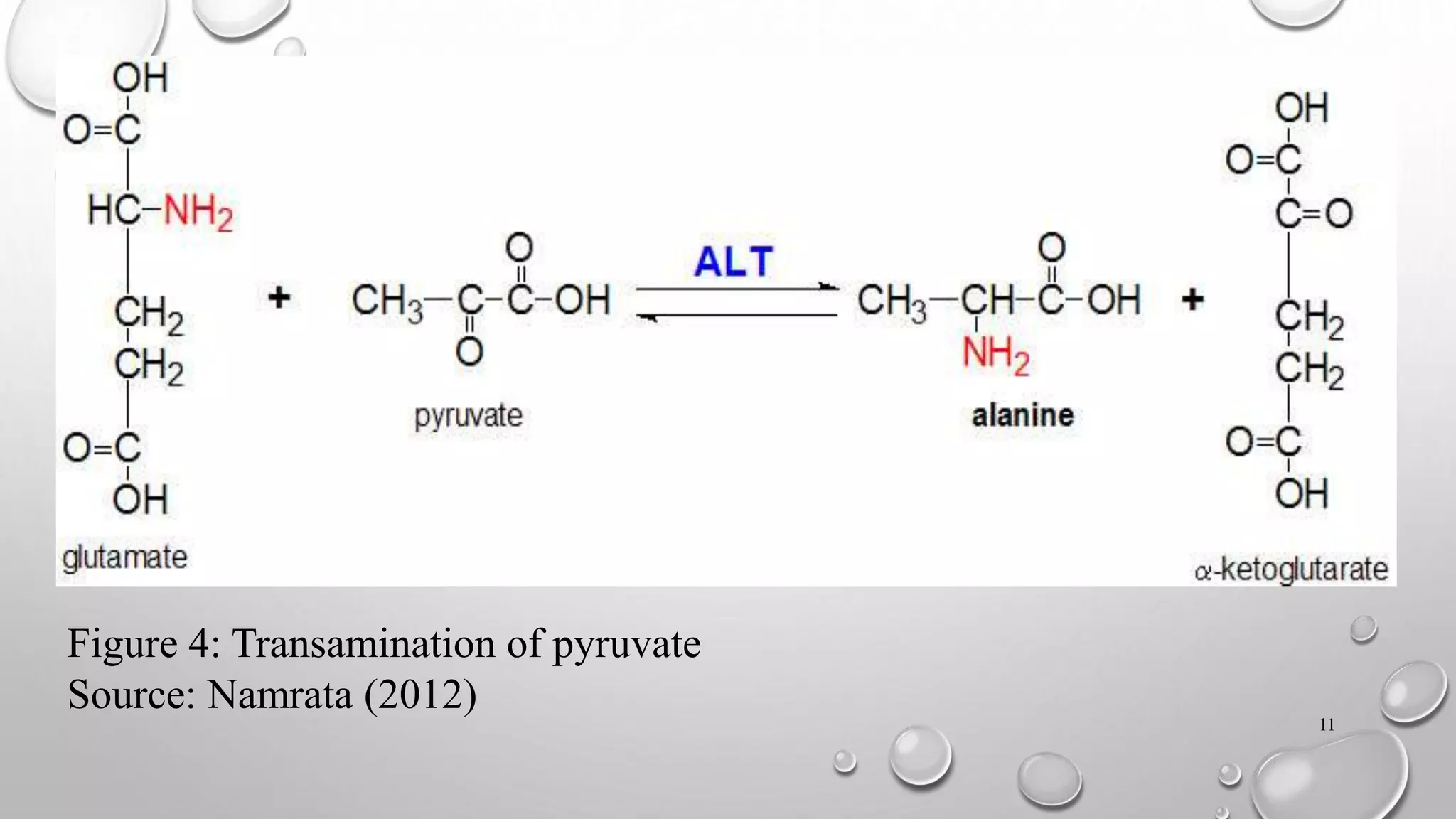
• Transamination of pyruvate by alanine transaminase (ALT)
[also referred to as serum glutamate-pyruvate transaminase]
(Figure 4) (Bryant, 2003).
10](https://image.slidesharecdn.com/a3b2196d-572f-4af1-943b-52db2eb8d111-160415163158/75/8-Glucose-alanine-cycle-10-2048.jpg)