THE MEANING OF INDUSTRY
 Industry means the economic activity
which creates the economic value by
transforming the raw material into
finished products.
INDUSTRIALIZATION
 Industrialization means the establishment &
development of different types of industries
producing with the help of modern methods of
production a variety of goods on large scale for the
local, national & international markets.
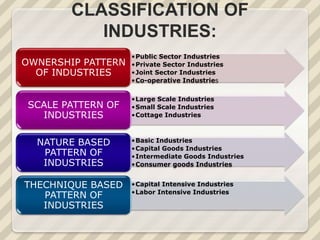
CLASSIFICATION OF
INDUSTRIES:
•Public Sector Industries
•Private Sector Industries
•Joint Sector Industries
•Co-operative Industries
OWNERSHIP PATTERN
OF INDUSTRIES
•Large Scale Industries
•Small Scale Industries
•Cottage Industries
SCALE PATTERN OF
INDUSTRIES
•Basic Industries
•Capital Goods Industries
•Intermediate Goods Industries
•Consumer goods Industries
NATURE BASED
PATTERN OF
INDUSTRIES
•Capital Intensive Industries
•Labor Intensive Industries
THECHNIQUE BASED
PATTERN OF
INDUSTRIES
OWNERSHIP
Public industries:- Owned by government.
Department Undertaking : Railway , Post Office
Statutory Industries : Life Insurance Corporation
Public Limited Company : Hindustan Steel Limited
Private industries:- Owned by individual.
Joint sector industries:- 26% Government,
25% Private Sector,
49% General Public.
Co-operative Industries
SIZE PATTERN
 Large Scale Industries
 Units with a capital investment of more than Rs. One Crore
 Small Scale Industries
 Units with a capital investment of NOT more than Rs. One
Crore
 Cottage Industries
 These are known as household industries because its manage by
individuals with their own resource
NATURE BASED
 Basic Industries
 These industries include mining and quarrying manufactures of
fertilizers like cement, iron and steel, metals.
 Capital Goods Industries
 These industries making hand tools and small tools for,
specialized tools for companies like electric cables and wires,
rail road equipments etc
NATURE BASED
 Intermediate Goods
 These industries supply goods which are still in the process of
production like plastics beg, nuts, bolts
 Consumer Goods
 These are the industries which produce goods used for direct
satisfaction of human wants like sugar, soft drink, TV
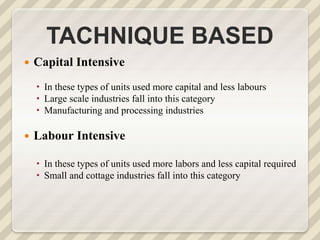
TACHNIQUE BASED
 Capital Intensive
 In these types of units used more capital and less labours
 Large scale industries fall into this category
 Manufacturing and processing industries
 Labour Intensive
 In these types of units used more labors and less capital required
 Small and cottage industries fall into this category
SIGNIFICANCE OF
INDUSTRIALIZATION
 Rapid Growth income
 Removal of Disguised Underemployment and
Unemployment
 Creation of Employment for Additional Population
 Help Agriculture Development
 National Security
 Emergence of technology Awareness
 Development of Basic Industries
FACTORS HAMPERING
INDUSTRIALISATION
 Unfavorable Policies of the British Govt.
 Population Pressure
 Institutional Imperfection
 Periodic shocks
 Bad Industrial Relation
 Control and Regulation
 Heavy Protection
 Scarcity of Funds
 Shortage of Infrastructure Facilities Weak
Performance of Agriculture
 Restriction on Exports

BBA-SEM-2-GSI-Industrialisation

  • 2.
    THE MEANING OFINDUSTRY  Industry means the economic activity which creates the economic value by transforming the raw material into finished products.
  • 3.
    INDUSTRIALIZATION  Industrialization meansthe establishment & development of different types of industries producing with the help of modern methods of production a variety of goods on large scale for the local, national & international markets.
  • 4.
    CLASSIFICATION OF INDUSTRIES: •Public SectorIndustries •Private Sector Industries •Joint Sector Industries •Co-operative Industries OWNERSHIP PATTERN OF INDUSTRIES •Large Scale Industries •Small Scale Industries •Cottage Industries SCALE PATTERN OF INDUSTRIES •Basic Industries •Capital Goods Industries •Intermediate Goods Industries •Consumer goods Industries NATURE BASED PATTERN OF INDUSTRIES •Capital Intensive Industries •Labor Intensive Industries THECHNIQUE BASED PATTERN OF INDUSTRIES
  • 5.
    OWNERSHIP Public industries:- Ownedby government. Department Undertaking : Railway , Post Office Statutory Industries : Life Insurance Corporation Public Limited Company : Hindustan Steel Limited Private industries:- Owned by individual. Joint sector industries:- 26% Government, 25% Private Sector, 49% General Public. Co-operative Industries
  • 6.
    SIZE PATTERN  LargeScale Industries  Units with a capital investment of more than Rs. One Crore  Small Scale Industries  Units with a capital investment of NOT more than Rs. One Crore  Cottage Industries  These are known as household industries because its manage by individuals with their own resource
  • 7.
    NATURE BASED  BasicIndustries  These industries include mining and quarrying manufactures of fertilizers like cement, iron and steel, metals.  Capital Goods Industries  These industries making hand tools and small tools for, specialized tools for companies like electric cables and wires, rail road equipments etc
  • 8.
    NATURE BASED  IntermediateGoods  These industries supply goods which are still in the process of production like plastics beg, nuts, bolts  Consumer Goods  These are the industries which produce goods used for direct satisfaction of human wants like sugar, soft drink, TV
  • 9.
    TACHNIQUE BASED  CapitalIntensive  In these types of units used more capital and less labours  Large scale industries fall into this category  Manufacturing and processing industries  Labour Intensive  In these types of units used more labors and less capital required  Small and cottage industries fall into this category
  • 10.
    SIGNIFICANCE OF INDUSTRIALIZATION  RapidGrowth income  Removal of Disguised Underemployment and Unemployment  Creation of Employment for Additional Population  Help Agriculture Development  National Security  Emergence of technology Awareness  Development of Basic Industries
  • 11.
    FACTORS HAMPERING INDUSTRIALISATION  UnfavorablePolicies of the British Govt.  Population Pressure  Institutional Imperfection  Periodic shocks  Bad Industrial Relation  Control and Regulation  Heavy Protection  Scarcity of Funds  Shortage of Infrastructure Facilities Weak Performance of Agriculture  Restriction on Exports