Job AnalysisJob Analysis
Golden Words By Martin Luther King..
If you can Fly, RUN………If you can Run, WALK
If you can Walk, CRAWL…….BUT KEEP MOVING…….
Kunal
Upadhyay
Meaning
• Job analysis is the process of the
collecting job related information, such
information helps in the preparation of job
description and job specification
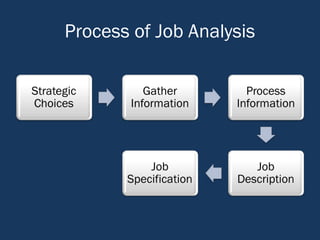
Process of Job Analysis
Strategic Choices
• Employee involvement
– Job analysis involves collecting job related
information-duties, responsibilities, skills and
knowledge required to perform the job
• The level of Details
– The level of analysis affect the nature of the
data collected
– The nature of job being analysis determines the
level of detail in job analysis
Cont…
• Timing and frequency of analysis
– An organization is newly established and job
analysis is generally conducted
– A new job is created in an established company
– Due to change in technology, methods, system
– The organization is contemplating a new
remuneration plan
Cont..
• Past-oriented versus Future-oriented
– Changing rapidly due to fast growth or
technology change, a more future-oriented
approach to job analysis may be desire
– Traditional job analysis information describe
how the job has been done in the past and
manner which it is being currently done
Cont…
• Non-Human Source
– Existing job descriptions
and specification
– Tools of maintain records
– Equipment design
blueprint
– Blueprint of work area
– Magazine and newspaper
• Human Source
– Job analysis
– Job incumbents
– Supervisors
– Job experts
• Source of data
Information Gathering
• What type of data is to be collected ?
• What methods are to be employed for data
collection ?
• Who should collect the data ?
Observation
• The job analyst carefully observes the
jobholder at work and records what he or
she dose
• How much time is needed for completion of
given task
• Method is simple because its direct
observation
• Observation handle by experts people who
have expertise knowledge and also
maintains the record
Interview
• The analyst interview the
job holder and his/her
supervision to draw out
information about the job
• Its structured interview
form is used to record the
information during the
interview the analyst make
judgment about the
interview
Questionnaire
• Job holder fill in the given structured
questionnaire which approved by the
supervisor
• The job title of the job holder
• The job title of job holder’s managers or
supervisor
• The job title and number of staff reporting to
the job holder
• A brief description of the overall roll or
purpose of job
Checklists
• Checklists is similar to a
questionnaire, but the
response sheet contains
fewer subject judgment and
tend to be either yes or no
• Checklist can cover as many
as 100 activities and job
holders tick only those tasks
that are include their jobs
Technical Conference
• Service of supervisors who possess extensive
knowledge about a job are used
• From these experts that details about the job
are obtained
Diary Method
• The method require the job holders to record
in detail their activities each day
• This technique is accurate and eliminates
errors caused by memory lapses the job
holder makes while answering the
questionnaire and checklists
Information Processing
• Once the data collected, it need processed
• Specifically job-related data would be useful
to prepare job description and job
specification
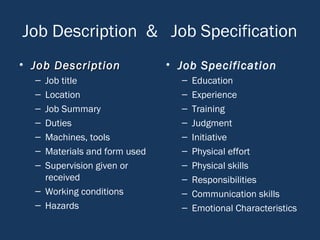
Job Description & Job Specification
• Job DescriptionJob Description
– Job title
– Location
– Job Summary
– Duties
– Machines, tools
– Materials and form used
– Supervision given or
received
– Working conditions
– Hazards
• Job Specification
– Education
– Experience
– Training
– Judgment
– Initiative
– Physical effort
– Physical skills
– Responsibilities
– Communication skills
– Emotional Characteristics

BBA-SEM-3-HRM-Job analysis

  • 1.
    Job AnalysisJob Analysis GoldenWords By Martin Luther King.. If you can Fly, RUN………If you can Run, WALK If you can Walk, CRAWL…….BUT KEEP MOVING……. Kunal Upadhyay
  • 2.
    Meaning • Job analysisis the process of the collecting job related information, such information helps in the preparation of job description and job specification
  • 3.
  • 4.
    Strategic Choices • Employeeinvolvement – Job analysis involves collecting job related information-duties, responsibilities, skills and knowledge required to perform the job • The level of Details – The level of analysis affect the nature of the data collected – The nature of job being analysis determines the level of detail in job analysis
  • 5.
    Cont… • Timing andfrequency of analysis – An organization is newly established and job analysis is generally conducted – A new job is created in an established company – Due to change in technology, methods, system – The organization is contemplating a new remuneration plan
  • 6.
    Cont.. • Past-oriented versusFuture-oriented – Changing rapidly due to fast growth or technology change, a more future-oriented approach to job analysis may be desire – Traditional job analysis information describe how the job has been done in the past and manner which it is being currently done
  • 7.
    Cont… • Non-Human Source –Existing job descriptions and specification – Tools of maintain records – Equipment design blueprint – Blueprint of work area – Magazine and newspaper • Human Source – Job analysis – Job incumbents – Supervisors – Job experts • Source of data
  • 8.
    Information Gathering • Whattype of data is to be collected ? • What methods are to be employed for data collection ? • Who should collect the data ?
  • 10.
    Observation • The jobanalyst carefully observes the jobholder at work and records what he or she dose • How much time is needed for completion of given task • Method is simple because its direct observation • Observation handle by experts people who have expertise knowledge and also maintains the record
  • 11.
    Interview • The analystinterview the job holder and his/her supervision to draw out information about the job • Its structured interview form is used to record the information during the interview the analyst make judgment about the interview
  • 12.
    Questionnaire • Job holderfill in the given structured questionnaire which approved by the supervisor • The job title of the job holder • The job title of job holder’s managers or supervisor • The job title and number of staff reporting to the job holder • A brief description of the overall roll or purpose of job
  • 14.
    Checklists • Checklists issimilar to a questionnaire, but the response sheet contains fewer subject judgment and tend to be either yes or no • Checklist can cover as many as 100 activities and job holders tick only those tasks that are include their jobs
  • 15.
    Technical Conference • Serviceof supervisors who possess extensive knowledge about a job are used • From these experts that details about the job are obtained
  • 16.
    Diary Method • Themethod require the job holders to record in detail their activities each day • This technique is accurate and eliminates errors caused by memory lapses the job holder makes while answering the questionnaire and checklists
  • 17.
    Information Processing • Oncethe data collected, it need processed • Specifically job-related data would be useful to prepare job description and job specification
  • 18.
    Job Description &Job Specification • Job DescriptionJob Description – Job title – Location – Job Summary – Duties – Machines, tools – Materials and form used – Supervision given or received – Working conditions – Hazards • Job Specification – Education – Experience – Training – Judgment – Initiative – Physical effort – Physical skills – Responsibilities – Communication skills – Emotional Characteristics