FISCAL POLICYPresented by SandeshKothavale    -  BT0942Shaniraj Babar            -  BT0944Sheetal  Mehta            -  BT0945Sheetal  Narkar           -  BT0946
FISCAL  POLICYThe use of Fiscal Tools by the government constitutes what we call Fiscal PolicyFiscal Policy is a policy under which the government uses its revenue and expenditure  programmes  to produce desirable effects and avoid undesirable effects on national income, production and employment.Fiscal Policy is used as a balancing device in an economy
OBJECTIVES  OF FISCAL  POLICY
OBJECTIVES  OF  FISCAL  POLICYObjectives differ from country to country
Major Objectives :Mobilization of ResourcesAcceleration of Economic GrowthMinimize the Inequalities of Income and WealthIncrease the Employment OpportunitiesPrice Stability
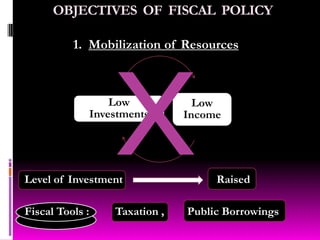
xOBJECTIVES  OF  FISCAL  POLICY1.  Mobilization of ResourcesLevel of Investment  RaisedPublic BorrowingsTaxation ,Fiscal Tools :
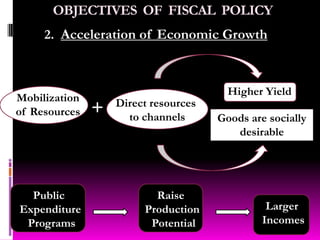
OBJECTIVES  OF  FISCAL  POLICY2.  Acceleration of Economic GrowthHigher YieldMobilization of Resources +Direct resources to channelsGoods are socially desirablePublic  Expenditure ProgramsRaise Production PotentialLarger Incomes
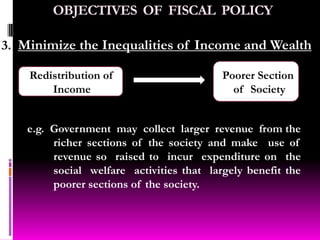
OBJECTIVES  OF  FISCAL  POLICY  3.Minimize the Inequalities of Income and WealthRedistribution of IncomePoorer Section of  Societye.g.  Government  may  collect  larger  revenue  from the      richer sections of the society and make  use of revenue so  raised to  incur  expenditure on  the  social  welfare  activities that  largely benefit the poorer sections of the society.
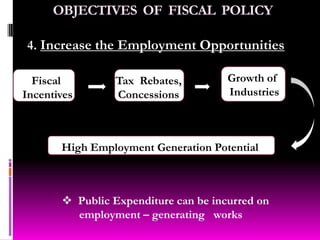
OBJECTIVES  OF  FISCAL  POLICY4. Increase the Employment OpportunitiesGrowth of IndustriesFiscal IncentivesTax  Rebates,ConcessionsHigh Employment Generation PotentialPublic Expenditure can be incurred on      employment – generating   works
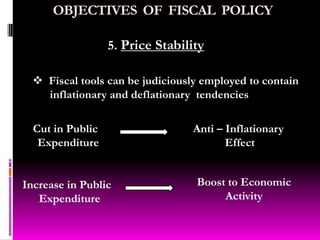
OBJECTIVES  OF  FISCAL  POLICY5. Price StabilityFiscal tools can be judiciously employed to contain       inflationary and deflationary  tendencies Cut in Public  ExpenditureAnti – Inflationary EffectBoost to Economic  ActivityIncrease in Public  Expenditure
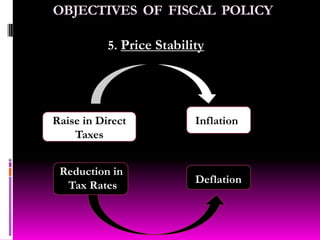
OBJECTIVES  OF  FISCAL  POLICY5. Price StabilityRaise in Direct TaxesInflationReduction in Tax RatesDeflation
Indian Fiscal Policy
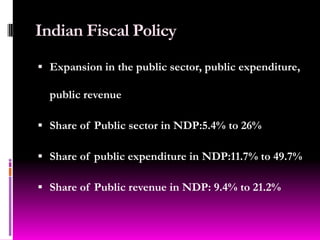
Indian Fiscal PolicyExpansion in the public sector, public expenditure, public revenueShare of Public sector in NDP:5.4% to 26%Share of public expenditure in NDP:11.7% to 49.7%Share of Public revenue in NDP: 9.4% to 21.2%
Goals of Indian Fiscal PolicyRapid economic growthExpansion of employmentReduction of disparities in income and wealthPrevention of concentration of economic power
Ways to Achieve the GoalsTo create necessary social and economic overheads.To develop and promote basic industries.To create job opportunities.To improve the economic conditions.To reduce the income and wealth disparitiesTo achieve self-sufficiency
Public expenditure Expenditure of public authorities, i.e. central, state and local government, on various socio-economic and political activities with ultimate aim of public expenditure being promotion of public welfare.
Principles of public expenditureGiven by prof. Findlay shirras Principle of benefitPrinciple of economyPrinciple of sanction Principle of surplus
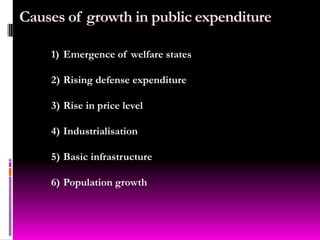
Causes of growth in public expenditureEmergence of welfare statesRising defense expenditureRise in price levelIndustrialisationBasic infrastructurePopulation growth
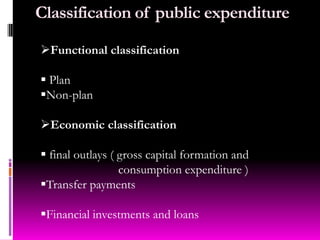
Classification of public expenditureFunctional classification
 Plan
Non-plan
Economic classification

Fiscal Policy

  • 1.
    FISCAL POLICYPresented bySandeshKothavale - BT0942Shaniraj Babar - BT0944Sheetal Mehta - BT0945Sheetal Narkar - BT0946
  • 2.
    FISCAL POLICYTheuse of Fiscal Tools by the government constitutes what we call Fiscal PolicyFiscal Policy is a policy under which the government uses its revenue and expenditure programmes to produce desirable effects and avoid undesirable effects on national income, production and employment.Fiscal Policy is used as a balancing device in an economy
  • 3.
    OBJECTIVES OFFISCAL POLICY
  • 4.
    OBJECTIVES OF FISCAL POLICYObjectives differ from country to country
  • 5.
    Major Objectives :Mobilizationof ResourcesAcceleration of Economic GrowthMinimize the Inequalities of Income and WealthIncrease the Employment OpportunitiesPrice Stability
  • 6.
    xOBJECTIVES OF FISCAL POLICY1. Mobilization of ResourcesLevel of Investment RaisedPublic BorrowingsTaxation ,Fiscal Tools :
  • 7.
    OBJECTIVES OF FISCAL POLICY2. Acceleration of Economic GrowthHigher YieldMobilization of Resources +Direct resources to channelsGoods are socially desirablePublic Expenditure ProgramsRaise Production PotentialLarger Incomes
  • 8.
    OBJECTIVES OF FISCAL POLICY 3.Minimize the Inequalities of Income and WealthRedistribution of IncomePoorer Section of Societye.g. Government may collect larger revenue from the richer sections of the society and make use of revenue so raised to incur expenditure on the social welfare activities that largely benefit the poorer sections of the society.
  • 9.
    OBJECTIVES OF FISCAL POLICY4. Increase the Employment OpportunitiesGrowth of IndustriesFiscal IncentivesTax Rebates,ConcessionsHigh Employment Generation PotentialPublic Expenditure can be incurred on employment – generating works
  • 10.
    OBJECTIVES OF FISCAL POLICY5. Price StabilityFiscal tools can be judiciously employed to contain inflationary and deflationary tendencies Cut in Public ExpenditureAnti – Inflationary EffectBoost to Economic ActivityIncrease in Public Expenditure
  • 11.
    OBJECTIVES OF FISCAL POLICY5. Price StabilityRaise in Direct TaxesInflationReduction in Tax RatesDeflation
  • 12.
  • 13.
    Indian Fiscal PolicyExpansionin the public sector, public expenditure, public revenueShare of Public sector in NDP:5.4% to 26%Share of public expenditure in NDP:11.7% to 49.7%Share of Public revenue in NDP: 9.4% to 21.2%
  • 14.
    Goals of IndianFiscal PolicyRapid economic growthExpansion of employmentReduction of disparities in income and wealthPrevention of concentration of economic power
  • 15.
    Ways to Achievethe GoalsTo create necessary social and economic overheads.To develop and promote basic industries.To create job opportunities.To improve the economic conditions.To reduce the income and wealth disparitiesTo achieve self-sufficiency
  • 16.
    Public expenditure Expenditureof public authorities, i.e. central, state and local government, on various socio-economic and political activities with ultimate aim of public expenditure being promotion of public welfare.
  • 17.
    Principles of publicexpenditureGiven by prof. Findlay shirras Principle of benefitPrinciple of economyPrinciple of sanction Principle of surplus
  • 18.
    Causes of growthin public expenditureEmergence of welfare statesRising defense expenditureRise in price levelIndustrialisationBasic infrastructurePopulation growth
  • 19.
    Classification of publicexpenditureFunctional classification
  • 20.
  • 21.
  • 22.