Downloaded 2,108 times
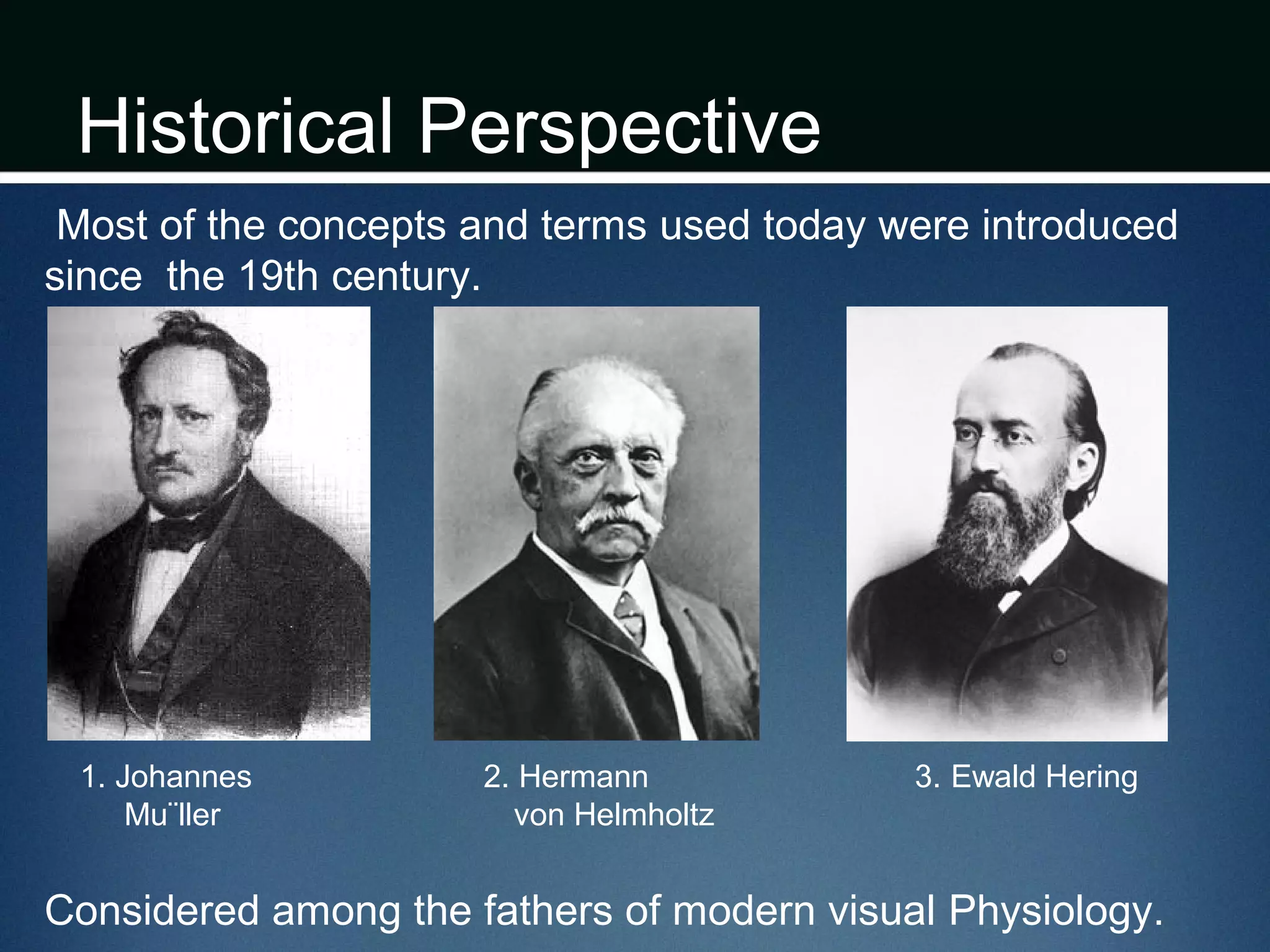
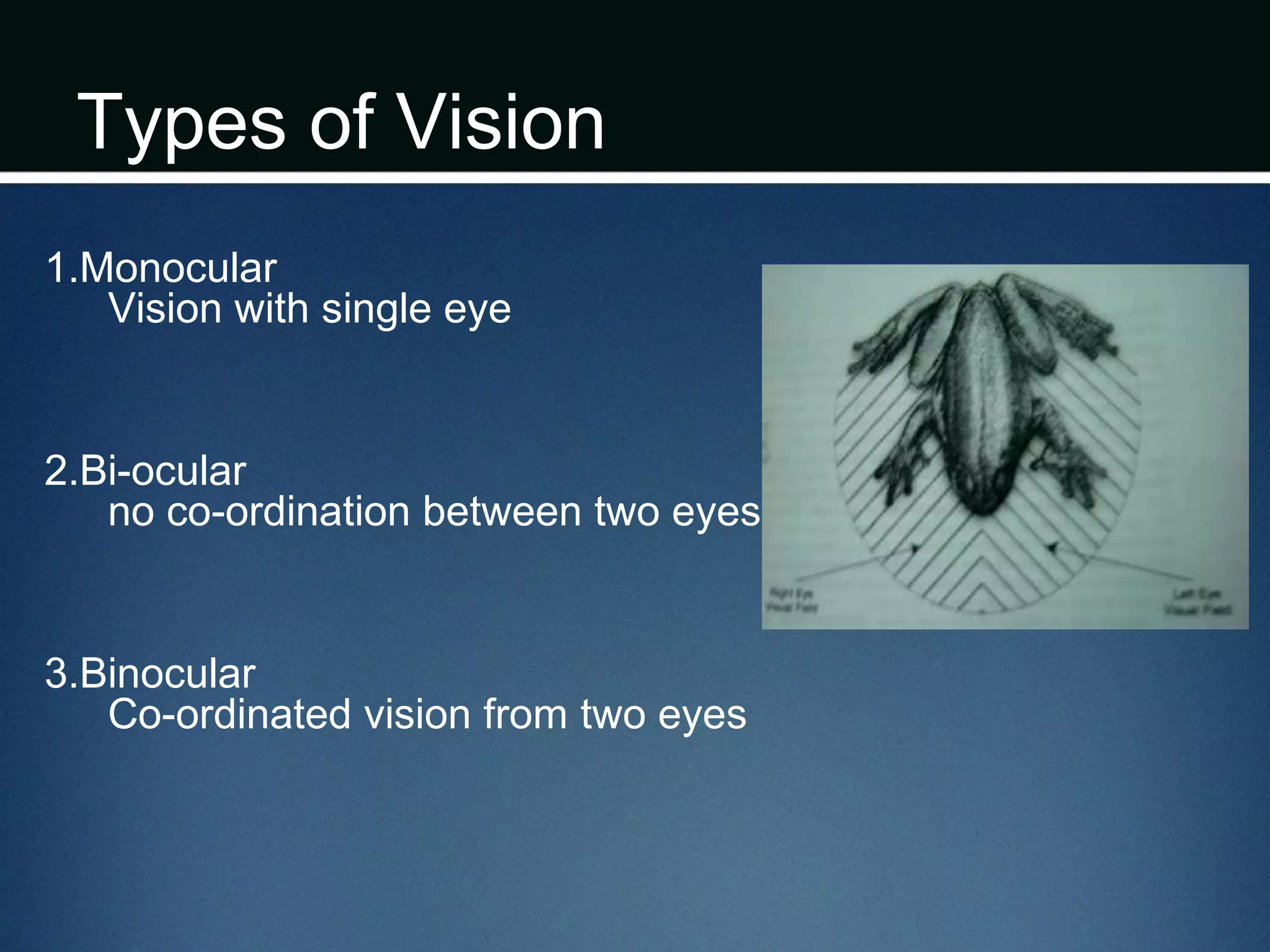

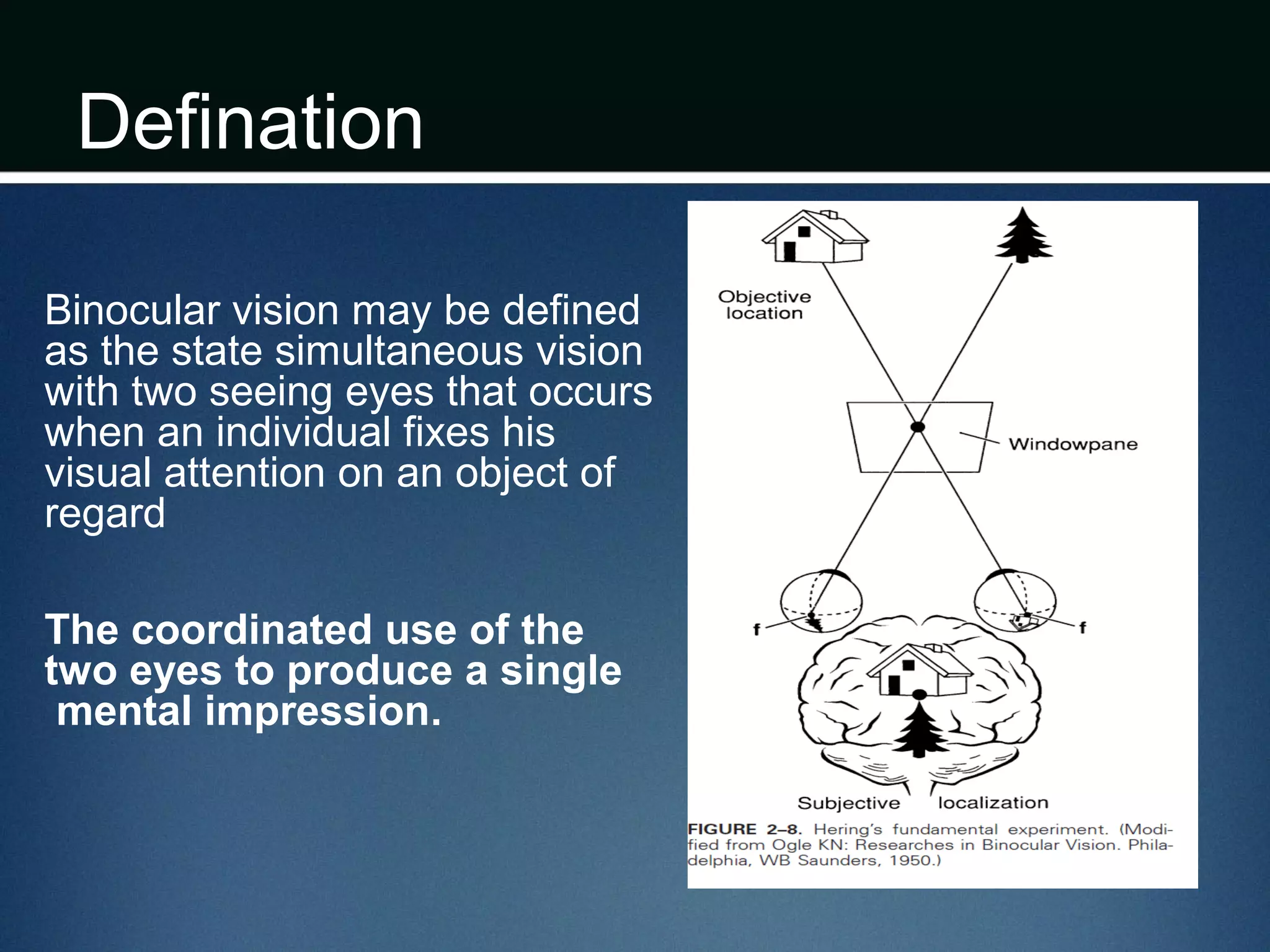
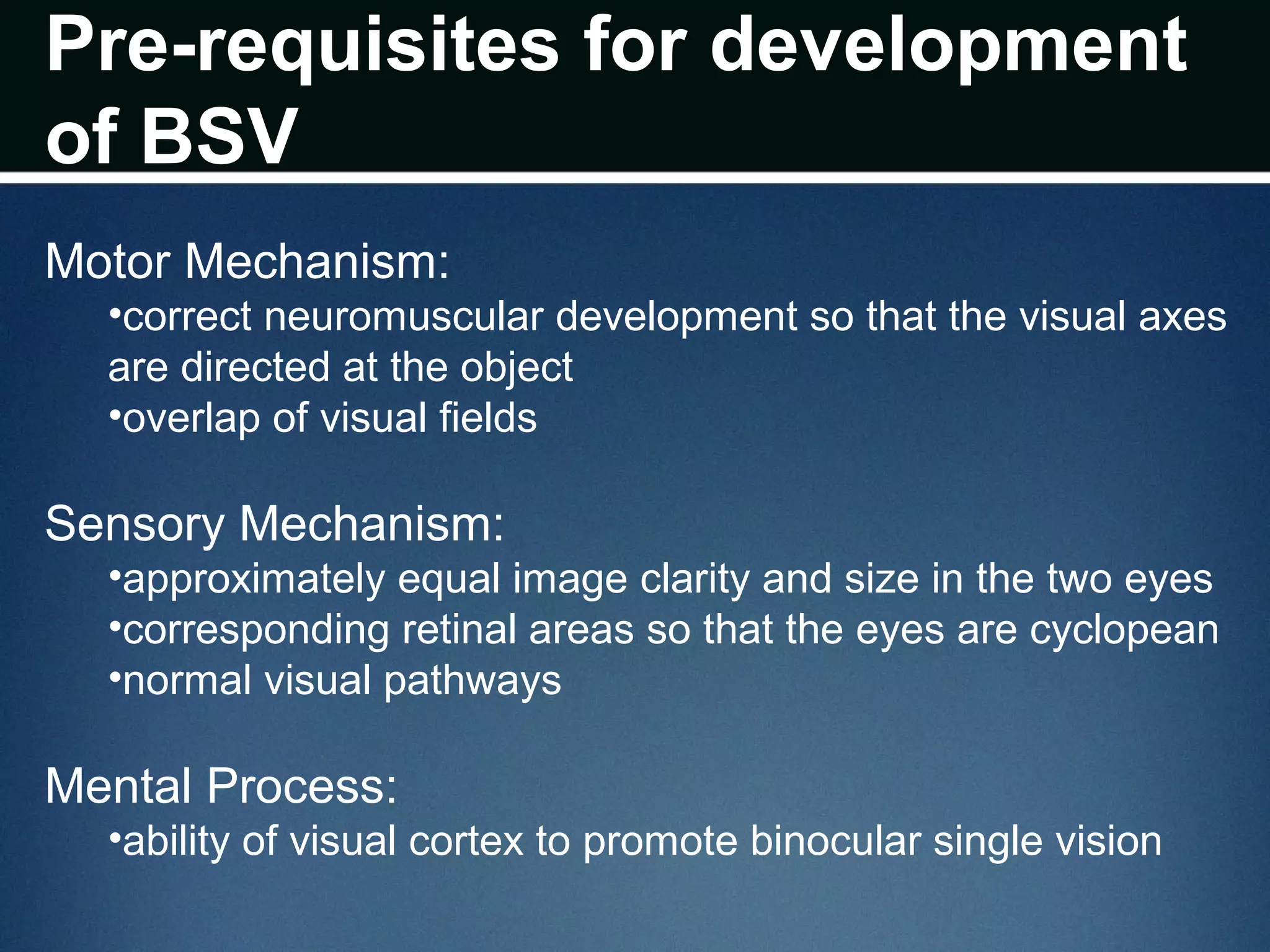

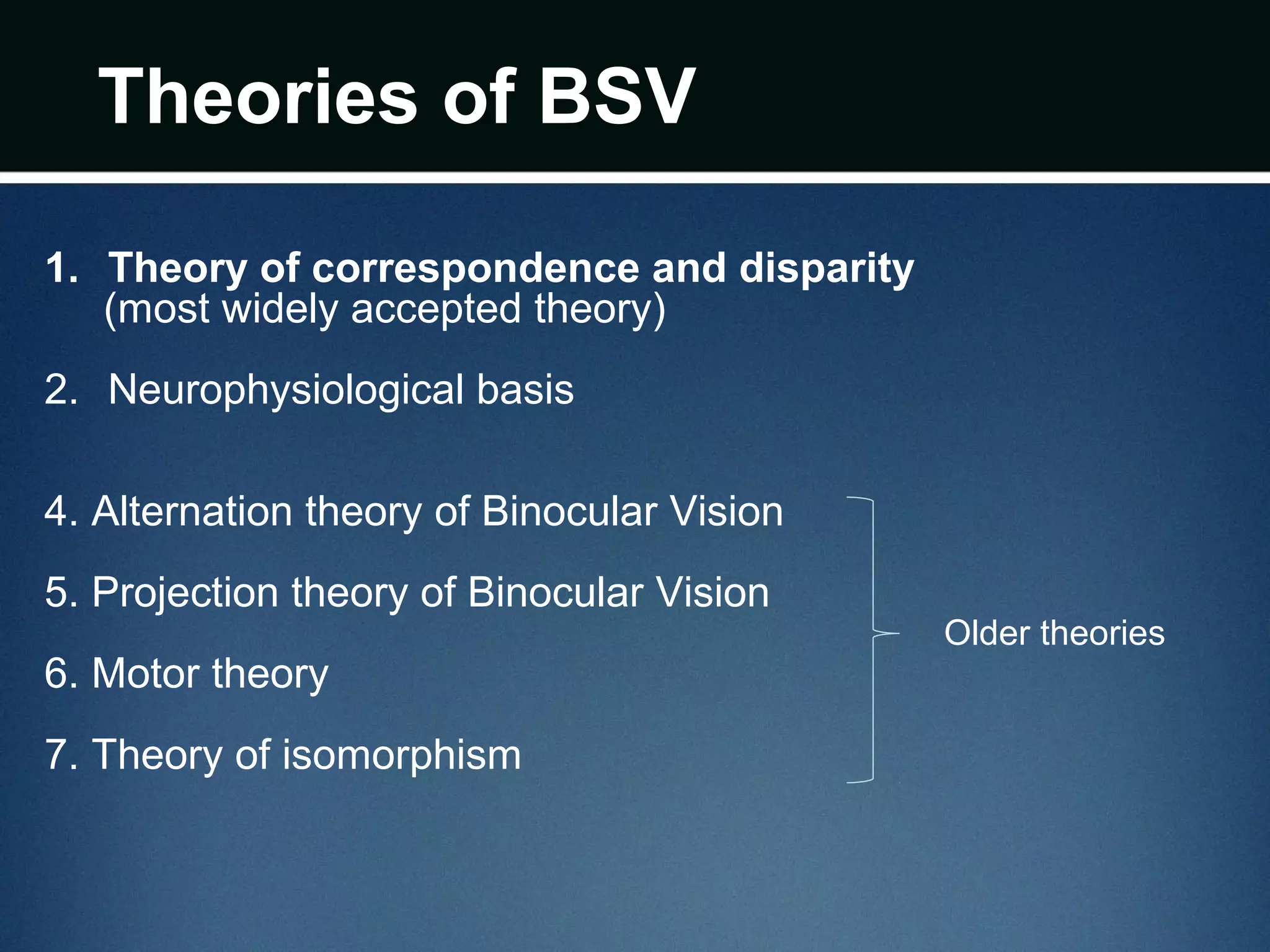
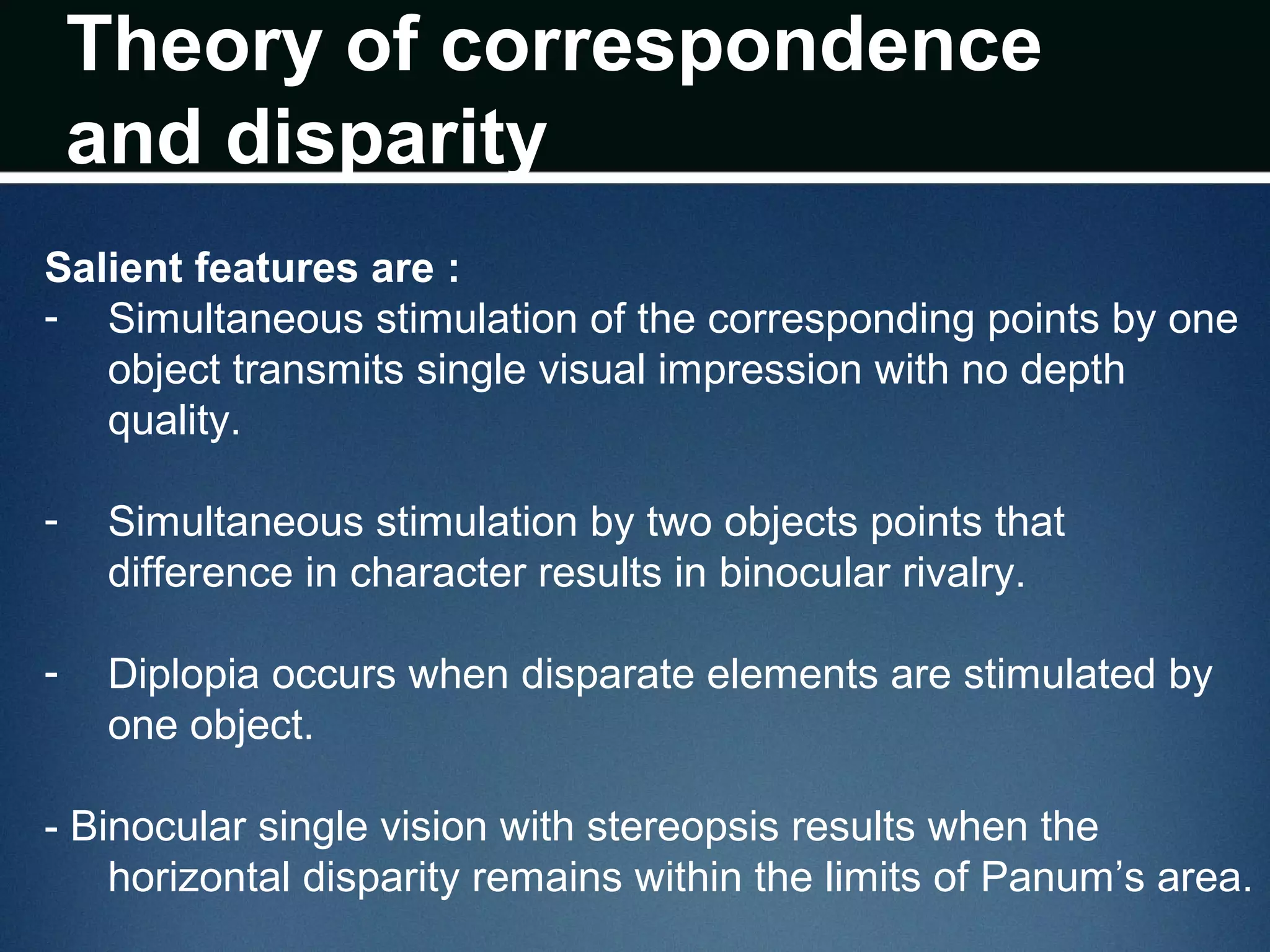
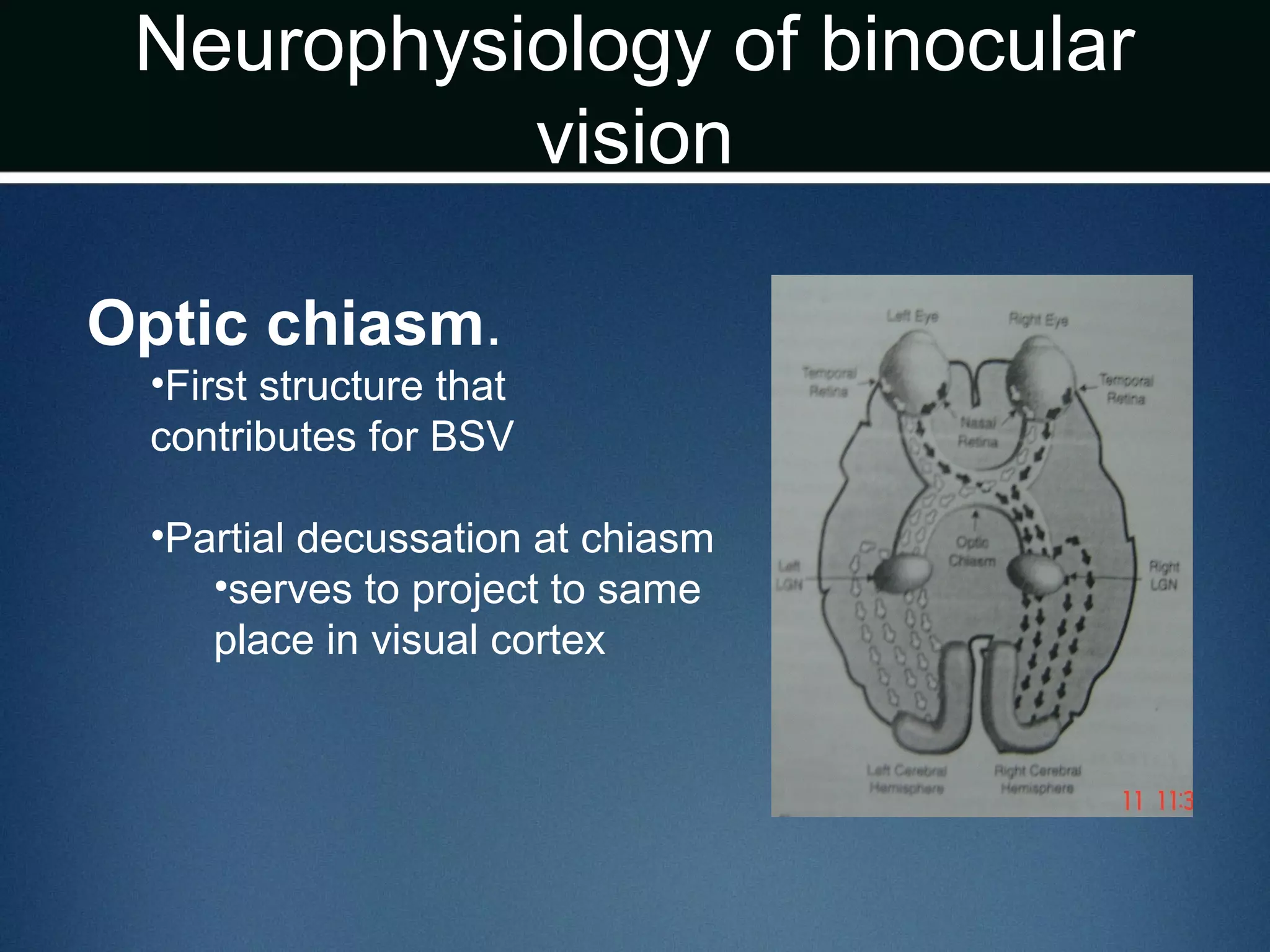

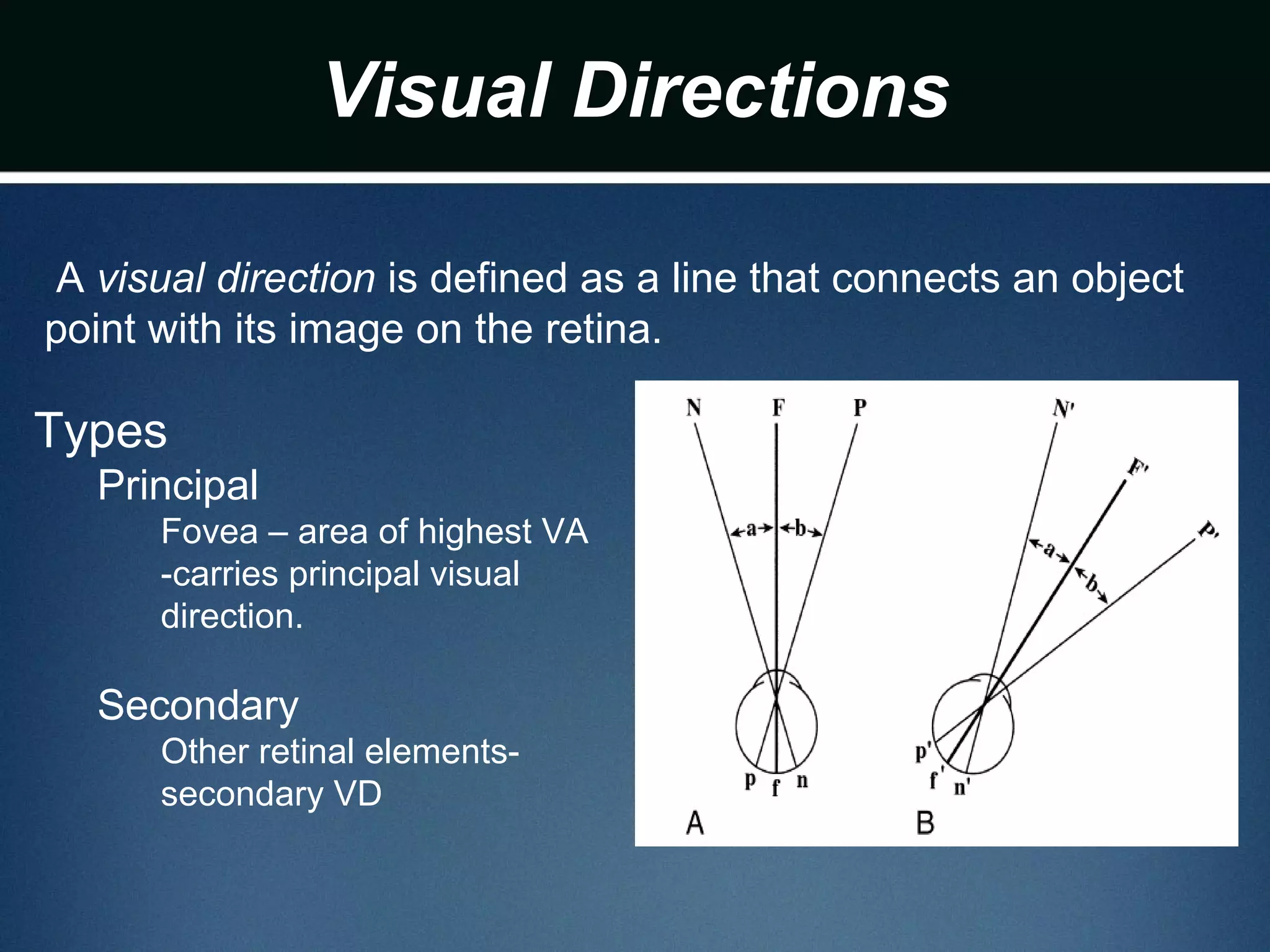
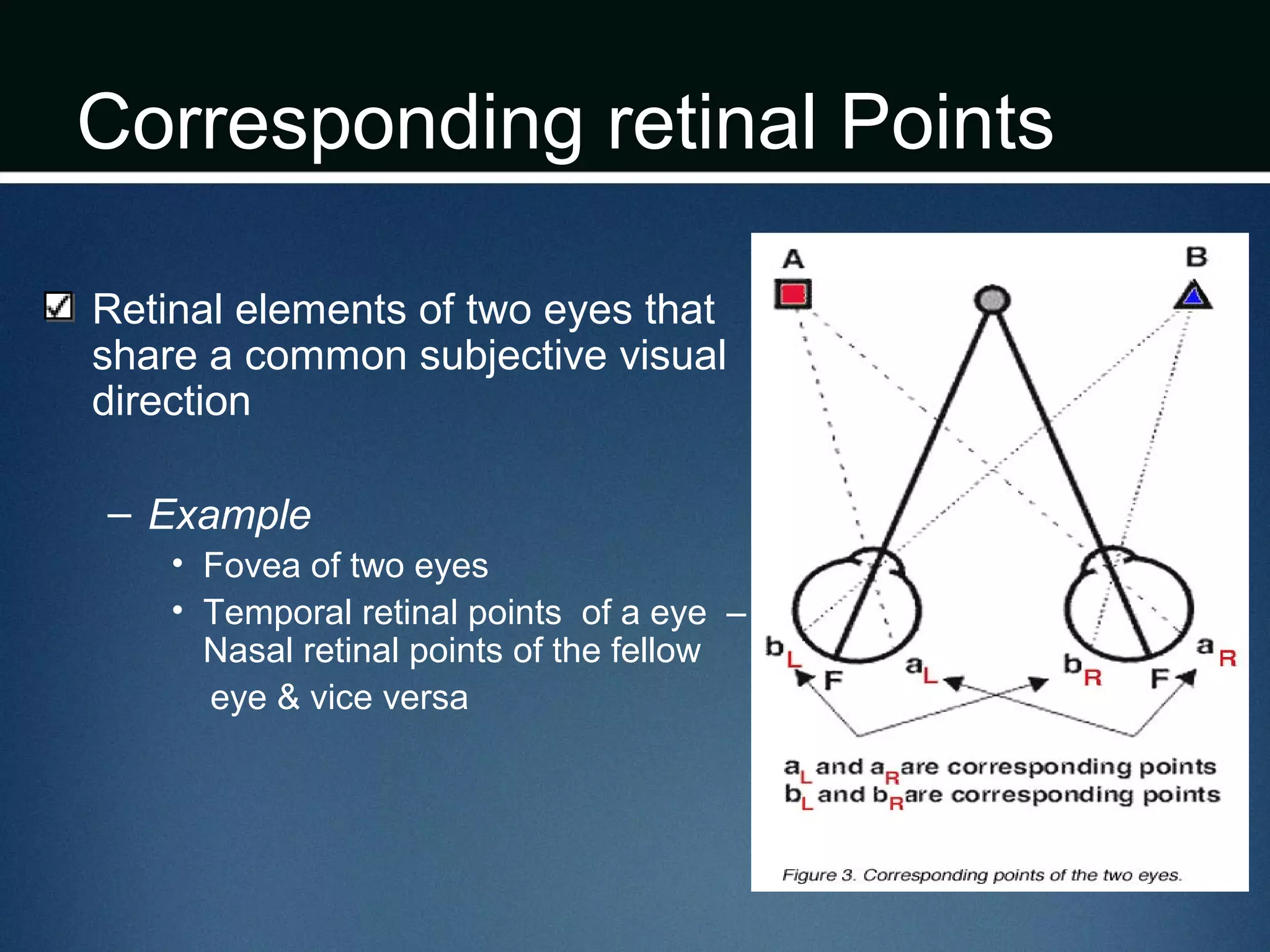
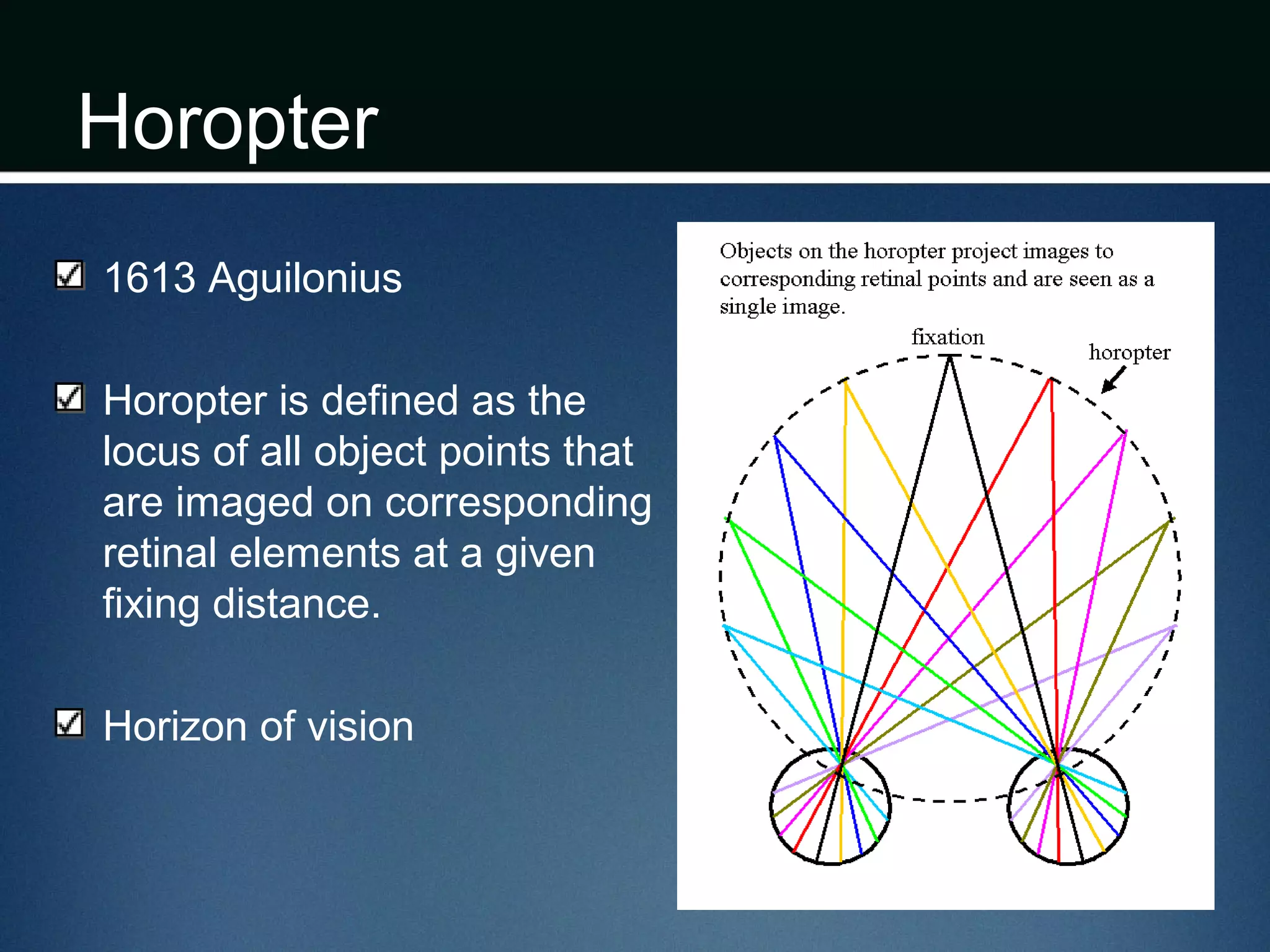
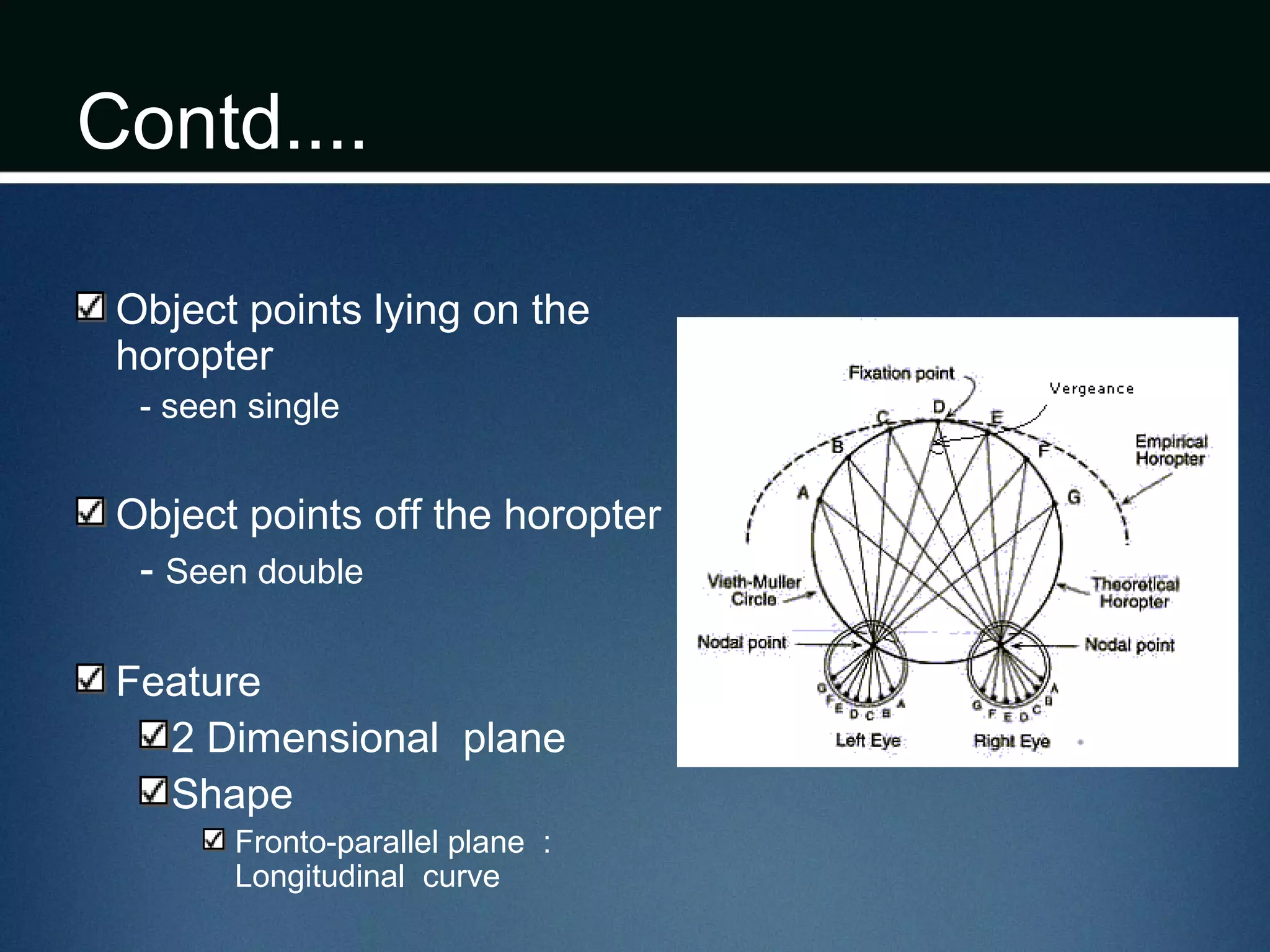
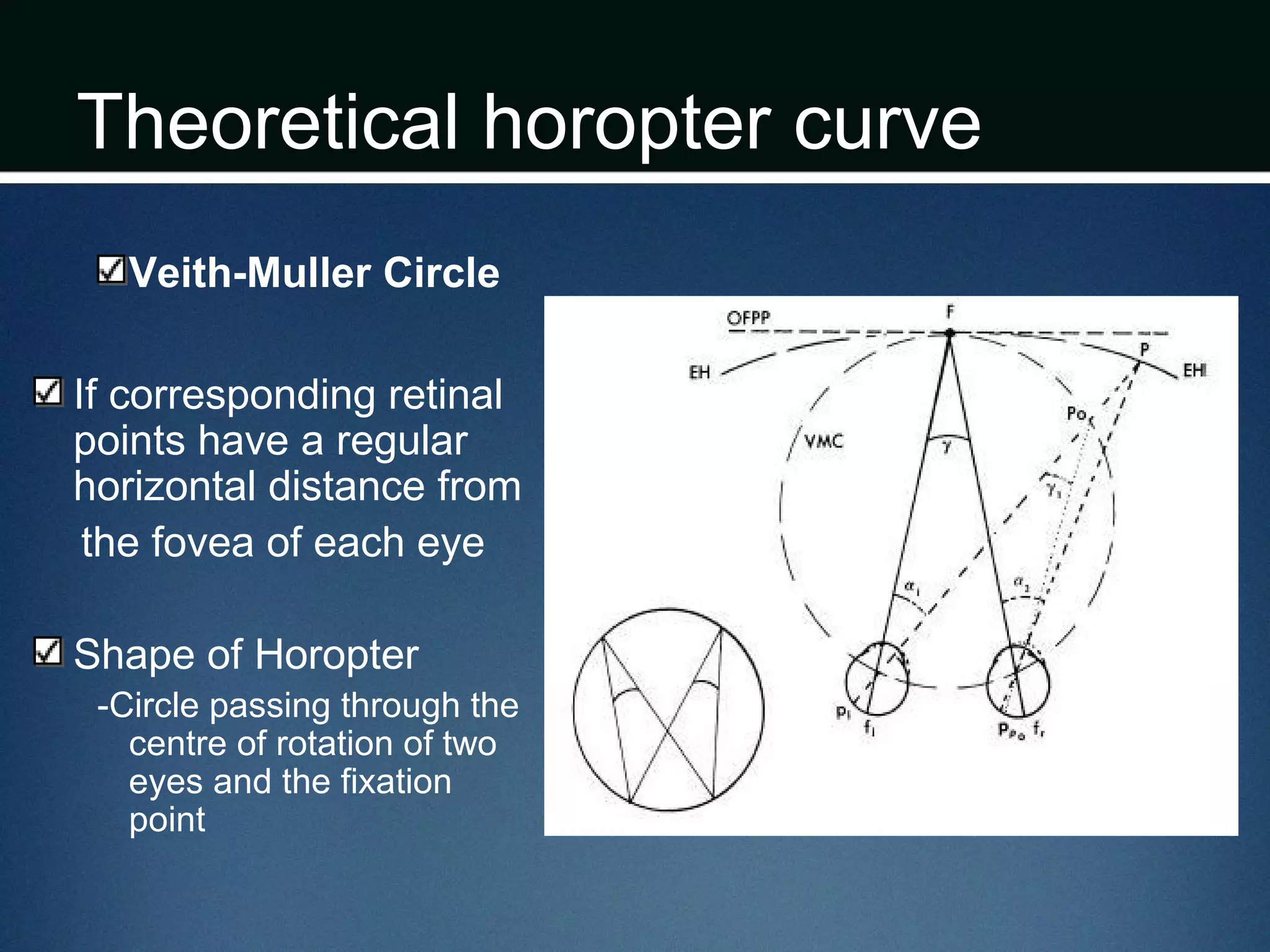
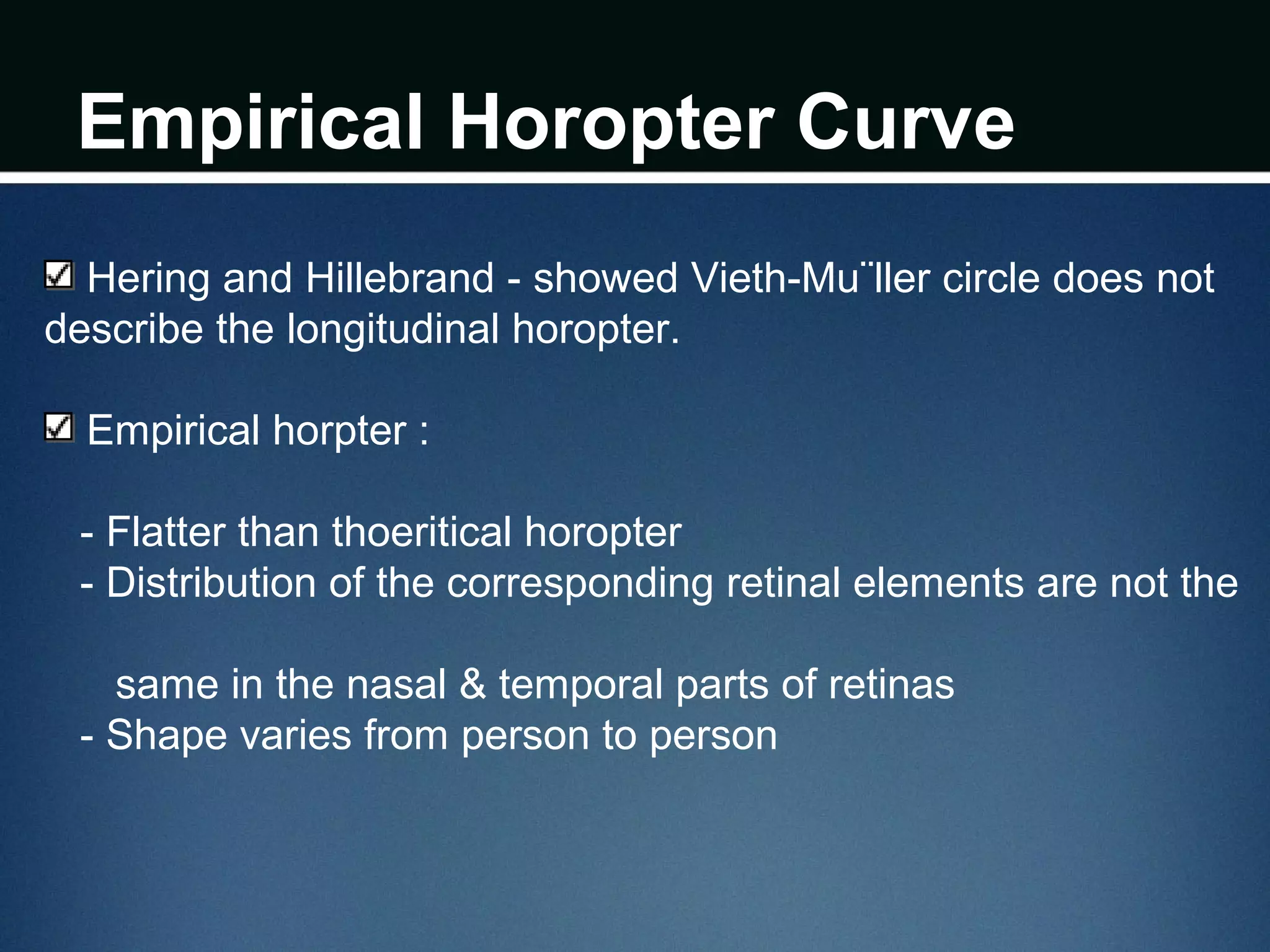
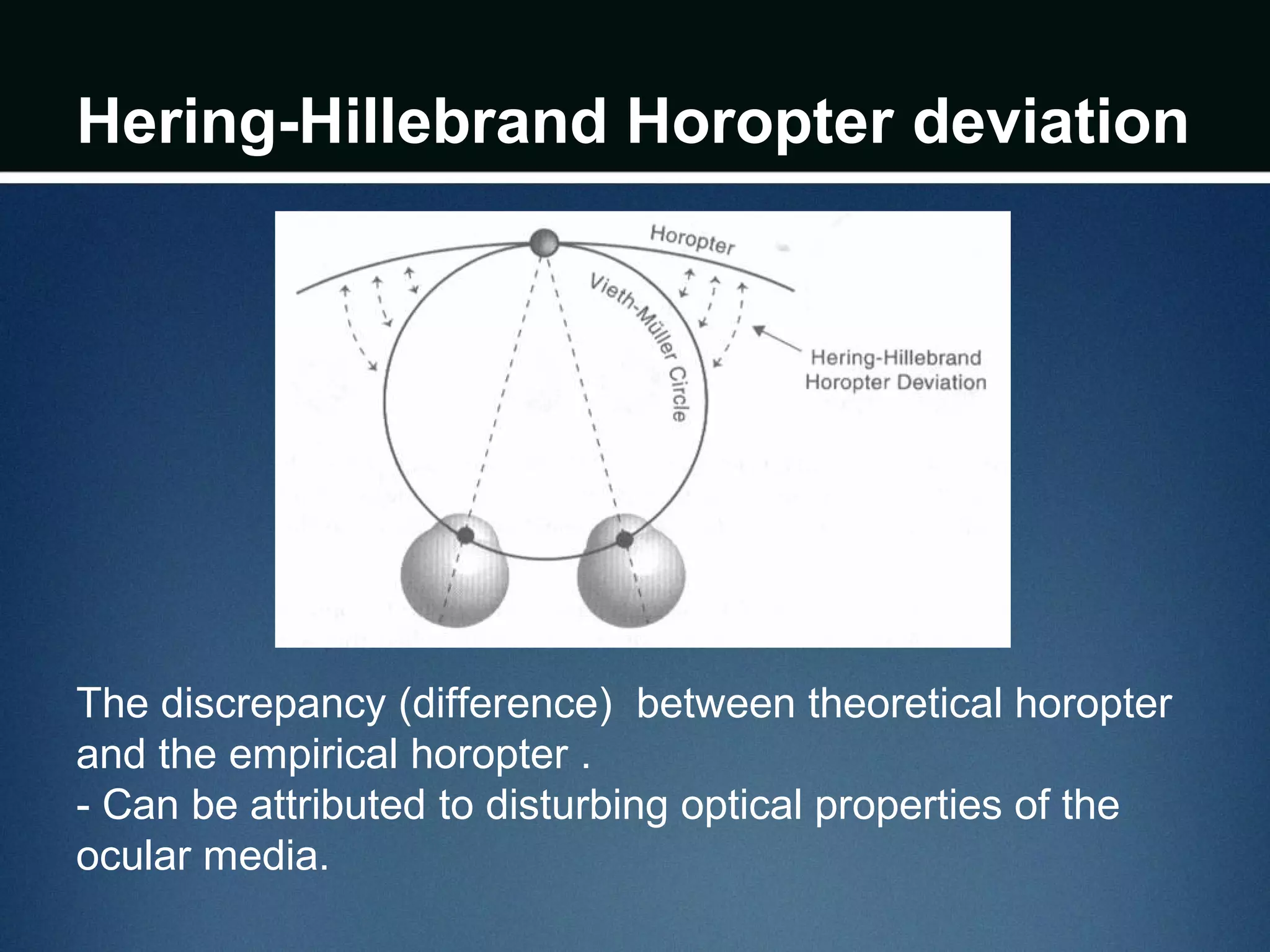
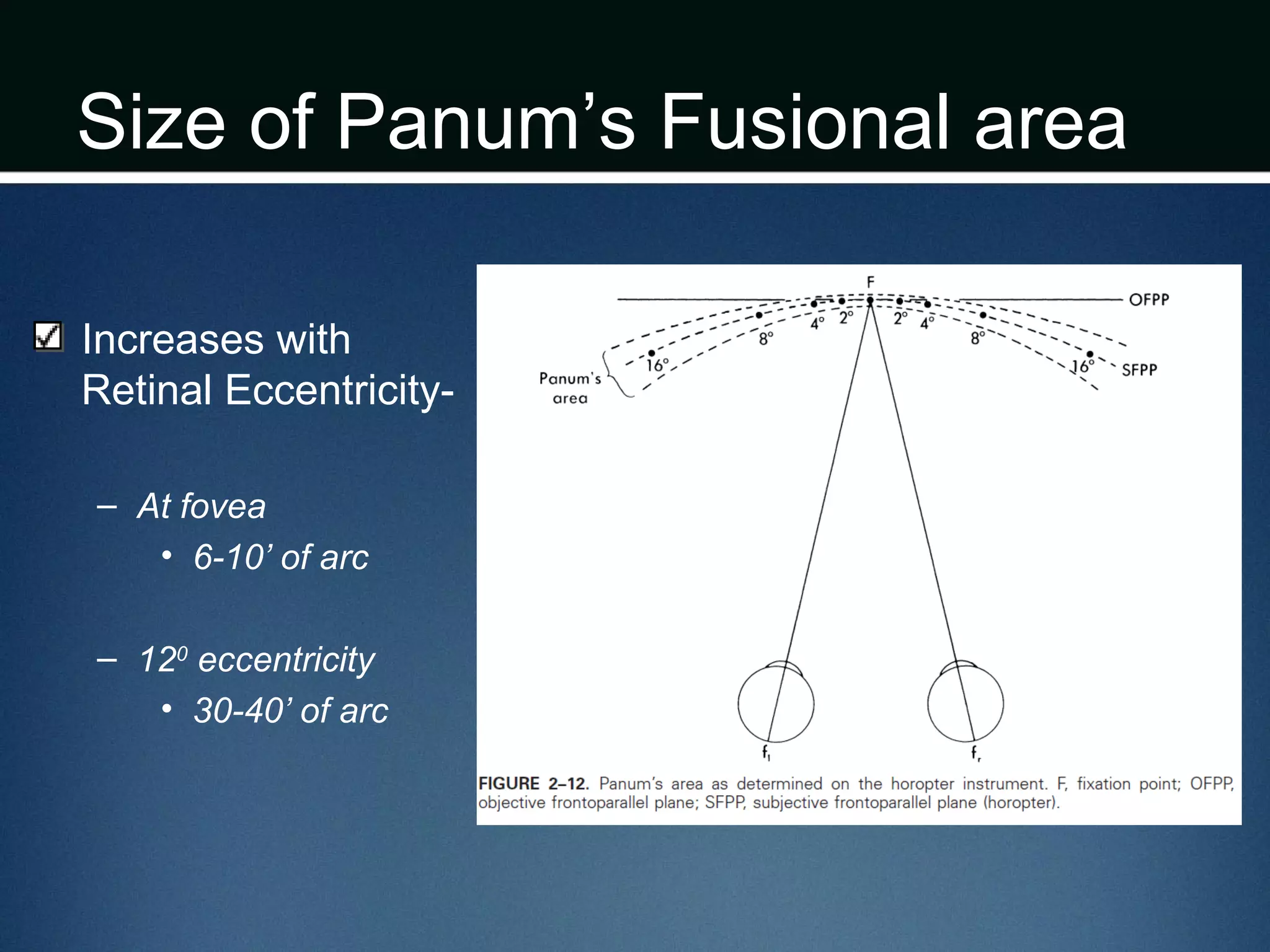
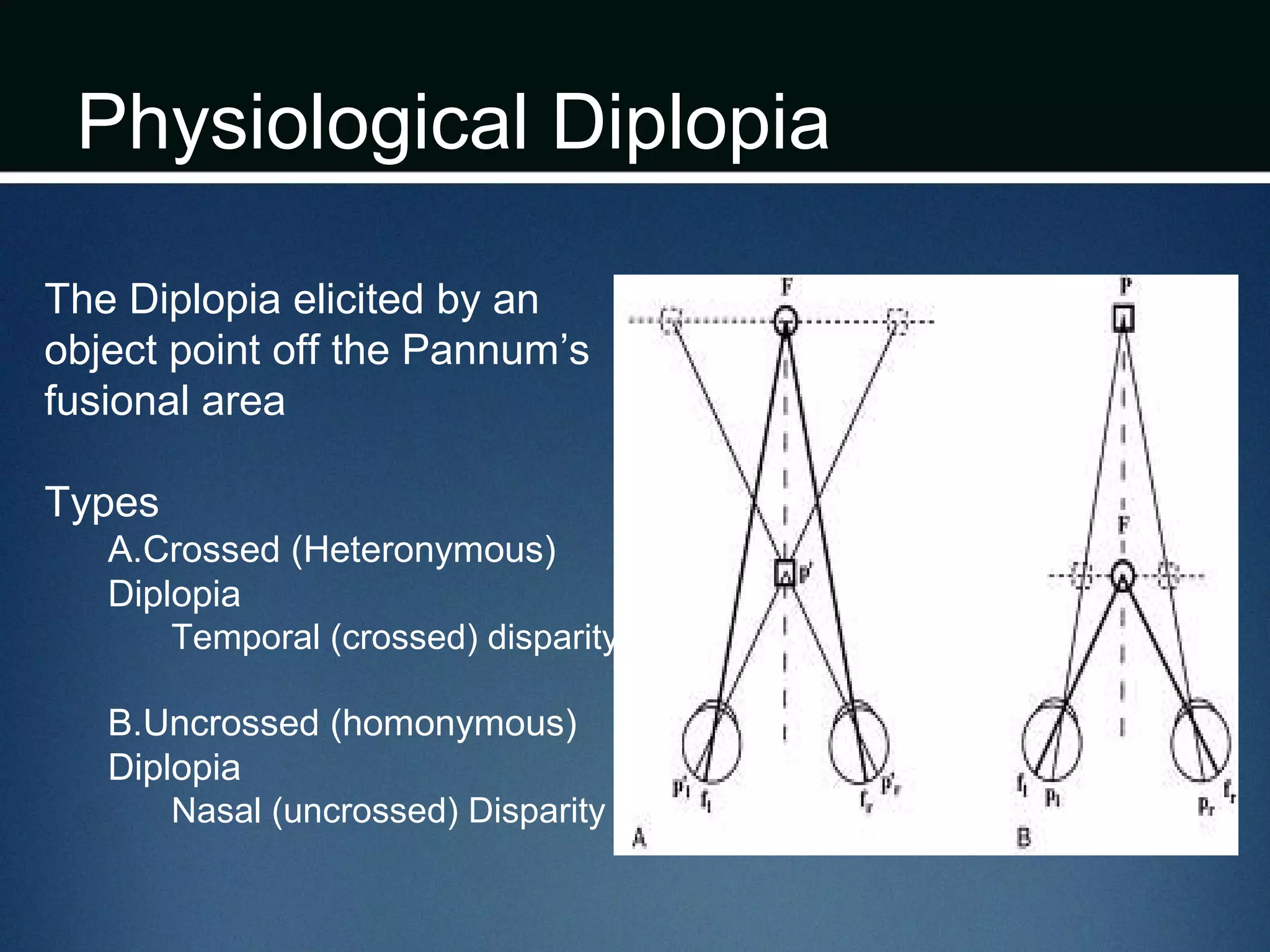
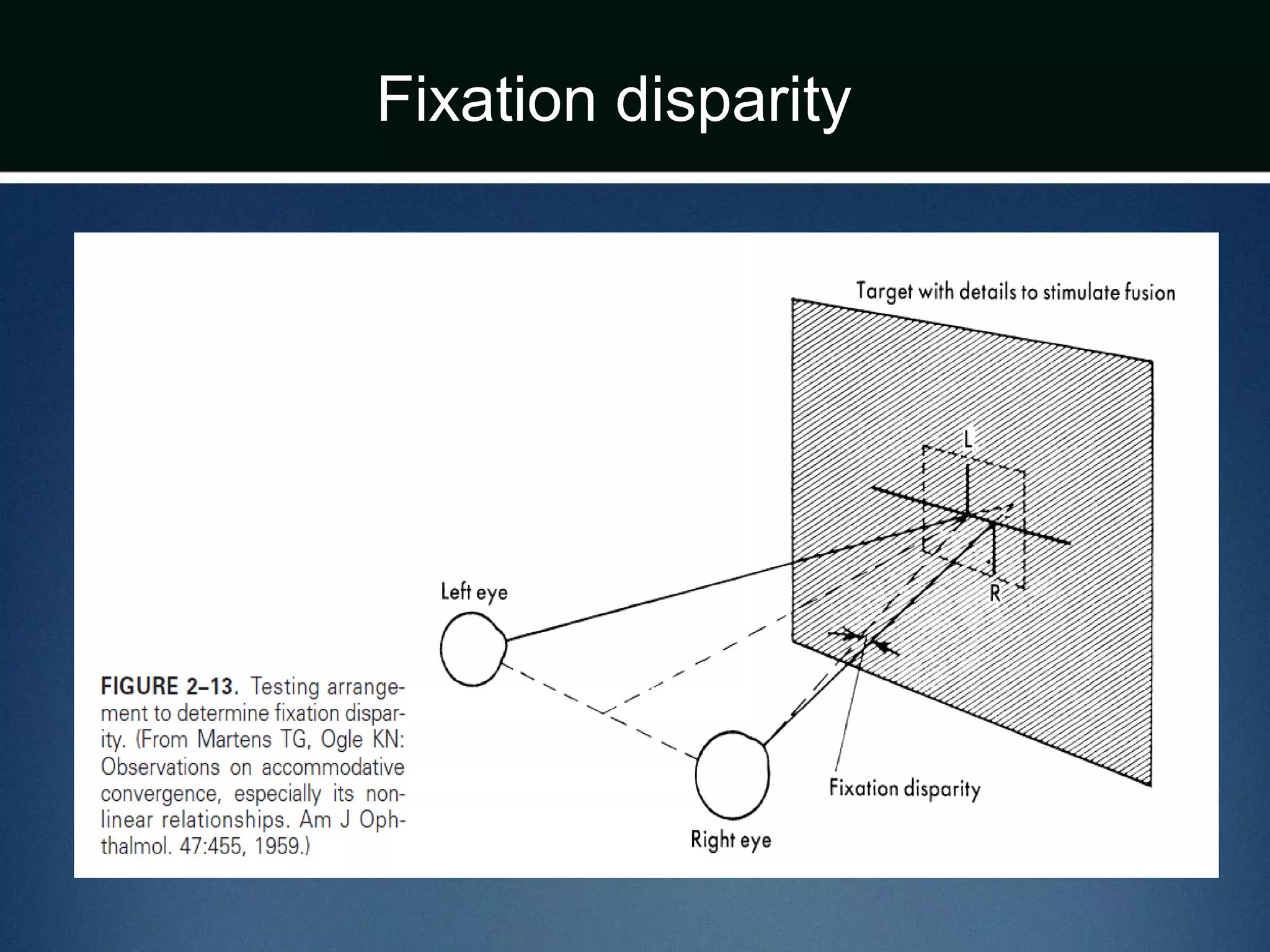

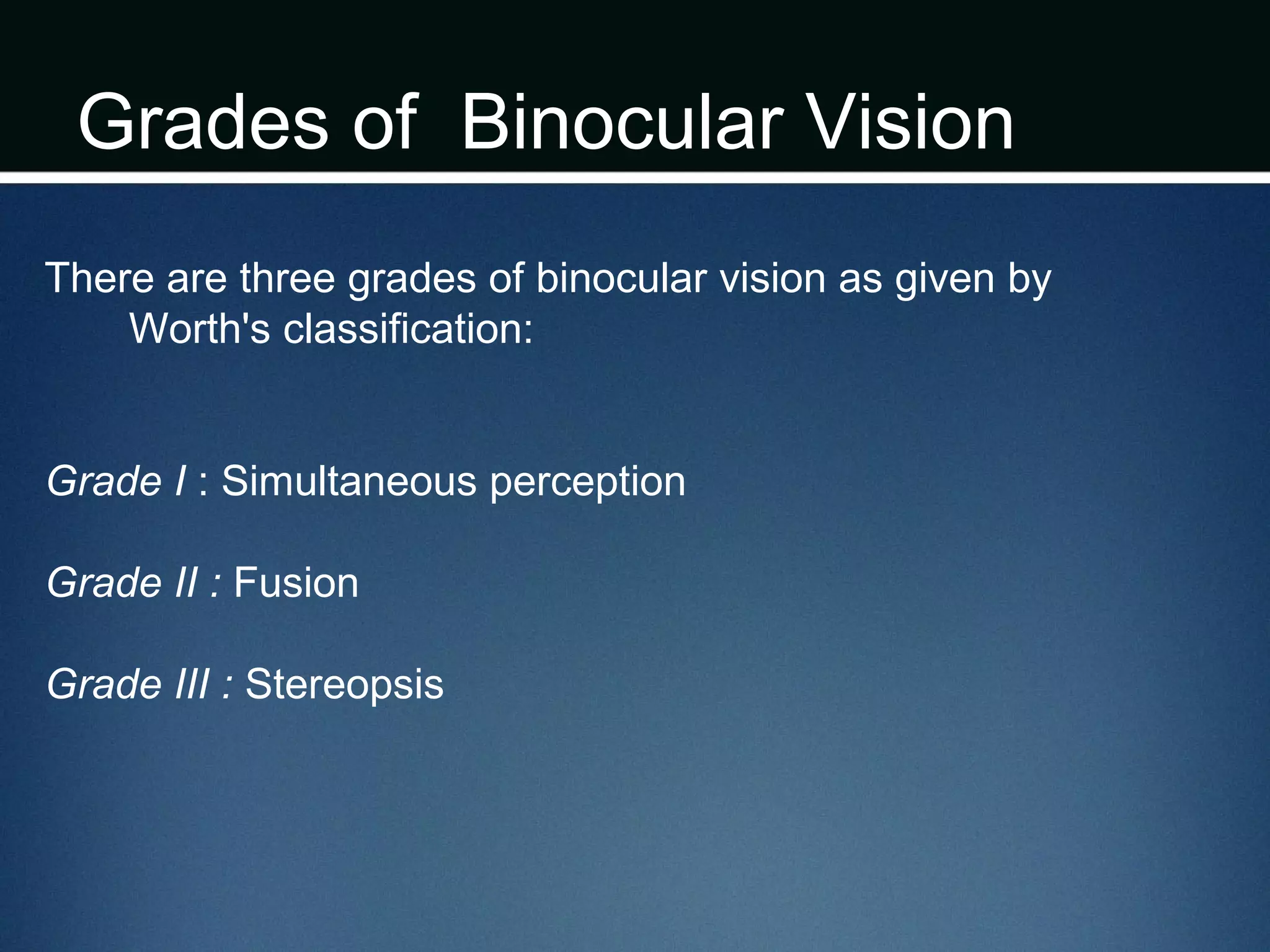
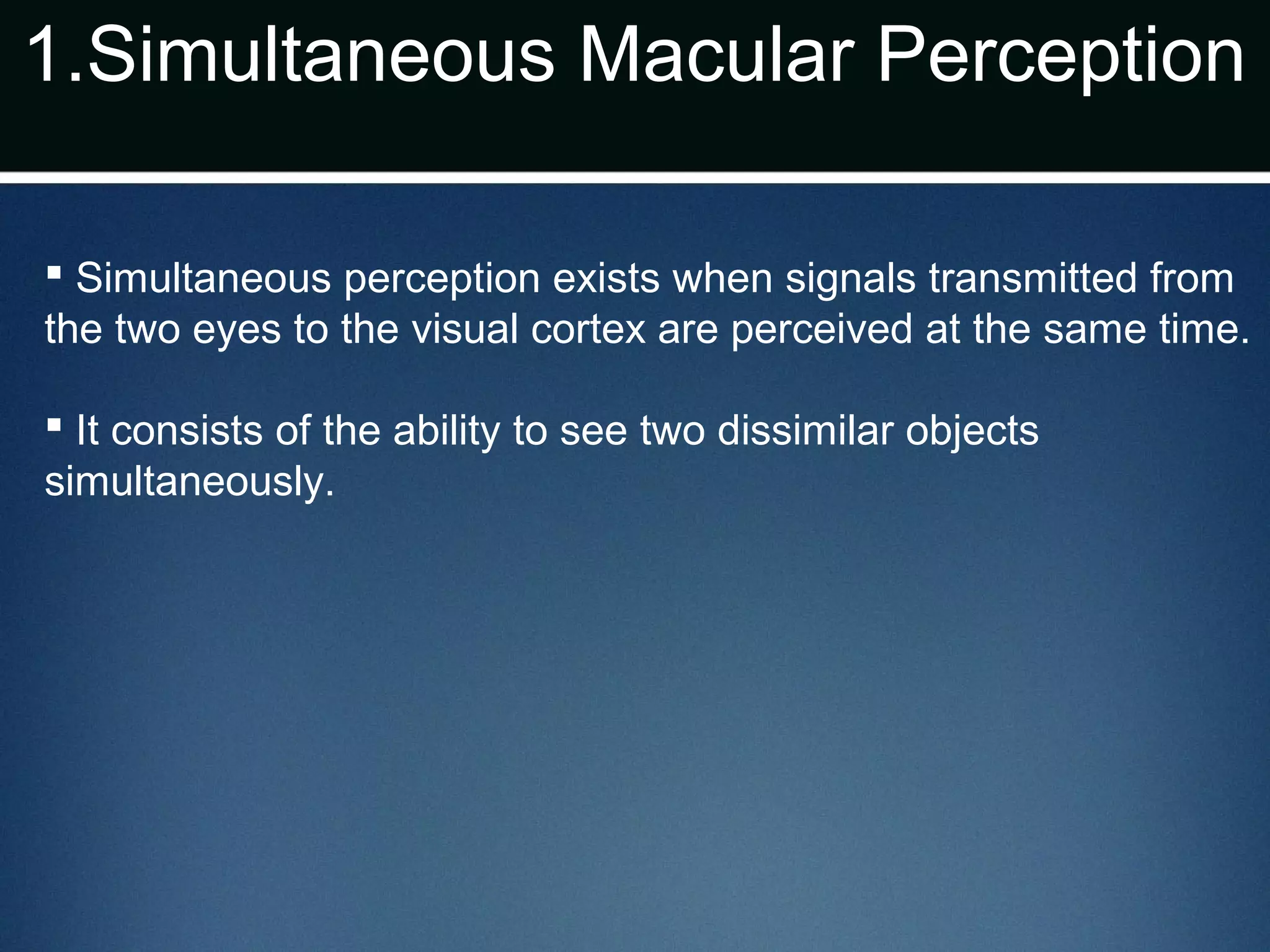
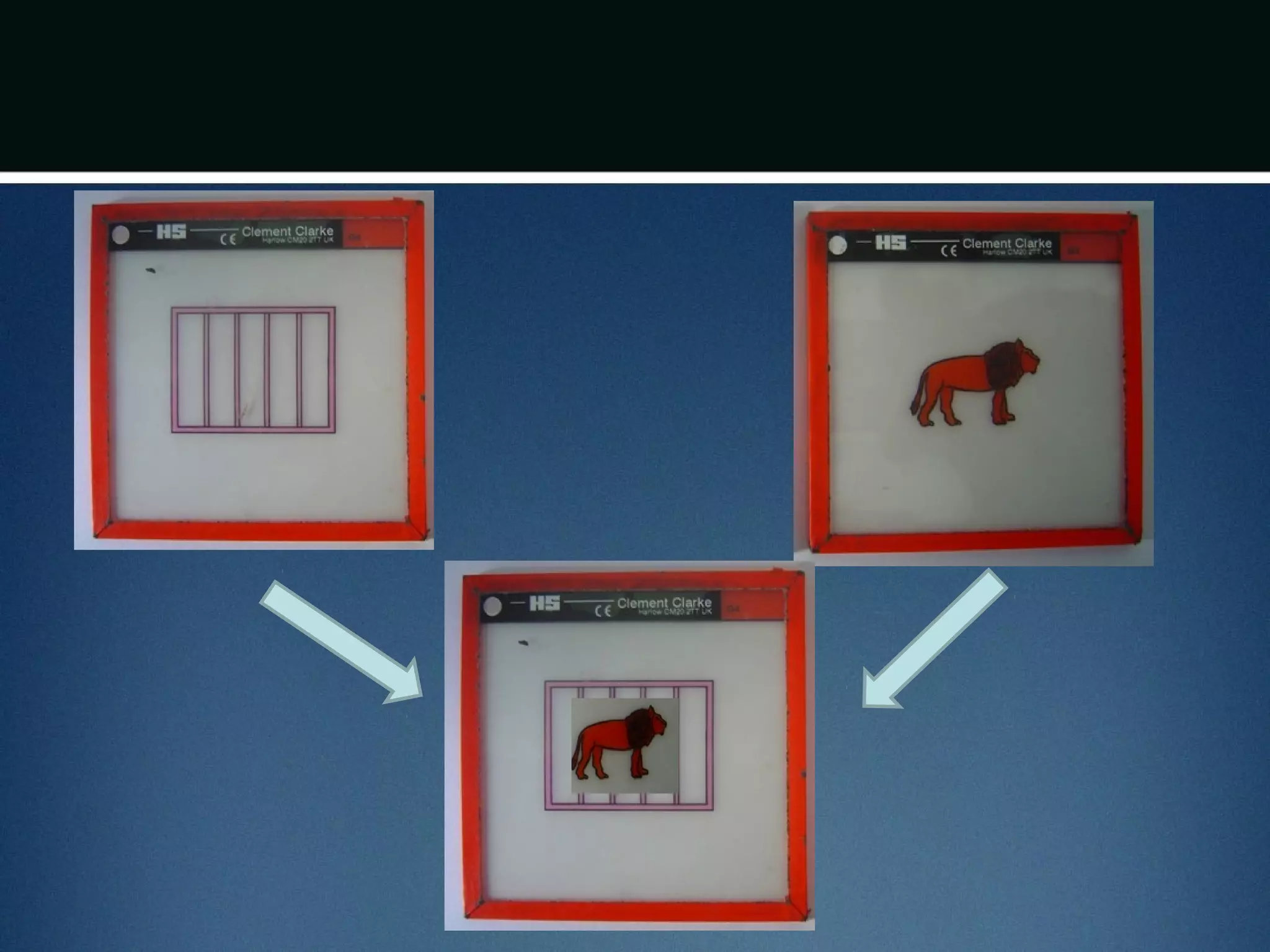
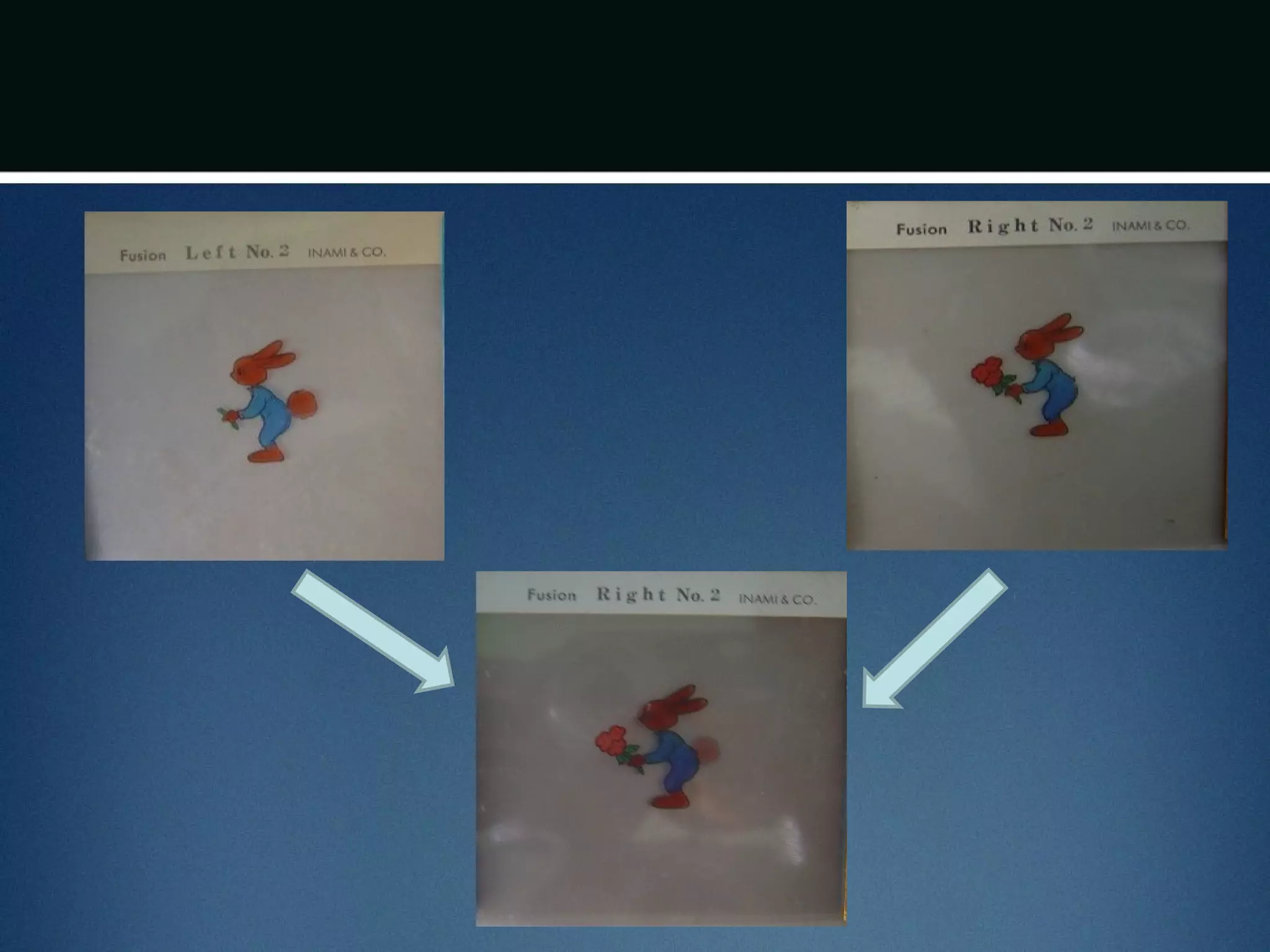


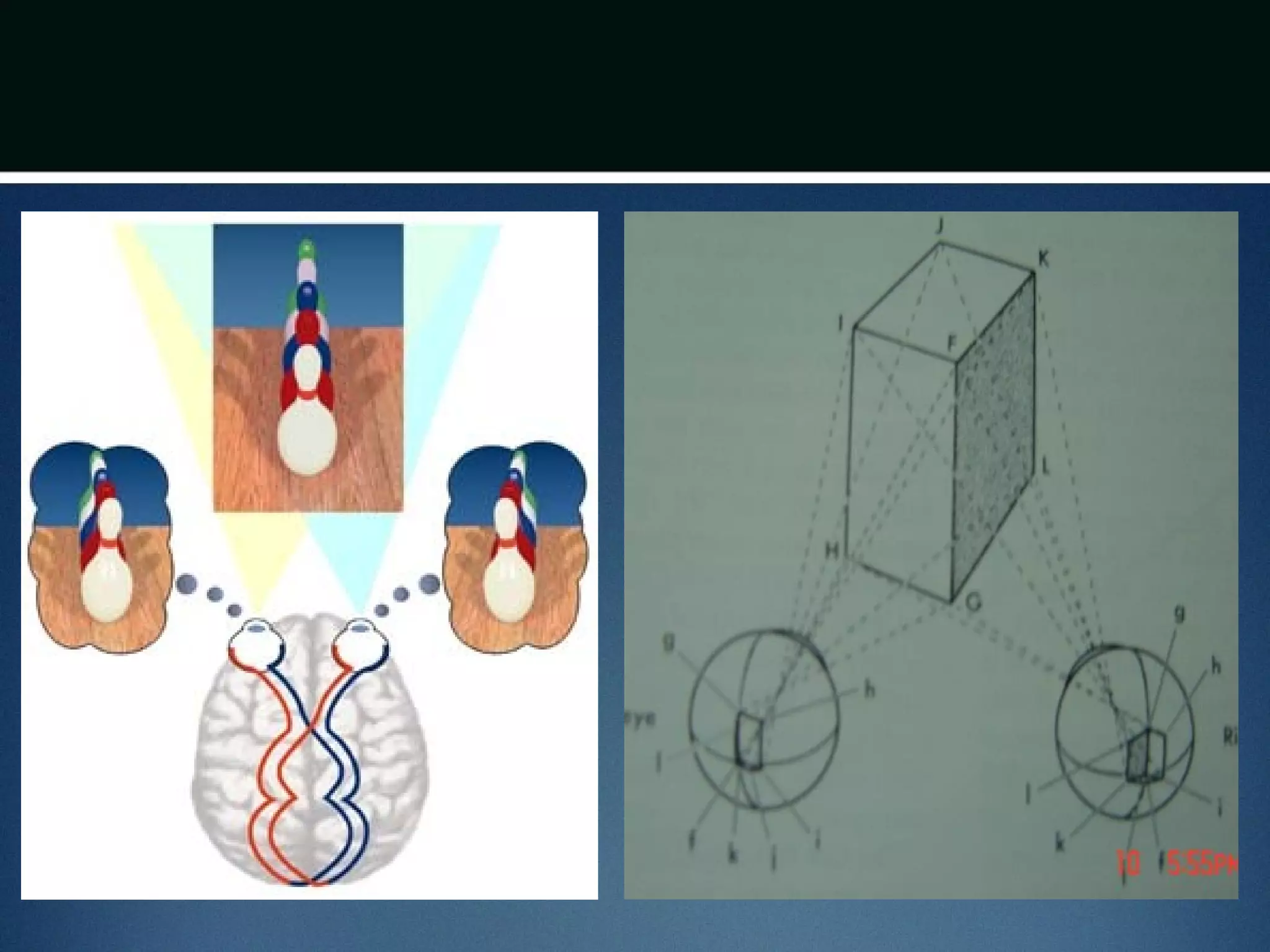
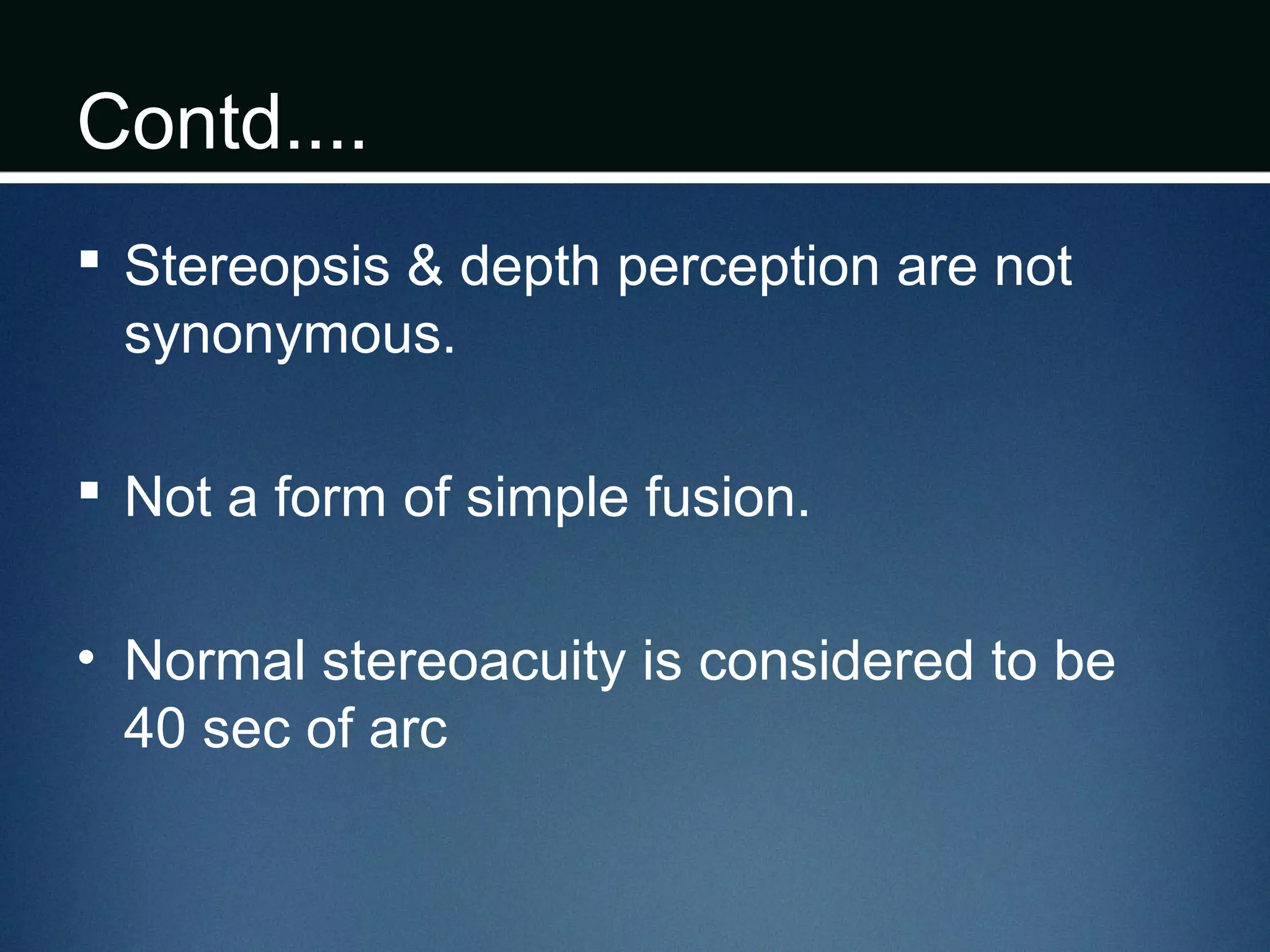
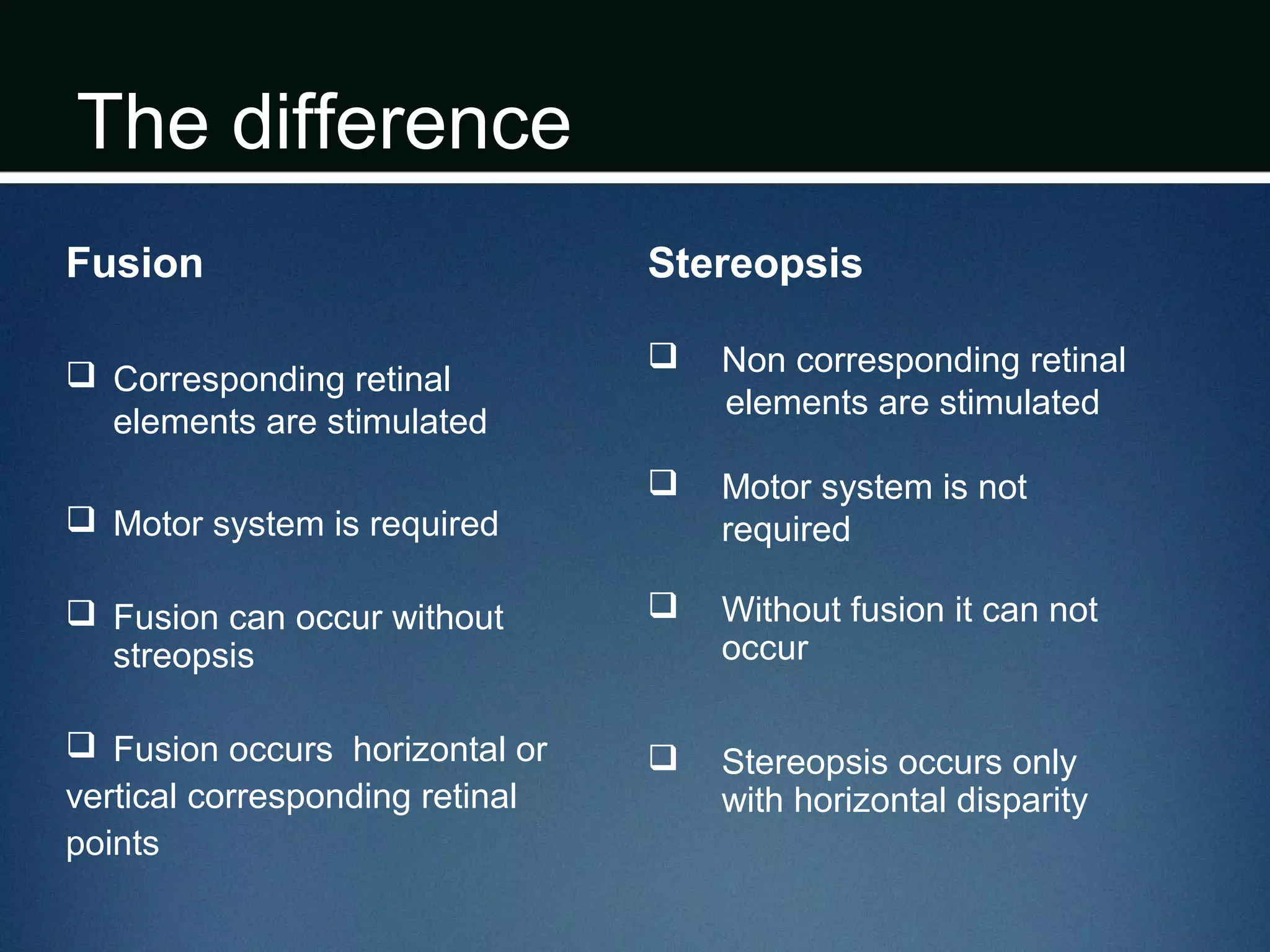






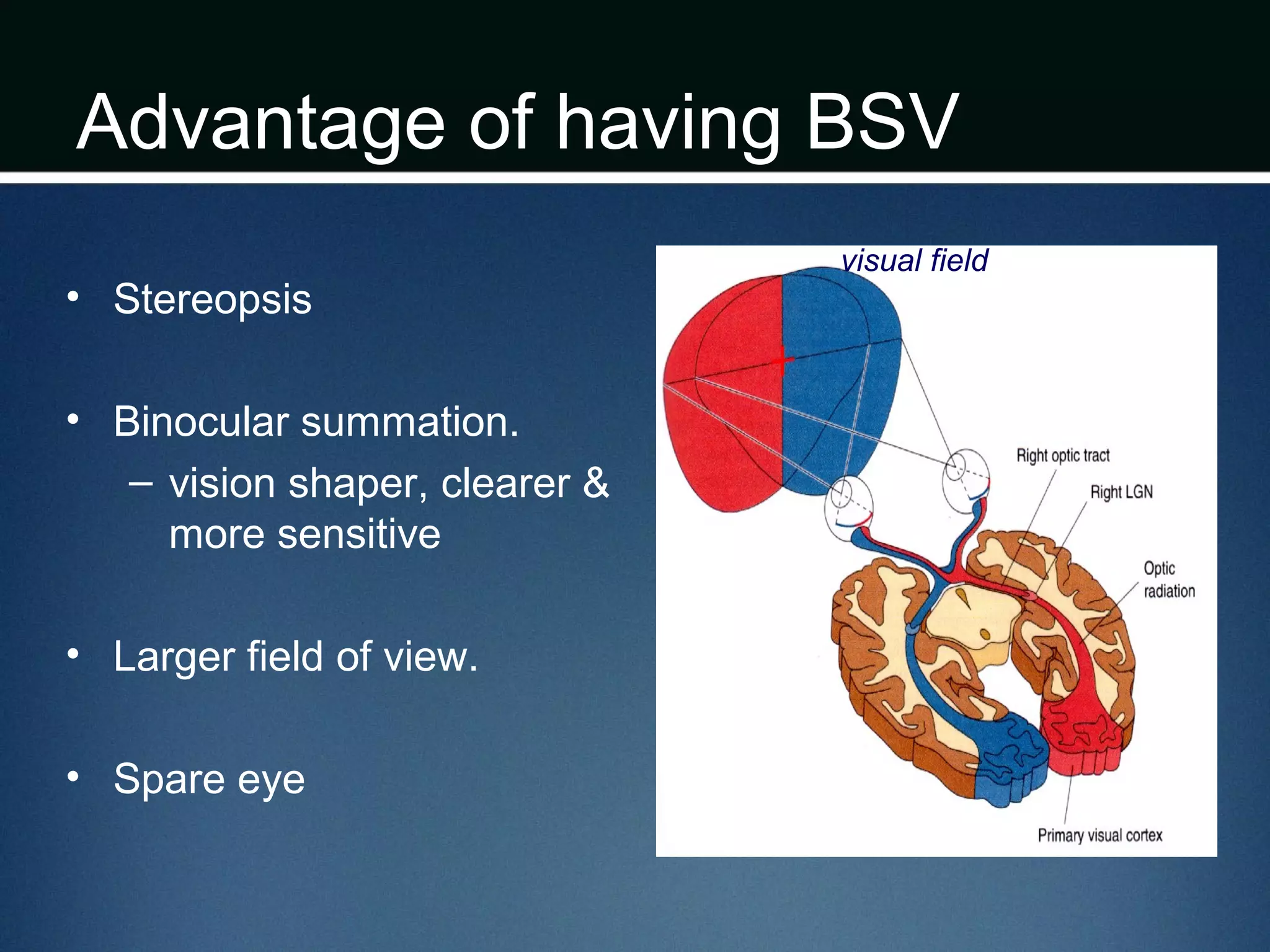
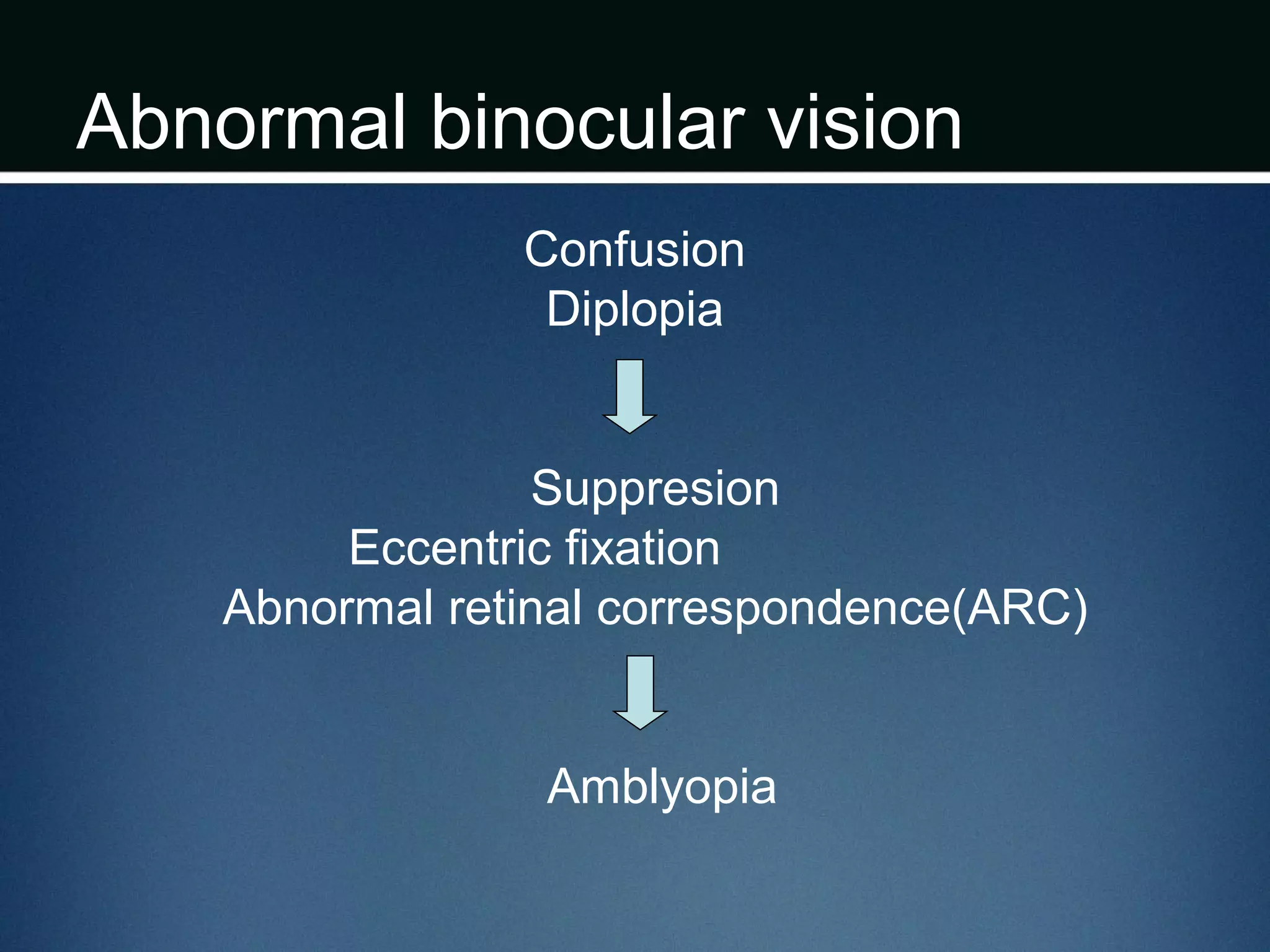
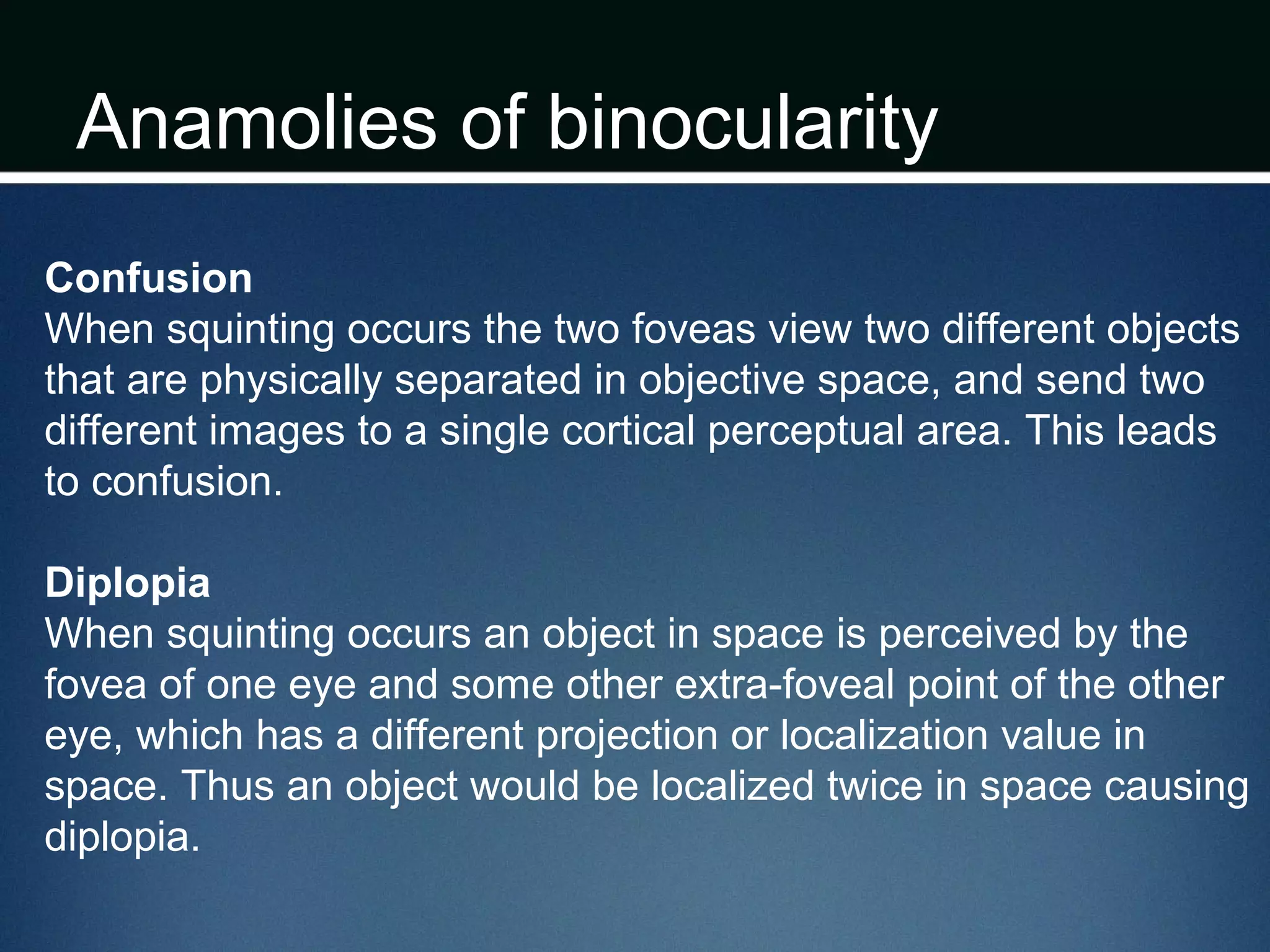
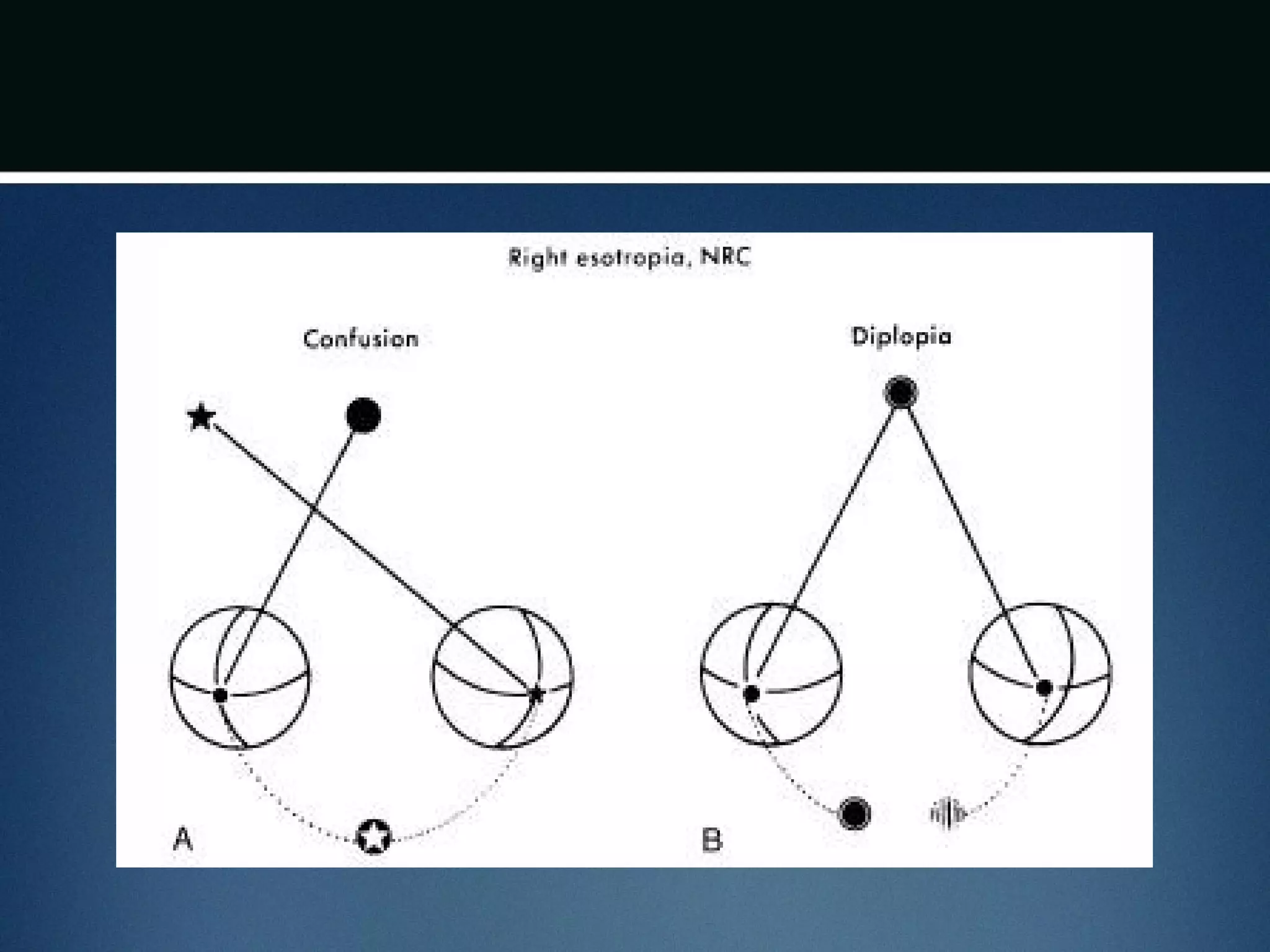



This document provides an overview of binocular vision, including its history, key concepts, mechanisms, and importance. It defines binocular vision as coordinated vision using both eyes to produce a single mental image. The three grades of binocular vision are simultaneous perception, fusion, and stereopsis. Fusion allows the eyes to produce a composite image, while stereopsis provides depth perception through retinal disparity. Other topics covered include the horopter curve, Panum's fusional area, theories of binocular vision, advantages and anomalies. Understanding binocular vision is essential for treating conditions like strabismus.


![Optics of contact lens and nomenclature copy [repaired] (1)](https://cdn.slidesharecdn.com/ss_thumbnails/opticsofcontactlensandnomenclature-copyrepaired1-170218054900-thumbnail.jpg?width=640&height=640&fit=bounds)


