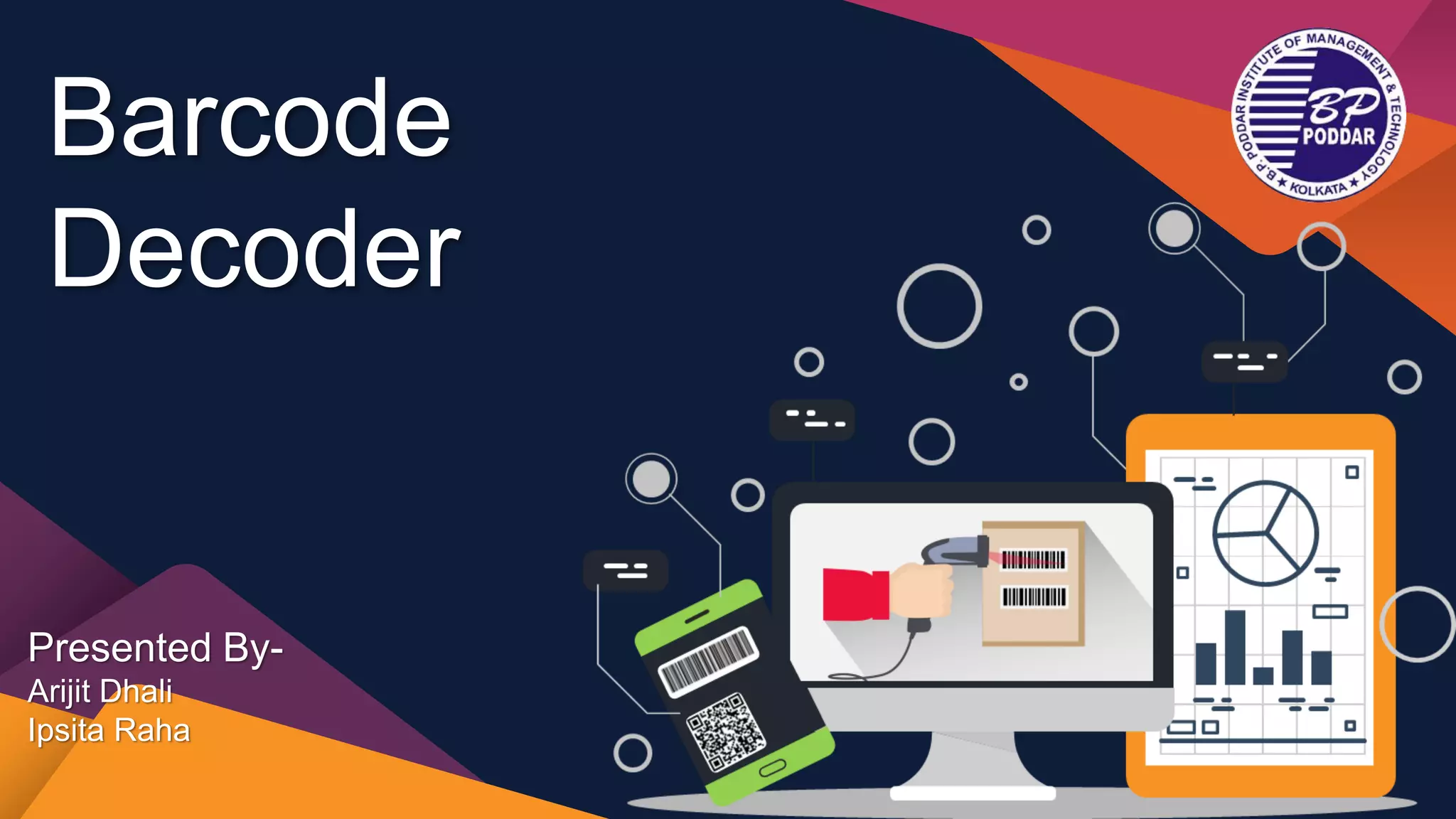
Barcode
Decoder
Presented By-
Arijit Dhali
Ipsita Raha
Prologue
Introduction of
barcode decoder
All about barcode
reader
Defining barcode
reader and its type
Neccesities
Applications and
advantage-disadvantage
Contents
All about Barcode
Defining barcode and
mentioning its type
Technico
All about interface
and way of decoding
Epilogue
Contains conclusion
and bibliography
Introduction
This presentation give an informative
data on Barcode and Barcode Reader.
Barcode Reader help us understanding
the inner workings of 1D and 2D codes
The barcode was invented by
Norman Joseph Woodland and
Bernard Silver and patented in the
US in 1951.
It was while working as an electrical engineer
with IBM that George Laurer fully developed
the Universal Product Code (UPC), or
barcode. He developed a scanner that could
read codes digitally.
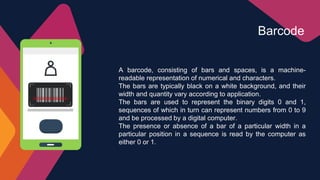
A barcode, consisting of bars and spaces, is a machine-
readable representation of numerical and characters.
The bars are typically black on a white background, and their
width and quantity vary according to application.
The bars are used to represent the binary digits 0 and 1,
sequences of which in turn can represent numbers from 0 to 9
and be processed by a digital computer.
The presence or absence of a bar of a particular width in a
particular position in a sequence is read by the computer as
either 0 or 1.
Barcode
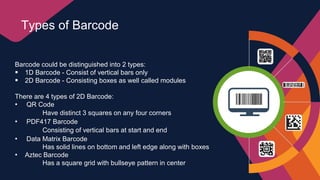
Barcode could be distinguished into 2 types:
 1D Barcode - Consist of vertical bars only
 2D Barcode - Consisting boxes as well called modules
There are 4 types of 2D Barcode:
• QR Code
Have distinct 3 squares on any four corners
• PDF417 Barcode
Consisting of vertical bars at start and end
• Data Matrix Barcode
Has solid lines on bottom and left edge along with boxes
• Aztec Barcode
Has a square grid with bullseye pattern in center
Types of Barcode
Barcode Reader
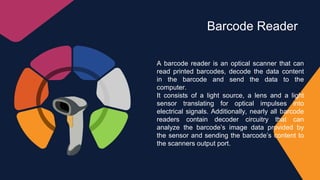
A barcode reader is an optical scanner that can
read printed barcodes, decode the data content
in the barcode and send the data to the
computer.
It consists of a light source, a lens and a light
sensor translating for optical impulses into
electrical signals. Additionally, nearly all barcode
readers contain decoder circuitry that can
analyze the barcode’s image data provided by
the sensor and sending the barcode’s content to
the scanners output port.
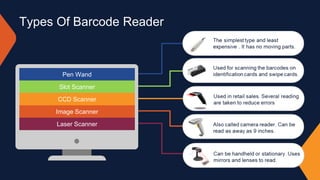
Types Of Barcode Reader
Pen Wand
Slot Scanner
CCD Scanner
Image Scanner
Laser Scanner
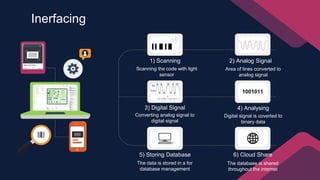
Inerfacing
1) Scanning
Scanning the code with light
sensor
4) Analysing
Digital signal is coverted to
binary data
2) Analog Signal
Area of lines converted to
analog signal
3) Digital Signal
Converting analog signal to
digital signal
5) Storing Database
The data is stored in a for
database management
6) Cloud Share
The database is shared
throughout the internet
1
2
3
4
5
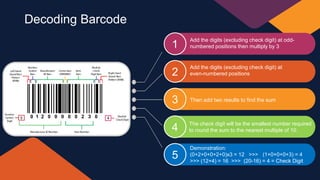
Decoding Barcode
Add the digits (excluding check digit) at odd-
numbered positions then multiply by 3
Add the digits (excluding check digit) at
even-numbered positions
Then add two results to find the sum
The check digit will be the smallest number required
to round the sum to the nearest multiple of 10.
Demonstration:
(0+2+0+0+2+0)x3 = 12 >>> (1+0+0+0+3) = 4
>>> (12+4) = 16 >>> (20-16) = 4 = Check Digit
0 1 2 0 0 0 0 0 2 3 0
Applications
 Retail Application
• Super markets
• Counter-mounted Bar Code scanners
• Universal Product Code (UPC) Price
and description information
 Ware Housing
 Health Care Applications
• Drugs, Devices, Instruments
• Identification of Expiry Date
• Knowledge of Blood Banking
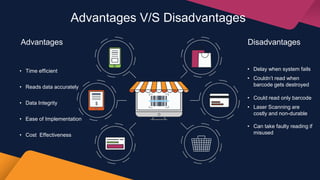
Advantages V/S Disadvantages
• Time efficient
• Reads data accurately
• Data Integrity
• Ease of Implementation
• Cost Effectiveness
Advantages Disadvantages
• Delay when system fails
• Couldn’t read when
barcode gets destroyed
• Could read only barcode
• Laser Scanning are
costly and non-durable
• Can take faulty reading if
misused
Conclusion
From the presentation we can conclude:
 Positive Impact On Daily Life.
 Have Lots Of Advantages With Minor Bottlenecks.
 It Has Its Versatile Uses & It’s User Friendly.
 Laser Emission Near Or On Human Body Is Very Harmful.
References
• https://barcode-labels.com/you-can-learn-read-barcode/
• https://www.slideshare.net/prashantb11/barcode-reader-
44594801?qid=6d30b4c1-34c0-477e-9bfd-
938966282491&v=&b=&from_ search=2
• https://www.britannica.com/technology/barcode
• https://en.wikipedia.org/wiki/Barcode_ reader
• https://www.denso-
wave.com/en/adcd/fundamental/barcode/scan/index.html
• https://www.dynamsoft.com/blog/insights/best-practices-for-
maximizing-barcode-reader-technology-3-6/
• Barcode Recognition System by Norhashimah Mohd Saad
Thank
You !
For your attention towards
our presentation

Barcode Decoder

  • 1.
  • 2.
    Prologue Introduction of barcode decoder Allabout barcode reader Defining barcode reader and its type Neccesities Applications and advantage-disadvantage Contents All about Barcode Defining barcode and mentioning its type Technico All about interface and way of decoding Epilogue Contains conclusion and bibliography
  • 3.
    Introduction This presentation givean informative data on Barcode and Barcode Reader. Barcode Reader help us understanding the inner workings of 1D and 2D codes The barcode was invented by Norman Joseph Woodland and Bernard Silver and patented in the US in 1951. It was while working as an electrical engineer with IBM that George Laurer fully developed the Universal Product Code (UPC), or barcode. He developed a scanner that could read codes digitally.
  • 4.
    A barcode, consistingof bars and spaces, is a machine- readable representation of numerical and characters. The bars are typically black on a white background, and their width and quantity vary according to application. The bars are used to represent the binary digits 0 and 1, sequences of which in turn can represent numbers from 0 to 9 and be processed by a digital computer. The presence or absence of a bar of a particular width in a particular position in a sequence is read by the computer as either 0 or 1. Barcode
  • 5.
    Barcode could bedistinguished into 2 types:  1D Barcode - Consist of vertical bars only  2D Barcode - Consisting boxes as well called modules There are 4 types of 2D Barcode: • QR Code Have distinct 3 squares on any four corners • PDF417 Barcode Consisting of vertical bars at start and end • Data Matrix Barcode Has solid lines on bottom and left edge along with boxes • Aztec Barcode Has a square grid with bullseye pattern in center Types of Barcode
  • 6.
    Barcode Reader A barcodereader is an optical scanner that can read printed barcodes, decode the data content in the barcode and send the data to the computer. It consists of a light source, a lens and a light sensor translating for optical impulses into electrical signals. Additionally, nearly all barcode readers contain decoder circuitry that can analyze the barcode’s image data provided by the sensor and sending the barcode’s content to the scanners output port.
  • 7.
    Types Of BarcodeReader Pen Wand Slot Scanner CCD Scanner Image Scanner Laser Scanner
  • 8.
    Inerfacing 1) Scanning Scanning thecode with light sensor 4) Analysing Digital signal is coverted to binary data 2) Analog Signal Area of lines converted to analog signal 3) Digital Signal Converting analog signal to digital signal 5) Storing Database The data is stored in a for database management 6) Cloud Share The database is shared throughout the internet
  • 9.
    1 2 3 4 5 Decoding Barcode Add thedigits (excluding check digit) at odd- numbered positions then multiply by 3 Add the digits (excluding check digit) at even-numbered positions Then add two results to find the sum The check digit will be the smallest number required to round the sum to the nearest multiple of 10. Demonstration: (0+2+0+0+2+0)x3 = 12 >>> (1+0+0+0+3) = 4 >>> (12+4) = 16 >>> (20-16) = 4 = Check Digit 0 1 2 0 0 0 0 0 2 3 0
  • 10.
    Applications  Retail Application •Super markets • Counter-mounted Bar Code scanners • Universal Product Code (UPC) Price and description information  Ware Housing  Health Care Applications • Drugs, Devices, Instruments • Identification of Expiry Date • Knowledge of Blood Banking
  • 11.
    Advantages V/S Disadvantages •Time efficient • Reads data accurately • Data Integrity • Ease of Implementation • Cost Effectiveness Advantages Disadvantages • Delay when system fails • Couldn’t read when barcode gets destroyed • Could read only barcode • Laser Scanning are costly and non-durable • Can take faulty reading if misused
  • 12.
    Conclusion From the presentationwe can conclude:  Positive Impact On Daily Life.  Have Lots Of Advantages With Minor Bottlenecks.  It Has Its Versatile Uses & It’s User Friendly.  Laser Emission Near Or On Human Body Is Very Harmful.
  • 13.
    References • https://barcode-labels.com/you-can-learn-read-barcode/ • https://www.slideshare.net/prashantb11/barcode-reader- 44594801?qid=6d30b4c1-34c0-477e-9bfd- 938966282491&v=&b=&from_search=2 • https://www.britannica.com/technology/barcode • https://en.wikipedia.org/wiki/Barcode_ reader • https://www.denso- wave.com/en/adcd/fundamental/barcode/scan/index.html • https://www.dynamsoft.com/blog/insights/best-practices-for- maximizing-barcode-reader-technology-3-6/ • Barcode Recognition System by Norhashimah Mohd Saad
  • 14.
    Thank You ! For yourattention towards our presentation