NAME : NAZURA NAJMI BINTI MOHD ARIF
MATRIC NO: BTCL15041157
SUPERVISOR: PROF MADYA DR ENGKU
FADZLI HASAN BIN SYED ABDULLAH
TITLE: ATTENDANCE SYSTEM USING RFID
FYP PRESENTATION 1
INTRODUCTION
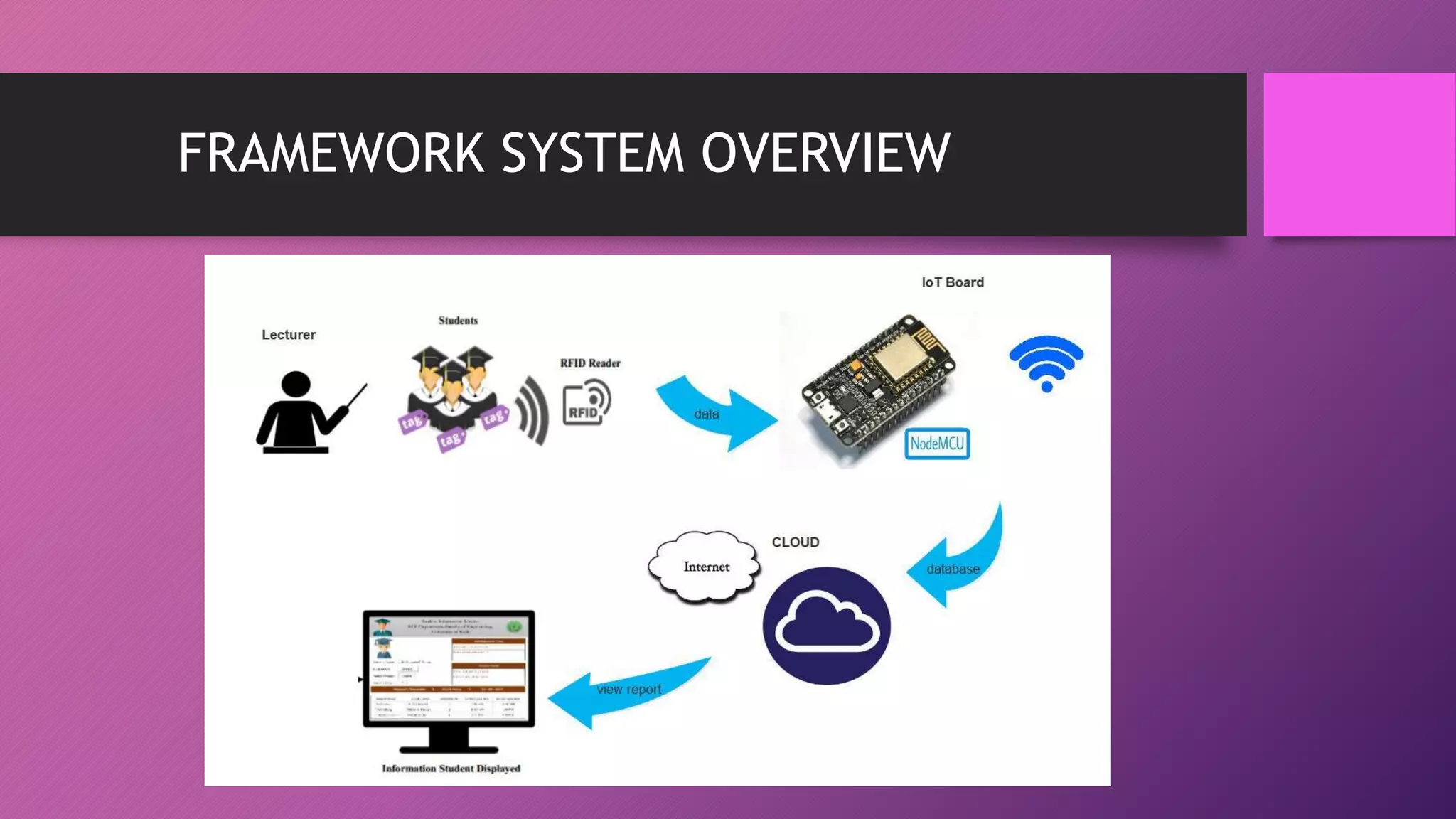
• The purpose is to develop an automated attendance system with IoT
using RFID
• To detect and maintain the attendance of students in real time
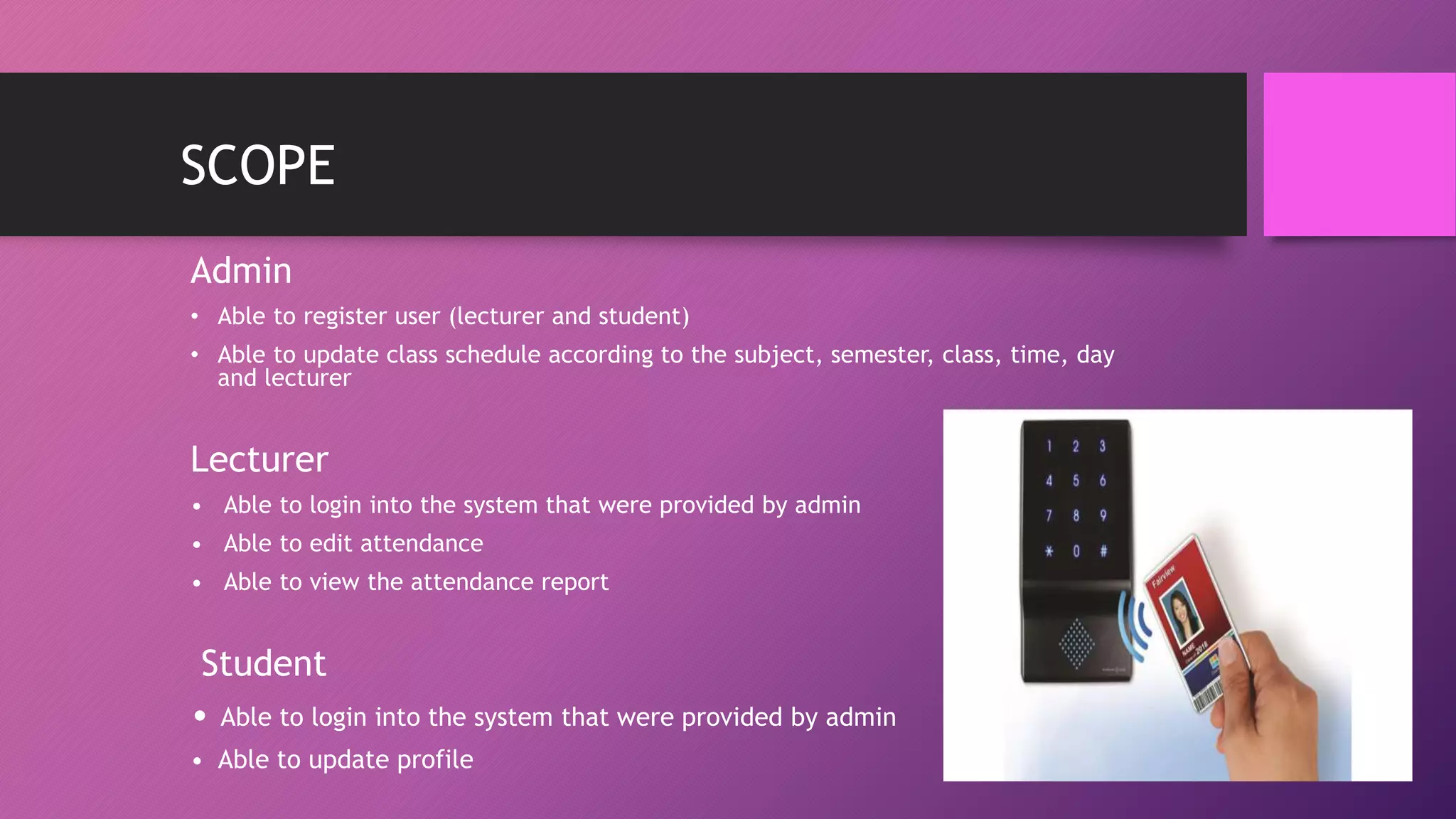
• A system that can automatically capture student's attendance by
flashing their student card at the RFID reader and it will be updated in
the online system
• Students ID (identification) card is tagged with Radio-frequency
identification (RFID) passive tag which is matched against the
database
• IoT allows “things (objects)” to be sensed and controlled remotely
across the Internet
PROBLEM STATEMENT
• Time consuming and inefficient by the students to find and sign their
name on the attendance sheet
• Some students may mistakenly or purposely signed another student's
name and the attendance sheet may got lost
• Our recent attendance is not systematic as missing out the student
name and false attendance record
OBJECTIVES
The IoT Attendance System using RFID is developed to achieve some of
this objectives:
• To study the problem of current system in the proposed system
• To develop a real time attendance system using RFID in IoT
• To test the functionality on how the system works
SCOPE
Admin
• Able to register user (lecturer and student)
• Able to update class schedule according to the subject, semester, class, time, day
and lecturer
Lecturer
• Able to login into the system that were provided by admin
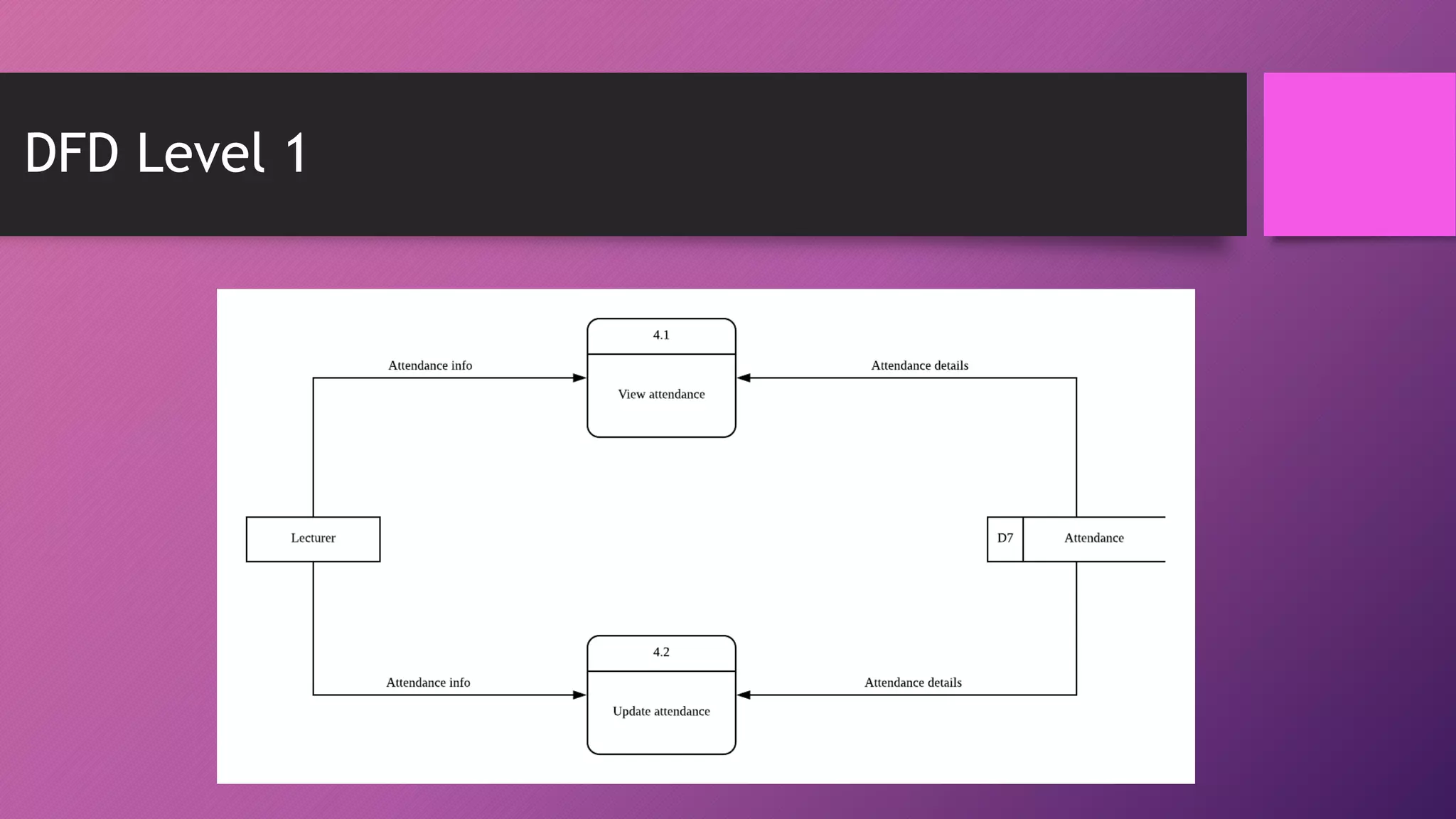
• Able to edit attendance
• Able to view the attendance report
Student
• Able to login into the system that were provided by admin
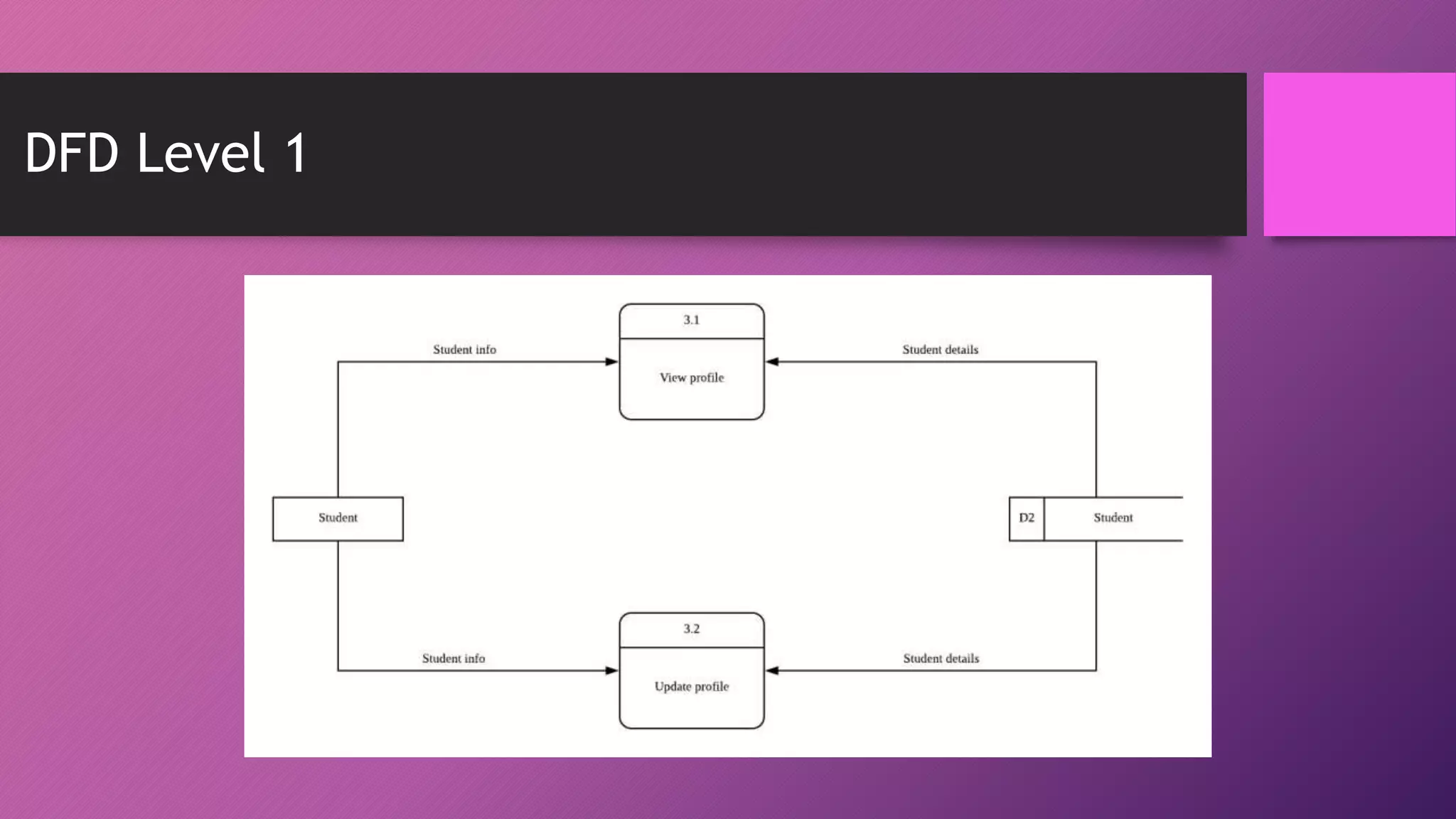
• Able to update profile
PROCESS MODEL
FRAMEWORK SYSTEM OVERVIEW
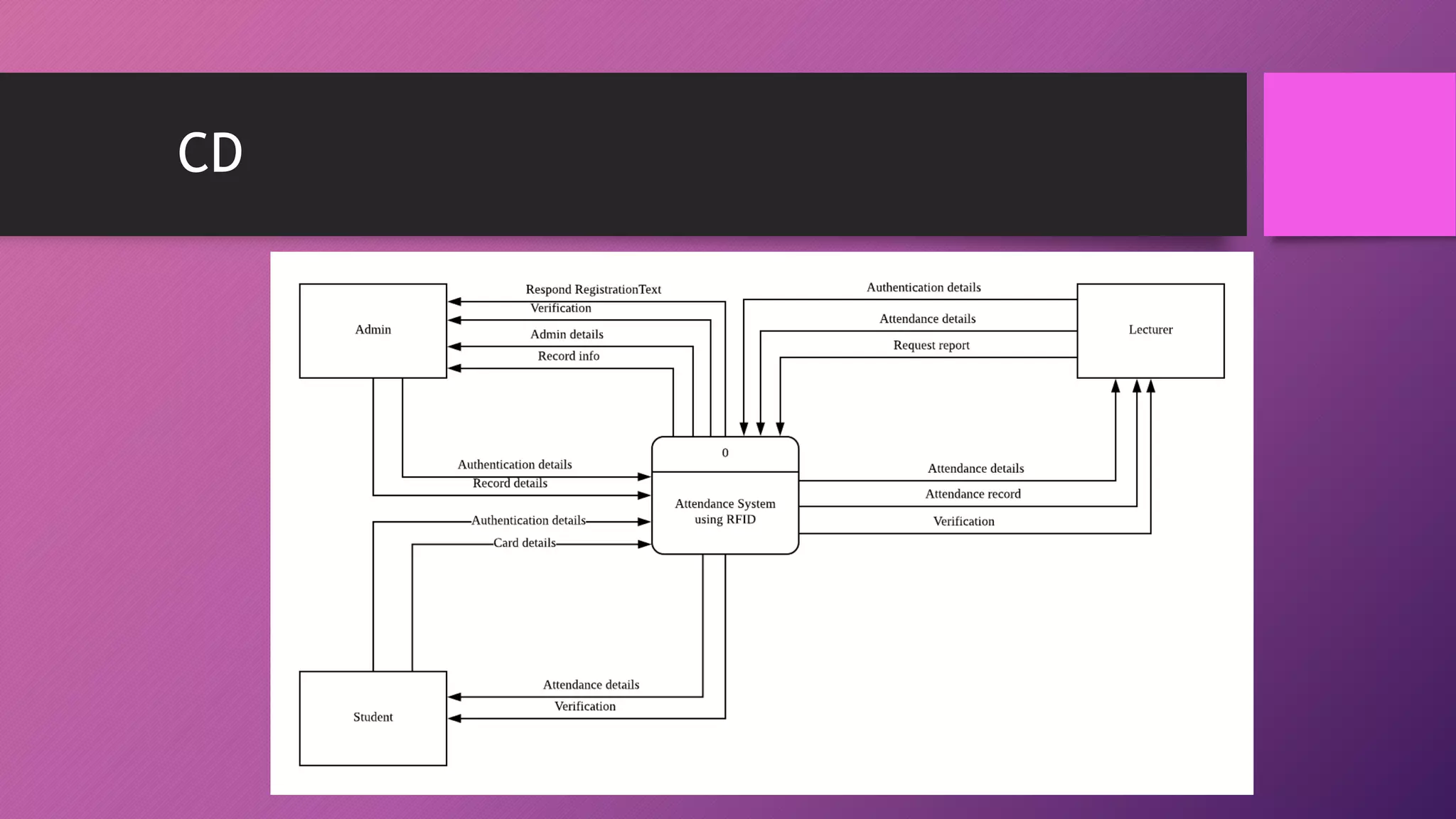
CD
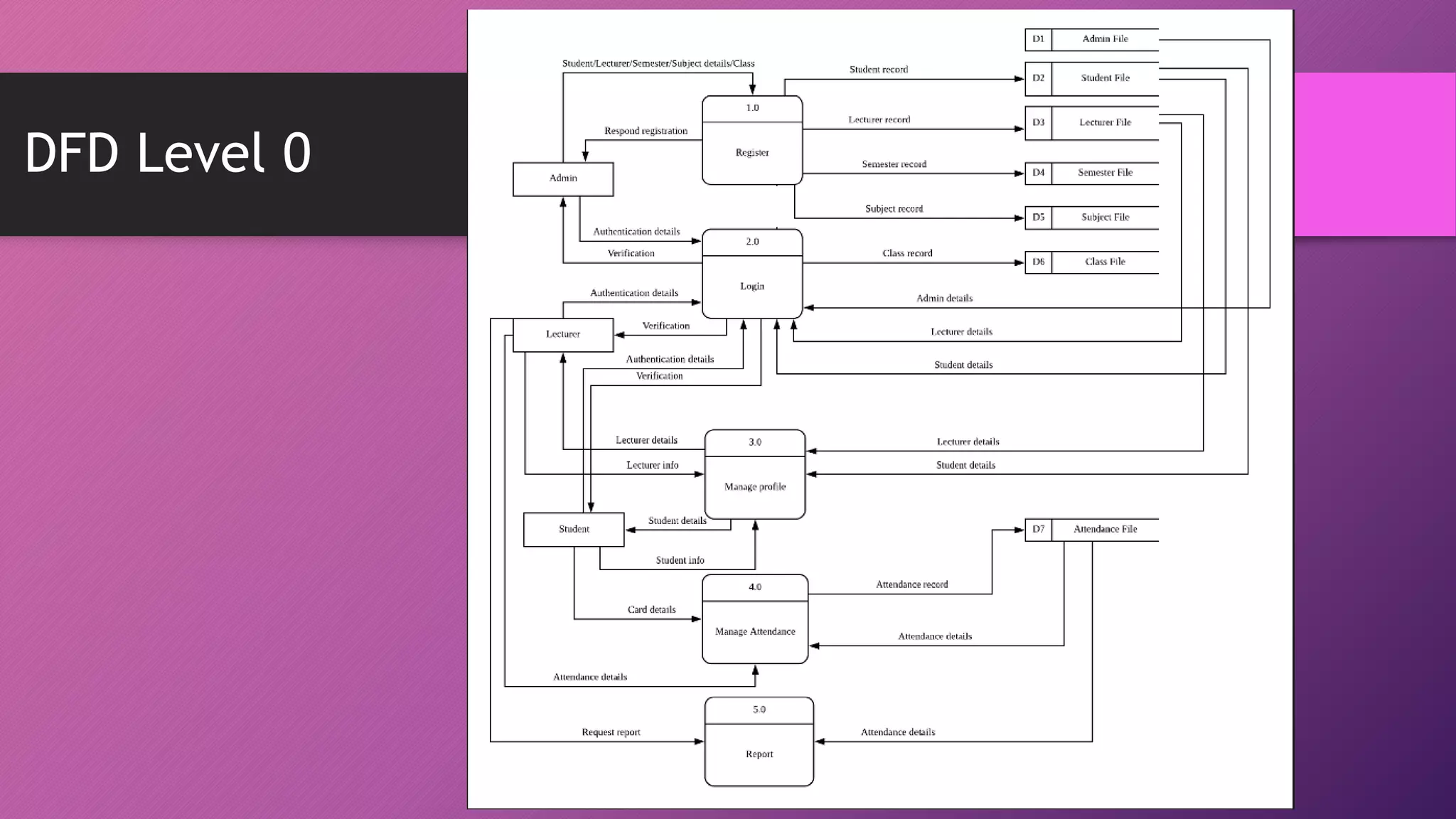
DFD Level 0
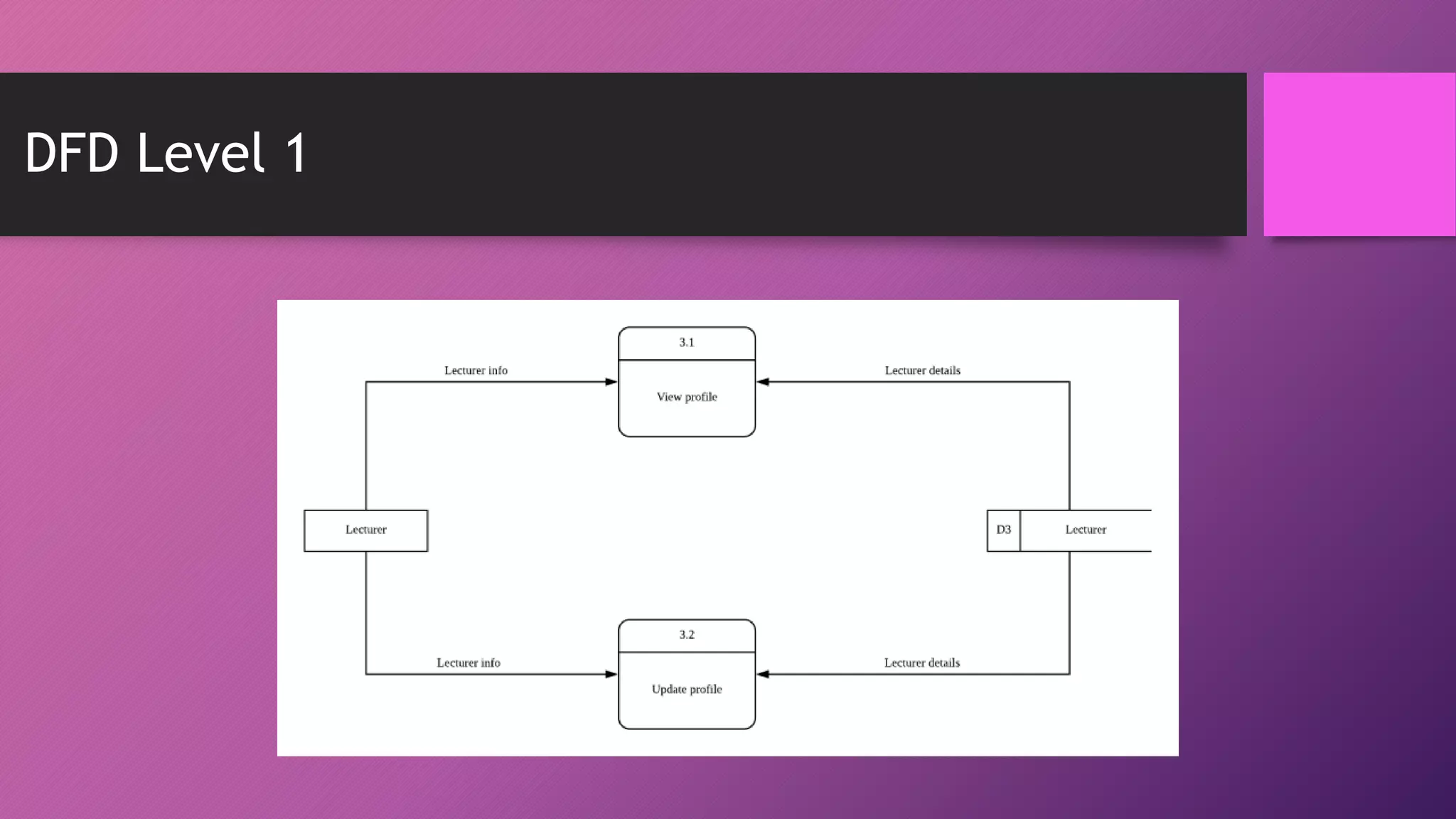
DFD Level 1
DFD Level 1
DFD Level 1
DATA MODEL
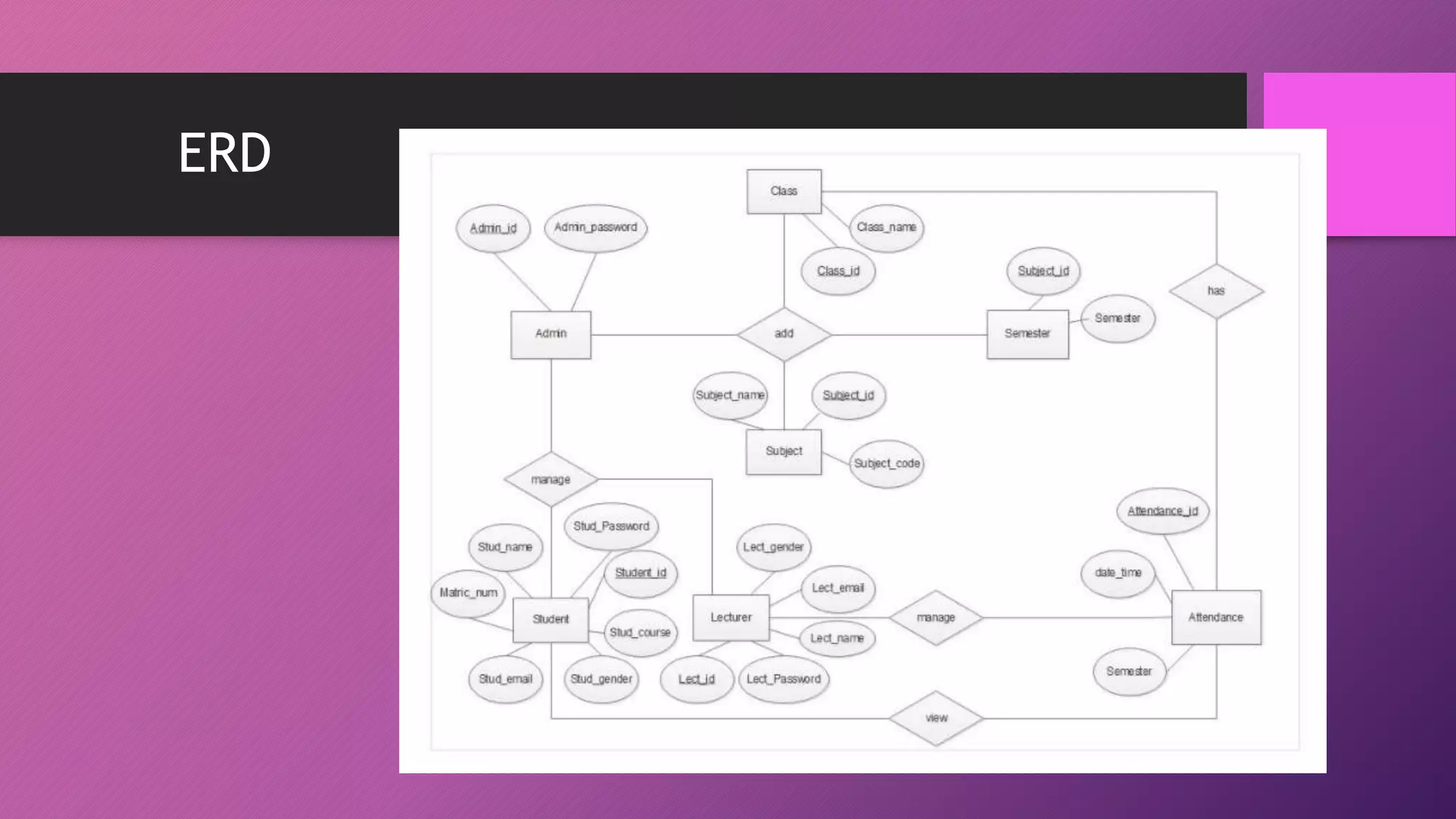
ERD
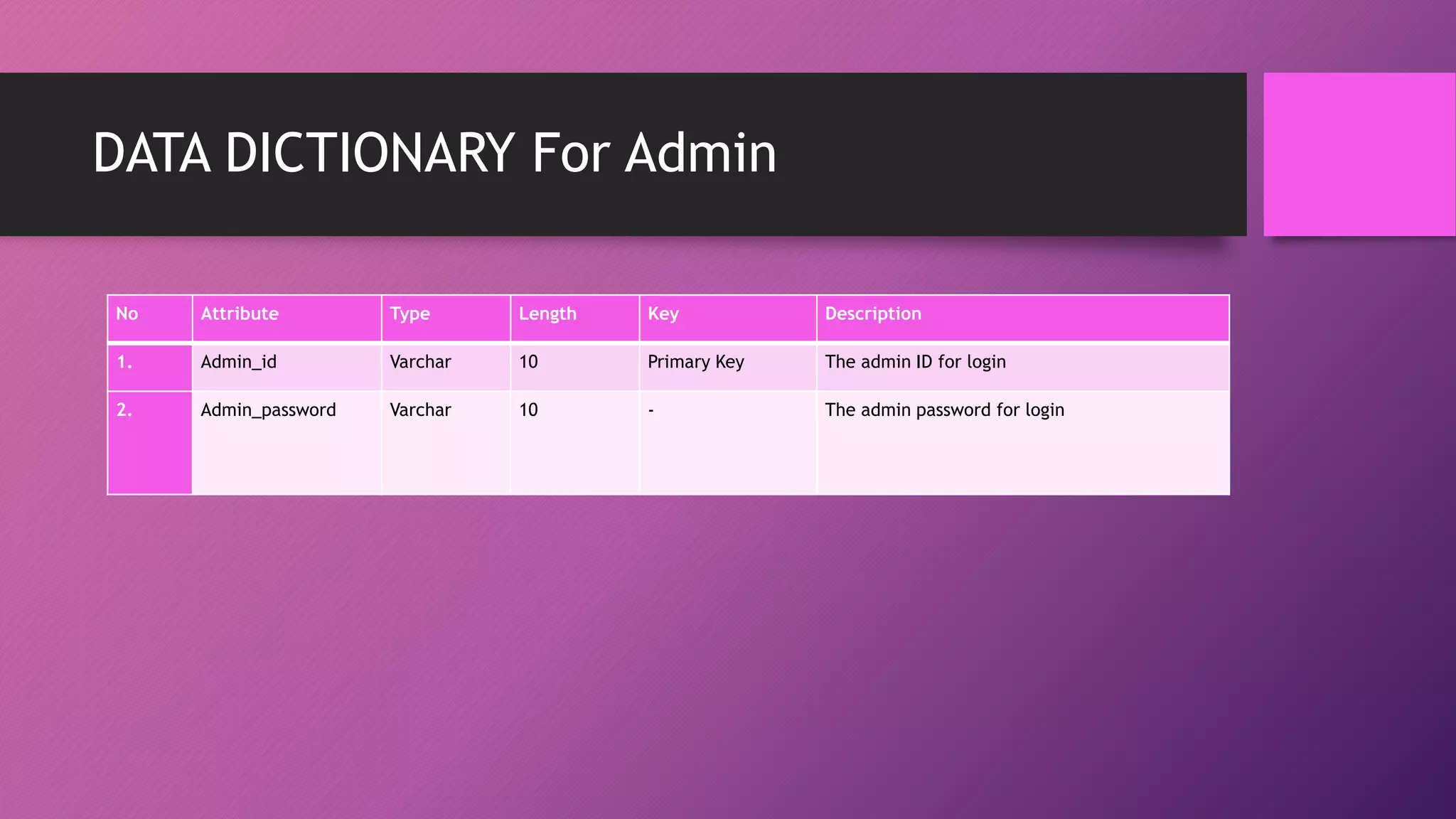
DATA DICTIONARY For Admin
No Attribute Type Length Key Description
1. Admin_id Varchar 10 Primary Key The admin ID for login
2. Admin_password Varchar 10 - The admin password for login
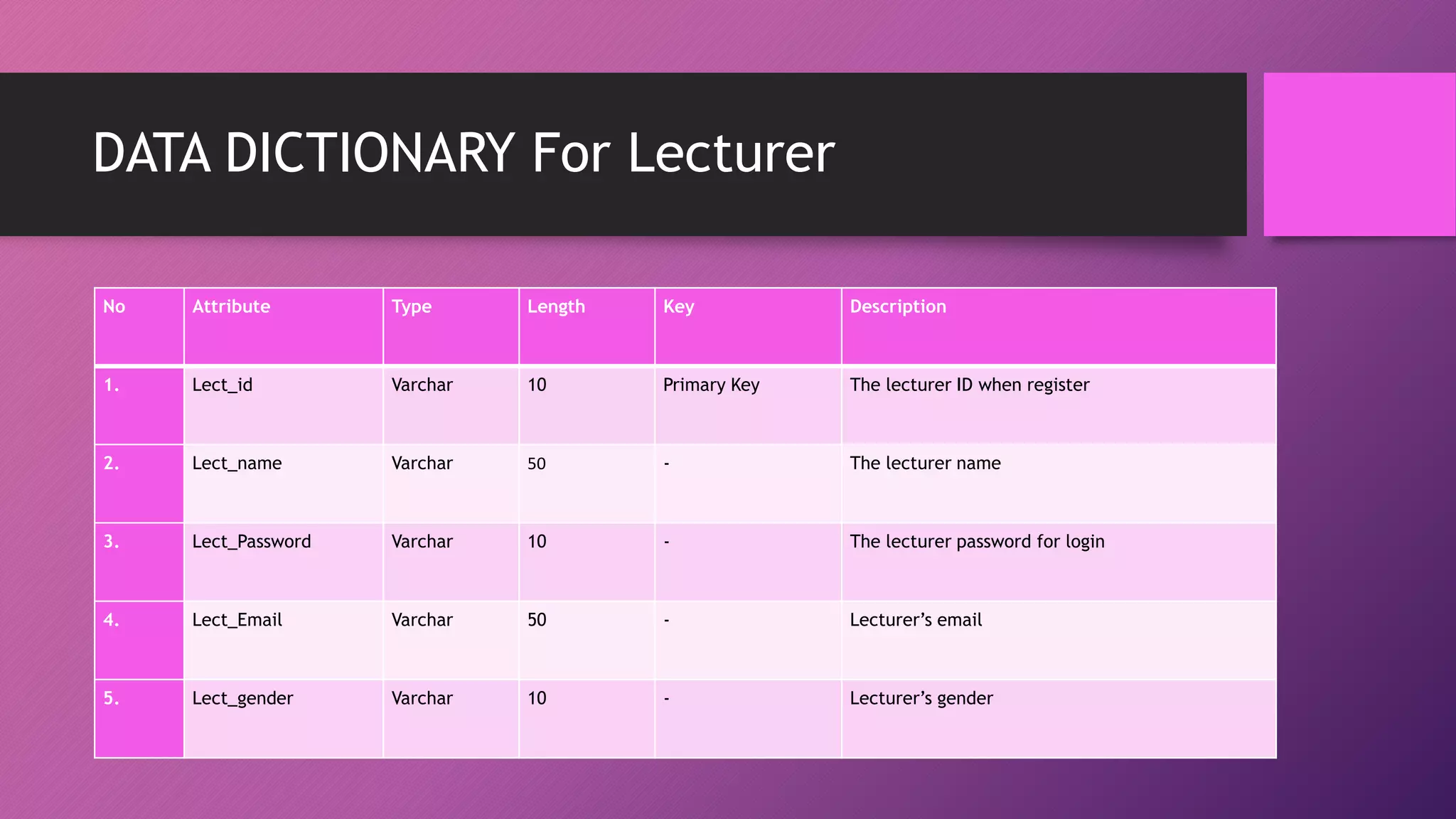
DATA DICTIONARY For Lecturer
No Attribute Type Length Key Description
1. Lect_id Varchar 10 Primary Key The lecturer ID when register
2. Lect_name Varchar 50 - The lecturer name
3. Lect_Password Varchar 10 - The lecturer password for login
4. Lect_Email Varchar 50 - Lecturer’s email
5. Lect_gender Varchar 10 - Lecturer’s gender
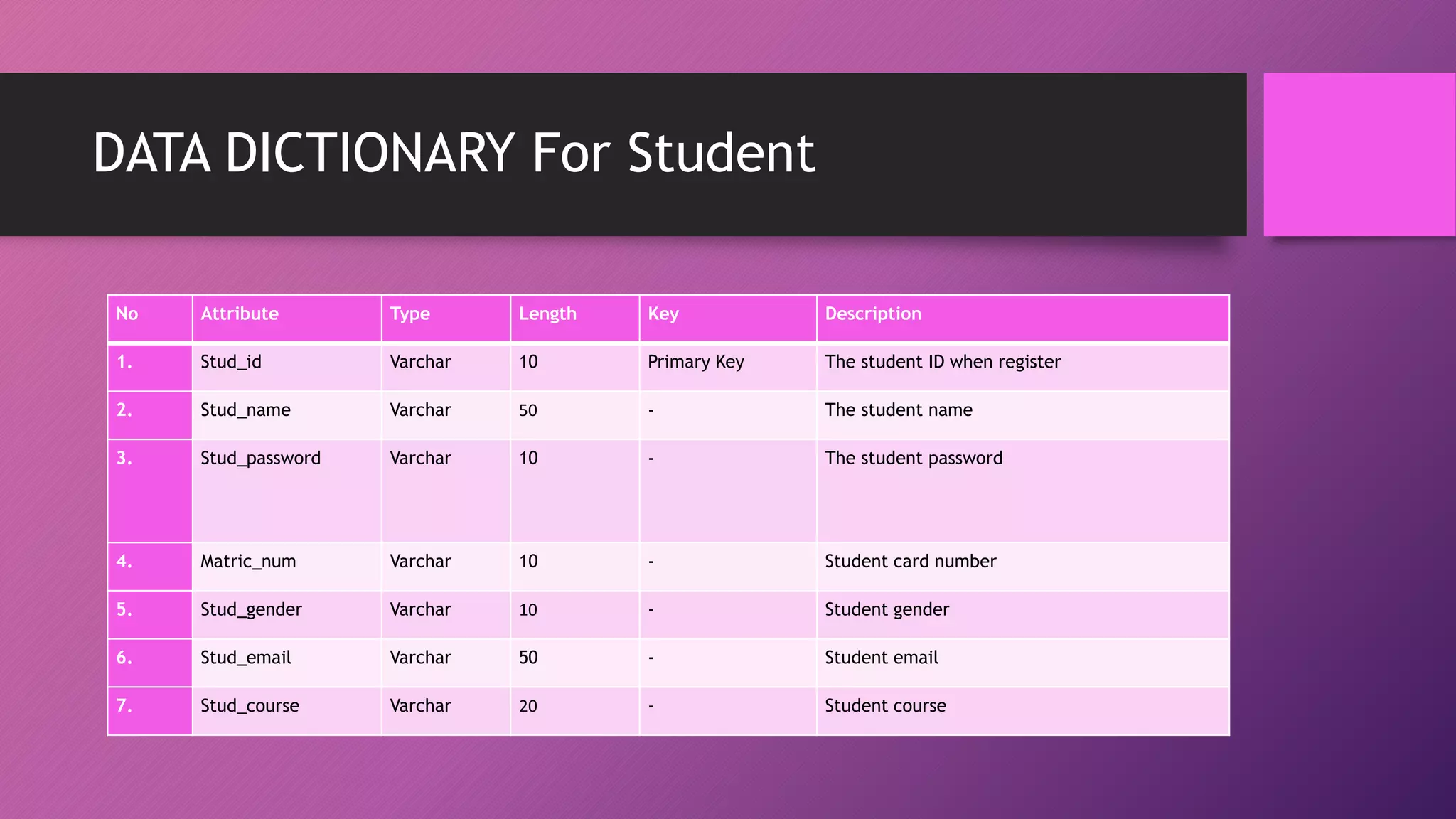
DATA DICTIONARY For Student
No Attribute Type Length Key Description
1. Stud_id Varchar 10 Primary Key The student ID when register
2. Stud_name Varchar 50 - The student name
3. Stud_password Varchar 10 - The student password
4. Matric_num Varchar 10 - Student card number
5. Stud_gender Varchar 10 - Student gender
6. Stud_email Varchar 50 - Student email
7. Stud_course Varchar 20 - Student course
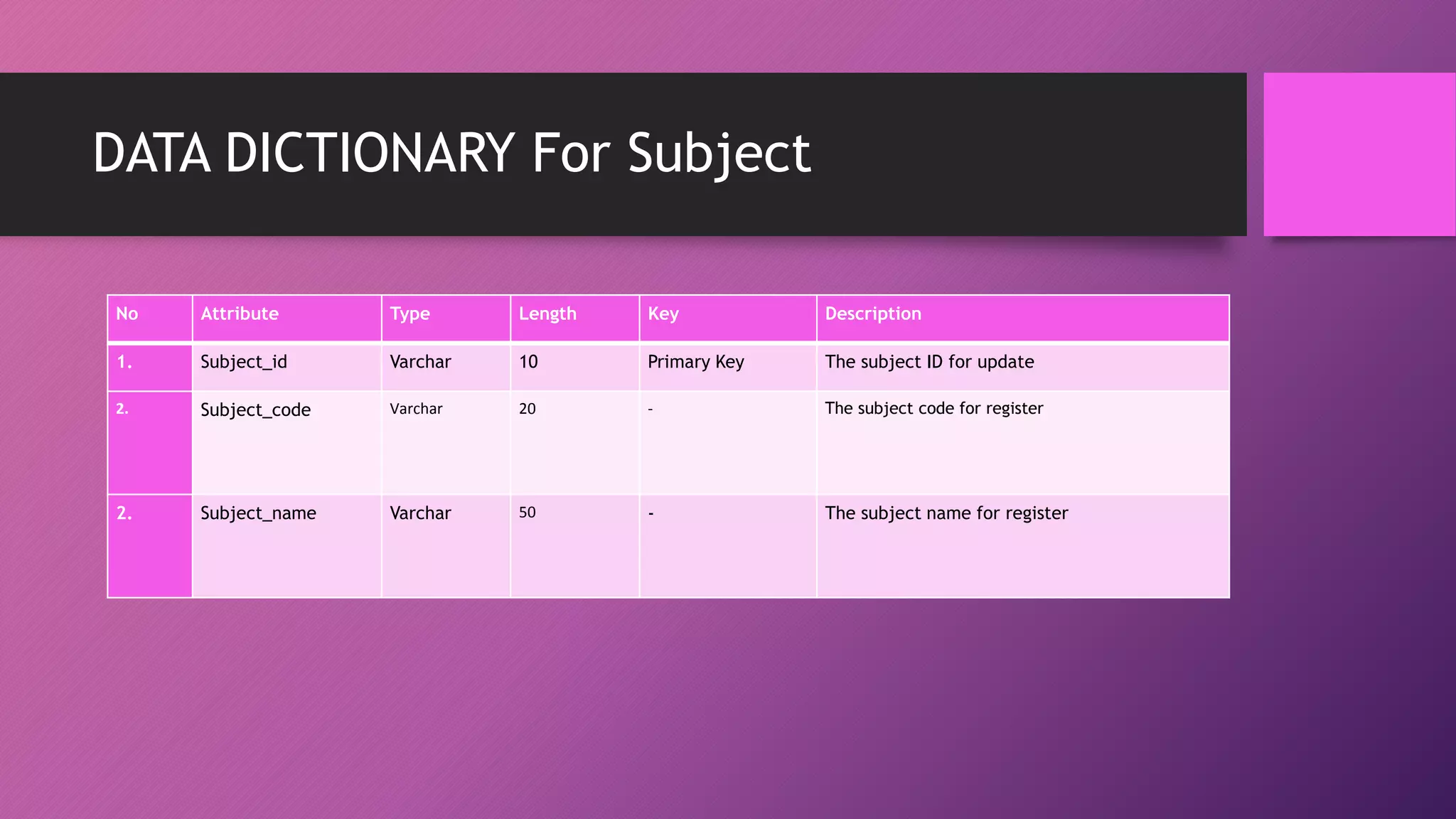
DATA DICTIONARY For Subject
No Attribute Type Length Key Description
1. Subject_id Varchar 10 Primary Key The subject ID for update
2. Subject_code Varchar 20 - The subject code for register
2. Subject_name Varchar 50 - The subject name for register
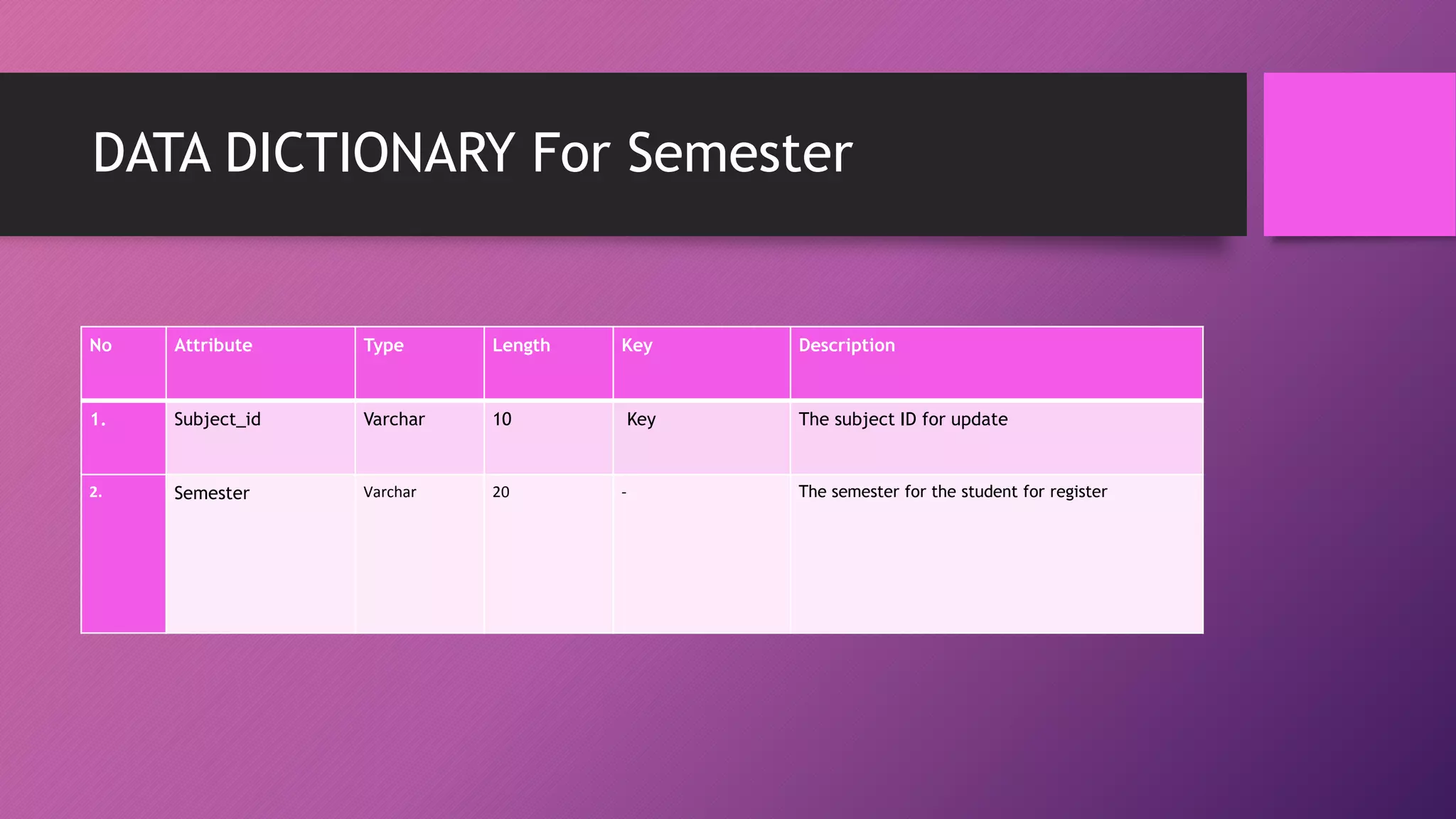
DATA DICTIONARY For Semester
No Attribute Type Length Key Description
1. Subject_id Varchar 10 Key The subject ID for update
2. Semester Varchar 20 - The semester for the student for register
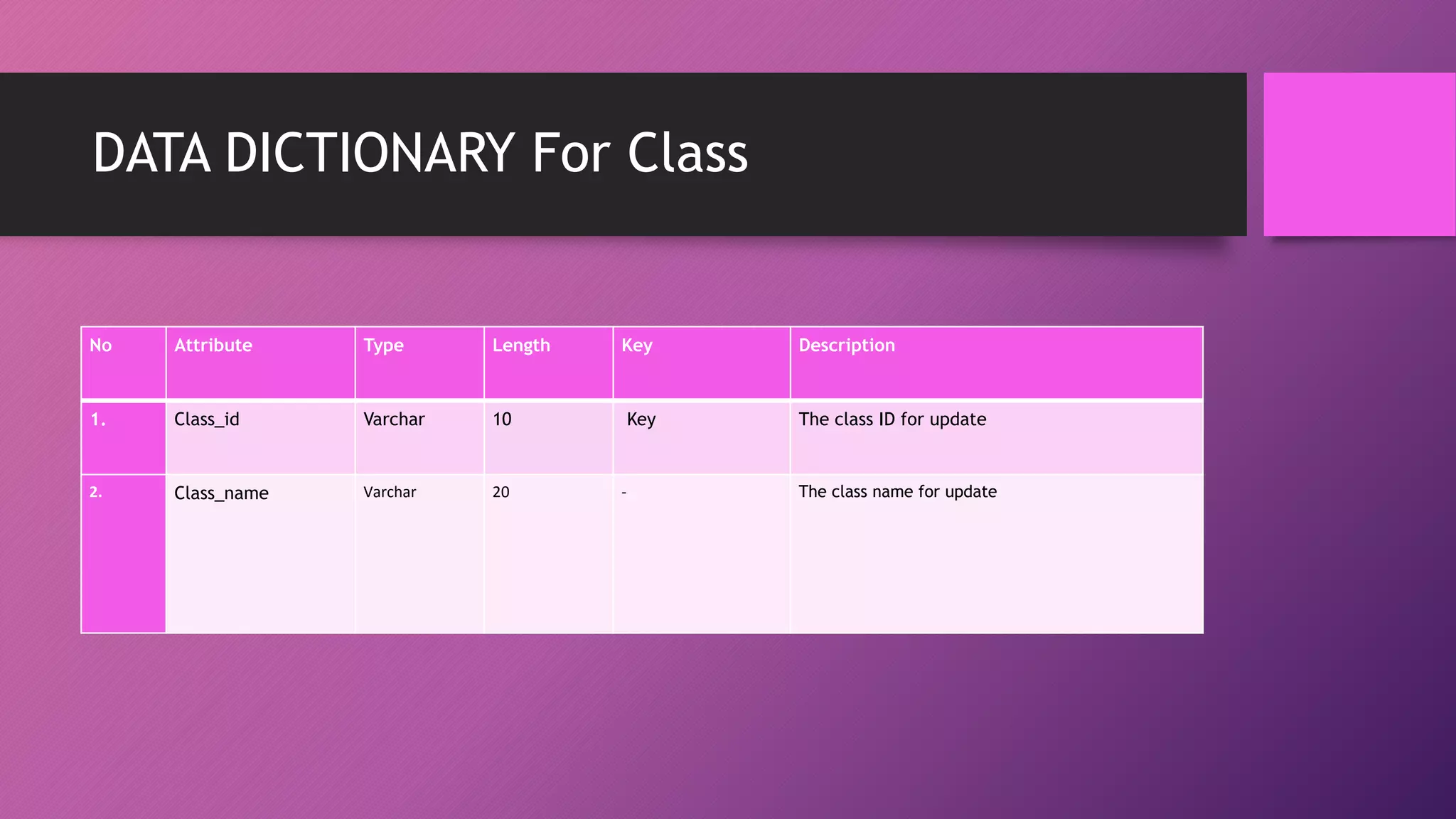
DATA DICTIONARY For Class
No Attribute Type Length Key Description
1. Class_id Varchar 10 Key The class ID for update
2. Class_name Varchar 20 - The class name for update
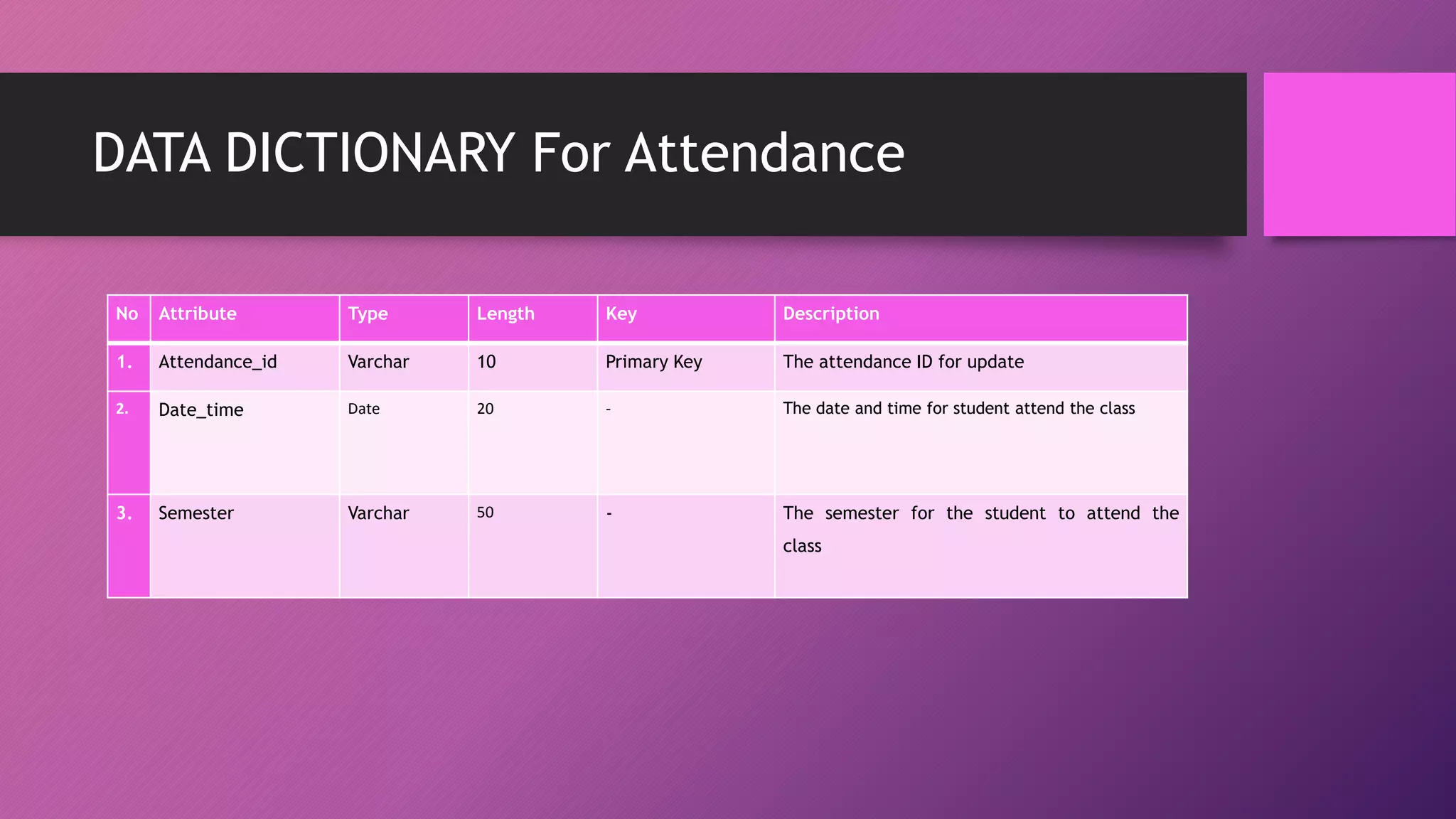
DATA DICTIONARY For Attendance
No Attribute Type Length Key Description
1. Attendance_id Varchar 10 Primary Key The attendance ID for update
2. Date_time Date 20 - The date and time for student attend the class
3. Semester Varchar 50 - The semester for the student to attend the
class
METHOD
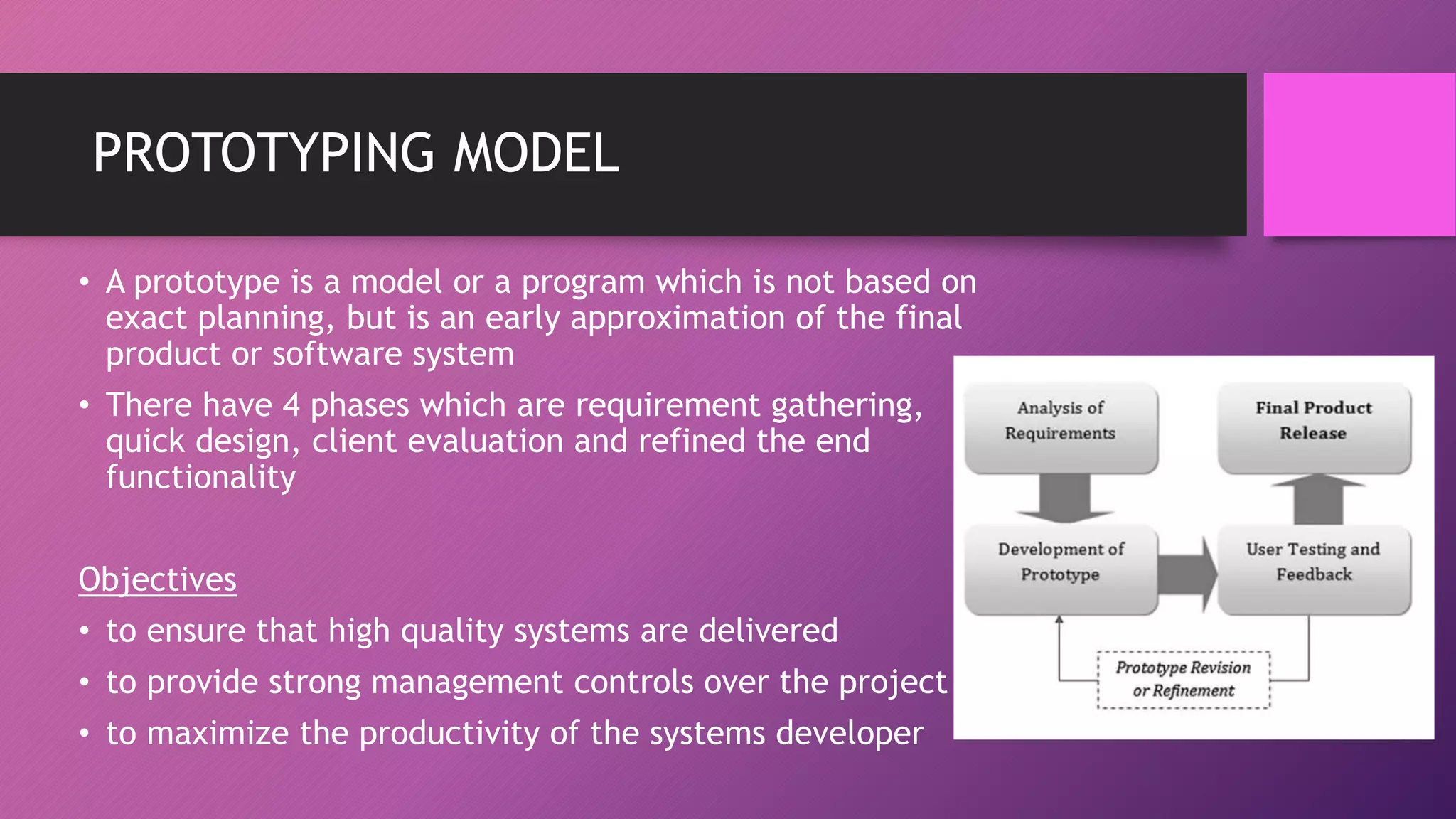
PROTOTYPING MODEL
• A prototype is a model or a program which is not based on
exact planning, but is an early approximation of the final
product or software system
• There have 4 phases which are requirement gathering,
quick design, client evaluation and refined the end
functionality
Objectives
• to ensure that high quality systems are delivered
• to provide strong management controls over the project
• to maximize the productivity of the systems developer
PROOF OF CONCEPT
What is an RFID or how does it work?
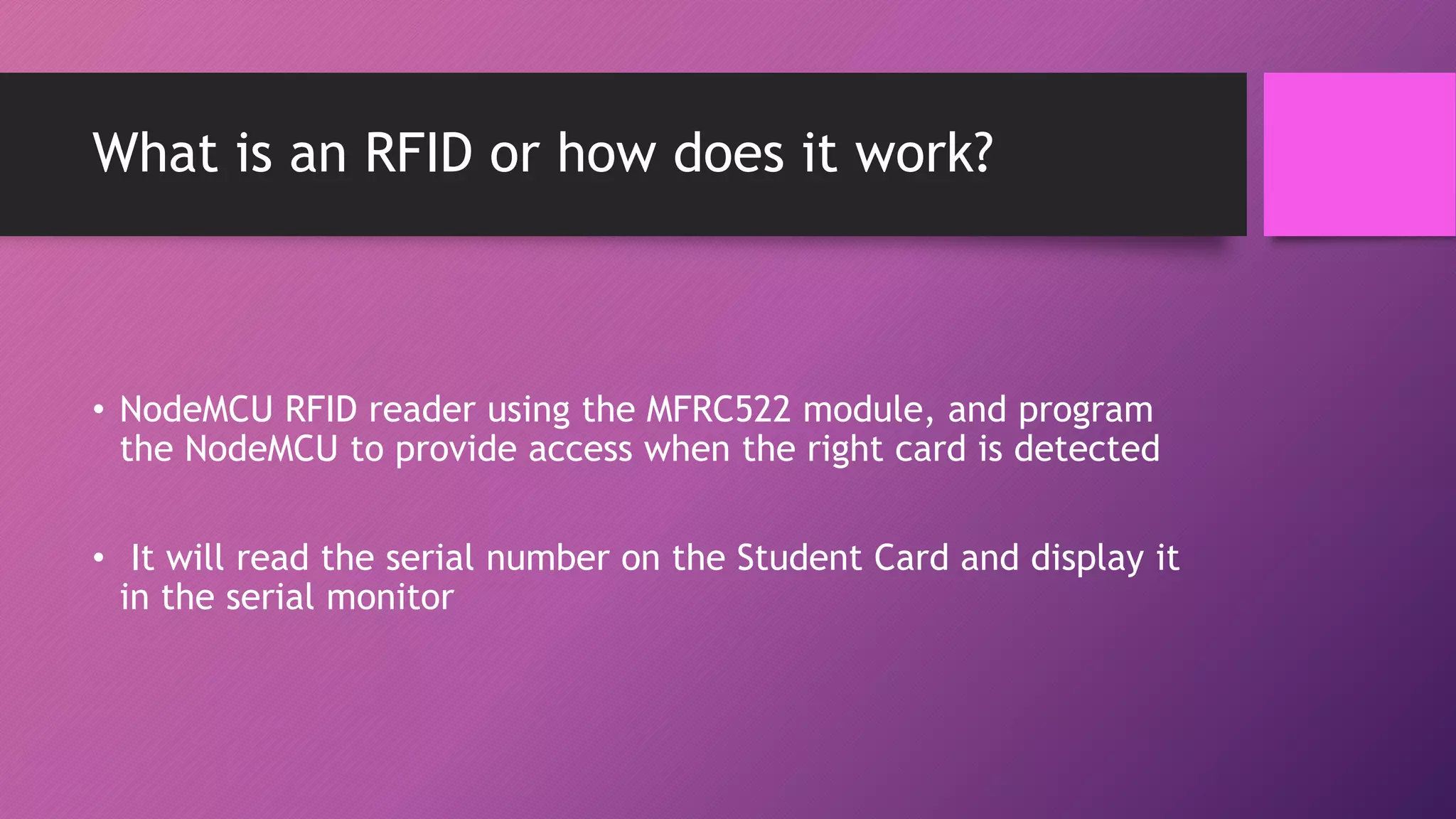
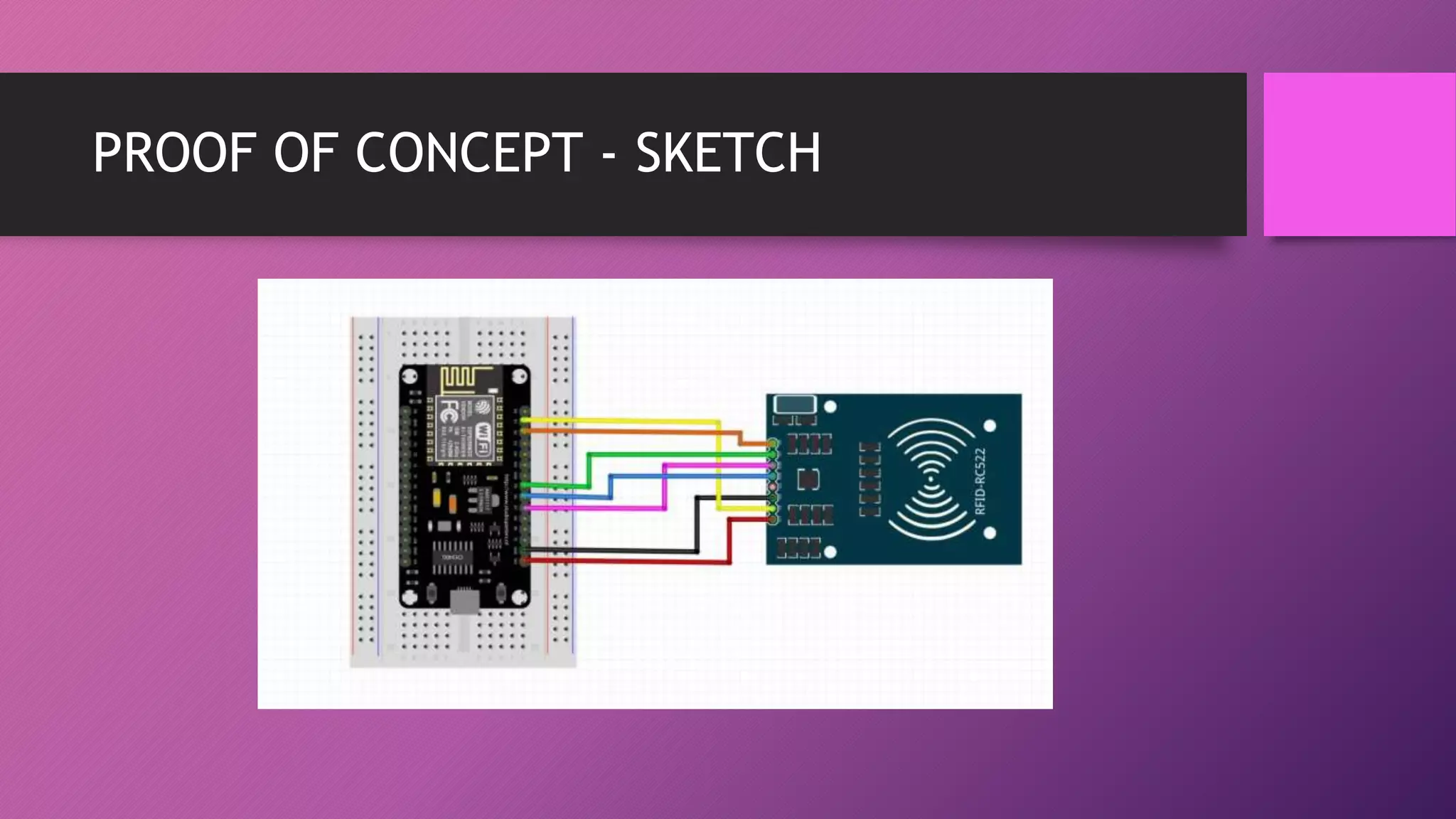
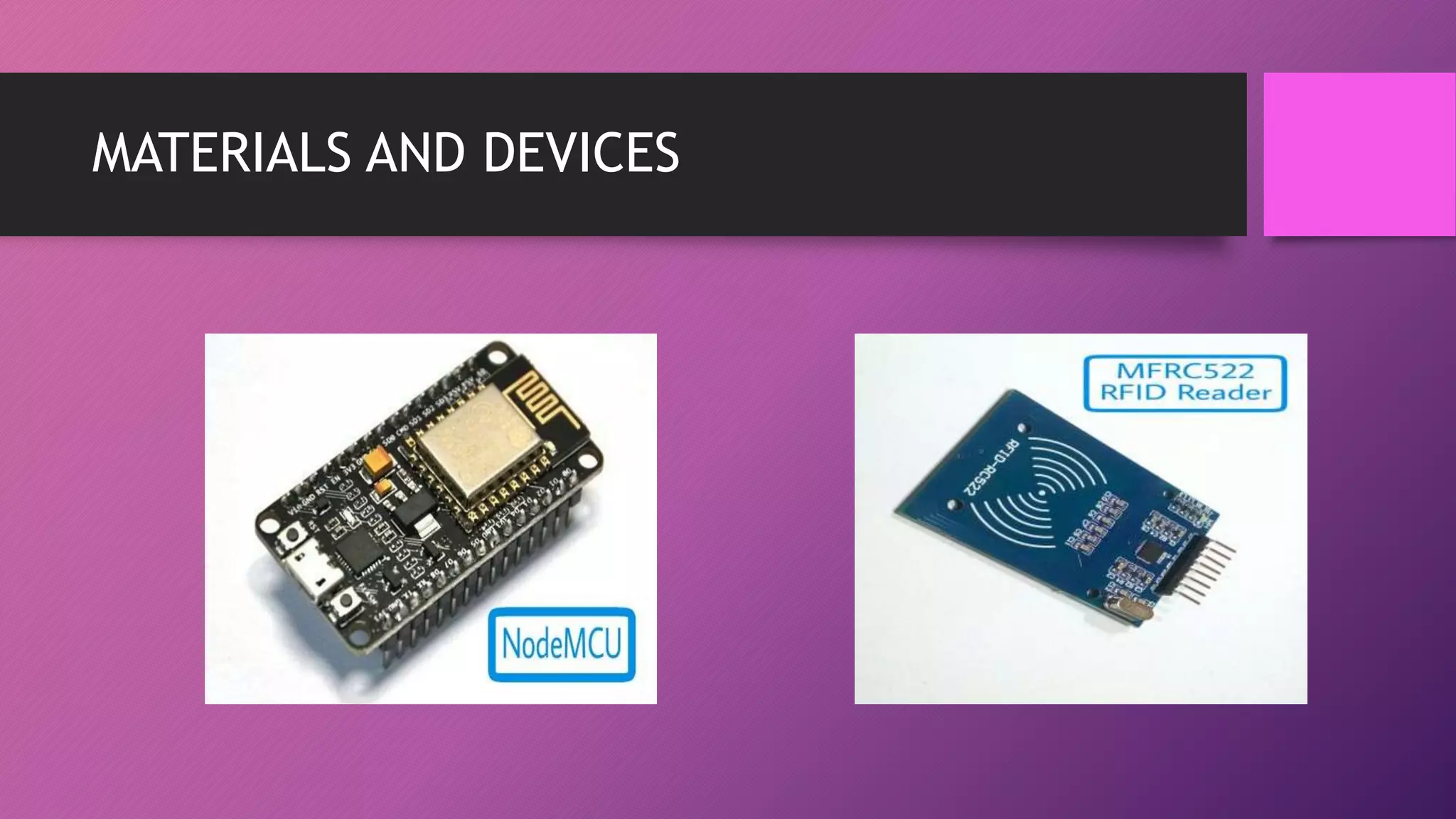
• NodeMCU RFID reader using the MFRC522 module, and program
the NodeMCU to provide access when the right card is detected
• It will read the serial number on the Student Card and display it
in the serial monitor
What's RFID?
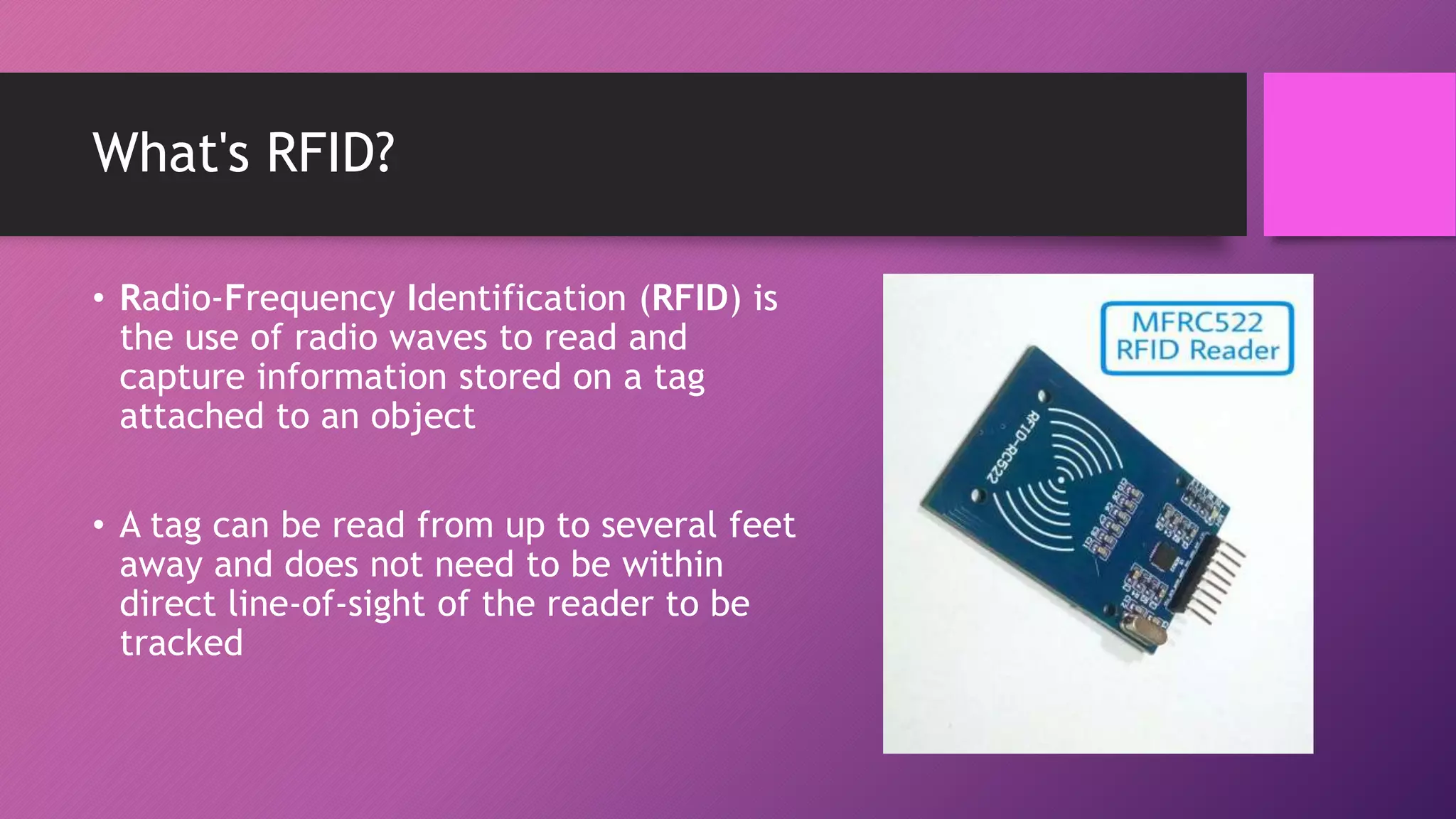
• Radio-Frequency Identification (RFID) is
the use of radio waves to read and
capture information stored on a tag
attached to an object
• A tag can be read from up to several feet
away and does not need to be within
direct line-of-sight of the reader to be
tracked
RFID reader
• device used to gather information from an RFID tag, which is used to
track individual objects. Radio waves are used to transfer data from the
tag to a reader
Passive tag
• is an RFID tag that does not contain a battery, the power is supplied by
the reader. When radio waves from the reader are encountered by a
passive rfid tag, the coiled antenna within the tag forms a magnetic
field. The tag draws power from it, energizing the circuits in the tag
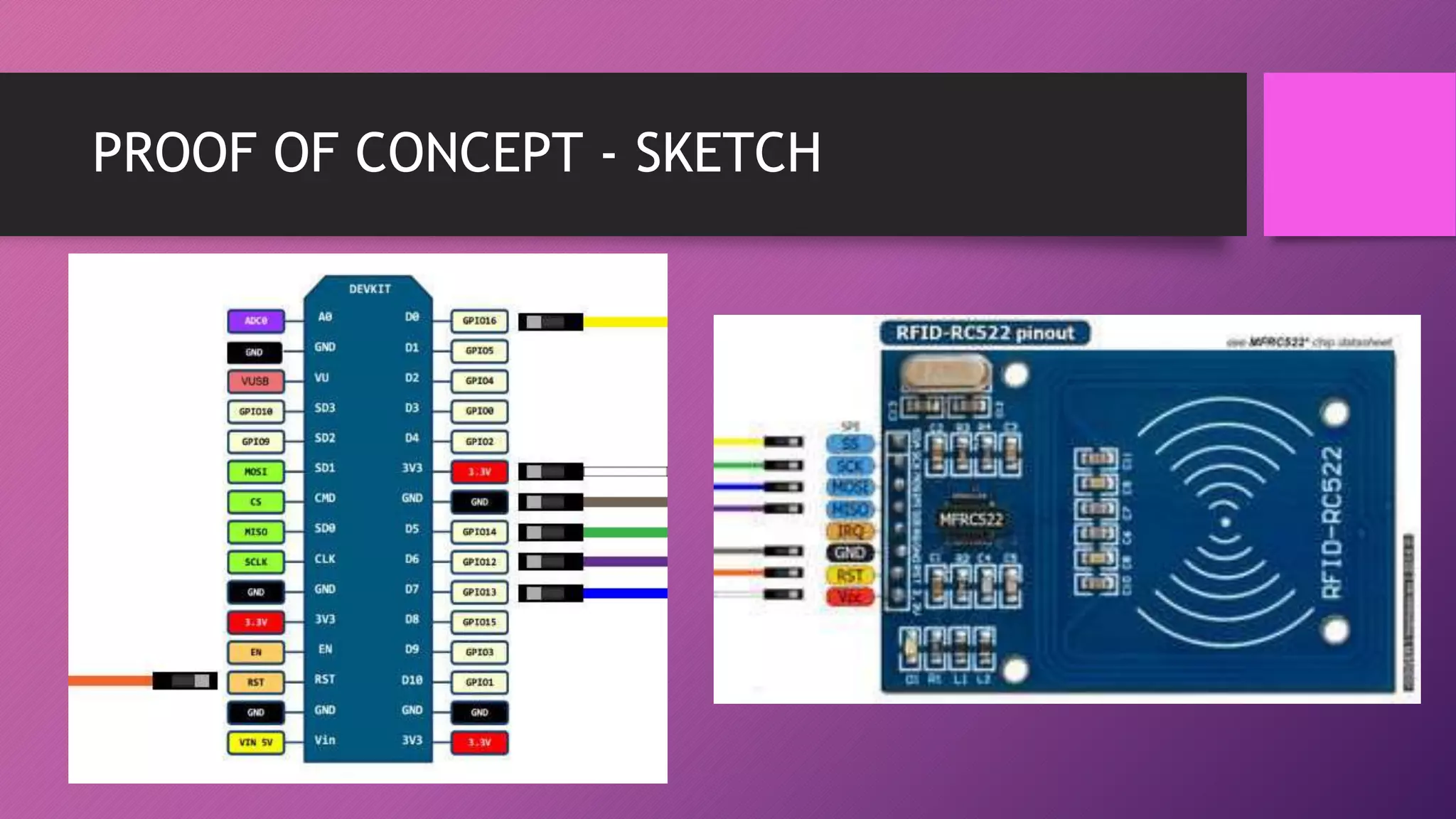
PROOF OF CONCEPT - SKETCH
MATERIALS AND DEVICES
THANK YOU

Attendance System using RFID

  • 1.
    NAME : NAZURANAJMI BINTI MOHD ARIF MATRIC NO: BTCL15041157 SUPERVISOR: PROF MADYA DR ENGKU FADZLI HASAN BIN SYED ABDULLAH TITLE: ATTENDANCE SYSTEM USING RFID FYP PRESENTATION 1
  • 2.
    INTRODUCTION • The purposeis to develop an automated attendance system with IoT using RFID • To detect and maintain the attendance of students in real time • A system that can automatically capture student's attendance by flashing their student card at the RFID reader and it will be updated in the online system • Students ID (identification) card is tagged with Radio-frequency identification (RFID) passive tag which is matched against the database • IoT allows “things (objects)” to be sensed and controlled remotely across the Internet
  • 3.
    PROBLEM STATEMENT • Timeconsuming and inefficient by the students to find and sign their name on the attendance sheet • Some students may mistakenly or purposely signed another student's name and the attendance sheet may got lost • Our recent attendance is not systematic as missing out the student name and false attendance record
  • 4.
    OBJECTIVES The IoT AttendanceSystem using RFID is developed to achieve some of this objectives: • To study the problem of current system in the proposed system • To develop a real time attendance system using RFID in IoT • To test the functionality on how the system works
  • 5.
    SCOPE Admin • Able toregister user (lecturer and student) • Able to update class schedule according to the subject, semester, class, time, day and lecturer Lecturer • Able to login into the system that were provided by admin • Able to edit attendance • Able to view the attendance report Student • Able to login into the system that were provided by admin • Able to update profile
  • 6.
  • 7.
  • 8.
  • 9.
  • 10.
  • 11.
  • 12.
  • 13.
  • 14.
  • 15.
    DATA DICTIONARY ForAdmin No Attribute Type Length Key Description 1. Admin_id Varchar 10 Primary Key The admin ID for login 2. Admin_password Varchar 10 - The admin password for login
  • 16.
    DATA DICTIONARY ForLecturer No Attribute Type Length Key Description 1. Lect_id Varchar 10 Primary Key The lecturer ID when register 2. Lect_name Varchar 50 - The lecturer name 3. Lect_Password Varchar 10 - The lecturer password for login 4. Lect_Email Varchar 50 - Lecturer’s email 5. Lect_gender Varchar 10 - Lecturer’s gender
  • 17.
    DATA DICTIONARY ForStudent No Attribute Type Length Key Description 1. Stud_id Varchar 10 Primary Key The student ID when register 2. Stud_name Varchar 50 - The student name 3. Stud_password Varchar 10 - The student password 4. Matric_num Varchar 10 - Student card number 5. Stud_gender Varchar 10 - Student gender 6. Stud_email Varchar 50 - Student email 7. Stud_course Varchar 20 - Student course
  • 18.
    DATA DICTIONARY ForSubject No Attribute Type Length Key Description 1. Subject_id Varchar 10 Primary Key The subject ID for update 2. Subject_code Varchar 20 - The subject code for register 2. Subject_name Varchar 50 - The subject name for register
  • 19.
    DATA DICTIONARY ForSemester No Attribute Type Length Key Description 1. Subject_id Varchar 10 Key The subject ID for update 2. Semester Varchar 20 - The semester for the student for register
  • 20.
    DATA DICTIONARY ForClass No Attribute Type Length Key Description 1. Class_id Varchar 10 Key The class ID for update 2. Class_name Varchar 20 - The class name for update
  • 21.
    DATA DICTIONARY ForAttendance No Attribute Type Length Key Description 1. Attendance_id Varchar 10 Primary Key The attendance ID for update 2. Date_time Date 20 - The date and time for student attend the class 3. Semester Varchar 50 - The semester for the student to attend the class
  • 22.
  • 23.
    PROTOTYPING MODEL • Aprototype is a model or a program which is not based on exact planning, but is an early approximation of the final product or software system • There have 4 phases which are requirement gathering, quick design, client evaluation and refined the end functionality Objectives • to ensure that high quality systems are delivered • to provide strong management controls over the project • to maximize the productivity of the systems developer
  • 24.
  • 25.
    What is anRFID or how does it work? • NodeMCU RFID reader using the MFRC522 module, and program the NodeMCU to provide access when the right card is detected • It will read the serial number on the Student Card and display it in the serial monitor
  • 26.
    What's RFID? • Radio-FrequencyIdentification (RFID) is the use of radio waves to read and capture information stored on a tag attached to an object • A tag can be read from up to several feet away and does not need to be within direct line-of-sight of the reader to be tracked
  • 27.
    RFID reader • deviceused to gather information from an RFID tag, which is used to track individual objects. Radio waves are used to transfer data from the tag to a reader Passive tag • is an RFID tag that does not contain a battery, the power is supplied by the reader. When radio waves from the reader are encountered by a passive rfid tag, the coiled antenna within the tag forms a magnetic field. The tag draws power from it, energizing the circuits in the tag
  • 28.
  • 29.
  • 30.
  • 31.