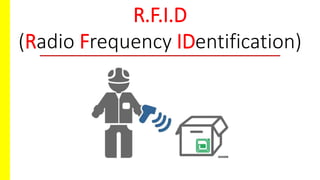
R.F.I.D
(Radio Frequency IDentification)
Contents
1. What is RFID?
2. Applications of RFID.
3. History.
4. RFID system.
5. RFID in Business.
6. Advantages and Disadvantages.
What is RFID?
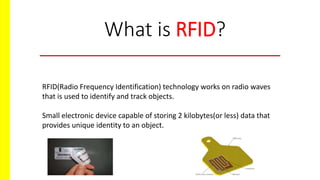
RFID(Radio Frequency Identification) technology works on radio waves
that is used to identify and track objects.
Small electronic device capable of storing 2 kilobytes(or less) data that
provides unique identity to an object.
It could be used to identify books in a
library.
Or.. It could be used to identify items in
shopping malls.
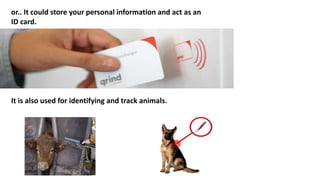
or.. It could store your personal information and act as an
ID card.
It is also used for identifying and track animals.
History
RFID was invented in Harry Stockman in 1948.
Commercial use started in 1990.
It was firstly used during WW2 by United Kingdom to identify enemy
planes.
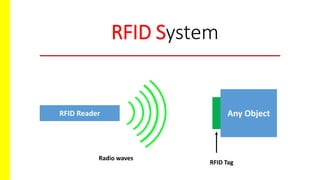
RFID System
RFID Reader Any Object
RFID Tag
Radio waves
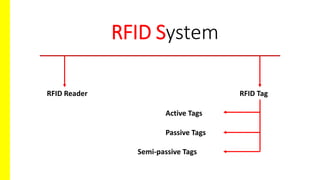
RFID System
RFID Reader RFID Tag
Active Tags
Passive Tags
Semi-passive Tags
RFID Reader
RFID reader is a two way radio transmitter-receiver used to gather
information from a RFID tag.
RFID reader sends a signal to a tag and also receives/reads its response.
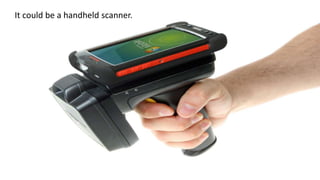
It could be a handheld scanner.
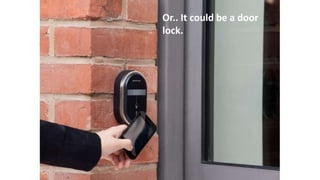
Or.. It could be a door
lock.
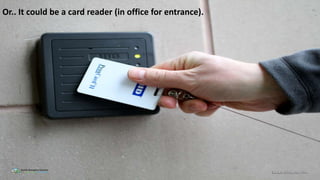
Or.. It could be a card reader (in office for entrance).
RFID in business
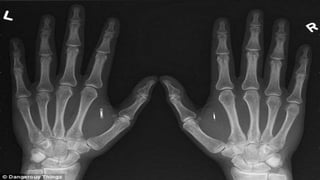
Nowadays, companies have agreed to implant RFID microchips inside
their employees body for security and for ease of use.
They implant RFID chips in staff members' hands in between their
thumb and forefinger.
WHY ???
Once implanted, a staff members can perform couple of things just by
the wave of their hands like opening doors, use of copy machines,
logging into our office computers, unlocking phones, sharing business
cards, storing medical/health information, and used as payment at other
RFID terminals.
Advantages
1. Unlike barcode reader should not be in LOS for sending and receiving
signals.
2. RFID tags can store more information.
3. Effective way to track animals as well as other objects.
4. Unlike barcode these tags can read as well as write.
Disadvantages
1. Active RFID tags are costly due to batteries.
2. Privacy is a concern because they can easily be tapped.
3. RFID devices take large amount of time during programming
4. Lack of awareness in people.
Thank you

RFID (Radio Frequency Identification)

  • 1.
  • 2.
    Contents 1. What isRFID? 2. Applications of RFID. 3. History. 4. RFID system. 5. RFID in Business. 6. Advantages and Disadvantages.
  • 3.
    What is RFID? RFID(RadioFrequency Identification) technology works on radio waves that is used to identify and track objects. Small electronic device capable of storing 2 kilobytes(or less) data that provides unique identity to an object.
  • 4.
    It could beused to identify books in a library.
  • 5.
    Or.. It couldbe used to identify items in shopping malls.
  • 6.
    or.. It couldstore your personal information and act as an ID card. It is also used for identifying and track animals.
  • 7.
    History RFID was inventedin Harry Stockman in 1948. Commercial use started in 1990. It was firstly used during WW2 by United Kingdom to identify enemy planes.
  • 8.
    RFID System RFID ReaderAny Object RFID Tag Radio waves
  • 9.
    RFID System RFID ReaderRFID Tag Active Tags Passive Tags Semi-passive Tags
  • 10.
    RFID Reader RFID readeris a two way radio transmitter-receiver used to gather information from a RFID tag. RFID reader sends a signal to a tag and also receives/reads its response.
  • 11.
    It could bea handheld scanner.
  • 12.
    Or.. It couldbe a door lock.
  • 13.
    Or.. It couldbe a card reader (in office for entrance).
  • 14.
    RFID in business Nowadays,companies have agreed to implant RFID microchips inside their employees body for security and for ease of use. They implant RFID chips in staff members' hands in between their thumb and forefinger.
  • 18.
    WHY ??? Once implanted,a staff members can perform couple of things just by the wave of their hands like opening doors, use of copy machines, logging into our office computers, unlocking phones, sharing business cards, storing medical/health information, and used as payment at other RFID terminals.
  • 19.
    Advantages 1. Unlike barcodereader should not be in LOS for sending and receiving signals. 2. RFID tags can store more information. 3. Effective way to track animals as well as other objects. 4. Unlike barcode these tags can read as well as write.
  • 20.
    Disadvantages 1. Active RFIDtags are costly due to batteries. 2. Privacy is a concern because they can easily be tapped. 3. RFID devices take large amount of time during programming 4. Lack of awareness in people.
  • 21.