





The Vehicle Tracking and Ticketing System (VTTS) utilizes RFID technology for the electronic identification of buses and ticketing of passengers, enhancing operational efficiency and reducing errors compared to traditional methods. The system features automatic and manual logs, vehicle profile analysis, and generates customized management reports, ultimately leading to faster throughput and improved quality control. RFID technology is favored for its no-line-of-sight capabilities and lower operational costs, making it suitable for future applications in various sectors.
Introduction to VTTS using RFID for vehicle identification and ticketing, focusing on enhancing efficiency and reducing errors.
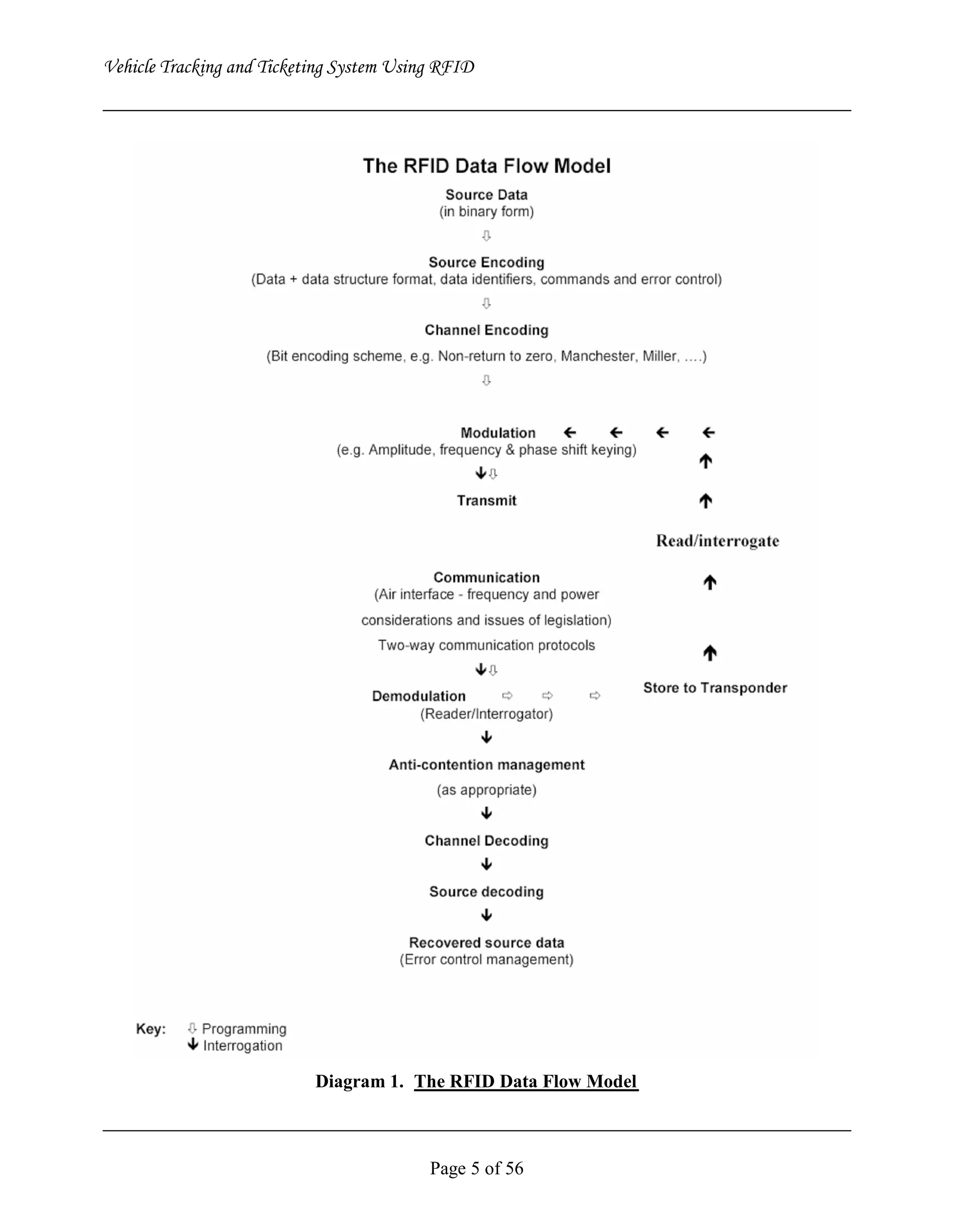
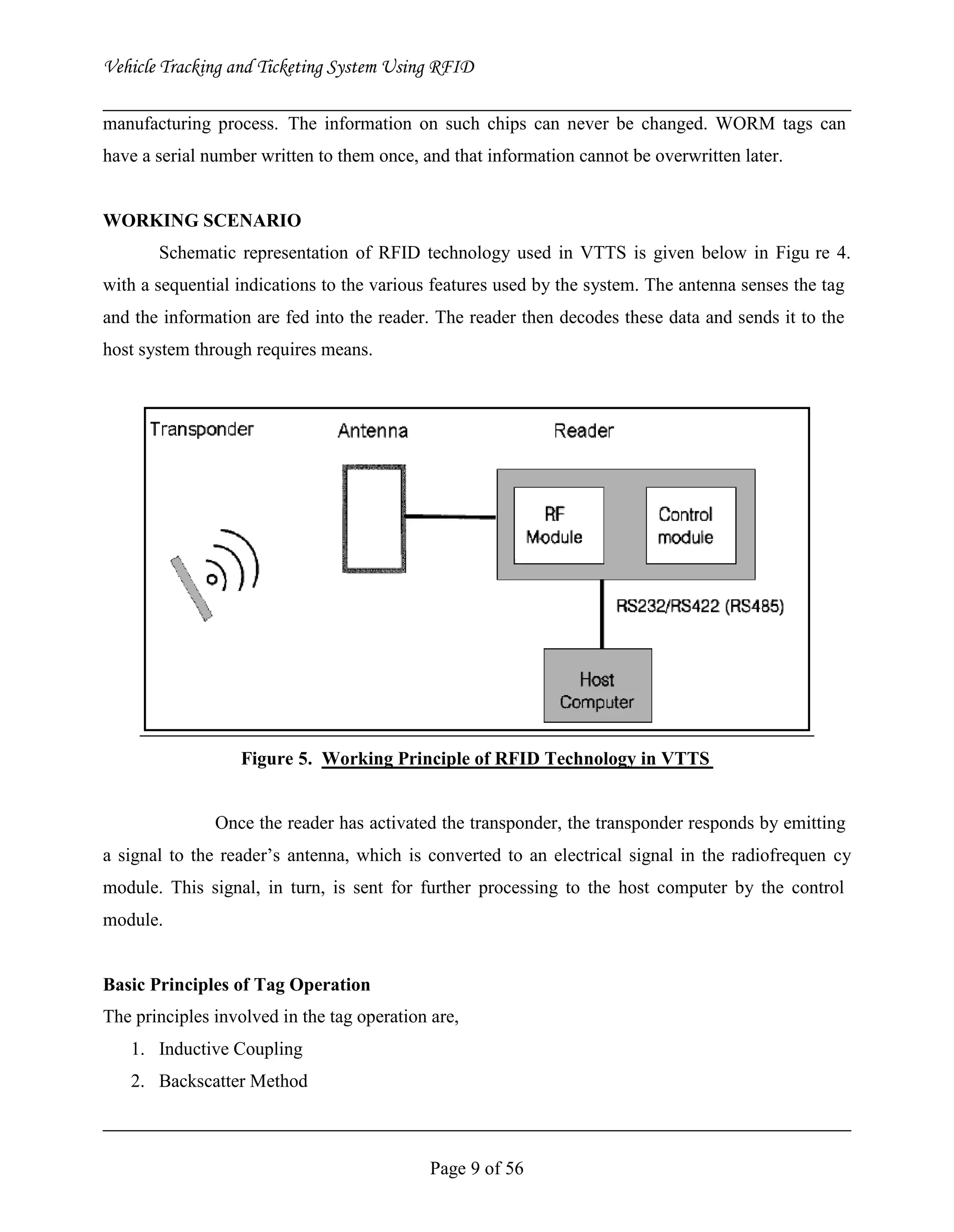
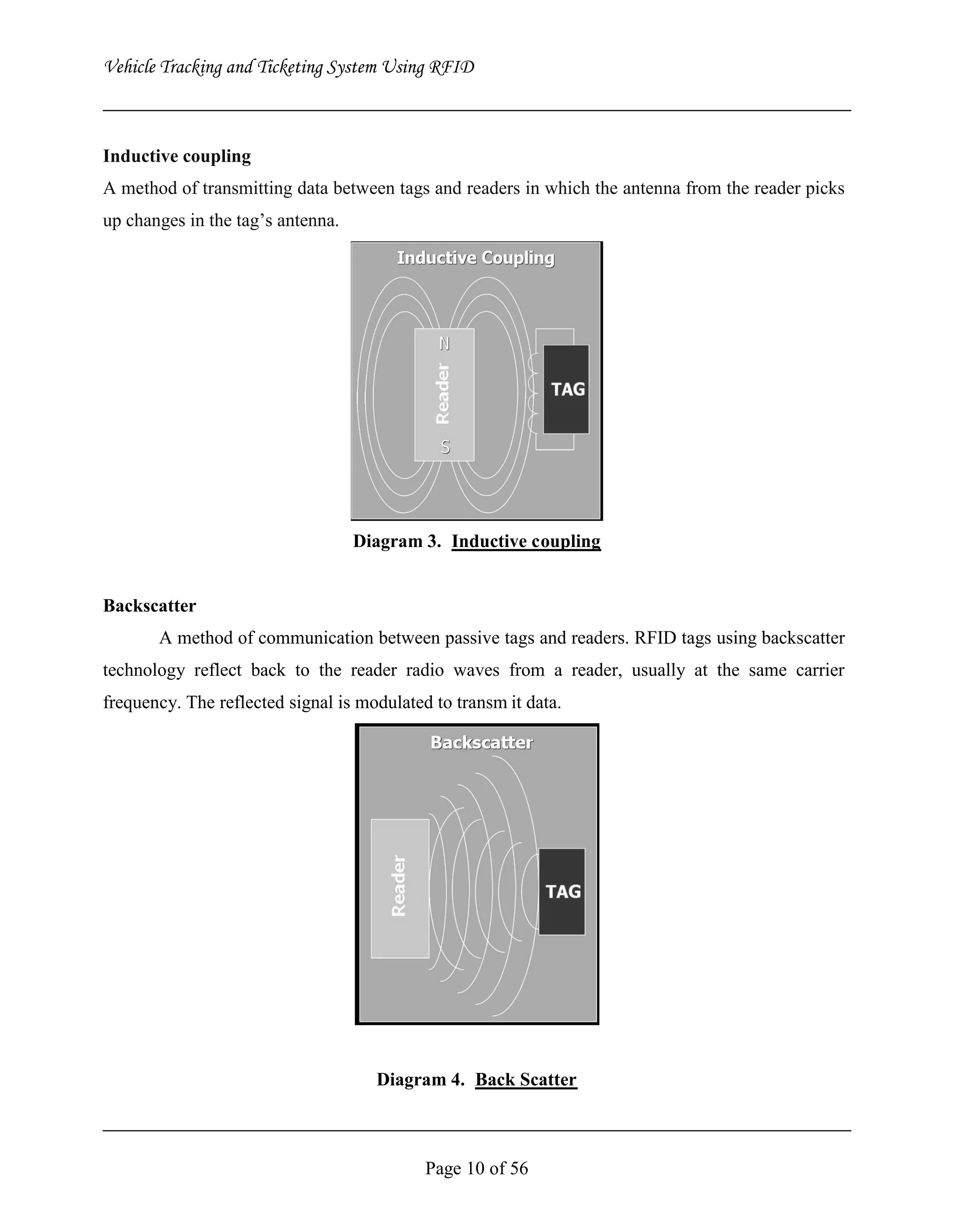
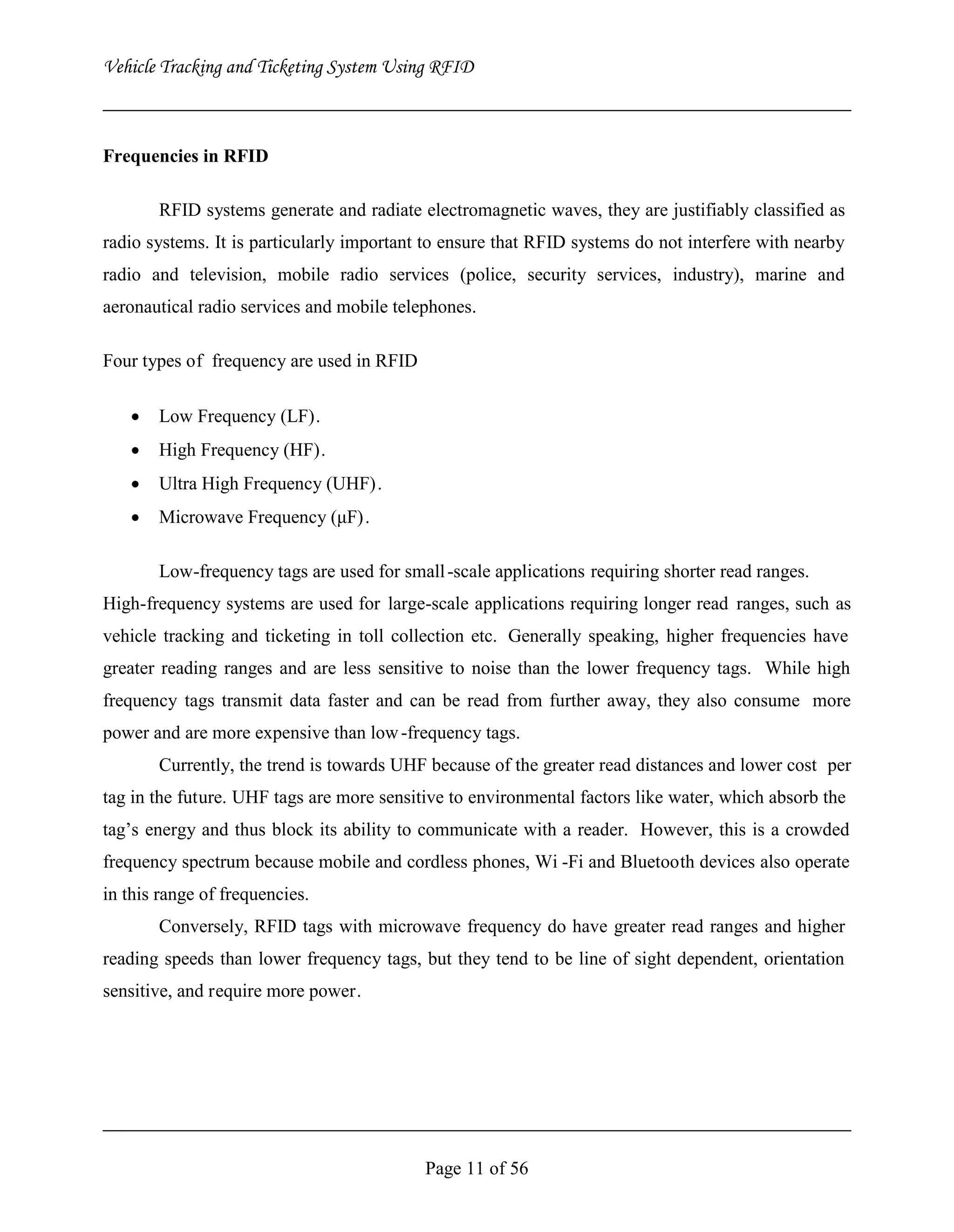
Description of RFID technology, its components, and basic principles including tags, readers, and data flow.
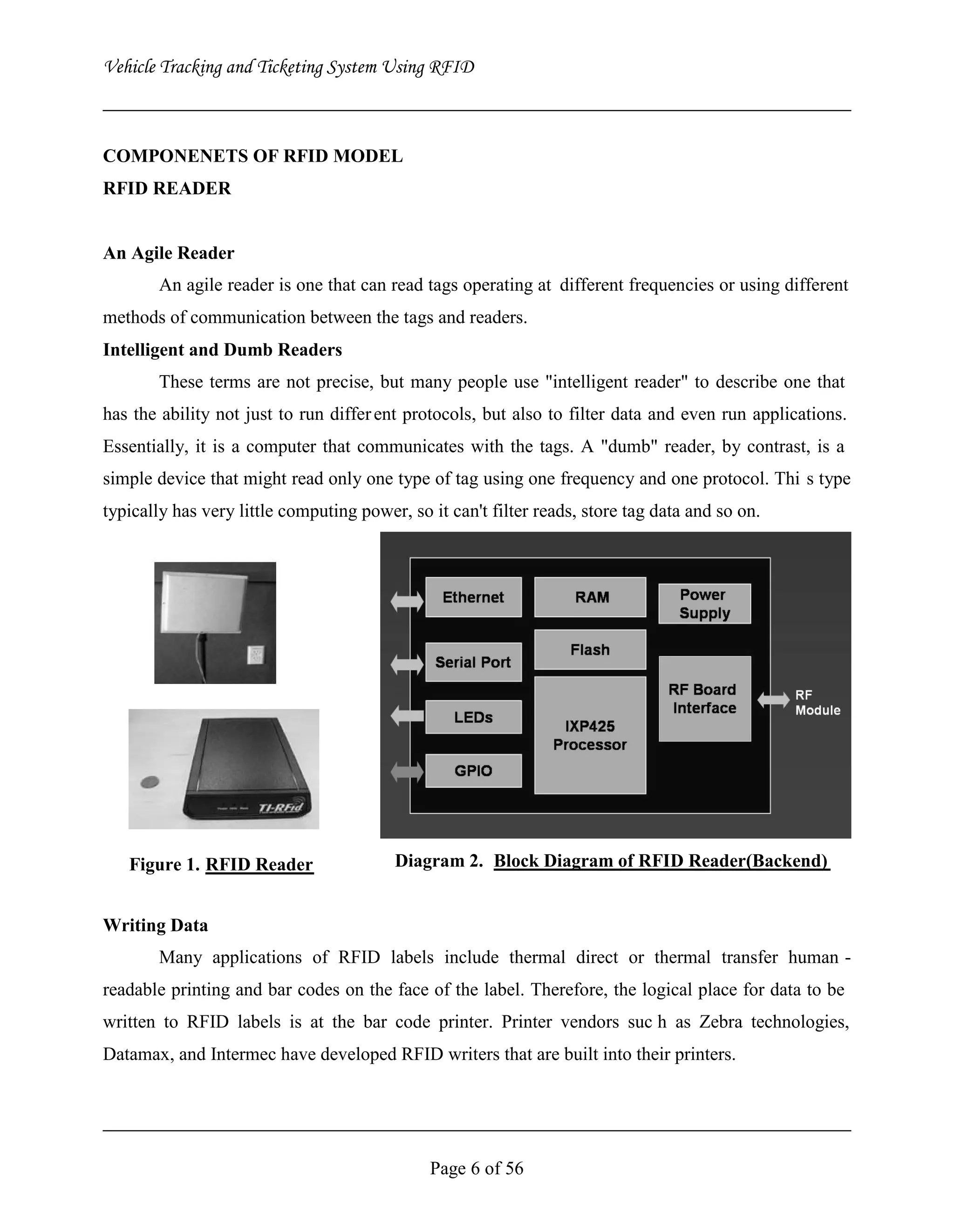
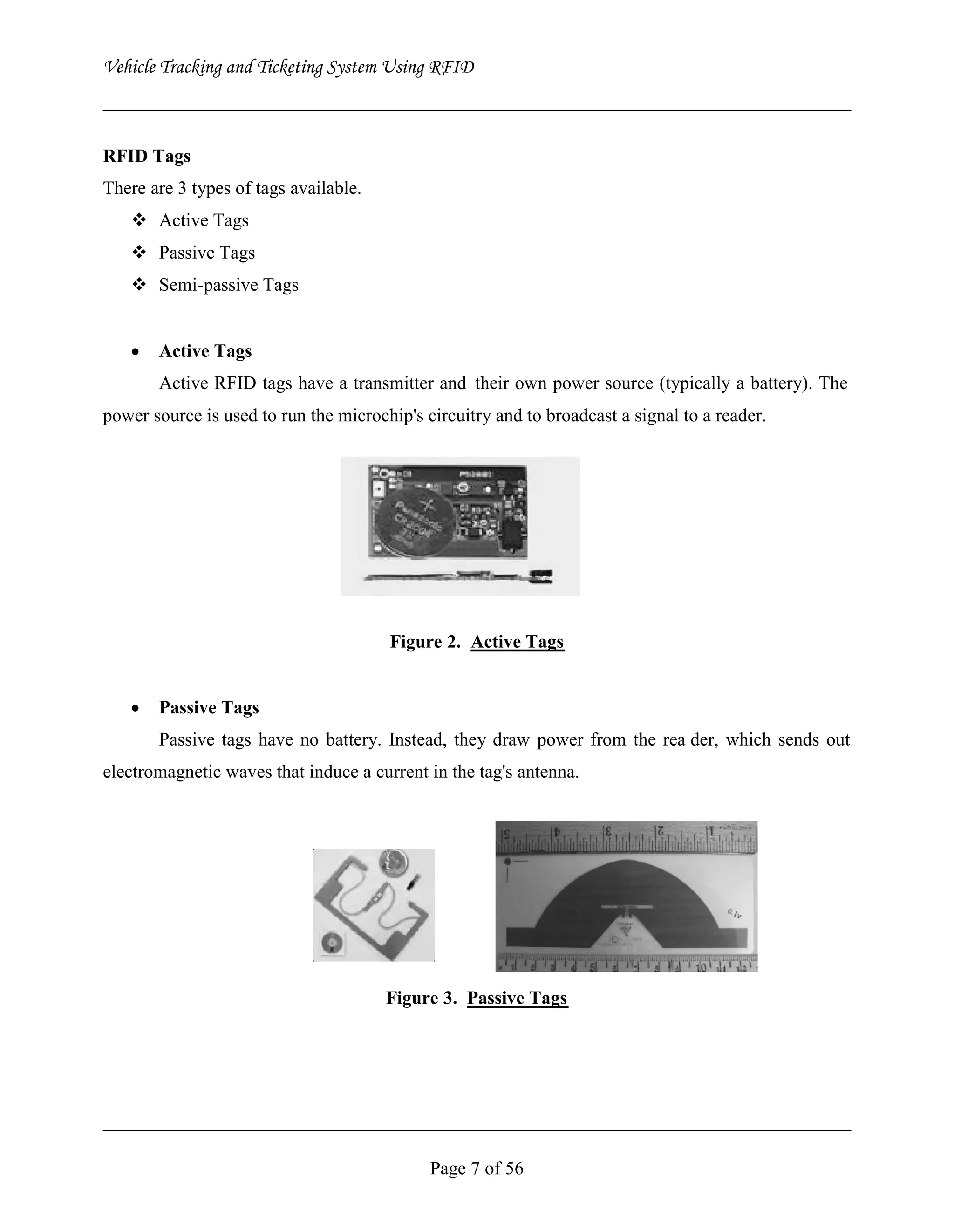
Explanation of RFID readers, including agile, intelligent, and dumb readers, with a focus on data writing methods.
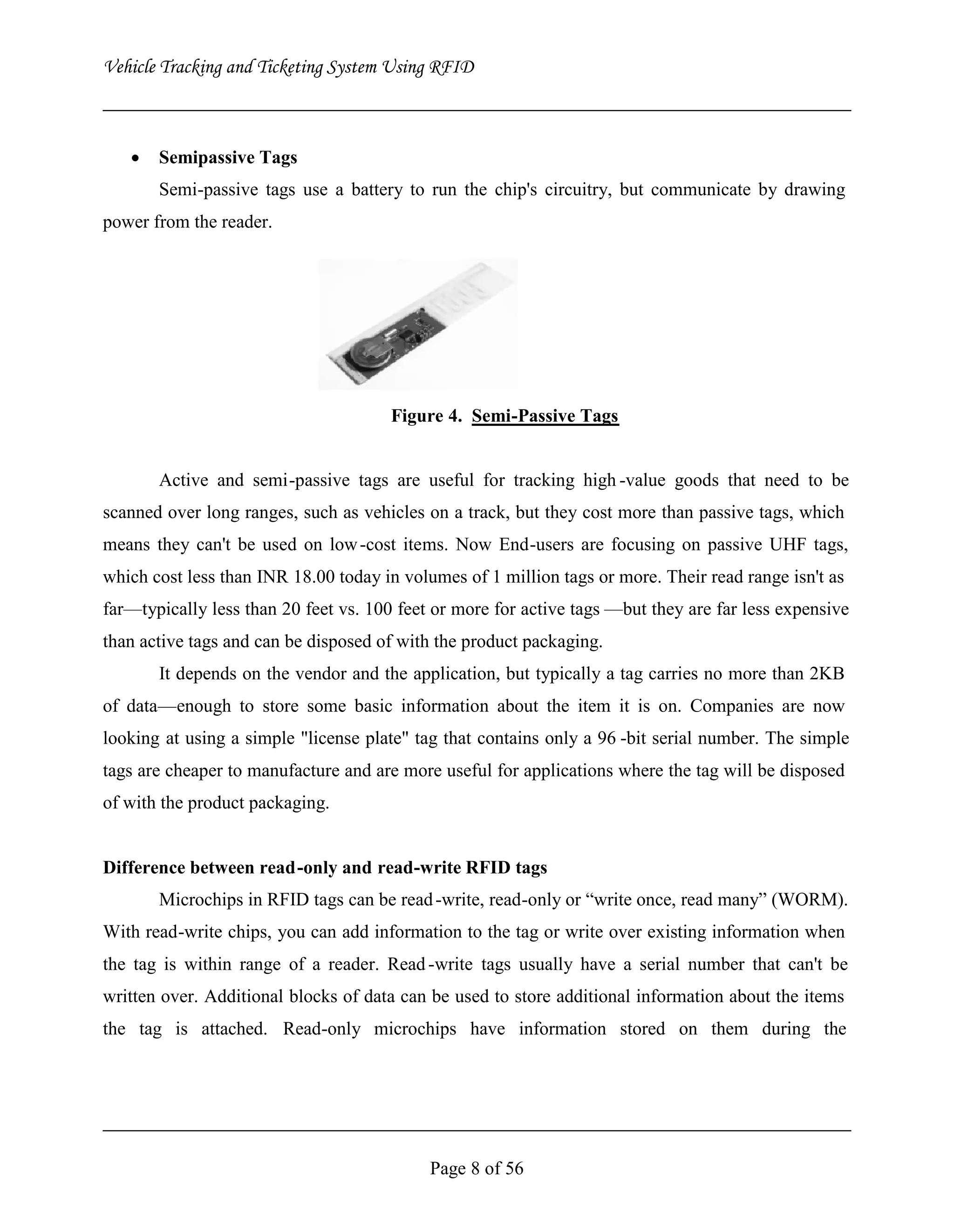
Comparison of active, passive, and semi-passive RFID tags, including their applications and limitations.
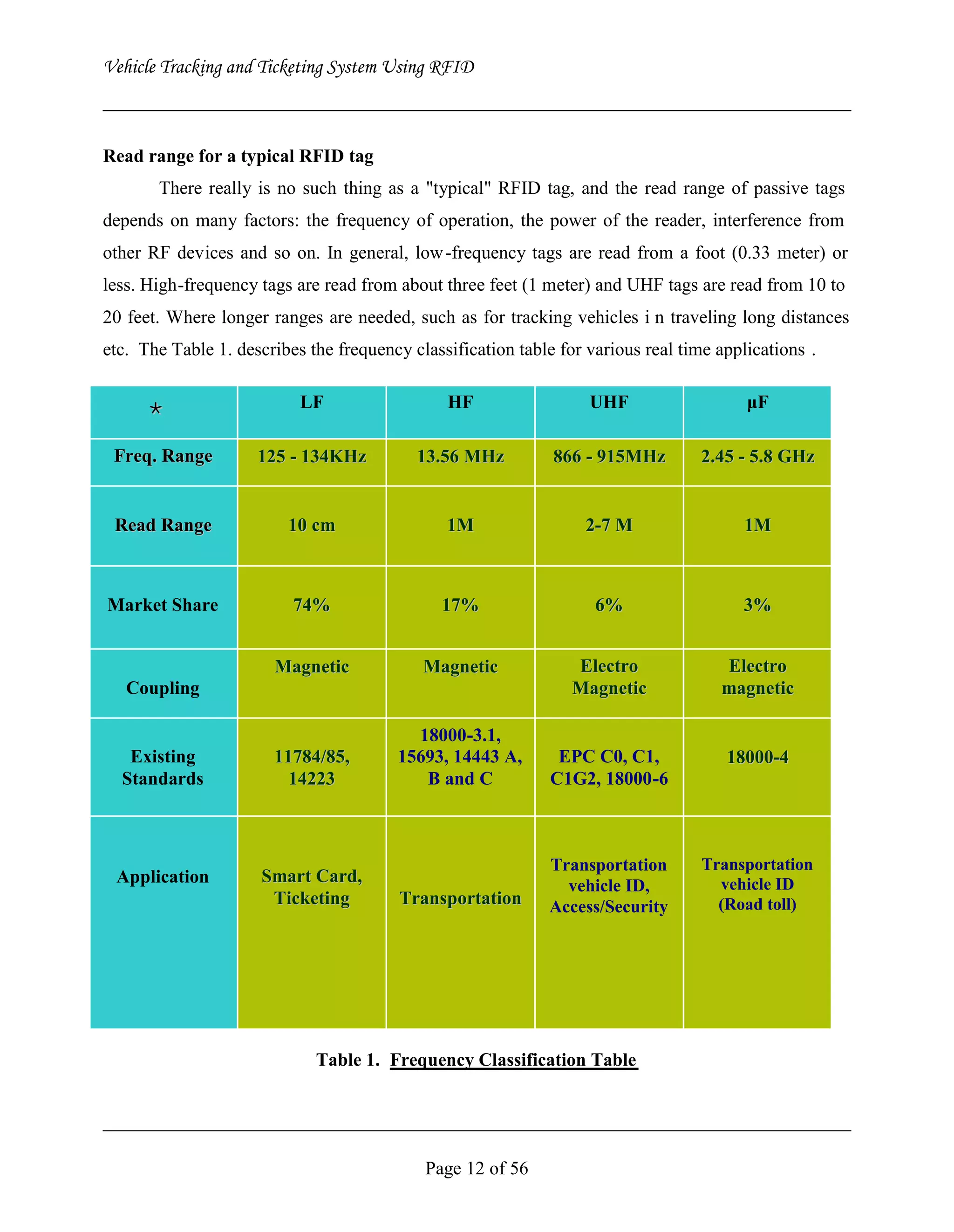
Different RFID frequency classifications (LF, HF, UHF, µF) and their specific applications in vehicle tracking.
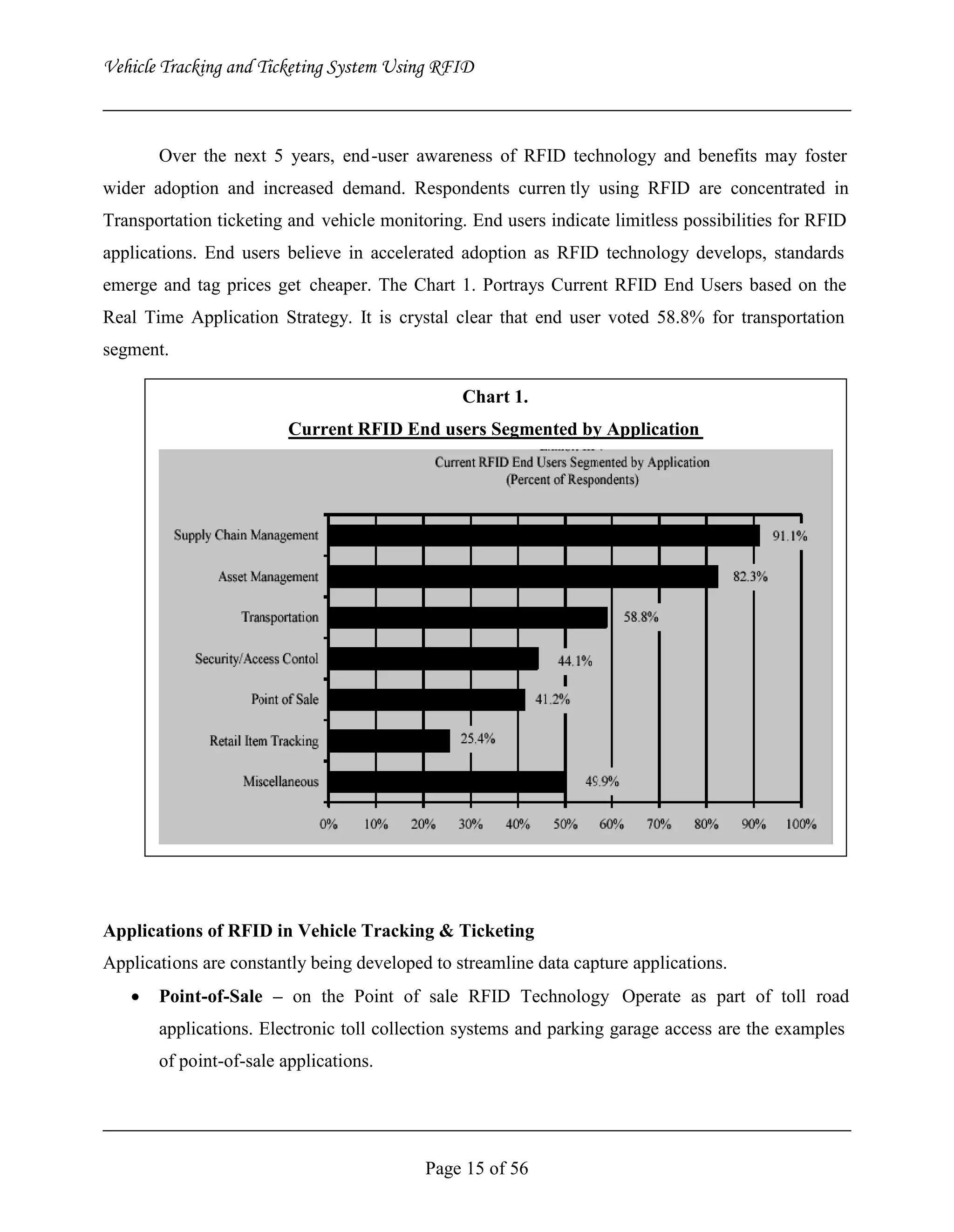
Status of RFID technology and predictions for consumer adoption, plus applications in vehicle tracking and ticketing.
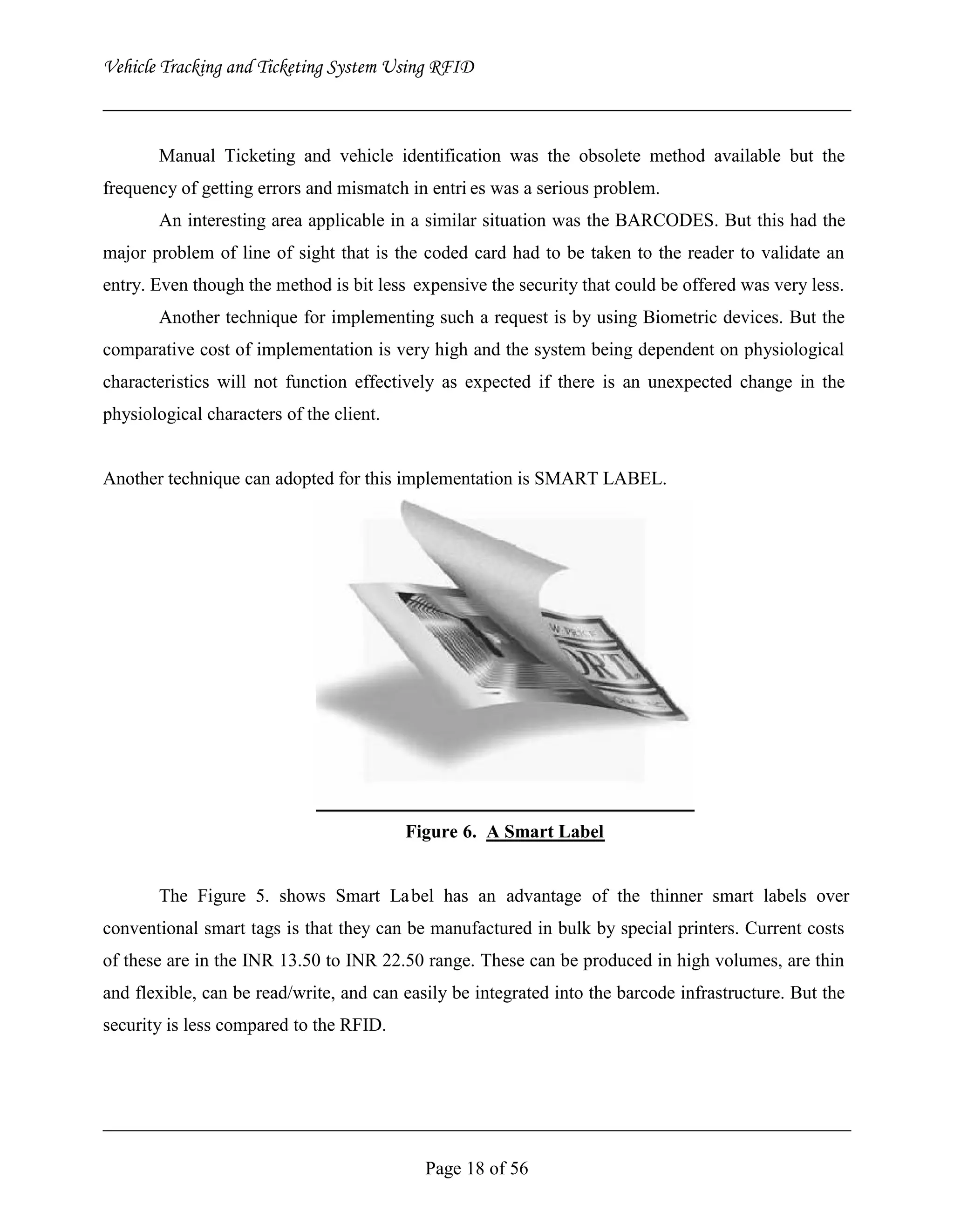
Advantages of the VTTS project over manual ticketing and barcodes, including cost efficiency and real-time tracking.
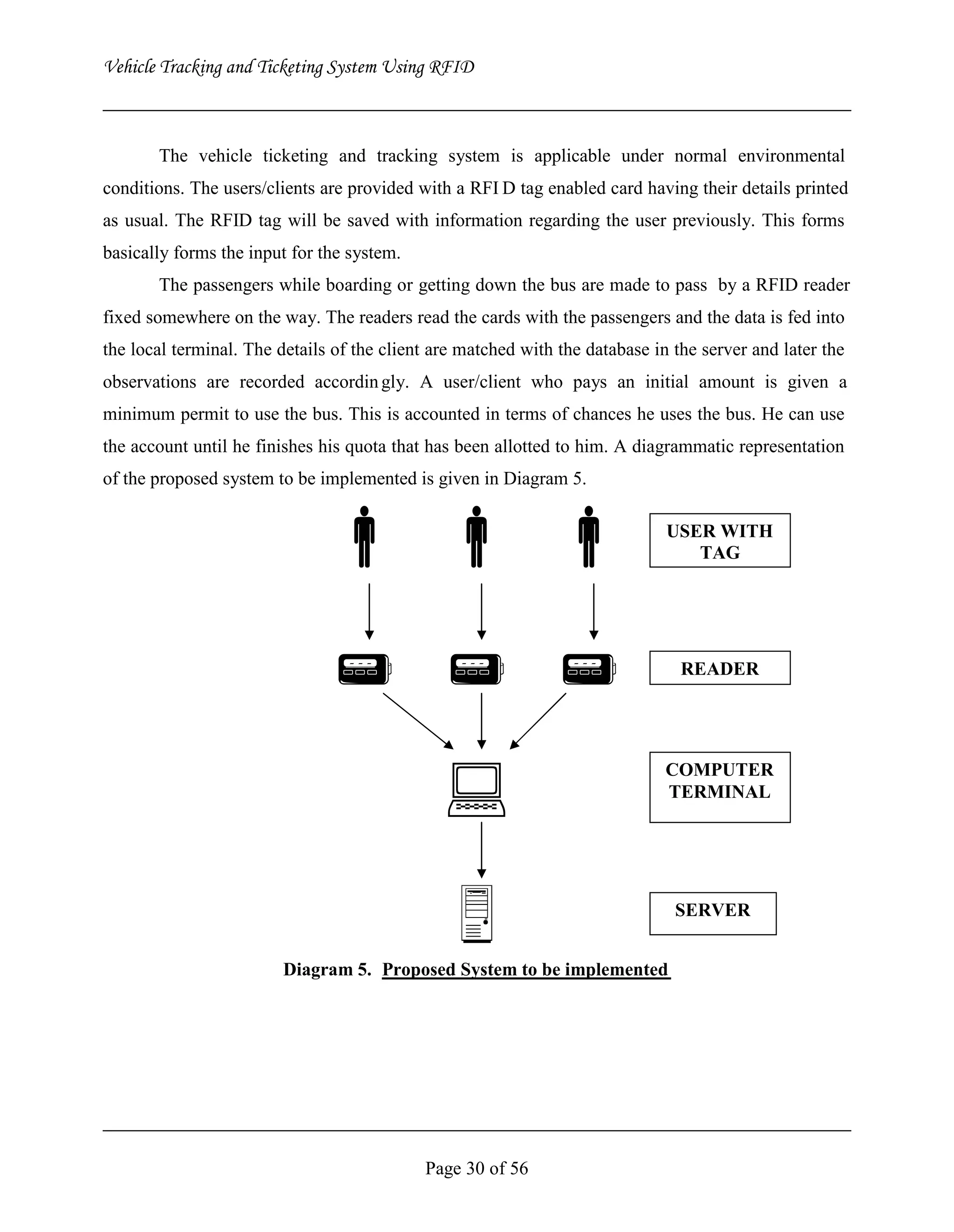
Proposed system structure for RFID implementation, dealing with server connectivity and technology features.
Various technical challenges of RFID technology and system implementation in terms of security and privacy.
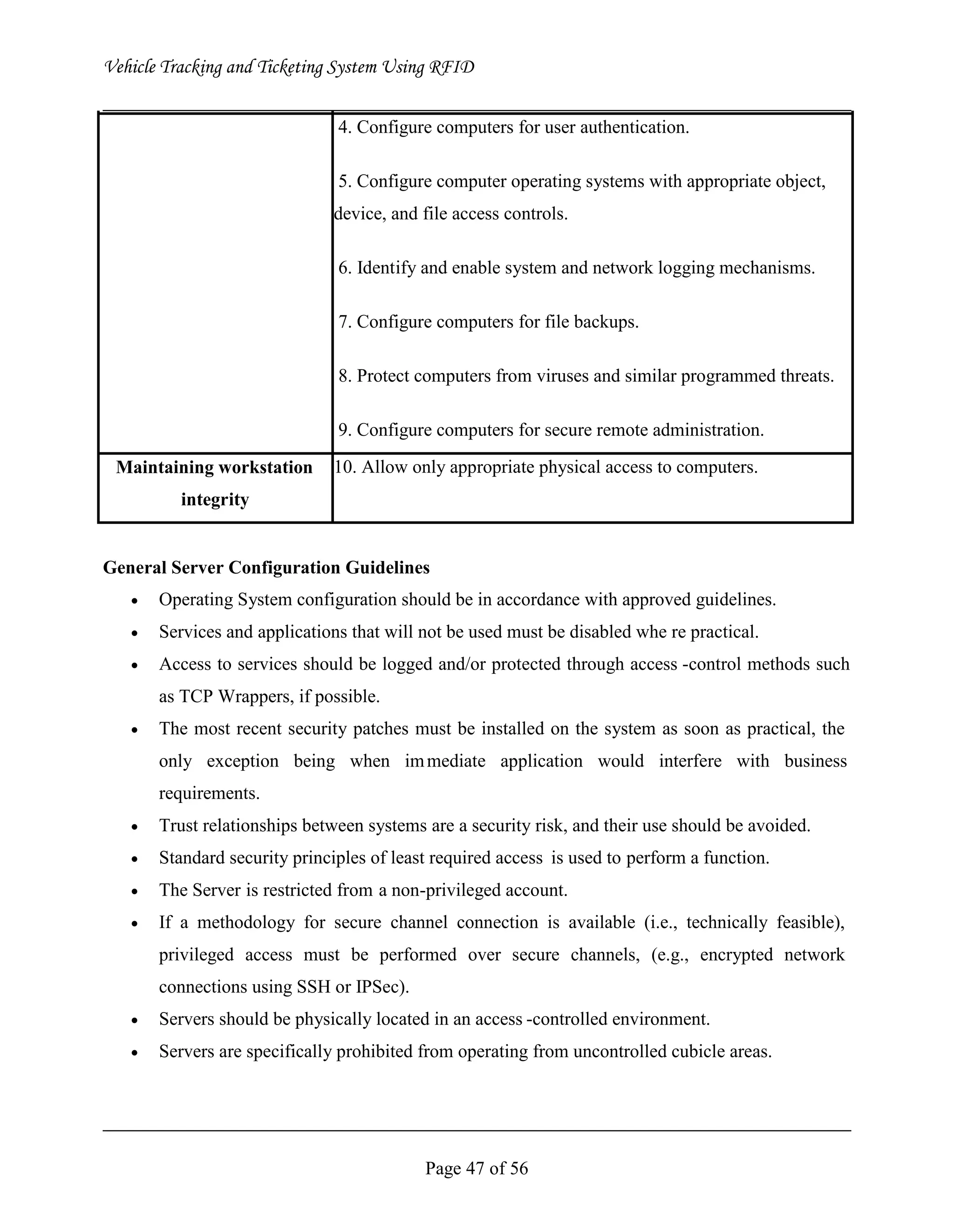
Detailed resource needs for RFID sections, computer sections, software tools, and server security requirements.
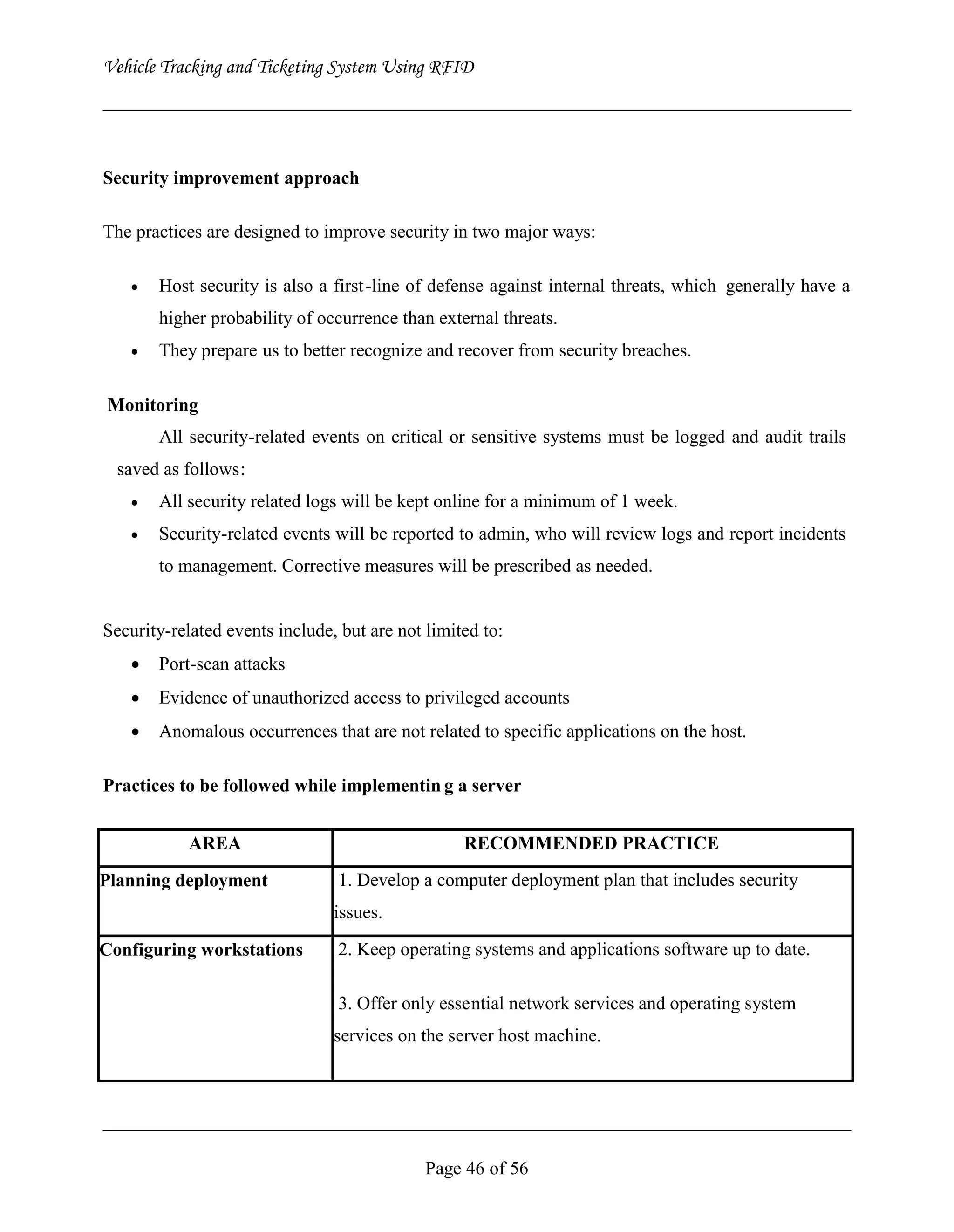
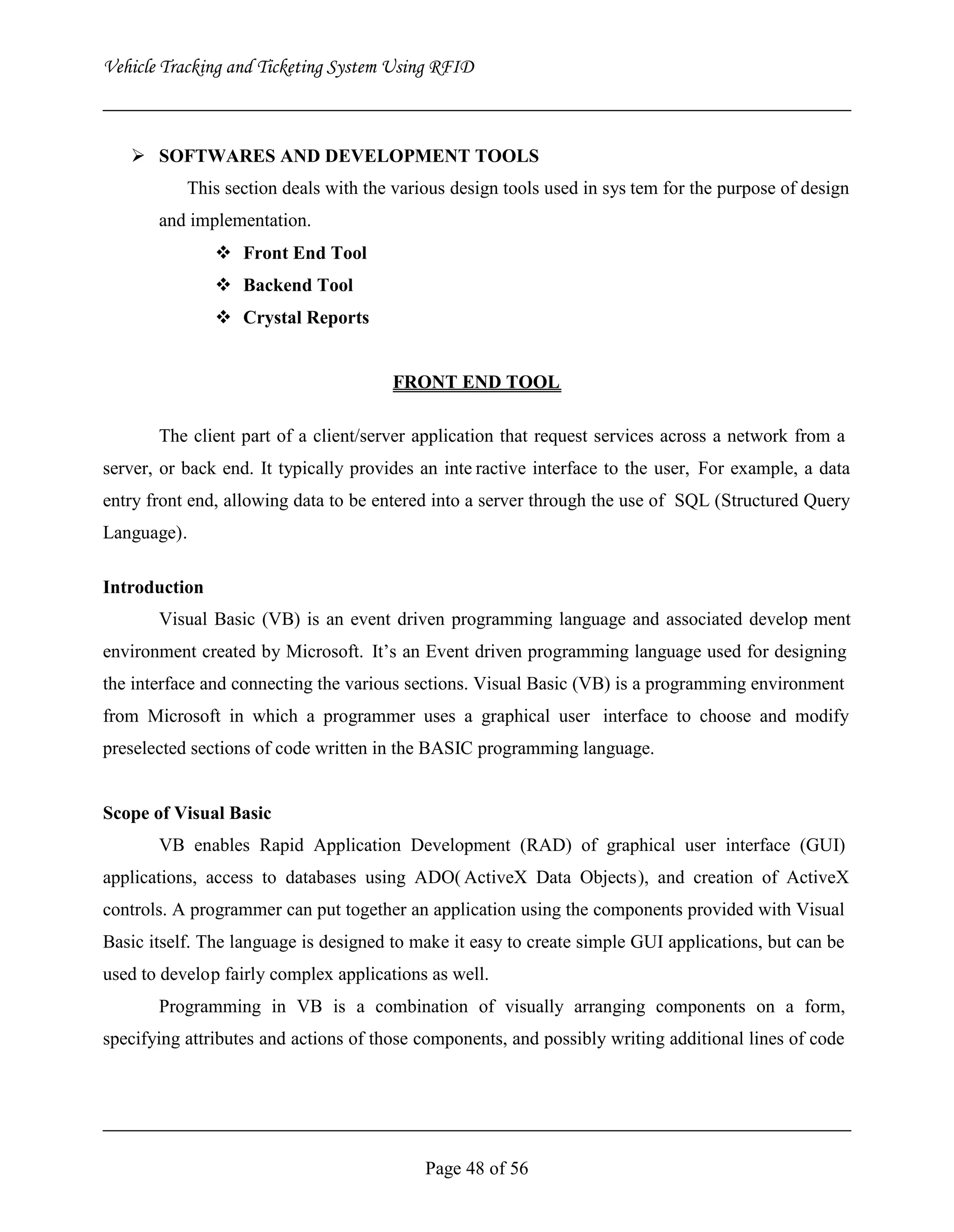
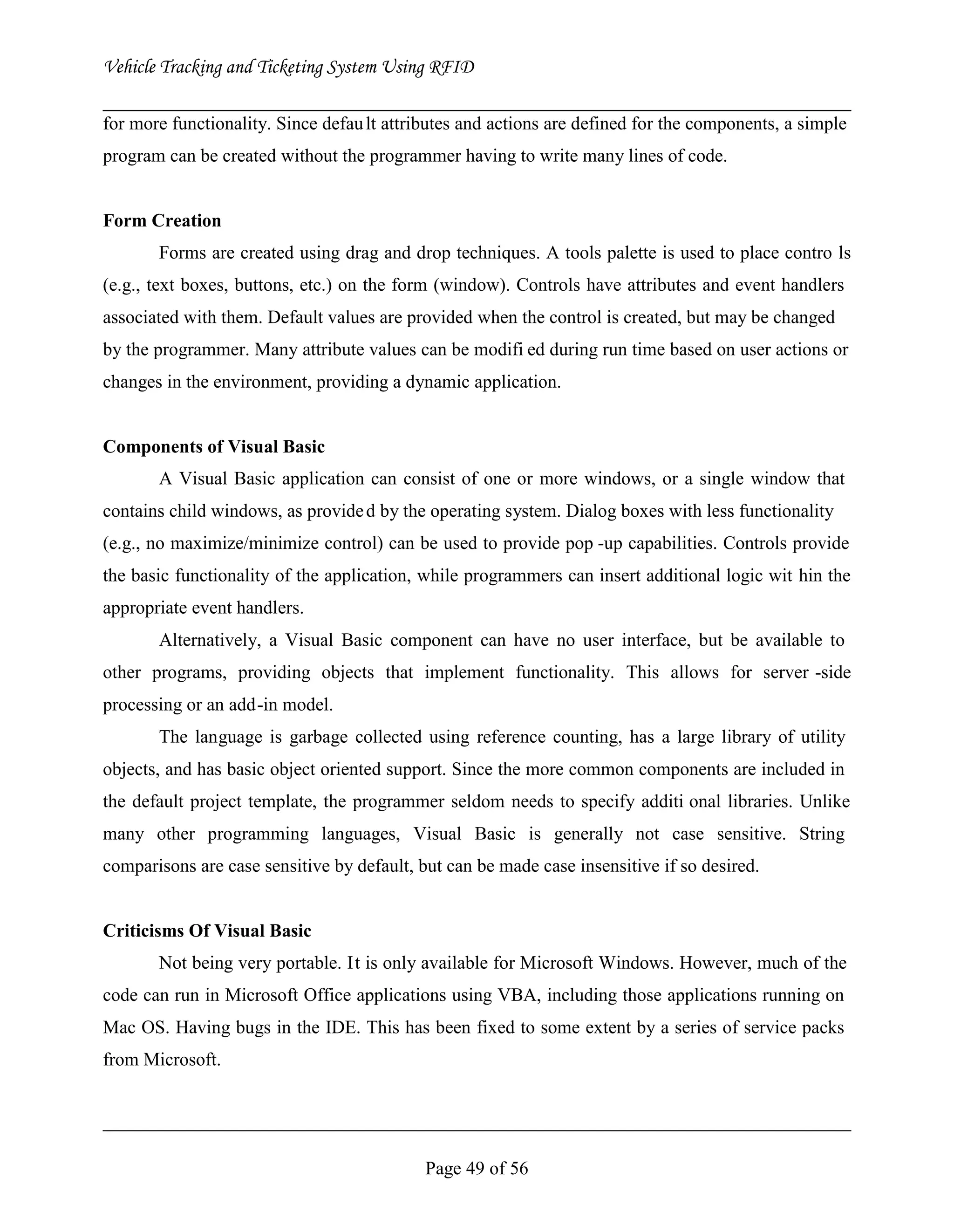
Tools for database management, report generation, security best practices, and server configuration to support VTTS.
Showcase of fully functional RFID-enabled ID cards and working models demonstrating the VTTS capabilities.


