N-BROMOSUCCINIMIDE
PRESENTED BY
PRANJAL TIDKE
M. PHARM 1ST YR
N-BROMOSUCCINIMIDE
N-Bromosuccinimide is a chemical reagent used in radical substitution and
electrophilic addition reaction in organic chemistry
NBS can be a convenient source of the bromine radical (Br•)
DESCRIPTION
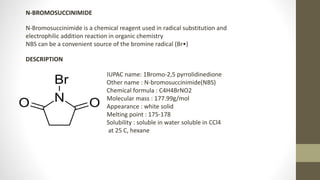
IUPAC name: 1Bromo-2,5 pyrrolidinedione
Other name : N-bromosuccinimide(NBS)
Chemical formula : C4H4BrNO2
Molecular mass : 177.99g/mol
Appearance : white solid
Melting point : 175-178
Solubility : soluble in water soluble in CCl4
at 25 C, hexane
PREPARATION :
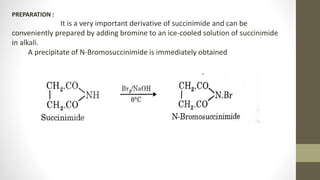
It is a very important derivative of succinimide and can be
conveniently prepared by adding bromine to an ice-cooled solution of succinimide
in alkali.
A precipitate of N-Bromosuccinimide is immediately obtained
APPLICATIONS
1. As a brominating agent :
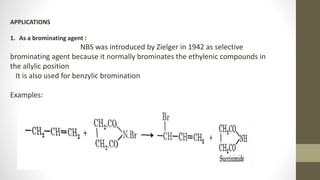
NBS was introduced by Zielger in 1942 as selective
brominating agent because it normally brominates the ethylenic compounds in
the allylic position
It is also used for benzylic bromination
Examples:
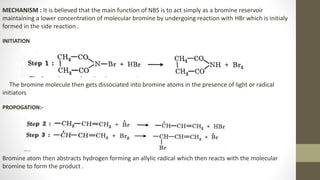
MECHANISM : It is believed that the main function of NBS is to act simply as a bromine reservoir
maintaining a lower concentration of molecular bromine by undergoing reaction with HBr which is initialy
formed in the side reaction .
INITIATION
The bromine molecule then gets dissociated into bromine atoms in the presence of light or radical
initiators
PROPOGATION:-
Bromine atom then abstracts hydrogen forming an allylic radical which then reacts with the molecular
bromine to form the product .
Applications of allylic bromination
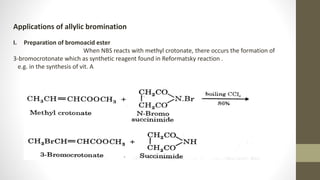
I. Preparation of bromoacid ester
When NBS reacts with methyl crotonate, there occurs the formation of
3-bromocrotonate which as synthetic reagent found in Reformatsky reaction .
e.g. in the synthesis of vit. A
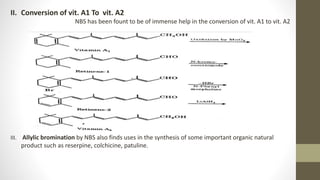
II. Conversion of vit. A1 To vit. A2
NBS has been fount to be of immense help in the conversion of vit. A1 to vit. A2
III. Allylic bromination by NBS also finds uses in the synthesis of some important organic natural
product such as reserpine, colchicine, patuline.
IV. Allylic bromination of cholesteryl benzoate at C17 find use in the commercial production of vit.D3
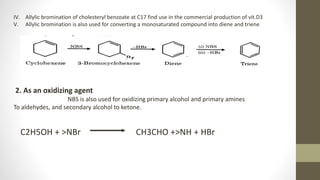
V. Allylic bromination is also used for converting a monosaturated compound into diene and triene
2. As an oxidizing agent
NBS is also used for oxidizing primary alcohol and primary amines
To aldehydes, and secondary alcohol to ketone.
C2H5OH + >NBr CH3CHO +>NH + HBr
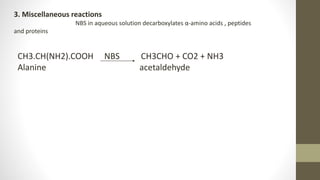
CH3.CH(NH2).COOH NBS CH3CHO + CO2 + NH3
Alanine acetaldehyde
3. Miscellaneous reactions
NBS in aqueous solution decarboxylates α-amino acids , peptides
and proteins
N bromosuccinamide reagent

N bromosuccinamide reagent

  • 1.
  • 2.
    N-BROMOSUCCINIMIDE N-Bromosuccinimide is achemical reagent used in radical substitution and electrophilic addition reaction in organic chemistry NBS can be a convenient source of the bromine radical (Br•) DESCRIPTION IUPAC name: 1Bromo-2,5 pyrrolidinedione Other name : N-bromosuccinimide(NBS) Chemical formula : C4H4BrNO2 Molecular mass : 177.99g/mol Appearance : white solid Melting point : 175-178 Solubility : soluble in water soluble in CCl4 at 25 C, hexane
  • 3.
    PREPARATION : It isa very important derivative of succinimide and can be conveniently prepared by adding bromine to an ice-cooled solution of succinimide in alkali. A precipitate of N-Bromosuccinimide is immediately obtained
  • 4.
    APPLICATIONS 1. As abrominating agent : NBS was introduced by Zielger in 1942 as selective brominating agent because it normally brominates the ethylenic compounds in the allylic position It is also used for benzylic bromination Examples:
  • 5.
    MECHANISM : Itis believed that the main function of NBS is to act simply as a bromine reservoir maintaining a lower concentration of molecular bromine by undergoing reaction with HBr which is initialy formed in the side reaction . INITIATION The bromine molecule then gets dissociated into bromine atoms in the presence of light or radical initiators PROPOGATION:- Bromine atom then abstracts hydrogen forming an allylic radical which then reacts with the molecular bromine to form the product .
  • 6.
    Applications of allylicbromination I. Preparation of bromoacid ester When NBS reacts with methyl crotonate, there occurs the formation of 3-bromocrotonate which as synthetic reagent found in Reformatsky reaction . e.g. in the synthesis of vit. A
  • 7.
    II. Conversion ofvit. A1 To vit. A2 NBS has been fount to be of immense help in the conversion of vit. A1 to vit. A2 III. Allylic bromination by NBS also finds uses in the synthesis of some important organic natural product such as reserpine, colchicine, patuline.
  • 8.
    IV. Allylic brominationof cholesteryl benzoate at C17 find use in the commercial production of vit.D3 V. Allylic bromination is also used for converting a monosaturated compound into diene and triene 2. As an oxidizing agent NBS is also used for oxidizing primary alcohol and primary amines To aldehydes, and secondary alcohol to ketone. C2H5OH + >NBr CH3CHO +>NH + HBr
  • 9.
    CH3.CH(NH2).COOH NBS CH3CHO+ CO2 + NH3 Alanine acetaldehyde 3. Miscellaneous reactions NBS in aqueous solution decarboxylates α-amino acids , peptides and proteins