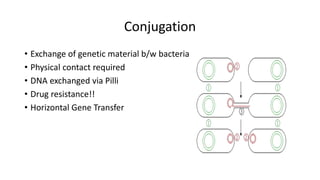
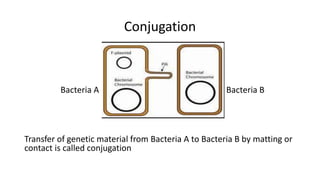
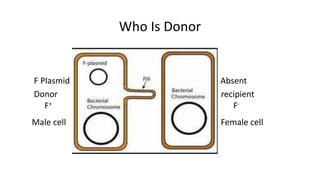
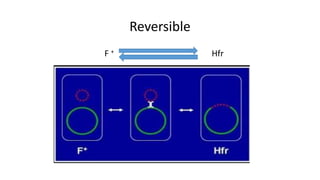
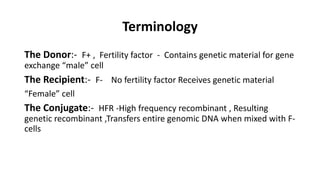
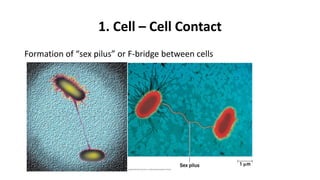
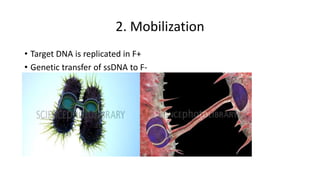
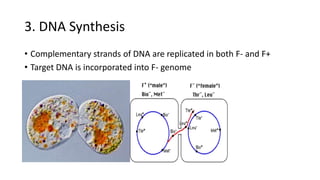
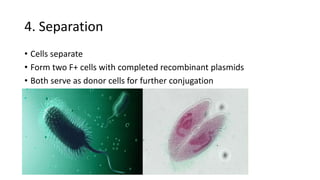
Bacterial conjugation is a form of horizontal gene transfer that requires physical contact between bacteria. During conjugation, genetic material is transferred from a "donor" bacteria to a "recipient" bacteria via a pilus. The F plasmid contains genes necessary for conjugation and is present in the donor cell. Conjugation results in the donor cell transferring a segment of its DNA to the recipient cell, integrating it into the recipient's genome and allowing for genetic recombination between the two bacterial cells. This transfer of antibiotic resistance and other genes between bacteria through conjugation contributes to the spread of multidrug resistance.








![genetic-recombination-1 [Compatibility Mode].pdf](https://cdn.slidesharecdn.com/ss_thumbnails/genetic-recombination-1compatibilitymode-220816192824-82739c20-thumbnail.jpg?width=640&height=640&fit=bounds)


