

1
SUBMITTED BY HAFSA ARSHAD
ROLL NO: BBOF17M006
Bs.6th Regular
SUBMITTED TO: Dr. AMIN ULLAH SHAH
DEPARTMENT OF BOTANY
UNIVERSITY OF SARGODHA
HISTORY
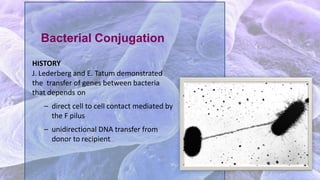
J. Lederberg and E. Tatum demonstrated
the transfer of genes between bacteria
that depends on
– direct cell to cell contact mediated by
the F pilus
– unidirectional DNA transfer from
donor to recipient
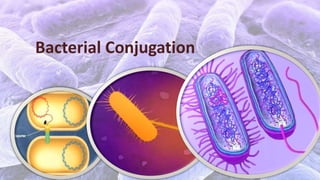
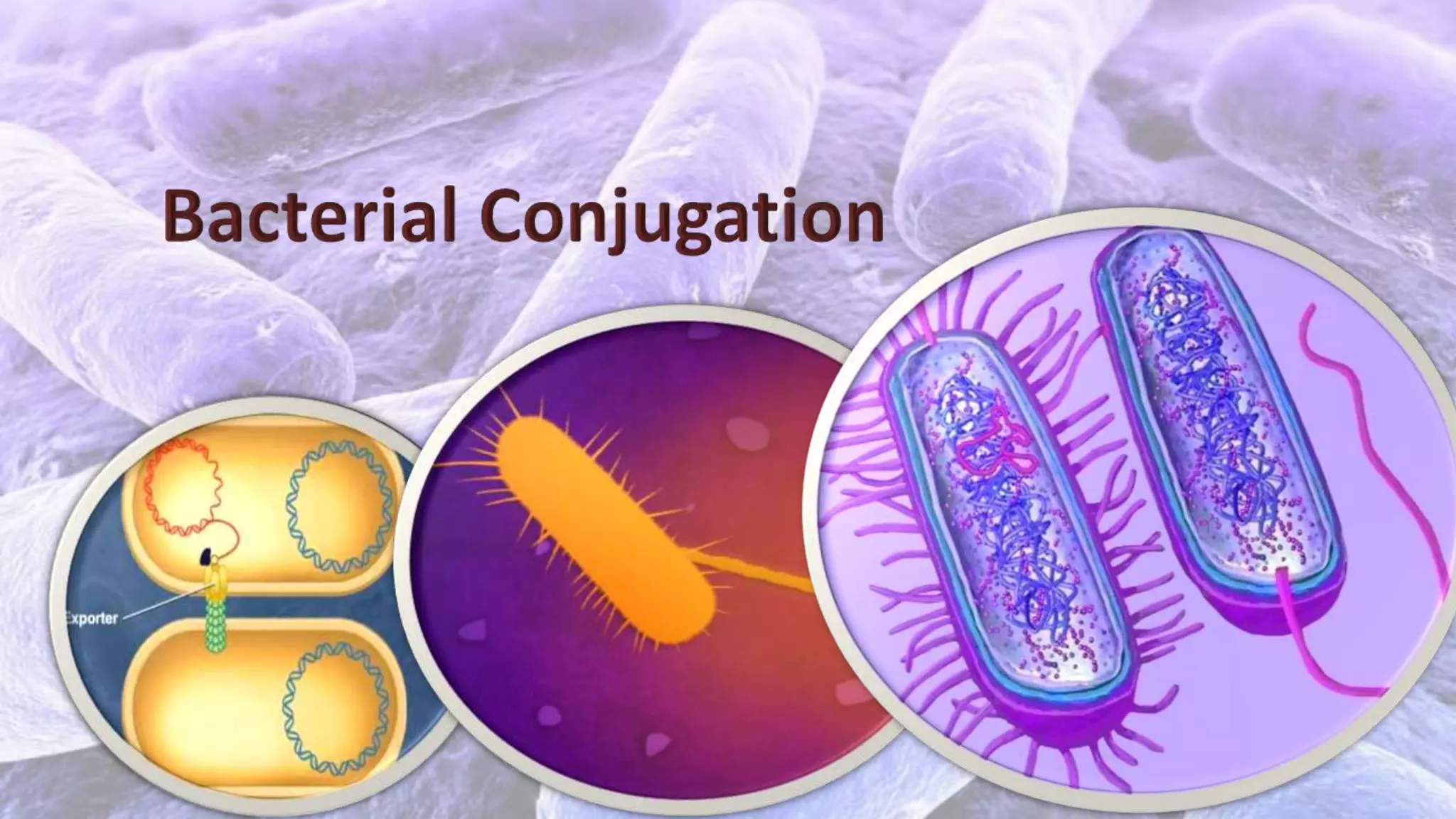
Bacterial Conjugation
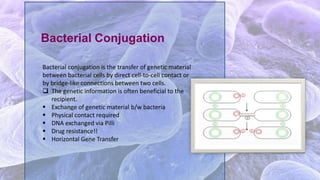
Bacterial conjugation is the transfer of genetic material
between bacterial cells by direct cell-to-cell contact or
by bridge-like connections between two cells.
 The genetic information is often beneficial to the
recipient.
 Exchange of genetic material b/w bacteria
 Physical contact required
 DNA exchanged via Pilli
 Drug resistance!!
 Horizontal Gene Transfer
TERMINOLOGY
The Donor
F+
Fertility factor
Contains genetic
material for gene
exchange
“ Male cell
The Recipient
F-
No fertility factor
Receives genetic material
Female cell
The Conjugate
HFR
High frequency
recombinant
Resulting genetic
recombinant
Transfers entire genomic DNA
when mixed with F- cells
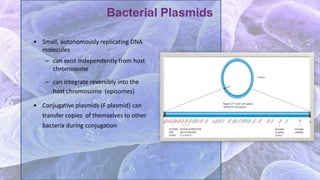
Bacterial Plasmids
• Small, autonomously replicating DNA
molecules
– can exist independently from host
chromosome
– can integrate reversibly into the
host chromosome (episomes)
• Conjugative plasmids (F plasmid) can
transfer copies of themselves to other
bacteria during conjugation
15
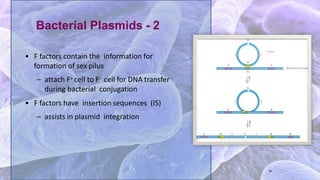
• F factors contain the information for
formation of sex pilus
– attach F+ cell to F- cell for DNA transfer
during bacterial conjugation
• F factors have insertion sequences (IS)
– assists in plasmid integration
Bacterial Plasmids - 2
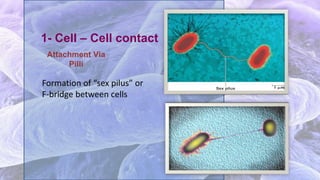
1- Cell – Cell contact
Formation of “sex pilus” or
F-bridge between cells
Attachment Via
Pilli
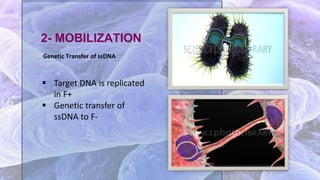
2- MOBILIZATION
 Target DNA is replicated
in F+
 Genetic transfer of
ssDNA to F-
Genetic Transfer of ssDNA
F+ x F-
Mating
• A copy of the F factor is transferred to the recipient and
does not integrate into the host chromosome
• Donor genes usually not transferred
• F factor codes for sex pilus
– Type IV secretion system that makes contact between
cells that DNA moves across
• Plasmid is replicated by rolling circle method
HFr Conjugation
• Donor HFr cell has F factor integrated into
its chromosome
• Donor genes are transferred to recipient
cell
• A complete copy of the F factor is usually
not transferred
• Gene transfer can be clockwise
or counterclockwise
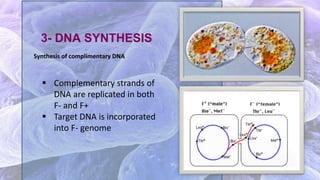
3- DNA SYNTHESIS
 Complementary strands of
DNA are replicated in both
F- and F+
 Target DNA is incorporated
into F- genome
Synthesis of complimentary DNA
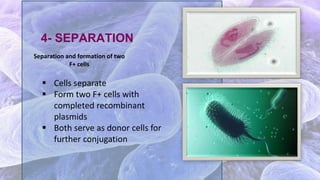
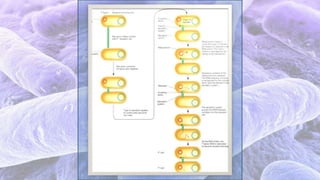
4- SEPARATION
 Cells separate
 Form two F+ cells with
completed recombinant
plasmids
 Both serve as donor cells for
further conjugation
Separation and formation of two
F+ cells
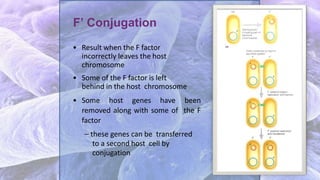
F’ Conjugation
• Result when the F factor
incorrectly leaves the host
chromosome
• Some of the F factor is left
behind in the host chromosome
• Some host genes have been
removed along with some of the F
factor
– these genes can be transferred
to a second host cell by
conjugation
Thanks
hafsaranjha.botanist@gmail.com

Bacterial conjugation

  • 1.
  • 2.
    SUBMITTED BY HAFSAARSHAD ROLL NO: BBOF17M006 Bs.6th Regular SUBMITTED TO: Dr. AMIN ULLAH SHAH DEPARTMENT OF BOTANY UNIVERSITY OF SARGODHA
  • 3.
    HISTORY J. Lederberg andE. Tatum demonstrated the transfer of genes between bacteria that depends on – direct cell to cell contact mediated by the F pilus – unidirectional DNA transfer from donor to recipient Bacterial Conjugation
  • 4.
    Bacterial Conjugation Bacterial conjugationis the transfer of genetic material between bacterial cells by direct cell-to-cell contact or by bridge-like connections between two cells.  The genetic information is often beneficial to the recipient.  Exchange of genetic material b/w bacteria  Physical contact required  DNA exchanged via Pilli  Drug resistance!!  Horizontal Gene Transfer
  • 5.
    TERMINOLOGY The Donor F+ Fertility factor Containsgenetic material for gene exchange “ Male cell The Recipient F- No fertility factor Receives genetic material Female cell The Conjugate HFR High frequency recombinant Resulting genetic recombinant Transfers entire genomic DNA when mixed with F- cells
  • 6.
    Bacterial Plasmids • Small,autonomously replicating DNA molecules – can exist independently from host chromosome – can integrate reversibly into the host chromosome (episomes) • Conjugative plasmids (F plasmid) can transfer copies of themselves to other bacteria during conjugation
  • 7.
    15 • F factorscontain the information for formation of sex pilus – attach F+ cell to F- cell for DNA transfer during bacterial conjugation • F factors have insertion sequences (IS) – assists in plasmid integration Bacterial Plasmids - 2
  • 8.
    1- Cell –Cell contact Formation of “sex pilus” or F-bridge between cells Attachment Via Pilli
  • 9.
    2- MOBILIZATION  TargetDNA is replicated in F+  Genetic transfer of ssDNA to F- Genetic Transfer of ssDNA
  • 10.
    F+ x F- Mating •A copy of the F factor is transferred to the recipient and does not integrate into the host chromosome • Donor genes usually not transferred • F factor codes for sex pilus – Type IV secretion system that makes contact between cells that DNA moves across • Plasmid is replicated by rolling circle method
  • 11.
    HFr Conjugation • DonorHFr cell has F factor integrated into its chromosome • Donor genes are transferred to recipient cell • A complete copy of the F factor is usually not transferred • Gene transfer can be clockwise or counterclockwise
  • 12.
    3- DNA SYNTHESIS Complementary strands of DNA are replicated in both F- and F+  Target DNA is incorporated into F- genome Synthesis of complimentary DNA
  • 13.
    4- SEPARATION  Cellsseparate  Form two F+ cells with completed recombinant plasmids  Both serve as donor cells for further conjugation Separation and formation of two F+ cells
  • 15.
    F’ Conjugation • Resultwhen the F factor incorrectly leaves the host chromosome • Some of the F factor is left behind in the host chromosome • Some host genes have been removed along with some of the F factor – these genes can be transferred to a second host cell by conjugation
  • 16.