JSS MAHAVIDYAPEETHA
JSS ACADEMY OF TECHNICAL EDUCATION
NOIDA
Department Of Manufacturing Technology
DESIGN, FABRICATION AND ANALYSIS OF AUTOMOBILE
RADIATOR TEST RIG USING MATLAB
Supervised By :
Mr. VISHNU TIWARI
Assistant Prof.
MT Department
Presented By :
Sharang Bhardwaj 1109141043
Aayushi 1109141002
Shishir Tripathi 1109141044
Sanchit Agrawal 1109141040
(8th Sem Students)
Group no.4
MAIN DIVISION OF PROJECT
1. Estimation of cost and availability of the
components.
2. Design of the engine cooling system in
MATLAB .
3. Assembling of the different components
to prepare test rig.
4. Analysis of rig values for different
parameters of the system.
5. Simulate the system, compare and
formulate the results.
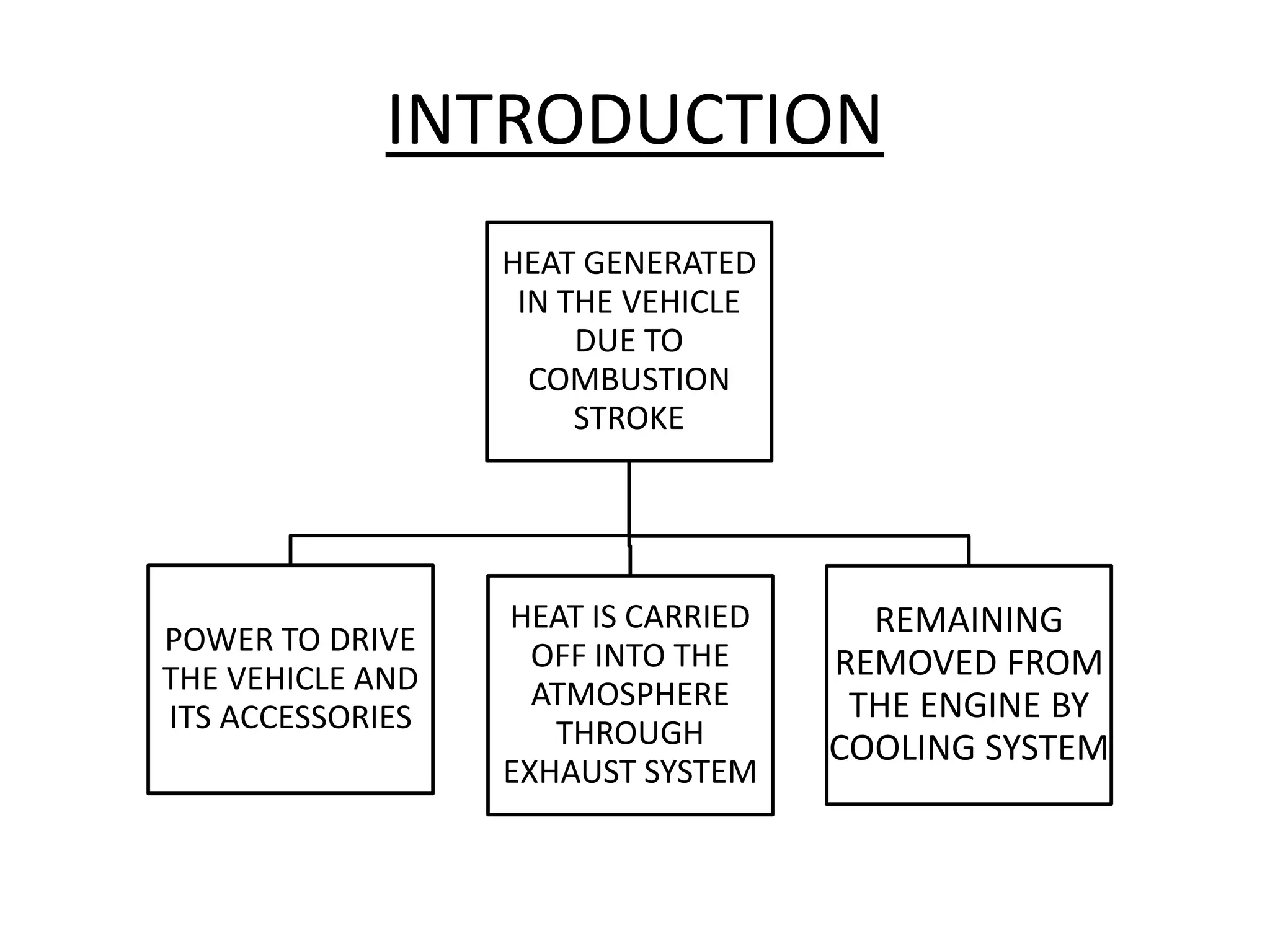
INTRODUCTION
HEAT GENERATED
IN THE VEHICLE
DUE TO
COMBUSTION
STROKE
POWER TO DRIVE
THE VEHICLE AND
ITS ACCESSORIES
HEAT IS CARRIED
OFF INTO THE
ATMOSPHERE
THROUGH
EXHAUST SYSTEM
REMAINING
REMOVED FROM
THE ENGINE BY
COOLING SYSTEM
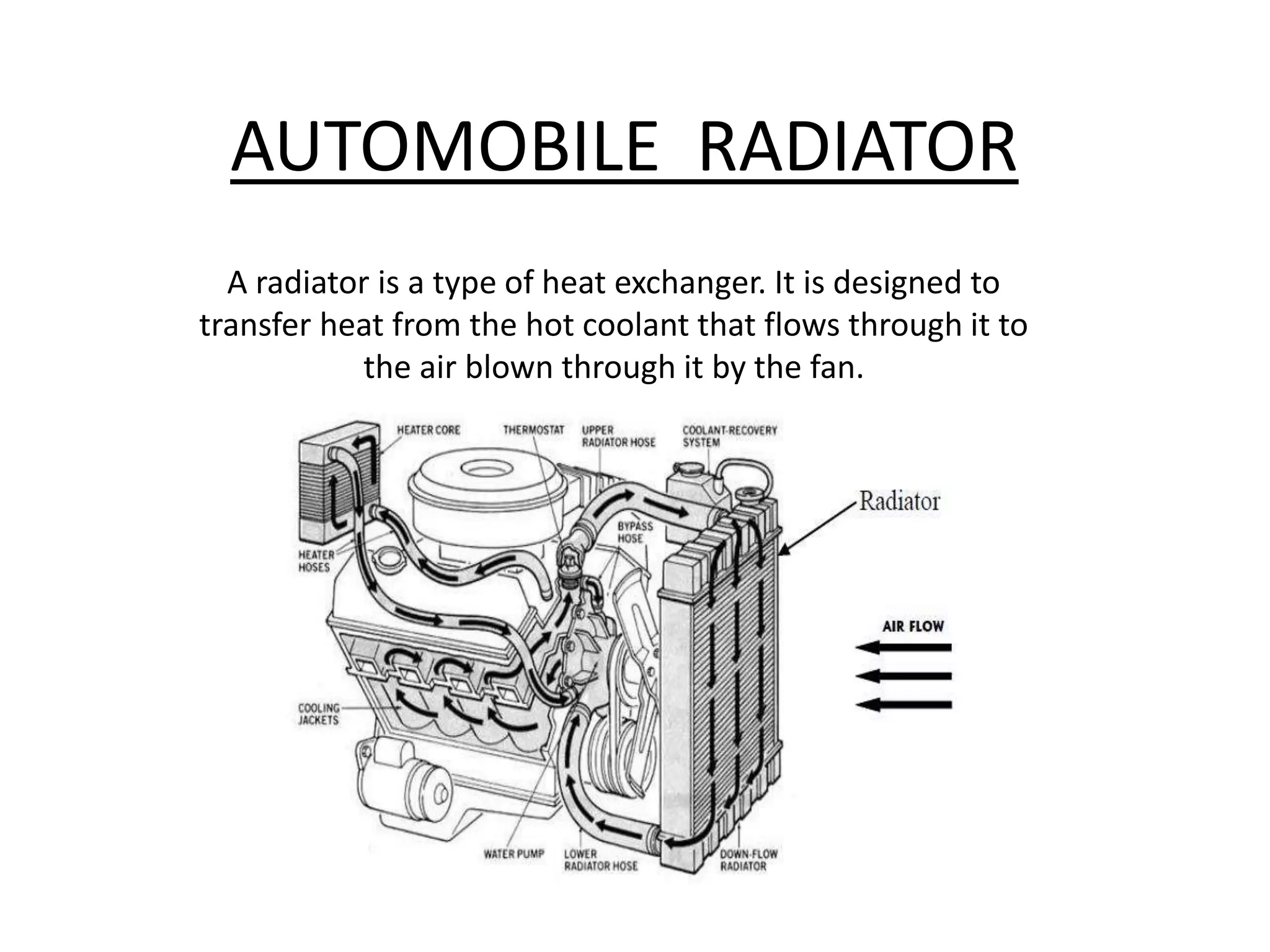
AUTOMOBILE RADIATOR
A radiator is a type of heat exchanger. It is designed to
transfer heat from the hot coolant that flows through it to
the air blown through it by the fan.
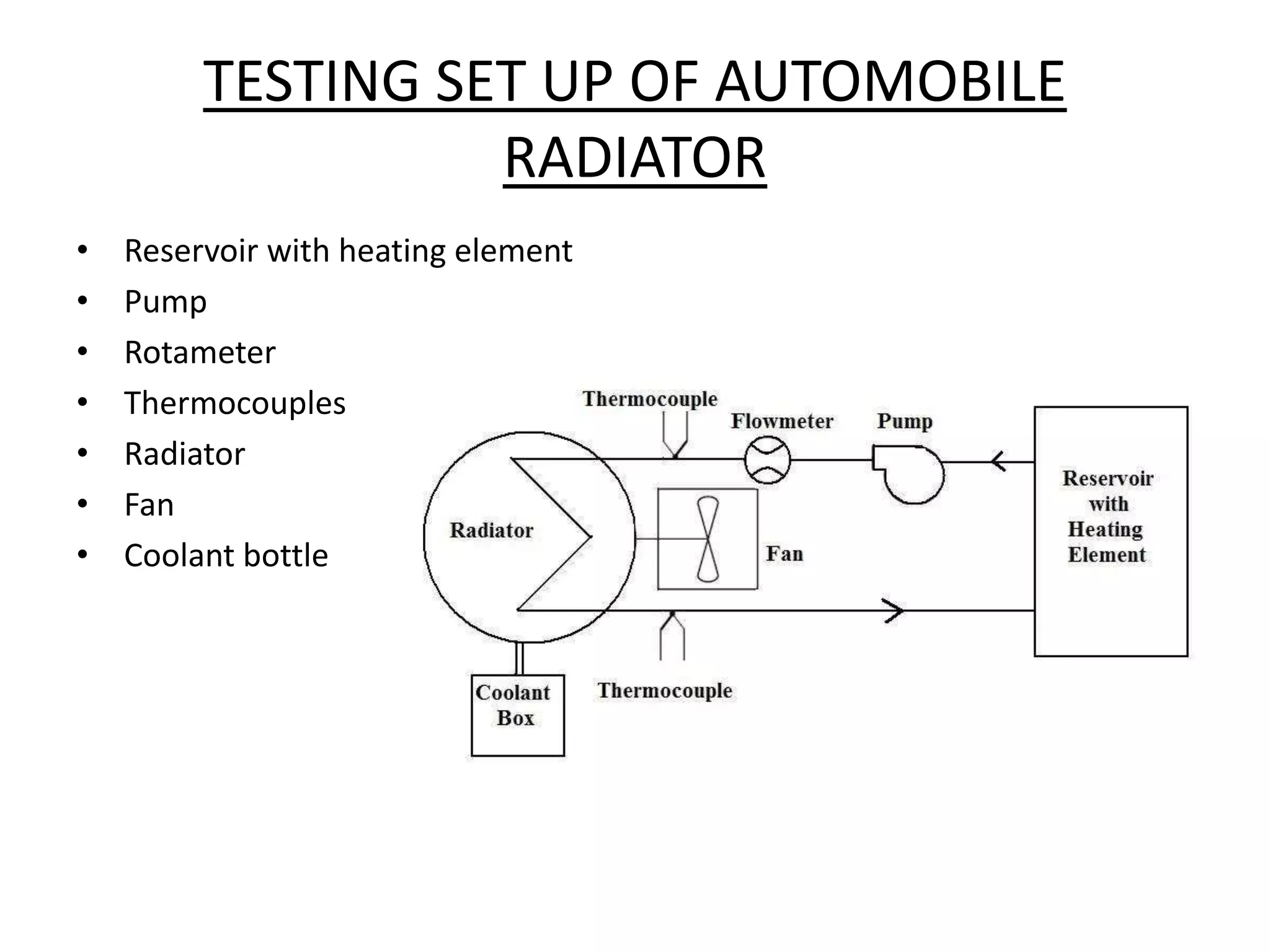
TESTING SET UP OF AUTOMOBILE
RADIATOR
• Reservoir with heating element
• Pump
• Rotameter
• Thermocouples
• Radiator
• Fan
• Coolant bottle
WORKING PRINCIPLE
• The pump sends the fluid into the engine block, where it makes its way
through passages in the engine around the cylinders. Then it returns
through the cylinder head of the engine.
• The thermostat is located where the fluid leaves the engine. The
thermostat sends the fluid back to the pump directly if the thermostat is
closed.
• If it is open, the fluid goes through the radiator first and then back to the
pump.
• There is also a separate circuit for the heating system. This circuit takes
fluid from the cylinder head and passes it through a heater core and then
back to the pump.
• There is normally also a separate circuit for cooling the transmission fluid
built into the radiator. The oil from the transmission is pumped by the
transmission through a second heat exchanger inside the radiator.
PROCEDURE
• Fill the reservoir with the coolant upto indicated level.
• Switch on the power supply,and then switch on the heating
element.
• Allow the coolant to get heated up to 60-90 degree celcius.
• Switch on the fan and the pump.
• Note down the electricity consumed by fan and pump by
energy meter.
• Note down the discharge of the coolant from flowmeter.
• Note down the inlet and outlet temperature/ by varying
pump discharge.
• Plot the graph between discharge vs. temperature.
• Plot the graph between inlet and outlet temperature.
COMPONENT SPECIFICATIONS
Maruti Alto:
•Size: 300*335*23 mm
•Make: SUZUKI
•Model no. DL-A039
•Material: Copper
Maruti 800
•Downward flow type
•Cu tubes, Cu plates
•37 plates, dia of tubes-10mm
Capacity= 3lit.
Cooling fan
•Rpm: 1200-2400 rpm
•220/240 V
•Single phase AC
Water Pump
•Submersible pump
•165-220V/50 Hz
•Power -19W
•Output -1100 L/H
Energy wire
• 1 phase, 2 wire
•AC 240V , 50Hz
•I (max)- 30A
Heating elements
•Power = 2000W, 1500W
Reservior
•Material: Stainless steel
•Capacity: 25-30L
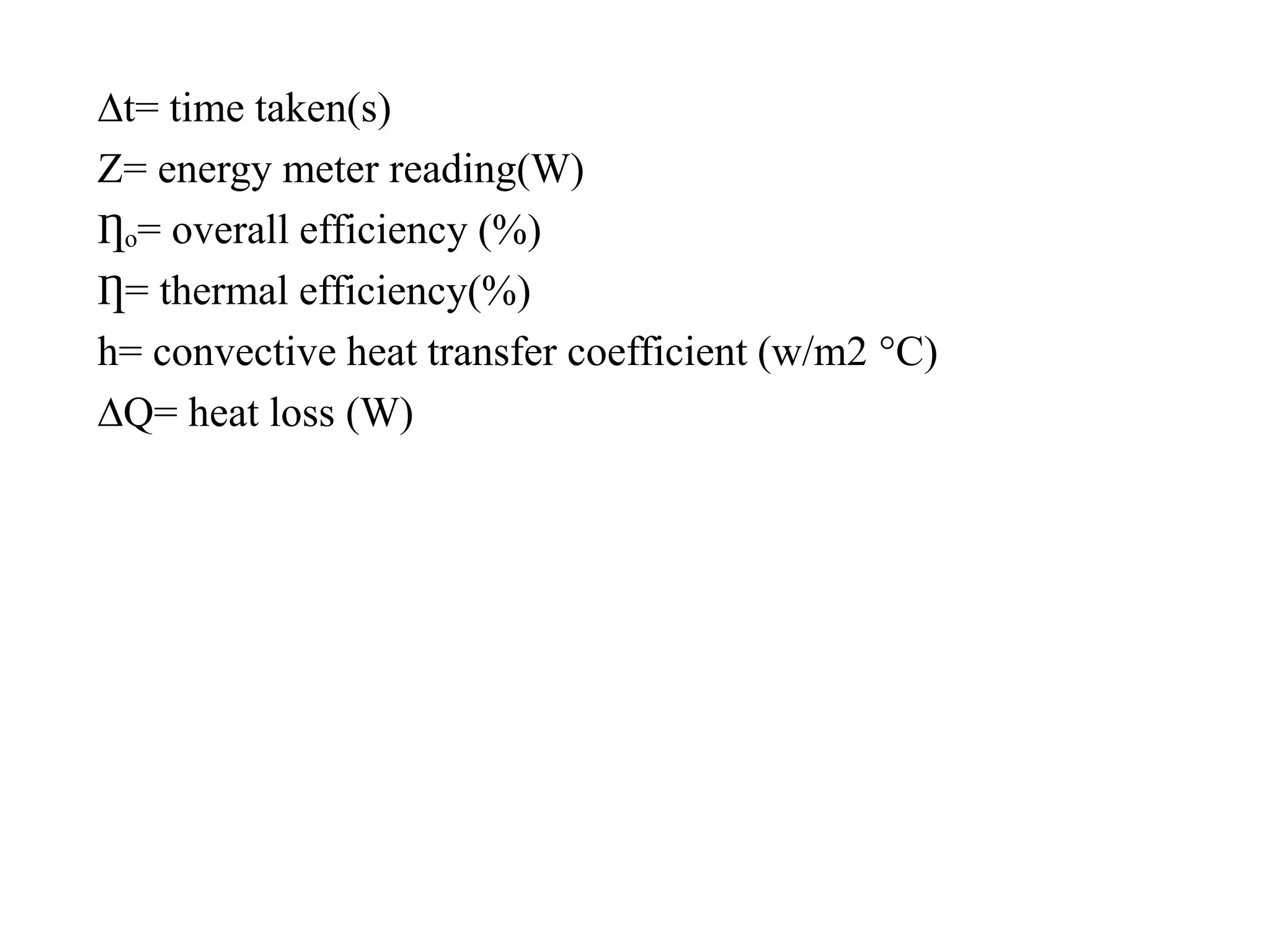
∆t= time taken(s)
Z= energy meter reading(W)
Ƞₒ= overall efficiency (%)
Ƞ= thermal efficiency(%)
h= convective heat transfer coefficient (w/m2 °C)
∆Q= heat loss (W)
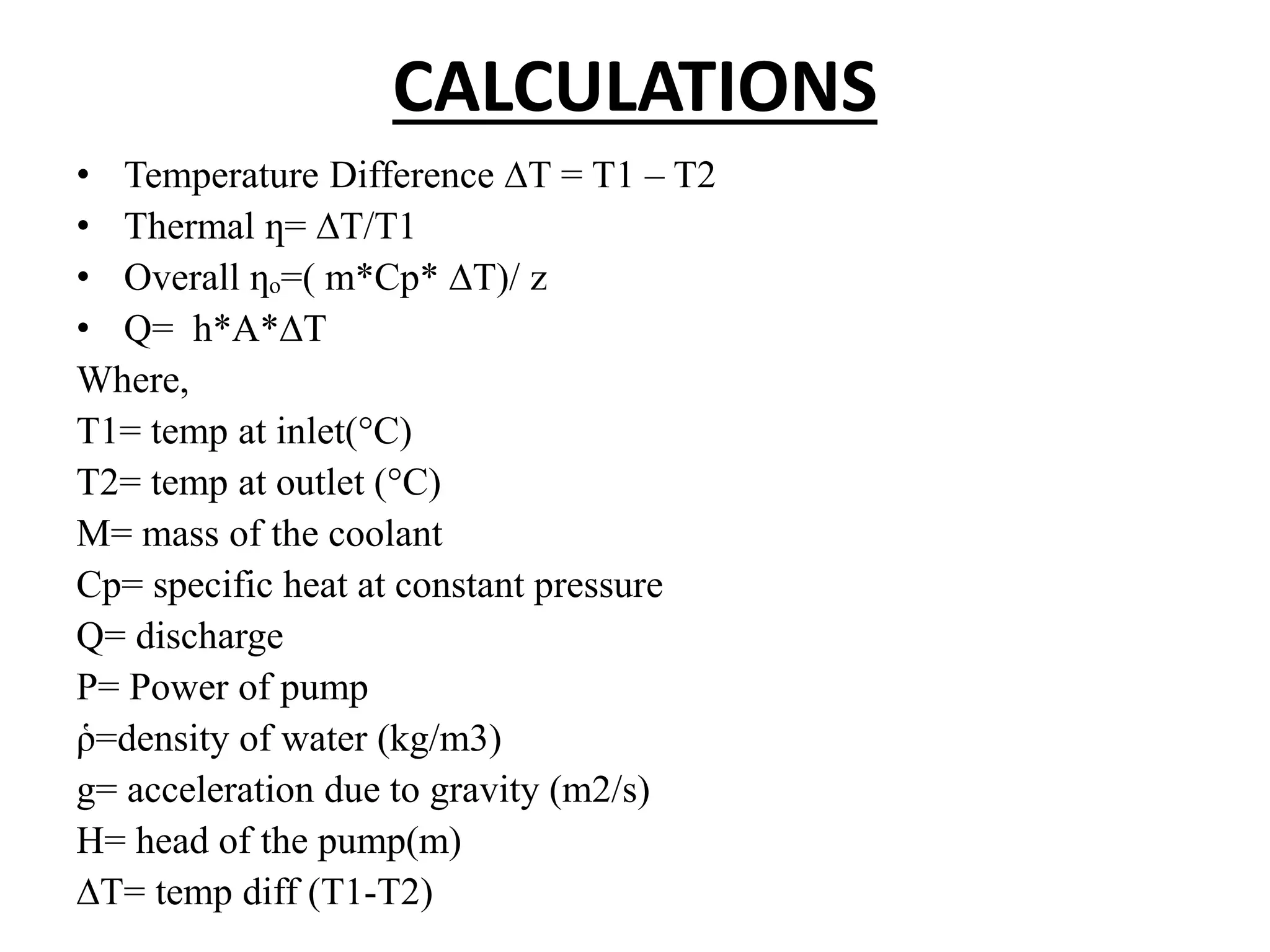
CALCULATIONS
• Temperature Difference ∆T = T1 – T2
• Thermal ƞ= ∆T/T1
• Overall ƞₒ=( m*Cp* ∆T)/ z
• Q= h*A*∆T
Where,
T1= temp at inlet(°C)
T2= temp at outlet (°C)
M= mass of the coolant
Cp= specific heat at constant pressure
Q= discharge
P= Power of pump
ῥ=density of water (kg/m3)
g= acceleration due to gravity (m2/s)
H= head of the pump(m)
∆T= temp diff (T1-T2)
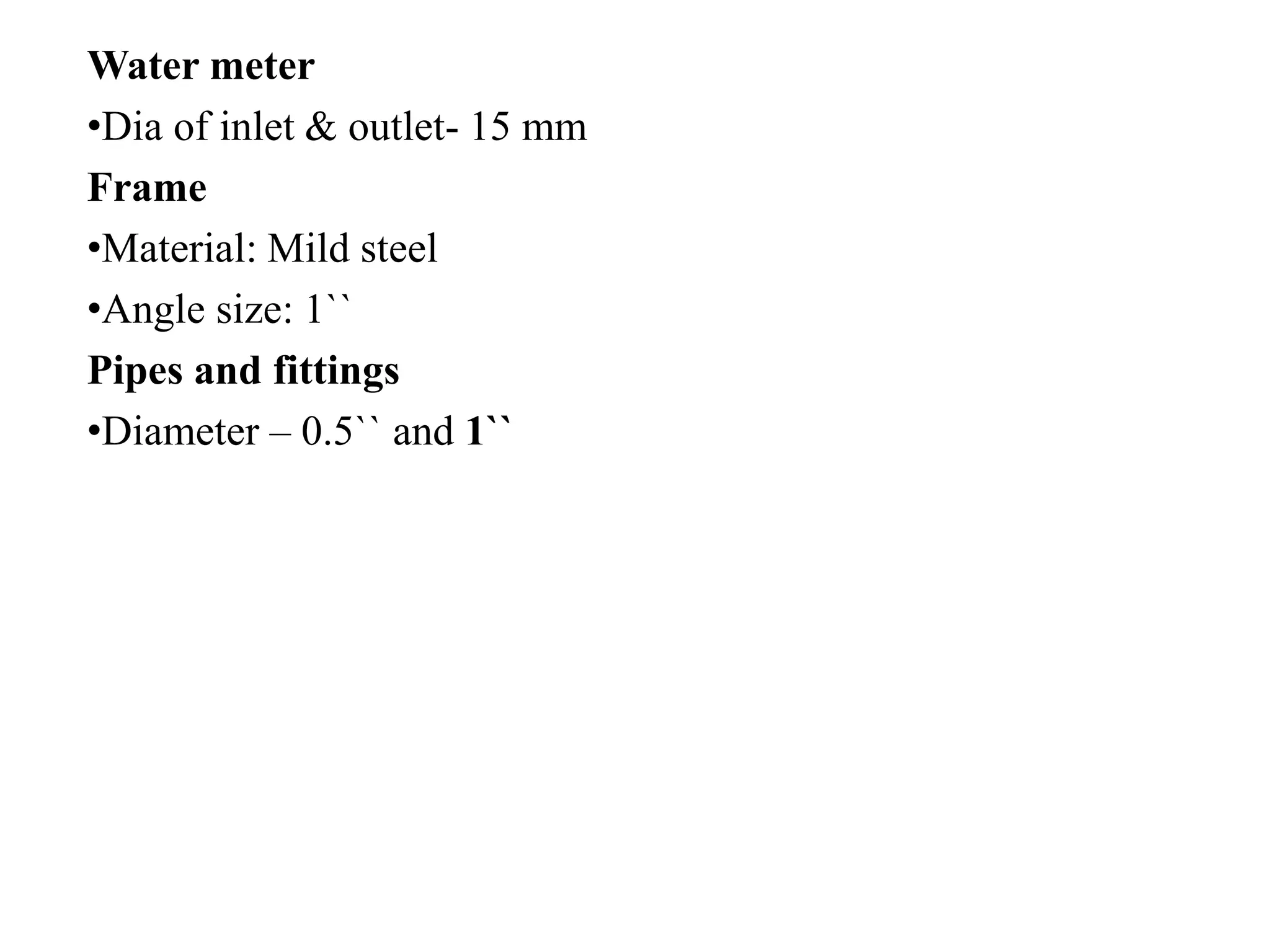
Water meter
•Dia of inlet & outlet- 15 mm
Frame
•Material: Mild steel
•Angle size: 1``
Pipes and fittings
•Diameter – 0.5`` and 1``
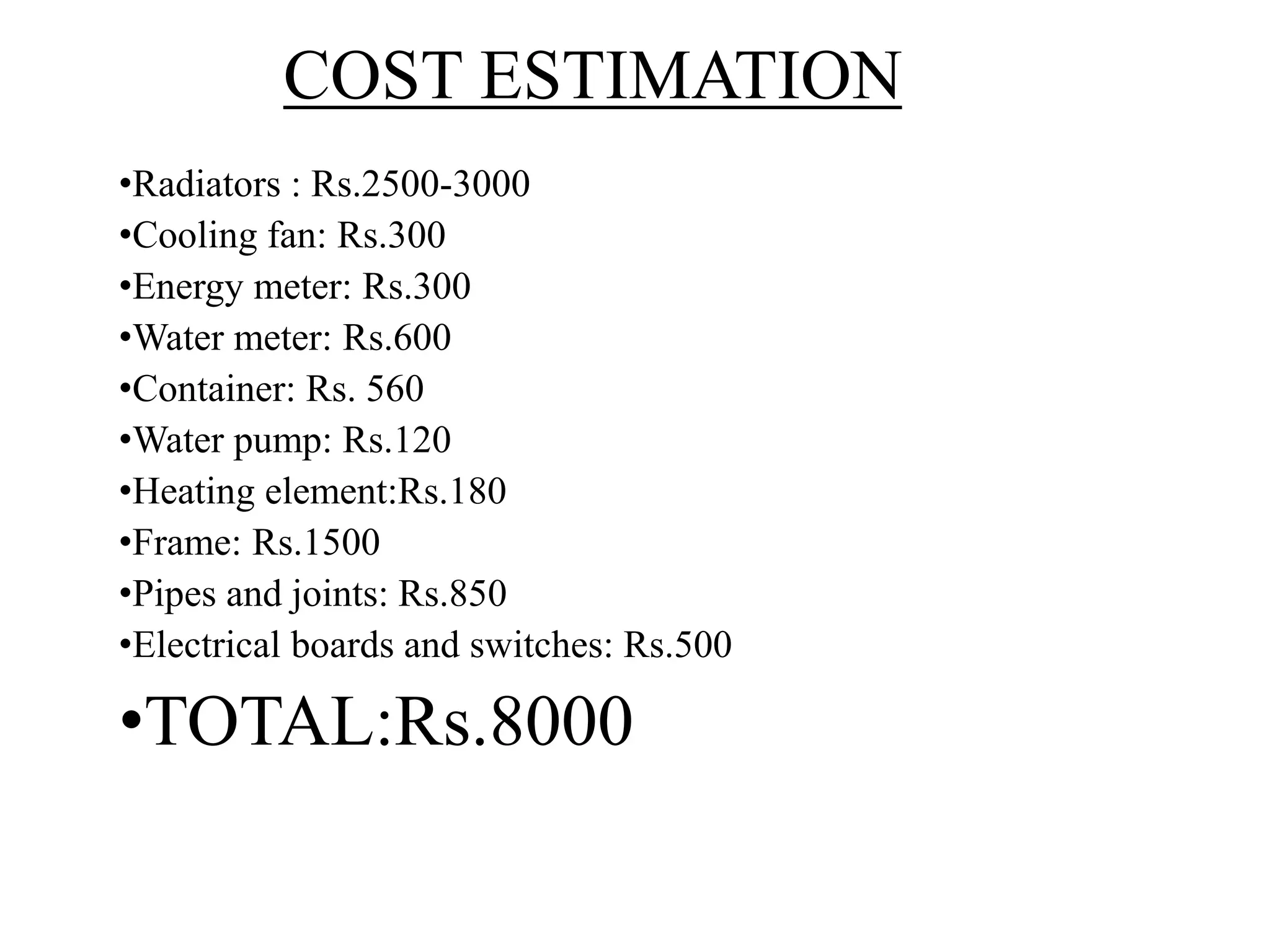
COST ESTIMATION
•Radiators : Rs.2500-3000
•Cooling fan: Rs.300
•Energy meter: Rs.300
•Water meter: Rs.600
•Container: Rs. 560
•Water pump: Rs.120
•Heating element:Rs.180
•Frame: Rs.1500
•Pipes and joints: Rs.850
•Electrical boards and switches: Rs.500
•TOTAL:Rs.8000
RADIATOR SPECIFICATION USED IN THE
MATLAB
• Size: (300*335*23) mm
• Make: SUZUKI
• Model no. DL-A039
• Material: Copper
• Downward flow type
• Cu tubes, Cu plates
• 37 plates, dia of tubes-10mm
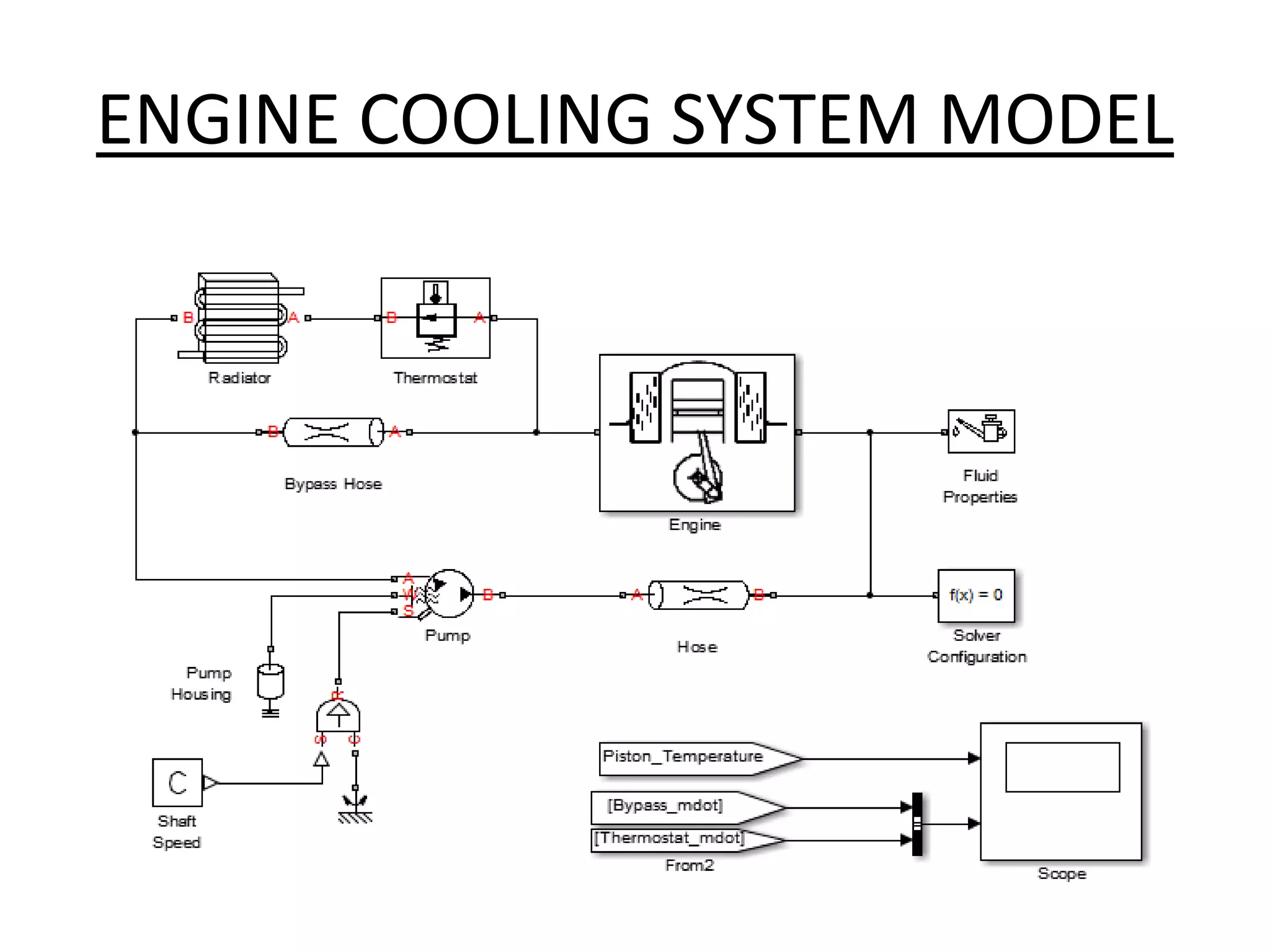
ENGINE COOLING SYSTEM MODEL
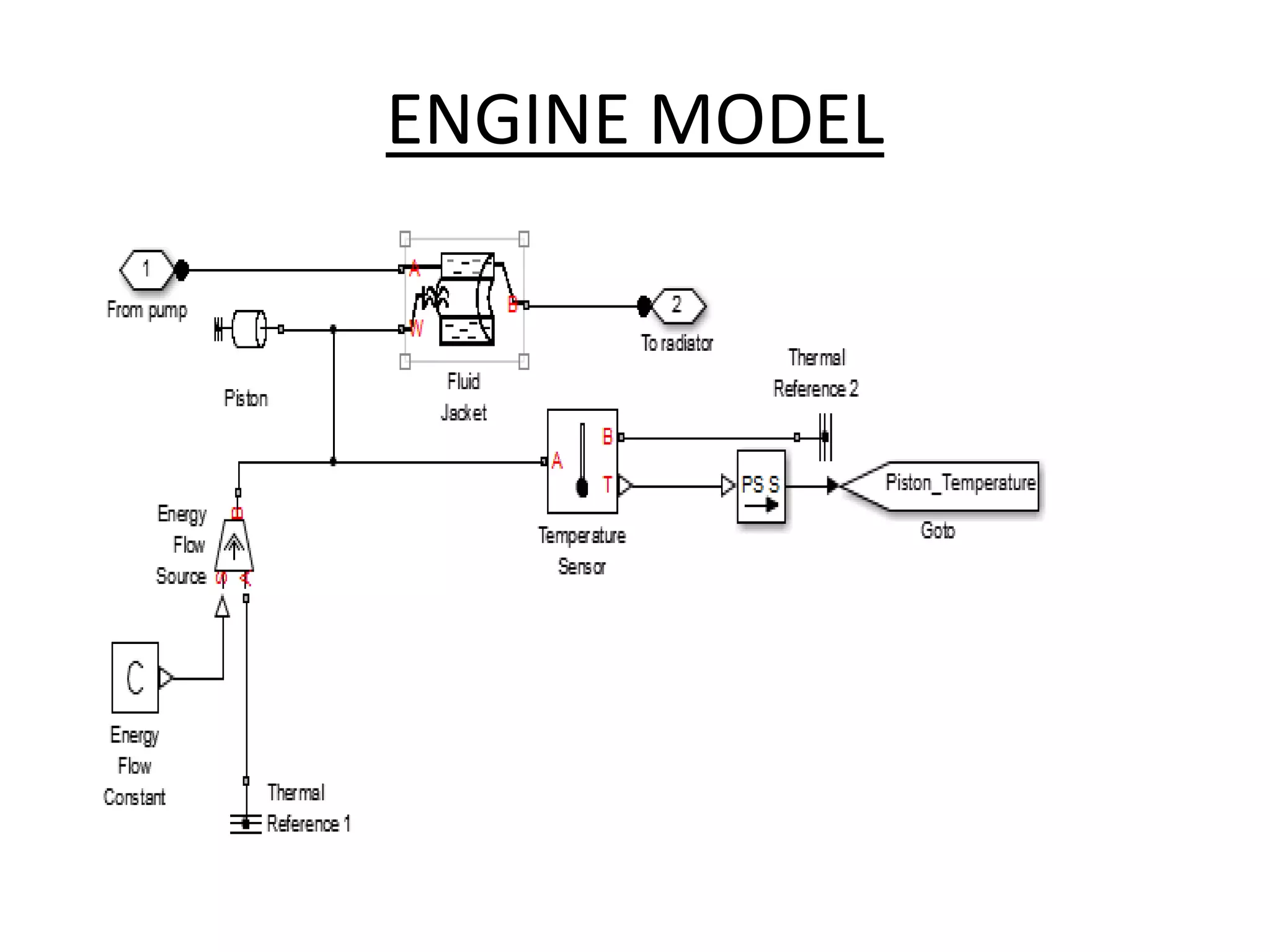
ENGINE MODEL
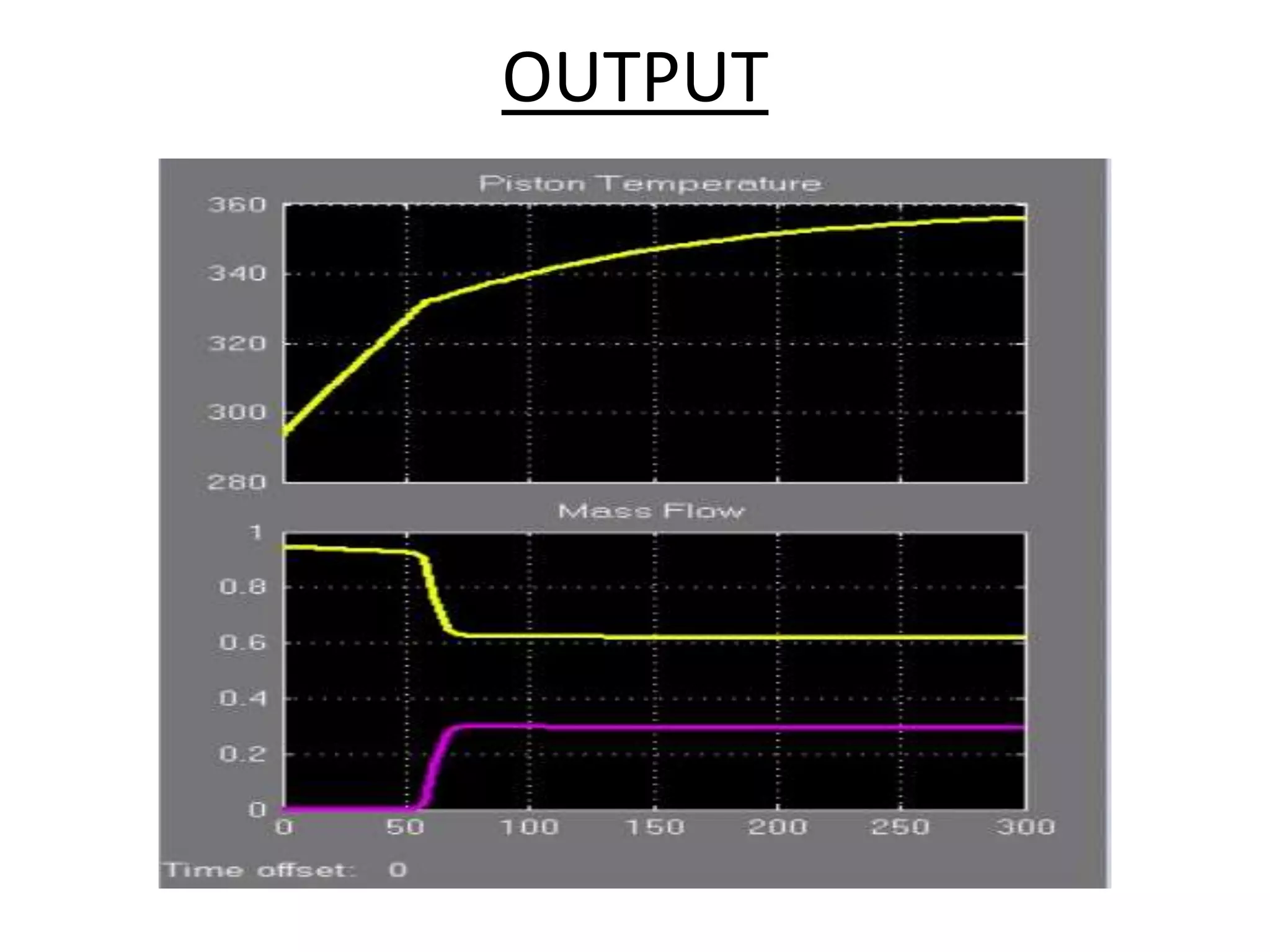
OUTPUT
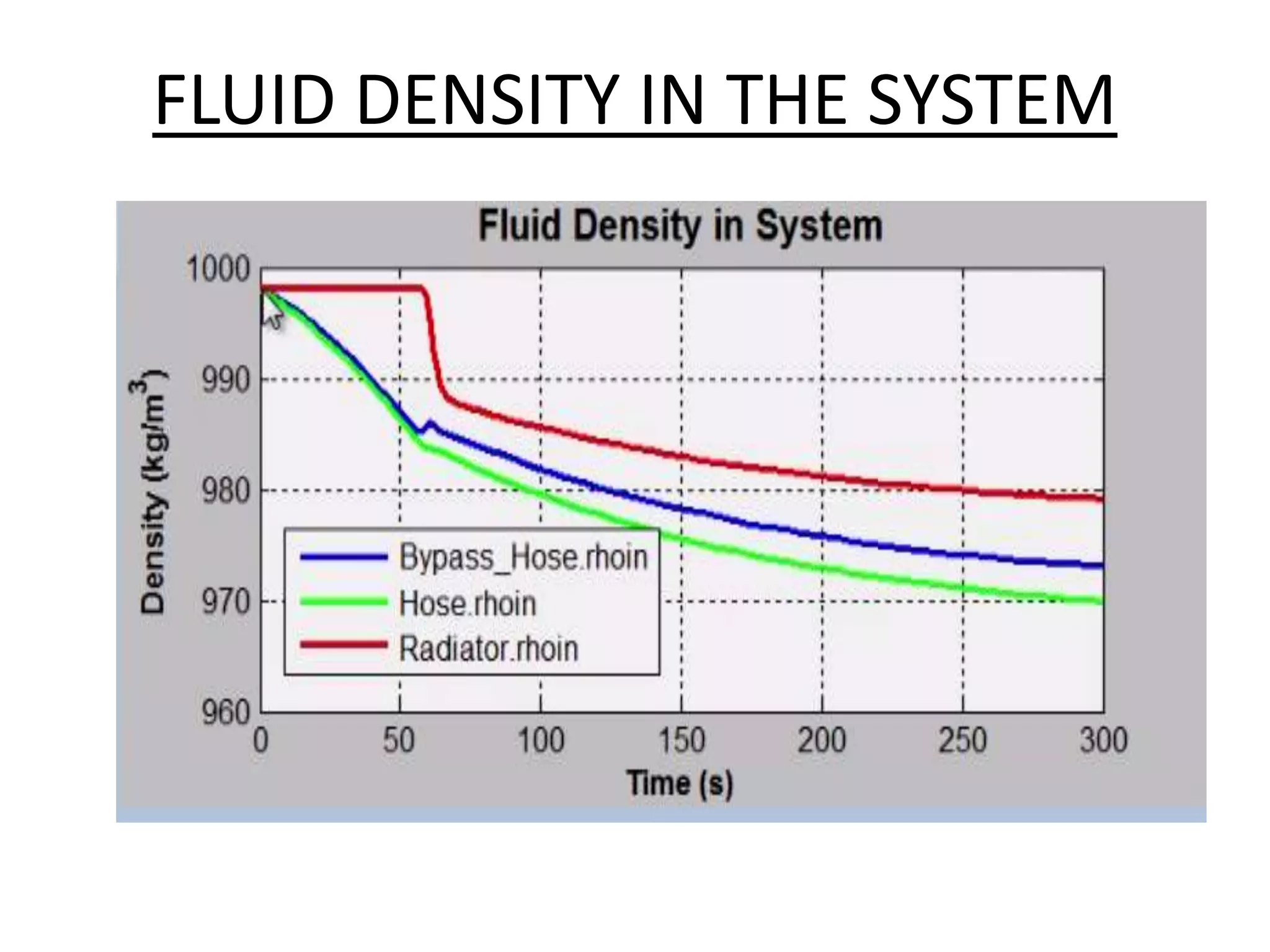
FLUID DENSITY IN THE SYSTEM
PARTS PURCHASED
• Radiator: Accent Camry Petrol version
• Submersible pump
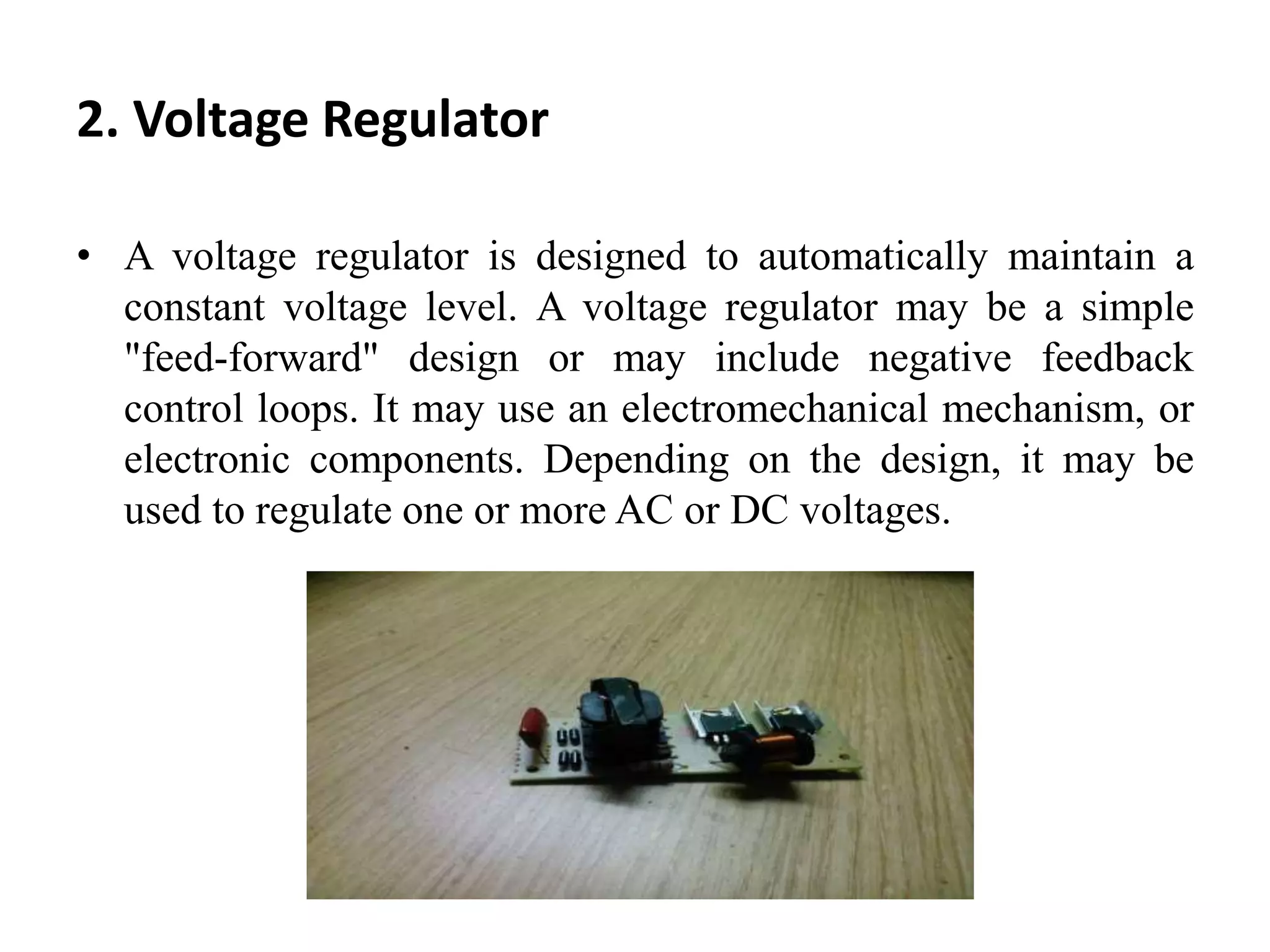
• Inverter Circuit for efficient running of the radiator fan at
high current.
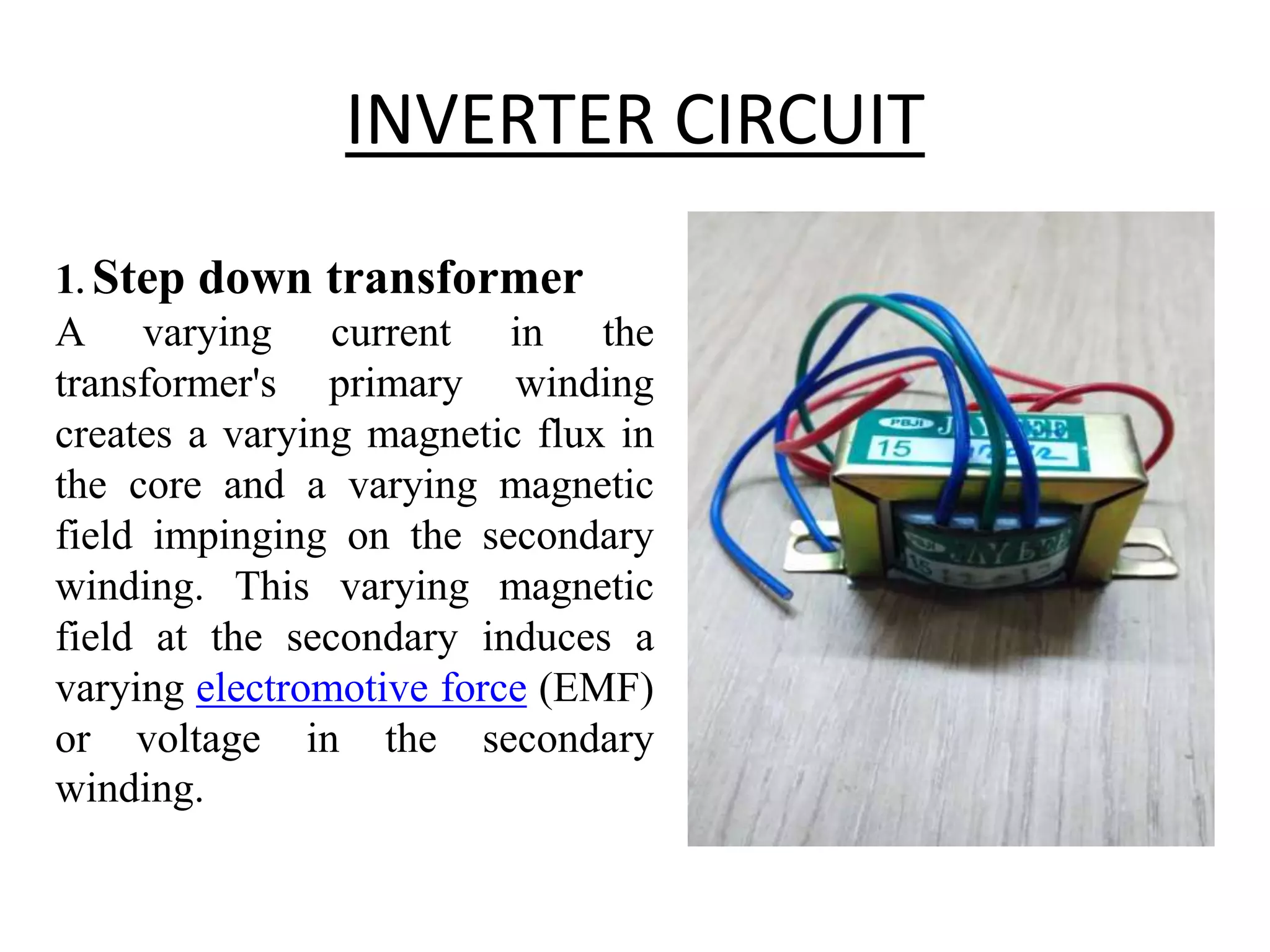
• Step down Transformer
• Emulsion heating rod
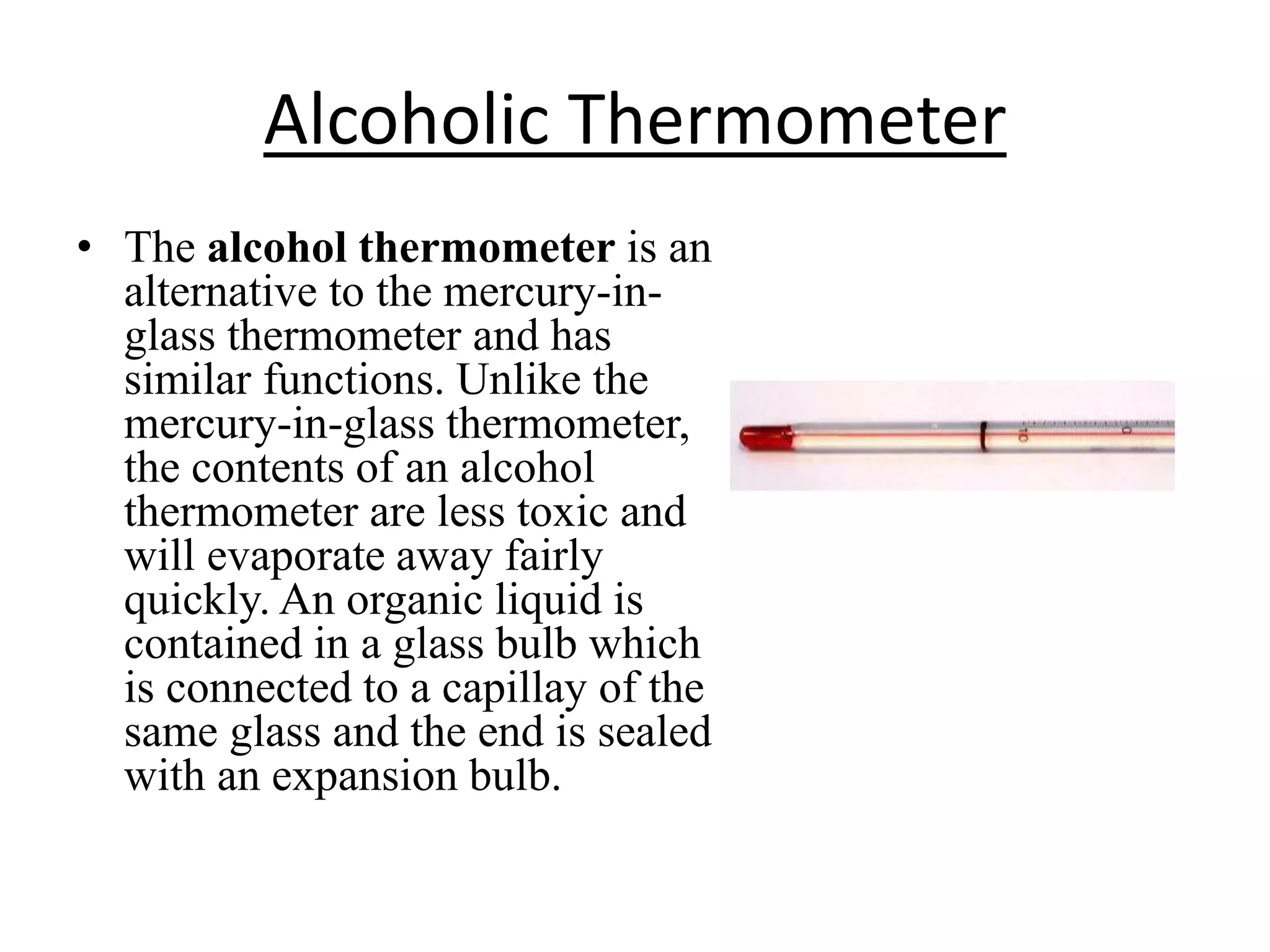
• Alcoholic Thermometer
Steps involved in the removal of
radiator from the car
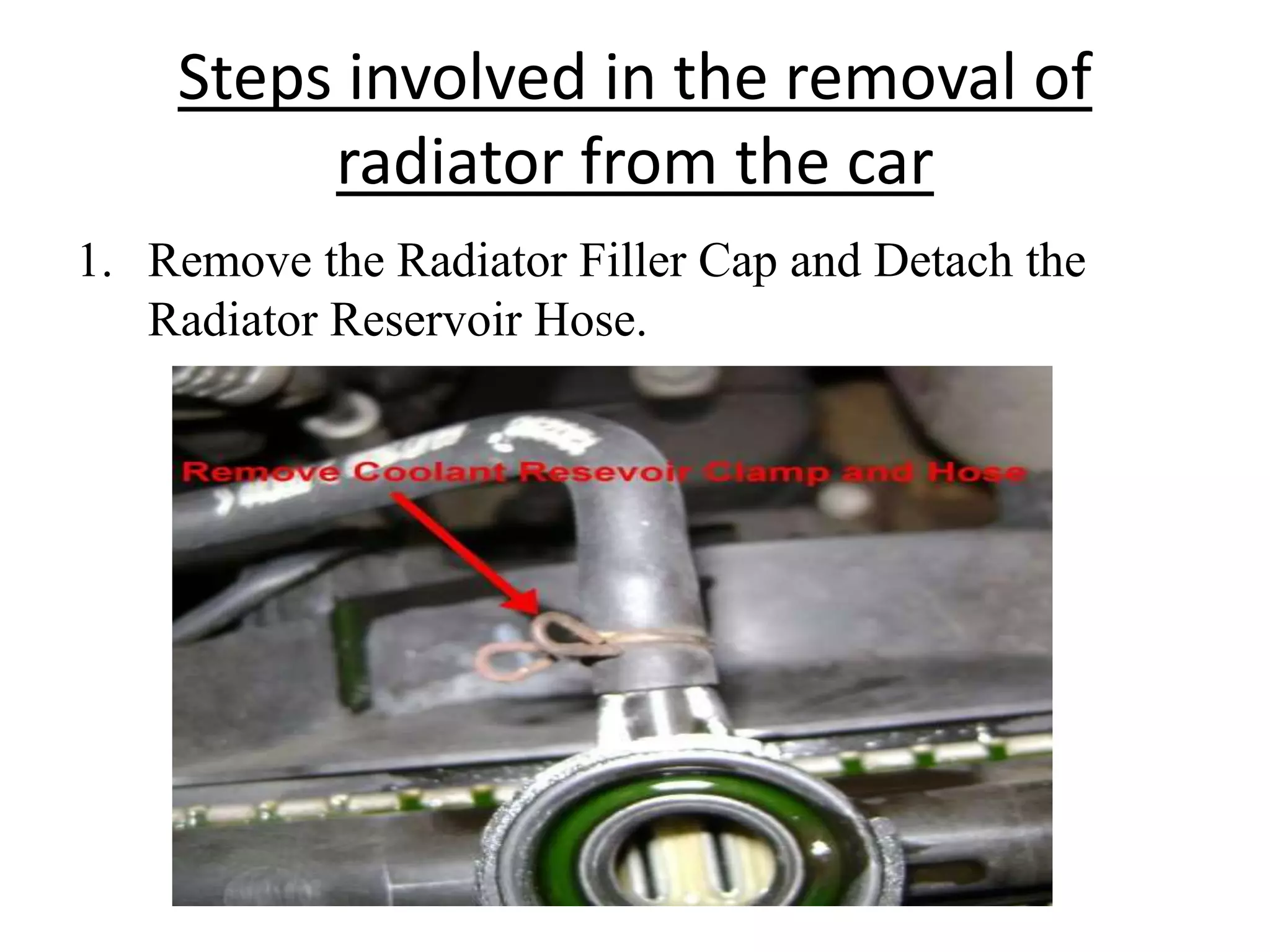
1. Remove the Radiator Filler Cap and Detach the
Radiator Reservoir Hose.
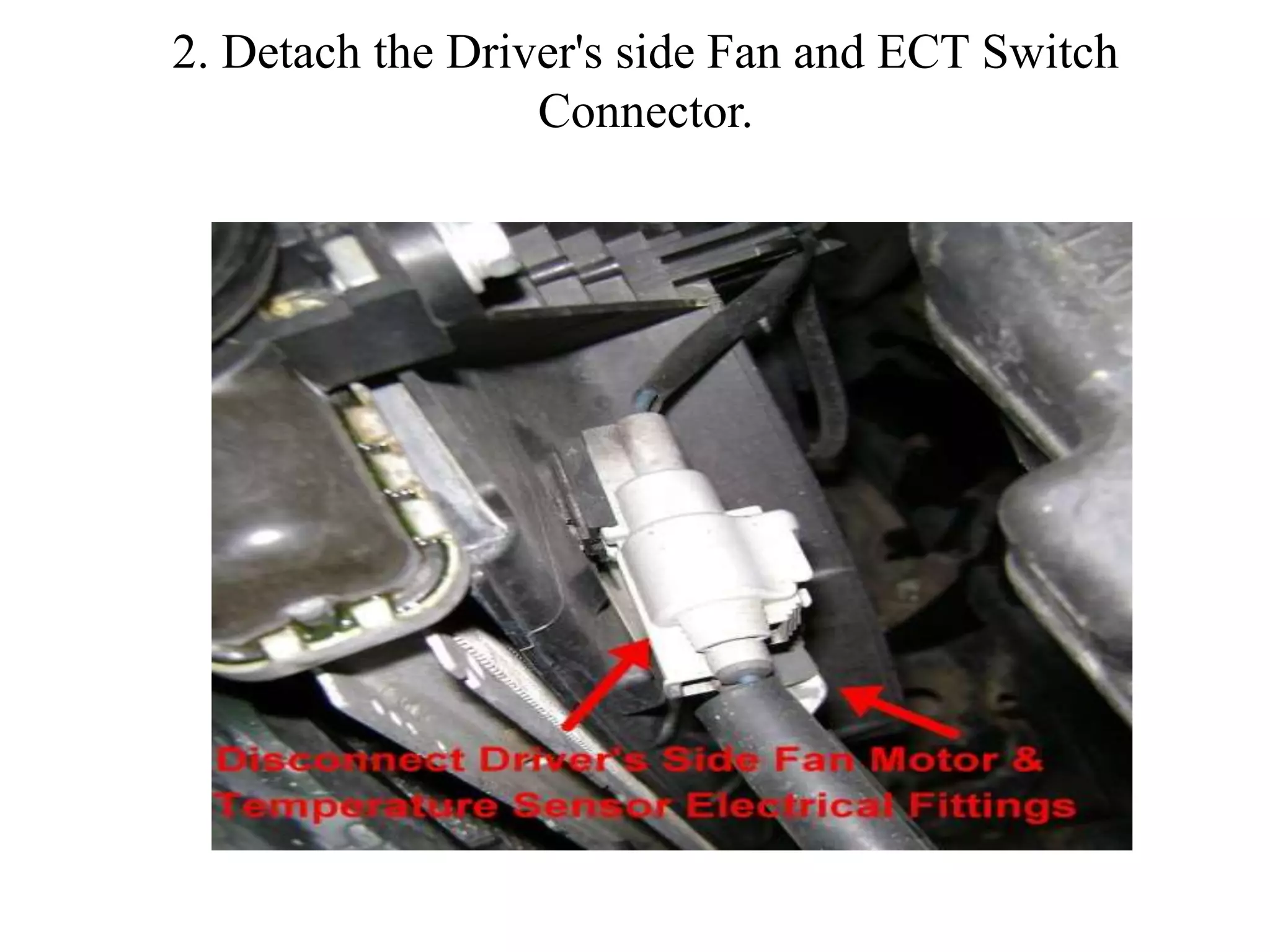
2. Detach the Driver's side Fan and ECT Switch
Connector.
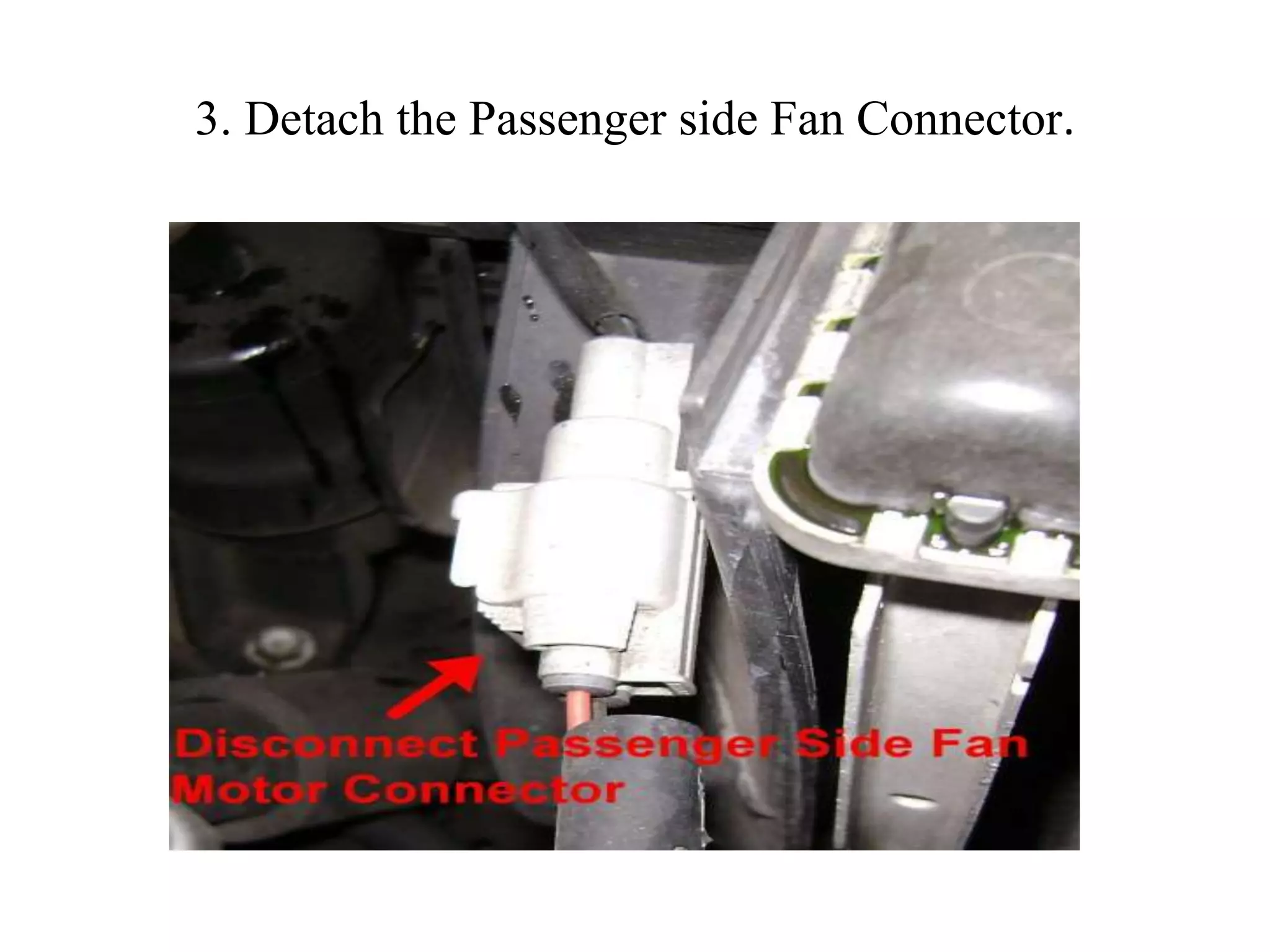
3. Detach the Passenger side Fan Connector.
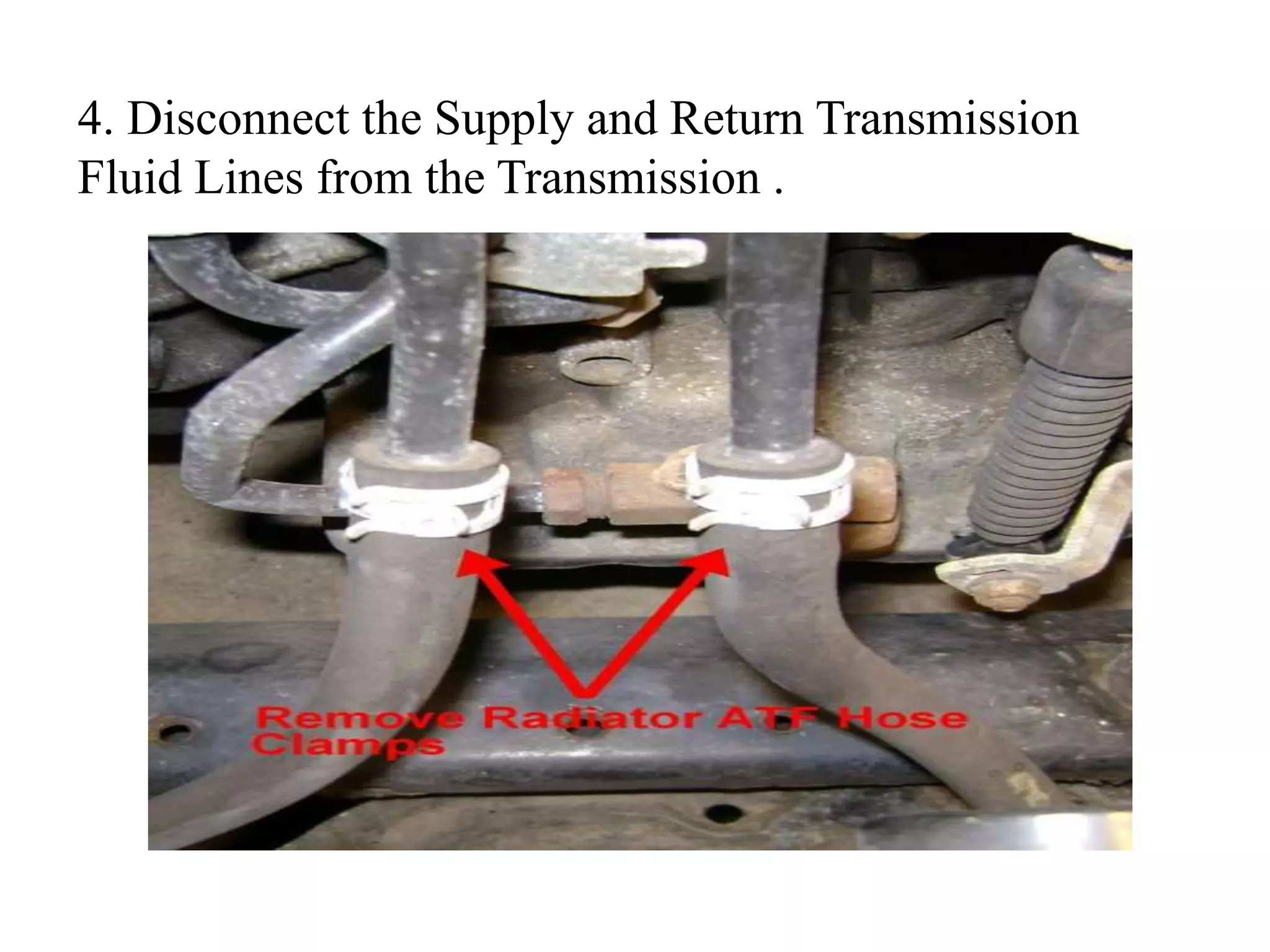
4. Disconnect the Supply and Return Transmission
Fluid Lines from the Transmission .
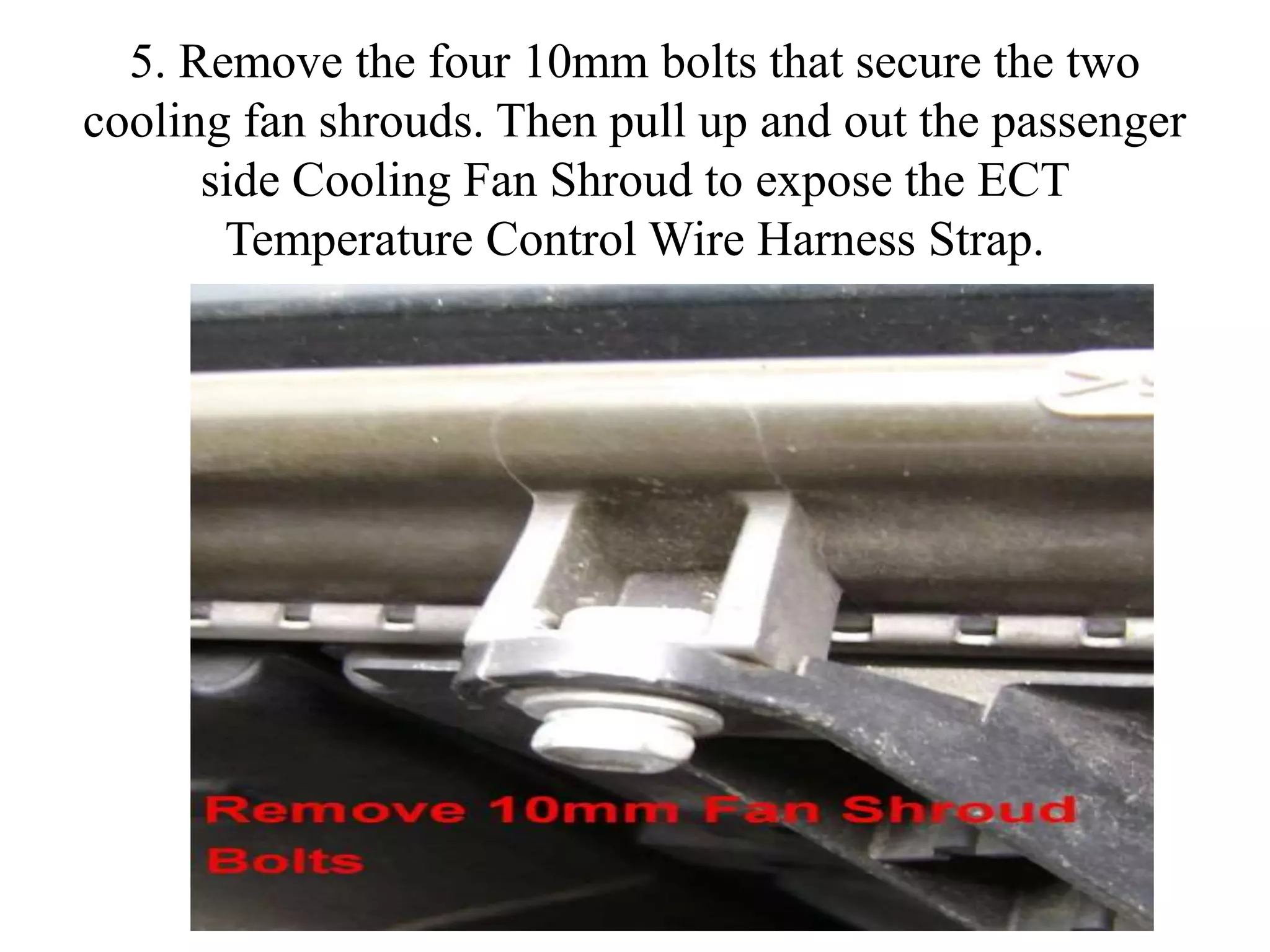
5. Remove the four 10mm bolts that secure the two
cooling fan shrouds. Then pull up and out the passenger
side Cooling Fan Shroud to expose the ECT
Temperature Control Wire Harness Strap.
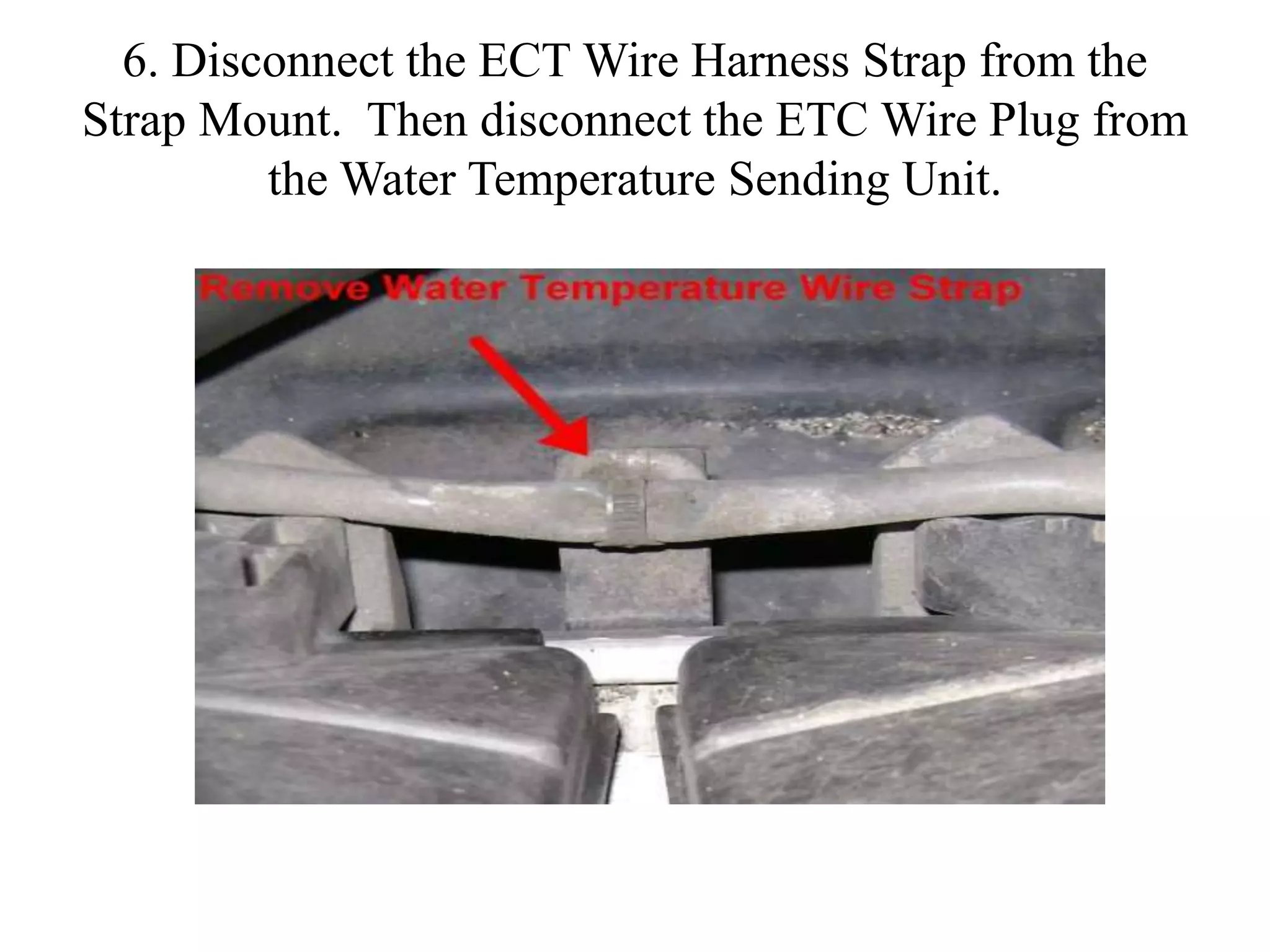
6. Disconnect the ECT Wire Harness Strap from the
Strap Mount. Then disconnect the ETC Wire Plug from
the Water Temperature Sending Unit.
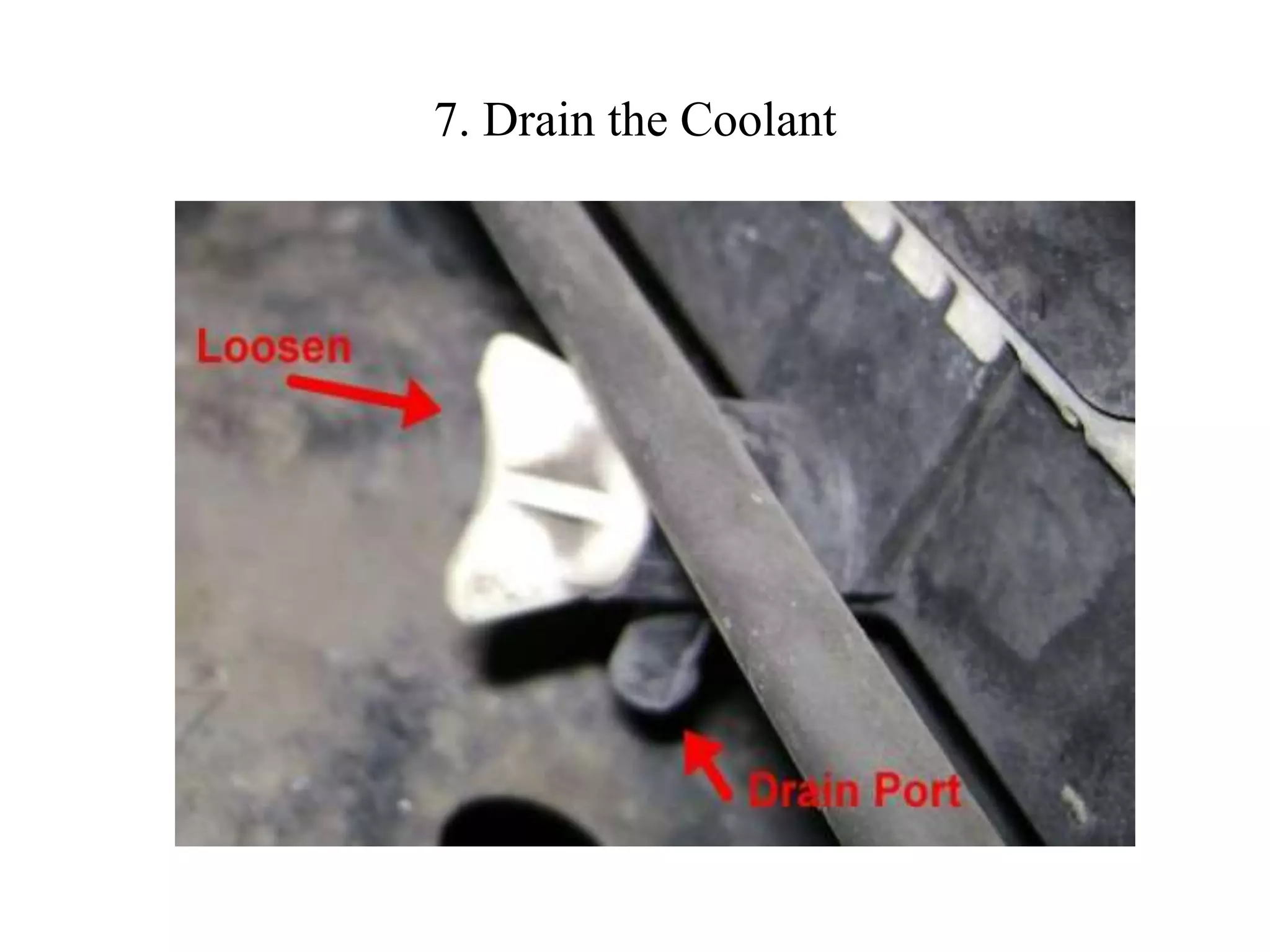
7. Drain the Coolant
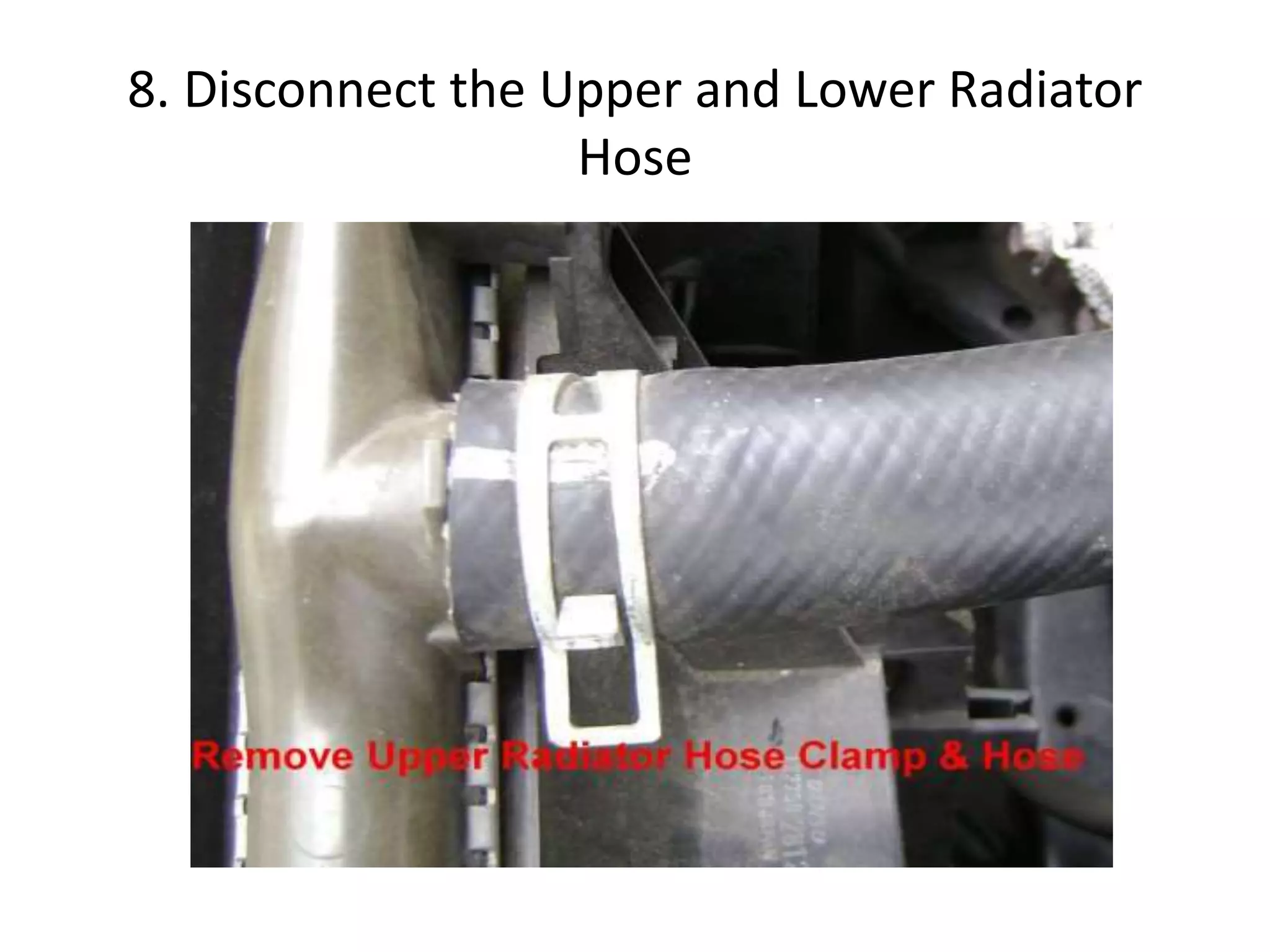
8. Disconnect the Upper and Lower Radiator
Hose
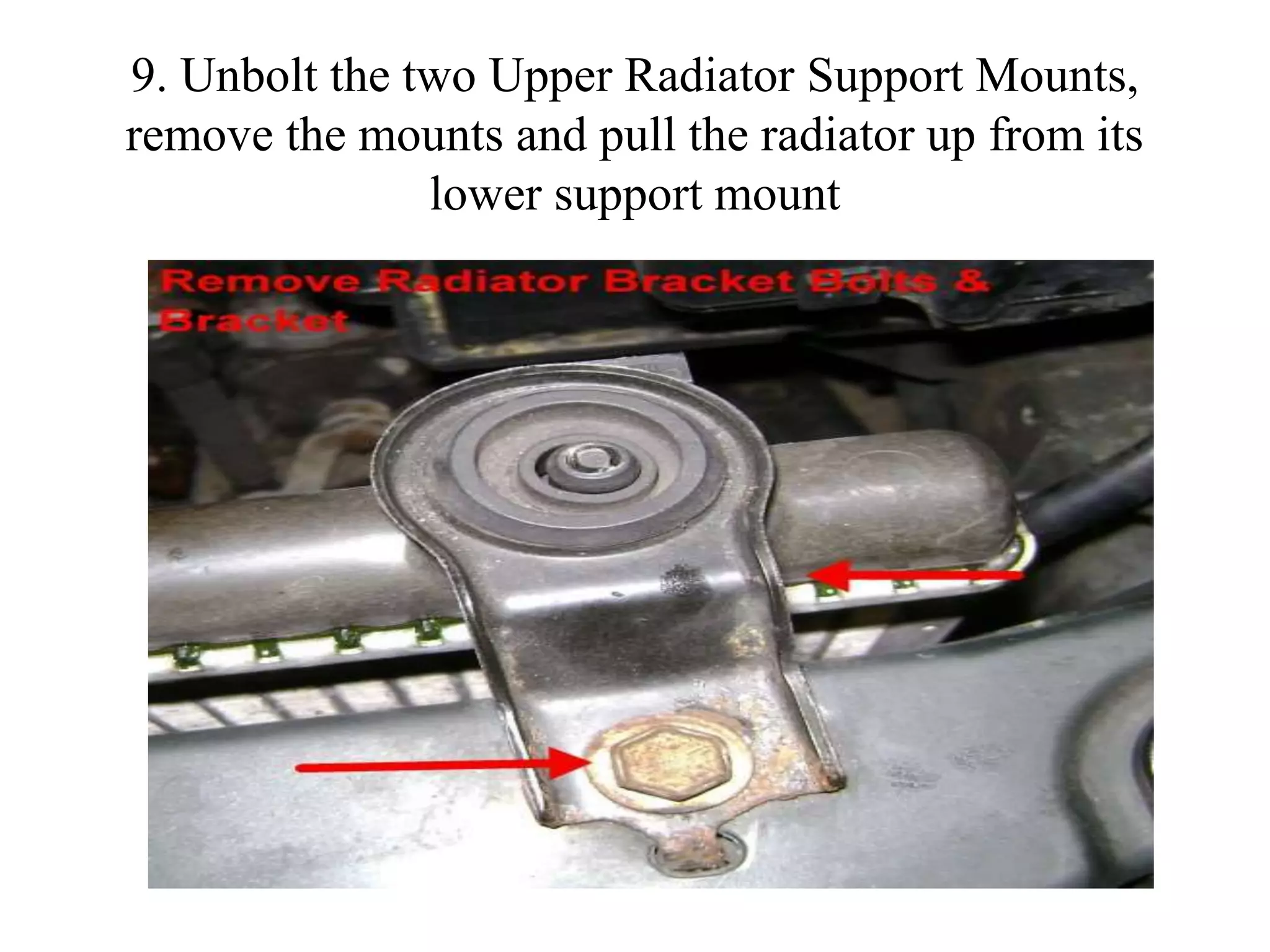
9. Unbolt the two Upper Radiator Support Mounts,
remove the mounts and pull the radiator up from its
lower support mount
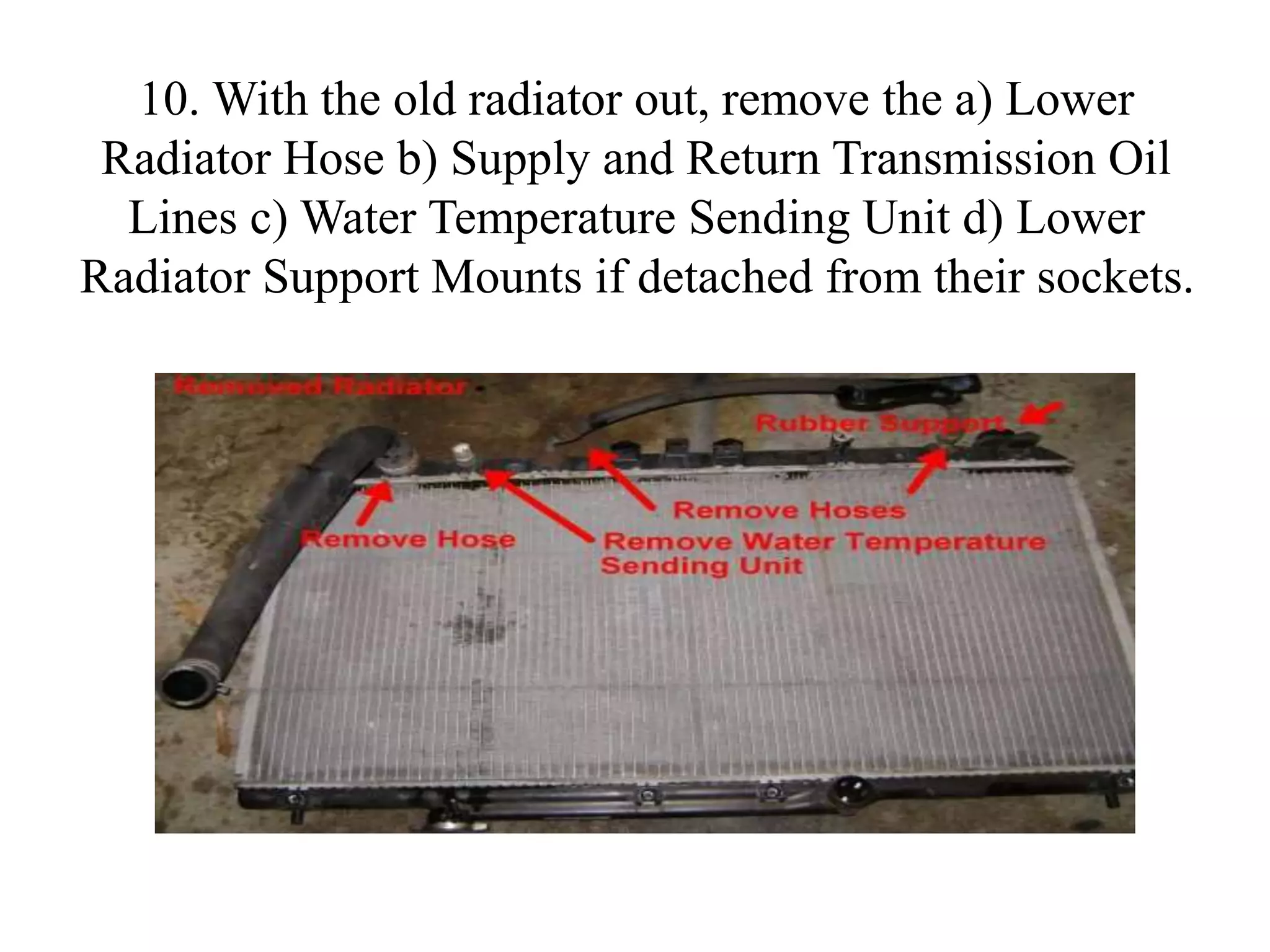
10. With the old radiator out, remove the a) Lower
Radiator Hose b) Supply and Return Transmission Oil
Lines c) Water Temperature Sending Unit d) Lower
Radiator Support Mounts if detached from their sockets.
INVERTER CIRCUIT
1. Step down transformer
A varying current in the
transformer's primary winding
creates a varying magnetic flux in
the core and a varying magnetic
field impinging on the secondary
winding. This varying magnetic
field at the secondary induces a
varying electromotive force (EMF)
or voltage in the secondary
winding.
2. Voltage Regulator
• A voltage regulator is designed to automatically maintain a
constant voltage level. A voltage regulator may be a simple
"feed-forward" design or may include negative feedback
control loops. It may use an electromechanical mechanism, or
electronic components. Depending on the design, it may be
used to regulate one or more AC or DC voltages.
Alcoholic Thermometer
• The alcohol thermometer is an
alternative to the mercury-in-
glass thermometer and has
similar functions. Unlike the
mercury-in-glass thermometer,
the contents of an alcohol
thermometer are less toxic and
will evaporate away fairly
quickly. An organic liquid is
contained in a glass bulb which
is connected to a capillay of the
same glass and the end is sealed
with an expansion bulb.
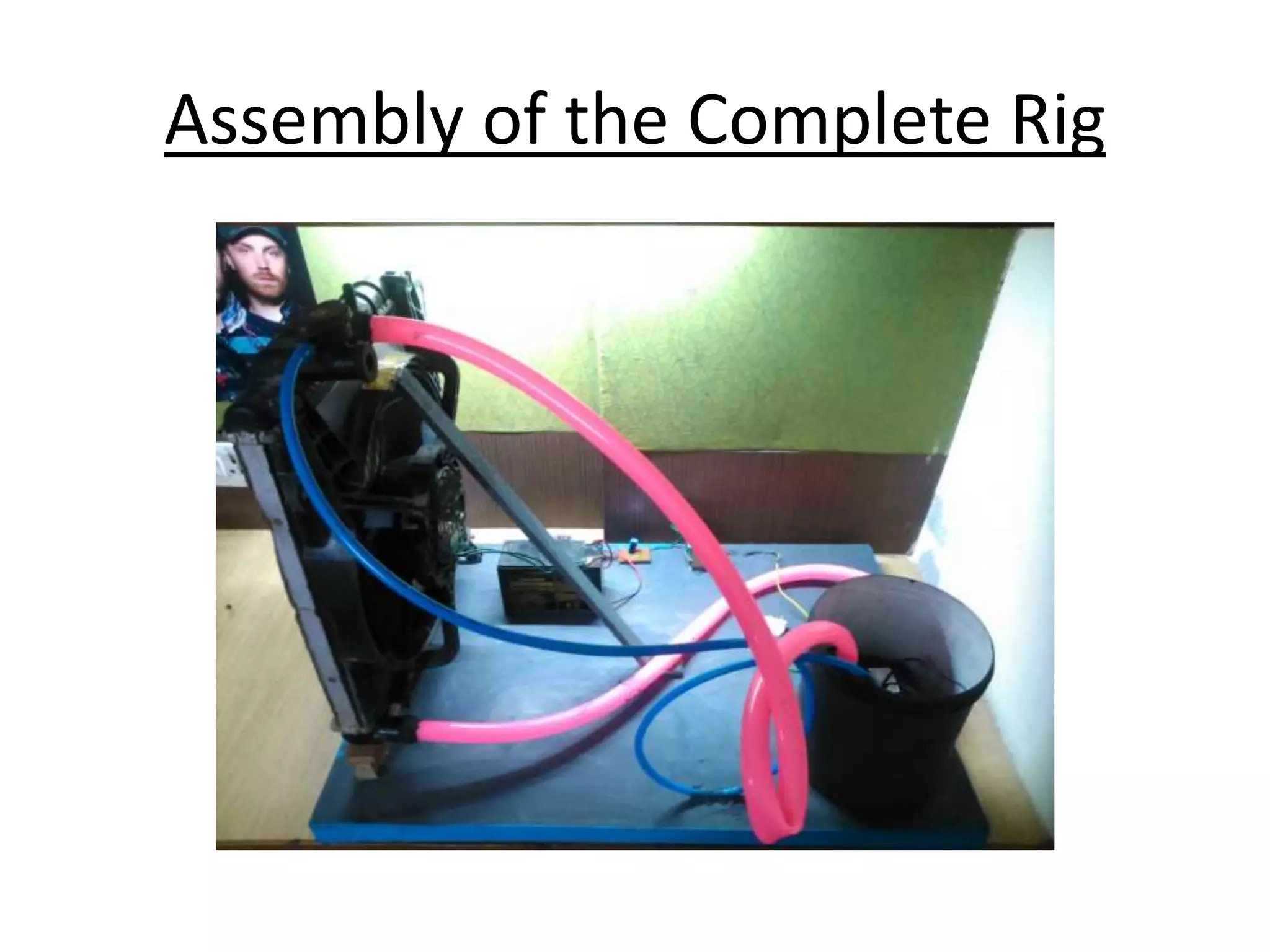
Assembly of the Complete Rig
S.NO Inlet Temp Ti(°C) Outlet Temp
TO(°C)
Time (sec)
1 70 62 60
2 75 67 120
3 80 68 180
4 85 71 240
5 90 74 300
OBSERVATIONS AND CALCULATIONS
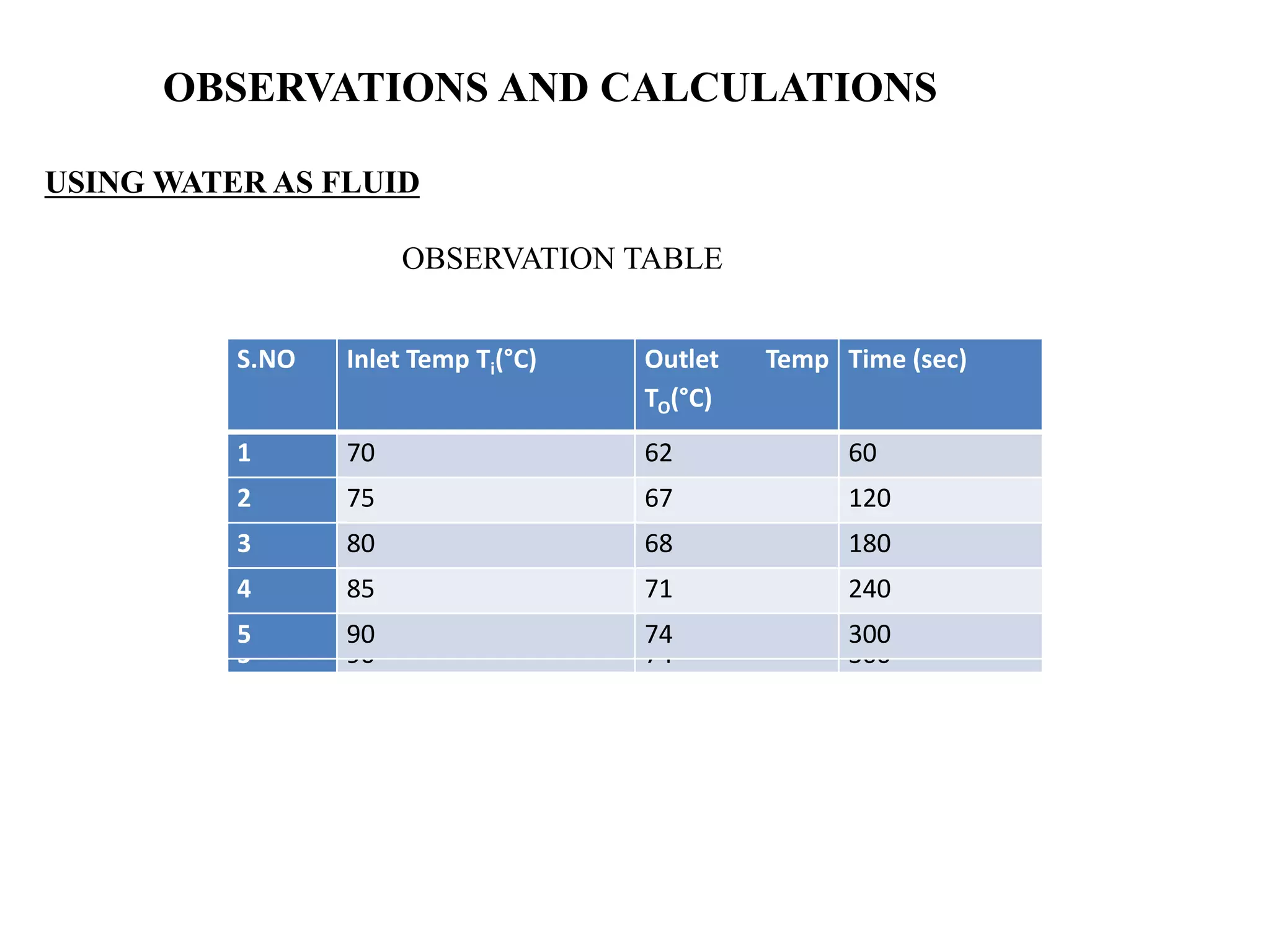
9.1USING WATER AS FLUID
9.1.1OBSERVATION TABLE
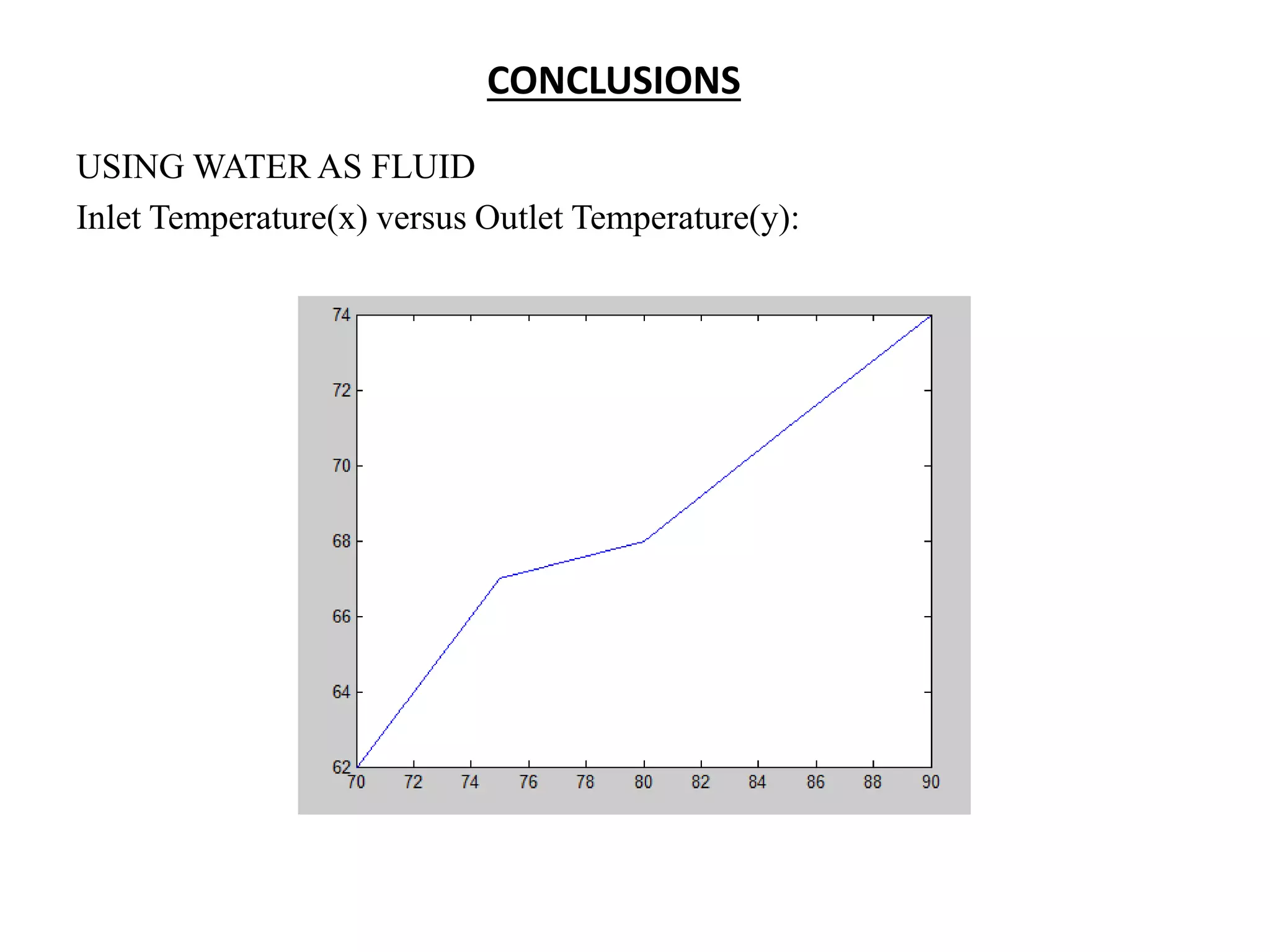
S.NO Inlet Temp Ti(°C) Outlet Temp
TO(°C)
Time (sec)
1 70 62 60
2 75 67 120
3 80 68 180
4 85 71 240
5 90 74 300
OBSERVATIONS AND CALCULATIONS
USING WATER AS FLUID
OBSERVATION TABLE
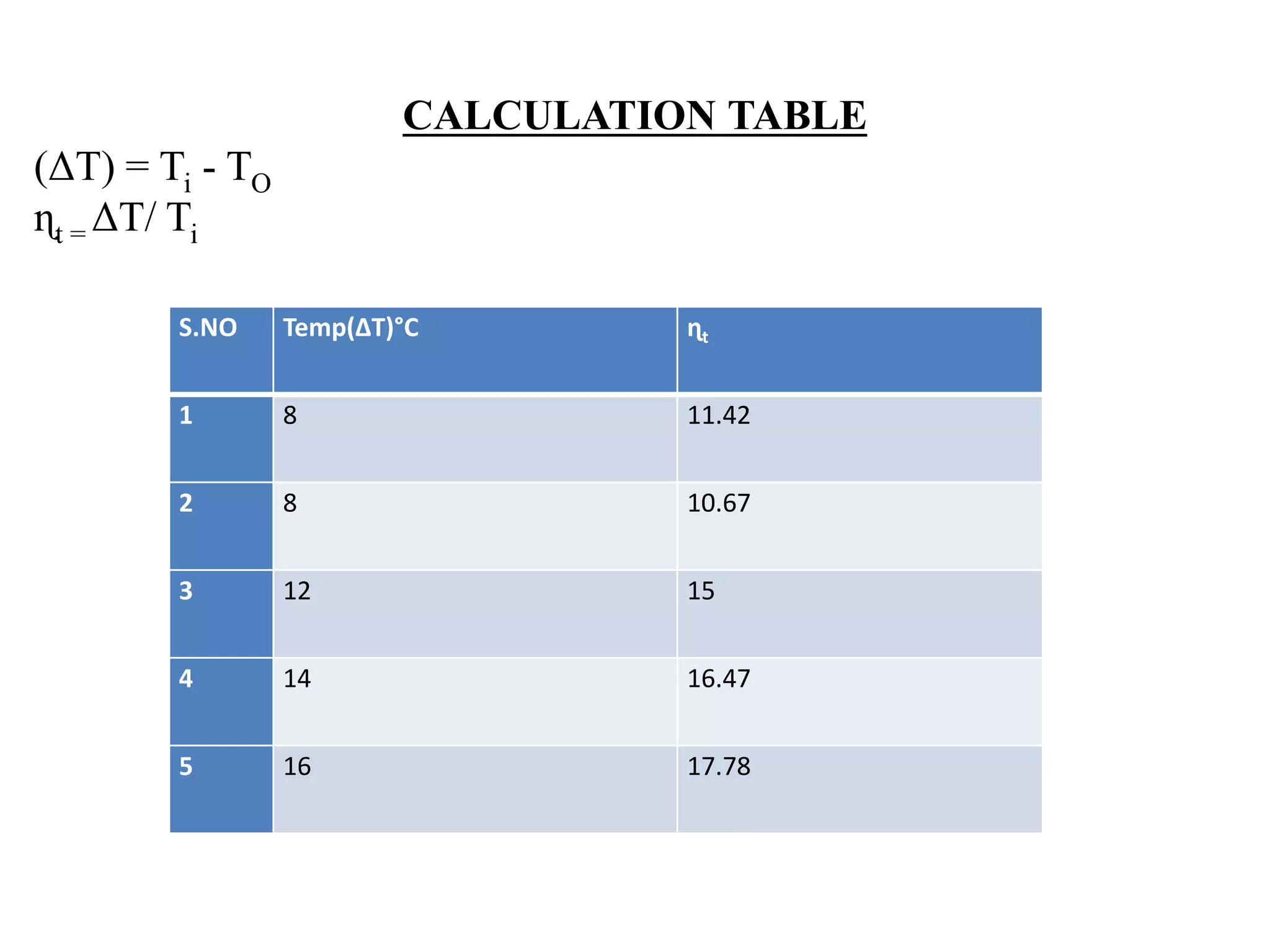
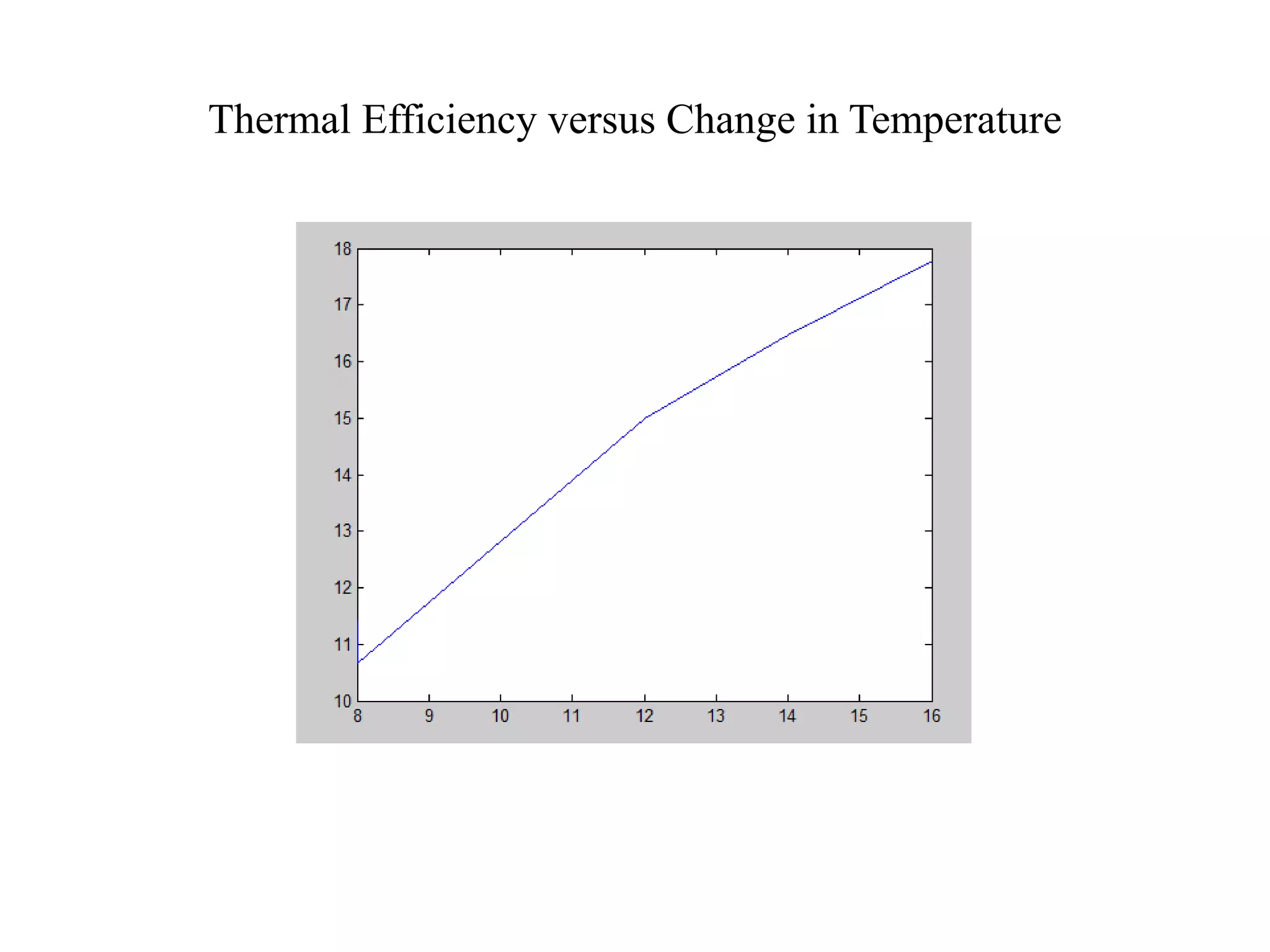
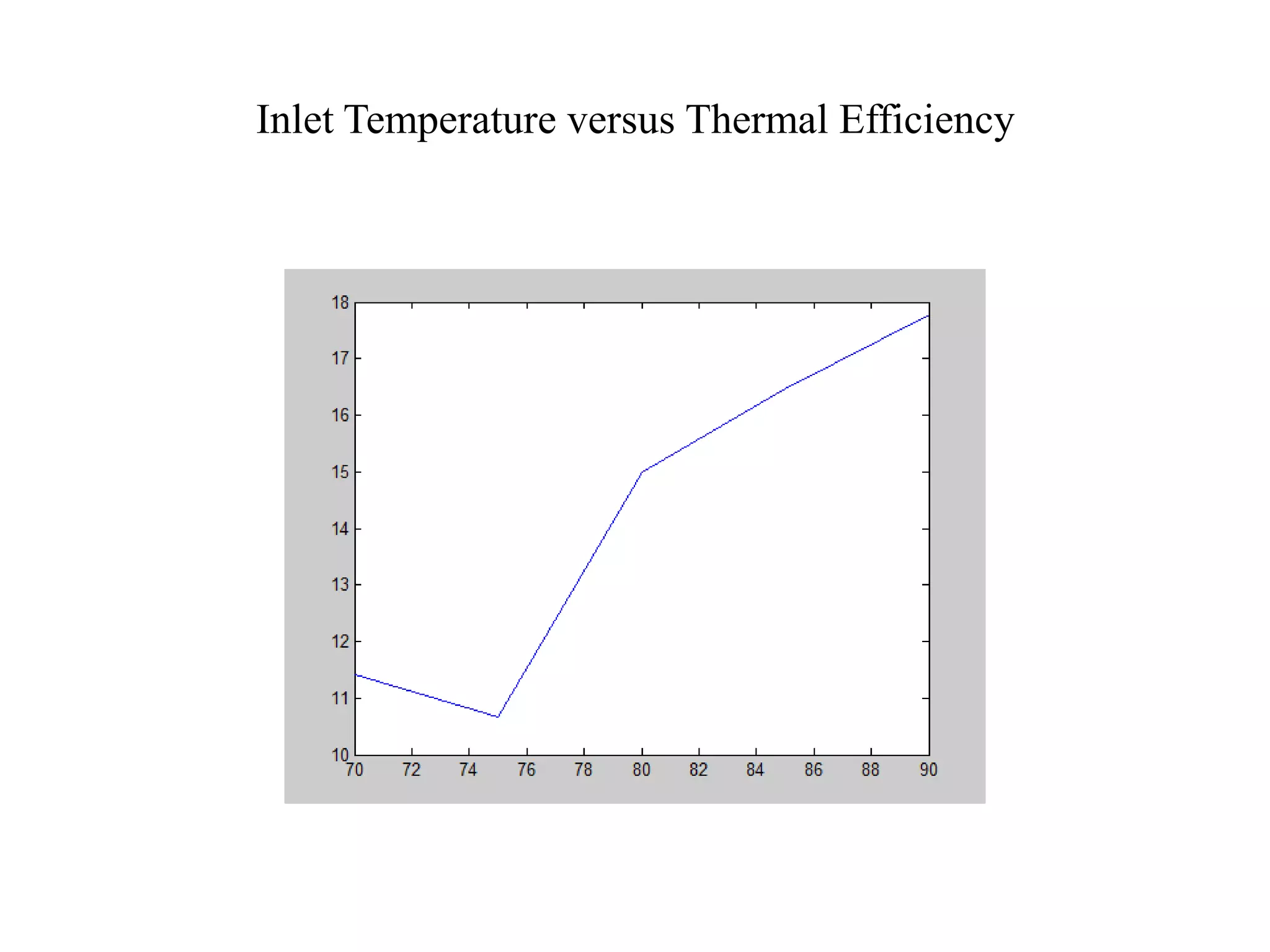
S.NO Temp(ΔT)°C ɳt
1 8 11.42
2 8 10.67
3 12 15
4 14 16.47
5 16 17.78
CALCULATION TABLE
(ΔT) = Ti - TO
ɳt = ΔT/ Ti
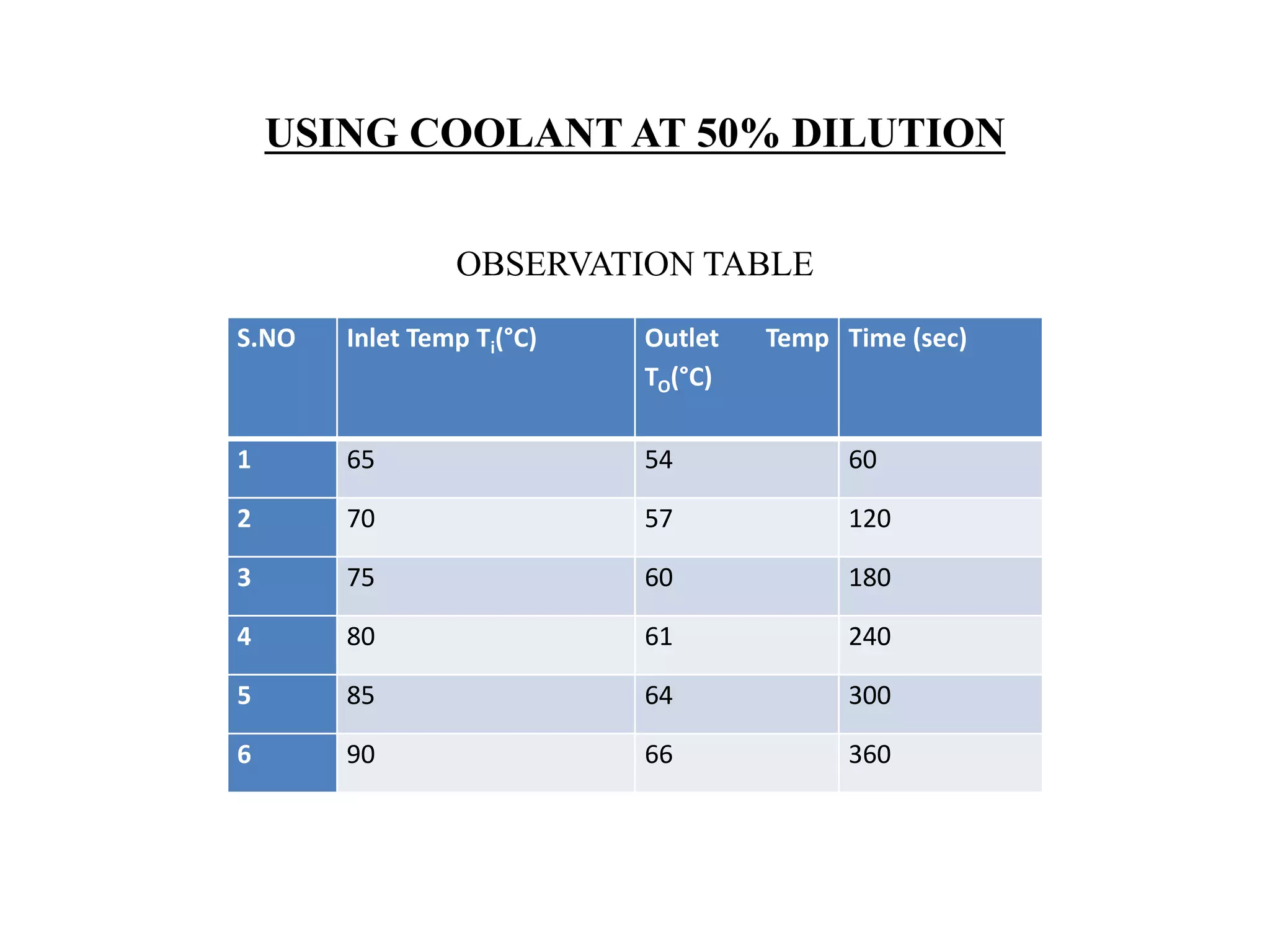
USING COOLANT AT 50% DILUTION
OBSERVATION TABLE
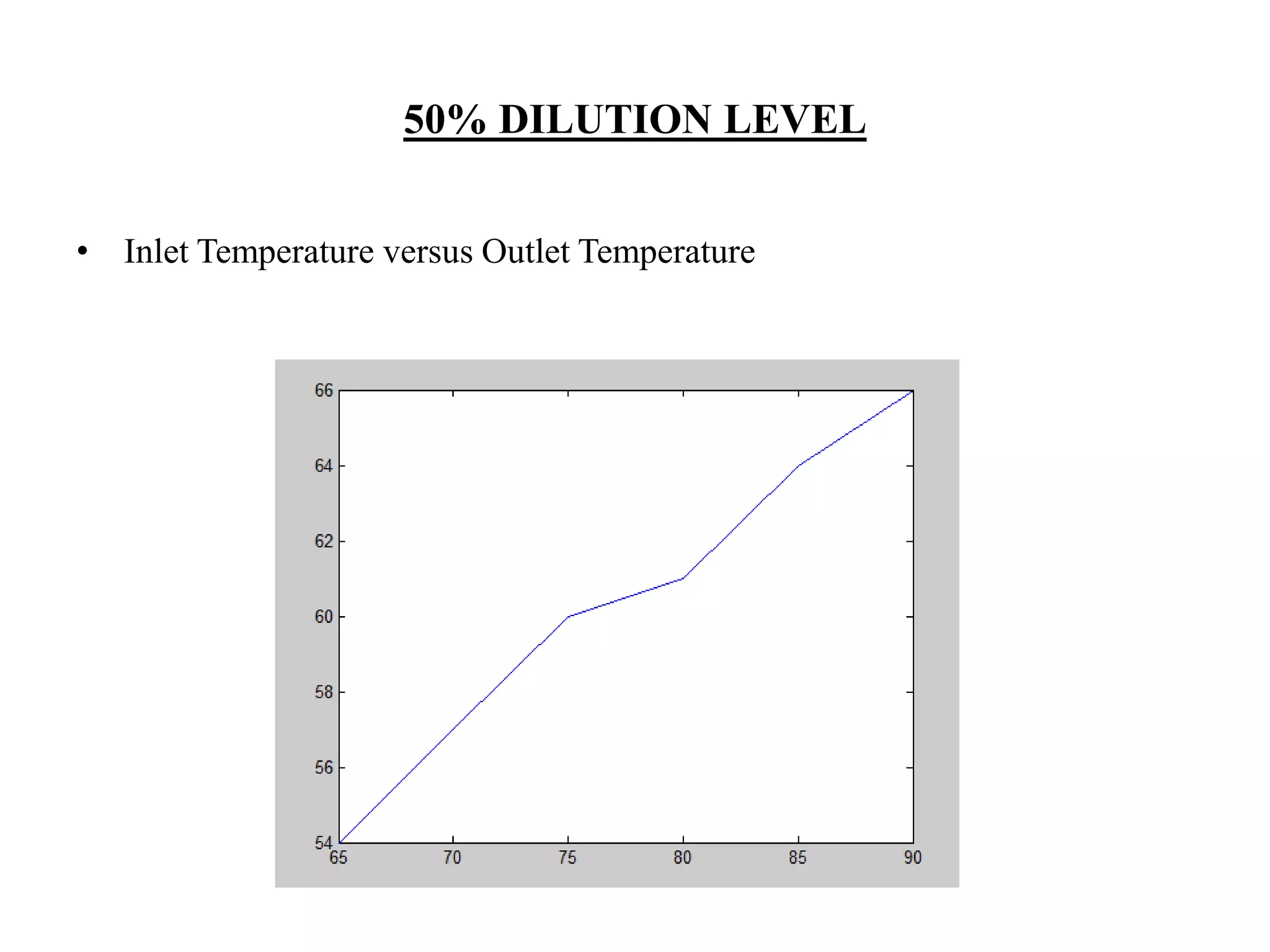
S.NO Inlet Temp Ti(°C) Outlet Temp
TO(°C)
Time (sec)
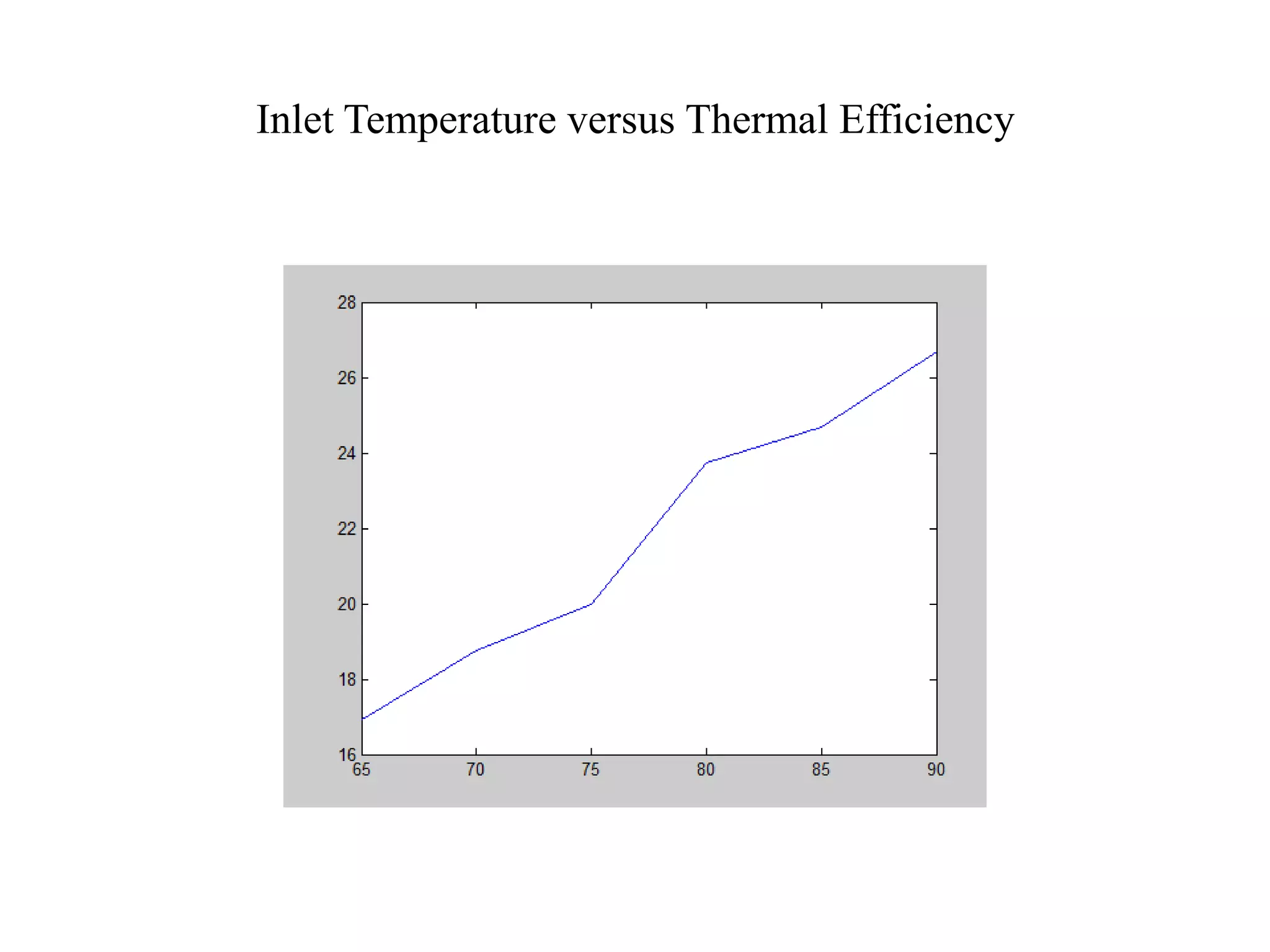
1 65 54 60
2 70 57 120
3 75 60 180
4 80 61 240
5 85 64 300
6 90 66 360
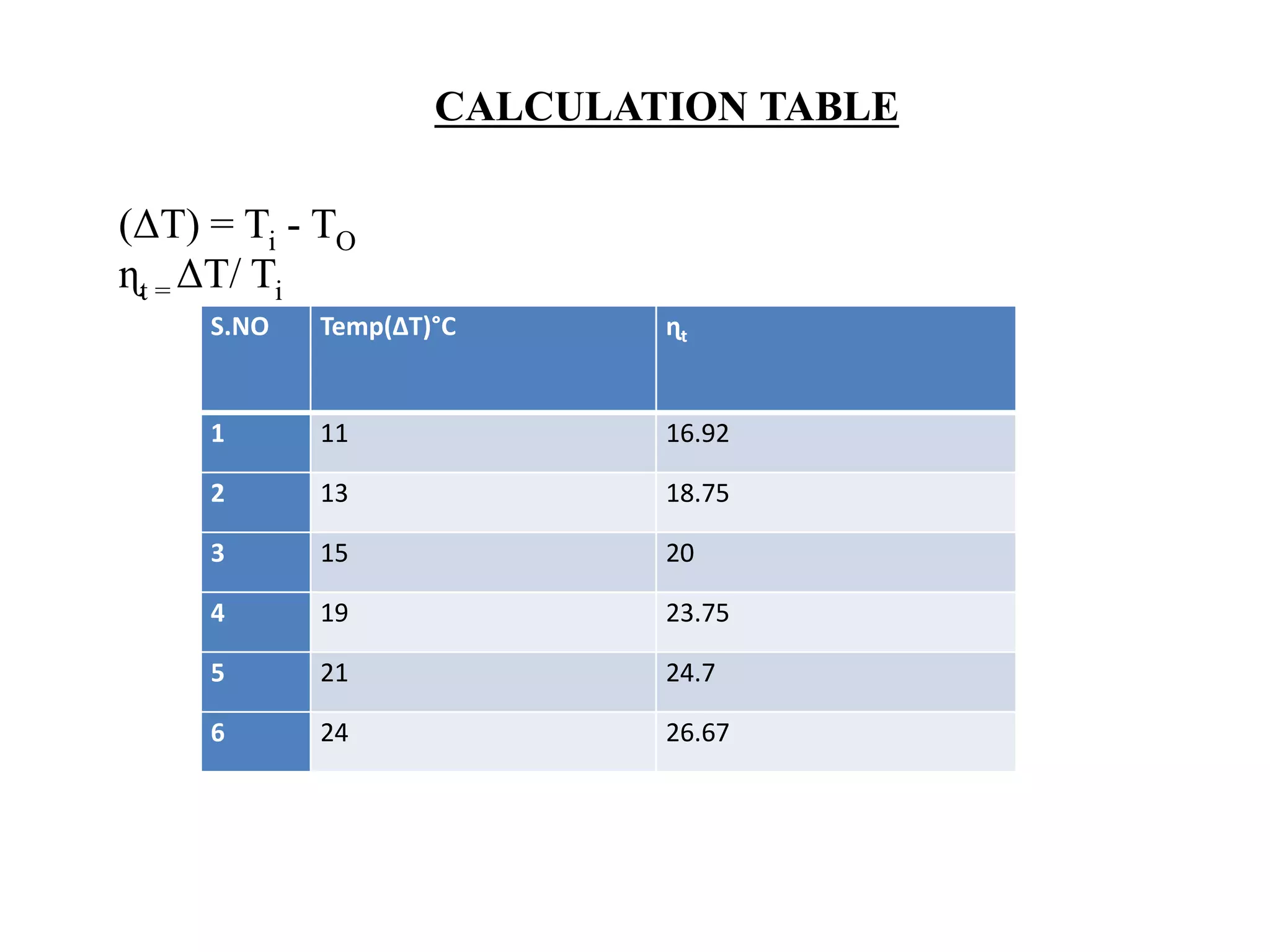
CALCULATION TABLE
S.NO Temp(ΔT)°C ɳt
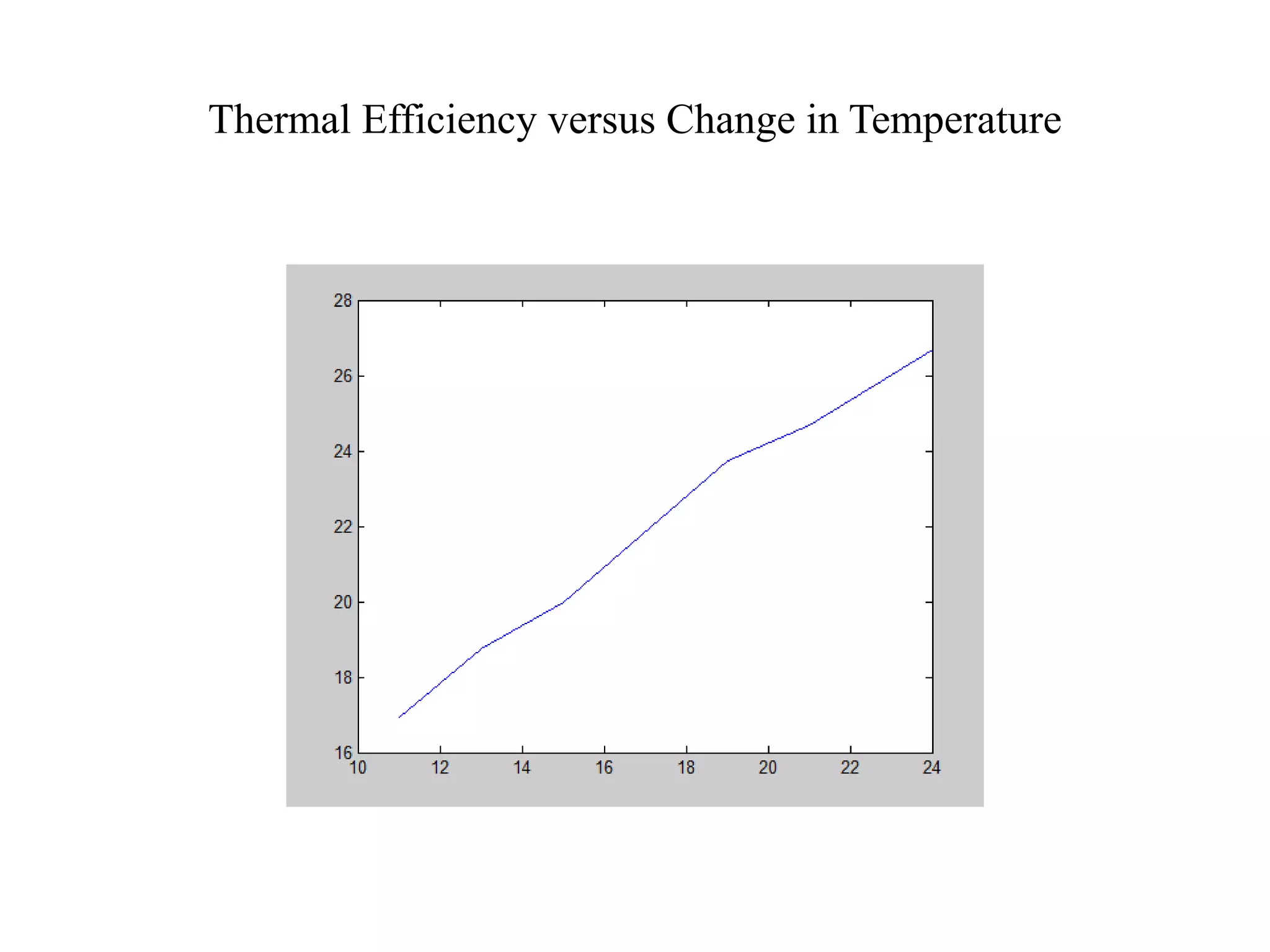
1 11 16.92
2 13 18.75
3 15 20
4 19 23.75
5 21 24.7
6 24 26.67
(ΔT) = Ti - TO
ɳt = ΔT/ Ti
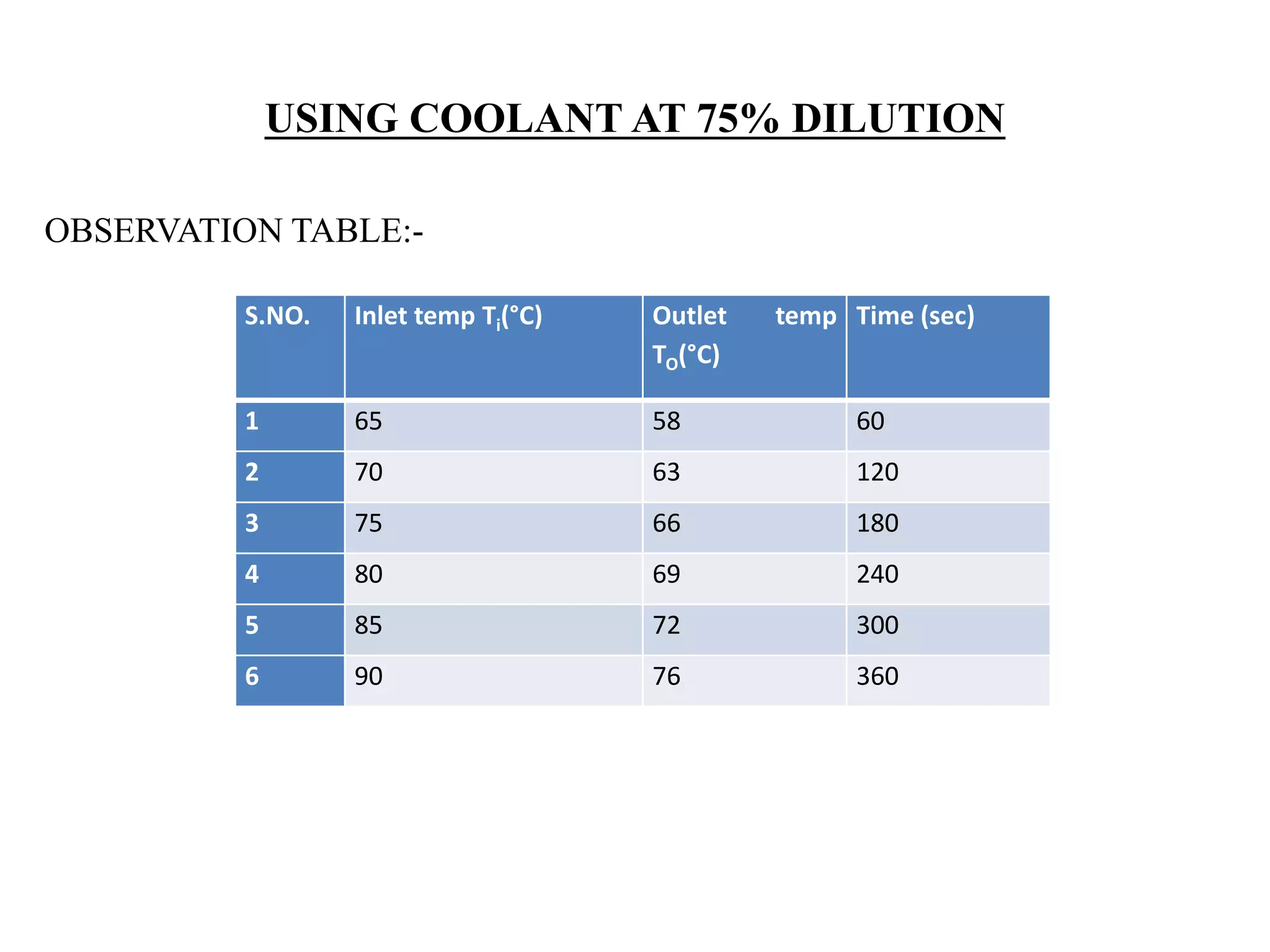
USING COOLANT AT 75% DILUTION
S.NO. Inlet temp Ti(°C) Outlet temp
TO(°C)
Time (sec)
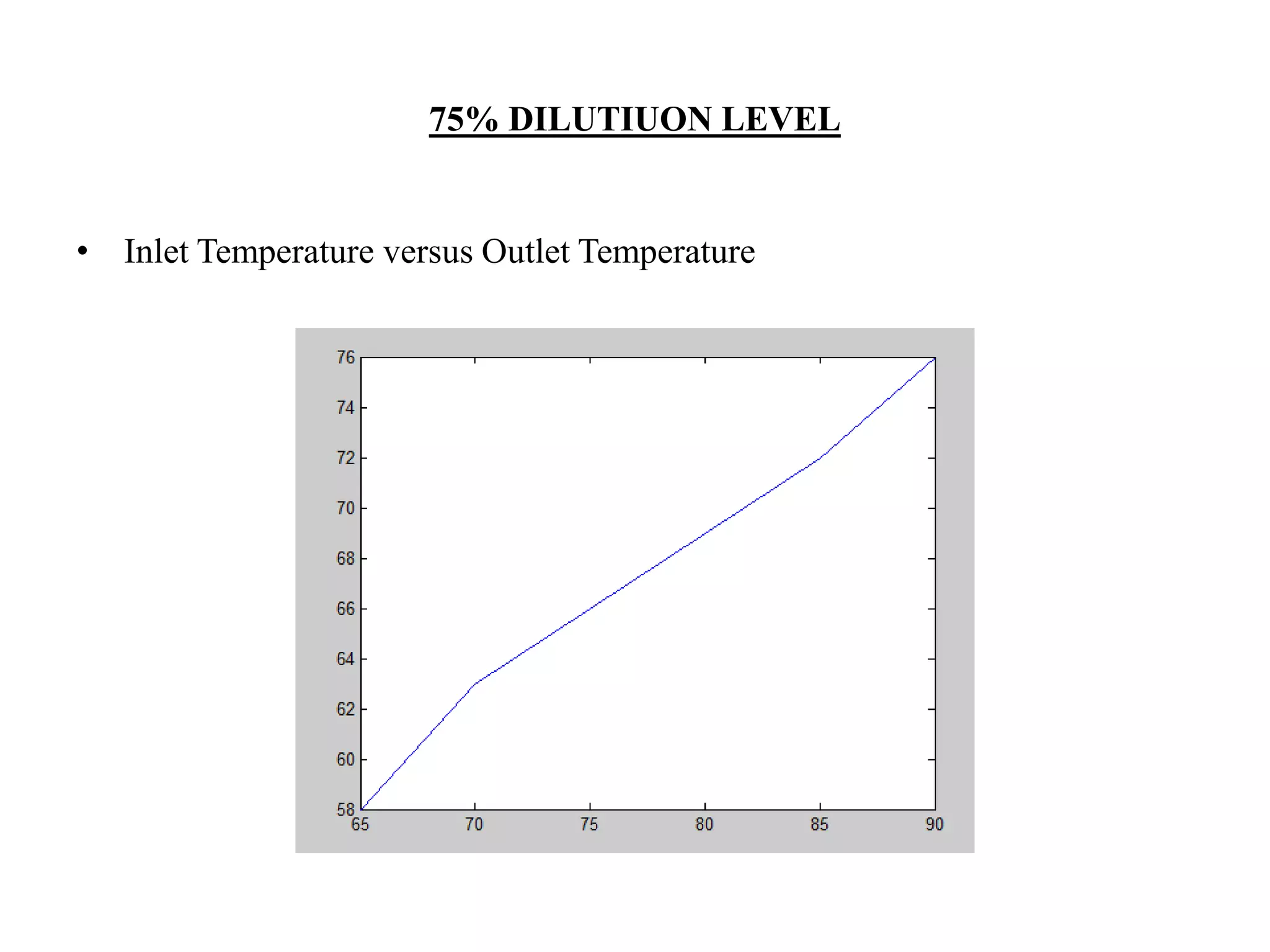
1 65 58 60
2 70 63 120
3 75 66 180
4 80 69 240
5 85 72 300
6 90 76 360
OBSERVATION TABLE:-
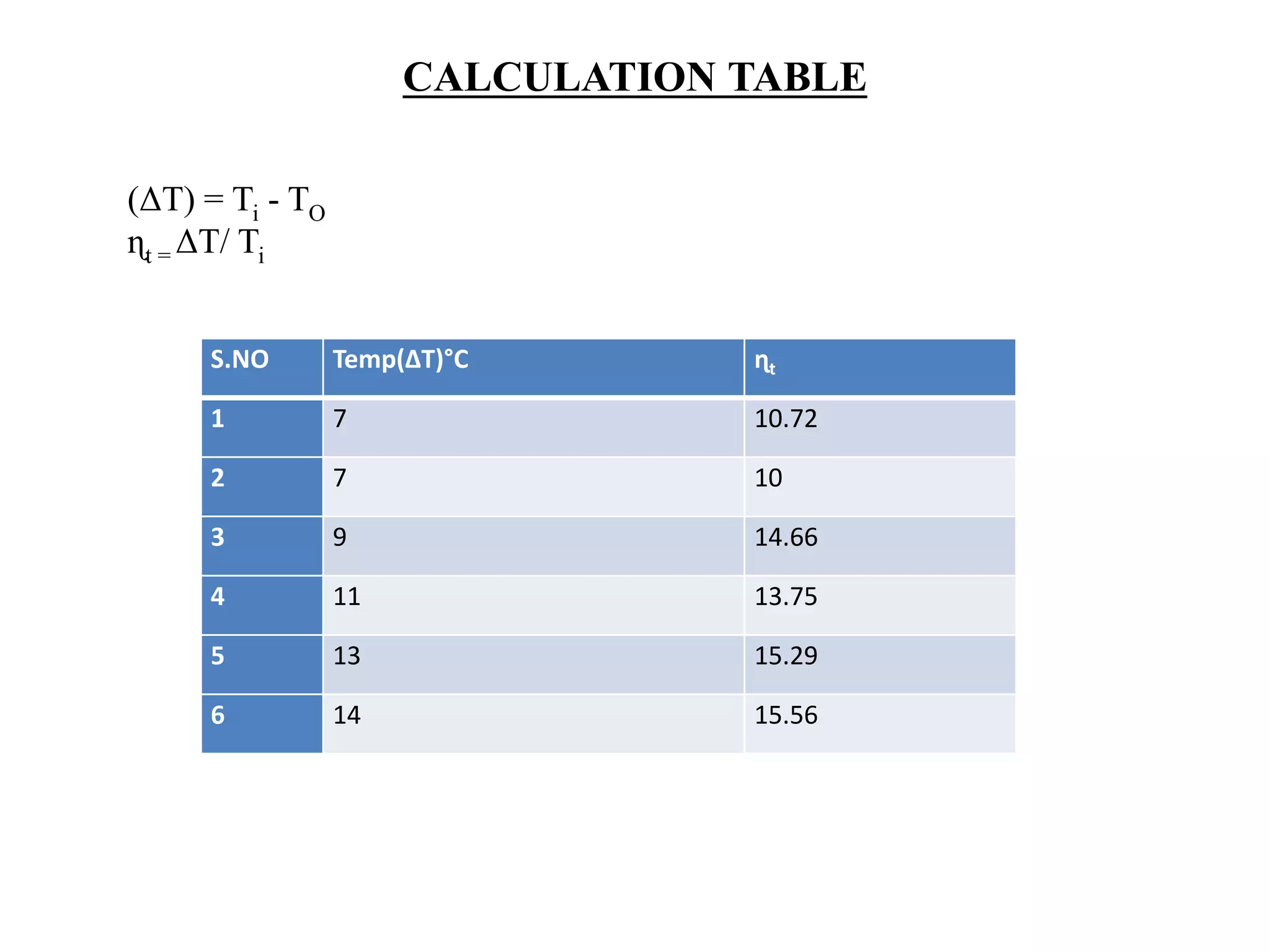
CALCULATION TABLE
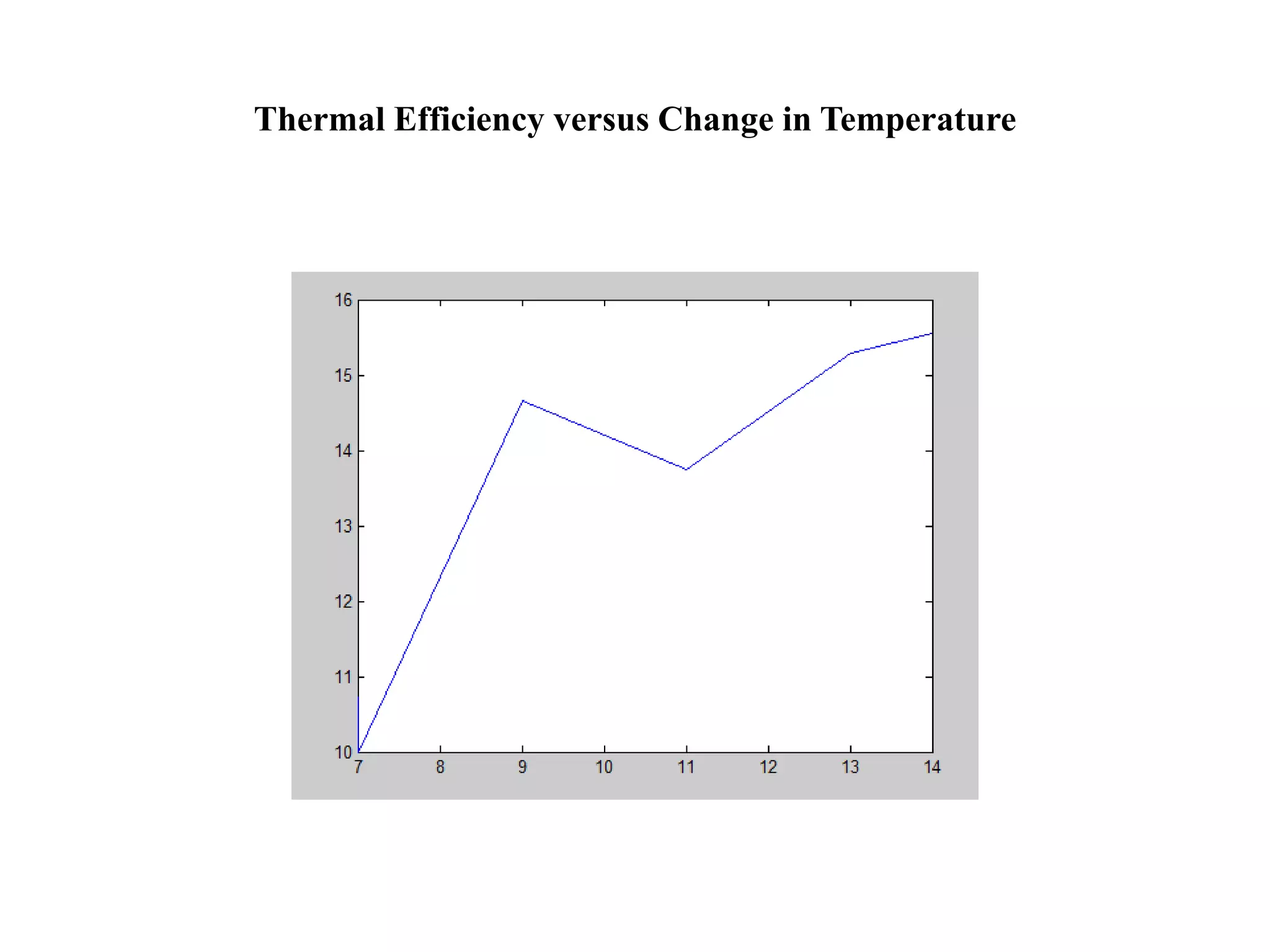
S.NO Temp(ΔT)°C ɳt
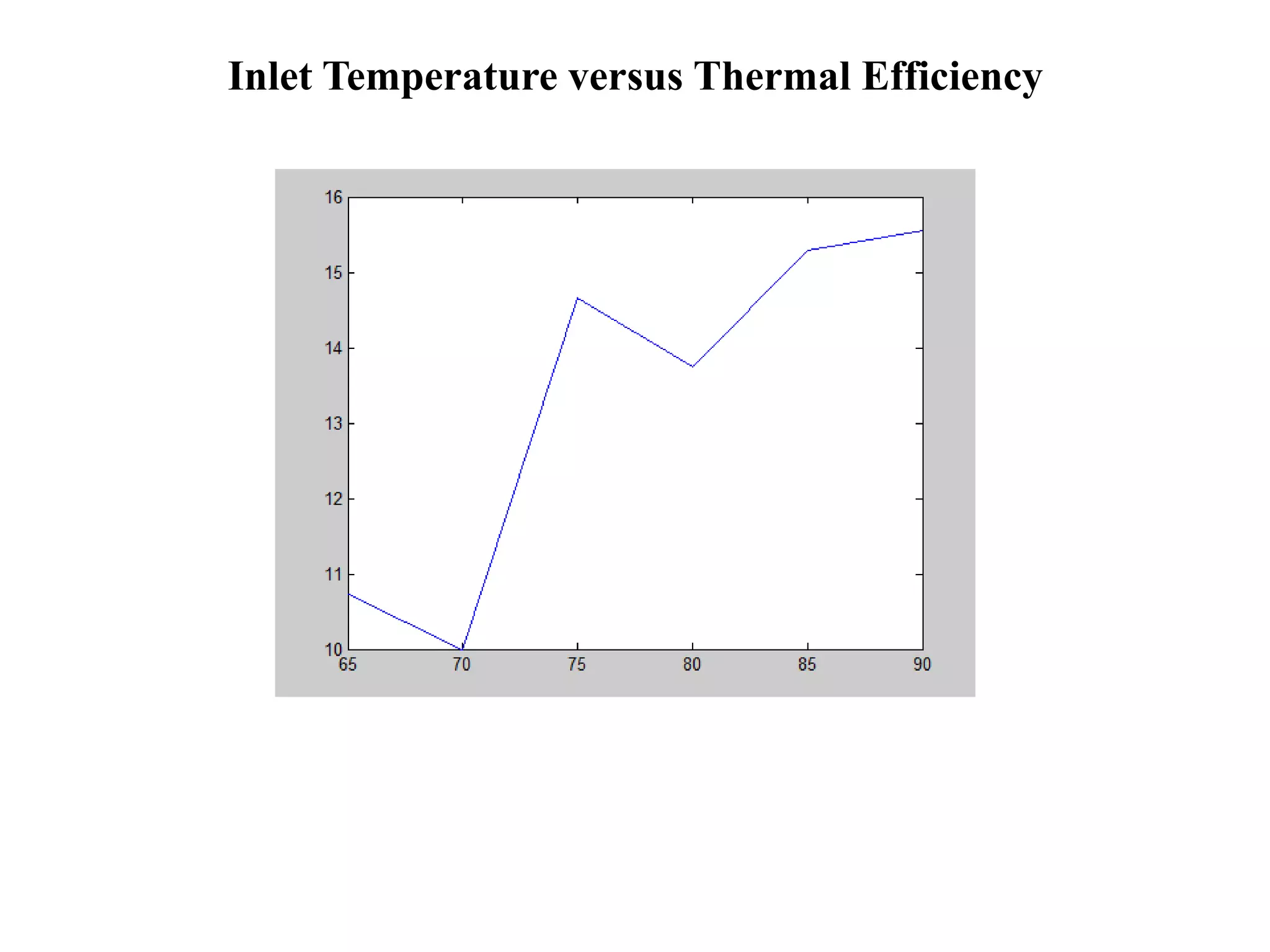
1 7 10.72
2 7 10
3 9 14.66
4 11 13.75
5 13 15.29
6 14 15.56
(ΔT) = Ti - TO
ɳt = ΔT/ Ti
CONCLUSIONS
USING WATER AS FLUID
Inlet Temperature(x) versus Outlet Temperature(y):
Thermal Efficiency versus Change in Temperature
Inlet Temperature versus Thermal Efficiency
50% DILUTION LEVEL
• Inlet Temperature versus Outlet Temperature
Thermal Efficiency versus Change in Temperature
Inlet Temperature versus Thermal Efficiency
75% DILUTIUON LEVEL
• Inlet Temperature versus Outlet Temperature
Thermal Efficiency versus Change in Temperature
Inlet Temperature versus Thermal Efficiency
FURTHER WORK
• Analysis of rig values for different parameters
of the system.
• Simulate the system, compare and formulate
the results.
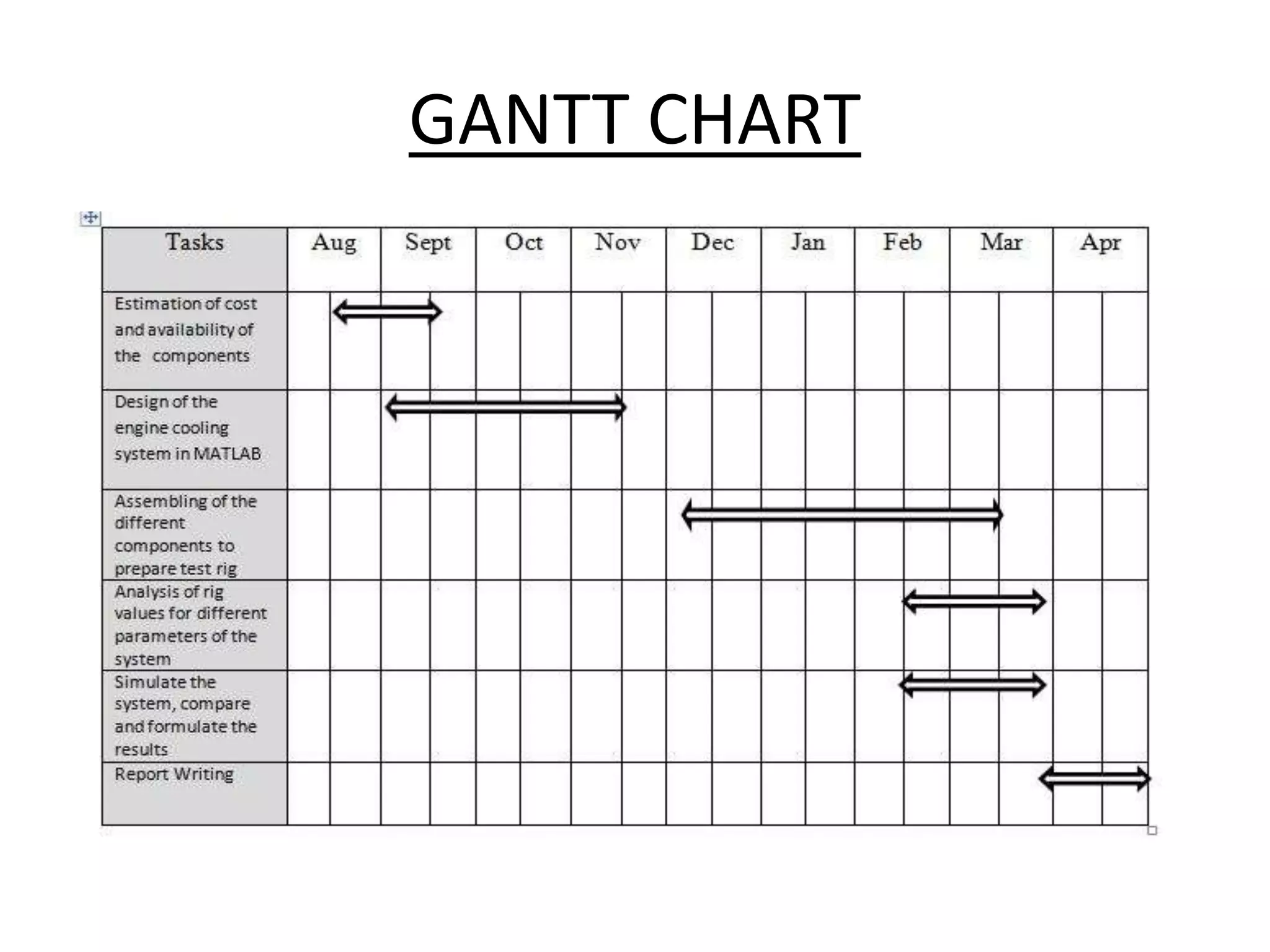
GANTT CHART
References
1. J P Yadav and Bharat Raj Singh,”Study on performance
evaluation of automotive radiator “.S-JPSET:ISSN:2229-
7111,Vol.2,issue 2.
2. F. G. Tenkel, “Computer Simulation of Automotive
Cooling Systems,” SAE Paper 740087, 1974 in page no. 19.
3. J.C. Corbel, “An Original Simulation Method for Car
Engine Cooling Systems: A Modular System,” SAE Paper
870713, 1987 in page no. 27.
4. W. Eichlseder, G. Raab, J. Hager and M. Raup, “Quasi-
Steady Calculation of Cooling Systems with Forecast on
Unsteady Calculations,” SAE Paper 954042, 1995 in page
no. 29.
THANK YOU

automobile radiator project

  • 1.
    JSS MAHAVIDYAPEETHA JSS ACADEMYOF TECHNICAL EDUCATION NOIDA Department Of Manufacturing Technology DESIGN, FABRICATION AND ANALYSIS OF AUTOMOBILE RADIATOR TEST RIG USING MATLAB Supervised By : Mr. VISHNU TIWARI Assistant Prof. MT Department Presented By : Sharang Bhardwaj 1109141043 Aayushi 1109141002 Shishir Tripathi 1109141044 Sanchit Agrawal 1109141040 (8th Sem Students) Group no.4
  • 2.
    MAIN DIVISION OFPROJECT 1. Estimation of cost and availability of the components. 2. Design of the engine cooling system in MATLAB . 3. Assembling of the different components to prepare test rig. 4. Analysis of rig values for different parameters of the system. 5. Simulate the system, compare and formulate the results.
  • 3.
    INTRODUCTION HEAT GENERATED IN THEVEHICLE DUE TO COMBUSTION STROKE POWER TO DRIVE THE VEHICLE AND ITS ACCESSORIES HEAT IS CARRIED OFF INTO THE ATMOSPHERE THROUGH EXHAUST SYSTEM REMAINING REMOVED FROM THE ENGINE BY COOLING SYSTEM
  • 4.
    AUTOMOBILE RADIATOR A radiatoris a type of heat exchanger. It is designed to transfer heat from the hot coolant that flows through it to the air blown through it by the fan.
  • 5.
    TESTING SET UPOF AUTOMOBILE RADIATOR • Reservoir with heating element • Pump • Rotameter • Thermocouples • Radiator • Fan • Coolant bottle
  • 6.
    WORKING PRINCIPLE • Thepump sends the fluid into the engine block, where it makes its way through passages in the engine around the cylinders. Then it returns through the cylinder head of the engine. • The thermostat is located where the fluid leaves the engine. The thermostat sends the fluid back to the pump directly if the thermostat is closed. • If it is open, the fluid goes through the radiator first and then back to the pump. • There is also a separate circuit for the heating system. This circuit takes fluid from the cylinder head and passes it through a heater core and then back to the pump. • There is normally also a separate circuit for cooling the transmission fluid built into the radiator. The oil from the transmission is pumped by the transmission through a second heat exchanger inside the radiator.
  • 7.
    PROCEDURE • Fill thereservoir with the coolant upto indicated level. • Switch on the power supply,and then switch on the heating element. • Allow the coolant to get heated up to 60-90 degree celcius. • Switch on the fan and the pump. • Note down the electricity consumed by fan and pump by energy meter. • Note down the discharge of the coolant from flowmeter. • Note down the inlet and outlet temperature/ by varying pump discharge. • Plot the graph between discharge vs. temperature. • Plot the graph between inlet and outlet temperature.
  • 8.
    COMPONENT SPECIFICATIONS Maruti Alto: •Size:300*335*23 mm •Make: SUZUKI •Model no. DL-A039 •Material: Copper Maruti 800 •Downward flow type •Cu tubes, Cu plates •37 plates, dia of tubes-10mm Capacity= 3lit. Cooling fan •Rpm: 1200-2400 rpm •220/240 V •Single phase AC
  • 9.
    Water Pump •Submersible pump •165-220V/50Hz •Power -19W •Output -1100 L/H Energy wire • 1 phase, 2 wire •AC 240V , 50Hz •I (max)- 30A Heating elements •Power = 2000W, 1500W Reservior •Material: Stainless steel •Capacity: 25-30L
  • 10.
    ∆t= time taken(s) Z=energy meter reading(W) Ƞₒ= overall efficiency (%) Ƞ= thermal efficiency(%) h= convective heat transfer coefficient (w/m2 °C) ∆Q= heat loss (W)
  • 11.
    CALCULATIONS • Temperature Difference∆T = T1 – T2 • Thermal ƞ= ∆T/T1 • Overall ƞₒ=( m*Cp* ∆T)/ z • Q= h*A*∆T Where, T1= temp at inlet(°C) T2= temp at outlet (°C) M= mass of the coolant Cp= specific heat at constant pressure Q= discharge P= Power of pump ῥ=density of water (kg/m3) g= acceleration due to gravity (m2/s) H= head of the pump(m) ∆T= temp diff (T1-T2)
  • 12.
    Water meter •Dia ofinlet & outlet- 15 mm Frame •Material: Mild steel •Angle size: 1`` Pipes and fittings •Diameter – 0.5`` and 1``
  • 13.
    COST ESTIMATION •Radiators :Rs.2500-3000 •Cooling fan: Rs.300 •Energy meter: Rs.300 •Water meter: Rs.600 •Container: Rs. 560 •Water pump: Rs.120 •Heating element:Rs.180 •Frame: Rs.1500 •Pipes and joints: Rs.850 •Electrical boards and switches: Rs.500 •TOTAL:Rs.8000
  • 14.
    RADIATOR SPECIFICATION USEDIN THE MATLAB • Size: (300*335*23) mm • Make: SUZUKI • Model no. DL-A039 • Material: Copper • Downward flow type • Cu tubes, Cu plates • 37 plates, dia of tubes-10mm
  • 15.
  • 16.
  • 17.
  • 18.
    FLUID DENSITY INTHE SYSTEM
  • 19.
    PARTS PURCHASED • Radiator:Accent Camry Petrol version • Submersible pump • Inverter Circuit for efficient running of the radiator fan at high current. • Step down Transformer • Emulsion heating rod • Alcoholic Thermometer
  • 20.
    Steps involved inthe removal of radiator from the car 1. Remove the Radiator Filler Cap and Detach the Radiator Reservoir Hose.
  • 21.
    2. Detach theDriver's side Fan and ECT Switch Connector.
  • 22.
    3. Detach thePassenger side Fan Connector.
  • 23.
    4. Disconnect theSupply and Return Transmission Fluid Lines from the Transmission .
  • 24.
    5. Remove thefour 10mm bolts that secure the two cooling fan shrouds. Then pull up and out the passenger side Cooling Fan Shroud to expose the ECT Temperature Control Wire Harness Strap.
  • 25.
    6. Disconnect theECT Wire Harness Strap from the Strap Mount. Then disconnect the ETC Wire Plug from the Water Temperature Sending Unit.
  • 26.
    7. Drain theCoolant
  • 27.
    8. Disconnect theUpper and Lower Radiator Hose
  • 28.
    9. Unbolt thetwo Upper Radiator Support Mounts, remove the mounts and pull the radiator up from its lower support mount
  • 29.
    10. With theold radiator out, remove the a) Lower Radiator Hose b) Supply and Return Transmission Oil Lines c) Water Temperature Sending Unit d) Lower Radiator Support Mounts if detached from their sockets.
  • 30.
    INVERTER CIRCUIT 1. Stepdown transformer A varying current in the transformer's primary winding creates a varying magnetic flux in the core and a varying magnetic field impinging on the secondary winding. This varying magnetic field at the secondary induces a varying electromotive force (EMF) or voltage in the secondary winding.
  • 31.
    2. Voltage Regulator •A voltage regulator is designed to automatically maintain a constant voltage level. A voltage regulator may be a simple "feed-forward" design or may include negative feedback control loops. It may use an electromechanical mechanism, or electronic components. Depending on the design, it may be used to regulate one or more AC or DC voltages.
  • 32.
    Alcoholic Thermometer • Thealcohol thermometer is an alternative to the mercury-in- glass thermometer and has similar functions. Unlike the mercury-in-glass thermometer, the contents of an alcohol thermometer are less toxic and will evaporate away fairly quickly. An organic liquid is contained in a glass bulb which is connected to a capillay of the same glass and the end is sealed with an expansion bulb.
  • 33.
    Assembly of theComplete Rig
  • 34.
    S.NO Inlet TempTi(°C) Outlet Temp TO(°C) Time (sec) 1 70 62 60 2 75 67 120 3 80 68 180 4 85 71 240 5 90 74 300 OBSERVATIONS AND CALCULATIONS 9.1USING WATER AS FLUID 9.1.1OBSERVATION TABLE S.NO Inlet Temp Ti(°C) Outlet Temp TO(°C) Time (sec) 1 70 62 60 2 75 67 120 3 80 68 180 4 85 71 240 5 90 74 300 OBSERVATIONS AND CALCULATIONS USING WATER AS FLUID OBSERVATION TABLE
  • 35.
    S.NO Temp(ΔT)°C ɳt 18 11.42 2 8 10.67 3 12 15 4 14 16.47 5 16 17.78 CALCULATION TABLE (ΔT) = Ti - TO ɳt = ΔT/ Ti
  • 36.
    USING COOLANT AT50% DILUTION OBSERVATION TABLE S.NO Inlet Temp Ti(°C) Outlet Temp TO(°C) Time (sec) 1 65 54 60 2 70 57 120 3 75 60 180 4 80 61 240 5 85 64 300 6 90 66 360
  • 37.
    CALCULATION TABLE S.NO Temp(ΔT)°Cɳt 1 11 16.92 2 13 18.75 3 15 20 4 19 23.75 5 21 24.7 6 24 26.67 (ΔT) = Ti - TO ɳt = ΔT/ Ti
  • 38.
    USING COOLANT AT75% DILUTION S.NO. Inlet temp Ti(°C) Outlet temp TO(°C) Time (sec) 1 65 58 60 2 70 63 120 3 75 66 180 4 80 69 240 5 85 72 300 6 90 76 360 OBSERVATION TABLE:-
  • 39.
    CALCULATION TABLE S.NO Temp(ΔT)°Cɳt 1 7 10.72 2 7 10 3 9 14.66 4 11 13.75 5 13 15.29 6 14 15.56 (ΔT) = Ti - TO ɳt = ΔT/ Ti
  • 40.
    CONCLUSIONS USING WATER ASFLUID Inlet Temperature(x) versus Outlet Temperature(y):
  • 41.
    Thermal Efficiency versusChange in Temperature
  • 42.
    Inlet Temperature versusThermal Efficiency
  • 43.
    50% DILUTION LEVEL •Inlet Temperature versus Outlet Temperature
  • 44.
    Thermal Efficiency versusChange in Temperature
  • 45.
    Inlet Temperature versusThermal Efficiency
  • 46.
    75% DILUTIUON LEVEL •Inlet Temperature versus Outlet Temperature
  • 47.
    Thermal Efficiency versusChange in Temperature
  • 48.
    Inlet Temperature versusThermal Efficiency
  • 49.
    FURTHER WORK • Analysisof rig values for different parameters of the system. • Simulate the system, compare and formulate the results.
  • 50.
  • 51.
    References 1. J PYadav and Bharat Raj Singh,”Study on performance evaluation of automotive radiator “.S-JPSET:ISSN:2229- 7111,Vol.2,issue 2. 2. F. G. Tenkel, “Computer Simulation of Automotive Cooling Systems,” SAE Paper 740087, 1974 in page no. 19. 3. J.C. Corbel, “An Original Simulation Method for Car Engine Cooling Systems: A Modular System,” SAE Paper 870713, 1987 in page no. 27. 4. W. Eichlseder, G. Raab, J. Hager and M. Raup, “Quasi- Steady Calculation of Cooling Systems with Forecast on Unsteady Calculations,” SAE Paper 954042, 1995 in page no. 29.
  • 52.