Steam Turbines
A steam turbine is a prime mover in which rotary
motion is obtained by the gradual change of
momentum of the steam. In general, a steam turbine,
essentially, consists of the following two parts:
1. The nozzle in which the heat energy of high pressure
steam is converted into kinetic energy, so that the
steam issues from the nozzle with a very high velocity.
2. The blades/buckets which change the direction of
steam issuing from the nozzle, so that a force acts on
the blades/buckets due to change of momentum and
propel them.
The steam turbines may be classified into the following
types:
1. According to the mode of steam action
i. Impulse Turbine
ii. Reaction Turbine
2. According to the direction of steam flow
i. Axial flow turbine
ii. Radial flow turbine
Classification of Steam Turbines
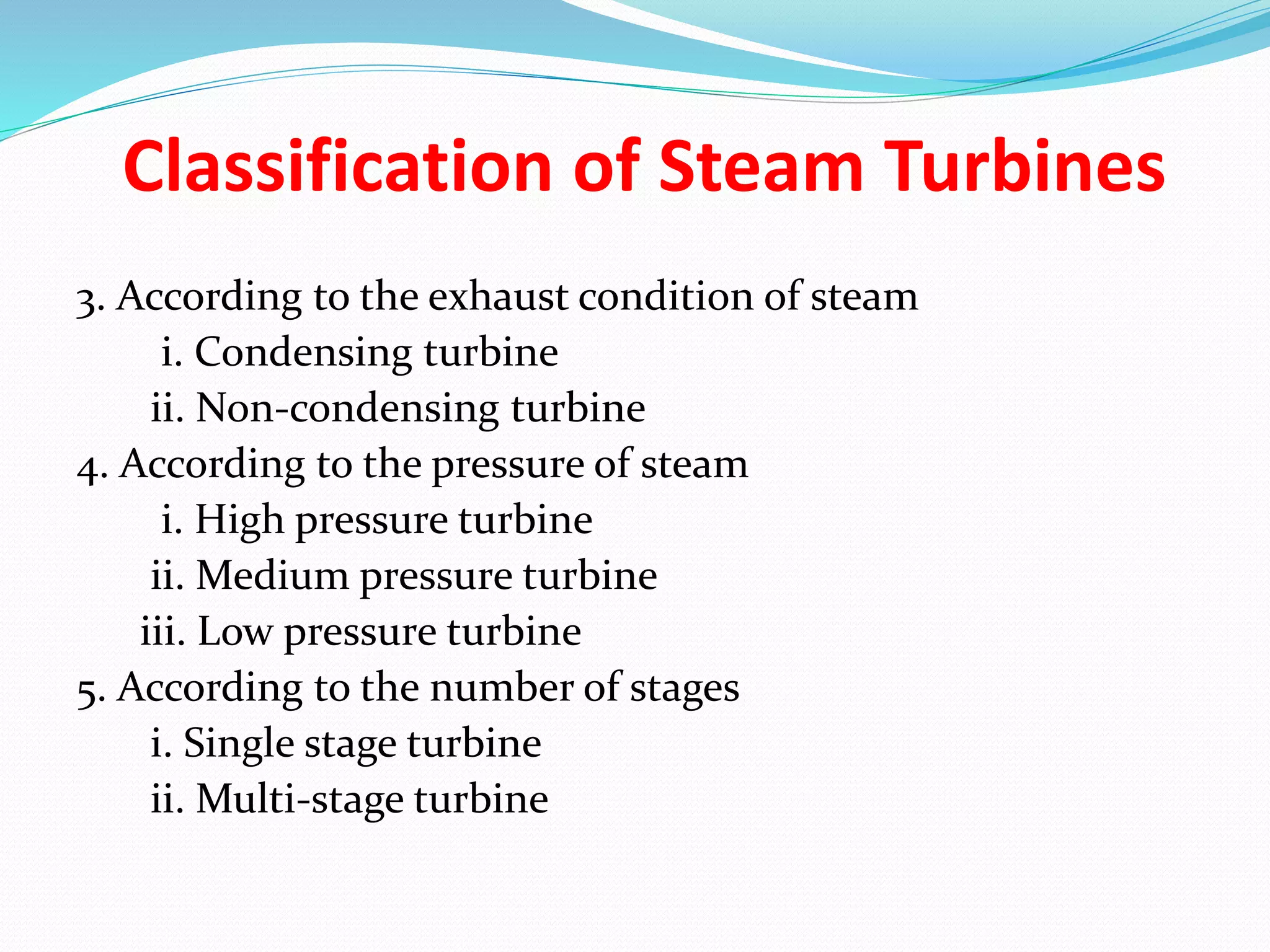
3. According to the exhaust condition of steam
i. Condensing turbine
ii. Non-condensing turbine
4. According to the pressure of steam
i. High pressure turbine
ii. Medium pressure turbine
iii. Low pressure turbine
5. According to the number of stages
i. Single stage turbine
ii. Multi-stage turbine
Impulse Turbine
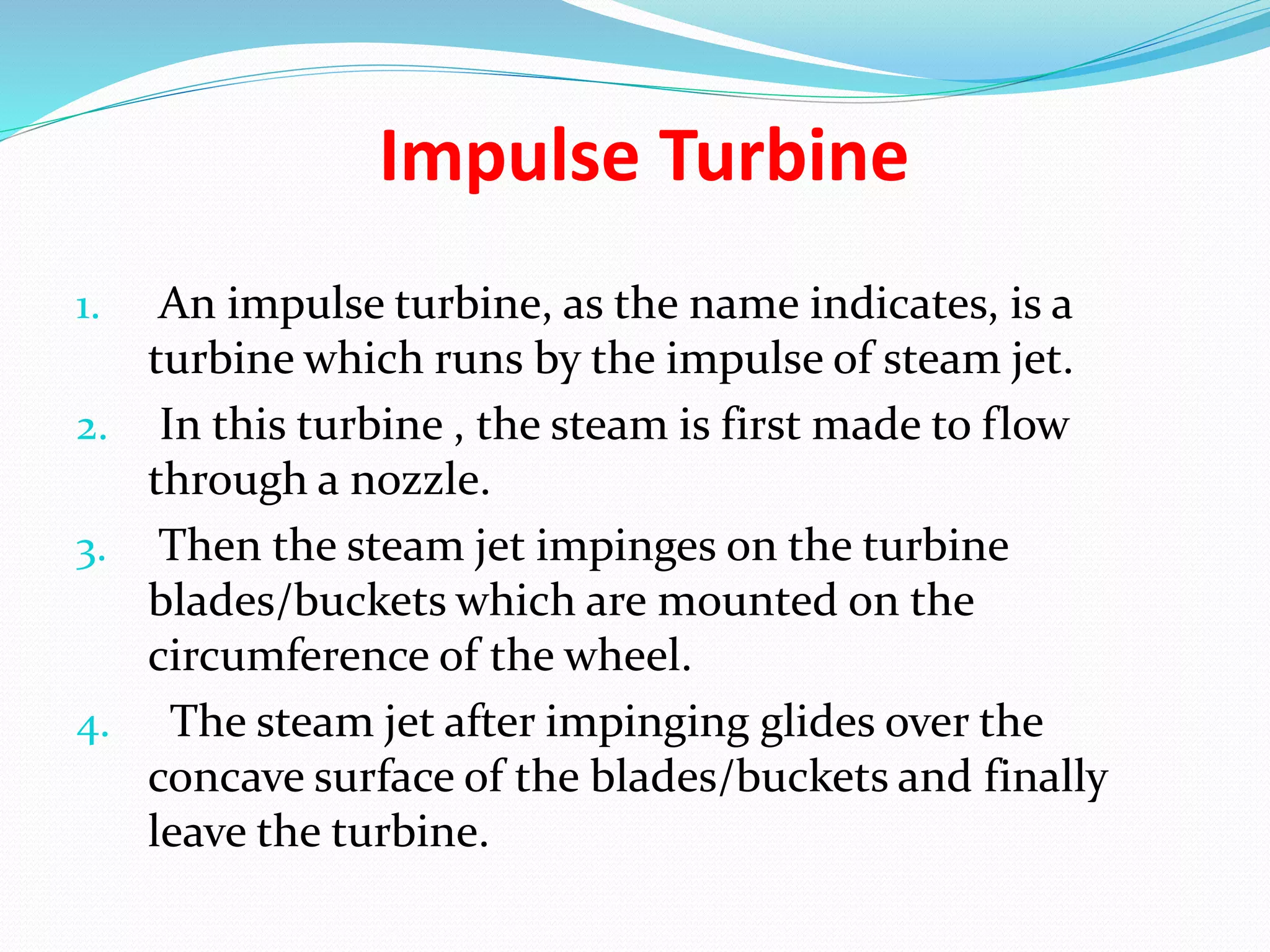
1. An impulse turbine, as the name indicates, is a
turbine which runs by the impulse of steam jet.
2. In this turbine , the steam is first made to flow
through a nozzle.
3. Then the steam jet impinges on the turbine
blades/buckets which are mounted on the
circumference of the wheel.
4. The steam jet after impinging glides over the
concave surface of the blades/buckets and finally
leave the turbine.
Impulse Turbine
It has the following main components:
1. Nozzle
2. Runner and blades/buckets
3. Casing
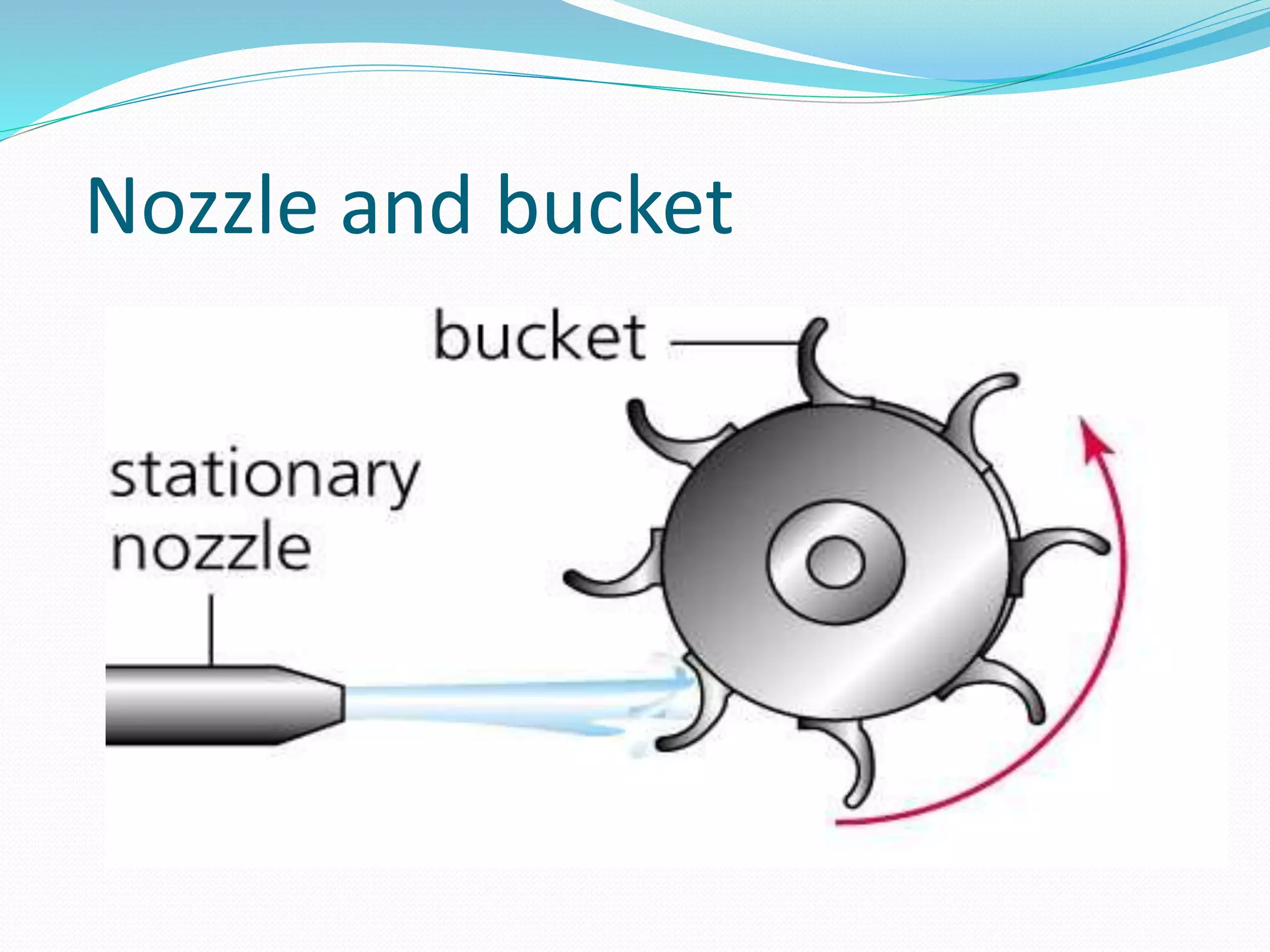
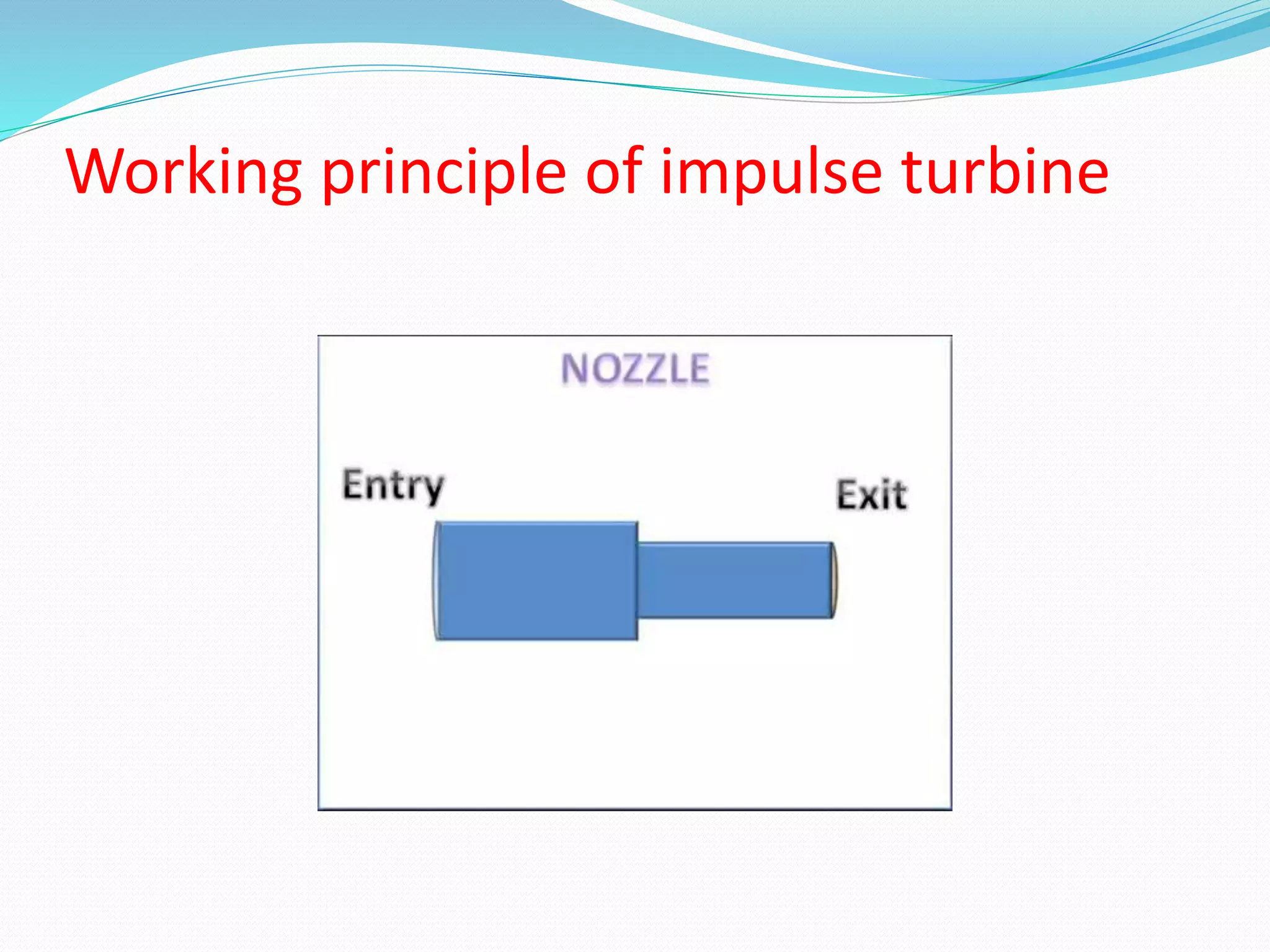
1. Nozzle
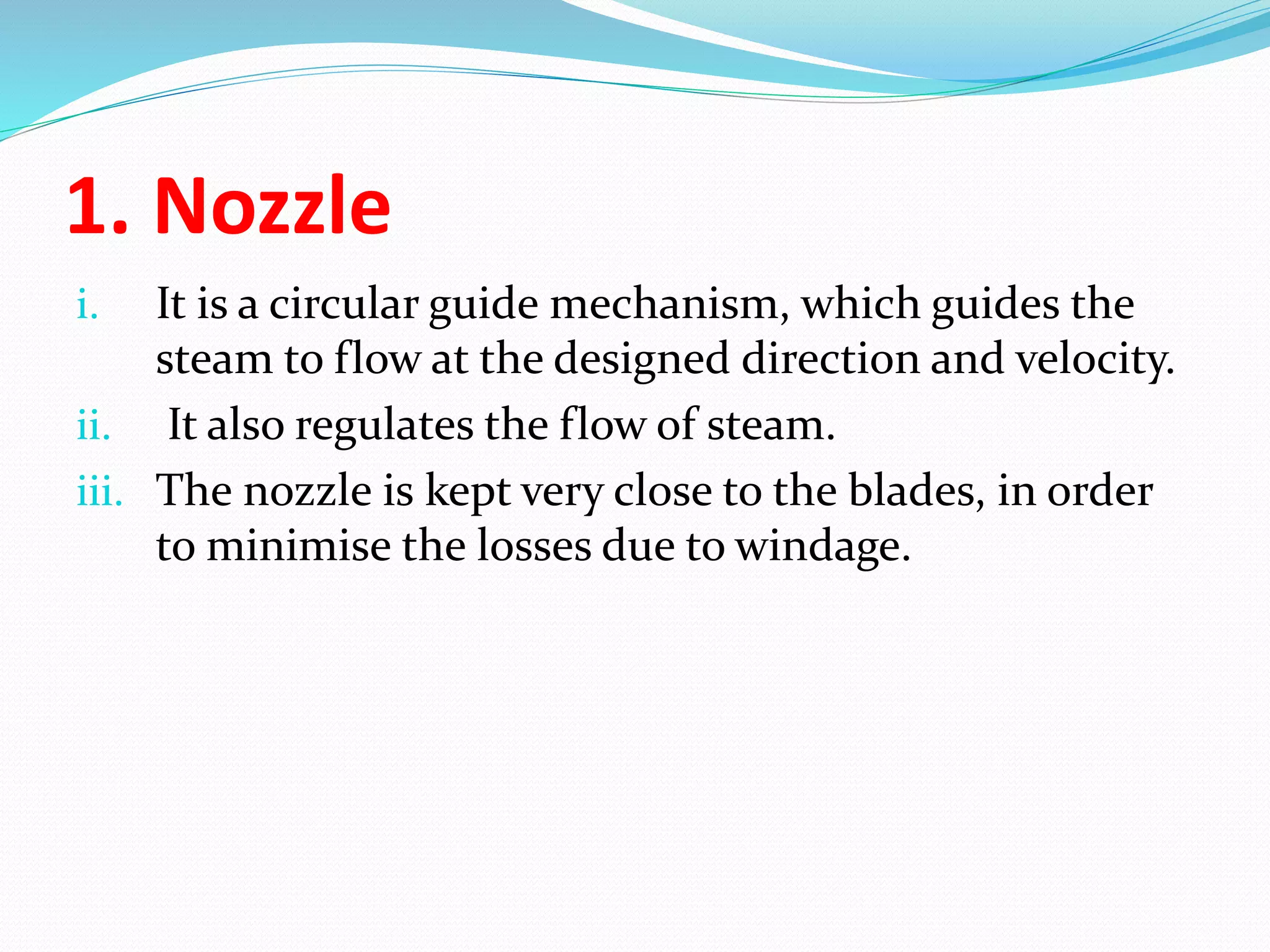
i. It is a circular guide mechanism, which guides the
steam to flow at the designed direction and velocity.
ii. It also regulates the flow of steam.
iii. The nozzle is kept very close to the blades, in order
to minimise the losses due to windage.
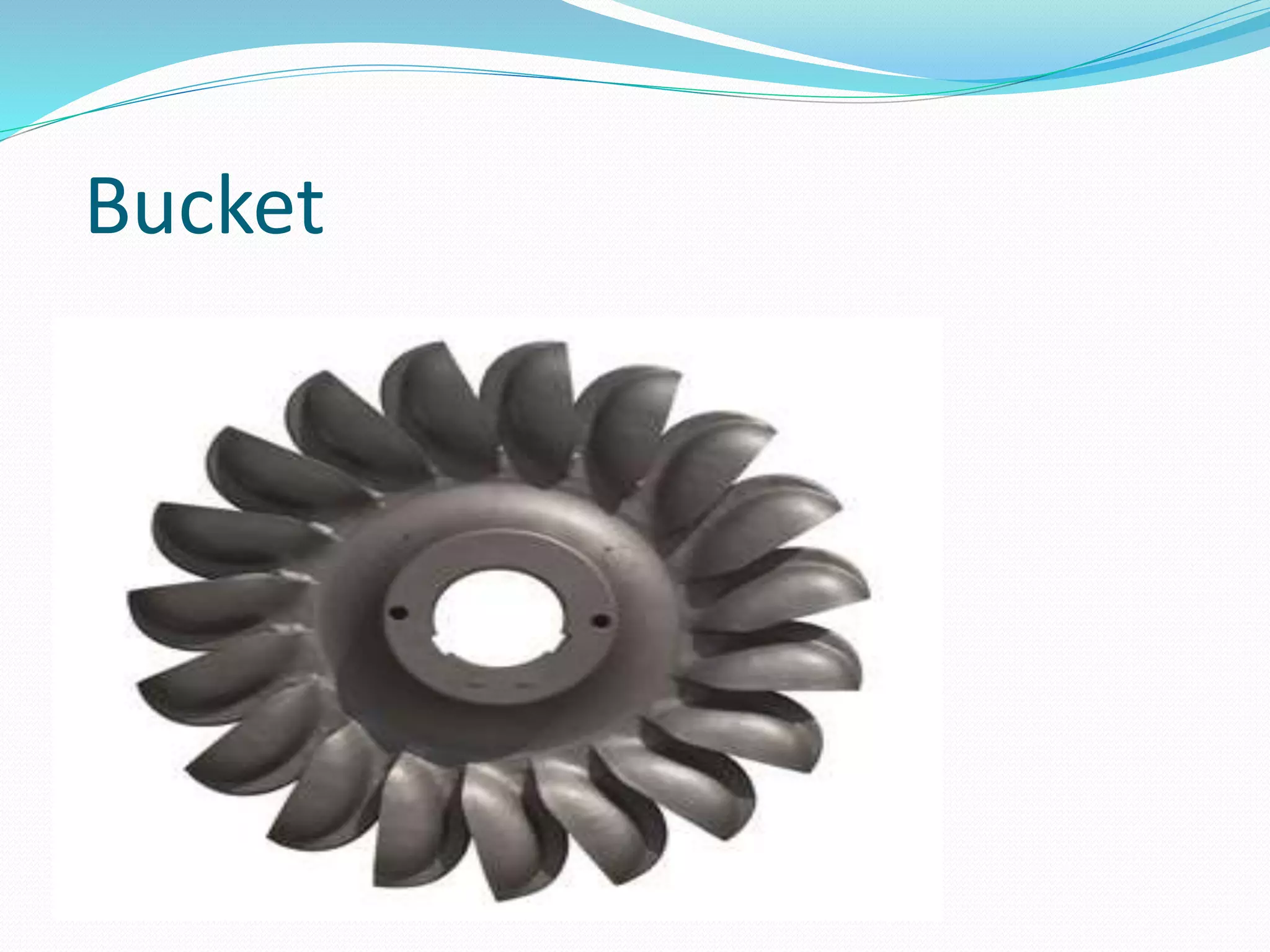
Bucket
Nozzle and bucket
Working principle of impulse turbine
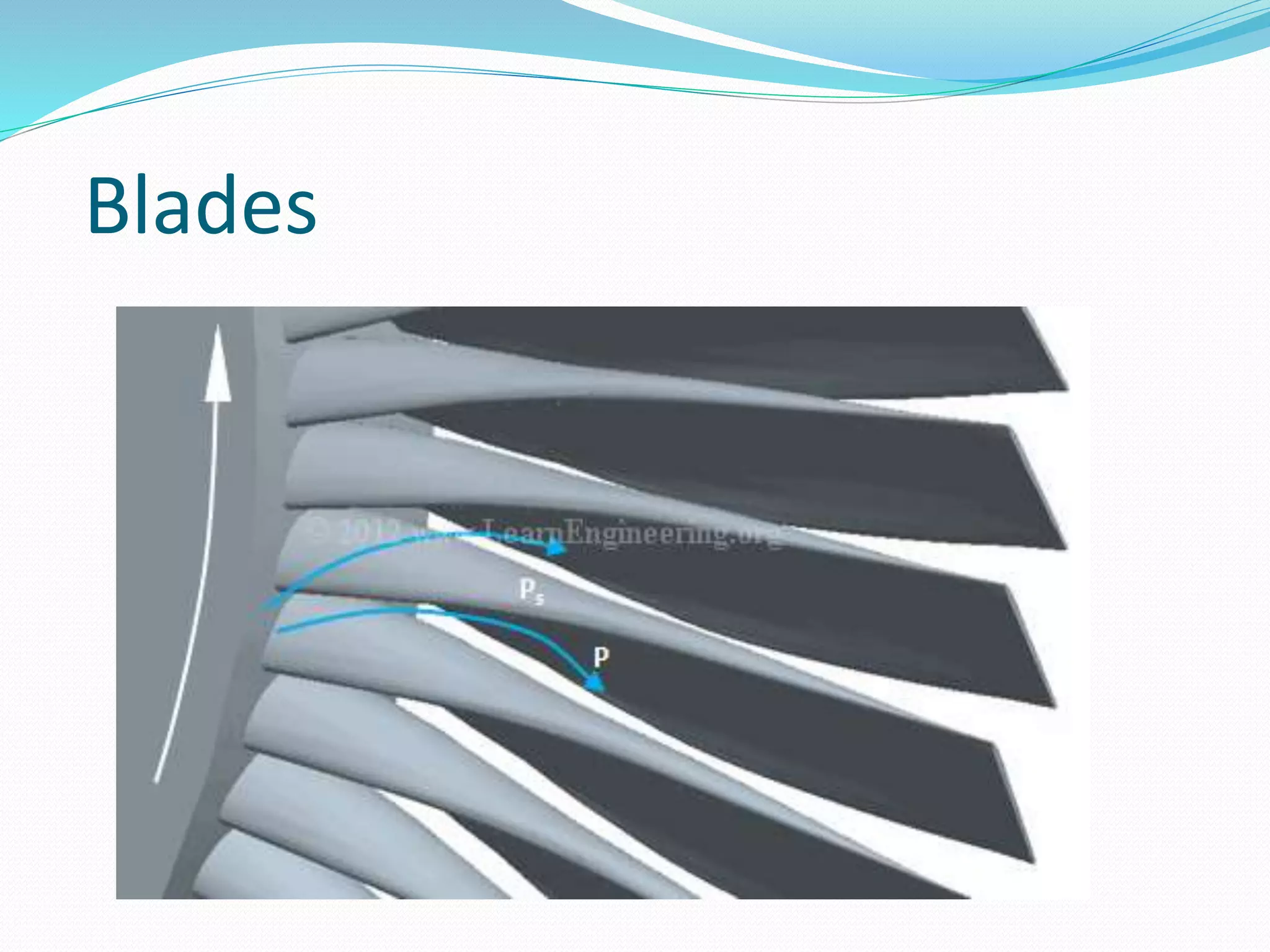
2. Runner and blades/buckets
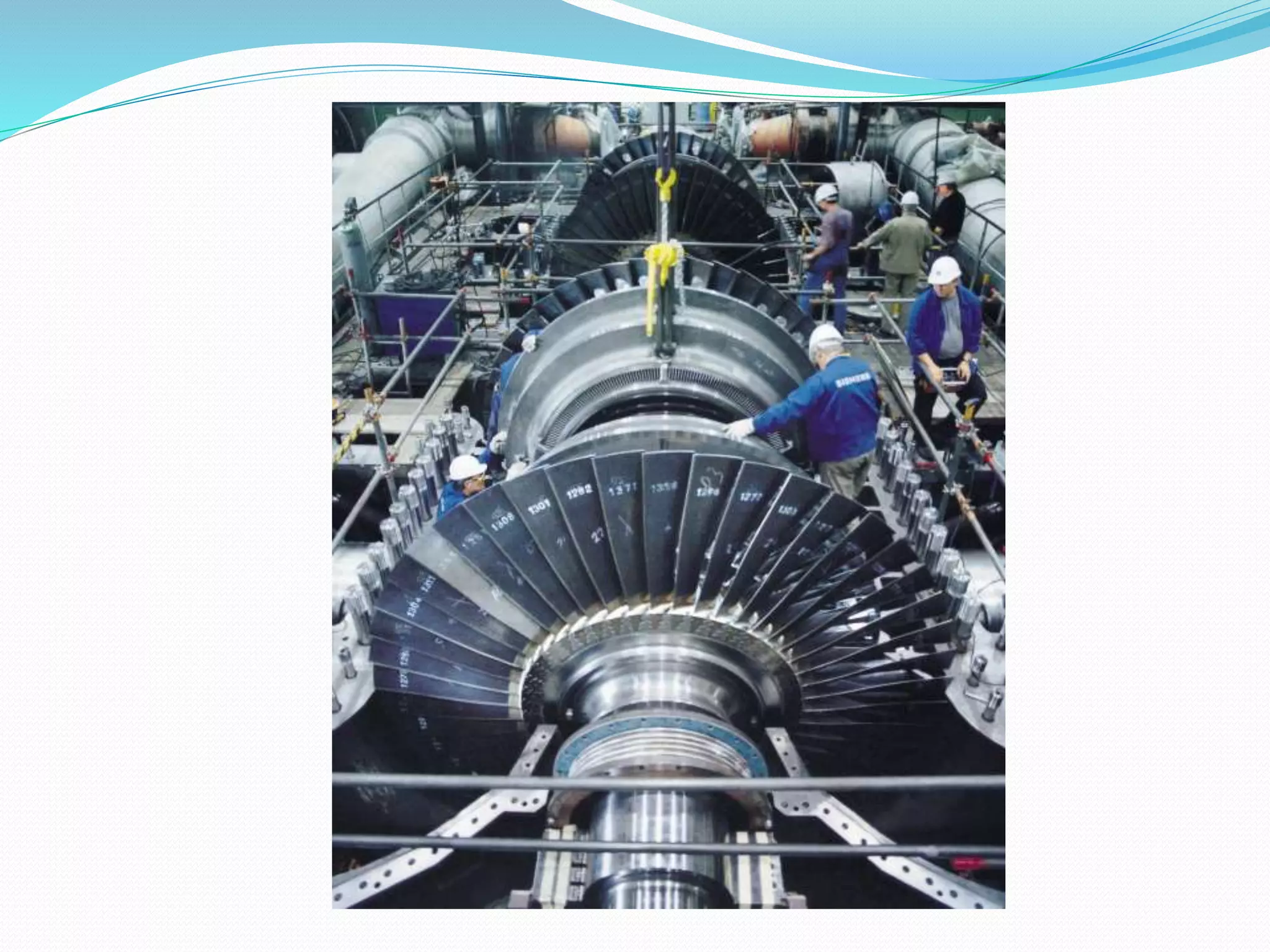
i. The runner consists of a circular disc fixed to a
horizontal shaft.
ii. On the periphery of the runner, a number of
blades/buckets are fixed uniformly.
iii. The steam jet impinges on the blades/buckets,
which move in the direction of the jet. This
movement of the blades/buckets makes the runner
to rotate.
Blades
3.Casing
1. It is an air-tight metallic case, which contains the
turbine runner and blades/buckets.
2. It controls the movements of steam from the
blades/buckets to the condenser, and does not
permit it to move into the space. Moreover, it is
essential to safeguard the runner against any
accident.
Classification of steam Turbine

Classification of steam Turbine

  • 5.
    Steam Turbines A steamturbine is a prime mover in which rotary motion is obtained by the gradual change of momentum of the steam. In general, a steam turbine, essentially, consists of the following two parts: 1. The nozzle in which the heat energy of high pressure steam is converted into kinetic energy, so that the steam issues from the nozzle with a very high velocity. 2. The blades/buckets which change the direction of steam issuing from the nozzle, so that a force acts on the blades/buckets due to change of momentum and propel them.
  • 6.
    The steam turbinesmay be classified into the following types: 1. According to the mode of steam action i. Impulse Turbine ii. Reaction Turbine 2. According to the direction of steam flow i. Axial flow turbine ii. Radial flow turbine Classification of Steam Turbines
  • 7.
    Classification of SteamTurbines 3. According to the exhaust condition of steam i. Condensing turbine ii. Non-condensing turbine 4. According to the pressure of steam i. High pressure turbine ii. Medium pressure turbine iii. Low pressure turbine 5. According to the number of stages i. Single stage turbine ii. Multi-stage turbine
  • 8.
    Impulse Turbine 1. Animpulse turbine, as the name indicates, is a turbine which runs by the impulse of steam jet. 2. In this turbine , the steam is first made to flow through a nozzle. 3. Then the steam jet impinges on the turbine blades/buckets which are mounted on the circumference of the wheel. 4. The steam jet after impinging glides over the concave surface of the blades/buckets and finally leave the turbine.
  • 9.
    Impulse Turbine It hasthe following main components: 1. Nozzle 2. Runner and blades/buckets 3. Casing
  • 10.
    1. Nozzle i. Itis a circular guide mechanism, which guides the steam to flow at the designed direction and velocity. ii. It also regulates the flow of steam. iii. The nozzle is kept very close to the blades, in order to minimise the losses due to windage.
  • 11.
  • 12.
  • 13.
    Working principle ofimpulse turbine
  • 14.
    2. Runner andblades/buckets i. The runner consists of a circular disc fixed to a horizontal shaft. ii. On the periphery of the runner, a number of blades/buckets are fixed uniformly. iii. The steam jet impinges on the blades/buckets, which move in the direction of the jet. This movement of the blades/buckets makes the runner to rotate.
  • 15.
  • 17.
    3.Casing 1. It isan air-tight metallic case, which contains the turbine runner and blades/buckets. 2. It controls the movements of steam from the blades/buckets to the condenser, and does not permit it to move into the space. Moreover, it is essential to safeguard the runner against any accident.