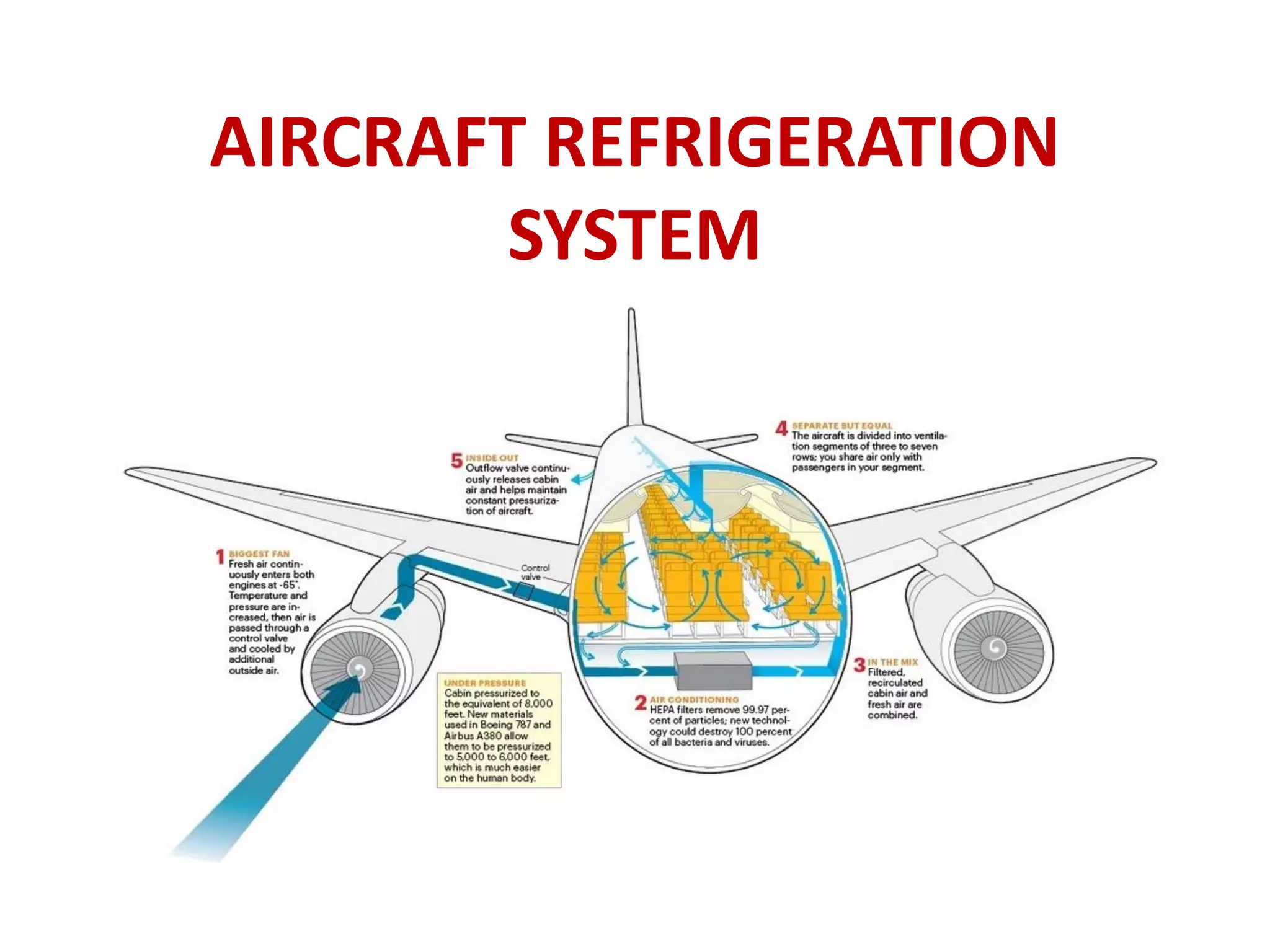
AIRCRAFT REFRIGERATION
SYSTEM
Why there is a need of cooling an aircraft?
• External Heat sources
– Solar radiations directly coming from the sun
– Skin friction causing rise in temperature of air.
• Internal Heat sources
– Human beings
– Electrical and Electronics components
– Engine parts
Types of Air Refrigeration Cycle
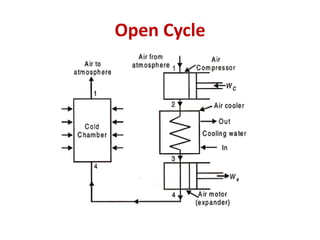
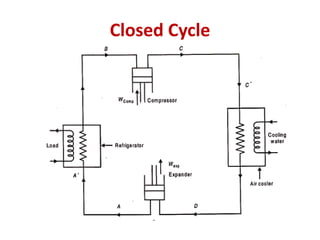
• Air cycle refrigeration is one of the earliest
methods used for cooling.
• The key features of this method is that, the
refrigerant air remain gaseous state
throughout the refrigeration cycle.
• Based on the operation, the air refrigeration
system can be classified into
– Open Cycle
– Closed Cycle
Open Cycle
Closed Cycle
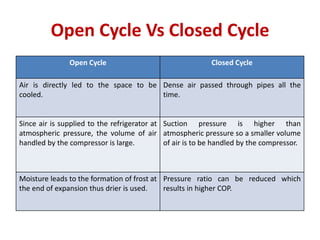
Open Cycle Vs Closed Cycle
Open Cycle Closed Cycle
Air is directly led to the space to be
cooled.
Dense air passed through pipes all the
time.
Since air is supplied to the refrigerator at
atmospheric pressure, the volume of air
handled by the compressor is large.
Suction pressure is higher than
atmospheric pressure so a smaller volume
of air is to be handled by the compressor.
Moisture leads to the formation of frost at
the end of expansion thus drier is used.
Pressure ratio can be reduced which
results in higher COP.
Advantages of Air Refrigeration System
• Air is used as refrigerant, which is easily
available and inexpensive.
• Refrigerant (Air) is non-toxic, non-flammable,
non-corrosive.
• Weight per tonne of refrigeration is quite low
(compared to other systems).
• The cold air can be directly used for
refrigeration so there is no need for separate
evaporator.
Disadvantages of Air Refrigeration System
• Lower C.O.P. compared to other refrigeration
cycle.
• Running cost is high.
• The mass of air required to circulate in the
system is very high when compared to other
type of refrigeration cycle due to low specific
heat capacity.
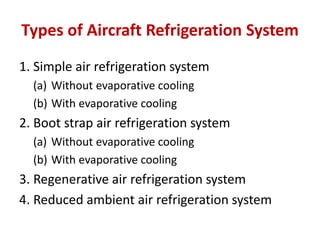
Types of Aircraft Refrigeration System
1. Simple air refrigeration system
(a) Without evaporative cooling
(b) With evaporative cooling
2. Boot strap air refrigeration system
(a) Without evaporative cooling
(b) With evaporative cooling
3. Regenerative air refrigeration system
4. Reduced ambient air refrigeration system
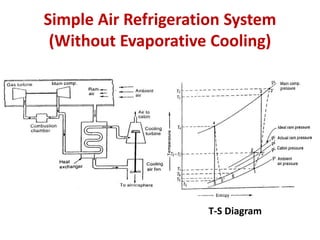
Simple Air Refrigeration System
(Without Evaporative Cooling)
T-S Diagram
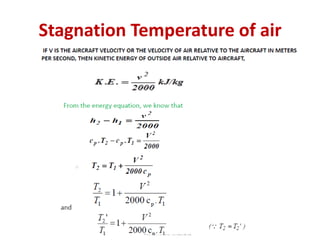
Stagnation Temperature of air
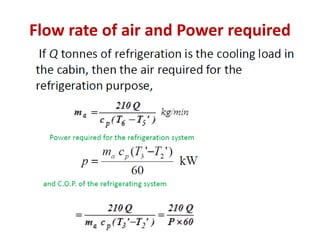
Flow rate of air and Power required
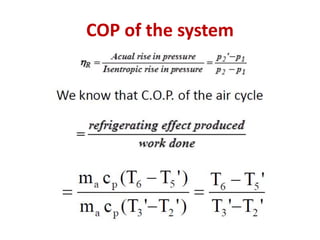
COP of the system
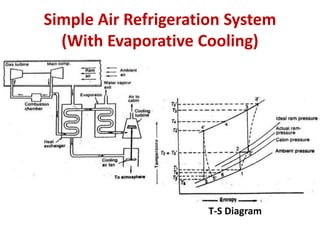
Simple Air Refrigeration System
(With Evaporative Cooling)
T-S Diagram
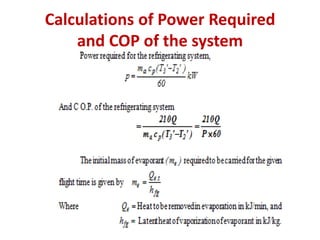
Calculations of Power Required
and COP of the system
Bootstrap Air Refrigeration System
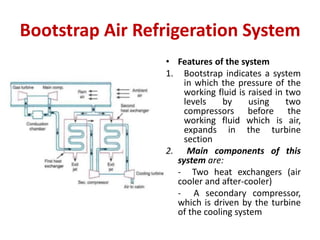
• Features of the system
1. Bootstrap indicates a system
in which the pressure of the
working fluid is raised in two
levels by using two
compressors before the
working fluid which is air,
expands in the turbine
section
2. Main components of this
system are:
- Two heat exchangers (air
cooler and after-cooler)
- A secondary compressor,
which is driven by the turbine
of the cooling system
Bootstrap Air Refrigeration System
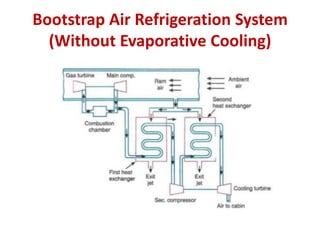
(Without Evaporative Cooling)
Bootstrap Air Refrigeration System
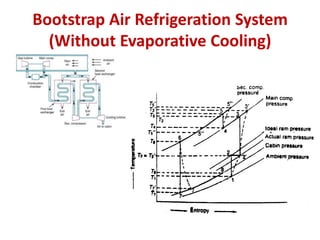
(Without Evaporative Cooling)
Bootstrap Air Refrigeration System
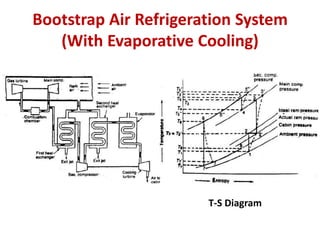
(With Evaporative Cooling)
T-S Diagram
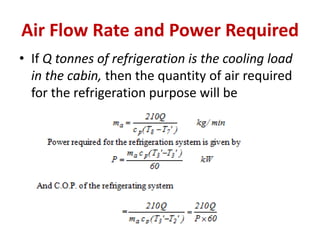
Air Flow Rate and Power Required
• If Q tonnes of refrigeration is the cooling load
in the cabin, then the quantity of air required
for the refrigeration purpose will be
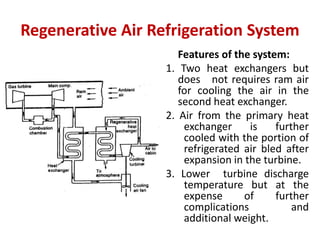
Regenerative Air Refrigeration System
Features of the system:
1. Two heat exchangers but
does not requires ram air
for cooling the air in the
second heat exchanger.
2. Air from the primary heat
exchanger is further
cooled with the portion of
refrigerated air bled after
expansion in the turbine.
3. Lower turbine discharge
temperature but at the
expense of further
complications and
additional weight.
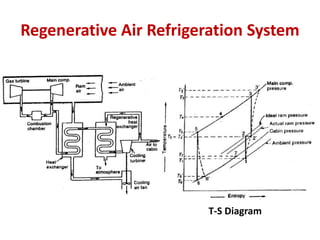
Regenerative Air Refrigeration System
T-S Diagram
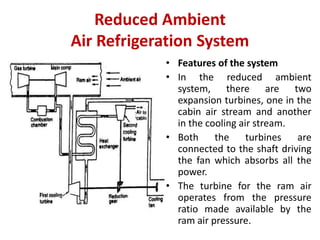
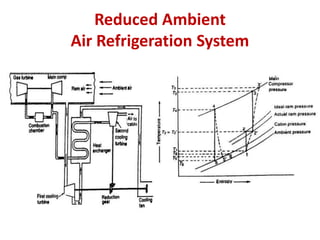
Reduced Ambient
Air Refrigeration System
• Features of the system
• In the reduced ambient
system, there are two
expansion turbines, one in the
cabin air stream and another
in the cooling air stream.
• Both the turbines are
connected to the shaft driving
the fan which absorbs all the
power.
• The turbine for the ram air
operates from the pressure
ratio made available by the
ram air pressure.
Reduced Ambient
Air Refrigeration System
Dry Air Rated Temperature (DART)
• It is the temperature in terms of which the
comparison of different types of aircraft is
made.
• It is the temperature of the discharged air
from the expander if there is no condensed
moisture is present.
• Rating of aircraft: kg of air per unit time at
the design DART.
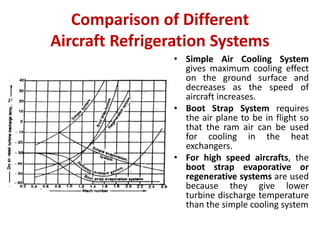
Comparison of Different
Aircraft Refrigeration Systems
• Simple Air Cooling System
gives maximum cooling effect
on the ground surface and
decreases as the speed of
aircraft increases.
• Boot Strap System requires
the air plane to be in flight so
that the ram air can be used
for cooling in the heat
exchangers.
• For high speed aircrafts, the
boot strap evaporative or
regenerative systems are used
because they give lower
turbine discharge temperature
than the simple cooling system

Aircraft refrigeration system

  • 1.
  • 2.
    Why there isa need of cooling an aircraft? • External Heat sources – Solar radiations directly coming from the sun – Skin friction causing rise in temperature of air. • Internal Heat sources – Human beings – Electrical and Electronics components – Engine parts
  • 3.
    Types of AirRefrigeration Cycle • Air cycle refrigeration is one of the earliest methods used for cooling. • The key features of this method is that, the refrigerant air remain gaseous state throughout the refrigeration cycle. • Based on the operation, the air refrigeration system can be classified into – Open Cycle – Closed Cycle
  • 4.
  • 5.
  • 6.
    Open Cycle VsClosed Cycle Open Cycle Closed Cycle Air is directly led to the space to be cooled. Dense air passed through pipes all the time. Since air is supplied to the refrigerator at atmospheric pressure, the volume of air handled by the compressor is large. Suction pressure is higher than atmospheric pressure so a smaller volume of air is to be handled by the compressor. Moisture leads to the formation of frost at the end of expansion thus drier is used. Pressure ratio can be reduced which results in higher COP.
  • 7.
    Advantages of AirRefrigeration System • Air is used as refrigerant, which is easily available and inexpensive. • Refrigerant (Air) is non-toxic, non-flammable, non-corrosive. • Weight per tonne of refrigeration is quite low (compared to other systems). • The cold air can be directly used for refrigeration so there is no need for separate evaporator.
  • 8.
    Disadvantages of AirRefrigeration System • Lower C.O.P. compared to other refrigeration cycle. • Running cost is high. • The mass of air required to circulate in the system is very high when compared to other type of refrigeration cycle due to low specific heat capacity.
  • 9.
    Types of AircraftRefrigeration System 1. Simple air refrigeration system (a) Without evaporative cooling (b) With evaporative cooling 2. Boot strap air refrigeration system (a) Without evaporative cooling (b) With evaporative cooling 3. Regenerative air refrigeration system 4. Reduced ambient air refrigeration system
  • 10.
    Simple Air RefrigerationSystem (Without Evaporative Cooling) T-S Diagram
  • 11.
  • 12.
    Flow rate ofair and Power required
  • 13.
    COP of thesystem
  • 14.
    Simple Air RefrigerationSystem (With Evaporative Cooling) T-S Diagram
  • 15.
    Calculations of PowerRequired and COP of the system
  • 16.
    Bootstrap Air RefrigerationSystem • Features of the system 1. Bootstrap indicates a system in which the pressure of the working fluid is raised in two levels by using two compressors before the working fluid which is air, expands in the turbine section 2. Main components of this system are: - Two heat exchangers (air cooler and after-cooler) - A secondary compressor, which is driven by the turbine of the cooling system
  • 17.
    Bootstrap Air RefrigerationSystem (Without Evaporative Cooling)
  • 18.
    Bootstrap Air RefrigerationSystem (Without Evaporative Cooling)
  • 19.
    Bootstrap Air RefrigerationSystem (With Evaporative Cooling) T-S Diagram
  • 20.
    Air Flow Rateand Power Required • If Q tonnes of refrigeration is the cooling load in the cabin, then the quantity of air required for the refrigeration purpose will be
  • 21.
    Regenerative Air RefrigerationSystem Features of the system: 1. Two heat exchangers but does not requires ram air for cooling the air in the second heat exchanger. 2. Air from the primary heat exchanger is further cooled with the portion of refrigerated air bled after expansion in the turbine. 3. Lower turbine discharge temperature but at the expense of further complications and additional weight.
  • 22.
  • 23.
    Reduced Ambient Air RefrigerationSystem • Features of the system • In the reduced ambient system, there are two expansion turbines, one in the cabin air stream and another in the cooling air stream. • Both the turbines are connected to the shaft driving the fan which absorbs all the power. • The turbine for the ram air operates from the pressure ratio made available by the ram air pressure.
  • 24.
  • 25.
    Dry Air RatedTemperature (DART) • It is the temperature in terms of which the comparison of different types of aircraft is made. • It is the temperature of the discharged air from the expander if there is no condensed moisture is present. • Rating of aircraft: kg of air per unit time at the design DART.
  • 26.
    Comparison of Different AircraftRefrigeration Systems • Simple Air Cooling System gives maximum cooling effect on the ground surface and decreases as the speed of aircraft increases. • Boot Strap System requires the air plane to be in flight so that the ram air can be used for cooling in the heat exchangers. • For high speed aircrafts, the boot strap evaporative or regenerative systems are used because they give lower turbine discharge temperature than the simple cooling system